

Note: This article contains affiliate links. If you click on these links and make a purchase, I may earn a small commission at no extra cost to you. This helps support my research and content. Read my full affiliate disclosure here.
Deck planters sit in direct sunlight for long stretches, which changes how plants grow, bloom, and use water compared with garden beds. Choosing plants specifically suited to full sun and container culture prevents wilting, scorched foliage, and constant watering chores. This guide shortlists seven top full sun plants for deck planters that balance heat tolerance, compact habit, and reliable flowering or foliage interest. Each pick was evaluated for sun tolerance, container performance, maintenance needs, and visual impact so you can pick options that fit your deck size and watering routine. Read on for practical details that make container choices easier.
Top Picks at a Glance
| Best Overall The best all-around choice for most situations | AVERAR 3 Mixed Mandevilla Live Plants, Long-Blooming Vine |  |
| Best Quality Built to a higher standard if you want something more solid | Proven Winners En Fuego Rose 2 Gal. Shrub |  |
| Best Value The sweet spot between price and what you get | Groundio Moss Rose (Portulaca grandiflora) Mixed-Color Seeds, 23,500 Count |  |
| Best Budget The cheapest option that still gets the job done reliably | Chapel Hill Yellow Lantana (2.5" pot) |  |
| Highest Rated A top-rated pick with lots of positive feedback | Costa Farms Ruellia (Mexican Petunia) Live Outdoor Plant, Purple Flowers |  |
| Most Popular A crowd favorite that many people choose with confidence | Tropical Plants of Florida Dipladenia Bush with Yellow Flowers (6" Grower Planter) |  |
| Best Seller A high-volume bestseller chosen again and again | KVITER Mix Moss Rose (Portulaca grandiflora) Heirloom Flower Seeds — Double Moss Rose Mix |  |
AVERAR 3 Mixed Mandevilla Live Plants, Long-Blooming Vine

| Expected Blooming Period | Spring to Fall |
|---|---|
| Sunlight Exposure | Full Sun |
| Moisture Needs | Moderate Watering |
| Unit Count | 3 Count |
| Plant or Animal Product Type | Flower |
These AVERAR Mandevilla plants arrive as three well-rooted young vines meant for containers, hanging baskets, or climbing supports on a deck or patio. They thrive in full sun and well-draining soil and are described as fast-growing, producing large tropical-style blooms from spring through fall, which makes them an attractive choice for adding vertical color to planters or trellis screens. Practical benefits include easy care once established, moderate watering needs, and suitability for container culture so you can move them around a sunny deck to optimize display and sun exposure. They are recommended for warm climates (USDA zones 9–11) or as annuals in cooler areas where they will be treated as seasonal container plants. Limitations are that these are young plants, so they need initial attention to get established and will require support for climbing and occasional pruning to shape; in colder zones you will not get winter hardiness and must overwinter indoors or replant each season.
Best for: Gardeners who want a low-fuss, showy climbing plant for sunny deck planters or trellises and prefer container-friendly specimens that establish quickly and provide long seasonal color.
Less Ideal for: Buyers seeking fully winter-hardy perennial shrubs or those who want immediate mature coverage without time for establishment should consider other options.
- Long bloom season from spring through fall for extended color
- Designed for container and vertical use so they fit deck planters and trellises
- Arrive well-rooted and ready to plant
- Tolerant of moderate watering and drought once established
- Not winter-hardy outside USDA zones 9–11 and must be treated as annuals or moved indoors in cooler climates
- Requires a support structure and regular pruning to maintain shape as a climbing vine
Verdict: A convenient three-pack of sun-loving, container-ready Mandevilla vines that deliver tropical, long-lasting blooms for deck planters and vertical displays.
Proven Winners En Fuego Rose 2 Gal. Shrub

| Sunlight Exposure | Full Sun |
|---|---|
| USDA Hardiness Zone | 4, 5, 6, 7, 8, 9 |
| Expected Blooming Period | Spring to Fall |
| Moisture Needs | Regular Watering |
The Proven Winners En Fuego rose is a 2 gallon shrub rose selected for vivid yellow, red and orange blooms and dependable, repeat flowering from spring through fall. It is planted as an outdoor specimen in full sun to partial shade and is commonly used as a focal plant in containers or beds where strong color and continuous bloom are desired. Notable features include pollinator-attracting flowers, glossy foliage that frames the blooms, and care instructions that are straightforward: plant in a sunny spot, water before planting, mulch, and fertilize in early spring. Practical benefits for a barrel planter include a compact mature habit and season-long interest, so it reads well in a whiskey barrel without overwhelming the space. Limitations are that it needs regular watering and routine basic care to perform well and it will be deciduous in winter so it will be dormant off-season; heavy winter pruning or protection may be needed in the coldest sites of its range.
Best for: Gardeners who want a performance-focused, continuously flowering shrub for a showy focal point in a whiskey barrel and who will keep up basic watering and spring feeding.
Less Ideal for: Buyers seeking a no-care, evergreen container plant or those unable to water regularly during hot weather should consider alternatives.
- Bright, multicolored blooms provide strong visual impact in containers
- Bred to attract pollinators which benefits garden biodiversity
- Compact mature habit suitable for barrel planters and smaller spaces
- Simple care routine with clear planting and fertilizing guidance
- Requires regular watering when grown in containers to avoid stress
- Deciduous and dormant in winter so it lacks year-round foliage interest
Verdict: Choose this rose for a compact, high-impact flowering shrub that keeps producing bright, pollinator-friendly blooms in a whiskey barrel with proper watering and seasonal care.
Groundio Moss Rose (Portulaca grandiflora) Mixed-Color Seeds, 23,500 Count

| Unit Count | 23500 Count |
|---|---|
| Expected Blooming Period | Summer to Fall |
| Sunlight Exposure | Full Sun |
| Material Features | GMO Free, Heirloom |
| Other Special Features of the Product | High Germination Rate |
These Groundio moss rose seeds supply a huge quantity of Portulaca grandiflora seed for quickly establishing a colorful carpet of low annual flowers. They are intended to be surface-sown in well-drained soil and will germinate quickly in warm temperatures, producing double-petaled blooms in mixed pinks, reds, yellows, oranges, whites, and purples from summer into fall. Key useful traits are high reported germination, non-GMO heirloom seed, and strong tolerance for heat and drought, which makes them easy to use in pots, hanging baskets, rock gardens, and dry sunny beds. Practical benefits include very broad coverage from one packet, minimal watering needs once established, and simple sowing that does not require a green thumb. Limitations are that the seed mix is aimed at full sun and well-drained soils only, so performance will drop in shadier or waterlogged locations, and buyers who need precise spacing or single-color uniformity may prefer smaller, variety-specific packets instead of this mixed bulk offering.
Best for: Gardeners who want a low-maintenance, high-coverage annual to fill pots and sunny containers quickly without fuss, and who prioritize easy establishment and drought tolerance over precise variety control.
Less Ideal for: People planting in shade, consistently moist containers, or those seeking single-color displays or tight spacing control for formal designs should choose a different seed selection.
- Very large seed count (23,500) provides extensive coverage for pots and containers
- High reported germination for faster, more reliable establishment
- Heat and drought tolerant once established, suitable for hot sunny sites
- Non-GMO heirloom seed for traditional varieties and genetic consistency
- Designed for full sun and well-drained soil so not suitable for shady or wet conditions
- Mixed colors mean less control if you want a single color or uniform look
Verdict: If you need an easy, low-water annual to rapidly fill sunny pots and hanging baskets with nonstop summer color, this giant pack of moss rose seeds delivers simple, reliable results.
Chapel Hill Yellow Lantana (2.5" pot)

| Indoor Outdoor Usage | Outdoor |
|---|---|
| Expected Blooming Period | July until hard frost |
| Sunlight Exposure | Full Sun |
| USDA Hardiness Zone | 7+ |
| Unit Count | 1 Count |
Chapel Hill Yellow Lantana is a sun-loving, low-maintenance flowering plant intended for outdoor beds and containers. Sold in a 2.5" pot, it establishes quickly in full sun and begins producing bright yellow blooms from July through the first hard frost, making it a long-season color provider. The plant reaches roughly 16 inches tall with a spreading habit suitable for filling deck planters or edging a sunny border. Notable features are its cold hardiness down to zone 7 when placed in protected microclimates and its attractiveness to butterflies, which adds pollinator activity to a deck or garden. It is also reported to resist deer, rabbits, and groundhogs, reducing the need for protective measures. Limitations include its spread, which needs room in planters or regular trimming to prevent crowding, and that it behaves as a perennial only in zone 7 and warmer, otherwise it will function as an annual. Planters should have good drainage and enough soil volume to accommodate its three-foot spread for best performance.
Best for: Gardeners looking for an affordable, low-fuss sun plant to add long-lasting yellow color to deck planters and attract pollinators during the warm season.
Less Ideal for: Those who need strictly compact plants for very small containers or gardeners in colder zones who want a reliable perennial habit year after year.
- Long blooming period from July until first hard frost
- Performs well in full sun and attracts butterflies and pollinators
- Cold hardy to zone 7 when planted in protected sites
- Resistant to deer, rabbits, and groundhogs
- Can spread up to about 3 feet and may require trimming or larger planters
- Perennial behavior is limited to USDA zone 7 and warmer
Verdict: Choose this lantana for an inexpensive, sun-loving planter plant that delivers months of yellow blooms and draws butterflies to your deck.
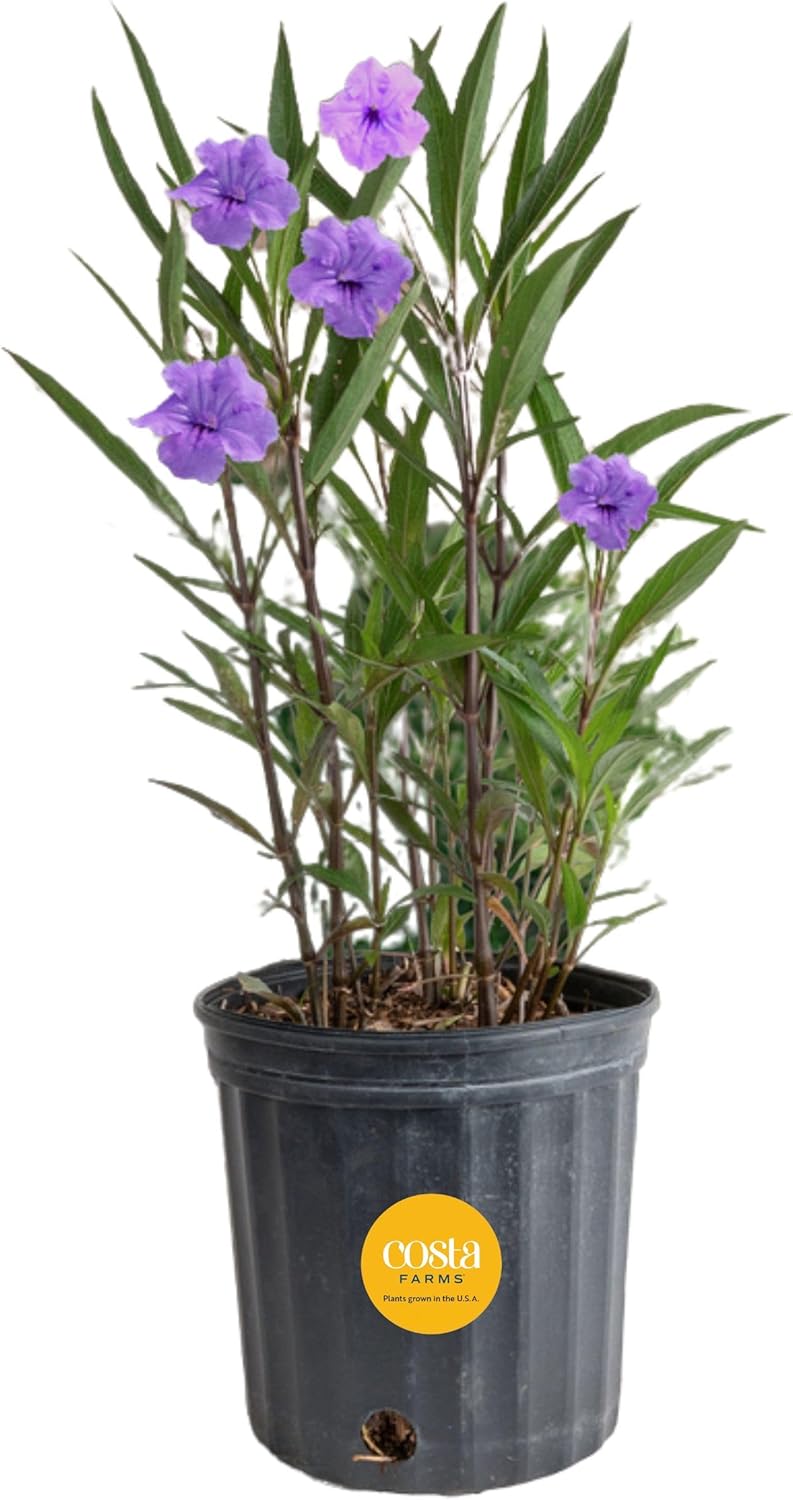
Costa Farms Ruellia (Mexican Petunia) Live Outdoor Plant, Purple Flowers
| Indoor Outdoor Usage | Outdoor |
|---|---|
| Sunlight Exposure | Full Sun |
| Expected Plant Height | 36 inches |
| Container Material | Plastic |
This Costa Farms Ruellia (Mexican petunia) is a vigorous, easy-care flowering plant that delivers continuous purple trumpet-shaped blooms and quick vertical growth. For pots on a sunny patio it establishes fast and reaches about 2 to 3 feet tall, making it a dependable thriller or focal plant in large containers. The plant performs best in full sun but tolerates partial shade and a wide range of soils as long as drainage is reasonable. Its drought tolerance and heat resilience mean lower watering needs once established, and its nectar-rich flowers attract pollinators such as hummingbirds and butterflies. Practical limitations include its rapid growth habit, which can require regular pruning or dividing in confined pots to prevent crowding, and the plastic nursery container that may need upgrading for long-term container culture. For gardeners seeking a low-effort, high-impact annual or summer perennial look in warm climates, this is an efficient choice for sunny pots and mixed container arrangements.
Best for: Buyers who want a high-performing, low-maintenance flowering plant to create bold color and height in full-sun pots and mixed container designs.
Less Ideal for: Gardeners seeking a very compact, slow-growing filler for small pots or those who do not want to perform occasional pruning or repotting should consider other compact annuals.
- Produces prolific, continuous purple blooms for strong visual impact
- Fast growth that quickly fills large pots or provides vertical interest
- Heat and drought tolerant once established, reducing watering frequency
- Attracts pollinators, adding wildlife and movement to containers
- Can outgrow containers quickly and needs regular pruning or dividing in pots
- Supplied in a basic plastic nursery container that may require repotting for long-term use
Verdict: Choose this Ruellia when you need a fast-growing, heat-tolerant plant that reliably delivers nonstop purple blooms and strong container presence in full sun.
Tropical Plants of Florida Dipladenia Bush with Yellow Flowers (6" Grower Planter)

| Indoor Outdoor Usage | Indoor, Outdoor |
|---|---|
| Expected Blooming Period | Spring to Fall |
| Sunlight Exposure | Full Sun |
| Soil Type | Sandy Soil |
This live Dipladenia arrives in a 6-inch grower planter and is intended for bright, sunny locations where it will bloom from spring through fall. It is typically used as a container or patio plant that tolerates direct sun and sandy soils, producing recurring yellow flowers that add long-season color. The product’s straightforward presentation in a grower pot makes it easy to place in a sunny spot or transplant into a larger container or garden bed in spring. Practical benefits include consistent flowering in full sun exposure and low soil-type fussiness when planted in well-draining, sandy mixtures. Limitations are that size and mature habit are not specified in detail on the listing and the plant may need regular watering and fertilizing in hot, direct-sun sites to maintain blooms. For performance-driven buyers looking for reliable sun-loving color, this Dipladenia offers a simple, ready-to-use option that performs best when given consistent light and routine care.
Best for: Gardeners seeking a performance-oriented, sun-loving flowering shrub for containers or sunny patios who prioritize consistent seasonal blooms and easy placement.
Less Ideal for: People wanting a large, established specimen or those who need detailed mature dimensions for precise landscape placement.
- Designed for full sun exposure and long bloom period from spring to fall
- Arrives in a 6" grower planter ready for placement or easy transplanting
- Tolerates sandy, well-draining soils common in warm, sunny sites
- Listing lacks detailed size and mature habit information for landscape planning
- May require frequent watering and feeding in hot, direct-sun locations
Verdict: A compact, sun-loving flowering shrub that delivers reliable yellow blooms for containers and sunny patios throughout the growing season.
KVITER Mix Moss Rose (Portulaca grandiflora) Heirloom Flower Seeds — Double Moss Rose Mix

| Indoor Outdoor Usage | Outdoor |
|---|---|
| Other Special Features of the Product | Drought Tolerant, Growing Guide Included, High Germination Rate, Made in the USA |
| Expected Blooming Period | Late Spring to Fall |
| Sunlight Exposure | Full Sun |
| USDA Hardiness Zone | 2-12 |
KVITER Mix Moss Rose seeds provide a straightforward way to establish a low, flowering ground cover that blooms from late spring through fall. The packet contains heirloom, non-GMO seeds of Portulaca grandiflora selected for double, ruffled blooms in pinks, reds, yellows and oranges; the included growing guide and high germination rate make direct sowing into warm, well-drained soil simple. These plants thrive in full sun and minimal water, so they are ideal for hot, dry spots, rocky borders, edging and shallow containers where you want continuous pink and mixed-color flowers without much care. Expect compact succulent foliage that spreads to form a colorful mat and attracts pollinators. Limitations are that moss rose prefers sandy or loamy, very well-drained soils and will not do well in shade or waterlogged conditions, and the low height means it is decorative rather than structural. Seed mix variability means color distribution is not uniform, so the result is a blended, natural look rather than a single solid block of pink.
Best for: Gardeners who want an easy, low-maintenance flowering ground cover for sunny, dry areas and who prioritize continuous seasonal color with minimal watering.
Less Ideal for: People seeking tall or structural plants, dense single-color lawns of pink flowers, or gardeners with shady, poorly drained sites should look elsewhere.
- Heirloom non-GMO seeds with high stated germination for reliable sprouting
- Drought tolerant and thrives in full sun, suited to hot, dry sites
- Large unit count suitable for covering substantial ground or many containers
- Includes step-by-step growing guide to simplify direct sowing for beginners
- Performs poorly in shade or wet soils so site selection is important
- Seed mix produces a varied color blend rather than uniform pink-only coverage
Verdict: A simple, low-water choice to create a long-blooming, low pink-and-mix ground cover in hot sunny spots.
Choosing the Right Full Sun Plants for Deck Planters: Key Factors to Consider
Sun and Heat Tolerance
Plants in deck planters are exposed to midday and afternoon sun more intensely than many in-ground locations. Look for species with proven tolerance for high light and warm temperatures so leaves do not scorch and flowers do not fade quickly.
Sun and heat tolerance affects placement on the deck, the need for afternoon shade, and irrigation frequency. Plants that handle reflected heat from siding or decking materials will remain healthier and require less intervention.
Container Rooting Habit
Containers limit how far roots can spread and how much soil buffers temperature swings. Choose plants with compact or fibrous root systems that adapt to root confinement without becoming root-bound or stunted.
A plant's rooting habit also influences the size of planter needed and when to repot. Deep tap-rooted species often struggle in shallow containers, while fibrous or shallow-rooted plants remain stable and use container soil more effectively.
Water Needs and Drought Response
Full sun planters dry out faster, especially on hot, windy decks. Consider how often you can water and pick plants whose drought tolerance matches that schedule. Some species shrug off intermittent drying, while others need daily moisture in midsummer.
Also think about water-holding strategies such as soil mix, mulching, and using water-storing gels. Plants with poor drought response increase maintenance and the risk of repeated losses during heat waves.
Size, Habit, and Growth Rate
Deck space is limited, so select plants that stay within the footprint of the planter and play well with companions. Compact mounds, upright narrow forms, and trailing types each suit different planter shapes and compositions.
Growth rate informs how often you will need to prune or divide. Fast growers can quickly outgrow containers and compete for light, while slow growers may provide steady structure over several seasons.
Bloom Duration or Foliage Interest
Long bloom periods provide seasonal color without constant replanting. If blooms are short-lived, consider plants that offer striking foliage as a backup source of interest.
Think about whether you want continuous color, peak-season impact, or textural contrast. Combining long-blooming plants with steady foliage performers reduces gaps in the display.
Maintenance and Winter Considerations
Maintenance covers deadheading, pruning, feeding, and overwintering decisions. Some full sun container plants need frequent grooming to remain tidy and flowering, while others are low-maintenance.
If you live in a cold zone, consider whether will you move containers inside, provide insulation, or treat plantings as annuals. Maintenance expectations should match the amount of time you want to spend caring for deck planters.
Designing a Small-Deck Planter Scheme
Start by measuring planter dimensions and the amount of sun each location receives during the hottest part of the day. That determines whether you need strictly high-heat performers or plants that tolerate morning sun and afternoon exposure.
Pair a structural mid-height plant with a lower filler and an edging or trailing element to soften the planter rim. On narrow decks, favor upright or narrow forms to preserve circulation and sight lines.
- Use a single dominant plant for quick impact and simpler maintenance.
- Add one or two low-maintenance companions for contrast and color extension.
- Reserve trailing plants for wide or hanging planters to avoid crowding.
Soil, Drainage, and Mulch for Sun-Exposed Containers
Choose a high-quality potting mix with good drainage and some organic matter to retain moisture without becoming waterlogged. Avoid garden soil which compacts in containers and reduces aeration.
Ensure each planter has adequate drainage holes and consider placing a gravel layer at the bottom only when it helps drainage in very shallow pots. Top-dress with a thin layer of mulch or small decorative stones to slow surface evaporation on hot days.
- Lightweight potting mixes reduce overall container weight on deck railings.
- Incorporate slow-release fertilizer or plan on a regular liquid feeding schedule during the growing season.
Irrigation Strategies for Hot Decks
Containers in full sun can need water once or twice daily in heat waves. Match plant selection to how much attention you can give. Install drip lines or use self-watering inserts if daily hand-watering is impractical.
Water deeply and less frequently rather than giving light surface wettings; deep watering encourages fuller root development and extends time between irrigations.
- Use a moisture meter or finger test to check soil rather than relying on a schedule alone.
- Morning watering reduces evaporation and helps plants cope with midday heat.
Combining Annuals and Perennials in Planters
Mixing perennials for structure with annuals for seasonal color gives flexible displays. Perennials provide a backbone that can return year after year, while annuals fill gaps and add bright, continuous blooms.
When pairing, align water needs and growth habits so one plant does not dominate or outcompete the others.
- Place perennials toward the back or center depending on viewing angles.
- Reserve the front edge for low-growing or trailing annuals that tolerate sun and frequent trimming.
Seasonal Care and Overwintering
Regular deadheading and light pruning keep plants tidy and promote extended flowering. Reduce feeding in late summer to help plants harden off before cooler weather arrives.
If your climate has freezing winters, plan whether to move containers to a protected area, insulate pots, or accept that some plants will be treated as annuals and replaced in spring.
- Bring frost-sensitive containers indoors or to a sheltered spot if possible.
- Multiply smaller planters across the deck so you can rearrange and protect the most vulnerable plants.
How We Chose the Best Full Sun Plants for Deck Planters
We focused on traits that matter in sunny container settings and evaluated candidates against practical gardener concerns. Key criteria included sun tolerance and heat resilience to ensure plants survive long sun exposure, and container performance which covers root confinement, growth habit, and how well the plant maintains shape when restricted. Drought response and watering frequency were assessed to match different care levels and irrigation approaches. Bloom period or foliage interest was included so selections provide sustained visual payoff across the season. Maintenance and pruning needs were considered to avoid choices that demand frequent deadheading or complicated care on a busy deck. We excluded plants that require deep in-ground roots, large spreads, or strict shade conditions, as well as annuals that collapse quickly in heat without heavy intervention. The final list favors durable, compact, and predictable performers that suit real-world deck planter conditions.
FAQ
How often should I water full sun deck planters?
It depends on container size, soil mix, and weather, but planters in full sun often need watering every day or every other day during heat waves. Check soil moisture with a finger or meter and water deeply when the top inch is dry.
Can I use the same soil mix for all my deck planters?
A high-quality, well-draining potting mix works for most sun-loving container plants, but mixes that retain more moisture suit thirsty species while gritty mixes suit very drought-tolerant plants. Tailor the mix when your plant choices have different water needs.
Will plants in deck planters need more fertilizer than in-ground plants?
Yes, container-grown plants typically need more frequent feeding because nutrients leach from pots with regular watering. Use a balanced liquid feed every few weeks or a slow-release fertilizer according to product directions.
How do I prevent pots from overheating on a hot deck?
Use lighter-colored containers to reflect heat, provide partial afternoon shade when possible, and choose potting mixes with good water retention. Grouping pots and using insulating saucers or stands can also reduce heat stress on roots.
Should I deadhead flowers in full sun planters?
Often deadheading encourages prolonged blooming in many flowering annuals and perennials. However, some plants bloom without deadheading and others reseed if left. Balance the time you have for upkeep with the visual benefits of deadheading.
What size planter is best for sun-exposed plants?
Larger planters hold more moisture and buffer temperature swings, reducing watering frequency. Choose the largest planter that fits your space and weight limits to give roots more room and make maintenance easier.
Final Verdict
For deck planters in full sun, prioritize plants that tolerate heat, have root habits suited to containers, and match your watering routine. Balance bloom duration with foliage interest so displays remain attractive even during brief dry spells. Decide how much maintenance you want to do and choose species whose care needs align with that time commitment. With the right soil, irrigation approach, and plant pairings, you can create long-lasting, low-stress container displays that thrive in full sun.
