

Note: This article contains affiliate links. If you click on these links and make a purchase, I may earn a small commission at no extra cost to you. This helps support my research and content. Read my full affiliate disclosure here.
Keeping a bonsai healthy depends on fast, precise treatment when fungal disease appears. A bonsai's small canopy, thin soil volume, and sensitive leaves change how fungicides behave compared with larger landscape plants. You need products that control common pathogens while minimizing leaf burn and avoiding root stress in a confined pot. This guide covers six carefully shortlisted fungicides for bonsai and explains how they were evaluated for coverage, safety, and ease of use. Read on for practical criteria and guidance to match a product to your species and growing situation.
Top Picks at a Glance
| Best Overall The best all-around choice for most situations | Bonide Captain Jack Copper Fungicide 16 oz Concentrate |  |
| Best Quality Built to a higher standard if you want something more solid | Monterey Copper Fungicide Garden Spray, 16 oz |  |
| Best Value The sweet spot between price and what you get | BioAdvanced 3-in-1 Insect, Disease & Mite Control Spray, 24 fl oz |  |
| Best Budget The cheapest option that still gets the job done reliably | Bonide Copper Fungicide Ready-to-Use Spray or Dust, 16 oz |  |
| Highest Rated A top-rated pick with lots of positive feedback | Monterey Fungi-Max Systemic Fungicide, 16 fl oz |  |
| Most Popular A crowd favorite that many people choose with confidence | Bonide Captain Jack's Liquid Copper Fungicide Ready-to-Use, 32 oz |  |
Bonide Captain Jack Copper Fungicide 16 oz Concentrate

| Unit Count | 16 Ounce |
|---|---|
| Item Form | Liquid |
| Target Species | Fungus |
| Active Ingredients | Copper Octanoate (Copper Soap) |
Bonide Captain Jack Copper Fungicide is a liquid concentrate designed to prevent and treat a broad range of fungal diseases on vegetables, fruits, ornamentals, and turf. Mixed with water per label directions, it is sprayed onto plant surfaces, including tops and undersides of leaves, and can be applied up to the day of harvest, which makes it practical for food crops like tomatoes. The active ingredient copper octanoate provides contact protection against powdery mildew, blight, black spot, rust, peach leaf curl and similar diseases. Application is straightforward and repeatable every 7 to 10 days as needed, and the product is cleared for use in organic gardening. Limitations to consider are that copper is a contact fungicide so it does not systemically move through the plant and works best as a preventative or early-treatment tool rather than curing severe systemic infections. Users should follow safety directions and avoid overuse to reduce copper buildup in soil.
Best for: Gardeners looking for a performance-focused, organic-approved fungicide to include in a preventative disease program for tomatoes and other edibles.
Less Ideal for: Growers seeking a systemic treatment for already advanced internal infections or those who prefer non-copper chemistries to avoid soil accumulation.
- Approved for organic gardening and can be used up to the day of harvest
- Controls a wide range of common diseases affecting tomatoes such as blight and powdery mildew
- Concentrated liquid formula mixes with water for spray application
- Repeatable 7–10 day application schedule makes preventative programs easy to maintain
- Acts as a contact fungicide and does not move systemically within the plant
- Repeated use can contribute to copper accumulation in soil if not managed
Verdict: Use this organic-approved copper concentrate when you want an effective, easy-to-apply preventative spray to protect tomatoes from common fungal diseases.
Monterey Copper Fungicide Garden Spray, 16 oz

| Item Form | Liquid |
|---|---|
| Target Species | Fungus |
| Liquid Volume | 16 fluid ounces |
Monterey Copper Fungicide is a liquid concentrate intended primarily as a preventative treatment against common fungal diseases on fruits, vegetables, ornamentals and trees. You mix it with water and apply as a foliar spray or soil drench to protect foliage and blooms before infections take hold. Notable features include its broad target of fungal pathogens, a formulation designed for home gardeners, and clear safety and usage guidance such as wearing protective clothing and washing after use. For bonsai growers seeking reliable preventative protection, the product’s ease of mixing and ability to be applied with a pump sprayer make it practical for small-scale, precise spray applications. Its limitation is that it is preventative rather than curative, so it will not reliably eradicate severe, established infections and must be timed correctly to be effective. Also, as with all copper products, repeated use requires attention to label limits to avoid copper buildup in potting media.
Best for: Bonsai growers who prioritize reliable, preventative disease control and want an easy-to-mix fungicide that can be applied precisely to small trees and container specimens.
Less Ideal for: Growers looking for a fast curative treatment for active, severe fungal outbreaks or those who prefer organic or non-copper disease controls.
- Broad preventative control against many common fungal diseases
- Can be applied as a foliar spray or soil drench for flexible use
- Formulated and labeled for safe residential use with clear safety directions
- Concentrated 16 fl oz size mixes for multiple small applications
- Designed as a preventative product and is not a reliable cure for established infections
- Repeated use can contribute to copper accumulation in potting media if label limits are exceeded
Verdict: A concentrated, easy-to-apply copper fungicide best for bonsai growers who want dependable preventative protection against common fungal diseases.
BioAdvanced 3-in-1 Insect, Disease & Mite Control Spray, 24 fl oz

| Unit Count | 24 Fluid Ounces |
|---|---|
| Item Form | Spray |
| Liquid Volume | 24 fluid ounces |
| Active Ingredients | 0.012% Imidacloprid, 0.014% Tau-fluvalinate, 0.015% Tebuconazole |
| Specification Met | EPA |
This ready-to-use BioAdvanced 3-in-1 spray combines an insecticide, miticide, and fungicide for broad protection on ornamental plants, including orchids listed among similar use sites. It is applied with a trigger sprayer to foliage and blooms, killing aphids, caterpillars, Japanese beetles and controlling spider mites on contact while the systemic components provide rainproof protection for up to 30 days. The inclusion of a fungicide helps manage common diseases such as powdery mildew and black spot, which can benefit orchids prone to fungal problems in humid conditions. Practical benefits are ease of use, multi-target control in one bottle, and coverage for dozens of plants per container. Important limitations are that the formula contains systemic insecticides so it must be used according to label directions and is not allowed for sale in several states, and specific orchid suitability is not detailed on the label so spot-testing on a few plants is prudent before wide application. Expect good short-term control but follow safety and timing guidance for flowering plants.
Best for: Home gardeners who want a single, easy-to-use product to manage common insect pests, mites, and fungal issues on ornamental plants and potted specimens while minimizing application time.
Less Ideal for: Specialist growers who require orchid-specific products or organic/chemical-free controls should consider targeted or softer alternatives tailored to sensitive species.
- Combines insect, mite, and fungal control in one ready-to-use spray for simplified treatment.
- Trigger-spray applicator makes spot and foliar application easy for container and potted plants.
- Systemic, rainproof protection that can last up to 30 days reduces reapplication frequency.
- Covers many common pests on ornamentals including aphids, caterpillars, Japanese beetles, and spider mites.
- Label does not list detailed directions specific to orchids so compatibility with sensitive species is not guaranteed.
- Not available for sale in several states which limits access depending on location.
- Contains multiple active ingredients so users must follow safety precautions and withholding periods for bloom treatments.
Verdict: A convenient all-in-one ready-to-use spray for casual orchid and ornamental growers who want combined insect, mite, and disease control with minimal fuss.
Bonide Copper Fungicide Ready-to-Use Spray or Dust, 16 oz

| Unit Count | 16 Ounce |
|---|---|
| Item Form | Spray |
| Target Species | Plants |
| Special Features | organic |
This ready-to-use copper fungicide comes as a spray or dust and is designed to prevent and control common fungal diseases such as powdery mildew, black spot, peach leaf curl, rust and early blight on fruits, vegetables, ornamentals and turf. For bonsai care you would apply it as a light spray to foliage or as a dust to hard-to-reach crevices, following label intervals and safety directions. The active copper ingredient is a longtime, broadly effective option and is approved for organic gardening, which makes it suitable for hobbyists who prefer minimal synthetic chemistry. Practical benefits include easy mixing for hose- or tank-sprayer application, compatibility with a variety of plant types, and use up to the day of harvest for edibles. Important limitations are that copper products can build up in soil with frequent use and may cause foliar sensitivity on some tender species if applied in hot sun, so careful timing and adherence to label rates are necessary when treating delicate bonsai foliage.
Best for: Best for bonsai hobbyists who want an affordable, broadly effective organic fungicide they can apply themselves and who prioritize straightforward, ready-to-use products.
Less Ideal for: Not a good choice for growers needing systemic or targeted chemistries for persistent infections or for those managing soils where metal buildup is a concern.
- Ready-to-use formula works as a spray or dust for flexible application
- Controls a wide range of common fungal diseases relevant to bonsai, including powdery mildew and leaf spots
- Approved for organic gardening, suitable for growers avoiding synthetic fungicides
- Mixes instantly for hose-end or tank sprayer use, simplifying routine treatments
- Copper can accumulate in soil with repeated use, requiring monitoring
- May cause foliar sensitivity on some tender plants if applied in hot conditions
Verdict: A budget-friendly, organic-ready copper fungicide that gives bonsai growers a simple, effective way to control common foliar diseases with spray or dust application.
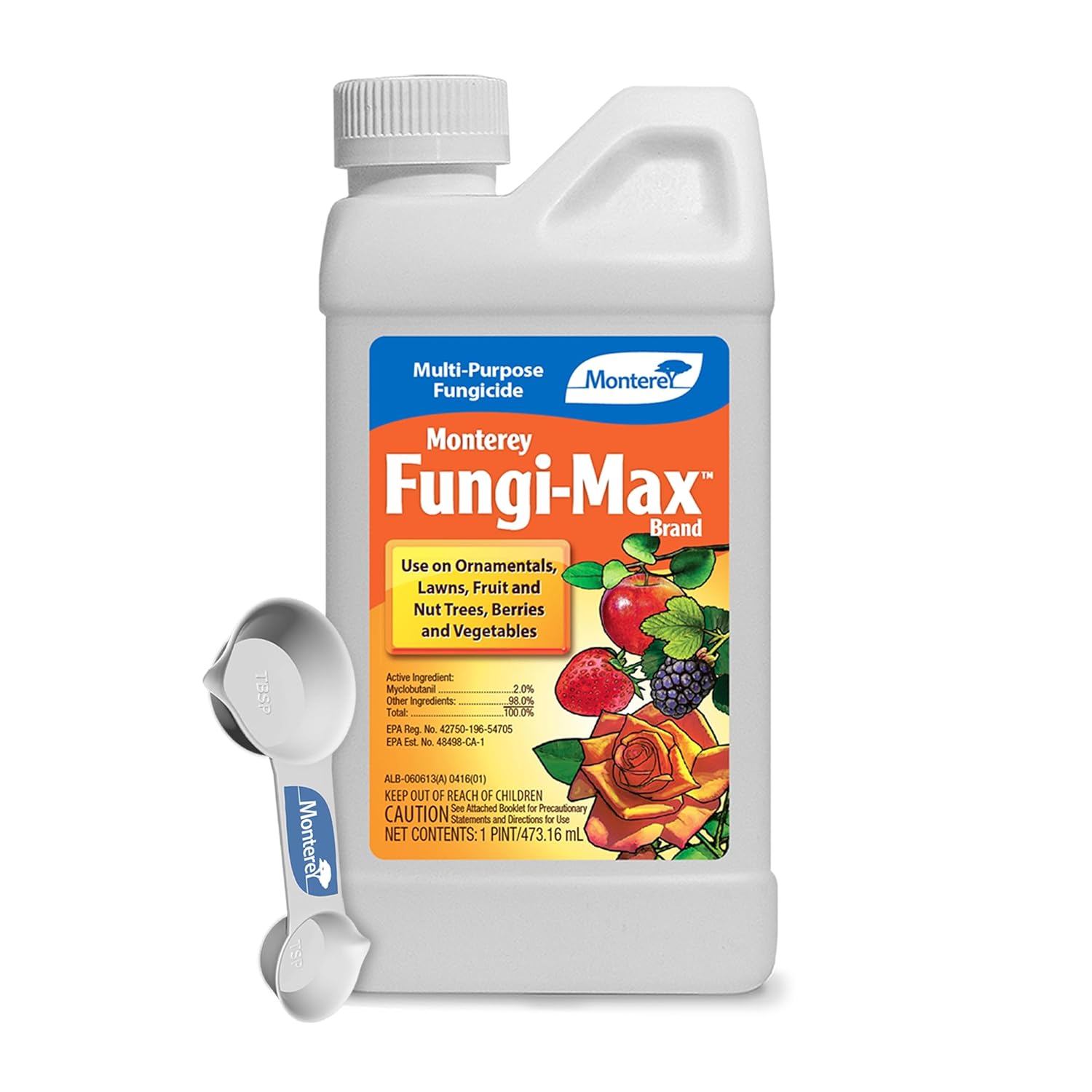
Monterey Fungi-Max Systemic Fungicide, 16 fl oz
| Item Form | Liquid |
|---|---|
| Application Method | Spray |
| Coverage | Wide range of plants and plant types |
| Target Species | Flowers, Vegetables, Trees, Lawn Grass |
| Liquid Volume | 16 fluid ounces |
Monterey Fungi-Max is a concentrated liquid fungicide formulated for home garden and landscape use to prevent and control common fungal diseases. You mix the product with water and apply it with a spray tank or pump sprayer; it works systemically so the active ingredient moves into plant tissue to protect leaves, stems, and roots. The label cites control for problems like powdery mildew, rust, leaf spots, crown rot, and several turf diseases, and the manufacturer says one application can protect plants for up to two weeks. Because it covers flowers, shrubs, fruit and nut trees, vegetables, and lawns, it is useful for mixed gardens where multiple plant types need disease management. Practical benefits include broad-spectrum disease coverage, systemic action that reaches new growth, and straightforward dilution and spray application. Important limitations are the need to follow label directions carefully for timing and mixing, potential incompatibility with certain sprayers or tank mixes, and the fact that repeat applications may be required for ongoing pressure or severe outbreaks.
Best for: Home gardeners and property owners who prioritize dependable, proactive disease control across mixed plantings and want a product that reaches plant tissue rather than only contact protection.
Less Ideal for: Organic gardeners or those seeking a contact-only, ready-to-use spray should consider alternatives designed for certified organic use or simpler ready-mix formulations.
- Systemic action that protects new growth after application
- Broad listed coverage for ornamentals, vegetables, fruit trees and turf
- Suitable for spray-tank or pump-sprayer application for yard-scale use
- One application offers up to two weeks of protection under normal conditions
- Not an organic or OMRI-listed product, so not suited for certified organic production
- Requires careful dilution and label reading to avoid misuse
Verdict: Choose Monterey Fungi-Max when you need a reliable, systemic fungicide that provides broad disease protection across a diverse home garden.
Bonide Captain Jack's Liquid Copper Fungicide Ready-to-Use, 32 oz

| Unit Count | 32 Ounce |
|---|---|
| Item Form | Spray |
| Active Ingredients | copper |
Bonide Captain Jack’s Liquid Copper Fungicide is a trigger-spray, ready-to-use copper solution designed to prevent and treat common fungal diseases on fruits, vegetables, nuts, herbs and ornamentals. It is applied by shaking the bottle and thoroughly spraying tops and undersides of leaves, with repeat applications every 7 to 10 days or as needed. The product is labeled for organic gardening and can be used up to the day of harvest, making it practical for vegetable beds and fruit trees where residue concerns matter. Notable features include its broad-spectrum activity against powdery mildew, leaf spot, blight and peach leaf curl, and the convenience of a pre-mixed spray bottle that removes measuring or mixing. Limitations are inherent to copper products: it treats fungal problems but does not replace cultural controls like good airflow and sanitation, and overuse of copper can accumulate in soil so following label directions is important. As a ready-to-use option, it is best for gardeners who want a simple, approved solution for recurring fungal issues without handling concentrates.
Best for: Gardeners who prioritize proven, labeled products and want an easy-to-use organic-approved fungicide for edible beds and ornamentals based on real-world effectiveness and peer recommendations.
Less Ideal for: Gardeners seeking an all-in-one pest control product or those who prefer to avoid any copper-based treatments should look at non-copper alternatives or integrated disease-management approaches.
- Ready-to-use trigger spray requires no mixing or measuring
- Approved for organic gardening and can be applied up to day of harvest
- Effective against a broad range of common fungal diseases
- Convenient repeat-application interval (7–10 days) for ongoing control
- Contains copper which can build up in soil with excessive use
- Does not address non-fungal problems like insects or bacterial diseases
Verdict: A convenient, ready-to-use copper fungicide for gardeners who want an effective organic-approved spray to manage common fungal diseases.
Choosing the Right Fungicide for Bonsai: Key Factors to Consider
Active Ingredient and Spectrum
Different active ingredients target different fungal groups. Some are broad-spectrum and suppress many foliar pathogens, while others are fungistatic against a narrow set of organisms. For bonsai you should match the chemistry to the likely problem: powdery mildew, leaf spot, rust, or root-rotting fungi often need different actives.
Understanding whether an active ingredient provides contact control, systemic protection, or both changes how you apply it. Systemic actives move within tissues and can protect new growth, which helps in shallow-rooted bonsai, but systemic movement can be limited in stressed or droughted trees. Read labels for labeled tree species and application methods for containerized ornamentals.
Phytotoxicity and Leaf Sensitivity
Bonsai foliage, especially young shoots and thin-leaved varieties, can be prone to burn or spotting after certain sprays. Phytotoxicity risk increases with high concentrations, hot sunlight after application, or repeated use without adequate rinsing. Choose products with documented low phytotoxicity on ornamental trees or that list container-grown ornamentals on the label.
To reduce risk, test sprays on a small branch, avoid treatments during heat or drought stress, and follow label dilution rates closely. Some gardeners prefer products with lower active concentrations and more frequent applications to reduce acute leaf stress while maintaining control.
Application Volume and Coverage
Bonsai require low spray volumes and very even coverage to reach inner foliage and undersides of leaves. Product formulations that spray into a fine, even mist and remain on leaf surfaces without excessive runoff are preferred. Contact fungicides need thorough surface coverage, while systemic products require good uptake through leaves or roots.
Consider nozzle type and sprayer control when selecting a fungicide for bonsai. Very viscous concentrates can be hard to dilute accurately at small volumes, leading to dosing errors. Look for clear mixing instructions for small batches and recommendations for foliar versus soil drench application.
Soil and Root System Impact
Because bonsai live in small, restricted soil volumes, any product applied as a drench or that washes into the pot can affect root health and beneficial microorganisms. Some fungicides are formulated for safe soil drench use in containers, while others are strictly foliar. Know whether your selected product is safe for repeated use in potting mixes and whether it affects mycorrhizae or beneficial bacteria.
When treating root-related diseases, choose products labeled for container drench use and follow dilution rates to avoid root burn. Monitor plants after drench treatments for signs of stress and avoid combining with recent repotting or root-pruning events.
Reapplication Interval and Residual Control
Residual control determines how often you must reapply and how much labor the product requires. Short residuals mean more frequent, lighter sprays; long residuals can reduce application frequency but may increase exposure risks for sensitive foliage. For bonsai, frequent light treatments are often preferable because they allow lower concentrations and better timing with vulnerable growth stages.
Balance residual length with phytotoxicity and use the recommended interval on the label. Consider seasonality, humidity, and pathogen pressure when planning reapplication to avoid unnecessary treatments while maintaining protection.
Identifying the Disease Before Treating
Diagnosing the likely fungal issue is the best first step. Powdery mildew appears as white, dusty patches on leaf surfaces, while leaf spot shows localized brown or black lesions. Rust produces orange or brown pustules on leaf undersides. Root rot is indicated by wilting, yellowing, and soggy soil in a confined pot.
Correct identification narrows the active ingredient classes that will work. If you are unsure, try cultural fixes first-improving air circulation, reducing overhead watering, and removing infected leaves-before applying chemical controls. Photograph symptoms and compare with trusted bonsai disease guides when in doubt.
- Observe both upper and lower leaf surfaces
- Check soil moisture and root condition
- Note recent watering, fertilizing, or stress events
Safe Application Practices for Container Trees
Apply fungicides in early morning or late afternoon to avoid high temperatures and direct sunlight that increase leaf burn risk. Work in a well-ventilated area and use a fine-mist sprayer to reach dense foliage. For small pots, mix only the amount you need and label the container clearly.
When using soil drenches, protect pot edges and use a saucer to avoid runoff. Avoid combining treatments with recent fertilization or repotting because roots are more vulnerable then. Keep detailed notes on application dates, rates, and observed plant response so you can adjust future treatments.
- Test a small branch 24-48 hours before full application
- Avoid spraying in strong sun or when temperatures exceed label guidance
- Rinse equipment after use to prevent cross-contamination
Integrating Cultural Controls With Chemical Use
Fungicides are most effective when paired with good cultural practices. Improve airflow around bonsai by pruning crowded branches and positioning pots to catch prevailing breezes. Water at the base or early in the day so foliage dries quickly and fungal spores are less likely to establish.
Sterilize tools and remove fallen debris that can harbor spores. Adjust feeding schedules to avoid excessive succulent growth that is more disease-prone. Using fungicides as part of a broader program reduces reliance on chemicals and lowers the chance of repeated leaf stress.
- Prune for airflow and light penetration
- Use well-draining potting mixes and avoid overwatering
- Sanitize tools between trees
Mixing Small Batches and Dosing Tips
Accurate dilution matters more for bonsai because small errors can lead to burn or underdosing. Use measuring tools calibrated in milliliters or teaspoons and pre-mix a small volume in a separate container before adding to a sprayer. Label your mix with concentration and date to avoid confusion.
If instructions are given per acre or per gallon, convert carefully to the small volumes you need for potted plants. When in doubt, err on the lower side of label rates for sensitive species and increase frequency rather than concentration to maintain control.
- Calibrate sprayer output so you know how much applied per pot
- Keep a simple conversion chart for small-volume mixes
- Wear protective gloves and eyewear when measuring concentrates
Seasonal Timing and Monitoring
Timing treatments to vulnerable growth stages reduces overall fungicide use. Young flushes of growth in spring are typically more susceptible, as are periods of high humidity. Monitor plants weekly during high-risk windows and treat early at the first sign of infection.
Record weather patterns and greenhouse humidity to anticipate outbreaks. In some seasons, short, regular preventative sprays at low rates are less stressful than reactive heavy sprays after a severe outbreak has established.
- Increase scouting during warm, humid weather
- Use low-rate preventative sprays when disease pressure is known
- Keep records of treatment dates and observed efficacy
How We Chose the Best Fungicide for Bonsai
We prioritized fungicides that address common bonsai pathogens while limiting risk to delicate foliage and confined root systems. Key evaluation areas were active-ingredient spectrum, phytotoxicity under bonsai conditions, application coverage at low spray volumes, and compatibility with soil and foliar care routines. We also looked at residual protection duration and reapplication intervals suited to container culture. Excluded were formulations intended only for large-scale agricultural or turf use, concentrates requiring professional spray rigs, and products with unlabeled bonsai or container plant instructions. We favored options with clear directions for foliar and soil drench use on potted ornamental trees and with data on leaf-safety at reduced rates. Tests of ease of mixing and clarity about protective interval informed choices alongside spectrum and safety.
FAQ
How often should I spray a bonsai with fungicide?
Frequency depends on the product's residual label and disease pressure. Often gardeners apply low-rate preventive sprays weekly during high-risk periods or follow the label reapplication interval for curative treatments.
Can I use garden fungicide concentrates on small bonsai pots?
Concentrates can be used if properly diluted for small volumes, but you must convert rates accurately and test on a small branch first. Avoid blanket applications at landscape rates that risk phytotoxicity in container trees.
Are systemic fungicides safer for bonsai than contact products?
Systemics can protect new growth and reduce the need for total canopy coverage, which is useful in small plants. However, they are not universally safer; uptake can be limited in stressed trees and some systemic chemistries still carry leaf-burn risks at high rates.
What is the best way to treat root rot in a bonsai pot?
Treating root rot usually combines improving drainage, removing affected soil and roots, and applying a drench labeled for container root pathogens. Use gentle dilutions and avoid drench treatments immediately after repotting until roots have recovered.
Will fungicide harm beneficial microbes in my bonsai soil?
Some fungicides can impact soil microbes, especially when used as repeated drenches. Choose products labeled safe for container use when possible and limit soil treatments to confirmed root disease cases to protect beneficial organisms.
Final Verdict
Choosing a fungicide for bonsai is about balancing effective pathogen control with the safety of delicate leaves and a small root volume. Prioritize products with the right active ingredient spectrum, low phytotoxicity on ornamentals, and clear directions for small-volume foliar or drench applications. Consider cultural controls and timing to reduce chemical use and favor lighter, more frequent treatments over concentrated, infrequent ones. With those tradeoffs in mind, select a product that fits the disease you face, the species you grow, and your preferred application method so you can manage outbreaks with minimal stress to the tree.
