

Note: This article contains affiliate links. If you click on these links and make a purchase, I may earn a small commission at no extra cost to you. This helps support my research and content. Read my full affiliate disclosure here.
If rust is spotting your daylily leaves and shortening bloom time, choosing the right fungicide for daylily rust matters. Rust can rapidly defoliate plants under favorable conditions, reducing vigor and next season's flower production. You need controls that stop spore spread without stressing foliage or interfering with repeat bloom. This guide covers seven top-rated fungicides selected for use on daylilies and similar perennials. We explain why each option made the shortlist and how they perform by efficacy, residual protection, application safety, and ease of use. Read on to match a product to your garden situation and application preferences.
Top Picks at a Glance
| Best Overall The best all-around choice for most situations | BioAdvanced Disease Control for Roses, Flowers & Shrubs Concentrate, 32 oz |  |
| Best Quality Built to a higher standard if you want something more solid | Liquid Harvest Pro Broad Spectrum Disease Control Fungicide, 32 oz |  |
| Best Value The sweet spot between price and what you get | BioAdvanced 3-in-1 Insect, Disease & Mite Control Spray, 24 fl oz |  |
| Best Budget The cheapest option that still gets the job done reliably | Bonide Fung-Onil Multi-Purpose Fungicide Concentrate, 16 oz |  |
| Highest Rated A top-rated pick with lots of positive feedback | Monterey Liqui-Cop Copper Fungicide Concentrate, 8 oz |  |
| Most Popular A crowd favorite that many people choose with confidence | Bonide Captain Jack Copper Fungicide 16 oz Concentrate |  |
| Best Seller A high-volume bestseller chosen again and again | Bonide Captain Jack's Liquid Copper Fungicide Ready-to-Use, 32 oz |  |
BioAdvanced Disease Control for Roses, Flowers & Shrubs Concentrate, 32 oz

| Unit Count | 32 Fluid Ounces |
|---|---|
| Item Form | Spray |
| Target Species | Fungus |
| Active Ingredients | Tebuconazole |
This BioAdvanced concentrate is a systemic fungicide that mixes with water to make a coarse spray for outdoor ornamentals. It contains tebuconazole and is designed to control and help prevent common fungal issues such as black spot, powdery mildew, rust and boxwood blight, with protection that is rainproof once dry and lasts up to two weeks. A 32-ounce bottle makes a large volume of spray, and the product is intended for use on roses, flowers, shrubs, vines and treated houseplants outdoors. Practical benefits include systemic action that moves through plant tissue for internal protection and a pump-style tank compatibility that simplifies application. Important limitations are that it is labeled for specific listed diseases only, contains a chemical active ingredient so users should follow safety directions and local regulations, and it is not intended for indoor use or for all plant species. For a balanced gardener tackling recurring rust or mildew on daylilies, this concentrate offers a straightforward preventive and curative option when used as directed.
Best for: Gardeners who want a reliable, preventive-and-curative fungicide for ornamental beds and mixed borders and who prioritize system-wide disease control to protect showy perennials like daylilies.
Less Ideal for: People seeking organic-only solutions for disease control or those who need products labeled for indoor houseplant treatment or unlisted plant species.
- Systemic active ingredient (tebuconazole) provides internal protection against listed fungal diseases.
- Rainproof once dry and remains effective for up to two weeks per application.
- Concentrate yields a large volume of spray from one bottle, useful for treating multiple plants or beds.
- Designed for a wide range of ornamentals including roses, flowers, shrubs and vines.
- Not labeled for every plant disease or species so effectiveness is limited to listed diseases.
- Contains a synthetic active ingredient requiring careful handling and adherence to safety directions.
- Not intended for indoor application or use in restricted states noted on the label.
Verdict: For gardeners needing dependable, systemic protection against listed fungal diseases on ornamentals, this concentrate delivers long-lasting, rainproof control in a high-yield formula.
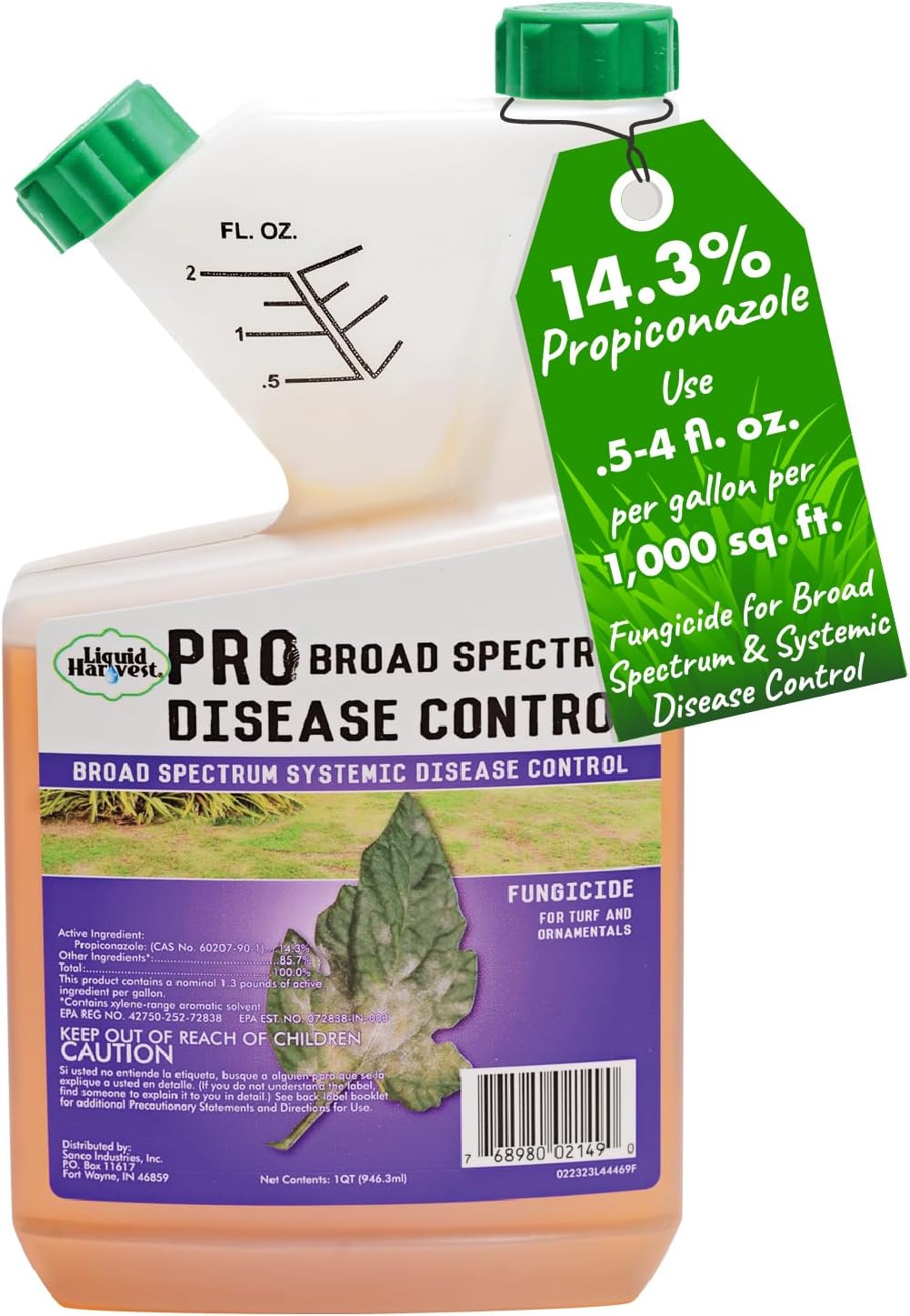
Liquid Harvest Pro Broad Spectrum Disease Control Fungicide, 32 oz
| Liquid Volume | 32 fluid ounces |
|---|---|
| Item Form | liquid |
| Target Species | Fungus |
| Active Ingredients | Propiconazole |
Liquid Harvest Pro Broad Spectrum Disease Control is a concentrated liquid fungicide that uses 14.3% propiconazole to prevent and treat a wide range of fungal diseases on turf, ornamentals, and landscape plants. It is typically mixed into a spray at label rates (0.5 to 4 fl. oz. per 1,000 sq ft depending on target) and applied as a foliar spray or used for root injection where labeled. The systemic activity means treated plants can get longer residual protection and improvement in existing infections such as rust and leaf spot. Practical benefits include compatibility with many herbicides and insecticides and a dose range that lets you scale from preventative maintenance to curative treatments. Important limitations are that correct disease identification and adherence to label dosing are required for effective control, and safety instructions must be followed until spray deposits dry. This product is best used by gardeners who want reliable, professional-style control of foliar fungal diseases and are comfortable following fungicide label directions.
Best for: Gardeners and groundskeepers who prioritize proven, performance-oriented control of foliar fungal diseases on ornamentals and want a systemic product they can dose for preventative or curative applications.
Less Ideal for: Casual gardeners unwilling to follow label directions or those seeking an organic, non-chemical option for disease control.
- Contains 14.3% propiconazole for systemic, long-lasting control of many foliar diseases
- Flexible dosing range (0.5–4 fl. oz. per 1,000 sq ft) for preventative or curative use
- Labeled for turf and a variety of ornamentals, making it suitable for daylilies and mixed plantings
- Compatible with many herbicides and insecticides for integrated programs
- Requires accurate disease ID and proper dosing from the label for best results
- Not a one-step fix for severe infections; repeated applications may be needed per label
Verdict: Choose this concentrated propiconazole fungicide when you need reliable, professional-grade control of rust and other foliar diseases on daylilies and ornamentals.
BioAdvanced 3-in-1 Insect, Disease & Mite Control Spray, 24 fl oz

| Unit Count | 24 Fluid Ounces |
|---|---|
| Item Form | Spray |
| Liquid Volume | 24 fluid ounces |
| Active Ingredients | 0.012% Imidacloprid, 0.014% Tau-fluvalinate, 0.015% Tebuconazole |
| Specification Met | EPA |
This ready-to-use BioAdvanced 3-in-1 spray combines an insecticide, miticide, and fungicide for broad protection on ornamental plants, including orchids listed among similar use sites. It is applied with a trigger sprayer to foliage and blooms, killing aphids, caterpillars, Japanese beetles and controlling spider mites on contact while the systemic components provide rainproof protection for up to 30 days. The inclusion of a fungicide helps manage common diseases such as powdery mildew and black spot, which can benefit orchids prone to fungal problems in humid conditions. Practical benefits are ease of use, multi-target control in one bottle, and coverage for dozens of plants per container. Important limitations are that the formula contains systemic insecticides so it must be used according to label directions and is not allowed for sale in several states, and specific orchid suitability is not detailed on the label so spot-testing on a few plants is prudent before wide application. Expect good short-term control but follow safety and timing guidance for flowering plants.
Best for: Home gardeners who want a single, easy-to-use product to manage common insect pests, mites, and fungal issues on ornamental plants and potted specimens while minimizing application time.
Less Ideal for: Specialist growers who require orchid-specific products or organic/chemical-free controls should consider targeted or softer alternatives tailored to sensitive species.
- Combines insect, mite, and fungal control in one ready-to-use spray for simplified treatment.
- Trigger-spray applicator makes spot and foliar application easy for container and potted plants.
- Systemic, rainproof protection that can last up to 30 days reduces reapplication frequency.
- Covers many common pests on ornamentals including aphids, caterpillars, Japanese beetles, and spider mites.
- Label does not list detailed directions specific to orchids so compatibility with sensitive species is not guaranteed.
- Not available for sale in several states which limits access depending on location.
- Contains multiple active ingredients so users must follow safety precautions and withholding periods for bloom treatments.
Verdict: A convenient all-in-one ready-to-use spray for casual orchid and ornamental growers who want combined insect, mite, and disease control with minimal fuss.
Bonide Fung-Onil Multi-Purpose Fungicide Concentrate, 16 oz

| Item Form | Other |
|---|---|
| Target Species | Fungicide |
| Special Features | organic |
| Liquid Volume | 16 fluid ounces |
Bonide Fung-Onil is a concentrated chlorothalonil-based fungicide designed to prevent and control a wide range of fungal problems in the garden. You mix the 16 oz concentrate with water according to the label and apply it with standard sprayer equipment to affected foliage. It is labeled for use on vegetables, fruits, ornamentals, shrubs, trees and similar garden plants, so it fits into routine disease-management for mixed borders like daylilies. The key benefit is broad-spectrum activity against leaf spot, rust, blight, mildew and other common pathogens, which makes it a practical option when you need reliable coverage across different plants. As a concentrate it stretches farther than ready-to-use sprays, which helps a budget-conscious gardener treat multiple plants or repeat applications during an active disease season. Important limitations are that it is a contact fungicide requiring thorough coverage and repeat applications for control, and users must follow label safety precautions and restrictions for edible crops and bloom periods.
Best for: Gardeners who want a cost-effective, multipurpose fungicide to protect mixed beds and ornamentals like daylilies without buying multiple specialized products.
Less Ideal for: People who prefer systemic fungicides, organic-only growers who avoid chlorothalonil, or growers who need a no-mix ready-to-use product.
- Broad-spectrum chlorothalonil formula effective against rust, leaf spot, blight and mildew
- Concentrate form mixes with water so one bottle can treat many plants
- Labeled for use on a wide range of garden plants including ornamentals and vegetables
- Well-known, longstanding brand with clear label instructions
- Contact mode of action means thorough coverage and repeated applications are required for good control
- Contains chlorothalonil which requires observing safety precautions and specific crop-use restrictions
Verdict: A concentrated, budget-friendly broad-spectrum contact fungicide that stretches across many garden uses and is suitable for treating daylily rust when thorough coverage is applied.
Monterey Liqui-Cop Copper Fungicide Concentrate, 8 oz

| Unit Count | 8 Fluid Ounces |
|---|---|
| Item Form | Liquid |
| Target Species | Fungus |
Monterey Liqui-Cop is a concentrated copper-based fungicide formulated to prevent common fungal diseases by coating plant surfaces with a rain-fast gel film. Mix the concentrate with water and apply as a spray to thoroughly cover leaves and stems; because copper fungicides are preventative rather than curative, routine applications timed before or at first signs of infection give the best protection. Notable features include broad-spectrum activity against leaf spots, blight, downy mildew and similar pathogens and a gel formulation that helps the product remain on foliage after light rain. In practice it is useful for protecting beds of susceptible perennials such as daylilies from rust when applied on a regular schedule and after removing heavily infected foliage. Handling requires basic PPE and careful mixing according to the label since copper can be irritating to skin and plant tissue if overapplied. The product is not a quick fix for already advanced infections and must be applied thoroughly and repeatedly for seasonal control, and users should follow label rates to avoid phytotoxicity on sensitive varieties.
Best for: Gardeners who prioritize dependable seasonal disease prevention and will schedule preventive sprays and follow label directions to protect susceptible ornamentals like daylilies.
Less Ideal for: Those seeking a curative, one-application fix for severe, established infections or gardeners unwilling to wear basic protective gear and follow mixing instructions.
- Broad-spectrum prevention against many foliar fungal diseases relevant to ornamentals and vegetables
- Gel formulation provides improved rain-fastness compared with plain liquids
- Concentrate form lets you mix only the amount you need for targeted treatments
- Suitable for use on a wide range of plants including ornamentals where daylily rust is a concern
- Preventative product only and will not cure advanced infections
- Requires careful mixing and protective gear during handling to avoid irritation
Verdict: Use this copper concentrate for reliable, rain-fast preventative protection of daylilies and other ornamentals when applied thoroughly and on a preventative schedule.
Bonide Captain Jack Copper Fungicide 16 oz Concentrate

| Unit Count | 16 Ounce |
|---|---|
| Item Form | Liquid |
| Target Species | Fungus |
| Active Ingredients | Copper Octanoate (Copper Soap) |
Bonide Captain Jack Copper Fungicide is a liquid concentrate designed to prevent and treat a broad range of fungal diseases on vegetables, fruits, ornamentals, and turf. Mixed with water per label directions, it is sprayed onto plant surfaces, including tops and undersides of leaves, and can be applied up to the day of harvest, which makes it practical for food crops like tomatoes. The active ingredient copper octanoate provides contact protection against powdery mildew, blight, black spot, rust, peach leaf curl and similar diseases. Application is straightforward and repeatable every 7 to 10 days as needed, and the product is cleared for use in organic gardening. Limitations to consider are that copper is a contact fungicide so it does not systemically move through the plant and works best as a preventative or early-treatment tool rather than curing severe systemic infections. Users should follow safety directions and avoid overuse to reduce copper buildup in soil.
Best for: Gardeners looking for a performance-focused, organic-approved fungicide to include in a preventative disease program for tomatoes and other edibles.
Less Ideal for: Growers seeking a systemic treatment for already advanced internal infections or those who prefer non-copper chemistries to avoid soil accumulation.
- Approved for organic gardening and can be used up to the day of harvest
- Controls a wide range of common diseases affecting tomatoes such as blight and powdery mildew
- Concentrated liquid formula mixes with water for spray application
- Repeatable 7–10 day application schedule makes preventative programs easy to maintain
- Acts as a contact fungicide and does not move systemically within the plant
- Repeated use can contribute to copper accumulation in soil if not managed
Verdict: Use this organic-approved copper concentrate when you want an effective, easy-to-apply preventative spray to protect tomatoes from common fungal diseases.
Bonide Captain Jack's Liquid Copper Fungicide Ready-to-Use, 32 oz

| Item Form | Spray |
|---|---|
| Unit Count | 32 Ounce |
| Active Ingredients | copper |
Bonide Captain Jack’s Liquid Copper Fungicide is a trigger-spray, ready-to-use copper treatment designed to control common fungal diseases such as black spot, powdery mildew, blight and peach leaf curl. It is applied by shaking and thoroughly spraying tops and undersides of leaves every 7 to 10 days or as needed, and the label allows application up to the day of harvest on listed edible plants. The product’s copper active ingredient makes it broadly effective against many foliar diseases and the convenient spray bottle removes the need to mix concentrates. Practical benefits include organic approval for many uses and clear directions for repeat treatments, which helps with consistent disease management. Important limitations are that it is a contact-style copper spray rather than a systemic cure, so thorough coverage and repeated applications are required for control, and care must be taken to follow label directions to avoid phytotoxicity on sensitive varieties.
Best for: Gardeners who prioritize established, proven solutions and want an organic-approved spray that controls common foliar diseases on roses and other plants with minimal setup.
Less Ideal for: Growers looking for a systemic fungicide or a single-application cure for long-term prevention should consider alternatives with systemic activity.
- Ready-to-use trigger spray for easy application without measuring or mixing
- Approved for organic gardening and label allows use up to day of harvest on listed edibles
- Effective copper active ingredient against a wide range of foliar fungal diseases including black spot
- Clear instructions for treatment interval make follow-up applications straightforward
- Contact-action copper requires thorough coverage and repeat sprays rather than a one-time systemic fix
- Potential for phytotoxicity on some sensitive plants if label directions are not followed
Verdict: A ready-to-use, organic-approved copper spray that provides reliable contact control of black spot and other foliar diseases when applied thoroughly and on schedule.
Choosing the Right Fungicide for Daylily Rust: Key Factors to Consider
Active Ingredient Mode of Action
Understanding the active ingredient and its mode of action matters because rust fungi can develop resistance when a single mode is used repeatedly. Rotate products with different modes of action across a season to preserve efficacy. Some act on fungal cell walls, others disrupt metabolic pathways. Knowing the chemistry helps you plan a rotation schedule and avoid repeated use of the same class.
Also consider systemic versus contact activity. Systemic fungicides move within plant tissue and can protect new growth after application, while contact fungicides coat surfaces and protect only where sprayed. Systemics may give longer control but sometimes carry stricter use instructions around bloom time and pollinators.
Labeling for Ornamental Use and Flower Safety
Always check the product label for explicit instructions for use on flowering perennials and daylilies when listed. Labels indicate whether the product is safe to apply during bloom, specifies pre-harvest or reentry intervals, and notes any risk of foliar or petal burn.
A label that permits application to ornamentals and provides clear dosing guidance reduces the chance of harming flowers or causing unsightly spotting. If instructions are vague or the label omits ornamentals, avoid using the product on showy blooms.
Residual Period and Reapplication Frequency
Residual activity determines how long a single spray will suppress rust development and protect new leaves. Short-residual contact products may need reapplication every 7 to 10 days in high-pressure situations, while longer-residual systemic options can extend intervals to 14 days or more depending on conditions.
Frequent applications increase labor and can raise the chance of phytotoxicity or inadvertent pollinator exposure. Match the residual profile to your garden's infection pressure and your willingness to spray regularly.
Application Method and Coverage
Good coverage is essential because rust spores land and germinate on leaf surfaces. Choose a formulation and applicator that let you reach the undersides of daylily leaves and the crown where spores accumulate. Sprays, drenches, and ready-to-use hose-end options vary in how well they coat foliage.
Foliar sprays require even pass coverage; coarse or low-pressure sprays may miss undersides. Pick an application method that you can execute reliably across your planting layout.
Safety for People, Pets, and Pollinators
Consider toxicity and labeled precautions to protect household members, pets, and visiting pollinators. Many fungicides require avoiding application during bloom or limiting use to times when bees are not active. Follow label guidance on reentry intervals and personal protective equipment.
Lower-risk products still require proper handling and disposal. If you garden near pollinator habitat, prioritize choices with minimal impact on bees and beneficial insects and time applications for early morning or late evening when pollinator activity is low.
Timing Relative to Disease Cycle and Weather
Rust control is more effective when timed to the disease cycle and prevailing weather. Rust spores need moisture to germinate, so watch weather forecasts and apply protectants before wet periods. Curative products work better on early symptoms; heavy infections may require multiple passes.
Understanding seasonal pressure in your yard lets you set a preventive program in spring and early summer, when new foliage is most susceptible.
When to Treat Daylilies for Rust
Treat at the first sign of rust pustules on leaf undersides or when spotting becomes visible on the top surface. Early action limits spore production and slows spread to neighboring clumps.
Also plan preventive treatments before extended wet spells or heavy morning dew. In climates with repeated humidity, a short rotation of protectant sprays during peak growth significantly reduces cumulative damage over the season.
- Inspect foliage weekly during warm, humid weather.
- Target the undersides of leaves and the crown when applying sprays.
- Start preventive applications when rust has been a problem in previous seasons.
Cultural Practices That Reduce Rust Pressure
Good garden hygiene complements fungicide use and often reduces the need for repeated sprays. Remove and dispose of heavily infected leaves to lower local spore counts. Avoid composting symptomatic material unless your composting process reaches high enough temperatures to kill spores.
Improve air circulation by spacing clumps appropriately and removing excess foliage around the base. Reduce overhead irrigation because leaf wetness encourages rust development. Water at the soil level to keep foliage dry whenever possible.
- Thin crowded clumps in spring to improve airflow.
- Mulch to prevent soil splash but keep mulch off crowns.
- Sanitize shears between cuts when working in infected areas.
Application Tips to Maximize Control
Aim for even coverage on both leaf surfaces and the crown. Tilt spray nozzles or use a sprayer with adjustable pressure to reach leaf undersides where rust pustules begin. Apply during calm conditions to avoid drift and to allow droplets to adhere.
Follow label mixing instructions exactly and avoid tank mixes unless explicitly allowed. Test a small area if you are uncertain about plant sensitivity, especially on prized cultivars. Track applications in a notebook to manage rotations and reapplication intervals.
- Apply in early morning or late evening to reduce bee exposure.
- Wear gloves and eye protection when mixing and spraying.
- Rinse sprayer thoroughly after use and dispose of rinsate per label instructions.
Integrating Fungicides with Seasonal Care
Fit fungicide use into your regular seasonal routine. Start inspections in early spring and prioritize treatments during new-leaf expansion when plants are most vulnerable. Pair chemical controls with sanitation and cultural adjustments for longer-term suppression.
Keep records of which active ingredients you use each season and rotate modes of action to reduce resistance risk. In low-pressure years, maintain vigilance but reduce spray frequency to minimize inputs.
- Coordinate sprays with fertilizer and other maintenance tasks to limit multiple interventions on the same day.
- Avoid heavy nitrogen late in the season, which can encourage tender growth that is more susceptible to infection.
Safe Disposal and Storage
Store fungicides in their original containers, locked away from children and pets, and out of direct sunlight. Keep product labels intact for reference to mixing, application, and emergency instructions.
Dispose of leftover product and rinsate according to local regulations and label directions. Never pour concentrated solutions down drains or into waterways. Proper storage and disposal protect people and the surrounding environment.
- Keep an up-to-date inventory of garden chemicals and purchase only what you will use within a reasonable timeframe.
- Follow local hazardous-waste guidelines for unwanted containers and unused product.
How We Chose the Best Fungicide for Daylily Rust
We prioritized products with documented effectiveness against rust pathogens common on ornamental daylilies and similar perennials. Efficacy under realistic garden conditions was the first filter, including rapid symptom suppression and reduction of spore production. We also weighed plant safety, favoring options formulated or labeled for use on flowering perennials and that minimize foliar burn or flower injury. Residual activity and reapplication interval mattered because shorter protection windows mean more labor and higher spray frequency. Ease of application was another practical criterion: ready-to-use or simple dilution and the ability to spray under typical backyard conditions scored higher. Environmental and pollinator considerations were factored in, emphasizing products with lower toxicity profiles and clear labeling about bloom-time restrictions. We excluded products lacking clear labeling for ornamental use or those indicated only for agricultural crops. Products with insufficient public efficacy data, unclear active ingredient information, or known high risk of phytotoxicity on ornamental flowers were not considered. The resulting list reflects a balance of control, safety, and usability for home gardeners managing daylily rust.
FAQ
Can I use a general garden fungicide on daylilies with rust?
Often a general garden fungicide labeled for ornamentals will work on rust if the label includes rust or rust pathogens. Check the label for ornamental use and any bloom-time restrictions. If the label is unclear, choose a product explicitly labeled for rust on flowering perennials.
How often should I reapply fungicide during a rust outbreak?
Reapplication frequency depends on the product's residual activity and weather. Contact products often need applications every 7 to 10 days under high disease pressure, while some systemics allow longer intervals. Follow label intervals and reapply sooner if heavy rain removes the spray.
Will removing infected leaves stop rust on daylilies?
Removing heavily infected leaves reduces local spore load and helps slow spread, but it rarely eliminates the disease on its own. Combine sanitation with appropriate fungicide timing and cultural changes like improved airflow for best control.
Are systemic fungicides safe to use when daylilies are in bloom?
Safety varies by active ingredient and label directions. Some systemics permit application during bloom with precautions, while others restrict use to nonflowering periods. Always follow label guidance and consider pollinator activity when treating blooming plants.
Can rust return after treatment?
Yes. Rust can reappear if conditions remain favorable or nearby infected plants continue to produce spores. Regular monitoring, cultural sanitation, and a planned rotation of control methods help reduce the chance of recurrent outbreaks.
Final Verdict
Choose a fungicide for daylily rust by balancing control strength, plant safety, and application practicality. Prioritize products labeled for ornamentals and that offer a suitable residual period for your garden's infection pressure. Combine chemical control with sanitation and cultural practices to reduce repeat infections and limit spray frequency. Rotate modes of action and time applications to avoid pollinator exposure. With measured use and good cultural care, you can keep rust from diminishing blooms while protecting plant health and the surrounding garden ecosystem.
