

Note: This article contains affiliate links. If you click on these links and make a purchase, I may earn a small commission at no extra cost to you. This helps support my research and content. Read my full affiliate disclosure here.
A good garden fence does more than mark property lines. It keeps out pests, supports climbing plants, protects young trees and beds from wind, and creates a tidy visual frame for your yard or vegetable patch. Choosing the right fence impacts how long it lasts in outdoor conditions, how much upkeep you will need, and how well it integrates with planting and access patterns. This guide covers seven shortlisted garden fences chosen for common home-garden situations. We evaluate options based on material longevity, installation complexity, and how each style performs around beds, borders, and small-acreage yards. Read on to see which functional features and tradeoffs matter most for your space before the product list below.
Top Picks at a Glance
| Best Overall The best all-around choice for most situations | KYATE No-Dig Garden Animal Barrier Fence, 30 Panels (42.5 ft) |  |
| Best Quality Built to a higher standard if you want something more solid | FXW No-Dig Metal Garden Fence with 16 Panels and 2 Gates |  |
| Best Value The sweet spot between price and what you get | Goovilla Metal Garden Fence Panels, 10-Pack (Total 10 ft) |  |
| Best Budget The cheapest option that still gets the job done reliably | Pvpy Yvrd 17 in x 10 ft Garden Border Fence, 10-Panel Rust-Resistant Metal |  |
| Highest Rated A top-rated pick with lots of positive feedback | Petorldog 40-inch Metal Garden Fence with Gate, 16-Panel Animal Barrier |  |
| Most Popular A crowd favorite that many people choose with confidence | AVELOTUUG 42.5 ft No-Dig Animal Barrier Garden Fence (30 Panels) |  |
| Best Seller A high-volume bestseller chosen again and again | Feitore 7 x 100 ft Polypropylene Garden Netting with Reinforced Edges |  |
KYATE No-Dig Garden Animal Barrier Fence, 30 Panels (42.5 ft)

| Material Type | Metal |
|---|---|
| Number of Pieces | 30 |
| Unit Count | 42.5 Feet |
This KYATE garden fence is a no-dig metal barrier made from welded wire panels that link together to create a 42.5-foot protective border around flower beds, vegetable patches, or patios. Each of the 30 panels is about 13 inches high with roughly 1.57-inch gaps, which keeps out rabbits, cats, small dogs and other small burrowing animals while remaining unobtrusive in the landscape. The panels use cable ties for assembly, and the kit includes gloves and wire cutters to trim excess ties, so installation is straightforward in soft or pre-moistened soil without tools. A rust-resistant coating and reinforced double-layer welds improve durability for outdoor exposure, though the low height means it is not intended to restrain medium or large dogs. The fence is best used as a perimeter for raised beds, border edging, or short-term seasonal protection; it is lightweight and flexible enough to shape around curves but will need careful anchoring in very loose soil or high-traffic areas. For gardeners who want a simple, tidy animal barrier that installs quickly and blends into planting edges, this is a practical option.
Best for: Gardeners who want a simple, low-visibility barrier to protect beds and borders from small animals and prefer an easy no-dig installation.
Less Ideal for: Homeowners needing a tall or heavy-duty fence to contain or deter medium to large dogs or to withstand heavy-impact areas.
- Long total length (42.5 ft) covers extensive borders with 30 linked panels
- No-dig installation using cable ties makes setup quick and tool-light
- Welded metal wire with anti-rust coating increases outdoor durability
- Narrow, low-profile height blends into garden beds without blocking sight lines
- Low height and light construction are not suitable for medium or large dogs
- May require extra anchoring or soil preparation in very hard or loose ground
Verdict: A quick-to-install, rust-resistant no-dig fence that efficiently protects beds and borders from rabbits and other small animals.
FXW No-Dig Metal Garden Fence with 16 Panels and 2 Gates
| Material Type | Metal |
|---|---|
| Unit Count | 118.54 Square Feet |
| Number of Pieces | 16 |
| Included Components | 2pcs Gates |
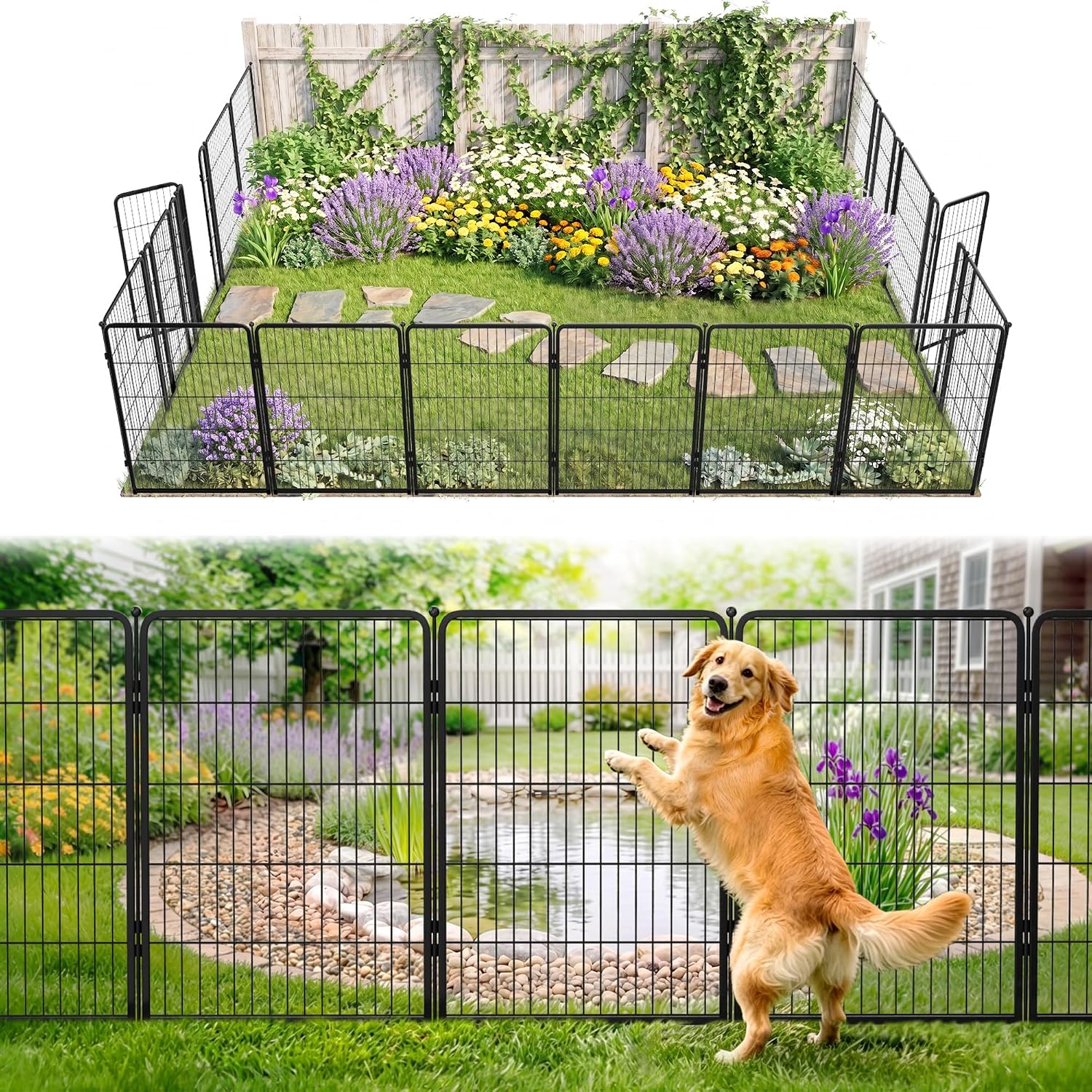
This FXW no-dig garden fence is a metal panel kit intended to form a low-maintenance barrier around lawns, flower beds, or pet areas. It arrives as multiple linked panels with included metal stakes and two gates so you can shape runs up to roughly 36.4 feet long without digging posts. The powder-coated iron panels and welded wire mesh provide a rigid, visible barrier that resists dogs and small wildlife while still allowing sightlines through the yard. Setup is tool-free: align adjacent panel rings and insert the stakes to lock panels in place, and the rounded stake tips reduce the chance of injury during installation. Notable benefits are its configurable layout and heavier construction compared with plastic alternatives, which helps it stand up to active pets and light impacts. Important limits are its modest height—best for small dogs and critter control rather than livestock—and the no-dig stakes rely on firm soil for stability so performance can vary in very loose or frozen ground. The included gates improve access but the system is not intended as a permanent, load-bearing fence for high-security needs.
Best for: Buyers who want a robust, easy-to-install perimeter for gardens and small-pet areas and prioritize durability and configurability over permanent post installation.
Less Ideal for: Those needing a high-security or tall livestock fence or anyone who requires maximum stability in very soft or frozen ground should consider more permanent post-and-concrete systems.
- Durable powder-coated iron construction with welded panels for better rigidity than plastic fencing
- Tool-free assembly with stake-and-ring connectors for quick reconfiguration
- Includes gates for convenient access without dismantling the fence
- Wire-mesh design preserves sightlines while blocking small animals
- Height around 40 inches is insufficient for large or jumping dogs
- Stake-mounted no-dig system can be less stable in very loose, rocky, or frozen soils
Verdict: If you want a heavy-duty, reconfigurable no-dig fence that holds up to active pets and protects flower beds, this FXW metal panel kit is a practical choice.
Goovilla Metal Garden Fence Panels, 10-Pack (Total 10 ft)

| Number of Pieces | 10 |
|---|---|
| Included Components | Zip ties, instruction and plastic connector |
| Material Type | Metal |
| Unit Count | 21.02 Square Feet |
The Goovilla 10-piece metal garden fence is a no-dig decorative barrier meant to protect flower beds, vegetable patches, and small areas of lawn from small critters and light foot traffic. Each arched panel connects with included S-clips or zip ties so you can form straight runs or curves and adjust the layout as needed. The panels are made from coated metal with pointed feet designed to insert into soil for stability and resistance to being knocked over. Practical touches include a black rustproof finish that resists weather and is simple to wipe clean, plus two thicker stakes per panel to help prevent digging under the fence. This fence works well as a temporary or seasonal border, pet containment for small animals, or to keep rabbits and raccoons out of planting areas. It is not intended to block large animals or prevent determined diggers long-term, and the low height limits use where taller containment is required. Installation is straightforward but may require firm soil for the pointed feet to hold securely.
Best for: Buyers who want a low-maintenance, movable border to protect flower beds or small vegetable plots and who prioritize easy installation and tidy landscaping appearance.
Less Ideal for: People needing tall or heavy-duty livestock fencing or long-term protection against determined diggers and large animals should consider sturdier, higher solutions.
- Rust-resistant coated metal construction for year-round outdoor use
- Includes S-clips and zip ties for flexible, tool-free connections
- Pointed feet and thicker stakes improve ground stability and dig resistance
- Arched decorative design improves curb appeal while acting as a barrier
- Low overall height limits protection against larger animals and climbing pets
- Requires firm or workable soil for the pointed feet to hold securely
Verdict: A practical, rustproof set of low-profile metal panels that delivers fast, tool-free protection and a neat decorative border for small gardens.
Pvpy Yvrd 17 in x 10 ft Garden Border Fence, 10-Panel Rust-Resistant Metal

| Material Type | Metal |
|---|---|
| Number of Pieces | 10 |
| Item Highlight | Garden Fencing Animal Barrier,Decorative Garden Fence for Flower,Yard Outdoor Patio Decor with Ground Stake |
This Pvpy Yvrd garden border is a straightforward, budget-friendly solution for edging flower beds and keeping small pets and pests out of planting areas. The kit includes ten 17-inch-high metal panels that stake directly into soil and link together, so you can form straight runs or simple shapes without tools. The panels have a rust-resistant coating and pointed decorative tops that add a classic look while helping the fence resist weathering. For casual garden use the iron construction feels sturdy enough to withstand light knocks and typical outdoor exposure. Limitations are its low height and lightweight stakes, which make it unsuitable for large or determined animals and less reliable in very loose or rocky soil. Installation is fast and the appearance is neater than loose wire or plastic edging, making it a good pick when you want a tidy, low-cost perimeter for beds, pathways, or patios.
Best for: Gardeners looking for an inexpensive, attractive way to define beds and deter small pests who value quick, tool-free installation and a tidy finished edge.
Less Ideal for: Those who need a tall, secure barrier for large animals or who require heavy-duty fencing for livestock or high-traffic erosion control.
- No-tool installation with stake-in panels for quick setup
- Rust-resistant coating designed to withstand rain and sun
- Decorative pointed-top design that improves garden appearance
- Ten panels allow flexible layouts for beds, borders, and small patios
- Low height and light stakes are not effective against large or determined animals
- May not hold well in very loose, sandy, or rocky soils without additional anchoring
Verdict: A low-cost, rust-resistant metal border that quickly creates a neat, decorative perimeter to protect beds from small pets and pests.
Petorldog 40-inch Metal Garden Fence with Gate, 16-Panel Animal Barrier

| Material Type | Metal |
|---|---|
| Number of Pieces | 16 |
This Petorldog metal garden fence is a straightforward, reliability-minded barrier for protecting flower beds and small-pet areas. The kit includes 16 welded-wire panels with closely spaced mesh that prevents puppies, rabbits, and chickens from slipping through while still keeping sight lines open. A built-in gate gives easy access for planting, watering, or feeding without disassembling the fence, and the reinforced metal frame improves rigidity compared with flimsy hobby fencing. Installation uses ground stakes for a no-dig setup, so you can shape straight runs or curves and reposition panels seasonally. Expect a sturdy, low-maintenance border that resists typical backyard wear, though it is a light-standing fence best for keeping small animals contained rather than stopping determined diggers or large dogs. If you need a decorative, reliable garden edge that is simple to install and maintain, this fence performs well for that role.
Best for: Gardeners who prioritize a dependable, low-maintenance border to protect plants and contain small pets and who want a fence that is quick to install and easy to reposition.
Less Ideal for: Owners who need a permanent, heavy-duty kennel or a barrier for large, strong dogs should look at more robust, anchored fencing options.
- Closely spaced welded-wire mesh prevents small animals from slipping through
- Built-in gate provides convenient access without disassembling panels
- Reinforced metal frames increase durability compared with thin decorative fences
- No-dig ground stakes allow quick, adjustable installation and flexible layouts
- Not designed to stop large dogs or animals that dig under the fence
- Lightweight no-dig installation can be less stable in very soft or uneven soil
Verdict: Choose this metal, mesh-panel fence when you want a reliable, easy-to-install border that keeps small animals out and gives convenient gate access for regular garden work.
AVELOTUUG 42.5 ft No-Dig Animal Barrier Garden Fence (30 Panels)

| Material Type | Metal |
|---|---|
| Number of Pieces | 30 |
| Unit Count | 42.5 Feet |
| Included Components | Gloves, 30 panels, cable zip ties, cutting pliers |
This metal no-dig garden fence is sold as a 30-panel kit that links together to create a 42.5-foot barrier designed to stop dogs and small animals from digging under or entering garden beds. The panels are welded with a three-cross-wire pattern for added stiffness and the bottom edges are pointed so you can press or tamp them into soil without trenching. Installation uses cable ties to join panels, and the kit includes gloves and cutting pliers to speed setup and trim excess ties. The baked anti-rust coating and heavier welding make it suitable for outdoor exposure and give it a sturdier feel than lightweight decorative stakes. Expect it to work well as a gap filler under an existing fence, a border around flower beds, or a low decorative perimeter. It is not a tall security fence and will not stop larger animals or determined diggers who can push or lift panels, so pair it with a stronger barrier if you need high security.
Best for: Buyers who want a straightforward, no-dig solution to keep dogs and small wildlife out of garden beds and to tidy up fence gaps, and who value a durable metal option with included installation tools.
Less Ideal for: Homeowners needing a high, tamper-proof perimeter or who require a permanent buried foundation should consider heavier or taller fencing solutions.
- Long continuous coverage with 30 panels totaling 42.5 feet to fill gaps or edge beds
- Welded three-cross-wire construction for improved stiffness and reduced bending
- Anti-rust baked coating designed to withstand outdoor weather
- Includes gloves, cable ties, and cutting pliers for safer, faster installation
- Low height limits use to small-animal control and decorative edging rather than security
- Cable-tie connections can look utilitarian and may require periodic re-tightening
Verdict: A long, rust-resistant no-dig metal fence kit that reliably fills gaps and protects flower beds from small animals.
Feitore 7 x 100 ft Polypropylene Garden Netting with Reinforced Edges
| Unit Count | 100 Feet |
|---|---|
| Mesh Opening | 3/4" square mesh |
| Material Type | Polypropylene |
| Included Accessories | 10 stakes and 50 zip ties |
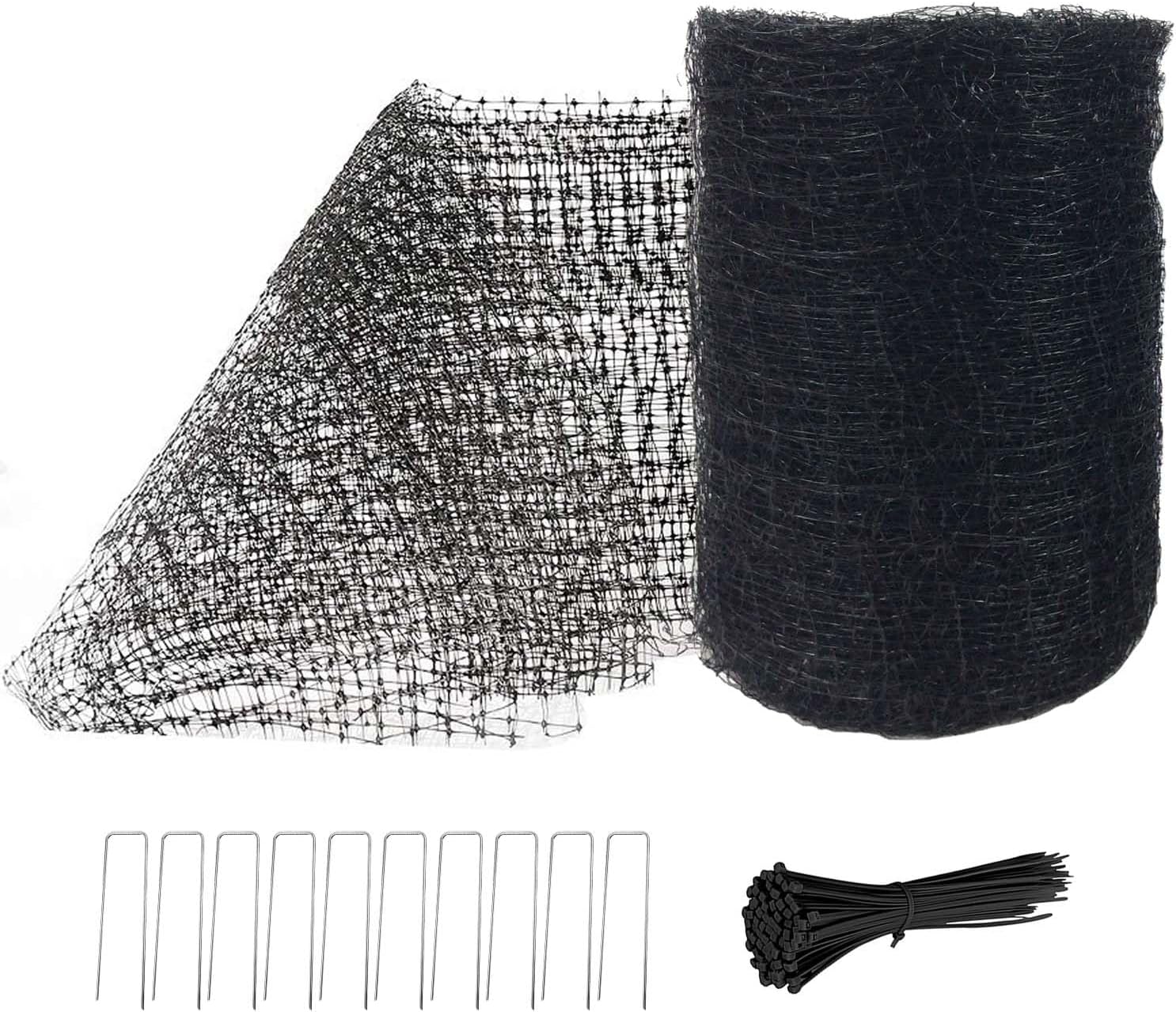
This polypropylene garden netting unrolls to cover a large area and is intended to keep birds, rabbits and other small animals away from fruiting plants and raised beds. Typical use is to drape or surround plants and secure the top and bottom edges with stakes, U-shaped staples or zip ties; the package includes 10 staples and 50 cable ties to simplify installation. The 3/4 inch square mesh stops pecking on berries and small fruit without tightly restricting plant growth, while the reinforced edge bands make it easier to anchor the net and reduce tearing. Because the material is UV-stabilized and rot resistant it can be reused season after season, and it is easy to cut to fit irregular beds or individual shrubs. Limitations are that the net is lightweight so very determined larger animals can push through unless supported by stakes or a frame, and it requires some effort to tension neatly over tall or heavily branched plants.
Best for: Buyers who want a low-maintenance, reusable way to protect fruits and vegetables from birds and small mammals and prefer a straightforward install with included accessories.
Less Ideal for: People who need a heavy-duty physical barrier against deer or large wildlife or who want a permanent, self-supporting fencing solution.
- Large 7 x 100 ft coverage suitable for protecting multiple beds or a small orchard area
- 3/4" square mesh that prevents bird pecking while allowing light and water through
- Reinforced top and bottom edges for easier anchoring and reduced tearing
- Made from UV-stabilized, rot-resistant polypropylene for seasonal reuse
- Includes installation accessories (U-staples and cable ties) to get started immediately
- Lightweight construction needs stakes or a frame to stop larger browsing animals
- Black color can absorb heat in full sun which may be noticeable on very hot days
Verdict: A simple, reusable large-roll net that reliably keeps birds and small animals off fruit and vegetable plantings when tensioned and anchored properly.
Choosing the Right Garden Fence: Key Factors to Consider
Material and Finish
The base material determines how long a garden fence will last in outdoor conditions. Wood looks natural but needs regular sealing or staining to resist rot and insect damage, especially where posts contact soil. Metal options such as galvanized steel or aluminum resist decay better but can rust if coatings are damaged. Plastic and composite materials avoid rot and rust, but exposure to UV and temperature swings can cause brittleness or fading over many seasons.
Finish choices further affect longevity. Pressure-treated wood, powder-coated metals, and UV-stabilized plastics extend service life. Consider local climate: humid or wet sites favor nonrot materials or raised post installations. Where longevity matters, prioritize treated materials and finishes designed for ground contact and UV exposure.
Installation Complexity
Installation demands influence time, cost, and whether you can DIY the fence. Simple panel-and-post systems that slot into predrilled holes or come with concrete-free post anchors are faster for a single gardener to install. In-ground posts set in concrete give firmer support but require digging, mixing concrete, and more time. Gate integration also raises complexity: a fence with a preframed gate or adjustable hardware simplifies adding an access point.
Evaluate site conditions: rocky soil, slopes, or existing hardscapes may require specialized anchors or professional help. If you plan to install the fence yourself, look for systems with clear instructions, modular panels, and easily sourced replacement hardware.
Height and Barrier Performance
The fence height and mesh or picket spacing determine how well it keeps out common garden pests and animals. Low decorative fences stop foot traffic and define beds but do little against rabbits or deer. Tight mesh or taller panels are necessary where small mammals are a problem. For deer-prone areas, higher panels or additional deterrents are required, while chicken or rabbit enclosures need small-gauge mesh and secure ground anchoring to prevent burrowing.
Consider not just peak height but lower clearances. Animals can push under poorly seated panels, so plan for buried skirts or ground anchors where persistent digging or burrowing occurs.
Maintenance and Repairability
Regular maintenance determines long-term ownership effort. Wood fences typically need periodic staining, painting, and board replacement. Metal fences may only require occasional touch-up paint for scratches and inspection for loose fasteners. Plastic or composite fences require the least routine care but can be harder to repair when panels crack; replacement parts should be easy to source.
Look for designs where damaged sections can be swapped out without dismantling large spans. Consider the availability of replacement posts, panels, and connectors. Also factor in how easy it is to clean the fence after planting season, especially if it supports twining vines or is near soil that splashes.
Plant Compatibility and Garden Integration
A garden fence often does double duty as a support for climbers or a backdrop for border plants. Slatted and lattice styles provide attachment points for vines and can increase vertical growing space for peas, beans, and ornamental vines. Solid panels offer wind screening but reduce airflow and light for adjacent plants, which can matter for sun-loving beds.
Think about spacing between the fence and planted rows to allow for maintenance and mower access. If you plan to train plants on the fence, choose a structure with secure attachment points and enough load-bearing capacity to handle wet growth after rain.
Visual Style and Site Context
The fence should support the visual character of your garden without creating maintenance headaches. Natural wood suits cottage or traditional gardens but shows wear sooner. Clean-lined metal or composite panels complement modern spaces and often require less upkeep. Transparency is another aesthetic choice: open pickets preserve sightlines and neighbor relationships, while solid panels offer privacy and wind protection.
Also consider how the fence interacts with pathways, gates, and existing structures. A well-chosen style enhances curb appeal and keeps sightlines for monitoring garden beds and irrigation systems.
Fencing Options by Garden Size and Use
Different garden sizes and uses call for different fence solutions. Small raised beds and container gardens often need low edging or short picket-style fencing to keep out small animals and define space without blocking light. Larger yards that need perimeter protection should use taller panels or mesh with secure posts to deter larger mammals and provide more privacy.
Think about multipurpose solutions for mixed-use yards. A fence that serves as a trellis can increase planting area in a small garden, while removable or modular panels let you reconfigure space seasonally for tools, composting, or larger harvest access.
- Short picket or scalloped edging for small beds and decorative borders
- Medium-height panels with small-gauge mesh for rabbits and dogs
- Tall panels or combined barriers for deer and privacy needs
- Modular panels for temporary or reconfigurable enclosures
Preparing the Site and Post Options
Proper site preparation prevents many long-term problems. Mark the line of the fence, check for underground utilities, and account for slopes or grade changes. Post spacing depends on the system, but uniform support is important to avoid panel sagging.
Post options influence installation method and longevity. In-ground posts set in concrete provide the most permanent support but make future removal harder. Sleeve or anchor systems that clamp to the ground allow easier removal and reduce concrete use. On rocky or compacted sites, aboveground anchors or surface-mounted posts may be the practical choice.
- Measure and mark property lines before digging
- Use a level and string line to maintain consistent post height
- Consider adjustable post anchors on uneven ground
Gates, Access, and Security Considerations
Gate placement and hardware are part of fence planning. A well-positioned gate improves traffic flow for watering, harvesting, and lawn care. Choose hardware rated for the expected gate weight and frequency of use. Self-closing or latchable gates increase security for children and pets but may add complexity to installation.
Think about lockable options if you need to secure compost or tool storage. For vegetable gardens, a simple latch is usually sufficient, while livestock or high-traffic areas benefit from sturdier latches and closer post spacing to prevent sagging over time.
- Plan gate width to accommodate wheelbarrows or lawn equipment
- Select corrosion-resistant hardware for wet climates
- Match gate style to the fence for consistent operation
Dealing with Wildlife and Pest Pressure
Match the fence design to the animals you need to deter. Small mammals are often stopped by buried mesh skirts or low, close-spaced slats. Rabbits can squeeze through wider pickets, while deer require height rather than tight spacing. Secure anchors and a buried edge help prevent digging under the fence.
Complement structural barriers with planting strategies. Dense groundcover or thorny shrubs near the base of a fence can discourage animals and reduce the need for very tall or heavy-duty fencing. For climbing pests or persistent diggers, reinforce vulnerable areas with additional mesh or rock barriers.
- Install buried skirts to deter burrowing animals
- Use tighter mesh at the base and wider spacing higher up
- Combine living barriers with physical fencing for best results
Seasonal Care and Long-Term Upkeep
Fences require seasonal checks to stay effective. Inspect post stability in spring, tighten any loose fasteners after winter storms, and clear vegetation that can trap moisture against materials. Clean panels to remove algae or dirt that accelerates wear, and touch up protective finishes when corrosion or flaking paint appears.
Plan for eventual component replacement. Keeping spare panels, fasteners, and a small stock of finish makes repairs faster and cheaper. For living fences or designs that support heavy plant growth, prune plants to reduce load on the structure and prevent premature sagging.
- Inspect and tighten hardware annually
- Reapply protective finishes as needed
- Remove climbing growth that stresses the structure
How We Chose the Best Garden Fence
We selected garden fences using practical, garden-focused filters to reflect everyday gardener needs. Primary evaluation criteria included material longevity under outdoor exposure, installation difficulty and required tools, how well the fence performs as a barrier against typical pests and animals, and adaptability to planting-whether it doubles as a trellis or allows clearance for shrubs and mower access. We also considered maintenance demands like repainting or rust prevention and the availability of common replacement parts such as posts or panels. Excluded from consideration were specialist commercial or agricultural perimeter systems that require heavy machinery or professional installation beyond typical homeowner DIY ability. We also excluded fence options intended solely for decorative use with no functional barrier capability. The final list prioritizes balance: durable materials that are feasible for most gardeners to install and maintain, designs suited to common yard sizes, and styles that support plant growth or protect beds without excessive upkeep.
FAQ
What fence height is best to keep rabbits out of a vegetable garden?
Rabbits are generally stopped by fences around 2 to 3 feet tall when the mesh spacing is small. Burying the bottom 6 inches or adding an outward-facing skirt helps prevent digging. If rabbits are persistent, combine the fence with dense groundcover or raised beds with skirting.
Can I install a garden fence on a slope without losing stability?
Yes. Use stepped or racked panels designed for slopes, or cut panels to match grade for a cleaner look. Posts should be set plumb and spaced closely enough to support the panels; in steep sites consider concrete-set posts or adjustable anchors to maintain stability.
How often do wood garden fences need maintenance?
Wood fences usually need inspection each year and refinishing every two to five years depending on exposure and finish quality. Check for rot at post bases and replace damaged boards promptly to prevent spread.
Is mesh fencing effective against deer?
Mesh fencing must be tall to deter deer; typical effective heights are 7 to 8 feet. In many yards, combining a shorter physical fence with visual deterrents or plants that deer avoid can reduce required height, but tall fencing is the most reliable barrier.
What is the easiest fence type to install as a DIY project?
Modular panel systems with predrilled posts or surface-mount anchors are usually the easiest for DIYers. They minimize digging and alignment work and often include hardware for straightforward assembly. Choose a system with clear instructions and accessible replacement parts.
How do I prevent plants from damaging the fence over time?
Train climbers to specific attachment points and prune heavy growth regularly to avoid excess load. Leave a small gap between soil and the fence base to reduce moisture transfer, and use protective coatings on materials that would otherwise rot or corrode from constant contact with wet vegetation.
Final Verdict
Choosing the right garden fence means balancing durability, the level of animal protection you need, and how much installation and maintenance you are willing to do. Prioritize material and finish for your climate, select a height and mesh spacing that match local pests, and plan gate placement for regular garden tasks. If you want a low-maintenance solution, favor durable materials and modular designs that allow easy panel replacement. Decide which tradeoffs matter most-visual style versus longevity, DIY ease versus permanence-and use the evaluation criteria above to narrow choices. That approach will help you pick a fence that protects plantings, fits your yard, and stands up to seasons of outdoor use.
