

Note: This article contains affiliate links. If you click on these links and make a purchase, I may earn a small commission at no extra cost to you. This helps support my research and content. Read my full affiliate disclosure here.
If you deal with large seasonal leaf piles, the right garden shredder for leaves changes how much time and space your cleanup takes. A machine that reduces leaf volume into fine mulch saves trips to the compost heap, makes leaf mould faster, and keeps gutters and beds clearer. This guide covers the top shortlisted options for shredding leaves and evaluates them on throughput, chop consistency, clog resistance, and ease of use. Read on to understand how each machine behaves with dry and damp leaves, how much prep they demand, and which features matter most for routine yard maintenance.
Top Picks at a Glance
| Best Overall The best all-around choice for most situations | Flowtron Electric Leaf Mulcher and Shredder, 30:1 Ratio |  |
| Best Quality Built to a higher standard if you want something more solid | WORX WG430 13 Amp Electric Leaf Mulcher |  |
| Best Value The sweet spot between price and what you get | DEKOPRO Electric Leaf Mulcher/Shredder with 15-Amp 8200 RPM Motor |  |
| Best Budget The cheapest option that still gets the job done reliably | WORX Trivac WG512 3‑in‑1 Corded Leaf Blower/Vacuum/Mulcher |  |
| Highest Rated A top-rated pick with lots of positive feedback | SOYUS Electric Bladeless Leaf Mulcher & Shredder, 15A 8400 RPM |  |
| Most Popular A crowd favorite that many people choose with confidence | WORX Trivac WG509 3‑in‑1 Corded Leaf Blower/Vacuum/Mulcher |  |
Flowtron Electric Leaf Mulcher and Shredder, 30:1 Ratio

| Mulch ratio | 8:1 to 30:1 coarseness |
|---|---|
| Funnel width | 21 in |
| Power source | Plug-in electric |
| Includes | 36 replacement cutting lines and bungee cord |
The Flowtron electric mulcher is built for homeowners who need to reduce large volumes of yard waste quickly. It uses a two-step double shredding action and a rotating 21-inch hopper to pull in leaves, grass clippings, and pine needles, producing mulch suited for either composting or spreading depending on the 8:1 to 30:1 coarseness setting. You can feed material directly through the wide funnel or mount the unit over a trash can with the included bungee cord for bagging. Practical touches include an overload circuit breaker, steel legs for freestanding use, and a storage compartment with 36 replacement cutting lines. For large yards it speeds cleanup and cuts down bulky waste dramatically, but being an electric unit it requires a nearby outlet and is less suited for very thick branches or wet, heavy piles. The adjustable output texture and easy feed make it a versatile choice for regular seasonal cleanups, though users should plan cord access and avoid feeding woody debris beyond its intended capacity.
Best for: Homeowners with medium to large yards who want a dependable electric mulcher to cut down seasonal leaf and grass volume and produce usable mulch for composting or spreading.
Less Ideal for: People who need to shred substantial woody branches, operate far from electrical power, or require a gas-powered commercial-grade chipper for very heavy-duty jobs.
- Wide 21-inch funnel with rotating hopper for easier, faster feeding
- Adjustable 8:1 to 30:1 mulch ratio to match composting or lawn use
- Two-step shredding reduces large volumes of yard waste up to about 30:1
- Includes overload circuit breaker and spare cutting lines for low maintenance
- Can bag or freestand for flexible disposal or spreading
- Requires a standard electrical outlet so cord length or access can limit placement
- Not designed for heavy woody branches or very wet, dense material
Verdict: A versatile electric mulcher that quickly converts large volumes of leaves and yard waste into usable mulch, making seasonal cleanup faster for large home yards.
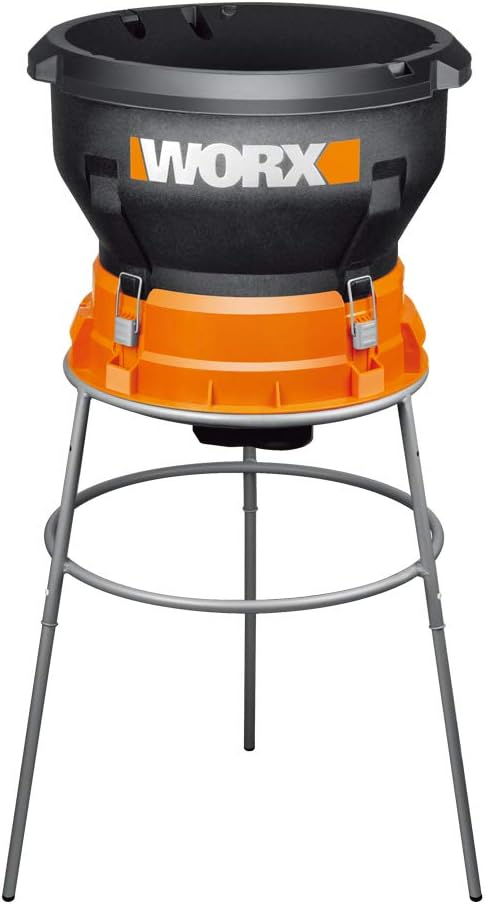
WORX WG430 13 Amp Electric Leaf Mulcher
| Motor | 13 Amp |
|---|---|
| Throughput | 53 gallons per minute |
| Mulch ratio | 11:1 |
| Cutting system | Flex-a-Line bladeless line |
The WORX WG430 is an electric leaf mulcher designed for homeowners who need to reduce large volumes of dry leaves and light yard debris quickly. It accepts leaves fed into the top funnel and shreds them with the bladeless Flex-a-Line string system, processing up to about 53 gallons per minute and reducing roughly 11 bags of leaves down to one. The unit sits over a standard bag held by the included support ring so mulch discharges directly into a receptacle for disposal or composting. Practical benefits include tool-free assembly and disassembly for seasonal storage, a dust-reducing motor cooling design, and an included supply of replacement cutting lines to simplify maintenance. Because it is a 13 amp corded electric tool it is quieter and cleaner than gas chippers and avoids blade sharpening, but it is not intended for heavy branches or thick woody material. The need for an appropriately rated outdoor extension cord and indoor storage in winter are additional considerations for regular use.
Best for: Homeowners who want a safer, low-maintenance electric solution to shrink large piles of leaves quickly and prefer a cleaner, quieter alternative to gas chippers.
Less Ideal for: Property owners who need to chip branches, thick brush, or heavy woody debris should consider a dedicated wood chipper or gas-powered shredder instead.
- High processing rate reported at up to 53 gallons of leaves per minute for fast cleanup
- 11:1 mulching ratio significantly reduces bag volume for easier disposal or composting
- Flex-a-Line bladeless system lowers blade-related hazards and includes tool-free line replacement
- Tool-free assembly and compact nesting parts for easier storage and off-season handling
- Not suitable for woody branches or heavy brush since it is a line-based leaf mulcher
- Requires a properly rated outdoor extension cord and access to an electrical outlet
Verdict: Choose the WORX WG430 if you need a fast, low-maintenance electric mulcher that turns large volumes of leaves into manageable mulch for disposal or composting.
DEKOPRO Electric Leaf Mulcher/Shredder with 15-Amp 8200 RPM Motor

| Power Source | ac |
|---|---|
| Speed | 8200 rpm |
| Cutting width | 15 inches |
The DEKOPRO electric leaf mulcher is a corded, high-speed machine designed to turn piles of leaves and light yard debris into much smaller mulch quickly. It runs on a 15-amp motor that spins at 8,200 rpm and uses a bladeless nylon cutting-line system, so replacements are simple and maintenance does not require tools. A three-mode adjustable control dial lets you pick a setting for dry leaves, wet leaves, or finer mulching, and the manufacturer rates its reduction at about 17:1 which makes bags and composting easier. It includes a collection bag and comes with extra cutting lines and a handheld scoop for feeding material. Practical benefits are faster cleanup, less bag volume to carry away, and gentler handling of leaves compared with metal-blade chippers. Important limitations are that it is meant for leaves, pine needles, and similar soft yard waste only and should not be used on resilient wood, large branches, or roots. It also requires a power outlet and occasional line replacement during heavy use.
Best for: Homeowners who want a fast, low-maintenance way to reduce raked leaves and light yard debris into manageable mulch for composting or disposal and who have ready access to outdoor power.
Less Ideal for: People who need to process thick branches, heavy green waste, or large amounts of woody material should choose a heavy-duty chipper instead.
- High-speed 15-amp motor (8,200 rpm) for rapid mulching
- Bladeless nylon cutting line that is easy to replace without tools
- Adjustable three-mode control dial for different debris and mulch fineness
- 17:1 reduction ratio significantly reduces leaf volume for easier disposal
- Includes collection bag, extra cutting lines, and a handheld scoop for feeding
- Not suitable for woody branches, roots, or resilient garden waste
- Requires an electrical outlet which limits use away from power sources
Verdict: A fast, easy-to-maintain electric mulcher that quickly reduces leaves into usable mulch for balanced homeowners who want efficient yard cleanup.
WORX Trivac WG512 3‑in‑1 Corded Leaf Blower/Vacuum/Mulcher

| Power Source | Corded Electric |
|---|---|
| Air Flow Capacity | 600 cfm |
| Mulch Ratio | 16:1 |
| Collection Bag Capacity | 50L |
| Speed Control | 2 speeds |
The WORX Trivac WG512 is a corded 3‑in‑1 yard tool that blows, vacuums, and mulches leaves for faster cleanup of lawns, driveways, patios, and walkways. In blower mode it pushes large volumes of leaves with up to 600 CFM and around 70 MPH, then converts to vacuum and mulcher where a metal impeller shreds debris down to a 16:1 ratio into a 50L collection bag. Two speed settings and a one‑button mode switch make it simple to match airflow to the job, and the corded design gives continuous power for longer sessions without battery changes. Practical benefits include reduced bag volume for easier disposal or composting, decent suction for damp leaves, and tool‑free conversion between modes. Limitations are inherent to corded units: you need access to an outlet and extension management on larger properties, and the unit is best for homeowners and light commercial tasks rather than heavy industrial mulching work.
Best for: Buyers who want an affordable, reliable 3‑in‑1 electric tool to handle seasonal leaf cleanup efficiently and avoid battery maintenance; good for homeowners and small properties where continuous corded power is acceptable.
Less Ideal for: Large commercial landscaping crews or sites without easy access to power who need high‑capacity gas equipment or long untethered runtime.
- Three functions in one tool: blower, vacuum, and mulcher which reduces the need for separate equipment.
- High airflow (600 CFM) and two speed settings let you move large leaf volumes quickly.
- Metal impeller and 16:1 mulch ratio significantly reduce bag volume for easier disposal or composting.
- Large 50L collection bag supports longer runs between emptying and the quick‑release design speeds bag changes.
- Corded power requires an outlet and extension management for larger yards.
- Not intended for heavy commercial/industrial mulching workloads where high‑capacity, gas‑powered units are typical.
Verdict: If you want an inexpensive, no‑battery 3‑in‑1 machine that efficiently mulches and reduces bag volume, the WORX WG512 is a practical choice.
SOYUS Electric Bladeless Leaf Mulcher & Shredder, 15A 8400 RPM

| Motor | 15 Amp, 8400 RPM |
|---|---|
| Reduction ratio | 18:1 |
| Throughput | Up to 55 gallons per minute |
| Control | 5-level adjustable dial |
The SOYUS bladeless leaf mulcher is built for fast backyard cleanup: a 15 amp motor spinning at 8400 RPM feeds leaves into a nylon cutting-line system that shreds material down with an advertised 18:1 reduction. You use the front hopper to feed wet or dry leaves and select one of five control-dial settings to match cutting aggressiveness to material. The design omits metal blades in favor of replaceable line, which simplifies maintenance and reduces the risk of large kickbacks while still producing a fine mulch suitable for composting or smaller collection bags. Practical benefits include high throughput of up to 55 gallons per minute and a compact, wheeled frame that is easy to move around the yard. Limitations are the reliance on cutting line that must be replaced over time and the lighter construction that favors routine yard debris rather than heavy branches or woody brush. For someone focused on quick, high-volume leaf shredding this machine delivers strong performance, but it is not a substitute for a heavy-duty chipper if you need to handle thick limbs.
Best for: Buyers who prioritize fast, high-volume leaf processing for routine yard cleanup and want a low-maintenance, maneuverable electric mulcher.
Less Ideal for: Those who need a machine for frequent heavy-duty chipping of branches or for commercial landscape work should choose a more robust chipper-shredder.
- Powerful 15A, 8400 RPM motor supports fast mulching throughput
- Bladeless nylon cutting-line system reduces maintenance complexity and kickback risk
- Five-level control dial lets you adjust processing for wet or dry leaves
- High 18:1 reduction ratio shrinks yard waste volume for easier disposal or composting
- Lightweight wheeled design improves mobility around the yard
- Not intended for heavy woody branches or thick brush
- Cutting line requires periodic replacement and is a consumable expense
Verdict: If you want a fast, high-throughput electric mulcher that turns large volumes of leaves into fine mulch with minimal fuss, this SOYUS bladeless model is a strong pick.
WORX Trivac WG509 3‑in‑1 Corded Leaf Blower/Vacuum/Mulcher

| Power Source | Corded Electric |
|---|---|
| Air Flow Capacity | 350 cfm |
| Maximum Speed | 210 miles_per_hour |
| Mulch Ratio | 18:1 |
The WORX WG509 Trivac combines a blower, vacuum, and mulcher in a single corded unit to simplify seasonal yard cleanup around homes. You use it in blow mode to move leaves from driveways, patios, and lawn edges, switch to vacuum to collect debris into the included bag, and engage the metal‑impeller mulcher to reduce leaf volume roughly 18:1 for easier disposal or composting. Variable speed control helps dial back airflow for delicate spots or ramp up for bigger piles, and corded power means uninterrupted runtime for medium‑sized yards. The quick mode switch and removable collection bag make transitions and emptying straightforward. Important limitations are that it is corded so you need an outlet or extension cord and the unit is best suited to hard surfaces and moderate leaf volumes rather than very large properties; heavier professional jobs may benefit from backpack or gas models. For homeowners who want a reliable, no‑battery‑worry electric tool, the WG509 offers efficient cleanup with minimal fuss.
Best for: Homeowners who prioritize reliable, continuous electric power and a single tool to handle regular leaf cleanup on driveways, patios, decks, and small to medium yards.
Less Ideal for: People with large acreage, frequent heavy debris or professional landscaping needs should consider petrol or backpack blowers built for extended heavy use.
- 3‑in‑1 design replaces separate blower, vacuum, and mulcher for simpler storage and use
- Strong airflow (350 CFM, 210 MPH) handles wet leaves and stubborn debris on hard surfaces
- Metal impeller mulches leaves to an 18:1 ratio, reducing bag changes and making composting easier
- Variable speed and a quick switch between modes let you adjust power for different tasks
- Corded power requires an outlet or extension cord which limits mobility
- Not intended for very large properties where commercial or backpack units perform better
Verdict: Buy this if you want a dependable corded 3‑in‑1 blower/vacuum/mulcher that delivers strong airflow and efficient mulching for routine home yard cleanup.
Choosing the Right Garden Shredder for Leaves: Key Factors to Consider
Throughput and Hopper Size
Throughput determines how fast you can process a pile of leaves. A higher throughput means fewer feeding sessions and less manual labor. Hopper size and feed opening shape the operator experience: a wide, taller hopper lets you add loose leaves quickly without bunching, while smaller hoppers require more frequent topping up.
Throughput also interacts with power delivery. A machine with a modest motor but efficient cutting geometry can outperform a larger unit with poor feed design. Think about the typical size of your leaf piles and how often you want to interrupt work to clear or refill the hopper.
Cutting Mechanism and Resulting Mulch Texture
The type of cutting mechanism affects the size and uniformity of shredded leaves. Rotary blades or knives tend to produce finer, more uniform chips useful for quick composting and weed suppression, while hammer-style or flail systems can handle mixed garden waste but may leave coarser fragments.
Mulch texture matters for your end use. Fine, consistent mulch integrates into compost faster and packs nicely for path cover or bed tidy-up. Coarser output is fine for bulk volume reduction but may need additional passes or time in the compost pile to break down fully.
Clog Prevention and Handling Damp Leaves
Leaves often arrive damp, matted, or with twigs and stems mixed in. Machines with anti-jam features, reversible blades, or a built-in clearing mechanism reduce downtime. A feed system that resists bridging and a cutter geometry that shears rather than grips leafy material will be less likely to clog.
Consider whether you will be shredding fresh wet leaves after rain or mostly dry leaves. If damp material is common in your climate, prioritize models and features aimed specifically at clog resistance and easy clearing.
Ease of Maintenance and Blade Access
Regular maintenance keeps a shredder working reliably across seasons. Easy access to blades or hammers makes cleaning, sharpening, and replacement straightforward. Look for designs with tool-free access panels or quick-release fasteners that let you inspect and clear the cutting chamber safely.
Maintenance also includes routine checks for belts, bearings, and feed mechanisms. Machines that require specialized tools or complex disassembly add time and often discourage proper upkeep.
Noise, Vibration, and Neighbor Considerations
Shredders vary widely in how loud and how much they vibrate. If you live in a dense neighborhood, noise level may limit when you can run the unit. Excessive vibration can also accelerate wear or make the machine harder to control during feeding.
Look for machines with vibration-damping mounts, balanced cutting assemblies, and clearer published noise guidance if community disturbance is a concern. Softer start-up features can also reduce sudden noise spikes that surprise neighbors or pets.
Mobility, Footprint, and Storage
A shredder that is easy to move and store simplifies seasonal leaf care. Wheels, an ergonomic handle, and a compact footprint make it manageable to roll the unit to large piles and put it away afterward. Consider whether you need a shredder you can lift into a shed or one that will stay outdoors.
Storage-friendly designs that fold or have detachable chutes save space. Also think about how the discharge direction and height integrate with wheelbarrows or collection bags to reduce bending and transfer work.
Best Practices for Shredding Leaves
Start by raking or blowing leaves into loose piles rather than compact bundles. Loose leaves feed more consistently and reduce the risk of bridging inside the hopper. Remove large branches or dense bunches of stems first to avoid sudden jams.
Feed at a steady, moderate rate rather than stuffing the hopper. If material starts to back up, stop and clear the feed throat using the tool provided by the manufacturer. Allow the machine to cool periodically during long sessions to avoid overheating.
- Process mixed loads by removing large woody pieces before shredding.
- Use a slower feed rate for damp or matted leaves to reduce clogging.
- Empty the discharge collector or wheelbarrow regularly to keep workflow moving.
How Shredded Leaves Work in Compost and Mulch
Shredded leaves integrate into compost piles faster because smaller particles expose more surface area to microbes. Fine leaf mulch also packs better, reducing trapped air and speeding decomposition. If you plan to compost leaves, aim for a consistent chop so drying and turning become predictable.
For mulch use around beds and paths, a medium-fine texture offers a good balance between moisture retention and airflow. Very fine leaf dust can mat on the surface when wet, so consider mixing shredded leaves with coarser yard waste or wood chips for long-term mulch layers.
- Use shredded leaves in the compost bin to speed nitrogen uptake when mixed with green materials.
- Layer leaf mulch in thin applications to avoid matting in wet climates.
- Store very dry shredded leaves in a breathable container to prevent spontaneous heating.
Seasonal Tips and When to Shred
Shred leaves soon after raking for best results. Over time, leaves become brittle and dusty, which can create more airborne fine material during shredding. Damp leaves shred differently than dry leaves; plan sessions on dry days if you want cleaner, dust-free output.
In late fall, process frequent small batches to avoid huge single sessions. During the off-season, perform maintenance like sharpening blades, checking belts, and protecting exposed metal parts from moisture.
- Avoid shredding immediately after heavy rain to reduce clogging risk.
- Schedule short, regular shredding sessions rather than large marathon jobs.
- Winterize and store the machine in a dry place to lengthen component life.
Safety and Setup for Garden Use
Always follow basic safety practices: clear the work area, wear eye protection, and keep hands and loose clothing away from the feed opening. Use push tools or a stick to feed material when recommended, not your hands.
Set the shredder on stable, level ground and confirm the discharge path is unobstructed. If the unit has multiple cutting settings, start with the gentlest option for leaves and only increase aggressiveness if you need coarser output for mixed waste.
- Keep children and pets well away while the machine is running.
- Unplug or disconnect power before clearing jams or doing maintenance.
- Follow the manufacturer guidance on personal protective equipment.
Integration With Yard Workflows
Think about how the shredder will tie into your yard tasks. Positioning near common leaf-collecting spots or alongside a compost bin reduces handling. If you use leaf mulch around your beds, set up a transfer system into totes or wheelbarrows to minimize bending and back strain.
If you garden on a small property or balcony, choose models with quiet operation or plan sessions during times that are less likely to disturb neighbors. For larger gardens, a higher-throughput machine positioned centrally reduces crossing the yard with full wheelbarrows.
- Line up discharge to feed directly into compost containers where possible.
- Consider a tarp-lined pile for quick transfer into the shredder.
- Coordinate shredding with mowing or pruning days to combine trips.
How We Chose the Best Garden Shredder for Leaves
We shortlisted garden shredders for leaves based on criteria that matter in real garden use. Throughput and cutting consistency were primary filters because leaf cleanup time depends on how quickly a unit accepts large volumes and produces uniformly shredded material for composting or mulching. Clog resistance and feed design were evaluated next since leaves, especially when damp, can mat together and stall weaker mechanisms. Durability and maintenance needs were considered to ensure machines stand up to seasonal use and are easy to service. Noise and vibration levels were assessed because long sessions near homes or neighbors can become intrusive. Portability, setup, and safety features were also part of the selection so that gardeners who move machines around a yard or store them seasonally are not left with heavy, awkward equipment. We excluded units intended only for heavy woody shredding that do not handle low-density leaves well, and machines without clear measures for throughput or any user-facing anti-clog features. The final list focuses on shredders that balance speed, consistent leaf reduction, and practical garden-friendly maintenance.
FAQ
Can I shred wet leaves, or do they need to be dry?
You can shred wet leaves but expect more clogging and slower throughput. Many shredders will handle damp material if fed slowly and cleared regularly, but dry leaves are easier to process and create less mechanical strain.
Will shredded leaves turn into compost faster?
Yes. Smaller leaf particles decompose faster because microbes have more surface area to work on. Mixing shredded leaves with some nitrogen-rich green yard waste speeds the process further.
How often should I maintain the blades or cutters?
Inspect blades or cutters after heavy seasonal use and at least once per year. Sharpening or replacing worn blades improves efficiency and reduces strain on the motor. Regular checks of belts and bearings help avoid unexpected downtime.
Are electric shredders powerful enough for big leaf piles?
Many electric models provide sufficient throughput for typical residential leaf loads, especially modern designs optimized for leaf handling. Very large properties or continuous commercial use may need higher-capacity equipment built for heavy duty.
How can I reduce dust and fine debris when shredding?
Shred on calm days and, if possible, slightly damp leaves to reduce airborne dust. Wear eye and respiratory protection when required, and position yourself upwind of the discharge.
Final Verdict
For leaf cleanup, prioritize throughput, clog resistance, and the resulting mulch texture. The best choice balances a cutting system that produces a usable particle size with a feed design that resists matting and is easy to maintain. Consider where you will store and move the machine, how often you will run it, and whether you will mostly handle dry or damp leaves. With those tradeoffs in mind, pick a unit that fits the scale of your yard and the end use for shredded leaves so your seasonal leaf work becomes faster and less cumbersome.
