

Note: This article contains affiliate links. If you click on these links and make a purchase, I may earn a small commission at no extra cost to you. This helps support my research and content. Read my full affiliate disclosure here.
Getting reliable soil data changes how you plan beds, amend soil, and feed plants. A garden soil test kit gives you pH and nutrient readings at home so you can decide whether to lime, add sulfur, or apply fertilizer and organic amendments. This guide highlights the top seven kits suitable for home gardens, container plantings, and small raised beds. We shortlisted options that deliver consistent readings, are easy to use in real garden conditions, and provide actionable recommendations. Below you will find what we evaluated and why each kit made the list, plus guidance on selecting the right kit for your gardening goals.
Top Picks at a Glance
| Best Overall The best all-around choice for most situations | Luster Leaf Rapitest 40-Test Soil Test Kit (pH, N, P, K) |  |
| Best Quality Built to a higher standard if you want something more solid | LaMotte Turf and Garden Soil Test Kit (pH, N, P, K) |  |
| Best Value The sweet spot between price and what you get | Soil Test Kit 140 Tests — pH, Nitrogen, Phosphorus, Potassium & Ammonia |  |
| Best Budget The cheapest option that still gets the job done reliably | Merydi Soil pH Test Strips — 150 Tests (pH 3–9) |  |
| Highest Rated A top-rated pick with lots of positive feedback | MySoil Professional Mail‑In Soil Test Kit (1 Test) |  |
| Most Popular A crowd favorite that many people choose with confidence | SONKIR MS02 3-in-1 Soil Moisture, pH and Light Tester |  |
| Best Seller A high-volume bestseller chosen again and again | Luster Leaf Rapitest Soil Test Kit (20 tests) |  |
Luster Leaf Rapitest 40-Test Soil Test Kit (pH, N, P, K)

| Tests included | pH, Nitrogen, Phosphorus, Potash |
|---|---|
| Number of tests | 40 total (10 per test type) |
| Mounting type | Tabletop |
| Battery description | No batteries required |
The Luster Leaf Rapitest kit gives quick, at-home readings for soil pH and the three primary nutrients gardeners watch for: nitrogen, phosphorus and potash. It ships with reagents and a patented color comparator system plus instructions and a plant pH preference list, and is designed to perform 40 total tests (10 each for pH, N, P and K). Typical use is straightforward: collect small soil samples, add the provided capsules or solutions, and compare the resulting color to the chart to determine whether your lawn needs lime, fertilizer, or other amendments. The tabletop format and printed recommendations make it useful for routine checks through the growing season. Limitations are that results are qualitative rather than lab-accurate numbers and interpretation depends on correct sampling and careful color matching under good light. For gardeners who want fast, actionable guidance for lawn feeding and pH adjustment, this kit balances simplicity and coverage; it is less suitable when precise ppm measurements are required.
Best for: Buyers who want a practical, no-fuss way to monitor lawn soil health and adjust fertilizer or lime between seasons; ideal for homeowners who prefer actionable, easy-to-read guidance over laboratory testing.
Less Ideal for: Users who require laboratory-grade nutrient concentrations or professional soil reports for diagnostics or commercial turf management.
- Covers four key tests (pH, nitrogen, phosphorus, potash) in one kit for routine lawn checks
- Includes enough reagents for 40 tests, allowing multiple checks through a season
- Patented color comparator and clear instructions make results easy to interpret for beginners
- Includes plant pH preference recommendations to help translate results into amendment choices
- Provides color-based, qualitative results rather than lab-precise numeric readings
- Accuracy depends on sampling technique and consistent lighting when matching colors
Verdict: An affordable, easy-to-use kit for routine lawn and garden checks that delivers quick, actionable pH and nutrient guidance.
LaMotte Turf and Garden Soil Test Kit (pH, N, P, K)

| Tests included | pH, nitrogen, phosphorus, potassium |
|---|---|
| pH tests | 30 tests |
| N/P/K tests | 15 tests each |
| Includes | Garden Guide manual and Soil Handbook |
The LaMotte Turf and Garden Soil Test Kit is a reagent-based kit designed to measure soil pH and the three primary macronutrients (N, P, K) with color-matching charts and step-by-step instructions. You collect representative samples from the area you plan to plant, follow the contained procedures for each parameter, and compare results to the included laminated charts and Garden Guide to decide on lime or fertilizer adjustments. The kit supplies more tests for pH (about 30) and roughly 15 tests each for N, P and K, which makes it useful for tracking multiple beds over a season. Its strengths are clear instructions, an educational handbook for interpreting results, and replaceable reagent-based chemistry that tends to be more accurate than simple reader strips. Limitations are that tests require careful sample prep and handling, they are not instant digital readouts, and interpreting borderline color matches can be subjective. For vegetable gardeners who want actionable guidance rather than a single quick reading, this kit delivers a thorough, repeatable soil picture.
Best for: Vegetable gardeners who want a practical, educational soil analysis to inform lime and fertilizer decisions and are willing to follow reagent-based procedures for repeatable results.
Less Ideal for: Gardeners who need a single fast digital reading or those unwilling to collect and prepare representative soil samples.
- Measures pH plus nitrogen, phosphorus and potassium for a rounded soil analysis
- Includes Garden Guide manual and Soil Handbook to interpret results and plan amendments
- Supplies multiple tests (about 30 pH tests and 15 tests each for N, P and K) for tracking over time
- Reagent-based chemistry typically gives more reliable results than basic test strips
- Color-matching requires careful technique and can be subjective on borderline readings
- Testing involves multiple steps and sample preparation rather than instant electronic readouts
Verdict: A thorough reagent-based kit that gives vegetable gardeners actionable pH and NPK results plus interpretive guidance for informed fertilizing and liming decisions.
Soil Test Kit 140 Tests — pH, Nitrogen, Phosphorus, Potassium & Ammonia

| Tests included | pH, Nitrogen, Phosphorus, Potassium, Ammonia |
|---|---|
| Total tests | About 140 |
| Manufacturer | Dewilde Trading Co |
This liquid soil test kit is built for routine fertility checks on lawns and gardens, offering about 140 individual tests across pH, nitrogen, phosphorus, potassium and ammonia. You use small soil samples, mix them with reagents, and compare color changes to supplied charts to get quick, on-site readings. The kit’s biggest practical benefit is coverage: multiple parameters in one kit mean you can diagnose common nutrient imbalances and pH issues without sending samples to a lab. That makes it handy for planning lime or fertilizer applications and for checking results after treatment. The instructions appear updated for 2026 which should ease setup, and the included volume of tests supports seasonal monitoring across a small to medium lawn. Expect the usual limitations of colorimetric kits: results are good for directional guidance but less precise than laboratory assays, and accurate interpretation depends on following sample timing and mixing steps closely. For users who want fast, repeatable checks rather than lab-grade precision, this kit is a practical, cost-effective choice.
Best for: Homeowners and lawn care hobbyists who monitor turf fertility regularly and want a single, economical kit to guide fertilizer and lime decisions without sending samples to a lab.
Less Ideal for: Users needing laboratory-accurate nutrient concentrations for commercial production or research should use professional lab testing instead.
- Tests five key soil parameters (pH, nitrogen, phosphorus, potassium, ammonia) in one kit
- Large test count (about 140) supports repeated seasonal checks
- Liquid colorimetric method gives quick on-site results without lab turnaround
- Updated instructions intended to simplify use and reduce user error
- Color chart readings are inherently less precise than laboratory analysis
- Accurate results depend on strict adherence to timing and mixing procedures
Verdict: A practical, all-in-one kit for regular lawn fertility checks that gives fast, actionable results without lab costs.
Merydi Soil pH Test Strips — 150 Tests (pH 3–9)

| Range | pH 3–9 |
|---|---|
| Number of tests | 150 strips |
| Sterility Rating | 3.5-9 |
The Merydi Soil pH Test Strips are a basic, affordable way to check soil acidity across a 3 to 9 pH range. You collect a small soil sample, mix it with water, dip a strip for a few seconds, then match the color to the included chart for an immediate reading. The kit includes 150 strips, making it convenient for repeated checks across beds, lawns, potted plants, and fruit trees. The fiber paper strips are designed to minimize color bleeding and the instructions recommend using distilled water and natural daylight for the most reliable results. Because the strips are single use and supplied in large quantity, this kit is good for routine monitoring and mapping pH across a garden over a season. Limitations are the inherent precision of color-match strips versus lab tests or electronic meters and the need to follow the sample-to-water ratio and timing carefully to avoid inconsistent readings.
Best for: Gardeners who want an inexpensive, repeatable way to monitor soil pH across beds and containers and prioritize regular checks over lab-level precision.
Less Ideal for: Professional soil analysts or growers who need high-precision, digital pH measurements should choose a calibrated electronic meter or laboratory testing instead.
- Large pack of 150 single-use strips allows frequent testing across many planting areas
- Covers a wide pH range (3.0–9.0) useful for most garden plants
- Simple dip-and-compare procedure requires no calibration or batteries
- Suitable for both indoor pots and outdoor garden soil, lawn and fruit trees
- Color-match strips are less precise than electronic meters or lab analysis
- Results depend on following the sample dilution and timing instructions exactly
Verdict: An inexpensive, high-count strip kit that makes routine garden pH monitoring easy and affordable.
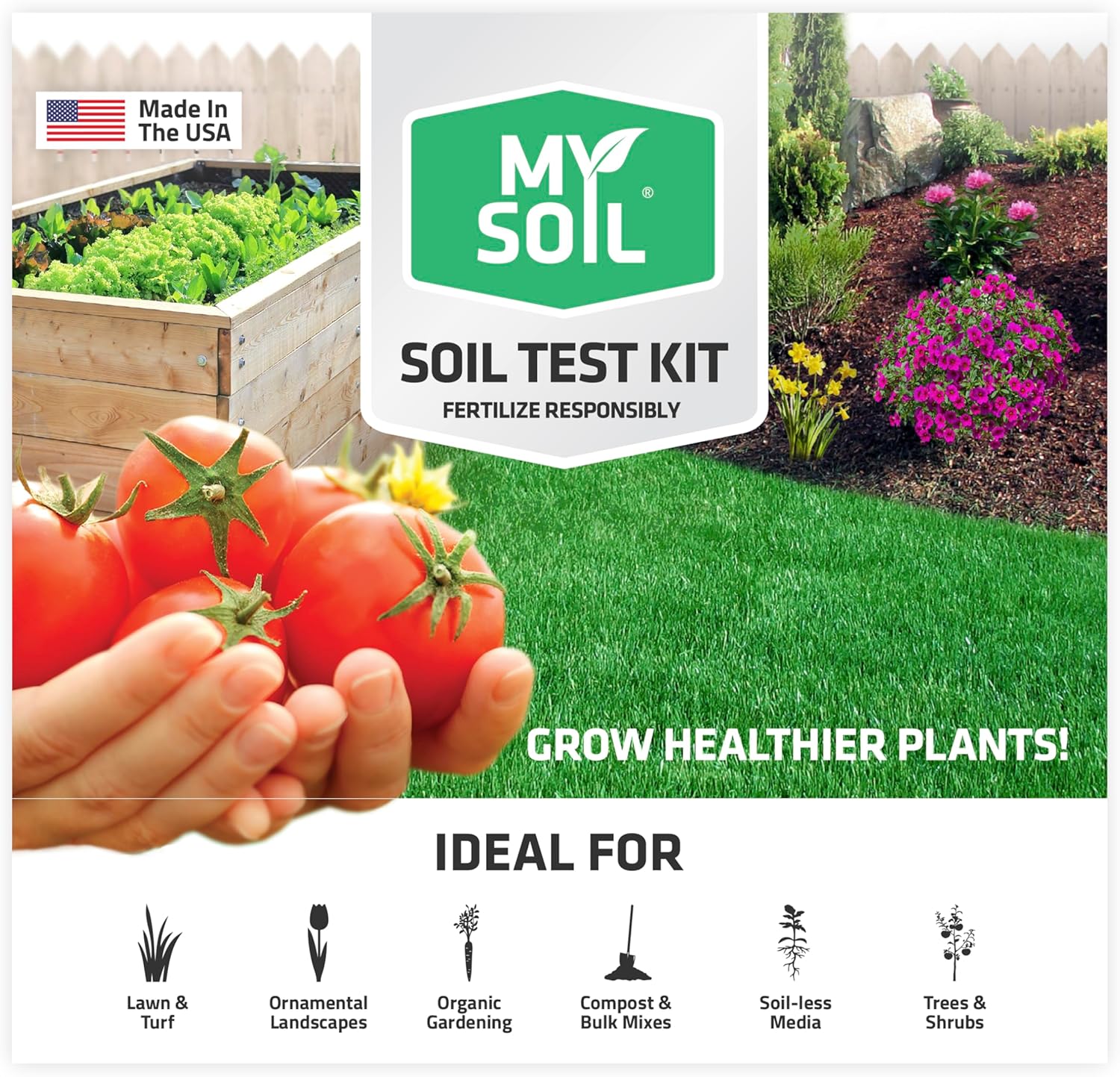
MySoil Professional Mail‑In Soil Test Kit (1 Test)
| Number of Packs | 1 |
|---|---|
| Unit Count | 1 Count |
| Manufacturer | Predictive Nutrient Solutions, Inc |
| Item Weight | 4.6 ounces |
The MySoil kit is a single‑use mail‑in soil test designed to give a professional laboratory analysis rather than an instant at‑home reading. You collect a sample in the included jar, register the kit online, mail the prepaid envelope to the lab, and get a detailed report in about 6–8 days. Results cover pH plus 13 plant‑available nutrients and include step‑by‑step recommendations for what to apply, how much, and when, with both organic and conventional options. That makes it useful for diagnosing lawn problems, planning fertilization for turf or vegetable beds, or checking soil before planting. The kit contains everything needed for one test and saves time by replacing guesswork with specific advice, which can reduce unnecessary product use. The main limitation is that each kit covers only a single sample, so testing multiple areas or repeated checks requires buying multiple kits; turnaround also depends on mailing times. For a homeowner who wants accurate, lab‑grade guidance for improving grass and garden soil, MySoil provides actionable results without complex equipment.
Best for: Homeowners focused on improving lawn health who want reliable, lab‑grade soil data and clear amendment instructions rather than DIY meters or strips.
Less Ideal for: People who need rapid, repeated tests across many spots or instant field readings should consider multi‑test packs or handheld meters instead.
- Laboratory analysis of pH plus 13 plant‑available nutrients for accurate results
- Includes prepaid mail envelope and everything needed to collect and send one sample
- Custom, easy‑to‑follow recommendations for what, when, and how much to apply
- Works for any soil type and a wide range of uses including lawn and turf
- Single‑use kit covers only one sample location
- Results take several days since samples are mailed to a lab
Verdict: For reliable, lab‑grade soil diagnostics and clear fertilizer guidance to improve grass and garden performance, choose this single‑test MySoil kit.
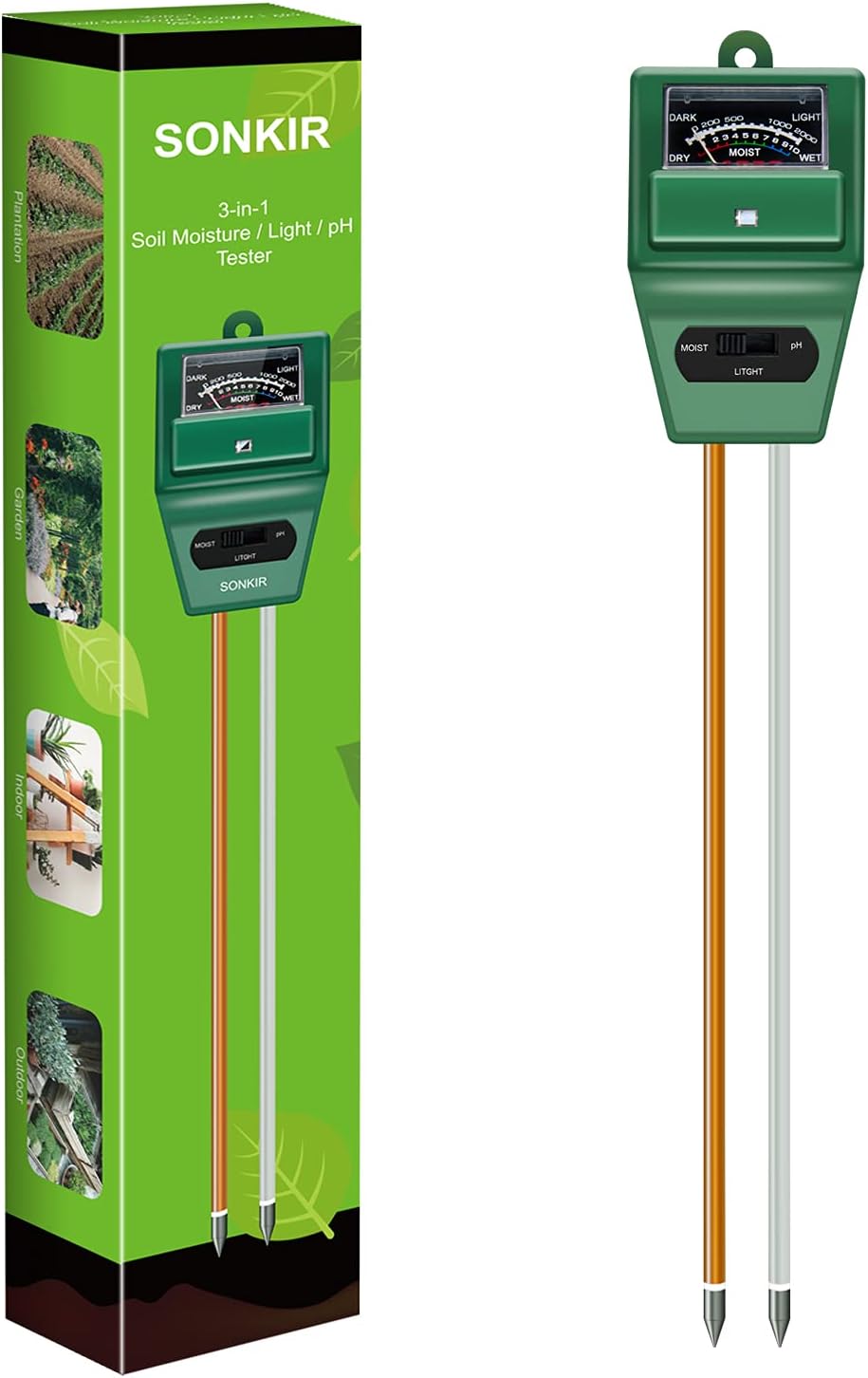
SONKIR MS02 3-in-1 Soil Moisture, pH and Light Tester
| pH range | 3.5-8 pH |
|---|---|
| Moisture range | 1-10 scale |
| Probe length | 7.9 inches |
| Power | No battery required |
The SONKIR MS02 is a handheld, no-battery soil meter that gives quick, visual readings of moisture, pH and sunlight to help you maintain healthier grass and garden plants. You switch the dial to the desired function, push the probe into the soil about 6 to 7 inches, wait roughly 10 minutes and read the needle on the analog display. The meter covers a practical pH range for lawns and gardens and shows moisture on a 1 to 10 scale so you can decide when to water. Its long probe and compact, lightweight body make it convenient for spot-checking multiple areas of a lawn or garden bed. Important limitations are that the pH probe is intended for soil only and the analog needle can be slow to move in very dry soils or close-to-neutral pH, so readings sometimes require rechecking after moistening the sample or testing several spots. The unit is best for gardeners who want an affordable, easy-to-use tool for routine soil checks rather than laboratory-accurate analysis.
Best for: Someone who wants an inexpensive, easy-to-use tool for routine soil checks across a lawn or garden and values practical, repeatable guidance over laboratory precision.
Less Ideal for: Users who need lab-grade pH or moisture measurements, continuous data logging, or digital readouts for precise record keeping should consider more advanced instruments.
- 3-in-1 functionality measures moisture, pH and sunlight without extra tools
- No battery required so it is always ready to use and low maintenance
- Long probe and compact form factor make spot checks across a lawn or garden quick
- Simple analog dial is straightforward for fast, at-a-glance decisions
- pH function is designed for soil only and cannot test water or other liquids
- Analog needle can be unresponsive in very dry soil or near-neutral pH, requiring repeated tests
Verdict: A straightforward, no-battery 3-in-1 tester that gives fast, practical soil moisture, pH and light checks for everyday lawn and garden care.
Luster Leaf Rapitest Soil Test Kit (20 tests)

| Brand Name | Luster Leaf |
|---|---|
| Unit Count | 20 Count |
| Item Type Name | Soil Test Kit |
| Model Number | 1602 |
The Luster Leaf Rapitest Soil Test Kit provides a simple, low-tech way to check garden soil pH and the three main nutrients gardeners track: nitrogen, phosphorus and potash. The kit includes reagents and comparators for 20 tests total (five tests per measurement), so you can sample several areas across a lawn or vegetable bed. Use involves mixing small soil samples with the provided capsules or solutions, then matching the resulting color against the included chart. That makes it fast and approachable for beginners and steady gardeners who want a practical snapshot before amending or fertilizing. The clear instructions and plant pH preference list for over 450 species are helpful for making actionable adjustments. Limitations are the coarse resolution of color-based readings and the limited number of tests compared with lab analysis, so it is best for routine spot checks rather than precise scientific monitoring.
Best for: Gardeners who want a straightforward, low-cost way to check soil health before amending and prefer practical, easy-to-follow results over lab-level precision.
Less Ideal for: Users who need laboratory-grade accuracy, quantitative nutrient concentrations, or frequent high-volume testing for professional soil management.
- Covers core measurements gardeners need: pH, nitrogen, phosphorus and potash.
- Includes materials for 20 total tests to sample multiple garden spots.
- Patented color comparator system makes results easy to read without special tools.
- Comes with detailed instructions and a plant pH preference list for many common species.
- Color-matching gives approximate results and is less precise than laboratory testing.
- Only five tests per measurement limits long-term or frequent monitoring without repurchasing.
Verdict: Buy this kit if you want an easy, affordable way to spot-check soil pH and basic nutrient levels across your garden before amending.
Choosing the Right Garden Soil Test Kit: Key Factors to Consider
pH Range and Precision
Soil pH controls nutrient availability and affects which plants will thrive. A kit with a broad pH range and finer precision helps you spot small but meaningful differences that change amendment decisions. For example, knowing whether your soil is 6.2 versus 6.8 can determine whether to add lime, sulfur, or leave the bed alone.
Precision matters more in gardens with acid-loving or alkaline-sensitive plants. If you regularly grow vegetables, berries, or ericaceous ornamentals, choose a kit that reports pH to at least one decimal place or provides calibrated color comparisons rather than a single broad band.
Which Nutrients Are Tested
Basic kits often test pH plus primary macronutrients: nitrogen, phosphorus, and potassium. More comprehensive kits add calcium, magnesium, and sometimes key micronutrients. Decide which nutrients matter for your crops and soil history. Vegetable gardens and lawns benefit most from reliable N, P, and K assessments, while orchards and long-term beds may need calcium and magnesium checks.
Also consider whether the kit reports only relative levels (low, medium, high) or gives usable ranges. Relative categories are fine for first-pass decisions, but quantified ranges let you match fertilizer formulas more confidently.
Sampling Method and Real-World Usability
A useful kit works with common garden sampling habits. Look for clear guidance on how deep and where to take soil, how to account for compost or mulch, and how many subsamples to mix for an accurate composite. Kits that require minimal, repeatable steps reduce user error and improve consistency across seasons.
Think about how easy it is to collect samples from containers, raised beds, and in-ground plots. Practical items such as a sampling probe, scoop, or pre-marked collection cups make the process less messy and more reliable for gardeners who test regularly.
Clarity of Results and Actionable Recommendations
Raw numbers are only helpful if you understand what to do next. Good kits pair readable results with clear, practical recommendations tailored to garden plants. Look for straightforward interpretation charts that translate pH and nutrient readings into amendment steps, suggested material types, and application timing.
Kits that include follow-up guidance for common problems, like compacted soil, low organic matter, or persistent nutrient deficiencies, reduce guesswork. Avoid kits that give ambiguous results without context or that require specialist knowledge to interpret.
Durability, Shelf Life, and Repeatability
Reagents, test strips, and probes can degrade over time or after exposure to moisture and light. A kit built with sealed reagents, replaceable strips, or a probe that can be recalibrated will last across multiple seasons and provide consistent readings. Consider how many tests the kit supplies and whether replacements are available.
Repeatability matters if you want to monitor changes after amendments. A one-off test is useful, but a durable kit that yields consistent results lets you track trends across a growing season and confirms whether your soil adjustments worked.
Turnaround Time and Lab Alternatives
Home kits vary in how quickly they deliver usable data. Some provide immediate colorimetric or digital readouts, while others require sending samples to a lab for more thorough analysis. Fast results are helpful when planning immediate amendments or planting, but lab tests typically offer more depth.
Balance the need for speed against the level of detail required. For routine seasonal checks and troubleshooting common deficiencies, a reliable home kit often gives enough guidance. Reserve lab tests for persistent problems, soils with contamination concerns, or when you need comprehensive micronutrient profiling.
When to Test Your Garden Soil
Test soil before major planting or renovation so you know whether to add lime, sulfur, or organic matter. Early spring and fall are common times to gather baseline readings, but testing after several seasons of heavy fertilization or compost additions can reveal slow shifts in acidity and nutrient balance.
Also test new ground before creating raised beds or installing new planting areas. Container mixes should be checked if plants show nutrient stress or pH-sensitive symptoms. Repeating tests annually or after large amendments helps track whether changes are taking effect.
- Test in early spring to plan fertilizer and lime applications
- Retest after major amendments or several growing seasons
- Test problem spots where plants decline or show nutrient symptoms
How to Take a Representative Soil Sample
Collect multiple subsamples from the same planting area and mix them for a composite sample. Take soil from similar exposures and depths to avoid skewed results. For vegetable beds, sample the top 6 to 8 inches where most roots are active; for lawns, a shallower depth is appropriate.
Remove surface mulch or debris and avoid sampling right next to recent fertilizer bands. Label samples by area and test each area that differs in soil history, sun exposure, or plant type so you can tailor amendments accurately.
- Combine 8 to 10 subsamples per area for a representative mix
- Sample to the root-active depth for the planting type
- Avoid freshly fertilized spots and remove mulch before sampling
Interpreting pH and Nutrient Results in Practical Terms
Translate pH results into actions: small adjustments are usually safer than large swings. If pH deviates slightly from a plant's sweet spot, gradual amendments and organic matter additions can bring the soil back into range without shocking soil biology.
For nutrient readings, focus on trends. Low nitrogen is often corrected with regular organic feeding or timed fertilizer applications, while low phosphorus or potassium may need targeted amendments. Consider soil texture and organic matter when choosing materials, as sandy soils require different approaches than clay soils.
- Make incremental pH changes rather than dramatic alterations
- Address nitrogen as a repeat application need, phosphorus as a corrective addition
- Match amendment selection to soil texture and drainage
Using Test Results to Plan Amendments
Turn results into an action plan with specific materials and timing. For low pH, agricultural lime applied in fall allows time to react before spring planting. For high pH, sulfur or acidifying fertilizers applied according to package directions can help over months. Nutrient shortages are best addressed with amendments that supply the missing elements and improve soil biology, such as composted manure or specialty mineral sources.
Keep notes on application rates and retest after an appropriate interval to confirm effectiveness. Avoid over-correcting, which can cause secondary nutrient issues or harm soil organisms.
- Choose amendment type based on both soil chemistry and crop needs
- Allow months for pH amendments to take effect and retest
- Record changes and retest to confirm that interventions worked
When to Consider Lab Testing Instead
Use a professional lab when contamination is a concern, when detailed micronutrient profiles are needed, or if home kit results are inconsistent. Labs can test for heavy metals and provide precise concentration data useful for remediation planning or for food-safety questions in urban gardens.
A lab test is also appropriate when managing high-value plantings or new orchard installations where long-term soil chemistry matters. For routine seasonal maintenance, a reliable home kit usually supplies sufficient information.
- Choose lab testing for contamination screening and heavy metal analysis
- Use labs for in-depth micronutrient work or complex soil chemistry issues
- Rely on home kits for routine monitoring and quick decisions
How We Chose the Best Garden Soil Test Kit
We focused on tests that give practical, repeatable results for backyard gardeners and small-scale growers. Key evaluation criteria included measurement accuracy for pH and primary nutrients, ease of sample collection and testing in a garden setting, clarity and usefulness of the included instructions and interpretation, and the range of tests provided (for example pH plus NPK or additional micronutrients). We also considered kit durability and the quality of reagents or probes for multi-season use, plus how straightforward follow-up recommendations were for common garden problems. Kits were excluded if they only offered a single crude indicator with no clear calibration, if sample handling required professional lab equipment, or if instructions assumed advanced chemistry knowledge. We prioritized tools that work reliably with typical garden soils, container mixes, and compost-amended beds and that help gardeners move quickly from result to correction.
FAQ
How often should I test my garden soil?
Test annually for vegetable beds and lawns, and every two to three years for stable perennial beds. Test after major amendments or if plants show persistent nutrient symptoms.
Can a home kit accurately measure soil pH?
Many home kits give reliable pH readings if samples are collected correctly and reagents or probes are in good condition. Calibrated digital probes or test kits with clear color charts are generally more repeatable than single-use strips.
Will a kit tell me exactly how much fertilizer to apply?
Home kits typically indicate nutrient ranges rather than precise recommendations. They help you choose a fertilizer type and estimate adjustments, but exact application rates should follow label guidance and account for soil texture and crop needs.
Do I need to test containers separately from in-ground beds?
Yes. Container mixes and raised beds often have different pH and nutrient profiles than natural soil. Test those areas separately to tailor feeding and amendment plans.
Are online or mail-in lab tests better than home kits?
Mail-in labs provide more detailed, standardized data and can test for contaminants, but they take longer. Home kits are faster and suitable for routine monitoring and immediate decisions.
Final Verdict
Choose a Garden Soil Test Kit that matches how you garden and the level of detail you need. Prioritize pH accuracy and the set of nutrients tested if you grow vegetables or acid-sensitive plants. Also consider sampling ease and how clearly the kit tells you what to do next. For routine seasonal checks, a durable kit with clear results and practical recommendations will solve most garden questions. Reserve lab testing for contamination issues or when you need a deeper, quantified nutrient profile.
