

Note: This article contains affiliate links. If you click on these links and make a purchase, I may earn a small commission at no extra cost to you. This helps support my research and content. Read my full affiliate disclosure here.
Choosing the right garden soil changes how quickly beds establish, how often you water, and whether vegetables and ornamentals thrive. In real gardens, soil governs drainage, root development, and the availability of nutrients over a full season. This guide covers seven shortlisted garden soil options chosen for common yard and container situations, from new raised beds to renovated borders. We'll evaluate each option for texture, nutrient retention, and ease of use so you can match a soil to your planting plan and maintenance style.
Top Picks at a Glance
| Best Overall The best all-around choice for most situations | FoxFarm Happy Frog Potting Soil (2 cu ft) with 2 Plant Tags |  |
| Best Quality Built to a higher standard if you want something more solid | FoxFarm Ocean Forest Potting Soil, 12 Qt |  |
| Best Value The sweet spot between price and what you get | Miracle-Gro Moisture Control Potting Mix, 16 qt., 2-Pack |  |
| Best Budget The cheapest option that still gets the job done reliably | Back to the Roots 3-in-1 Seed Starting Mix, 6 Quart Organic Seed/Sowing Mix |  |
| Highest Rated A top-rated pick with lots of positive feedback | Coast of Maine Cobscook Blend In-Ground Garden Soil, 1 cu ft |  |
| Most Popular A crowd favorite that many people choose with confidence | Miracle-Gro Potting Mix, 16 qt. (2-Pack) |  |
| Best Seller A high-volume bestseller chosen again and again | Back to the Roots Organic Expanding Coco Coir Potting Soil Brick (10 lb) |  |
FoxFarm Happy Frog Potting Soil (2 cu ft) with 2 Plant Tags

| Brand Name | FoxFarm |
|---|---|
| Item Highlight | Ready-to-Use Amended Container Blend with Soil Microbes, Earthworm Castings, Bat Guano, and Aged Forest Products |
| Volume | 2 cubic feet |
| Style Name | Container Garden |
FoxFarm Happy Frog Potting Soil is a premium, ready-to-use mix aimed at container gardening and potted trees and shrubs. It combines earthworm castings, bat guano, and aged forest products with a custom microbial blend and mycorrhizal fungi to improve root development and nutrient uptake. Typical use is filling containers and planters for ornamentals, vegetables, or small trees; it arrives pH adjusted and needs no prior mixing. Practical benefits include a nutrient-rich medium that promotes vigorous vegetative growth and better flowering or fruiting, plus two plant tags for tracking plant varieties or dates. The inclusion of microbes and organic amendments makes it a good foundation for long-season container crops, though gardeners who prefer to tailor every input may still add additional fertilizer depending on crop demands. This is a bagged, finished potting soil intended for containers rather than in-ground amendments, so it should be used as the primary media in pots or blended sparingly into raised beds.
Best for: Gardeners who want a reliable, nutrient-rich potting medium that supports strong root development and higher flowering or fruit yields in containers without extra mixing or amendments.
Less Ideal for: People looking for a bulk in-ground topsoil or who need a bare-bones, unamended mix to customize from scratch should consider other products.
- Ready-to-use mix formulated specifically for container gardening
- Contains beneficial microbes and mycorrhizal fungi to support root growth
- Amended with organic inputs like earthworm castings and bat guano for nutrient density
- pH adjusted for improved nutrient uptake
- Includes two plant tags for easy labeling
- Designed for containers and not formulated as a soil replacement for in-ground beds
Verdict: Choose this potting soil when you want a ready-made, richly amended container mix that promotes vigorous roots and better flowering.
FoxFarm Ocean Forest Potting Soil, 12 Qt

| Item Form | Granules |
|---|---|
| Specific Uses For Product | Dry Fertilizer |
| Coverage | 4.8 sq ft |
| Mixing Ratio | 1:1 |
FoxFarm Ocean Forest is a premium potting soil designed to give container plants a strong start straight from the bag. The mix combines aged forest products, sandy loam, and sphagnum peat moss to create a light, aerated texture that balances drainage and moisture retention. It is amended with fish meal, crab meal, and earthworm castings so seedlings and plant starts receive an immediate nutrient boost; the bag notes no additional fertilizer is needed for the first 30 days. Typical uses are filling pots, top-dressing containers, or blending with other soils at a 1:1 ratio for heavier feeders. Practical benefits include easy planting with good root aeration, a nutrient-rich base for the early growth phase, and clear directions for container use. Important limitations are that it is a bagged consumer potting mix intended for container or bed use rather than bulk garden amendment, and handling requires gloves because of irritation warnings and concentrated amendments. Expect to supplement nutrients later in the season for long-term feeding needs.
Best for: Gardeners focused on strong early growth for container plants and houseplants who want a high-performance, nutrient-rich mix that works straight from the bag.
Less Ideal for: Those needing bulk topsoil or large landscape-scale amendments should choose a garden soil product meant for beds and large area coverage.
- Ready-to-use mix with balanced aeration and drainage
- Enriched with organic amendments like fish meal and earthworm castings
- Suitable for seedlings, plant starts, and container gardening
- pH-adjusted for better nutrient uptake
- Clear planting directions and compatible for blending with other soils
- Packaged quantity is for container use rather than large-scale soil replacement
- Contains concentrated amendments that may irritate skin or eyes during handling
Verdict: Choose this potting mix when you want a ready-to-use, nutrient-rich base that promotes vigorous starts for container plants.
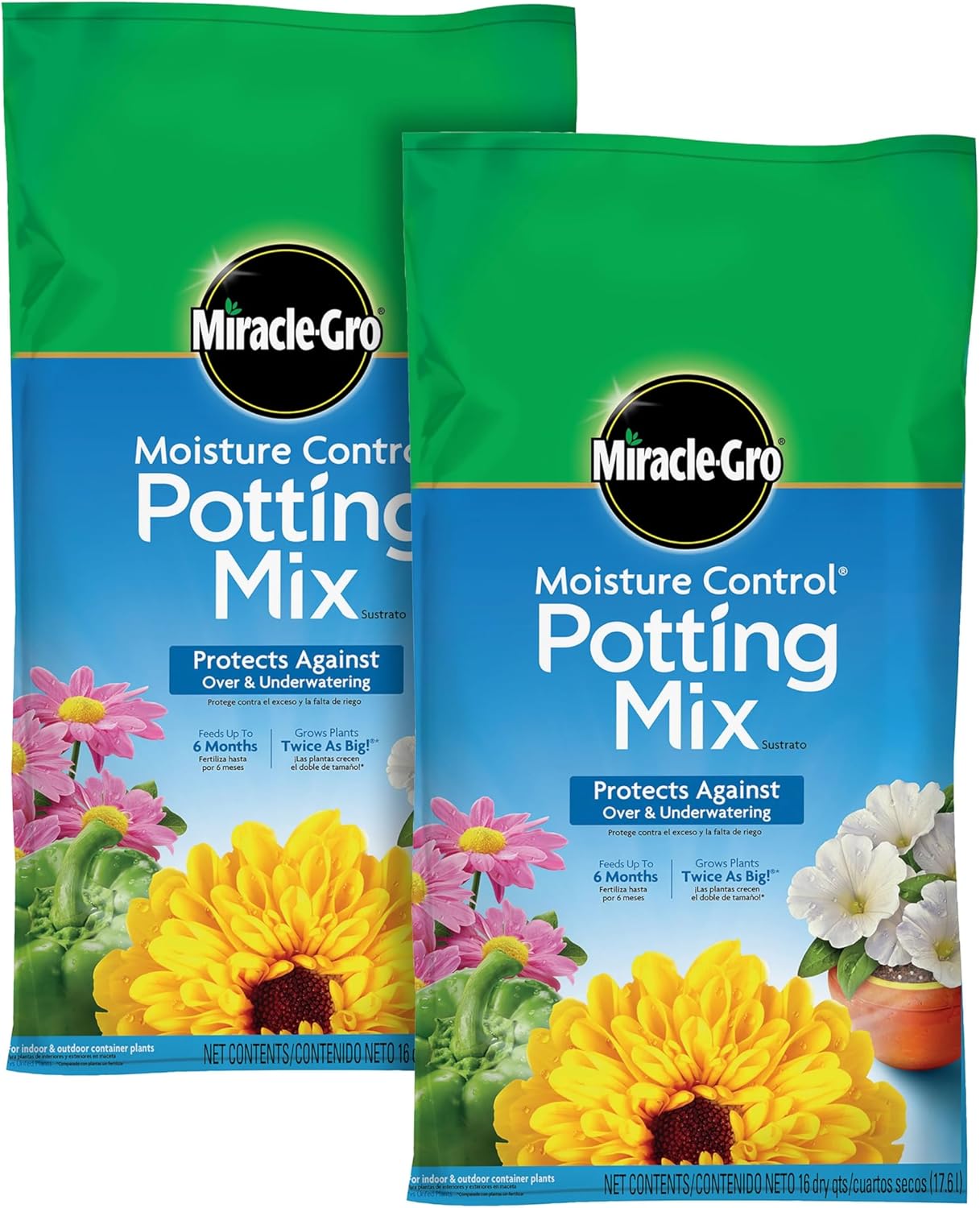
Miracle-Gro Moisture Control Potting Mix, 16 qt., 2-Pack
| Unit count | 2 |
|---|---|
| Style name | 16 qt. |
| Feeds plants | Up to 6 months |
| Intended use | For potted plants |
This Moisture Control Potting Mix is designed for container gardening and aims to reduce both over- and under-watering while feeding plants for up to six months. Typical use is straightforward: fill a drained pot about one third full, set the plant, top off with mix, and water through until runoff. The proprietary AquaCoir formula combines sphagnum peat moss, coir, and a wetting agent to absorb up to 33% more water than basic potting soil and to keep the mix airy so roots can breathe. For practical gardeners it simplifies watering schedules and supports bigger growth in outdoor containers, hanging baskets, and planter boxes. The bundle gives two 16-quart bags, each intended to fill roughly a 12-inch container. Limitations to note are standard for pre-mixed soils: it will compact over time and benefits from annual repotting or replenishing, and it is formulated for containers rather than in-ground beds.
Best for: Gardeners who want a low-fuss potting mix that stabilizes moisture and reduces watering frequency for outdoor containers and hanging baskets.
Less Ideal for: People looking for a soil to amend in-ground beds or for growers who prefer custom blends for specific crops or soil-less professional mixes.
- Moisture-control formula that absorbs up to 33% more water than basic potting soil
- Feeds plants for up to six months, reducing the need for frequent fertilizing
- Light, airy texture that promotes healthy root aeration in containers
- Sold as a two-pack of 16 qt. bags to cover multiple containers or a few large pots
- Formulated specifically for container use and not intended for in-ground beds
- Will eventually lose structure and nutrients and typically requires annual repotting or amendment
Verdict: A convenient, moisture-managing potting mix that reduces watering and feeds container plants for months, making it a smart choice for practical gardeners.
Back to the Roots 3-in-1 Seed Starting Mix, 6 Quart Organic Seed/Sowing Mix

| Unit Count | 192 Fluid Ounces |
|---|---|
| Volume | 0.23 cubic feet |
| Style Name | 3-in-1 Seed Starting Mix |
| Made in | USA |
This 3-in-1 seed starting mix is a lightweight, peat-free blend designed to get seeds and young plants off to a healthy start. It is pre-mixed with nutrient-rich ingredients like coconut coir, mycorrhizae, worm castings and yucca extract to support root development and moisture management, so you can fill trays, small pots, or starter cells without additional amendments. The formula is intended for indoor or outdoor seed starting and transplanting of herbs, vegetables and flowers, and the inclusion of moisture-controlling yucca helps reduce overwatering issues common with seedlings. Practical benefits include convenience of a ready-to-use bag and organic components that appeal to eco-minded gardeners. Limitations are typical for small volume bags: at 6 quarts this will cover only a few flats of seedlings, so budget buyers with larger projects will need multiple bags or a bulk alternative, and those wanting a heavier potting mix for mature plants may need to add extra perlite or compost. For routine seed starting and small-scale container gardens this mix simplifies early growth without peat.
Best for: Gardeners starting seeds or growing small container herbs and vegetables who want an easy, organic, peat-free starter mix that works straight from the bag and values convenience and sustainability.
Less Ideal for: Large-scale gardeners or anyone needing bulk soil for many pots or mature plants should choose a bulk bag or a heavier potting compost tailored for full-size container plants.
- Peat-free organic formula with coconut coir and worm castings for improved sustainability
- Contains mycorrhizae and nutrients to promote root development in seedlings
- Includes yucca extract for moisture control to help prevent overwatering
- Ready-to-use blend convenient for filling seed trays and small pots
- Small 6 quart volume means multiple bags are needed for larger projects
- Not formulated as a finished potting mix for large or mature plants
Verdict: Choose this peat-free, ready-to-use seed starting mix when you want an organic, convenient option to get seedlings and small container plants growing quickly.
Coast of Maine Cobscook Blend In-Ground Garden Soil, 1 cu ft

| Brand | Coast of Maine |
|---|---|
| Item Type | Plant Food |
| Included Components | SOIL |
| OMRI Listed | Yes |
Coast of Maine Cobscook Blend is an organic in-ground garden soil designed to refresh and build healthy garden beds. It is used by working the blend into existing soil or adding to planting holes to improve texture, drainage, and moisture retention thanks to ingredients like compost, sphagnum peat moss, and aged bark. The formula includes ocean-derived inputs such as lobster and kelp meals that supply slow-release nutrients and feed soil life, promoting microbial activity and healthier root growth. Practical benefits include easier cultivation of vegetables, perennials, and roses in sandy or compacted sites and a sustainable ingredient list that is OMRI-listed. The bag size is convenient for spot repairs or small beds, and the product avoids synthetic fertilizers in favor of building living soil. Limitations are that a single 1 cu ft bag is modest coverage for larger projects and gardeners wanting immediate, high-NPK feeding may need a supplemental fertilizer during heavy vegetable production.
Best for: Gardeners who prioritize long-term soil health and prefer organic, sustainably sourced amendments for small beds, spot repairs, or establishing richer in-ground planting areas.
Less Ideal for: People needing large-volume soil delivery for major bed builds or those who want instant, high-soluble nutrient boosts for heavy-feeding annuals.
- OMRI-listed organic formula that supports soil biology
- Contains compost and sea- and land-sourced amendments to improve structure and nutrients
- Improves moisture retention and drainage through peat moss and aged bark
- Suitable for in-ground vegetable beds, flower beds, and landscape plantings
- One cubic foot bag provides limited coverage for medium to large gardens
- Not formulated as a quick-release high fertilizer for heavy-feeding crops
Verdict: Choose this blend if you want a small-batch, OMRI-listed organic soil that builds living in-ground beds and supports long-term garden health.
Miracle-Gro Potting Mix, 16 qt. (2-Pack)

| Feeds up to | 6 months |
|---|---|
| Volume per bag | 16 quarts |
| Number of packs | 2 |
| Ingredients | Sphagnum peat moss, perlite, compost, fertilizer |
Miracle-Gro Potting Mix is a general-purpose container soil designed to support outdoor potted vegetables, herbs, annuals, perennials and shrubs. It is sold as two 16-quart bags and combines peat-based media, perlite and compost with slow-release fertilizer so newly potted plants get nutrients without immediate extra feeding. Typical use is filling a drained pot about one-third, setting the root ball, topping off and watering through; the brand’s instructions and images make potting straightforward for beginners. Practical benefits include good drainage for container roots, lightweight handling compared with garden soil, and up to six months of feeding that reduces how often you need to fertilize. Limitations are that it is intended for containers only and not formulated as a heavy soil amendment for in-ground beds, and repeated repotting or soil refreshes are advised to avoid compaction and nutrient depletion over time. Safety notes recommend avoiding skin or eye contact and keeping the product away from children and pets.
Best for: Gardeners who grow vegetables, herbs or ornamentals in outdoor pots and want a low-effort, reliable potting mix that reduces frequent feeding and watering.
Less Ideal for: Home gardeners focused on in-ground beds, heavy soil improvement, or those seeking organic-only formulations should consider a different product.
- Formulated for containers with components that promote drainage and root aeration
- Includes slow-release fertilizer that feeds plants for up to six months
- Clear usage guidance for potting and repotting makes it beginner-friendly
- Sold as a two-pack for replacing or repotting multiple containers
- Not intended for in-ground garden beds or heavy soil amendment
- Will require annual repotting or fresh mix to prevent compaction and nutrient decline
Verdict: A convenient two-pack potting mix that makes getting outdoor container plants established easier by combining good drainage with up to six months of built-in feeding.
Back to the Roots Organic Expanding Coco Coir Potting Soil Brick (10 lb)

| Item Highlight | 10 lb compressed coco coir brick; peat-free, OMRI Listed |
|---|---|
| Item Type Name | Coconut Coir |
| Volume | 2 cubic feet |
| Ingredients | Coconut Coir |
This 10 lb compressed coco coir brick is designed to expand into roughly 2 cubic feet of loose, pH-balanced growing medium when you add water. It is typically used to fill pots, refresh container mixes, start seeds, or lighten heavy garden soil by mixing in. The product is peat-free and OMRI listed, so it appeals to gardeners who prefer organic and sustainable inputs. Practical benefits include easy storage and transport compared with bulky soil bags, good water retention with improved aeration for roots, and versatility to use alone or blended with existing soil. Limitations to consider are that coco coir supplies few nutrients on its own, so you will need to add fertilizer for long-term container crops, and it requires rehydration and fluffing after expanding which adds a small setup step. For risk-averse gardeners this offers a consistent, clean base media that reduces variability versus unknown bagged loam, but plan to supplement nutrition for feeding vegetables and heavy feeders.
Best for: Gardeners who want a reliable, organic base medium for pots, seed starting, or amending soil and who prioritize predictable, peat-free materials over guessing at unknown bagged soils.
Less Ideal for: People who want an all-in-one potting mix with built-in long-term fertilizer or those unwilling to mix and amend their media for specific crops.
- Compact, easy-to-store compressed brick that expands to about 2 cubic feet
- OMRI listed and peat-free for organic and environmentally minded gardeners
- pH-balanced and improves water retention and aeration when hydrated
- Versatile: usable alone for seed starting or mixed with existing soil to lighten heavy mixes
- Provides little inherent fertility so regular fertilization is required for sustained plant growth
- Must be hydrated and fluffed before use which adds a prep step
Verdict: A compact, OMRI-listed coco coir brick that reliably expands into a clean, pH-balanced growing medium ideal for risk-averse gardeners seeking a sustainable base soil.
Choosing the Right Garden Soil: Key Factors to Consider
Texture and Structure
Soil texture controls how well roots can move and how fast water drains. Sandy soils drain quickly but hold fewer nutrients, while clay soils hold water and nutrients but can compact and limit root growth. A loamy texture that balances sand, silt, and clay offers the best compromise for most garden plants because it provides good aeration and steady moisture.
Structure relates to how particles bind into crumbs or aggregates. Well-structured soil resists crusting, warms evenly in spring, and allows consistent watering. When choosing a garden soil, look for mixes that feel crumbly, not gummy or powdery, because that indicates stable aggregates that support healthy root systems.
Nutrient Content and Organic Matter
Nutrient levels and organic matter determine how quickly young plants establish and how productive perennials or vegetables will be. Organic matter provides a slow-release reservoir of nitrogen, phosphorus, and potassium, and it nurtures beneficial soil microbes. Soils with a healthy proportion of compost or decomposed organic material reduce the need for frequent feeding in the first season.
Consider whether the soil contains balanced, plant-available nutrients or simply raw materials that require additional fertilizing. For long beds or heavy feeders, a richer starting soil reduces follow-up work; for light feeders or maintenance beds, a leaner base that you amend selectively can be preferable.
Moisture Retention and Drainage
How a soil holds and releases water affects irrigation demands and root health. A soil that drains poorly invites root rot, while one that dries out too fast stresses plants and increases watering frequency. The ideal garden soil retains enough moisture for consistent growth while allowing excess water to escape after heavy rain.
Modifiers such as coir, peat, or aged compost influence water-holding capacity. Choose a soil whose moisture profile matches your climate and planting plan. In hot or windy sites you may favor mixes with better retention; in heavy clay yards you may prioritize faster-draining blends to prevent standing water.
pH and Ability To Adjust
Soil pH affects nutrient availability. Most vegetables and many ornamentals prefer a near-neutral pH, while azaleas, blueberries, and some ericaceous plants need acidic conditions. A garden soil that is close to neutral gives you flexibility and reduces the need for corrective amendments.
Also consider how easy it is to alter the soil pH if needed. Some soils buffer changes strongly, which can be useful or problematic depending on your goals. If you plan acid-loving plantings, choose a base that you can reliably acidify with amendments; for general-purpose beds, a neutral, well-balanced pH saves work.
Ease of Handling and Application
Practical handling matters: how heavy the soil is when wet, how fine or coarse it is to shovel, and whether it dusts or clumps during spreading. Lightweight, well-structured soils make filling raised beds or topdressing easier and reduce physical strain. For large areas, availability in bulk or in manageable bag sizes affects labor and logistics.
Also think about how the soil integrates with existing ground. Some mixes settle or compact more than others. A soil that blends smoothly with in-ground borders or layers well in containers avoids future rework and makes planting day faster and cleaner.
When to Use Garden Soil Versus Potting Mix
Garden soil is formulated to support in-ground beds and many types of containers that will not be moved frequently. It is usually heavier and richer in mineral content than potting mixes, which are designed primarily for container drainage and frequent root pruning. Use garden soil when you need structure and sustained nutrient supply for beds, vegetable plots, and larger planters.
Potting mixes remain a better choice for seed starting and small mobile containers because they are lighter and sterile. For deep-rooting perennials and established raised beds, garden soil helps roots access a stable reserve of nutrients and moisture over seasons.
- Garden soil for raised beds and permanent borders
- Potting mix for small or temporary containers and seed starting
- Mix garden soil with amendments when planting acid-loving or specialized crops
Preparing a Site Before Adding New Soil
Before adding purchased garden soil, clear competing weeds and perennial roots, and loosen compacted ground to help the new soil integrate. If you are topping an existing bed, rake and lightly fork the surface so the new material blends without forming a barrier layer.
For deep renovations, excavate compacted layers and use a mix of new soil and aged organic matter to restore structure. Avoid simply piling soil on top of an impermeable layer, as that creates a perched water table that can harm roots.
- Remove persistent weeds and roots first
- Loosen underlying soil to aid drainage and root penetration
- Blend new soil with existing material for gradual integration
Adjusting Garden Soil for Different Plant Types
Not all plants share the same soil needs. Amend general garden soil to suit heavy-feeding vegetables with extra compost and steady-release organic fertilizer. For bulbs and corms, improve drainage by adding grit or coarse sand to prevent rot.
For acid-loving shrubs, incorporate ericaceous amendments gradually rather than forcing sudden pH changes. Always retest soil pH after large-scale amendments and allow several weeks for the soil chemistry to stabilize before planting.
- Add compost and organic fertilizer for heavy feeders
- Increase drainage for bulbs with grit or coarse sand
- Use specialized acidic amendments gradually for ericaceous plants
Storing and Keeping Garden Soil Ready
Store extra garden soil in a covered area to prevent nutrient leaching and weed seed contamination. If you buy in bulk, keep a breathable cover to allow air flow while protecting from heavy rain that could compact or wash away fines.
Avoid storing soil directly on bare ground for long periods; use a pallet or sheet to reduce contamination and mixing with local fill. Rotate stock so older, more stable soil is used first and fresher mixes go into priority plantings.
- Cover stored soil to prevent nutrient and structure loss
- Keep off bare ground to avoid contamination
- Use older stock first to maintain consistency
Common Mistakes When Adding Garden Soil
A frequent error is adding a thin layer of richer soil on top of compacted native ground without mixing. That creates a barrier that roots struggle to penetrate and may cause water to sit at the interface. Instead, blend new soil into the existing profile or fully replace compacted layers where practical.
Another mistake is over-amending with peat or fine materials that hold too much moisture, especially in heavy soils. Aim for balance and test drainage behavior after small trial areas before committing to large-scale changes.
- Do not simply cap compacted soil with a thin rich layer
- Test drainage after amendments before planting widely
- Avoid too-fine amendments that create waterlogged conditions
How We Chose the Best Garden Soil
We focused on attributes that matter to gardeners establishing or improving beds and containers. Primary evaluation criteria included soil texture and structure because these determine drainage and root penetration; nutrient content and slow-release organic matter because those affect plant vigor over months; moisture retention characteristics to reduce watering frequency without causing waterlogging; and ease of handling and application for common garden tasks like filling raised beds or topdressing borders. We also considered pH neutrality and amendability, looking for soils that accept further adjustments for acid- or alkaline-loving plants. Longevity and stability were checked to prefer mixes that maintain structure rather than compacting quickly. Exclusions included specialty mixes targeted solely at one plant type (for example, single-species potting mixes or seed-starting-only media), purely decorative topdressings, and untreated fill dirt, as those do not provide balanced growth support. The final shortlist contains options that meet these practical standards and perform reliably across a range of climates and garden uses. The scoring criteria reflect the same dimensions gardeners care about when choosing a soil for planting, establishing beds, or refreshing containers.
FAQ
How much garden soil do I need to topdress an existing bed?
Amount depends on bed size and desired depth. For a light topdress to improve surface organic matter, 1 to 2 inches is typical. For rebuilding or raising beds, plan for deeper replacement, and measure bed area in square feet to calculate volume.
Can I use garden soil in containers?
You can use garden soil in large, permanent containers where weight is not an issue, but it may be too heavy for small pots and can compact over time. Blending with lighter materials improves drainage and handling for most containers.
How soon can I plant after adding new garden soil?
Usually you can plant right away if the soil is well-mixed and has balanced nutrients. If you added strong amendments or lime, allow a few weeks for chemistry to stabilize and retest pH for sensitive crops.
Will garden soil reduce how often I water?
A quality garden soil with adequate organic matter will hold moisture better than raw fill and can reduce watering frequency. The exact effect depends on climate, plant type, and how deep the root zone is.
Should I test the soil before planting?
Yes. A basic soil test for pH and nutrient levels helps you decide on amendments and fertilizer needs. Testing also identifies deficiency patterns so you can address them before planting heavy feeders.
Final Verdict
Pick garden soil based on how you will use it: prioritize texture and structure for long-term beds, nutrient-rich mixes for vegetables, and better moisture retention for hot, dry sites. Balance pH adjustability and ease of handling against the specific needs of your plants. Focus on the tradeoffs: richer soils reduce feeding but may need attention to drainage, while leaner mixes require more targeted fertilizing but are easier to tailor. Choosing a soil that matches your planting plan and maintenance capacity is the quickest path to reliable garden results.
