

Note: This article contains affiliate links. If you click on these links and make a purchase, I may earn a small commission at no extra cost to you. This helps support my research and content. Read my full affiliate disclosure here.
Choosing the right garlic fertilizer changes how well your bulbs form, size up, and store through winter. Garlic has distinct nutrient needs across planting, bulb development, and curing stages, so the fertilizer you use affects yield, flavor, and postharvest quality. This guide covers six shortlisted garlic fertilizers garden-tested for typical backyard and small-scale vegetable plots. We evaluate each option for nutrient balance, application timing, and ease of use so you can pick a product that fits your soil and time commitment. Read on for practical notes on feeding schedule, soil testing, and compatibility with organic plots.
Top Picks at a Glance
| Best Quality Built to a higher standard if you want something more solid | Old Cobblers Farm Wicked Growth Garlic & Onion Fertilizer (5 lb) |  |
| Best Value The sweet spot between price and what you get | TPS Nutrients Garlic Fertilizer Liquid Plant Food, 32 oz |  |
| Best Budget The cheapest option that still gets the job done reliably | Gardenera Liquid Power Garlic Fertilizer Spray, Ready-to-Use 8 oz |  |
| Highest Rated A top-rated pick with lots of positive feedback | Gardenera Liquid Power Garlic Fertilizer Concentrate, 8 oz |  |
| Most Popular A crowd favorite that many people choose with confidence | TPS NUTRIENTS Garlic Fertilizer Liquid Plant Food, 8 oz |  |
| Best Seller A high-volume bestseller chosen again and again | Gardenera Liquid Power Garlic Fertilizer Concentrate, 32 oz |  |
Old Cobblers Farm Wicked Growth Garlic & Onion Fertilizer (5 lb)

| Item Form | Granules |
|---|---|
| Application Method | Granular |
| Target Species | Garlic and Onion |
| Unit Count | 16 Ounce |
This granular fertilizer is designed specifically for allium crops and combines a balanced 10-10-10 NPK with added sulfur, calcium, boron, and zinc to support bulb set, firmness, and flavor compounds. Use it as a pre-plant soil amendment (mix into the bed) and as a periodic side-dress once plants reach 4 to 6 inches, following the label schedule every 4 to 6 weeks and stopping a few weeks before harvest. Notable features include a guaranteed nutrient analysis that addresses sulfur needs unique to garlic and onions and trace elements that help even bulb formation. In practice it is easy to apply, stores as a dry granular, and the directions are clear about keeping granules off foliage and watering in after application. Limitations are that it is a conventional synthetic-style granular feed so gardeners wanting organic certification or slow-release only products should look elsewhere, and effectiveness depends on correcting soil imbalances first via testing. For growers focused on maximizing bulb size, storage quality, and characteristic allium flavor, this product gives targeted nutrition in a straightforward format.
Best for: Serious backyard and small-scale growers who want a purpose-built fertilizer to maximize garlic and onion bulb size, storage quality, and characteristic flavor through targeted nutrient feeding.
Less Ideal for: Growers strictly seeking organic-certified or wholly slow-release nutrient sources or those who prefer liquid feeding programs for quick foliar corrections.
- Balanced 10-10-10 NPK tailored for bulb development
- Includes 3% sulfur plus calcium, boron, and zinc to support allium flavor and even bulb formation
- Clear usage directions for pre-plant mixing and repeat side-dressing
- Granular form is easy to store and apply to beds or rows
- Not labeled as organic, so it is unsuitable for certified organic production
- Performance depends on correcting soil deficiencies first with a soil test
Verdict: Choose this product when you want a focused, sulfur-enriched granular fertilizer made to boost bulb development, flavor, and storage quality in garlic and onions.
TPS Nutrients Garlic Fertilizer Liquid Plant Food, 32 oz

| Item Form | Liquid |
|---|---|
| Specific Uses For Product | Plant Growth |
| Coverage | Garlic and All Allium Varieties |
| Liquid Volume | 32 fluid ounces |
| Mixing Ratio | 1:0:0 |
This 32-ounce liquid fertilizer from TPS Nutrients is designed for garlic and other alliums and is used as a regular feed to encourage tight bulb formation and sturdy tops. It is a low-nitrate, kelp-enriched formula with added calcium and magnesium, intended to deliver balanced nutrients without pushing excessive leaf growth. Typical use is diluting per the included mixing directions and applying during the growing season to garden beds or raised rows where garlic is planted. Practical benefits include targeted nutrition for bulb development, easy foliar or soil feeding because it is liquid, and trace mineral support that can help reduce tip burn and strengthen tissue. Limitations are that the label gives a simple mixing ratio but little detailed timing guidance for different garlic varieties, and a single 32 fl oz bottle may be small for larger plots. This product is a straightforward option for gardeners who want a garlic-focused feed rather than a general-purpose fertilizer.
Best for: Practical home gardeners growing garlic in beds or raised rows who want a purpose-built feed to promote consistent bulbs without encouraging excess leafy growth.
Less Ideal for: Large-scale growers or those seeking an all-purpose fertilizer for many crop types should consider higher-volume or multi-crop products instead.
- Formulated specifically for garlic and other alliums to support bulb development
- Liquid form makes measuring, diluting, and applying quick and flexible
- Includes calcium, magnesium, and kelp for improved plant strength and micronutrient support
- Limited dosing and timing detail on the label for different planting conditions
- 32 fl oz volume may require multiple bottles for larger garden areas
Verdict: Choose this if you want a simple, garlic-specific liquid feed that helps form tighter bulbs and strengthens plants.
Gardenera Liquid Power Garlic Fertilizer Spray, Ready-to-Use 8 oz

| Item Form | Liquid |
|---|---|
| Application Method | Spray |
| Coverage | Full |
| Target Species | Garlic |
| Liquid Volume | 8 fluid ounces |
Gardenera Liquid Power Garlic Fertilizer Spray is a premixed foliar plant food designed for fast nutrient delivery to garlic through leaf and stem application. You simply shake and mist the plants every 7 to 14 days, which makes it convenient for small beds, containers, or indoor garlic. The ready-to-use spray removes guesswork around dilution and measuring and its fast-acting formula aims to support greener foliage, stronger roots, and higher-quality bulbs. Notable features are the targeted garlic formulation and full coverage spray bottle that lets you treat individual plants or rows quickly. Because it is a concentrated concept in an 8 ounce bottle, it is best for gardeners with a modest number of plants rather than large acreage. There is limited ingredient detail beyond a generic "Plant Superfood" label, so organic certification or exact N-P-K values are not provided. For homeowners wanting a simple, no-mix option to boost garlic growth, this delivers straightforward, easy-to-use foliar feeding with visible effects within a few applications.
Best for: Gardeners who grow garlic in small plots, raised beds, or containers and want a hassle-free, premixed foliar feed to boost growth without mixing fertilizers.
Less Ideal for: Large-scale growers or those who need a granular or bulk fertilizer solution for many plants should consider higher-volume or formulation-specific products.
- Ready-to-use spray eliminates measuring and mixing
- Formulated specifically for garlic for targeted feeding
- Fast-acting foliar delivery that is absorbed through leaves and stems
- Convenient spray bottle suitable for indoor and outdoor use
- Small 8 oz volume is not economical for treating large plots
- No detailed N-P-K or full ingredient breakdown provided
Verdict: Buy this if you want a simple, ready-to-use foliar spray that gives garlic a quick nutrient boost with no mixing required.
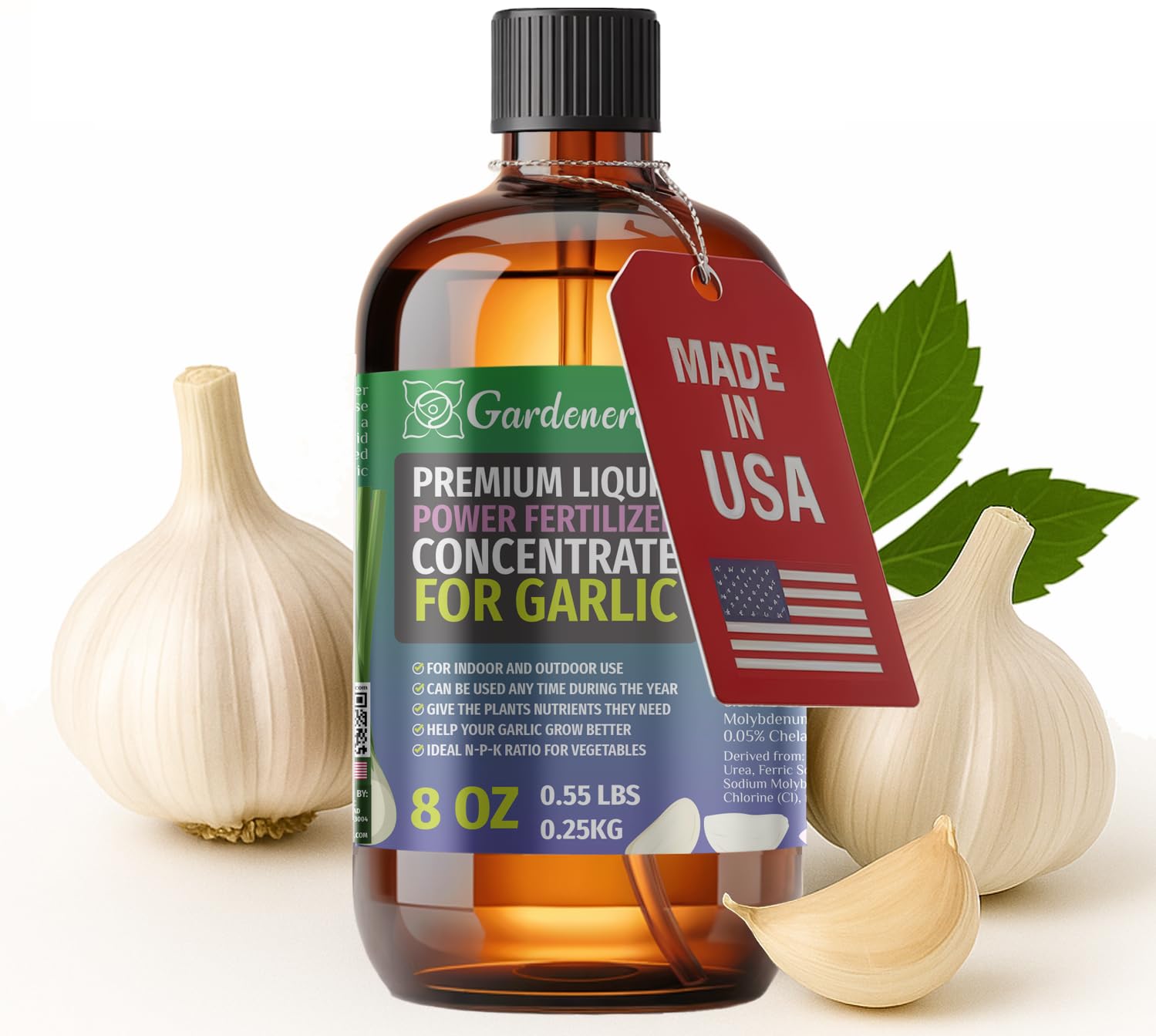
Gardenera Liquid Power Garlic Fertilizer Concentrate, 8 oz
| Item Form | Liquid |
|---|---|
| Application Method | root drench, hose sprayer, or foliar mist |
| Coverage | Low |
| Target Species | Garlic |
| Liquid Volume | 8 fluid ounces |
Gardenera Liquid Power is a focused liquid fertilizer made specifically for garlic, offered as an 8 ounce concentrate for root drenches, hose sprayers, or foliar misting. In practice you dilute and apply it during key growth stages to encourage vigorous tops, bigger cloves, and stronger root systems. The formula combines NPK with chelated micronutrients and an acidic profile to free locked-up elements in alkaline soils, which can help correct common nutrient deficiencies and improve flavor development. Its small concentrated bottle is convenient for hobby beds, containers, or small plots and makes targeted feeding straightforward. Because coverage is listed as low, this product is best for seasonal applications or for growers who treat specific plants rather than wide-area feeding. The low pH and concentrated nutrition mean you should follow dilution guidance to avoid overfeeding or foliar burn, and the 8 ounce volume may require multiple purchases for larger gardens. For growers seeking a garlic-tailored feed that acts quickly and supports bulb quality, this is a practical, reliable option.
Best for: Gardeners who prioritize predictable, crop-specific feeding for garlic beds and value a product engineered to support bulb size and flavor in small plots or containers.
Less Ideal for: Large-scale growers or those who need broad coverage from a single purchase should consider bulk or landscape-grade fertilizers instead.
- Formulated specifically for garlic with a balanced NPK and chelated micronutrients
- Multiple application methods: root drench, hose sprayer, or foliar mist
- Acidic formula helps unlock micronutrients in alkaline soils
- Concentrated 8 oz bottle is easy to store and transport
- Coverage rated as low so not suited for treating large areas in a single bottle
- Very acidic pH requires careful dilution to avoid plant or foliar damage
Verdict: Buy this if you want a garlic-specific, fast-acting concentrate that reliably promotes bigger bulbs and stronger roots in small-scale gardens.
TPS NUTRIENTS Garlic Fertilizer Liquid Plant Food, 8 oz

| Item Form | Liquid |
|---|---|
| Specific Uses For Product | Plant Growth |
| Coverage | garlic and allium varieties |
| Target Species | garlic and allium varieties |
| Unit Count | 8 Fluid Ounces |
This 8-ounce liquid garlic fertilizer from TPS Nutrients is made to feed garlic and other alliums through the bulb-forming season. It delivers a gentle, nitrate-conscious nutrient balance with added calcium, magnesium, and kelp to promote tight bulbs and strong green tops without excessive leafy growth. Typical use is diluting per the directions and applying to garden beds or raised rows at intervals during the growing season to support root strength and consistent bulb formation. Practical benefits include targeted formulation for garlic, ease of use as a liquid concentrate, and supplemental minerals that can help prevent common deficiencies. Because it is a concentrated liquid and not a slow-release granular, it requires regular applications and careful dosing to avoid overfeeding. Safety precautions such as gloves and eyewear are advised. For gardeners who want a garlic-focused feed backed by clear labeling and straightforward directions, this product provides a convenient, specialist option for improving bulb quality.
Best for: Gardeners focused on improving garlic bulb size and quality who prefer a product tailored to alliums and clear ingredient information and usage guidance.
Less Ideal for: People who want a low-maintenance, single-application granular fertilizer for large-scale plantings should consider other options.
- Formulated specifically for garlic and allium varieties to encourage bulb development
- Includes calcium, magnesium, and kelp to address common micronutrient needs
- Liquid concentrate is easy to mix and apply to garden beds and raised rows
- Gentle nitrate formula aimed at feeding bulbs without overstimulating foliage
- Small 8 oz bottle means frequent repurchasing for larger gardens
- Requires correct dilution and repeated applications rather than one-time feeding
Verdict: A compact, garlic-focused liquid feed that makes it easy for home gardeners to boost bulb development and nutrient balance.
Gardenera Liquid Power Garlic Fertilizer Concentrate, 32 oz

| Item Form | Liquid |
|---|---|
| Application Method | root drench, hose sprayer, or foliar mist |
| Target Species | Garlic |
| Liquid Volume | 32 fluid ounces |
Gardenera Liquid Power is a fast-acting liquid fertilizer formulated specifically for garlic growers. It is intended for use as a root drench, through a hose sprayer, or as a foliar mist and supplies a balanced NPK blend plus chelated micronutrients to encourage stronger roots, larger cloves, and healthier tops. The product’s low pH helps unlock iron and other micronutrients in alkaline soils, which can improve uptake and reduce visible deficiencies. In practice you dilute the concentrate for regular feedings during the growth cycle to promote vigorous early leaf growth and later bulb development. Practical benefits include flexibility of application methods, a garlic-focused nutrient profile, and a concentrated 32 oz size that treats multiple plantings. Important limitations are that the label gives limited coverage guidance beyond "Low" and the acidic formula means careful dilution is required to avoid root burn or foliar damage on sensitive plants. Follow dilution and timing recommendations for best results in pots or garden beds.
Best for: Buyers who want a garlic-focused feed that actively improves bulb formation and nutrient uptake and who prefer a ready-made concentrate tailored to garlic care.
Less Ideal for: Gardeners who prefer all-purpose or multi-crop fertilizers or those unwilling to measure and dilute an acidic concentrate; not ideal for users seeking detailed coverage rates on the label.
- Formulated specifically for garlic to support bulb size and flavor
- Multiple application methods: root drench, hose sprayer, or foliar mist
- Contains chelated micronutrients to improve nutrient availability in alkaline soils
- Concentrated 32 fl oz volume treats several plantings
- Low pH helps release locked-up nutrients for faster uptake
- Label lists coverage as "Low" and provides limited dosing/coverage detail
- Very acidic formula requires careful dilution to avoid plant damage
Verdict: If you want a garlic-specific, fast-acting concentrate to promote bigger cloves and stronger roots, this product is built for that purpose.
Choosing the Right Garlic Fertilizer: Key Factors to Consider
Nutrient Profile and Timing
Garlic needs different nutrients at each stage. Early on, moderate nitrogen supports root and leaf growth without encouraging excessive foliage that reduces bulb size. During bulbing, a shift toward phosphorus and potassium helps bulb set and size while supporting skin development for storage. Knowing a fertilizer's N-P-K ratio and micronutrient content matters because it tells you whether the product is best at planting, during midseason side-dressing, or for a final feed before harvest.
Timing is as important as ratios. A fertilizer that supplies too much nitrogen late in the season can delay bulb maturation and increase rot risk. Select products that include clear timing guidance or that can be applied in split doses so you can match feeding to green growth, bulbing initiation, and preharvest hardening.
Soil Test Results and pH
A soil test identifies nutrient deficits and pH issues that control nutrient availability. Garlic prefers loose, well-drained soil with a near-neutral pH; deficiencies in phosphorus or potassium are common limiting factors for bulb size. A fertilizer chosen to correct specific test results will be more effective than a general-purpose feed.
pH also affects micronutrient availability. If your soil pH is outside the optimal band, some fertilizer benefits may be muted. Consider pairing a corrective fertilizer with amendments that adjust pH or selecting a formulation that contains chelated micronutrients for better uptake in marginal soils.
Formulation and Application Method
Fertilizers come as granular, water-soluble, liquid concentrate, or slow-release blends. Granular products are easy to broadcast or side-dress and work well for preplant incorporation. Water-soluble or liquid feeds give quick nutrient availability and are useful for targeted midseason boosts. Slow-release blends reduce the risk of leaching and overfeeding but may not respond quickly when a fast correction is needed.
Choose a formulation that matches how you work in the garden. If you do regular foliar feeds or have a drip irrigation system, water-soluble fertilizers are practical. For minimal disturbance beds or dry climates, slow-release granules can protect bulbs from salt buildup and reduce labor.
Compatibility With Organic Practices
Many gardeners prefer organic fertilizers for garlic because organic amendments often improve soil structure and microbial life in addition to supplying nutrients. Organic products typically release nutrients more slowly and rely on soil biology for conversion. That can be ideal for sustained bulb development but may require earlier application and planning.
If you follow organic certification or want to build long-term soil health, choose fertilizers with recognizable organic inputs and avoid synthetic salts that can harm beneficial organisms. Consider how a fertilizer interacts with compost, cover crops, and inoculants you already use.
Salt Index and Risk of Burn
Garlic is sensitive to high soluble-salt concentrations at the root zone. Fertilizers with a high salt index can damage young roots or cause uneven bulb development. Products designed for vegetables usually list salt index or provide application rates that minimize risk.
When planting cloves, avoid placing high-salt granules in direct contact with the seed piece. Opt for broadcast incorporation or lower-strength starter feeds. If you garden in a hot, dry region, the salt risk is greater because salts concentrate as water evaporates, so adjust product choice and application frequency accordingly.
Ease of Use and Storage
Practical handling matters across a growing season. Powdery or dusty fertilizers can be messy and uneven to spread, while liquids require measuring and may need dilution. Look for clear labeling, easy-to-follow rates per linear foot or per plant, and storage stability for the season.
Also consider packaging that keeps moisture out and whether the product requires special disposal. A fertilizer that is simple to measure and store reduces mistakes and makes it easier to follow a consistent feeding schedule for predictable bulb results.
When to Feed Garlic
Feed garlic in phases that follow its growth cycle. Apply a starter feed at planting to encourage root establishment, then switch to a midseason side-dress to support bulb initiation and enlargement. Stop high-nitrogen applications several weeks before harvest to allow bulbs to cure and skins to toughen.
Adjust timing to your climate and planting date. In mild-winter areas you may need a different cadence than gardeners in colder zones. Always factor in rainfall and irrigation schedules because heavy rain can leach soluble nutrients and require a follow-up feed.
- Starter feed at planting or just after emergence
- Side-dress when scapes appear or when leaves reach active growth
- Final, lower-nitrogen feed 3 to 4 weeks before harvest
Applying Fertilizer Correctly
Use recommended rates and avoid placing concentrated granules directly over cloves. For side-dressing, apply fertilizer in a band a few inches to the side of the row and lightly incorporate or water it in to move nutrients to the root zone without damaging bulbs.
For liquid or water-soluble feeds, dilute according to label instructions and apply at times of day when plants can take up nutrients without heat stress. Foliar feeding can be useful for quick micronutrient corrections but should not replace soil applications for major nutrients.
- Side-dress rather than broadcasting over established beds to reduce waste
- Water in granular feeds to prevent salt concentration at roots
- Limit foliar sprays to micronutrient shortages or early-season boosts
Managing Common Nutrient Problems
Yellowing leaves early in the season often point to nitrogen shortage or poor root growth. If nitrogen is low, a light feed will green up foliage, but excess nitrogen late in the season can harm bulb formation. Stunted plants with poor bulb development are often linked to low phosphorus or compacted soil limiting root expansion.
Potassium deficiency can show as weak skin formation and poor storage life. If you see symptoms midseason, apply a potassium-rich side-dress and adjust irrigation to avoid salt stress. For persistent micronutrient symptoms, correct soil pH or use a targeted chelated micronutrient feed.
- Nitrogen deficiency: pale leaves, thin scapes
- Phosphorus deficiency: slow early growth, small bulbs
- Potassium deficiency: poor skin, reduced storage life
Integrating Fertilizer With Soil-Building
Fertilizer supplies plant-available nutrients, but long-term soil health comes from organic matter and biology. Combine fertilization with compost, cover crops, and crop rotations to build tilth and water-holding capacity. A balanced program reduces reliance on high-salt, quick-release feeds and improves bulb consistency year to year.
If you add compost at planting, reduce synthetic starter rates accordingly. Compost also moderates nutrient release in sandy soils and buffers salts in heavier soils, improving the effectiveness of whatever fertilizer you choose.
- Use compost or well-rotted manure for steady nutrient release
- Plant cover crops in the off-season to restore nutrients
- Adjust fertilizer rates when adding generous organic amendments
Storage and Handling Best Practices
Store fertilizers in a cool, dry place away from moisture and pet access. Keep granules sealed to prevent caking and liquids capped to avoid contamination. Label any decanted mixes with concentration and date so you do not accidentally apply overly strong solutions.
When measuring and applying, wear gloves if the product is concentrated and avoid inhaling dust. Clean tools and measuring containers after use to prevent cross-contamination between products and to maintain accurate application rates during the season.
- Seal packages to prevent moisture uptake
- Label homemade mixes with date and dilution
- Clean measuring tools between different fertilizers
How We Chose the Best Garlic Fertilizer
We focused on attributes that matter for growing garlic in backyard beds and small market plots. Primary evaluation criteria were nutrient profile relevance for all bulb stages, clarity of application instructions and timing, and physical form or formulation that suits common garden methods. We also considered how forgiving a fertilizer is if slightly overapplied, compatibility with organic soil-building programs, and practical handling factors such as dust, odor, or need for special equipment. Products that lacked clear N-P-K and micronutrient information, provided no guidance for split feeding, or were clearly mismatched to garlic growth stages were excluded. We prioritized fertilizers that support both planting-time root development and the midseason bulbing phase, and we applied the same standards across synthetic and organic options to keep recommendations comparable.
FAQ
When should I apply fertilizer to newly planted garlic cloves?
Apply a light starter feed at planting or shortly after shoots emerge to support root development. Avoid placing high-strength granules directly on the clove and use a banded application or dilute starter solution instead.
Can I use general vegetable fertilizer on garlic?
Often general vegetable fertilizers work, but choose one with a nutrient profile suited to bulbing crops. Avoid high late-season nitrogen and follow split-feeding guidance so nutrients match garlic's growth stages.
How do I correct micronutrient deficiencies in garlic?
First check soil pH and correct it if needed, then use targeted micronutrient applications, preferably chelated forms for quick uptake. Foliar sprays can correct acute shortages faster but should complement soil-based corrections.
Is it better to use organic fertilizer for garlic?
Organic fertilizers support soil biology and release nutrients more slowly, which can benefit bulb consistency and long-term soil health. They require earlier application and may need pairing with compost to meet peak nutrient demands.
How much fertilizer will burn garlic roots?
The risk depends on formulation and salt index. High-salt or overconcentrated solutions can burn roots, so follow label rates, avoid placing granules directly on cloves, and water in applied amendments to dilute salts.
Can foliar feeding replace soil applications for garlic?
Foliar feeding is effective for supplying micronutrients quickly but does not replace soil applications for primary nutrients like nitrogen, phosphorus, and potassium. Use foliar sprays as a supplemental fix when needed.
Final Verdict
Pick a garlic fertilizer that aligns with your soil test and garden workflow. Prioritize products with an N-P-K profile and micronutrient content appropriate for both early root growth and the bulbing phase, and choose a formulation that matches how you apply nutrients. Balance short-term yields with long-term soil health by combining targeted fertilization with compost and cover crops. With the right feeding plan and attention to timing, you can reliably increase bulb size and storage life without risking late-season softness or burn.
