

Note: This article contains affiliate links. If you click on these links and make a purchase, I may earn a small commission at no extra cost to you. This helps support my research and content. Read my full affiliate disclosure here.
Thick, dense turf demands more from a mower than a neat trim. You need a machine with steady torque, a robust cutting deck, and a blade system that resists clogging so you can finish jobs quickly and without repeated passes. This guide looks at a shortlist of seven strong gas lawn mower options selected for performance in tough stands of grass. We evaluated machines for engine torque and cutting consistency, deck construction and clog resistance, and real-world handling in heavy growth. Read on to see the practical strengths and tradeoffs that matter when choosing a gas lawn mower for thick grass.
Top Picks at a Glance
| Best Overall The best all-around choice for most situations | PowerSmart EasyDrive Pro 22-Inch 170cc Self-Propelled Gas Lawn Mower |  |
| Best Quality Built to a higher standard if you want something more solid | SENIX 22-inch 201cc Rear-Wheel Self-Propelled Gas Lawn Mower |  |
| Best Value The sweet spot between price and what you get | SENIX 21-Inch Gas Push Lawn Mower, 144cc 4-Cycle, 2-in-1 Mulching/Side Discharge |  |
| Best Budget The cheapest option that still gets the job done reliably | YOXIER 131cc 4‑Cycle 3‑in‑1 Gas Push Lawn Mower |  |
| Highest Rated A top-rated pick with lots of positive feedback | Bdujhit 20" Self-Propelled Gas Lawn Mower with 140cc OHV Engine, 3-in-1 Mulch/Bag/Rear Discharge |  |
| Most Popular A crowd favorite that many people choose with confidence | SENIX 201cc 22" 3-in-1 Variable Speed Self-Propelled Gas Lawn Mower |  |
| Best Seller A high-volume bestseller chosen again and again | SENIX 21" 144cc 3‑in‑1 Gas Push Lawn Mower |  |
PowerSmart EasyDrive Pro 22-Inch 170cc Self-Propelled Gas Lawn Mower

| Engine displacement | 170cc |
|---|---|
| Cutting width | 22 in. |
| Drive type | Self-Propelled Rear-Wheel Drive |
| Cutting options | Mulch / Rear Bag / Side Discharge |
| Cutting height range | 1.5 in to 3.9 in |
This PowerSmart EasyDrive Pro is a straightforward gas walk-behind mower aimed at homeowners who want reliable, no-frills lawn care. Its 170cc OHV 4-stroke engine and 22-inch steel deck provide enough power and cutting width to handle lawns up to about half an acre, and the rear-wheel self-propel system eases forward motion on slight slopes and uneven ground. You get three cutting modes — mulch, rear bag, or side discharge — plus a 60L grass bag so you can switch between neat collection and returning clippings to the lawn. Six height positions from 1.5 to 3.9 inches let you dial the finish for seasonal needs. Practical touches include a pull-cord recoil start and a compact folded footprint for storage. Expect typical gas-mower upkeep such as fuel, oil, and spark plug service and some assembly at first use. This mower is solid for someone prioritizing cutting performance and durability over battery convenience or ultra-quiet operation.
Best for: Best for homeowners who want a durable, gas-powered mower that covers medium-sized yards efficiently and minimizes pushing effort while delivering solid cut quality.
Less Ideal for: Not a good fit for buyers who need a low-noise, low-maintenance electric or cordless solution or for very small yards where a lighter mower would suffice.
- 170cc OHV 4-stroke engine provides consistent power for thicker grass and larger yards
- 22-inch steel deck covers ground efficiently for faster mowing passes
- Self-propelled rear-wheel drive reduces physical effort on slopes and uneven terrain
- 3-in-1 cutting (mulch, rear bag, side discharge) offers flexible grass management
- Six cutting-height positions let you quickly adjust lawn finish
- Requires regular gas-engine maintenance and storage care
- Pull-cord start may be harder for users who prefer push-button or electric start
- Heavier and louder than battery-powered alternatives
Verdict: A practical, powerful gas self-propelled mower that delivers efficient cutting and flexible disposal options for medium-sized yards.
SENIX 22-inch 201cc Rear-Wheel Self-Propelled Gas Lawn Mower
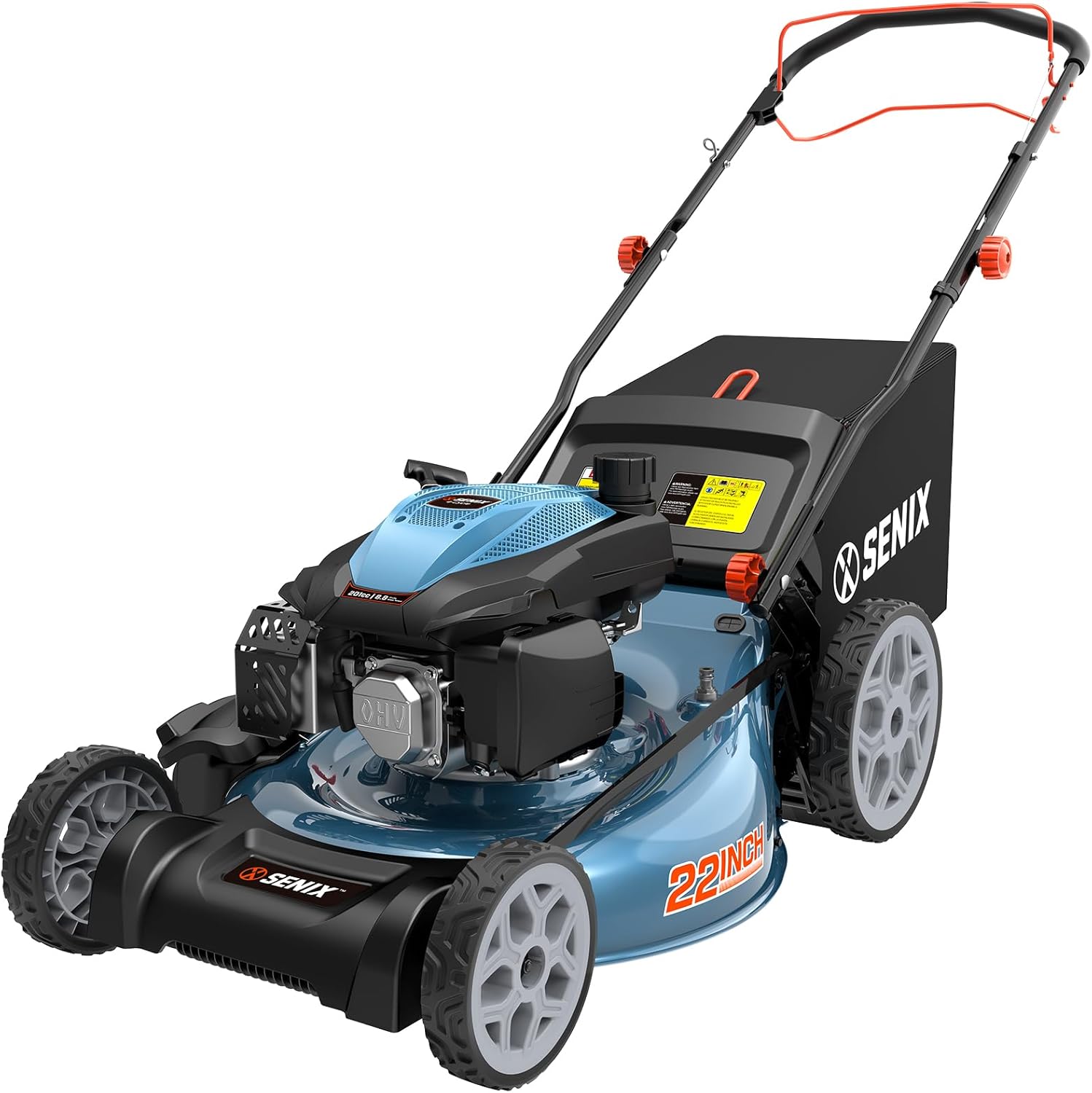
| Power Source | Gas Powered |
|---|---|
| Cutting width | 22 inches |
| Operation Mode | Automatic |
| Number of Positions | 6 |
| Material Type | Metal |
This SENIX mower is built for homeowners who want gas-powered performance without complexity. Its 201cc OHV 4-cycle engine produces enough torque for thick grass while the rear-wheel single-speed self-propelled drive (up to about 2.9 MPH) reduces fatigue on larger yards. The 22-inch steel deck and hardened manganese blades give efficient coverage and clean cuts, and the mower supports three modes — mulching, side discharge, and rear bagging — so you can adapt to seasonal conditions. Central six-position height adjustment (1.25 to 4 inches) makes switching cutting heights quick. The steel deck and vortex-style airflow aim to improve discharge and collection, and the folding handle helps store the mower in tighter spaces. Expect routine gas-engine upkeep and occasional tuneups, and note the single-speed drive limits control on steep slopes compared with variable-speed models. Assembly and break-in will be required before peak performance is realized.
Best for: Buyers who prioritize strong, gas-powered cutting performance and want a low-complexity self-propelled mower for medium to larger suburban lawns.
Less Ideal for: People who need very fine speed control for steep or highly uneven terrain or those who prefer battery-electric zero-emission options.
- Powerful 201cc OHV 4-cycle engine for consistent cutting through thicker turf
- 22-inch cutting deck covers ground quickly for medium to large yards
- 3-in-1 mowing (mulch, bag, side discharge) for seasonal versatility
- Durable steel deck and hardened manganese blades for long wear and reliable grass flow
- Central 6-position height adjustment for fast changes to cutting height
- Single-speed self-propelled drive offers less speed control than variable-speed models
- Gas engine requires regular maintenance and fuel storage
Verdict: Choose this mower if you want a solid, gas-powered 22-inch self-propelled machine that delivers reliable cutting power and 3-in-1 versatility for performance-focused lawn care.
SENIX 21-Inch Gas Push Lawn Mower, 144cc 4-Cycle, 2-in-1 Mulching/Side Discharge
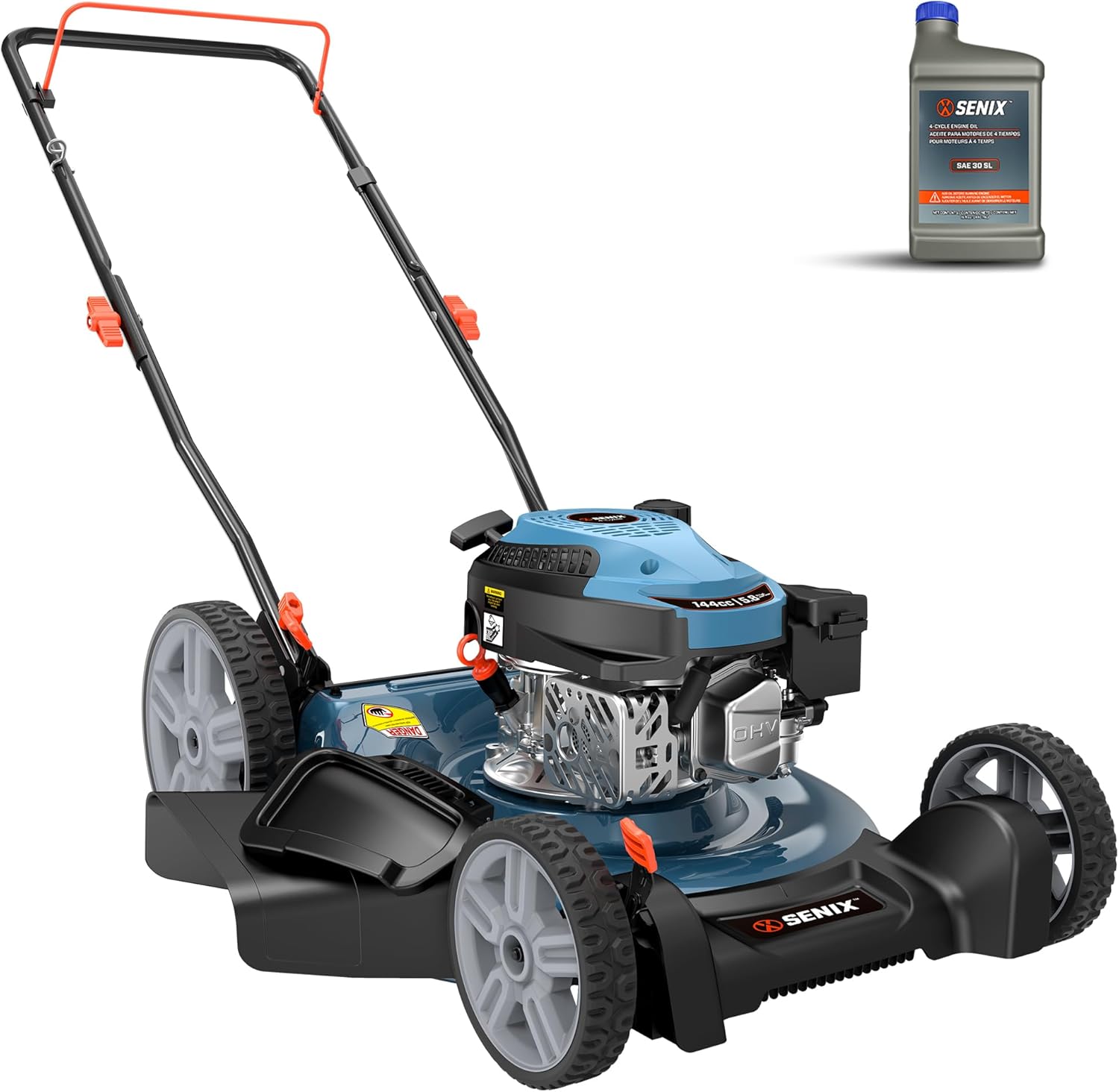
| Power Source | Gasoline-Powered |
|---|---|
| Cutting width | 21 inches |
| Number of Positions | 6 |
| Item Highlight | 4-Cycle Engine, Side Discharge, 6-Position Height Adjustment |
This SENIX 21-inch push mower pairs a 144cc 4-cycle engine with a 2-in-1 deck so you can mulch or side-discharge depending on grass conditions. It is built for routine residential mowing and is most useful for yards up to roughly 1/2 acre where corded or battery options are inconvenient. The high-rear 11-inch wheels and oversized front wheels make it easier to push across uneven lawns and through taller turf, while the dual-lever six-position height adjustment (1.25 to 3.75 inches) lets you switch quickly between a close cut and a taller, protective setting. Assembly is straightforward and the mower comes with a basic tool kit. Expect reliable power on thicker turf and slopes without frequent stalling, but remember a gas mower needs regular fuel, oil, and spark plug upkeep and makes more noise and emissions than electric alternatives. For a homeowner who prioritizes straightforward power, wide cutting path, and adjustable finish, this is a practical and capable choice; if you need zero-emission operation or are unwilling to maintain an engine, consider an electric or battery model instead.
Best for: Homeowners who want a straightforward, gas-powered mower that reliably handles thicker turf and uneven lawns and who value runtime and cutting width over zero-emission operation.
Less Ideal for: City dwellers or small-lot owners who prefer quiet, low-maintenance, and emission-free mowing should consider electric or battery alternatives instead.
- Powerful 144cc 4-cycle engine delivers steady performance on thick grass and gentle slopes
- 21-inch cutting deck covers more ground per pass for faster mowing of medium yards
- 2-in-1 mulching and side-discharge options adapt to different grass and cleanup needs
- High 11-inch rear wheels improve maneuverability over uneven terrain
- Dual-lever six-position height adjustment allows quick, tool-free changes
- Requires regular gas engine maintenance and produces more noise and emissions than electric mowers
- Heavier than comparable battery models which can make transport and storage less convenient
Verdict: Choose this mower if you need a practical, gas-powered 21-inch machine that delivers reliable power and easy height adjustment for medium residential lawns.
YOXIER 131cc 4‑Cycle 3‑in‑1 Gas Push Lawn Mower

| Engine | 131cc 4‑cycle |
|---|---|
| Grass bag capacity | 50L |
| Drive type | Rear‑wheel self‑propelled |
| Cutting modes | Mulch, side discharge, rear bag |
This YOXIER gas mower is a basic, budget‑focused 3‑in‑1 machine intended for homeowners who need a straightforward way to cut thick grass and light brush. The 131cc 4‑cycle engine and heavy‑duty blade let it handle overgrowth and tougher turf more confidently than small electric models. You can switch between mulching, side discharge, and rear bagging depending on how you want to manage clippings, and the supplied 50L bag with a wide opening makes emptying quicker. Large wheels and a rear‑wheel self‑propel system improve traction on slopes and uneven lawns, reducing the effort required to push across rough terrain. The mower is marketed as lightweight with a push‑button start for easier use, but buyers should expect the typical maintenance of a gas engine such as oil, spark plugs, and seasonal storage needs. This is not a premium commercial machine, so build and long‑term durability may not match higher‑end brands, but it delivers core cutting versatility at a lower entry cost for small to medium yards.
Best for: Buyers who want the cutting power and versatility of a gas mower without paying for premium brand features and who need a practical tool for small to medium yards.
Less Ideal for: Those who prefer near‑silent, low‑maintenance electric or battery mowers or homeowners with very large properties who need commercial‑grade durability.
- 3‑in‑1 cutting options: mulching, side discharge, and rear bagging for flexible grass management
- 131cc 4‑cycle engine and heavy‑duty blade handle thicker grass and light brush better than small electric mowers
- Rear‑wheel self‑propel and large wheels improve traction on slopes and uneven terrain
- 50L grass bag with wide opening for higher capacity and easier emptying
- As a budget model, long‑term durability and fit‑and‑finish may be lower than premium mowers
- Requires regular gas‑engine maintenance and winter storage care
Verdict: A low‑cost, gas‑powered 3‑in‑1 mower that gives budget buyers real cutting power and versatile clipping management for small to medium lawns.
Bdujhit 20" Self-Propelled Gas Lawn Mower with 140cc OHV Engine, 3-in-1 Mulch/Bag/Rear Discharge

| Power Source | Gas Powered |
|---|---|
| Engine | 140CC 4-stroke OHV |
| Cutting width | 20 inches |
| Number of Positions | 8 |
| Maximum Adjustable Cutting Height | 3.2 inches |
This walk-behind mower pairs a 140cc 4-stroke OHV engine with a 20-inch steel deck and a self-propelled drive to make regular lawn care quicker and less tiring. It is typically used for medium residential lawns where the 20-inch cutting width and up to 2800 RPM blade speed cover ground efficiently while producing a clean cut. The 3-in-1 steel deck lets you switch between mulching, rear discharge, and bagging; the included 1.7-bushel bag and larger onboard collection capacity reduce trips to empty clippings. An 8-position single-lever height adjustment from 1 to 3.2 inches helps dial in turf height across conditions. Practical benefits include a powerful starting engine for thicker grass, a self-propelled system that eases operation on gentle slopes, and a robust steel construction for routine use. Important limitations are its manual operation and fuel requirement, which need regular maintenance and storage care, and the 20-inch cut is best for small to medium lots rather than very large properties.
Best for: Buyers who prioritize dependable, gas-powered performance for routine lawn maintenance and want a self-propelled mower that reduces physical effort while offering mulching and bagging options.
Less Ideal for: Those wanting a cordless, low-maintenance electric mower or owners with very large properties who need a wider cutting width or commercial-grade equipment.
- Powerful 140cc OHV engine providing reliable starting and enough torque for thick grass
- Self-propelled drive reduces operator fatigue on longer walks and slight slopes
- 3-in-1 steel deck (mulch, bag, rear discharge) for flexible clipping management
- Single-lever 8-position height adjustment for quick deck changes
- Larger grass collection capacity to cut longer between emptying
- Requires regular gasoline and basic engine maintenance unlike electric alternatives
- Manual operation and weight make it less suitable for users seeking ultra-light or battery-powered mowers
Verdict: A reliable, gas-powered self-propelled mower that delivers robust cutting performance and flexible mulching or bagging for homeowners who want dependable routine lawn care.
SENIX 201cc 22" 3-in-1 Variable Speed Self-Propelled Gas Lawn Mower

| Power Source | Gas Powered |
|---|---|
| Cutting width | 22 inches |
| Operation Mode | Automatic |
| Number of Positions | 6 |
| Material Type | Stainless Steel |
This SENIX mower pairs a 201cc four-cycle OHV engine with a 22-inch steel deck to tackle medium to large lawns efficiently. It is self-propelled with large 11-inch rear wheels, so it eases forward motion on slopes and thicker turf while letting you control pace with variable drive. The mower offers a 3-in-1 system so you can bag clippings, mulch them back into the lawn, or side-discharge depending on grass conditions. Height is adjusted quickly with a single lever across six positions from 1.25 to 4 inches to suit seasonal needs. The steel construction and sizeable cutting width help you finish jobs faster than a typical 20-inch push mower. Expect routine maintenance typical of gas machines such as fuel, oil, spark plug checks, and occasional blade sharpening; it is heavier and louder than electric models and needs winter storage to avoid carburetor issues. For buyers prioritizing proven mechanical performance and versatility, this mower delivers a substantial, practical package for regular lawn care.
Best for: Homeowners who value reliable gas power and versatility for maintaining medium to large yards and who prefer equipment with established mechanical performance and visible user feedback.
Less Ideal for: People who prioritize low-noise, low-maintenance electric options or have very small yards where a lighter push mower or battery model would be more convenient.
- Powerful 201cc OHV engine provides consistent cutting performance for medium to large lawns
- 22-inch steel cutting deck covers more ground per pass than 20-inch mowers
- Rear-wheel self-propelled drive with 11-inch wheels improves traction and handling on slopes
- 3-in-1 cutting system (bag, mulch, side discharge) adapts to different lawn care needs
- Single-lever, six-position height adjustment lets you change cutting height quickly
- Gas engine requires regular maintenance and winter storage to avoid fuel system issues
- Heavier and louder than electric alternatives which may affect maneuverability and noise sensitivity
Verdict: Choose this mower if you want a tough, gas-powered 22-inch self-propelled machine that handles larger lawns and offers bagging, mulching, and side-discharge versatility.
SENIX 21" 144cc 3‑in‑1 Gas Push Lawn Mower

| Power Source | Gas Powered |
|---|---|
| Engine Size | 144 cc |
| Cutting width | 21 inches |
| Number of Positions | 6 |
| Maximum Adjustable Cutting Height | 3.75 inches |
The SENIX 21" 144cc 3‑in‑1 push mower is a straightforward gas-powered mower aimed at everyday lawn maintenance. It uses a 144cc 4-stroke OHV engine that ships pre-filled with oil for quick startup and delivers about 3.4 HP for cutting medium to thick grass. The steel deck supports rear bagging, side discharge, and mulching; a 1.7-bushel catcher is included to reduce how often you stop to empty clippings. Height is adjusted with dual levers across six positions from 1.25 to 3.75 inches to match seasonal needs. Rugged wheels and a vortex-style deck help reduce grass buildup and improve maneuverability on uneven yards. For buyers watching costs, this model gives core features without premium extras, and the ready-to-mow package is convenient. Expect typical gas-mower responsibilities such as fuel, periodic oil and spark-plug maintenance, and louder operation compared with electric alternatives.
Best for: Homeowners who want a capable, no-frills gas mower that handles medium to large suburban lawns on a tighter budget and prefer a proven 3-in-1 cutting setup.
Less Ideal for: People who need a self-propelled mower for steep or very large properties or those seeking a quieter, low-maintenance battery-electric alternative.
- Powerful 144cc 4-stroke engine for reliable cutting performance
- Three mowing modes (bag, mulch, side discharge) for seasonal flexibility
- Pre-filled oil and ready-to-mow kit reduces setup time
- Six-position height adjustment adapts to different grass lengths
- Included 1.7-bushel bagger lowers frequency of stops to empty clippings
- Requires regular gas and engine maintenance typical of small gas mowers
- No self-propelled drive so pushing is required on larger or hilly yards
Verdict: A budget-minded 21" gas push mower that delivers reliable power and 3‑in‑1 versatility for typical suburban lawns.
Choosing the Right Gas Lawn Mower for Thick Grass: Key Factors to Consider
Engine Torque and Power Delivery
Thick grass needs steady torque more than peak rpm. Engines that maintain rpm under load push blades through dense clumps instead of bogging down. Look for clear torque or horsepower behavior under load in specs and practical notes about how the engine responds when cutting tall, fibrous growth.
A mower with marginal torque may require multiple passes, which compacts turf and leaves uneven cuts. Conversely, an engine with strong low-end torque lets you mow more slowly and finish in fewer passes, improving cut quality and reducing wear on the deck and blades.
Cutting Deck Construction
Deck gauge, reinforcement ribs, and overall rigidity determine whether the deck will flex when blades hit heavy clumps. A rigid deck keeps the blade plane stable and maintains consistent blade-to-deck clearance, which is critical for even cutting in thick grass.
Thin or poorly braced decks bend more easily, creating uneven cuts and increasing the likelihood of clogs. Also consider deck shape and discharge geometry because these affect airflow and how clippings move through and out of the mowing chamber.
Blade Type, Mounting, and Edge Holding
Blade profile and how the blade is mounted affect lift and chop. High-lift or mulching blades produce stronger suction that lifts dense grass into the cutting path, giving a cleaner cut. Secure mounting and robust blade bolts reduce vibration and the risk of blade failure when striking hidden debris.
Edge holding matters for long-term performance. Thick grass dulls edges faster, so choose blades that are easy to replace or sharpen and check whether the machine uses common blade fittings for straightforward maintenance.
Airflow, Clog Resistance, and Grass Management
Airflow through the deck moves clippings and keeps the cutting chamber clear. Decks designed to minimize dead zones and to direct clippings effectively are less likely to clog when dealing with wet or dense material. Mulching setups should balance chopping with evacuation so cuttings do not accumulate and stall the engine.
Features such as wider discharge openings, optimized blade gullet shape, or deck liners can help prevent clogs. Practical considerations include how often you must stop to clear the chute and how the machine performs after prolonged periods of cutting dense turf.
Drive System and Traction
Thick grass often increases resistance against the wheels and drive train. Self-propelled systems should have enough torque and durable transmissions to maintain pace on thick lawns and slight hills. Wheel tread pattern and diameter influence traction and reduced turf scuffing during startup and turns.
Manual push mowers need proportionally more effort. If you have large or sloped areas with heavy grass, prioritize strong transmission gearing and larger drive wheels to reduce operator fatigue and maintain consistent cutting speed.
Serviceability and Maintenance Needs
Mowing thick grass increases wear on blades, belts, and engine air filters. Easy access to blade bolts, a simple deck cleaning routine, and replaceable filters reduce downtime. Check that belts and common wear parts are standard sizes and that routine maintenance tasks do not require disassembling major components.
A model that is easier to service will stay reliable across seasons, especially if you frequently tackle dense growth that accelerates component wear.
Preparing Thick Lawns Before Mowing
Start by inspecting the lawn for debris, sticks, and stones that can damage blades or cause sudden stalls in dense stands. Removing obstacles reduces shock loads on the engine and minimizes the chance of deck dents.
If grass is very tall, consider a two-stage cut: first raise the deck and remove the bulk with a high pass, then lower the deck for a finishing pass. This approach reduces the load on the engine and helps avoid clumping that leads to clogs.
- Clear debris and check for hidden obstacles.
- Mow high on the first pass, then lower for a finish cut.
- Sharpen blades before tackling heavy growth.
Blade Choices and Sharpening Tips
High-lift blades help pull dense grass upright so the cut is cleaner. Mulching blades chop clippings more finely but may increase resistance, so match blade type to your mowing strategy and engine strength.
Keep blades sharp and balanced. Uneven or dull blades tear grass, leading to a ragged appearance and increased disease risk. Balance after sharpening to avoid vibration that stresses the deck and drive components.
- Use high-lift or mulching blades depending on engine torque.
- Sharpen and balance blades at regular intervals during heavy-use seasons.
Managing Wet or Recently Watered Thick Grass
Wet thick grass compounds clogging and makes cutting harder. If possible, wait for drier conditions. Mow in the late morning when dew has evaporated but before midday heat sets in to reduce stress on grass and machine.
When you must mow wet grass, slow your forward speed and make fewer passes over the same area. Keep the chute and deck clear more frequently to maintain airflow and prevent the engine from lugging.
- Avoid mowing immediately after rain if possible.
- Slow down and clear the deck more often in wet conditions.
Traction and Control on Uneven Ground
Thick grass and uneven terrain combine to increase resistance and wheel slip. Choose machines with larger rear wheels or a reliable variable-speed drive when working on slopes or bumpy yards. Proper wheel traction preserves finish quality and makes mowing less fatiguing.
Use steady, overlapping passes to avoid scalping and to maintain consistent deck height across contours.
- Prefer larger diameter wheels for better traction.
- Use steady, overlapping strokes to avoid scalps.
Routine Maintenance for Heavy-Use Mowers
Increase the cadence of air filter checks, spark plug inspections, and blade sharpening when you frequently cut thick grass. Dense turf accelerates clogging of the deck and buildup around the engine cooling fins, so plan more regular cleanouts.
Lubricate pivot points and inspect belts after long sessions in heavy growth. A short maintenance checklist after each mowing session keeps performance predictable and prevents small issues from becoming major repairs.
- Check air filter and cooling fins after long jobs.
- Sharpen blades and inspect belts more often in heavy-use seasons.
How We Chose the Best Gas Lawn Mower for Thick Grass
We prioritized attributes that directly affect how well a mower handles heavy, wet, or fibrous turf. Core evaluation criteria included measured engine torque and horsepower behavior under load, cutting deck construction and airflow design, blade type and mounting stability, and deck-to-blade tolerances that influence clogging and mulching ability. We also assessed transmission or drive system strength for sustained uphill or long-run work, and user ergonomics like handle setup and wheel traction that affect control during dense mowing. Products with weak airflow designs, undersized decks, or inadequate engine torque were excluded. We filtered out machines intended only for light residential lawns or those lacking clear specs on torque and deck gauge. The final list reflects models that balance raw cutting power with deck durability and serviceable components that gardeners can maintain season to season. These criteria align with the scoring metrics used for each product so you can compare tradeoffs that matter in heavy-turf mowing.
FAQ
How low should I set the deck when mowing thick grass?
Start higher on the first pass to remove bulk, then lower the deck for a finish cut. Cutting too low in a single pass increases load and scalping risk.
Is mulching better than bagging for dense turf?
Mulching chops clippings finer and returns nutrients, but it increases resistance on the engine. If your mower has strong torque and good airflow, mulching is efficient; otherwise bagging or side discharge can prevent clogs.
How often do blades need sharpening when cutting thick grass?
Expect to sharpen blades more frequently during heavy-use periods, often every few mowing sessions depending on turf abrasiveness and hidden debris.
Can I mow wet thick grass safely with a gas mower?
You can, but it adds risk of clogging and increases engine load. Mow more slowly, clear the deck frequently, and avoid very wet conditions when possible to protect the mower and improve cut quality.
What wheel size is best for traction in thick lawns?
Larger rear wheels generally provide better traction and roll over dense turf more smoothly. A reliable drive system combined with larger wheels reduces slip and operator effort.
Final Verdict
When you need to tame thick grass, prioritize steady low-end torque and a rigid deck that preserves blade clearance under load. Good blade choice, regular sharpening, and a deck designed for effective airflow reduce clogs and improve cut quality. Consider drive traction and serviceability if you mow large or uneven areas frequently. Balance the tradeoffs between mulching capability and engine load, and pick a mower with components you can maintain. Focusing on these attributes will help you choose a gas lawn mower that reliably handles heavy turf season after season.
