

Note: This article contains affiliate links. If you click on these links and make a purchase, I may earn a small commission at no extra cost to you. This helps support my research and content. Read my full affiliate disclosure here.
If you manage a medium to large lawn, a gas lawn mower with bagger can save time and leave the yard looking tidier. These machines combine the power of a gasoline engine with integrated clippings collection so you spend less time raking and more time enjoying the lawn. In this guide we narrowed the field to seven top options that suit common homeowner needs, from compact residential yards to larger properties. We shortlisted choices that balance engine power, cutting width, bag capacity, and ease of emptying. Below you will find practical notes on how each model behaves in a real yard plus the criteria we used to evaluate them.
Top Picks at a Glance
| Best Overall The best all-around choice for most situations | SENIX 22-inch 201cc Rear-Wheel Self-Propelled Gas Lawn Mower |  |
| Best Quality Built to a higher standard if you want something more solid | PowerSmart 21" 3-in-1 Gas Push Lawn Mower with 140cc Briggs & Stratton 4‑Stroke Engine |  |
| Best Value The sweet spot between price and what you get | SENIX 21" 144cc 3‑in‑1 Gas Push Lawn Mower |  |
| Best Budget The cheapest option that still gets the job done reliably | Rodiuiu 131cc 18" Self-Propelled Gas Lawn Mower with 3-in-1 Deck and 50L Bag |  |
| Highest Rated A top-rated pick with lots of positive feedback | SENIX 21-Inch Gas Push Lawn Mower, 144cc 4-Stroke, Steel Deck |  |
| Most Popular A crowd favorite that many people choose with confidence | SENIX 201cc 22" 3-in-1 Variable Speed Self-Propelled Gas Lawn Mower |  |
| Best Seller A high-volume bestseller chosen again and again | BILT HARD 21" 3-in-1 Push Lawn Mower with 201cc 4-Cycle Engine and Rear Bag |  |
SENIX 22-inch 201cc Rear-Wheel Self-Propelled Gas Lawn Mower
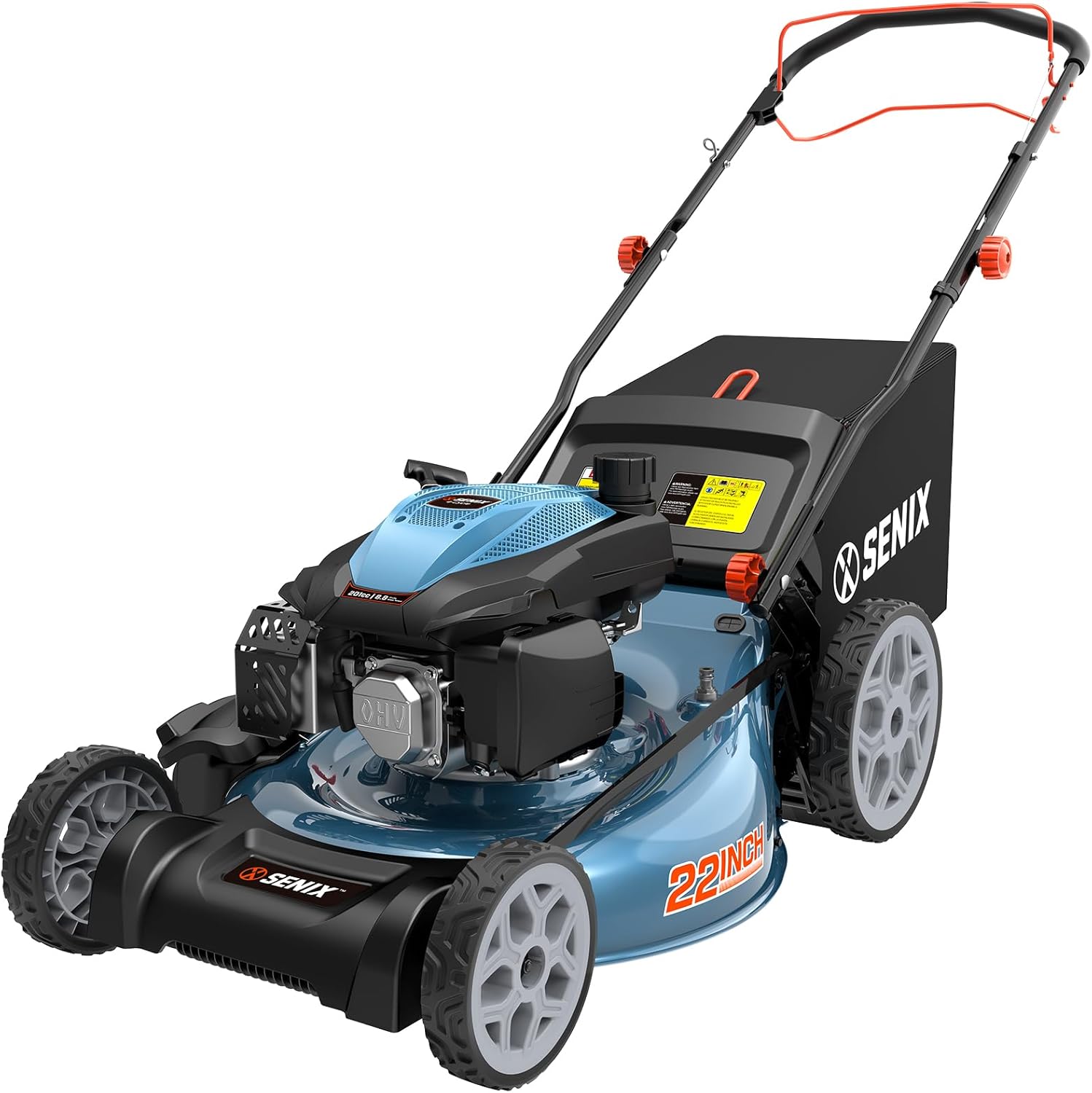
| Power Source | Gas Powered |
|---|---|
| Cutting width | 22 inches |
| Operation Mode | Automatic |
| Number of Positions | 6 |
| Material Type | Metal |
This SENIX mower is built for homeowners who want gas-powered performance without complexity. Its 201cc OHV 4-cycle engine produces enough torque for thick grass while the rear-wheel single-speed self-propelled drive (up to about 2.9 MPH) reduces fatigue on larger yards. The 22-inch steel deck and hardened manganese blades give efficient coverage and clean cuts, and the mower supports three modes — mulching, side discharge, and rear bagging — so you can adapt to seasonal conditions. Central six-position height adjustment (1.25 to 4 inches) makes switching cutting heights quick. The steel deck and vortex-style airflow aim to improve discharge and collection, and the folding handle helps store the mower in tighter spaces. Expect routine gas-engine upkeep and occasional tuneups, and note the single-speed drive limits control on steep slopes compared with variable-speed models. Assembly and break-in will be required before peak performance is realized.
Best for: Buyers who prioritize strong, gas-powered cutting performance and want a low-complexity self-propelled mower for medium to larger suburban lawns.
Less Ideal for: People who need very fine speed control for steep or highly uneven terrain or those who prefer battery-electric zero-emission options.
- Powerful 201cc OHV 4-cycle engine for consistent cutting through thicker turf
- 22-inch cutting deck covers ground quickly for medium to large yards
- 3-in-1 mowing (mulch, bag, side discharge) for seasonal versatility
- Durable steel deck and hardened manganese blades for long wear and reliable grass flow
- Central 6-position height adjustment for fast changes to cutting height
- Single-speed self-propelled drive offers less speed control than variable-speed models
- Gas engine requires regular maintenance and fuel storage
Verdict: Choose this mower if you want a solid, gas-powered 22-inch self-propelled machine that delivers reliable cutting power and 3-in-1 versatility for performance-focused lawn care.
PowerSmart 21" 3-in-1 Gas Push Lawn Mower with 140cc Briggs & Stratton 4‑Stroke Engine

| Power Source | Gas Powered |
|---|---|
| Cutting width | 21 inches |
| Number of Positions | 6 |
| Maximum Adjustable Cutting Height | 3.9 inches |
| Minimum Adjustable Cutting Height | 1.5 inches |
This PowerSmart 21" push mower is built for solid, no-frills performance on small to medium yards. It uses a 140cc Briggs & Stratton 4-stroke engine that delivers reliable torque without mixing oil and gas, and the 21-inch deck covers a reasonable swath to reduce passes. The mower offers a 3-in-1 cutting system so you can bag grass clippings, mulch them back into the lawn, or side-discharge when grass is heavy. Six height positions (1.5 to 3.9 inches) make it straightforward to dial in the desired cut. The deck and frame are steel alloy for durability, and the unit’s manual push operation keeps complexity down and maintenance simpler than self-propelled models. Expect efficient mowing and good bagging capacity for regular lawn care, though on very large properties a self-propelled or wider-deck model will save time. Assembly and routine upkeep are typical for a gas mower: tune-ups, oil changes, and winter storage care are required to keep the engine running well.
Best for: Buyers who prioritize steady engine performance and a versatile bagging option for well-kept small to medium yards and who prefer a straightforward, serviceable gas mower.
Less Ideal for: Homeowners with very large lawns, steep slopes, or those who want a self-propelled or wider-deck machine to reduce physical effort and mowing time.
- 140cc Briggs & Stratton 4-stroke engine for dependable torque and simpler fuel handling
- 21-inch cutting deck balances coverage and maneuverability for small to medium lawns
- 3-in-1 cutting system (bagging, mulching, side discharge) for seasonal flexibility
- Six adjustable cutting heights for consistent, customizable finishes
- Steel deck and alloy construction for long-term durability
- Manual push operation requires more effort than self-propelled models on uneven or hilly terrain
- Not the fastest option for large properties due to deck width and lack of self-propulsion
Verdict: Choose this mower if you want a reliable Briggs & Stratton‑powered 21-inch gas push mower that offers bagging and mulching flexibility for tidy, performance-focused lawn care.
SENIX 21" 144cc 3‑in‑1 Gas Push Lawn Mower

| Power Source | Gas Powered |
|---|---|
| Engine Size | 144 cc |
| Cutting width | 21 inches |
| Number of Positions | 6 |
| Maximum Adjustable Cutting Height | 3.75 inches |
The SENIX 21" 144cc 3‑in‑1 push mower is a straightforward gas-powered mower aimed at everyday lawn maintenance. It uses a 144cc 4-stroke OHV engine that ships pre-filled with oil for quick startup and delivers about 3.4 HP for cutting medium to thick grass. The steel deck supports rear bagging, side discharge, and mulching; a 1.7-bushel catcher is included to reduce how often you stop to empty clippings. Height is adjusted with dual levers across six positions from 1.25 to 3.75 inches to match seasonal needs. Rugged wheels and a vortex-style deck help reduce grass buildup and improve maneuverability on uneven yards. For buyers watching costs, this model gives core features without premium extras, and the ready-to-mow package is convenient. Expect typical gas-mower responsibilities such as fuel, periodic oil and spark-plug maintenance, and louder operation compared with electric alternatives.
Best for: Homeowners who want a capable, no-frills gas mower that handles medium to large suburban lawns on a tighter budget and prefer a proven 3-in-1 cutting setup.
Less Ideal for: People who need a self-propelled mower for steep or very large properties or those seeking a quieter, low-maintenance battery-electric alternative.
- Powerful 144cc 4-stroke engine for reliable cutting performance
- Three mowing modes (bag, mulch, side discharge) for seasonal flexibility
- Pre-filled oil and ready-to-mow kit reduces setup time
- Six-position height adjustment adapts to different grass lengths
- Included 1.7-bushel bagger lowers frequency of stops to empty clippings
- Requires regular gas and engine maintenance typical of small gas mowers
- No self-propelled drive so pushing is required on larger or hilly yards
Verdict: A budget-minded 21" gas push mower that delivers reliable power and 3‑in‑1 versatility for typical suburban lawns.
Rodiuiu 131cc 18" Self-Propelled Gas Lawn Mower with 3-in-1 Deck and 50L Bag

| Power Source | Gas Powered |
|---|---|
| Cutting width | 18 inches |
| Number of Positions | 8 |
| Maximum Adjustable Cutting Height | 7.5 centimeters |
| Minimum Adjustable Cutting Height | 25 millimeters |
This Rodiuiu mower is a budget-oriented self-propelled gas mower designed for homeowners who need reliable cutting power without premium pricing. It uses a 131cc OHV 4-stroke engine and an 18-inch steel deck that converts between mulching, side discharge, and rear bagging to handle different grass conditions. The self-propelled rear-wheel drive and large wheels make it easier to push across modest slopes and medium lawns, while the single lever synchronizes eight cutting heights for quick deck adjustments. A 50L grass collection bag with a wide opening reduces stops to empty clippings. The unit folds for storage and transport, which helps tight garages or seasonal storage. Expect straightforward starting with its simplified choke/primer claims but plan for normal gas engine maintenance such as oil, spark plug, and fuel care. Buyers should also be ready to assemble the mower and accept that fit and long-term durability may reflect the mower's cost-class rather than premium models.
Best for: Homeowners looking for an affordable, gas-powered self-propelled mower that covers medium-size lawns efficiently and values practical features over premium build refinements.
Less Ideal for: Those who want a maintenance-free electric or battery mower, need very wide cutting swaths for large commercial lawns, or prioritize top-tier long-term durability and dealer support.
- Powerful 131cc OHV 4-stroke engine for consistent cutting performance
- 3-in-1 steel deck lets you mulch, side discharge, or bag clippings
- Self-propelled rear-wheel drive and large wheels ease maneuvering on uneven yards
- Single-lever eight-position height adjustment for quick, uniform changes
- Foldable design and large 50L bag simplify storage and reduce emptying frequency
- As a budget model, long-term durability and component fit may not match premium brands
- Requires regular gas-engine maintenance and storage care
- No battery or electric start option for users who prefer cordless convenience
Verdict: If you want an affordable self-propelled gas mower that mulches, bags, and adjusts easily, this Rodiuiu 131cc 18-inch model delivers straightforward performance and useful features for typical home lawns.
SENIX 21-Inch Gas Push Lawn Mower, 144cc 4-Stroke, Steel Deck

| Power Source | Gas Powered |
|---|---|
| Cutting width | 21 inches |
| Maximum Adjustable Cutting Height | 3.75 inches |
| Minimum Adjustable Cutting Height | 1.25 inches |
| Number of Positions | 6 |
This SENIX 21-inch gas push mower is built around a 144cc OHV 4-stroke engine and a stamped steel deck to handle regular lawn maintenance for small to mid-size yards. Typical use is straightforward: fill with oil and gas, set one of six cutting heights from 1.25 to 3.75 inches, then choose mulching, side discharge, or rear bagging with the included 1.7-bushel catcher. Notable features include the low-vibration OHV engine that delivers about 3.4 HP, a vortex-style deck to reduce clumping, and larger rear wheels that help when mowing uneven turf. Practical benefits are reliable starting and longer engine life from the 4-stroke design, decent cutting coverage from the 21-inch deck, and flexibility for different grass conditions thanks to the 3-in-1 system. Important limitations are that it is a manual push model rather than self-propelled and the bag capacity is modest, so it is best suited to up to roughly a third-acre rather than large properties.
Best for: Buyers who prioritize a dependable, serviceable gas mower for routine lawn care on small to mid-size yards and want straightforward mechanics that are easy to maintain.
Less Ideal for: People with larger properties, steep slopes, or those who prefer low-effort mowing should consider a self-propelled or larger-capacity model instead.
- 144cc OHV 4-stroke engine designed for reliable starting and longer service life
- 3-in-1 steel deck supports mulching, side discharge, and rear bagging for flexible mowing
- Six-position dual-lever height adjustment for precise cut from 1.25 to 3.75 inches
- Vortex deck design reduces grass buildup and larger rear wheels improve maneuverability on uneven ground
- Push-only operation requires more physical effort than self-propelled mowers for larger yards
- 1.7-bushel grass bag is relatively small, requiring frequent emptying on dense growth
Verdict: A sturdy, easy-to-maintain gas push mower that delivers reliable performance for routine care of small to mid-size lawns.
SENIX 201cc 22" 3-in-1 Variable Speed Self-Propelled Gas Lawn Mower

| Power Source | Gas Powered |
|---|---|
| Cutting width | 22 inches |
| Operation Mode | Automatic |
| Number of Positions | 6 |
| Material Type | Stainless Steel |
This SENIX mower pairs a 201cc four-cycle OHV engine with a 22-inch steel deck to tackle medium to large lawns efficiently. It is self-propelled with large 11-inch rear wheels, so it eases forward motion on slopes and thicker turf while letting you control pace with variable drive. The mower offers a 3-in-1 system so you can bag clippings, mulch them back into the lawn, or side-discharge depending on grass conditions. Height is adjusted quickly with a single lever across six positions from 1.25 to 4 inches to suit seasonal needs. The steel construction and sizeable cutting width help you finish jobs faster than a typical 20-inch push mower. Expect routine maintenance typical of gas machines such as fuel, oil, spark plug checks, and occasional blade sharpening; it is heavier and louder than electric models and needs winter storage to avoid carburetor issues. For buyers prioritizing proven mechanical performance and versatility, this mower delivers a substantial, practical package for regular lawn care.
Best for: Homeowners who value reliable gas power and versatility for maintaining medium to large yards and who prefer equipment with established mechanical performance and visible user feedback.
Less Ideal for: People who prioritize low-noise, low-maintenance electric options or have very small yards where a lighter push mower or battery model would be more convenient.
- Powerful 201cc OHV engine provides consistent cutting performance for medium to large lawns
- 22-inch steel cutting deck covers more ground per pass than 20-inch mowers
- Rear-wheel self-propelled drive with 11-inch wheels improves traction and handling on slopes
- 3-in-1 cutting system (bag, mulch, side discharge) adapts to different lawn care needs
- Single-lever, six-position height adjustment lets you change cutting height quickly
- Gas engine requires regular maintenance and winter storage to avoid fuel system issues
- Heavier and louder than electric alternatives which may affect maneuverability and noise sensitivity
Verdict: Choose this mower if you want a tough, gas-powered 22-inch self-propelled machine that handles larger lawns and offers bagging, mulching, and side-discharge versatility.
BILT HARD 21" 3-in-1 Push Lawn Mower with 201cc 4-Cycle Engine and Rear Bag

| Cutting width | 21 inches |
|---|---|
| Engine | 201cc 4-cycle OHV |
| Number of Positions | 10 |
| Maximum Adjustable Cutting Height | 3.75 inches |
| Minimum Adjustable Cutting Height | 1.2 inches |
This BILT HARD 21-inch push mower is built for straightforward, no-fuss yard maintenance. It uses a 201cc 4-cycle OHV engine with a no-choke, no-primer start design and a 3-in-1 steel deck so you can mulch, side-discharge, or collect clippings in the rear bag depending on the job. Height is adjusted with a single lever across multiple positions to tune cut from short to taller grass, and the foam-wrapped handle plus ball-bearing wheels make long runs easier on your hands. In practice it handles typical suburban lawns efficiently and the bagging option keeps clippings contained for a tidy finish. Expect reliable day-to-day performance, but note the mower is a hand-push model not self-propelled and the maker warns against use on slopes over 15 degrees. Assembly and routine maintenance like oil and spark plug checks are required as with any gas mower. For buyers who prefer simple gas power with the option to bag clippings, this mower delivers solid, practical value.
Best for: Buyers who want a reliable, straightforward gas mower with a rear bag option for tidy lawns and who prioritize predictable, easy-to-operate equipment over high-end features.
Less Ideal for: If you need a self-propelled mower for large or steep properties or want a cordless electric model for quieter operation, this unit is not the best fit.
- 3-in-1 deck gives flexibility to mulch, side-discharge, or bag clippings.
- No-choke, no-primer starting simplifies cold starts and reduces user steps.
- Single-lever height adjustment lets you quickly set mowing height.
- Comfort features include foam-wrapped handle and ball-bearing wheels for smoother push.
- Robust 201cc 4-cycle engine provides dependable power for routine lawns.
- Hand-push operation means more effort on larger or uneven yards since it is not self-propelled.
- Not recommended for slopes steeper than 15 degrees, limiting use on hilly properties.
Verdict: A dependable, easy-to-start gas push mower with a rear bag option that suits risk-averse buyers seeking a practical, no-frills solution for tidy suburban lawns.
Choosing the Right Gas Lawn Mower with Bagger: Key Factors to Consider
Engine Size and Torque
Engine displacement and torque determine how well the mower handles thick grass, wet clippings, and uneven terrain. A higher torque rating helps the blade maintain RPM under load so you avoid bogging down on dense patches. For lawns with tall or coarse grasses, choose a machine with enough low-end grunt rather than focusing only on peak horsepower.
Fuel type and engine design also affect starting reliability and vibration. Consider engines with simple choke and primer systems if you prefer easier cold starts, and look for accessible spark plug and oil fill locations to simplify seasonal maintenance.
Cutting Deck Width and Blade Design
Deck width directly affects how many passes you need to mow a lawn. Wider decks reduce mowing time but can be harder to maneuver around tight beds and trees. Matching deck width to yard size is key: smaller yards benefit from compact decks while larger properties gain efficiency with wider decks.
Blade shape and mounting influence cut quality and how the mower moves clippings into the bagger. Mulching blades differ from high-lift blades that force clippings into a bag; ensure blade type pairs with your preferred clippings handling method.
Bag Capacity and Clippings Management
A mower bagger's capacity determines how often you need to stop and empty. Larger bags are useful for big lawns but add weight and may affect maneuverability. The bagging system should attach and detach quickly and seal well to minimize dust and stray clippings.
Also consider how the mower channels clippings to the bag. Poorly designed chutes can clog, especially with damp grass or when cutting high volumes. Look for systems with smooth-flow chutes and easy-access points for clearing blockages.
Maneuverability and Handling
How a mower turns, steers, and rides matters more than raw power for many homeowners. Wheel size, drive type, and front/rear caster design influence how easily the mower hugs curves, climbs slight grades, and navigates around obstacles. Self-propelled drive systems reduce fatigue on larger properties but add mechanical complexity.
Balance between weight and traction affects control on slopes. Too-light machines may slip while heavy ones can be hard to push or steer in tight areas. Test for comfortable handle height, reach, and control placement to avoid strain during extended mowing.
Durability and Weather Resistance
The deck and chassis materials determine long-term toughness. Stamped steel decks are common and affordable but can dent and rust; polymer and reinforced decks resist corrosion better but vary in impact resistance. Pay attention to paint finishes and seam seals if you store the mower outdoors or in a damp garage.
Fasteners, chute connections, and bag frames should be robust to withstand repeated attachment cycles. Corrosion-resistant hardware and easily replaceable wear items help extend service life without major overhauls.
Maintenance Access and Serviceability
Routine service tasks include oil changes, air filter replacement, blade sharpening, and spark plug checks. Mowers with tool-free access panels, clearly marked service points, and intuitive drain or fill locations reduce time spent on upkeep. Easy blade removal and a stable deck for sharpening are practical advantages.
Consider availability of replacement filters and belts for common service intervals. A design that minimizes hidden fasteners or tightly packed components will make seasonal maintenance and any troubleshooting much easier for a homeowner.
Why Choose a Bagger Attachment
Using a bagger on a gas mower keeps clippings contained and produces a cleaner finish, especially for lawns where visible clippings are undesirable. For properties with frequent leaf fall or when preparing an area for guests, a bagger reduces post-mow cleanup work.
Baggers also make it easier to collect clippings for compost or municipal green-waste programs. Unlike mulching, bagging removes material from the lawn and helps when managing disease or heavy thatch buildup.
- Reduces raking and leaf cleanup
- Collects clippings for compost or disposal
- Helps prevent grass clumping on the turf
Matching Bagger Capacity to Yard Size
Think about how long you can mow before emptying the bag. Small residential yards tolerate smaller bags because emptying is quick and infrequent. Larger lawns or properties with dense growth benefit from larger capacity systems to reduce interruptions.
Remember that larger bags add weight and can affect handling and fuel economy. If you routinely mow hilly or obstacle-dense lawns, a slightly smaller bag that is easier to manage may be a better tradeoff than maximal capacity.
- Small yards: prioritize maneuverability
- Medium to large yards: balance capacity and weight
- Frequent emptying vs heavier handling is a key tradeoff
Operating Tips to Prevent Bagger Clogs
Clogs are most common when grass is wet or when cutting excessively tall growth. To reduce blockage risk, mow at recommended heights and avoid bagging immediately after heavy rain. Raising the deck and making a second pass at a higher setting can help manage thick loads.
Empty the bag before it is completely full to maintain airflow in the chute. Inspect the chute and attachment points periodically for debris buildup and clear any obstructions with the engine off and spark plug disconnected.
- Avoid bagging when turf is wet
- Make lighter passes for very tall grass
- Check and clear chute connections regularly
Storage and Off-Season Care
Proper off-season storage keeps the mower and bagger functioning for years. Drain fuel or add stabilizer before long storage periods, clean clippings out of chutes and bags, and store bags in a dry place to prevent mold. Treat metal parts with a light coating of oil if you store the mower outdoors and have limited shelter.
Inspect fabrics and frames on baggers for tears or rust before the next mowing season. Small repairs are easier to manage early in the season than when you need the mower for regular use.
- Clean chutes and bags before storage
- Stabilize or drain fuel for long-term storage
- Store fabric bags in dry, ventilated locations
Safety Considerations When Bagging
Always stop the engine and disconnect the spark plug before servicing blades, chutes, or bagger attachments. Debris can be sharp and chutes may store hidden clogs that shift when disturbed.
Wear hearing protection and eye protection while operating gas mowers. Ensure the bagger is correctly fastened and that fabric bags are free from rips that could allow debris to be ejected.
- Disconnect spark plug before clearing clogs
- Wear eye and ear protection
- Check attachment points before each use
How We Chose the Best Gas Lawn Mower with Bagger
We focused on features that matter to everyday gardeners using gas mowers paired with baggers. Key evaluation criteria were engine output and torque for consistent cutting through thicker turf; cutting deck width and blade design because they determine pass count and cut quality; clippings management, including bag capacity, attachment reliability, and ease of emptying; handling and maneuverability for tight yards, slopes, and obstacles; build durability and corrosion resistance for machines stored outdoors or used seasonally; and maintenance access for routine tasks like oil and air filter changes. To keep recommendations practical we excluded commercial-grade, oversized units intended for contractors and any machines without an integrated bagging option. We prioritized mowers that deliver reliable clippings collection without frequent clogging, reasonable bag volumes for typical homeowner yards, and straightforward owner maintenance. The scoring metrics below reflect these priorities and guided selection of the seven finalists.
FAQ
Will a bagger affect cutting performance?
A properly matched bagger should not reduce cut quality, but poorly installed or undersized systems can change airflow and affect blade lift. Choose a bagger designed for the mower's deck size and check that blade type complements the bagging system.
How often will I need to empty the bagger?
Emptying frequency depends on bag capacity, grass height, and how dense the clippings are. For average lawns expect to stop every 10 to 30 minutes; larger capacity bags extend that interval but add handling weight.
Can I mulch and bag with the same mower?
Many mowers accept both mulching blades and bagger attachments, but you will usually need to swap blades or install a chute plug. Verify that the mower supports both modes and follow manufacturer guidance for blade selection.
Is a self-propelled drive necessary with a bagger?
Self-propelled systems are helpful on larger lawns or sloped properties because they reduce operator effort, especially with a full bag adding resistance. For small, flat yards a push mower with a bagger can be perfectly adequate.
How do I maintain the bagger fabric and frame?
Brush out the fabric after each use and allow it to dry before storage to avoid mildew. Inspect the frame for bends or rust and replace worn straps or fasteners. Minor tears can sometimes be patched but larger damage usually warrants replacement.
Can bagging help with lawn disease management?
Removing clippings can help reduce spread of certain surface diseases and minimize thatch buildup in heavily cut lawns. However, bagging removes nutrients that could otherwise return to the turf, so consider composting clippings or targeted removal when managing disease outbreaks.
Final Verdict
When choosing a gas lawn mower with bagger, match engine torque and cutting width to your lawn's size and grass type, and balance bag capacity against handling and emptying frequency. Prioritize reliable clippings flow, corrosion-resistant construction, and ease of routine maintenance to keep the system working season after season. Decide whether you need self-propelled drive for slopes or larger areas and whether larger bag capacity is worth the extra weight. With those tradeoffs in mind, you can pick a mower that speeds mowing, simplifies cleanup, and fits how you maintain your yard.
