

Note: This article contains affiliate links. If you click on these links and make a purchase, I may earn a small commission at no extra cost to you. This helps support my research and content. Read my full affiliate disclosure here.
If you maintain a medium or large yard, a gas leaf blower can drastically cut the time you spend clearing leaves, grass clippings, and debris. The right model balances raw airflow with runtime and handling so you can finish jobs faster without tiring your shoulders or constantly refueling. This guide shortlists the top gas leaf blowers suited to heavier outdoor work and evaluates them on real gardener priorities like blowing force, fuel use, and ergonomics. Read on to see our top picks and the practical factors that should steer your decision.
Top Picks at a Glance
| Best Overall The best all-around choice for most situations | Husqvarna 350BT 50.2-cc Gas Backpack Leaf Blower |  |
| Best Quality Built to a higher standard if you want something more solid | Husqvarna 580BTS III 75.6cc Gas Backpack Leaf Blower |  |
| Best Value The sweet spot between price and what you get | HASANEN 850CFM Backpack Gas Leaf Blower (63CC, 2-Stroke) |  |
| Best Budget The cheapest option that still gets the job done reliably | GMSLuu 25.4cc Handheld Gas Leaf Blower (750 W, 7500 rpm) |  |
| Highest Rated A top-rated pick with lots of positive feedback | Houltune 26CC Handheld Gas Leaf Blower — 432 CFM, 180 MPH |  |
| Most Popular A crowd favorite that many people choose with confidence | Husqvarna 150BT 51cc Gas Backpack Leaf Blower |  |
| Best Seller A high-volume bestseller chosen again and again | Husqvarna 125B Gas Handheld Leaf Blower |  |
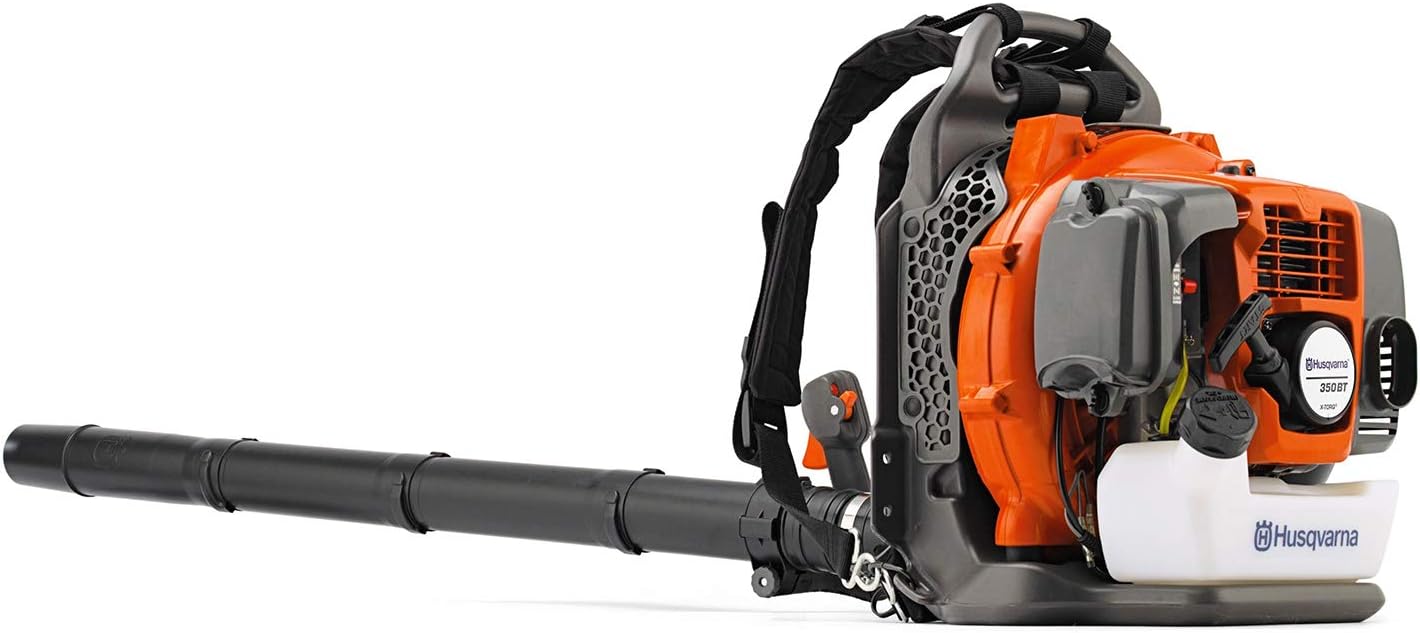
Husqvarna 350BT 50.2-cc Gas Backpack Leaf Blower
| Power Source | Gas Powered |
|---|---|
| Form Factor | Backpack |
| Air Flow Capacity | 692.17 cfm |
| Maximum Speed | 180 miles_per_hour |
| Additional Features | Anti-Vibration |
The Husqvarna 350BT is a professional-style backpack leaf blower built for regular yard cleanup and larger properties. It uses a 50.2-cc X-Torq 2-cycle engine to deliver up to 692 CFM and 180 MPH with a 21 N blowing force, which moves heavy leaves, grass clippings and hedge trimmings efficiently. The ergonomic harness, padded hip belt and weight-leveling system make longer jobs less tiring, while LowVib anti-vibration features and tube-mounted throttle with cruise control improve comfort and control. Practical touches like an air purge for easier starting mean fewer cold-start hassles in the field. The blower is gas powered, so it offers strong continuous performance and good fuel economy for its class but requires mixing fuel and routine engine maintenance. Noise and emissions are higher than electric options, and the backpack form factor adds setup and storage considerations compared with handheld blowers. For homeowners who need sustained clearing power across larger lawns or acreage, the 350BT balances performance and user comfort.
Best for: Buyers who need a reliable, mid-size gas blower for large yards or frequent cleanup sessions and value sustained power and operator comfort during extended use.
Less Ideal for: People with small yards, those who prefer low-noise or low-emission tools, or buyers who want a maintenance-free electric or battery blower.
- Strong clearing performance: up to 692 CFM and 180 MPH for moving heavy debris
- Ergonomic harness with padded hip belt and weight-leveling for extended use comfort
- LowVib anti-vibration design and tube-mounted throttle with cruise control for better control
- Air purge system improves starting reliability and reduces cold-start trouble
- Gas engine requires fuel mixing and regular maintenance
- Higher noise and emissions compared with battery or electric blowers
Verdict: If you need sustained, professional-level clearing power for larger properties, this backpack blower delivers a strong balance of performance and operator comfort.
Husqvarna 580BTS III 75.6cc Gas Backpack Leaf Blower

| Max air flow at nozzle | 1000 CFM |
|---|---|
| Max air speed | 220 MPH |
| Max blow force | 47 N |
| Engine displacement | 75.6 CC |
| Engine cycle | 2-Cycle |
The Husqvarna 580BTS III is a commercial-style backpack blower built to move large volumes of debris quickly. It pairs a 75.6 cc two-stroke X-TORQ engine with an efficient fan to produce up to 1000 CFM and 47 N of blow force, making it well suited to clearing heavy leaves, grass clippings, and wet debris across large properties. The ventilated, load-reducing harness and padded hip belt improve weight distribution so operators can work longer with less fatigue, and the tube-mounted throttle gives straightforward control while walking. A larger fuel tank reduces refueling stops during long shifts and the two-stage commercial air filter helps protect the engine in dusty conditions. Expect loud operation typical of powerful gas blowers and plan for regular 2-stroke maintenance and fuel mixing. This unit favors contractors or experienced homeowners who need sustained power and durability rather than occasional light-use tasks.
Best for: Buyers who need a rugged, high-output blower for frequent or large-area clearing—commercial landscapers and homeowners with extensive properties who prioritize performance and uptime.
Less Ideal for: Those with small yards, infrequent need for a blower, or who prefer quieter, low-maintenance electric models should consider smaller or battery-powered alternatives.
- Very high airflow and blow force suitable for commercial clearing (1000 CFM, 47 N)
- Ergonomic ventilated backpack harness and padded hip belt reduce operator fatigue
- Large fuel tank supports longer run times between refuels
- Tube-mounted throttle and adjustable speed give straightforward control during use
- Commercial two-stage air filter for better engine protection in dusty conditions
- High noise and typical 2-stroke maintenance requirements
- Backpack format and power are oversized for small yards or occasional light use
Verdict: Choose the 580BTS III when you need professional-level blowing power and endurance for large or frequent cleanup jobs.
HASANEN 850CFM Backpack Gas Leaf Blower (63CC, 2-Stroke)

| Power Source | Gas Powered |
|---|---|
| Form Factor | Backpack |
| Maximum Speed | 6800 rpm |
| Noise Level | 101 db |
| Additional Features | Adjustable Speed |
This HASANEN backpack leaf blower pairs a 63CC two-stroke engine with an adjustable, multi-angle nozzle to deliver high airflow for clearing leaves, gravel, and light snow across larger areas. It is built for continuous use: the 0.47 gallon fuel tank and adjustable cruise control let you run longer between refills and keep a steady speed without holding the throttle. The backpack harness, padded backrest, and breathable straps spread weight for less fatigue during longer jobs, while the one-hand control groups the switch and throttle for easier operation. Notable features include adjustable nozzle articulation, air-cooled construction with multiple heat vents, and a visible fuel line for straightforward refueling. Expect commercial-level noise and the usual maintenance needs of a two-stroke engine such as mixing fuel and periodic spark plug and carburetor care. The unit is made of durable polypropylene but is relatively heavy compared with handheld models and will require proper hearing protection and storage space.
Best for: Buyers who need a powerful blower for large yards, light commercial cleanup, or seasonal debris removal and prioritize run time and sustained clearing over ultra-light portability.
Less Ideal for: Casual homeowners with small yards or those who prefer quieter, low-maintenance electric models should consider alternatives.
- High-displacement 63CC two-stroke engine provides strong airflow suitable for commercial tasks
- Large 0.47 gal fuel tank supports longer run times between refueling
- Backpack harness with padded backrest and breathable straps reduces operator fatigue on extended jobs
- Adjustable nozzle angle and cruise control improve reach and make sustained operation easier
- Produces high noise levels around 101 dB, so hearing protection is required
- Requires two-stroke fuel mixing and routine engine maintenance
- Heavier and bulkier than handheld blowers, which reduces maneuverability for tight spaces
Verdict: Choose this backpack gas blower when you need sustained, high-power clearing across large areas and value runtime and operator comfort during long jobs.
GMSLuu 25.4cc Handheld Gas Leaf Blower (750 W, 7500 rpm)

| Power Source | Gas Powered |
|---|---|
| Form Factor | Handheld |
| Speed | 7500 rpm |
| Wattage | 750 watts |
| Noise Level | 90 db |
This GMSLuu handheld gas leaf blower is a no-frills, budget-oriented unit built for routine yard cleanup. It runs on a 25.4cc two-stroke engine rated at about 750 watts and 7500 rpm to generate substantial airflow for moving leaves, light snow, dust, and small debris. The blower is designed for single-hand operation with a pull-start, a translucent 0.2 gallon fuel tank for easy level checks, and a silencer aimed at cutting noise to around 90 dB. Practical touches include an anti-suction guard for safety, an external spark plug for easier maintenance, and two handle holes for adding a shoulder strap. Expect solid performance for small to medium yards and occasional heavier jobs, but note the noise level is still loud compared with electric models and it requires regular fuel mixing and basic engine upkeep. For buyers prioritizing a low upfront cost and raw blowing power, this unit covers the essentials; if you want quieter operation or lower ongoing maintenance, an electric or higher-end gas model would be worth considering.
Best for: Buyers who need an inexpensive, portable gas blower for regular yard cleanup and prioritize upfront cost and straightforward power over low-noise operation or minimal maintenance.
Less Ideal for: Those who want ultra-quiet operation, minimal maintenance, or who primarily work in very small urban yards where cordless electric blowers are more convenient.
- Decent engine output (25.4cc/750 W) for moving leaves, light snow, and debris
- Translucent 0.2 gal fuel tank lets you monitor fuel level easily
- Handheld design with single-hand controls and external spark plug for simpler maintenance
- Anti-suction protective cover improves safety and helps prevent clogging
- Rated noise around 90 dB which is loud compared with many cordless or electric blowers
- Requires two-stroke fuel and regular engine maintenance typical of gas units
Verdict: A budget-friendly handheld gas blower that delivers strong blowing power for routine yard cleanup when low cost and portability are the top priorities.
Houltune 26CC Handheld Gas Leaf Blower — 432 CFM, 180 MPH

| Power Source | Gas Powered |
|---|---|
| Form Factor | Handheld |
| Air Flow Capacity | 432 cfm |
| Maximum Speed | 7500 rpm |
| Noise Level | 70 db |
The Houltune 26CC handheld gas leaf blower is designed for homeowners who need reliable, cordless power for routine yard cleanup. Its 2-cycle engine produces 432 CFM at up to 180 MPH, making it effective at moving leaves, grass clippings, light snow, and debris into piles so you can finish jobs with fewer passes. The unit is compact and weighs 9.4 pounds, which reduces arm fatigue and makes it easy to maneuver around flower beds, fences, and vehicles. Practical features include an easy-pull reduced-recoil starter, a priming bulb and choke for easier cold starts, and variable-speed control for gentler work near plants. The soft rubber handle and anti-vibration design improve comfort during extended use. Expect about 30 minutes of runtime from the 0.18-gallon tank per fill, and the product includes common accessories like a two-piece blower tube and basic tools. Limitations to note are the shorter runtime compared with larger backpack gas models and the maintenance needs of a two-stroke engine, including fuel mixing and periodic spark plug care.
Best for: Buyers who prioritize dependable, gas-powered performance for regular yard maintenance and who want a portable blower that is easy to start and handle.
Less Ideal for: People who need long, continuous runtime for very large properties or who prefer zero-maintenance electric battery operation.
- Strong continuous airflow (432 CFM) for efficient leaf and debris clearing
- Lightweight 9.4 lb handheld design reduces arm fatigue and eases maneuvering
- Reduced-pull recoil starter, priming bulb, and choke for easier cold starts
- Variable speed control and focused blower tube for precise cleanup
- Includes useful accessories such as a two-piece tube and fuel mixing bottle
- Shorter single-fill runtime (about 30 minutes) compared with larger gas blowers
- Requires two-stroke fuel mixing and routine engine maintenance
Verdict: Choose this compact 26CC gas blower when you want reliable, cordless power and easy starting in a lightweight handheld package.
Husqvarna 150BT 51cc Gas Backpack Leaf Blower

| Power Source | Gas Powered |
|---|---|
| Form Factor | Backpack |
| Air Flow Capacity | 765 cfm |
| Maximum Speed | 270 miles_per_hour |
| Additional Features | Adjustable Speed |
The Husqvarna 150BT is a gas-powered backpack leaf blower built for heavy yard work where stamina and clearing power matter. Its 51cc two-cycle engine delivers up to 765 CFM and 270 MPH, which makes short work of large piles of leaves, wet debris, and other stubborn yard messes. The harness system includes padding, a hip belt, and a weight-leveling load management design that keeps the unit more comfortable on longer jobs than handheld models. Practical controls such as an air purge for easier starting and a variable-speed throttle with cruise control simplify use and cut fatigue during extended runs. Because it is a backpack gas unit, you get sustained power and airflow for bigger properties and commercial-style tasks, but it requires routine fuel mixing, maintenance, and produces exhaust and noise typical of gas engines. The blower’s sound and fuel needs make it less convenient for very small yards or users seeking zero-emission operation, yet for anyone who needs reliable, high-capacity clearing performance, this model is a solid choice.
Best for: Buyers who need high-volume clearing power for large yards or professional maintenance and who prioritize proven performance and comfort during extended use.
Less Ideal for: People with very small yards, those who prefer low-noise or emission-free equipment, or buyers unwilling to perform routine engine maintenance.
- High clearing capacity with 765 CFM and 270 MPH for fast removal of heavy or wet leaves
- Ergonomic backpack harness with padded straps and hip belt reduces operator fatigue on long jobs
- Air purge and variable-speed throttle with cruise control make starting and sustained operation easier
- Backpack form factor provides longer run capability and more consistent power than handheld blowers
- Requires fuel mixing and regular engine maintenance associated with two-cycle gas engines
- Produces exhaust and higher noise compared with battery or electric models
Verdict: Choose the Husqvarna 150BT when you need sustained, pro-level clearing power and a comfortable harness for long yard or commercial jobs.
Husqvarna 125B Gas Handheld Leaf Blower

| Power Source | Gas Powered |
|---|---|
| Air Flow Capacity | 470 cfm |
| Maximum Speed | 170 miles_per_hour |
| Form Factor | Handheld |
| Additional Features | Adjustable Tube Length |
The Husqvarna 125B is a gas-powered handheld leaf blower built for homeowner yard cleanup. Its 28-cc two-cycle engine produces up to 470 CFM and 170 MPH, which makes quick work of leaves, grass clippings, and light debris on driveways, sidewalks, and garden beds. The blower is designed with an in-line tube and soft-grip handle to reduce wrist and arm strain, and an adjustable tube plus variable speed throttle with cruise control helps match airflow to the task. Practical features such as air purge for easier starting and an auto-return stop switch simplify use for everyday users. At roughly 9.4 pounds it is portable for routine jobs but being gas powered means routine fuel mixing, maintenance, and louder operation compared with electric models. Noise is listed at 94 dB so hearing protection is advisable. For homeowners who want dependable clearing power without professional-level complexity, this unit balances performance and familiar gas-engine servicing requirements.
Best for: Homeowners who prioritize reliable, high clearing power and prefer familiar gas-engine tools for seasonal yard cleanup and larger outdoor spaces.
Less Ideal for: People who prefer low-noise, low-maintenance cordless or electric models or those with very small yards where heavy clearing power is unnecessary.
- High airflow and speed (470 CFM, 170 MPH) for fast debris clearing
- Ergonomic in-line tube and soft-grip handle to reduce wrist strain
- Adjustable tube and variable speed with cruise control for task control
- Air purge and auto-return stop switch make starting easier
- Gas engine requires fuel mixing and regular maintenance
- Relatively loud at 94 dB compared with electric alternatives
Verdict: Choose the Husqvarna 125B if you want a familiar gas-powered blower that delivers strong, controllable clearing power for routine homeowner yard maintenance.
Choosing the Right Gas Leaf Blower: Key Factors to Consider
Blowing Power and Airflow
A blower's effective clearing ability comes from a combination of airspeed (mph) and volume (CFM). High airspeed dislodges wet or compacted debris while high CFM moves large piles quickly. Different jobs favor different mixes: thin dry leaves need less speed but more volume, while damp leaves and stuck grass clumps benefit from higher speed.
When evaluating power, consider how often you will tackle heavy-duty tasks like clearing gravel drives or wet fall leaves. Overpowering sometimes means more vibration and weight, so balance raw force with the other factors below.
Fuel Use, Tank Capacity, and Runtime
Gas blowers vary widely in how long they run per tank and how much fuel they consume under load. Runtime affects how often you stop to refuel and whether one tankful can handle your typical session. Tank capacity is one part of the equation; engine efficiency and how you operate the throttle are equally important.
Also consider fuel type and mixing requirements, ease of accessing the tank and filters, and whether mid-job refueling is practical for your site. For larger properties, prioritize models with longer runtime or easy refueling access to minimize interruptions.
Ergonomics, Weight, and Fatigue
Gas blowers can be heavy and transmit vibration to the operator. How the weight is distributed, handle design, vibration damping, and available throttle controls all shape comfort during extended use. Lighter handheld units are easier for short tasks, while heavier, more powerful models are better suited for long sessions when you need maximum airflow.
Try to estimate typical job length and who will operate the blower. Features like adjustable handles, padded straps for backpack designs, and anti-vibration mounts reduce fatigue and make powerful units more usable.
Starting Reliability and Maintenance
A blower that is hard to start or requires frequent fiddling becomes a chore. Look for designs with easy pull-starts, primer bulbs, or simplified choke systems. Equally important is routine maintenance: accessible spark plugs, filters, and carburetor adjustments keep a blower running longer and reduce the chance of breakdown in peak season.
Consider how comfortable you are performing basic maintenance or whether you have local service support. Tools that are easier to maintain will save time and money over the unit's life.
Durability and Weather Exposure
Outdoor power equipment faces dust, moisture, and vibration, so build quality influences long-term value. Sturdier housings, sealed electricals, and corrosion-resistant fasteners extend life when stored in garages or sheds. Check how components like nozzles, starter cords, and throttle assemblies hold up to repeated use.
Also think about storage conditions and seasonal handling. If you live where winter salt or humid conditions are common, prioritize models with better corrosion resistance and serviceable parts.
Handheld Versus Backpack Layouts
Handheld blowers offer portability and are ideal for smaller lawns or quick tasks. They are generally lighter and easier to maneuver around flower beds and tight spaces. For most homeowners who need bursts of clearing rather than all-day use, a handheld model is a practical choice.
Backpack blowers concentrate weight on the shoulders and hips, which lets the operator handle much higher airflows without excessive arm fatigue. They are the preferred layout for landscapers or gardeners with large properties who regularly spend long hours clearing debris. Expect louder operation and slightly more setup when using a backpack system.
- Handheld: better for spot jobs, tight spaces, and shorter sessions
- Backpack: better for sustained clearing and large yard work
- Consider noise and storage needs for both layouts
Noise and Local Regulations
Gas blowers are typically louder than electric alternatives, and local noise ordinances or neighborhood covenants may restrict hours of use or require quieter equipment. Check local rules to avoid fines or disputes.
If you need to operate in noise-sensitive areas, look for models with lower decibel ratings or plan work for times when neighbors are less likely to be disturbed. Hearing protection is essential for regular use.
- Confirm local noise restrictions before choosing a high-power model
- Use hearing protection and consider quieter operation practices
Fuel Storage and Safety
Storing and handling gasoline safely is part of owning a gas blower. Use approved containers, store fuel in a cool, ventilated area, and follow local regulations for storage quantities. Keep fuel away from ignition sources and out of reach of children.
Also plan for fuel stabilizer if you store the blower for months between seasons. Stabilizers help prevent varnish and carburetor issues that make starting difficult after long storage periods.
- Use approved fuel containers and store in a ventilated location
- Consider a fuel stabilizer for seasonal storage to avoid starting problems
Attachments and Nozzle Options
Some blowers accept tapered nozzles, accent rings, or vacuum/mulching kits that broaden their usefulness. Narrow nozzles increase airspeed for stubborn debris; wider nozzles and variable flow controls help move larger volumes. Vacuum accessories convert blowers into leaf vacuums for bagging and mulching, though they add weight and complexity.
Think about whether you want a single-purpose blower or a model that can adapt to multiple jobs. Removable nozzles and simple attachment systems make it easier to change tasks without tools.
- Narrow nozzles for power, wide nozzles for volume
- Vacuum kits add function but increase maintenance needs
Seasonal Care and Winterizing
Proper seasonal maintenance keeps a gas blower ready year after year. Drain or stabilize fuel, clean or replace the air filter, and lubricate moving parts before long storage. Follow the manufacturer maintenance schedule for spark plug and carburetor checks.
When bringing a blower back into service, inspect fuel lines, check for rodent damage, and run the engine briefly to verify operation. Preventive care significantly extends lifespan and reduces the chance of mid-season breakdowns.
- Stabilize fuel or drain the tank before long storage
- Inspect filters and ignition components before each season
How We Chose the Best Gas Leaf Blower
We focused on attributes that matter to gardeners who need reliable, heavy-duty clearing power. Primary evaluation criteria included engine output and airspeed, fuel consumption and runtime, ergonomic design and weight distribution, and durability for seasonal outdoor use. We also considered starting reliability and maintenance accessibility because a blower that is hard to start or service adds real downtime during yard work. Models were excluded if they were primarily battery-only or electric, or if they lacked sufficient documented airflow or run specifications for the intended yard sizes. Our selection prioritized units that combine sustained blowing force with manageable vibration and straightforward upkeep, so gardeners get a tool that performs over multiple seasons.
FAQ
How loud are gas leaf blowers compared with electric models?
Gas blowers are generally louder than electric models and can exceed common neighborhood noise limits. Noise varies by engine size and muffler design, so check decibel ratings and use hearing protection during operation.
Can a gas blower handle wet leaves and compacted debris?
Yes, higher airspeed and focused nozzles on gas blowers make them better at dislodging wet leaves and compacted material than many low-power electric units. Expect increased fuel use and possible need for multiple passes on very heavy or soaked debris.
What regular maintenance does a gas blower need?
Routine tasks include checking and changing the air filter, inspecting spark plugs, cleaning the carburetor area, and following fuel storage recommendations. Regular maintenance prevents starting issues and maintains consistent performance.
Is a backpack blower worth it for home use?
A backpack blower is worth it if you have a large property or do regular heavy-duty clearing. It shifts weight from the arms to the torso, reducing fatigue, but it is bulkier and typically louder than handheld alternatives.
How should I store fuel for seasonal use?
Store fuel in approved containers in a cool, ventilated area and use a stabilizer if fuel will sit for more than a month. Avoid keeping large quantities indoors and follow local regulations for fuel storage.
Final Verdict
Prioritize the balance of blowing power, runtime, and ergonomics based on the size and typical conditions of your property. For large yards or frequent heavy clearing, favor higher airflow and backpack layouts that reduce operator fatigue. For smaller properties, choose a lighter handheld model with good airflow-to-weight ratio. Weigh tradeoffs like noise, maintenance, and fuel handling when deciding. Focus on real-world factors such as starting reliability, serviceability, and how long one tank lasts under typical use to pick a gas leaf blower that stays useful season after season.
