

Note: This article contains affiliate links. If you click on these links and make a purchase, I may earn a small commission at no extra cost to you. This helps support my research and content. Read my full affiliate disclosure here.
A gas string trimmer makes short work of thick grass, tall weeds, and overgrown edges where electric tools struggle. If you maintain a larger yard, fields, or rough borders, choosing the right gas trimmer affects how quickly you finish jobs, how often you service the tool, and how comfortable it feels during long sessions. This guide covers seven shortlisted gas string trimmers chosen for common homeowner and small-acreage needs. We evaluate engine power and torque, cutting head options, ergonomics, and long-term durability so you can pick a model that matches the size of the area you care for and the level of heavy-duty use you expect. Read on for practical notes that clarify the differences between heavier-duty and lighter two-stroke options.
Top Picks at a Glance
| Best Overall The best all-around choice for most situations | Husqvarna 330LK Gas Straight-Shaft String Trimmer |  |
| Best Quality Built to a higher standard if you want something more solid | ECHO X Series SRM-3020T 30.5cc Professional Gas String Trimmer |  |
| Best Value The sweet spot between price and what you get | Wild Badger Power Gen2 26cc Gas 3-in-1 String Trimmer and Brush Cutter (17") |  |
| Best Budget The cheapest option that still gets the job done reliably | COOCHEER 4‑in‑1 58cc Gas String Trimmer with Straight Shaft |  |
| Highest Rated A top-rated pick with lots of positive feedback | DOWILIN 46cc 2-Cycle Gas 3-in-1 String Trimmer (Straight Shaft) |  |
| Most Popular A crowd favorite that many people choose with confidence | Husqvarna 130L Gas String Trimmer, 18-Inch Straight Shaft |  |
| Best Seller A high-volume bestseller chosen again and again | Husqvarna 525L 25.4cc Straight-Shaft Gas String Trimmer |  |
Husqvarna 330LK Gas Straight-Shaft String Trimmer

| Power Source | Gas Powered |
|---|---|
| Cutting width | 20 inches / 18 inches option |
| Speed | 8000 rpm |
| Recommended Uses For Product | Large areas, thick vegetation, landscaping with attachments |
The Husqvarna 330LK is a straight-shaft gas string trimmer built to handle large areas and thicker vegetation. It offers a selectable cutting width—20 inches for broad coverage or 18 inches for more power when tackling heavy grass—and comes with a Rapid Replace trimmer head that makes reloading line quick and intuitive. Practical startup aids include a spring-assisted pull and Air Purge to clear the fuel system, plus an auto-return stop switch to simplify starting. LowVib technology and a comfortable handle reduce vibration and operator fatigue during longer sessions, and the detachable shaft plus compatibility with many click-on attachments turn the tool into a multi-purpose landscaping machine. Expect the usual gas-tool trade-offs: it requires fuel, routine maintenance, and produces vibration/noise typical of gas engines. The unit is relatively heavy compared with small electric trimmers, but that mass helps stability and cutting power across large properties. For a buyer wanting a capable, serviceable gas trimmer that can expand with attachments, the 330LK is a practical choice.
Best for: Buyers who need a robust, gas-powered trimmer for frequent work on large lawns or overgrown areas and who value expandability via attachments and reliable cutting power.
Less Ideal for: Those with very small yards, infrequent trimming needs, or who prefer lower-noise, low-maintenance electric or battery models.
- Customizable cutting width (20 in or 18 in) for coverage or power
- Rapid Replace trimmer head for faster line reloading
- Spring-assisted start and Air Purge for easier, more reliable startups
- LowVib anti-vibration system and ergonomic handle reduce operator fatigue
- Detachable shaft and wide attachment compatibility for multi-purpose use
- Requires gasoline and regular engine maintenance inherent to gas-powered tools
- Heavier than battery or electric trimmers, which may be tiring for some users
Verdict: A powerful, attachment-ready gas trimmer that balances wide-area cutting and rugged performance for homeowners who maintain large or overgrown properties.
ECHO X Series SRM-3020T 30.5cc Professional Gas String Trimmer

| Power Source | Gas Powered |
|---|---|
| Cutting width | 12 inches |
| Speed | 10000 rpm |
The ECHO X Series SRM-3020T is built for high-performance trimming on large properties and commercial jobs. Its 30.5 cc engine delivers strong torque and, combined with a 1.62:1 gear reduction, produces fast, aggressive cutting that handles dense turf and thick weeds. The unit uses a flex cable drive and bellows-type fuel intake for lower vibration and more reliable hot restarts, which helps during long shifts. Magnesium fan housing and over-molded front and rear grips reduce operator fatigue and improve comfort when used for extended periods. Typical use is line trimming and edge work across extensive lawns, brushy areas, and professional landscaping sites where power and uptime matter. Limitations include the typical maintenance and noise of a gas engine and a weight profile more suitable for experienced users rather than casual gardeners. Protective gear and attention to exhaust ventilation are required when operating.
Best for: Buyers who prioritize cutting performance and uptime for large lawns or professional landscaping crews and need a durable trimmer that runs well under heavy use.
Less Ideal for: Casual homeowners with small yards or those who prefer low-noise, low-maintenance electric or battery trimmers.
- High 30.5 cc engine output for strong cutting power
- 1.62:1 gear reduction for faster, more efficient cutting through thick growth
- Flex cable drive and bellows-type fuel intake for reduced vibration and more reliable hot restarts
- Magnesium fan housing and over-molded grips improve operator comfort during long use
- Gas engine requires regular maintenance and fuel handling
- Heavier and louder than electric alternatives, less suited to small yards
Verdict: Choose the ECHO SRM-3020T when you need a powerful, professional gas trimmer that delivers fast, reliable cutting on large or demanding jobs.
Wild Badger Power Gen2 26cc Gas 3-in-1 String Trimmer and Brush Cutter (17")

| Power Source | Gas Powered |
|---|---|
| Cutting width | 17 inches |
| Engine | 26cc 2-cycle full-crank |
| Functions | Trimmer, edger, brush cutter |
The Wild Badger Power Gen2 is a gas-powered 3-in-1 yard tool that combines a 17-inch trimmer/edger with a 10-inch brush cutter driven by a 26cc full-crank two-cycle engine. It is typically used for routine lawn perimeter trimming, defining edges and tackling heavier weeds or light brush where a blade is needed. The Gen2 upgrades include an aluminum-alloy drive shaft and wear-resistant PA trimmer line for better durability, plus an extra spool of line for longer sessions. The full-crank engine aims for more consistent power and longer life than cheaper two-cycle designs, and the quick-starting setup and tool-free air filter cover make maintenance straightforward. A straight shaft and included shoulder strap improve reach and comfort along fences, driveways and under shrubs. Important limitations are that it is gas-powered so it requires fuel mixing and routine engine upkeep, it can be heavier and louder than cordless options, and the brush cutter is for light brush rather than heavy woody branches. For buyers optimizing for practical value, it packs multiple functions into one powerhead with user-friendly maintenance features.
Best for: Homeowners who want one practical gas tool to handle regular trimming, edging and occasional heavier weeds across medium residential yards and value straightforward maintenance and durable components.
Less Ideal for: Urban dwellers with small yards who prefer quiet, low-maintenance battery tools or users who need to cut thick woody branches and large saplings.
- 3-in-1 versatility: trimmer, edger and 10-inch brush cutter in one powerhead
- 26cc full-crank two-cycle engine for steady power and improved engine longevity
- Aluminum-alloy shaft and wear-resistant PA line add durability for regular use
- Includes extra spool of trimmer line and a shoulder strap for longer jobs
- Requires gas and two-cycle maintenance which adds ongoing upkeep
- Heavier and louder than battery-powered alternatives
- Brush cutter is suitable for light brush but not thick woody branches
Verdict: A practical multi-function gas trimmer that delivers steady power and durability for medium residential yards where owners want one tool to do trimming, edging and light brush clearing.
COOCHEER 4‑in‑1 58cc Gas String Trimmer with Straight Shaft

| Power Source | Gas Powered |
|---|---|
| Speed | 9300 rpm |
| Cutting width | 18.5 inches |
This COOCHEER 4-in-1 gas string trimmer is built around a 58cc two-stroke engine and a straight shaft for extended reach and tougher cutting jobs. It ships with a dual-line bump-feed head plus 3T and 4T brush blades and a circular saw blade, so you can switch heads to trim lawn edges, clear thick weeds, or attack heavy brush without a second machine. The engine claims up to 9,300 RPM which delivers strong cutting power and speeds through dense growth more quickly than smaller consumer trimmers. Practical extras include a shoulder strap, safety guard, spare parts, and an easy-start system to simplify setup and use. Expect the usual two-stroke maintenance: mixing fuel and oil, periodic spark plug and carburetor attention, and louder operation than electric options. The unit is heavier and has more vibration than lightweight cordless models, so longer sessions will be more tiring despite the shoulder strap. For budget buyers who need versatile cutting power for medium to large yards, this trimmer offers a lot of capability for the price but requires regular fuel upkeep and protective gear during use.
Best for: Buyers on a tight budget who need a single, versatile gas tool to handle lawns, thick weeds, and occasional brush-clearing across medium to large yards.
Less Ideal for: Those who prioritize low noise, low maintenance, or very frequent short trimming sessions in small yards should consider lighter electric or battery models instead.
- Powerful 58cc two-stroke engine provides strong cutting performance for dense grass and brush
- Interchangeable 4-in-1 heads (dual-line bump feed, 3T and 4T blades, circular saw blade) for versatile tasks
- Straight shaft design improves reach under shrubs and along edges
- Comes with practical accessories including shoulder strap, spare parts, and tools for out-of-box use
- Requires two-stroke fuel mixing and regular engine maintenance
- Heavier and louder than electric or battery trimmers, which increases fatigue and noise
Verdict: If you need budget-friendly raw cutting power and versatility to tackle grass, weeds, and brush with one machine, this 58cc 4-in-1 gas trimmer delivers the most capability for the price.
DOWILIN 46cc 2-Cycle Gas 3-in-1 String Trimmer (Straight Shaft)

| Power Source | Gas Powered |
|---|---|
| Cutting width | 10 inches |
| Speed | 3000 rpm |
| Style Name | Straight Shaft |
This DOWILIN 46cc 2-cycle gas string trimmer is built for heavy yard work where power and versatility matter. It ships as a 3-in-1 tool with a dual-line trimmer head plus a 9-inch 3-tooth metal blade and a 10-inch circular saw blade, so you can switch from edging and regular trimming to cutting through thicker weeds and light brush without buying separate machines. The straight 71-inch shaft and ergonomic handles make it easier to reach fence lines and under shrubs, and the included blade guard, basic tool kit, and fuel-mixing bottle help with setup and routine maintenance. Because it is gas powered, it delivers stronger, continuous cutting performance than most battery trimmers, but you should expect regular fuel mixing, basic engine tune-ups, and louder operation. The unit’s learning curve for blade changes and mixing fuel is offset by its flexibility and the ability to handle larger properties or tougher growth that electric options struggle with.
Best for: Buyers who prioritize dependable, gas-powered cutting performance for larger yards or frequent heavy trimming and who are willing to perform routine engine upkeep.
Less Ideal for: Casual gardeners with small yards who prefer low-maintenance, quiet electric or battery trimmers and do not want to mix fuel or do engine maintenance.
- Powerful 46cc 2-cycle engine suited to heavy trimming and light brush cutting
- Three cutting options (dual-line head, 9-inch 3-tooth blade, 10-inch saw blade) for versatile tasks
- Long straight shaft improves reach for fence lines and under shrubs
- Includes blade guard, basic tool kit, and fuel mixing bottle for immediate use
- Requires fuel mixing and regular engine maintenance typical of 2-cycle gas tools
- Louder operation and higher vibration compared with electric trimmers
Verdict: Choose this DOWILIN if you need a robust, versatile gas trimmer that tackles everything from edging to light brush with one machine.
Husqvarna 130L Gas String Trimmer, 18-Inch Straight Shaft

| Power Source | Gas Powered |
|---|---|
| Cutting width | 18 inches |
| Speed | 8000 rpm |
The Husqvarna 130L is a gas straight-shaft string trimmer built for homeowners who need a powerful, reliable unit for edging and trimming around yards and tough spots. Its 28-cc 2-cycle engine and 18-inch cutting width let you cover more area faster than smaller trimmers, and features like digital ignition, Air Purge and Smart Start reduce the fuss when starting the engine. The Rapid Replace trimmer head simplifies line changes by letting you align, load and twist the line instead of wrestling with small parts. LowVib anti-vibration design and a comfortable handle help reduce fatigue during longer runs. Expect robust cutting performance and straightforward controls suitable for routine lawn maintenance. The trade-offs are those common to gas models: it requires fuel mixing, occasional tune-ups, and produces more noise and emissions than battery alternatives, so it is less suitable where quiet or zero-emission operation is a priority.
Best for: Homeowners who want a robust gas trimmer that starts reliably and handles larger yards or tougher vegetation, and who prioritize proven features and ease of use.
Less Ideal for: People who need a quiet, low-emission tool for small yards or who prefer low-maintenance battery systems should consider electric alternatives.
- Powerful 28-cc engine with 18-inch cutting width covers more area per pass
- Digital ignition, Air Purge and Smart Start make cold starts easier
- Rapid Replace trimmer head speeds up line changes
- LowVib anti-vibration system and ergonomic handle reduce operator fatigue
- Requires mixed fuel and regular engine maintenance typical of 2-cycle gas units
- Noisy and produces emissions compared with battery trimmers
Verdict: Choose the Husqvarna 130L when you want a dependable, easy-starting gas trimmer that delivers strong cutting performance for medium to large yards.
Husqvarna 525L 25.4cc Straight-Shaft Gas String Trimmer
| Power Source | Gas Powered |
|---|---|
| Cutting width | 17 inches |
| Engine Displacement | 25.4 CC |
| Engine Cycle | 2-Cycle |
| Attachment Capable | No |
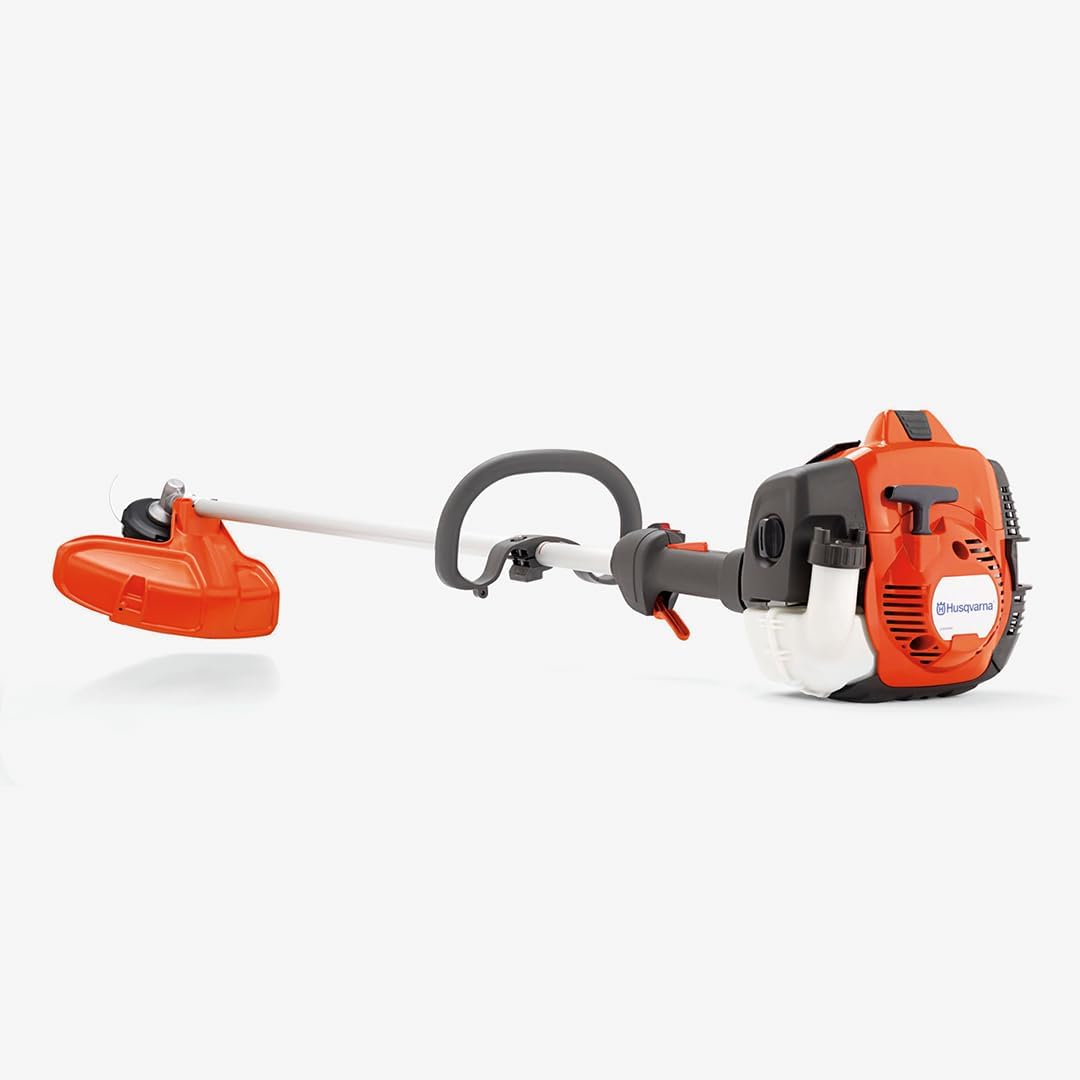
The Husqvarna 525L is a gas-powered straight-shaft string trimmer built for regular yard maintenance and light professional use. It uses a 25.4cc X-Torq 2-cycle engine with Smart Start and Air Purge to reduce startup effort and fuel consumption, and a Tap-n-Go head that makes line advancement and reloads quick. The 17-inch cutting width covers more area per pass than compact consumer trimmers, and the intuitive controls and high-capacity line head help when edging, clearing overgrown grass, or doing seasonal cleanup. Practical benefits include stronger cutting performance than battery models and a durable design intended for frequent use. Important limitations are the typical noise and vibration of a gas two-stroke unit and the need for fuel mixing, routine maintenance, and hearing protection for longer sessions. This model is not attachment-capable, so you cannot expand it with other tools, but it delivers straightforward, reliable trimming where cordless runtime or power would be a constraint.
Best for: Buyers who prioritize dependable gas power for frequent trimming and want a machine that starts easily and handles heavier grass without relying on battery runtime.
Less Ideal for: Those who need a quiet, low-maintenance option for small yards or who prefer cordless convenience and zero-emission operation.
- Powerful 25.4cc X-Torq engine for robust cutting and improved fuel efficiency
- Smart Start and Air Purge reduce effort when starting the trimmer
- Tap-n-Go trimmer head for fast line advance and easier reloading
- 17-inch cutting width speeds up work on larger patches and edges
- Two-cycle gas engine requires fuel mixing and regular maintenance
- Higher noise and vibration levels compared with electric or battery trimmers
- Not compatible with attachments for other yard tools
Verdict: Choose the 525L when you need a reliable, easy-starting gas trimmer that handles frequent trimming and heavier grass better than cordless alternatives.
Choosing the Right Gas String Trimmer: Key Factors to Consider
Engine Type and Displacement
Engine design determines how a trimmer behaves under load. Two-stroke engines are lighter and often deliver higher power-to-weight ratios, which helps when you need rapid acceleration through thick patches. Four-stroke engines burn regular gasoline without oil premix and usually run cleaner and quieter, but they add weight and complexity.
Displacement, measured in cubic centimeters, gives a general sense of potential power. Larger displacement usually means more torque for cutting dense weeds and saplings, but it also increases fuel consumption and weight. Balance the need for raw power with how long you plan to use the tool in one session and whether you need easier transport and storage.
Cutting Head Type and Line Capacity
The cutting head governs how well the trimmer slices through stems and grasses. Tap-to-feed heads are convenient for quick line replacement while bump-feed and fixed-line heads offer different trade-offs in reliability and speed. Larger line diameters cut thicker vegetation but reduce head rpm and shorten runtime.
Consider head compatibility with heavier-duty lines or blade attachments if you expect to tackle woody growth or thick, interwoven stems. Also think about how easy it is to change line in the field; fewer steps and a clear threading path save time when reloading during long jobs.
Ergonomics, Balance, and Vibration Control
Trimming for extended periods exposes you to fatigue and vibration-related discomfort. Shaft length, handle placement, and the ability to add a shoulder harness all change how the tool feels in use. A well-balanced trimmer minimizes wrist strain and lets you work with smoother motion along borders and around obstacles.
Look for vibration-dampening features in the handle and anti-vibration mounts separating the engine from the shaft. Adjustable loop or bicycle-style handles improve control in precise edging, while a padded shoulder harness distributes weight for long stand-up trimming sessions.
Starting Ease and Maintenance Access
A trimmer that is hard to start or difficult to service costs time and frustration. Ease-of-start features include primer bulbs, choke designs that work predictably, and accessible spark plug and air filter locations. Four-stroke models may require less frequent fuel mixing but can have more complex oil systems.
Routine maintenance tasks like replacing line, cleaning or replacing the air filter, and adjusting the carburetor should be straightforward. Check whether common wear parts are reachable without disassembling the engine housing and whether the design allows basic field repairs.
Fuel Efficiency, Emissions, and Runtime
Fuel consumption affects how long you can work before refueling and how often you need spare fuel on site. Two-stroke engines typically use a gasoline-oil mix which can increase operating costs and emissions, while four-strokes use straight gasoline and generally emit fewer fumes.
Consider tank size relative to the area you trim in a single session. Higher-displacement engines may offer more cutting power but will shorten runtime. For environmental or neighborhood considerations, quieter, lower-emission designs may be preferable.
Durability and Parts Availability
A trimmer will take bumps, occasional knocks against rocks and curbs, and exposure to dust and grass debris. Materials used in the shaft, gearbox, and cutting head determine how well the tool stands up to that abuse. Metal gearboxes usually last longer than plastic ones under heavy use.
Equally important is parts availability. A machine with widely available replacement heads, spools, fuel lines, and carburetor kits is easier to keep in service long term. Consider whether the manufacturer offers straightforward parts diagrams and whether common maintenance items are sold through multiple channels.
When to Choose a Heavy-Duty Gas Trimmer
If your property has overgrown borders, thick perennial grasses, or patches of brush that electric trimmers struggle with, a heavier-duty gas unit will give you the torque and cutting width needed to finish the job faster. Heavier engines maintain rpm when the line hits dense stems, reducing the tendency to bog down and requiring fewer passes.
- Best for large yards, fields, and rough edges
- Handles thicker, coarser vegetation without stalling
- More suitable where battery recharge or extension cords are impractical
Using a Gas Trimmer Safely and Efficiently
Gas trimmers are powerful and require sensible personal protective equipment. Wear eye protection, long pants, gloves, and hearing protection. Keep a safe distance from bystanders and pets, and be aware that rocks and debris can be thrown at high speed. Optimize efficiency by trimming in a pattern that minimizes repositioning and by cutting at a steady pace rather than forcing the head through very thick stems. Let the engine work at its preferred rpm and avoid biting off more than the line size is designed for.
- Clear the work area of loose debris before starting
- Trim in sweeps that follow natural contours to reduce fatigue
- Maintain a firm but relaxed grip to control direction without overexerting wrists
Transport, Storage, and Seasonal Care
Transporting a gas trimmer safely means securing it upright and containing any fuel. For storage, drain or stabilize the fuel to prevent carburetor gumming during long idle periods. Four-stroke engines need oil-level checks and occasional oil changes, while two-stroke machines require proper fuel mixing and fresh oil rates.
- Stabilize or empty fuel before long-term storage
- Clean cooling fins and air filter after dirty jobs
- Inspect the gearbox and drive shaft for wear at season start
Field Maintenance Tips for Longer Life
Regular checks prolong a trimmer's usable life. Replace cutting line before it becomes brittle, and inspect the cutting head for cracks or deformation. Keep the air filter clean; a clogged filter reduces power and increases fuel use. Tighten fasteners after the first few hours of operation and periodically thereafter to prevent loosening from vibration.
- Carry spare line and basic tools when working remote areas
- Check and replace spark plugs as part of seasonal maintenance
- Lubricate gearbox per the manufacturer schedule to avoid premature failure
How We Chose the Best Gas String Trimmer
We focused on real-world garden performance and serviceability when picking the seven trimmers for this list. Selection began by filtering for reliable two-stroke and four-stroke gas engines that are rated for typical homeowner or small-acreage workloads. We excluded units intended strictly for commercial landscapers and purely novelty models that lack standard replacement parts. Key evaluation criteria included engine displacement and torque behavior under load, because cutting thicker vegetation requires sustained torque rather than just peak RPM. We checked cutting system versatility, including head types and line capacity, since faster reloading and adaptable cutting widths reduce downtime. Ergonomics and balance were assessed to reduce fatigue during extended use, with attention to handle adjustability and harness compatibility. Fuel efficiency and emissions characteristics matter for both runtime and maintenance, so we weighed carburetor design and whether the unit used a four-stroke or two-stroke mix. Durability and parts availability were also considered to estimate service life and ease of repairs. Finally, ease of starting and routine maintenance accessibility completed the filters applied to narrow the field.
FAQ
How much power do I need for an acre of mixed lawn and brush?
It depends on vegetation density. For mostly lawn with occasional thick patches, a mid-displacement two-stroke will usually be adequate. For continuous brush and heavy stems, prioritize higher displacement and torque so the engine maintains rpm without stalling.
Are two-stroke engines worth the extra maintenance?
Two-stroke units are lighter and often have higher power-to-weight ratios, which is useful for long trimming sessions. They require premixed fuel and can run dirtier, so expect slightly higher maintenance and emissions compared with four-stroke designs.
Can I use blade attachments on a gas string trimmer?
Many gas trimmers accept blade attachments for cutting woody stems and thicker brush, but not all gearboxes are rated for blades. Confirm the gearbox rating and follow safety guidance for blade use, including proper guards and protective gear.
How often should I replace the cutting line?
Replace line whenever it becomes brittle or frequently breaks, which commonly occurs after heavy use or when cutting through abrasive materials. Keep spare spools and match the line diameter to the intended vegetation for best results.
What maintenance steps reduce starting problems?
Use fresh fuel or stabilize stored fuel, clean or replace the air filter regularly, and check the spark plug condition. For two-stroke engines, ensure the correct fuel-oil mix. Primer bulbs and choke settings should be used as recommended to reduce repeated pulls.
Final Verdict
For most homeowners with large yards or occasional heavy growth, prioritize engine torque, cutting head versatility, and good ergonomics. If you face continuous heavy brush, choose a higher-displacement unit with a robust gearbox and easy blade or line attachment options. For lighter or infrequent jobs, a smaller two-stroke offers a balance of power and lower weight. Think about serviceability and parts access as much as peak power. A machine that is easy to maintain and that accepts common replacement heads will save time and keep the trimmer working season after season. Match the trimmer to the typical terrain you manage and the length of trimming sessions to choose confidently.
