

Note: This article contains affiliate links. If you click on these links and make a purchase, I may earn a small commission at no extra cost to you. This helps support my research and content. Read my full affiliate disclosure here.
A gas-powered tiller cultivator can turn hard ground into a workable seedbed in a fraction of the time hand tools require. Choosing the right gas tiller cultivator matters because engine output, tine configuration, and machine weight directly affect how well it digs, how deep it goes, and how easy it is to maneuver in a small vegetable patch or a larger backyard plot. This guide covers seven shortlisted options that perform well across common garden situations. We evaluated each on power delivery, maneuverability, depth control, and maintenance burden so you can pick the model that fits your soil type, plot size, and physical comfort. Read on to see which features matter most for tilling success.
Top Picks at a Glance
| Best Overall The best all-around choice for most situations | Earthquake Versa 2-in-1 Front-Tine Tiller Cultivator with 99cc 4-Cycle Viper Engine |  |
| Best Quality Built to a higher standard if you want something more solid | EARTHQUAKE Victory Rear Tine Tiller (209cc Viper Engine) |  |
| Best Value The sweet spot between price and what you get | VEVOR 43CC Gas-Powered Tiller Cultivator with Four Adjustable Steel Tines |  |
| Best Budget The cheapest option that still gets the job done reliably | KIOMGLE 52cc 2-Stroke Gas-Powered Tiller/Cultivator |  |
| Highest Rated A top-rated pick with lots of positive feedback | Mutaomay 212cc Gas-Powered Front-Tine Garden Tiller (21" Width) |  |
| Most Popular A crowd favorite that many people choose with confidence | Mantis 7940 4-Cycle Tiller/Cultivator with Honda Engine |  |
| Best Seller A high-volume bestseller chosen again and again | BILT HARD 46cc 4-Cycle Gas Tiller Cultivator, 16" Tilling Width |  |
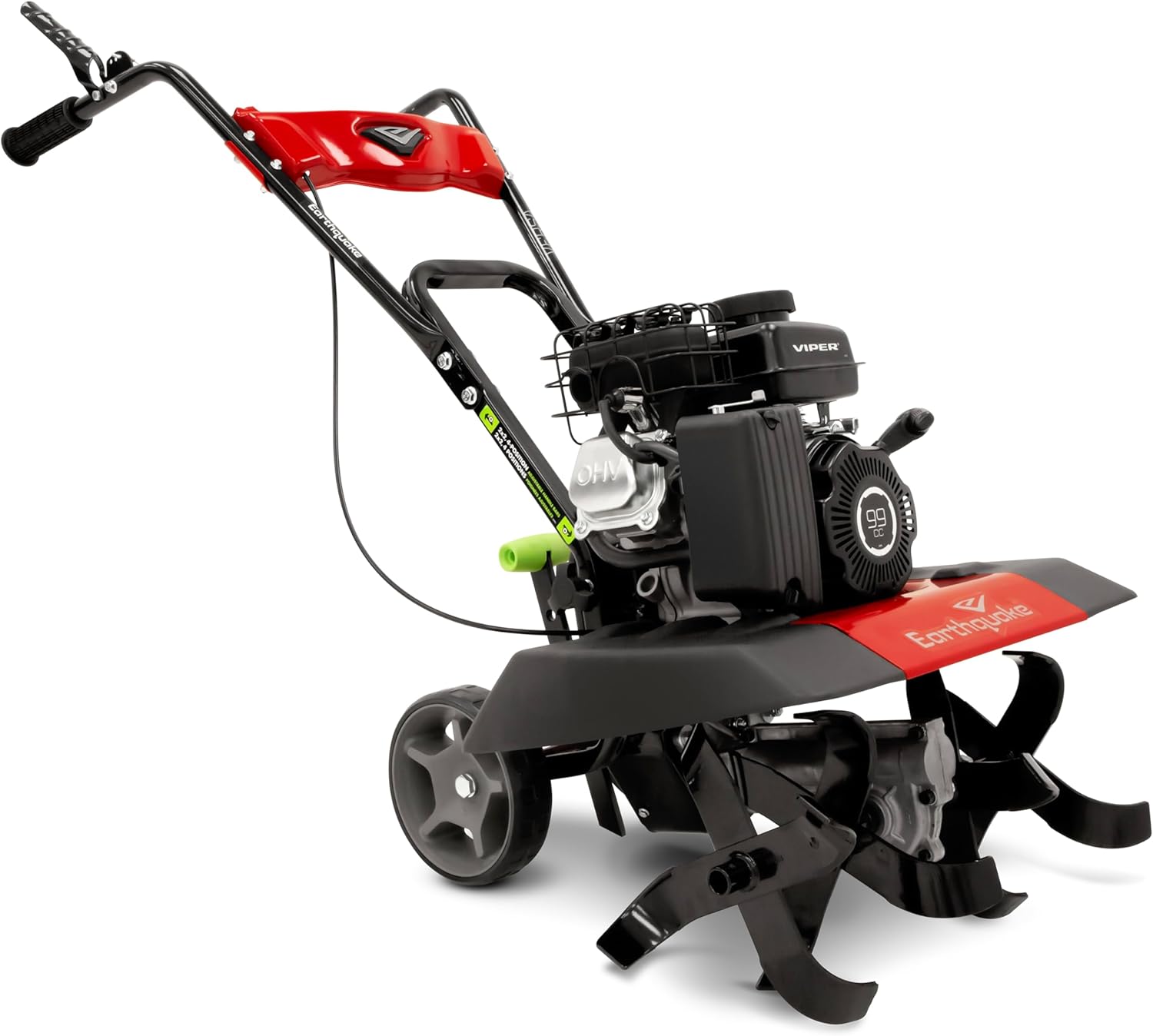
Earthquake Versa 2-in-1 Front-Tine Tiller Cultivator with 99cc 4-Cycle Viper Engine
| Power Source | gas_powered |
|---|---|
| Operation Mode | Gas-powered |
| Engine | 99cc 4-cycle Viper engine |
| Tilling Depth | Up to 11 inches |
| Adjustable Tilling Width | 11, 16, 21 inches |
The Earthquake Versa is a front-tine tiller that doubles as a cultivator by removing the outer tines and side shields, letting you switch between an 11 inch narrow cultivator and a 21 inch full-width tiller without tools. The 99cc 4-cycle Viper engine provides consistent power for breaking compacted soil, turning beds, and light fall cleanup, while onboard transport wheels and an adjustable handlebar make moving and positioning the machine easier. Notable features include up to 11 inches of tilling depth and three selectable widths for faster work across larger plots or precise work along rows and fence lines. In practice it excels at preparing seedbeds and midseason cultivation, and the low center of gravity helps with stability. Limitations are typical of front-tine machines: it is heavier and less maneuverable than small rear-tine models for very heavy sod or rocky ground, and being gas powered it needs regular maintenance and fuel storage. For many homeowners this is a capable, flexible machine that covers most garden tasks without specialist equipment.
Best for: Home gardeners who want one machine that handles both bed preparation and row cultivation across small to medium plots and who value straightforward, adjustable performance.
Less Ideal for: Large-acreage users or those who need to break heavy sod, rocky ground, or want a quieter electric option should consider more specialized rear-tine or non-gas models.
- Two-in-one design allows quick conversion between cultivator and full-width tiller
- 99cc 4-cycle Viper engine delivers reliable power for typical garden soils
- Tool-less removal of outer tines and side shields for fast width adjustment
- Adjustable tilling widths (11, 16, 21 inches) and up to 11 inch depth cover a range of tasks
- Integrated transport wheels and adjustable handlebar improve handling and maneuvering
- Front-tine design is less effective than rear-tine tillers on very heavy sod or extremely compacted ground
- Gas engine requires routine maintenance and fueling
Verdict: Buy this if you want a single gas-powered machine that cleanly switches between narrow cultivation and wider tilling to handle most home garden jobs.
EARTHQUAKE Victory Rear Tine Tiller (209cc Viper Engine)

| Engine | 209cc 4-Cycle Viper |
|---|---|
| Tilling width | 16" |
| Max tilling depth | 10" |
| Wheels | 13" pneumatic self-propelled |
The Earthquake Victory is a purpose-built rear tine tiller for homeowners who need serious soil-turning power. Its 209cc Viper 4-cycle engine drives counter-rotating tines that aggressively break compacted soil and new ground, while a durable cast-iron transmission with bronze gears is designed for long service life. The machine tills a 16-inch swath up to about 10 inches deep, and features instant reverse so you can change direction or work close to fences without stopping to shift. Adjustable handlebars and a drag stake let you tune comfort and tilling resistance, and 13-inch pneumatic wheels make positioning and moving the unit over rough ground easier. Side tine shields and a rear smoothing shield help keep dirt away from plants and produce a neater seedbed. This tiller is best suited to gardeners who need a robust, long-lasting tool for breaking new ground and maintaining rows; it is heavier and more powerful than lightweight front-tine models, so storage, transport, and initial assembly should be planned for accordingly.
Best for: Buyers who want a robust, long-lasting rear tine tiller for breaking new ground and maintaining garden rows and who prioritize proven mechanical durability and user control over low weight.
Less Ideal for: Casual gardeners with very small plots, those who need a lightweight portable unit, or users who prefer low-maintenance electric alternatives.
- Powerful 209cc 4-cycle engine for sustained tilling performance
- Counter-rotating rear tines that break compacted soil and new ground effectively
- Instant Reverse handle for easy directional changes and tight-space maneuvering
- Durable cast-iron transmission with bronze gears for long-term reliability
- Adjustable handlebars and drag stake for operator comfort and better seedbed control
- Substantial weight makes it less convenient to move or lift for storage
- Requires gas engine maintenance and winterization unlike electric models
Verdict: Choose the Victory if you want a heavy-duty, mechanically durable rear tine tiller built to break new ground and deliver reliable season-after-season performance.
VEVOR 43CC Gas-Powered Tiller Cultivator with Four Adjustable Steel Tines

| Engine displacement | 43CC |
|---|---|
| Operation mode | Gas |
| Tines | 4 steel adjustable front tines |
| Cultivation width | 11.8 in (300 mm) |
This VEVOR 43CC tiller cultivator is designed to loosen and prepare soil in home gardens, vegetable plots, and flower beds. The 43CC 2-stroke engine supplies enough torque for light plowing, seedbed preparation, and turning composted soil, while the four steel adjustable front tines let you control working width and aggressiveness. Practical touches include a long pull cord for reliable starts, handle-mounted controls for on-the-go braking, and a shield over the tines to reduce thrown debris. The aluminum-alloy gearbox and enlarged heat-dissipation openings are intended to improve longevity and reduce overheating during continuous runs. It is compact and stand-up operated, so you avoid bending during use and assembly is reported to be simple. Expect this machine to handle typical backyard tasks quickly, but know it is sized for light to moderate work rather than heavy-duty breaking of sod or rocky ground and that owning a gas engine means routine fuel, oil mix, and maintenance chores.
Best for: Buyers who want a no-frills, gas-powered tiller to speed up bed preparation and routine cultivation around a typical home garden and prefer machines they can service themselves.
Less Ideal for: Not a good fit for users who need a heavy-duty tiller for rocky or compacted ground or those who want a cordless or electric option for quieter, low-maintenance operation.
- Powerful 43CC engine suitable for most home garden cultivation tasks
- Four steel adjustable tines let you vary cultivation aggressiveness
- Aluminum-alloy gearbox and enlarged cooling help with durability and continuous use
- Handle-mounted controls and stand-up operation improve ergonomics and control
- Designed for light to moderate soil work and not for heavy sod or large roots
- Requires regular gas engine maintenance and fuel handling
Verdict: A compact, serviceable gas tiller that makes backyard bed preparation faster and easier for practical home gardeners.
KIOMGLE 52cc 2-Stroke Gas-Powered Tiller/Cultivator

| Power Source | Gasoline |
|---|---|
| Operation Mode | Manual |
| Material Type | 65 Manganese Steel, Iron, Plastic |
| Idle Speed | 2800-3200 rpm |
| Fuel Tank Capacity | 0.2 gal |
This KIOMGLE 52cc two-stroke gas tiller is a budget-friendly handheld cultivator for preparing and maintaining small to medium garden beds. It uses a 2-stroke gasoline engine with air cooling and multiple heat sinks to run at an idle speed of about 2800–3200 rpm, and it offers a 0.2 gal fuel tank for extended runtime between refills. The unit's tillage width and depth range (about 17.17 inches wide and up to roughly 3.94 inches deep) plus large-diameter wheels make it effective for loosening soil, removing weeds, and speeding light tillage tasks. Controls are handled from the handlebars with a throttle and an on/off switch for straightforward one-touch operation. Construction blends manganese steel with iron and plastic for a balance of durability and lower cost, though the two-stroke engine means mixing fuel and oil and a bit more vibration and noise than a four-stroke. This is not intended for heavy commercial use but is a practical, easy-to-operate option if you want an affordable gas-powered tiller for routine garden soil work.
Best for: Gardeners who need an inexpensive gas-powered cultivator for routine bed preparation and weeding and prefer a simple, handheld unit over larger equipment.
Less Ideal for: Large-scale farms, contractors, or gardeners needing a tiller for very heavy, compacted, or rocky soil should consider more powerful rear-tine or commercial models.
- Compact, single-person handheld design for small-to-medium beds
- Two-stroke gasoline engine with air cooling for consistent power during use
- Wide tillage width and adjustable depth to handle common garden cultivation tasks
- Simple handlebar controls with throttle and on/off switch for easy operation
- Durable construction using manganese steel and iron in key wear areas
- Two-stroke engine requires mixing fuel and oil and produces more vibration and noise than four-stroke engines
- Not designed for heavy commercial or very rocky soil where a larger rear-tine tiller would be better
Verdict: A cost-conscious, easy-to-use gas cultivator that delivers practical power for routine small-plot tilling and weed control.
Mutaomay 212cc Gas-Powered Front-Tine Garden Tiller (21" Width)

| Power Source | gas_powered |
|---|---|
| Material Type | High Carbon Steel |
| Unit Count | 1 Count |
| Number of Items | 1 |
This Mutaomay gas tiller is built for heavy-duty garden work: a 212cc 4-stroke engine drives 4×4 steel tines across a 21-inch path to break compacted soil, mix compost, and prepare seedbeds. It uses forward and reverse transmission, which makes maneuvering in long rows and turning in tight spaces much easier than a simple push-only machine. The adjustable multi-height handlebar helps reduce operator strain during long sessions and the large fuel tank supports extended runs between refills. Notable practical benefits are the aggressive tine design for clay and hard-packed ground and the transport/cultivation wheel that switches modes for moving the machine versus deep tilling. Limits to consider are the machine weight and size, which make it better suited to larger plots and users comfortable with gasoline equipment, plus higher maintenance compared with electric models. For gardeners who need reliable, continuous power for big areas, this tiller delivers robust performance but requires regular fuel and engine upkeep.
Best for: Gardeners and small-scale farmers who need dependable, continuous power to prepare and maintain large beds or tough soil and who prioritize a rugged, workhorse machine over lightweight convenience.
Less Ideal for: Those with very small urban plots, users who prefer low-maintenance electric tools, or anyone unable or unwilling to perform regular engine maintenance.
- Powerful 212cc 4-stroke engine for sustained performance on large or compacted plots
- Forward and reverse transmission for easier maneuvering and better control
- Heavy-duty 4×4 steel tines that penetrate hard soil and resist clogging
- Adjustable multi-height handlebar reduces operator fatigue during long jobs
- Heavy overall weight makes transport and storage more difficult
- Requires gasoline engine maintenance and occasional tuneups
Verdict: If you need a robust, gas-powered tiller that can reliably break hard soil and cover large garden areas, this Mutaomay 212cc front-tine tiller is built for the job.
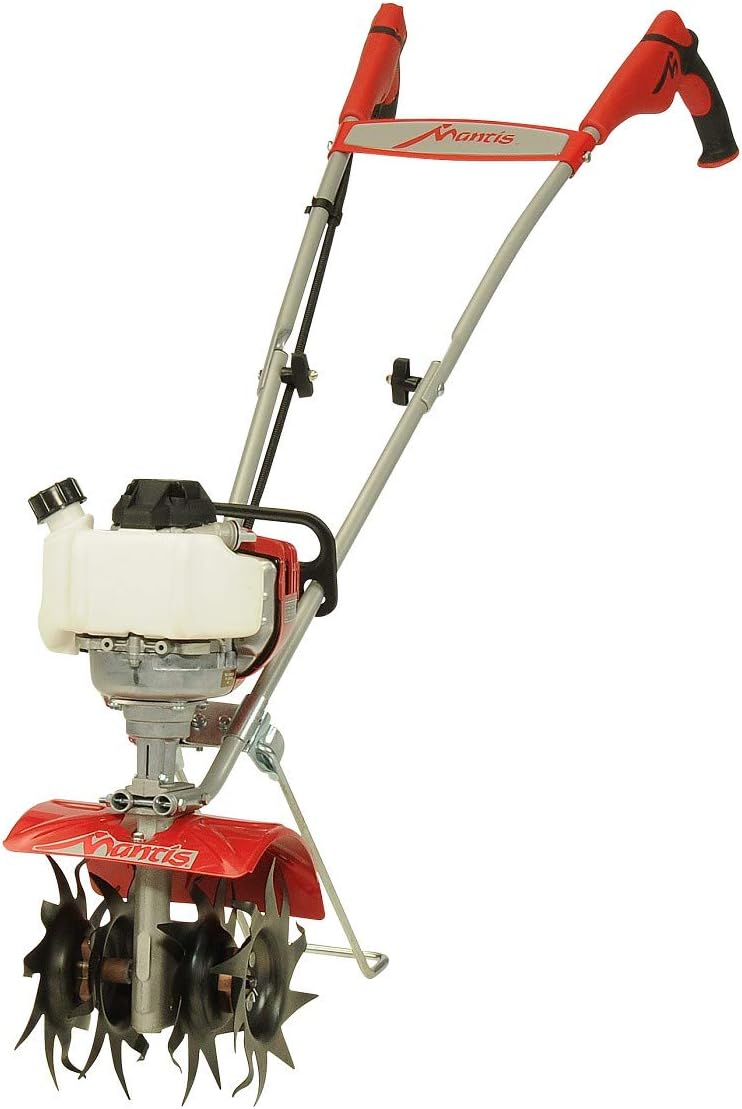
Mantis 7940 4-Cycle Tiller/Cultivator with Honda Engine
| Power Source | gas-powered |
|---|---|
| Material Type | Metal |
| Manufacturer Warranty Description | 2-year limited |
The Mantis 7940 is a compact, performance-focused mini tiller that uses a Honda 4-cycle engine to deliver strong tilling power without the need for fuel mixing. It is typically used to break sod, loosen compacted soil, and prepare planting beds where a full-size tiller would be overkill. Notable features include a high-tine speed (up to 240 rpm), finger-controlled throttle for infinite speed adjustment, ergonomic sure-grip handles, folding handlebars for storage, and a standard kickstand for easy staging. In practice the machine is easy to start and maneuver thanks to its light 24-pound build, yet the transmission and tine design let it dig deeply—claims note up to 10 inches—so you can tackle tougher ground and precision-weed around plants by flipping the tines. The main trade-offs are that it is a small, single-purpose tool: it is ideal for garden beds and rows but not intended to replace larger tillers for very large acreage or heavy-duty landscaping, and being gas-powered it requires routine engine maintenance and hearing/eye protection during use.
Best for: Gardeners who prioritize tilling performance in small to medium beds and want a compact, easy-to-handle machine that still delivers strong digging power for sod and compacted soil.
Less Ideal for: Landscapers or homeowners who need to cultivate large acreages or who prefer zero-emission electric tools for frequent, heavy-duty work.
- Honda 4-cycle engine provides reliable, no-mix gas power and strong tine speed.
- Lightweight 24 lb design makes it easy to carry, maneuver, and store.
- Finger-controlled throttle offers infinite speed control for delicate or aggressive work.
- Folding handlebars and a kickstand improve storage and on-site handling.
- Small, single-tine design is not suited for very large areas or heavy landscaping jobs.
- As a gas engine tool it requires regular maintenance and produces noise and emissions.
Verdict: If you want a lightweight mini tiller that punches above its size for serious bed preparation, the Mantis 7940 delivers reliable Honda-powered performance in a compact package.
BILT HARD 46cc 4-Cycle Gas Tiller Cultivator, 16" Tilling Width

| Engine | 46cc 4-Cycle |
|---|---|
| Power | 1.9 HP |
| Tilling Width | 16 in. |
| Operation Mode | Gas |
The BILT HARD 46cc 4-cycle tiller is a straightforward gas-powered cultivator aimed at homeowners who need a capable machine for regular garden bed preparation. Its 46cc engine runs on separate gasoline and oil so there is no pre-mixing, and the unit drives six steel tines arranged for a 16-inch working width and up to roughly 8-inch depth in softer soils. Two-position adjustable wheels and foldable handles make it easier to move, store, and transport between beds. Cushioned grips and one-hand throttle control reduce operator fatigue during longer runs. Practical benefits include the 4-stroke engine's smoother operation and lower emissions compared with 2-stroke models and a tine arrangement that mixes compost or fertilizer into soil effectively. Limitations to note are its modest 1.9 hp output and relatively narrow 16-inch width, which mean the machine is best for medium to large garden plots rather than large acreage or very hard, compacted ground where a heavier 24–30 inch tiller would be faster. Routine engine maintenance and safe fueling practices are required for reliable performance.
Best for: Gardeners who want a reliable, easy-to-maintain gas tiller to prepare and maintain medium to large vegetable beds and borders without dealing with gas-oil mixing.
Less Ideal for: Property owners needing high-capacity tilling for several acres or contractors who require a wider, heavier-duty commercial tiller for hardpan or rocky ground.
- 46cc 4-stroke engine with separate oil reservoir avoids gas-oil mixing and runs smoother than 2-stroke units
- Six steel tines and 16-inch cutting width provide thorough soil mixing for garden beds
- Foldable handles and 2-position transport wheels simplify storage and movement
- Cushioned grips and one-hand throttle control reduce operator fatigue during extended use
- Relatively low horsepower and narrow width make it slower on very large or heavily compacted areas
- Not suited for breaking heavy clay or rocky soil without multiple passes
Verdict: A practical, easy-to-maintain 4-stroke gas tiller for homeowners who want efficient soil preparation for medium to large garden beds.
Choosing the Right Gas Tiller Cultivator: Key Factors to Consider
Engine Power and Torque
Engine size and torque determine how effectively a gas tiller cultivator breaks through compacted or clay-rich soils. Higher torque helps the tines bite and stay engaged under load, reducing stall risk when encountering roots or heavy sod. Consider the typical soil conditions in your garden: light, sandy soil needs less power than tilled clay or grass-converted ground.
Beyond peak output, look at how power is delivered across the rev range. Smooth, low-end torque makes it easier to maintain a steady tilling pace without constant throttle changes. Fuel access, choke operation, and starting ease also affect daily usability in the field.
Tine Configuration and Coverage
Tine shape, diameter, and the number of tines affect how much soil is turned per pass and how aggressively the machine tills. Narrower tine assemblies are better for cultivating between rows and around plants, while wider tine spreads cover more ground per pass for open beds. Curved or forward-angled tines tend to pull soil upward, providing better mixing, while more vertical tines cut and slice.
Tine material and ease of replacement matter because tines wear when used in stony or sandy soils. Also consider whether the tine assembly can be reversed or reconfigured for cultivating versus shallow mixing.
Working Width and Depth Range
Working width influences how many passes you must make across a bed and therefore affects job time. A wider tilling span reduces passes but can be harder to fit into narrow beds. Depth adjustability lets you tailor the tilling action to the task: shallow cultivation for mixing amendments near the surface or deeper tilling for breaking new ground.
Check how depth is set and adjusted in the field. Quick-to-change depth stops or easy mechanical levers keep you productive and allow you to respond as soil conditions change.
Maneuverability and Weight Balance
How a gas tiller cultivator handles dramatically changes user fatigue and accuracy, especially when working around plantings or on sloped terrain. A well-balanced machine with adjustable handlebars and responsive steering makes it easier to follow bed lines and complete neat passes.
Heavier machines dig deeper with less forward force but can be harder to lift, turn, or transport. Think about how you will move the tool between beds and whether you need wheels that raise the tines for transit.
Durability and Maintenance Accessibility
Durability is about both construction and the ease of keeping the engine and drivetrain in serviceable condition. Look for accessible air filters, spark plugs, and oil fill points that reduce downtime for routine service. Materials used in the transmission housing and tine mounts affect resistance to bending and wear.
Consider what parts are likely to be replaced over time and how straightforward it is to swap them. Machines with modular tine assemblies and clear maintenance points will stay usable longer and cost less to maintain in the long run.
Best Uses by Garden Size and Soil Type
Match the tiller to both your plot size and soil condition. Small, raised beds and container gardens benefit from compact, narrow machines that let you work between rows without damaging plants. Medium backyard plots usually require a mid-width machine that balances coverage and control. Larger or previously untilled areas are better served by wider units with higher torque to reduce the number of passes needed.
- Small plots: prioritize narrow working width and light weight for maneuvering between beds.
- Heavy clay: favor machines with higher torque and aggressive tine geometry.
- Sandy or rock-strewn soil: choose robust tine materials and easy-to-replace parts.
Operating Tips for Safer, More Effective Tilling
Start by clearing the area of stones, sticks, and debris that could damage tines or cause kickback. Set depth shallow on the first pass to loosen surface compaction, then increase depth gradually in subsequent passes to avoid overloading the engine. Keep a steady walking pace and allow the machine to engage rather than forcing it forward, which can strain the drive system.
- Wear eye protection and sturdy footwear to guard against flying debris.
- Use the throttle and depth controls in small increments to maintain steady operation.
- If you hit roots or heavy sod, raise the depth slightly and make a lighter second pass.
Maintenance Schedule That Keeps a Tiller Running
Regular upkeep extends the life of a gas tiller cultivator and preserves performance. Check oil levels and change oil at recommended intervals. Clean or replace air filters more often if you work in dusty conditions. Inspect tines for wear and replace them before severe bending or breakage occurs to prevent drivetrain damage.
- Daily: inspect tines, check fuel and oil before use.
- Monthly: clean air filter, inspect belts or chains, and tighten hardware.
- Seasonally: sharpen or replace tines and perform a full engine tune-up.
Attaching and Using Accessories
Many gas tillers accept optional accessories such as furrowers, hiller blades, or transport wheels that expand functionality. Choose attachments that are compatible with the tine spacing and mounting system your machine uses. Using the correct accessory can speed planting preparations and reduce manual labor for tasks like trenching or row shaping.
- Confirm attachment fit and mounting hardware before purchase.
- Store accessories clean and dry to prevent corrosion.
- Learn attachment installation in a clean, level area before taking them to the field.
How We Chose the Best Gas Tiller Cultivator
To assemble this list we focused on real-world gardener needs for soil prep with gas-powered cultivators. We prioritized machines that demonstrate a balance of usable engine power and efficient tine design, because raw horsepower alone does not guarantee effective digging in heavy or compacted soils. Maneuverability and depth control were essential filters since tight beds, around plants, and raised rows demand precise handling. We evaluated durability and maintenance factors that affect ownership over multiple seasons, including access to service points and common wear items. Safety features and vibration control were considered to reduce fatigue during extended use. We excluded small handheld devices and full-size tractor attachments to keep the selection relevant to homeowners and small-plot growers. Final inclusion required clear specifications for engine displacement or torque, tine width and depth range, and accessible maintenance design.
FAQ
How deep should I till with a gas cultivator?
Depth depends on task. For mixing compost and surface amendments, work 2 to 4 inches deep. For breaking new ground or turning sod, multiple passes reaching 6 to 8 inches are common, increasing depth gradually to avoid overloading the engine.
Can I use a gas tiller in clay soil?
Yes, but choose higher torque and appropriate tine geometry. Clay compacts easily, so take shallower initial passes and allow the machine to make incremental progress rather than forcing deep cuts in one go.
How often do tines need replacement?
Replacement frequency depends on soil abrasiveness and usage. In sandy or rocky soils tines may wear noticeably within a season, while in softer soils they can last multiple seasons. Inspect tines regularly and replace them when wear reduces cutting effectiveness or they become bent.
Is a heavier machine always better for deep tilling?
Heavier machines can help maintain tine engagement and reduce the need to push, but they also increase fatigue and make transport harder. Consider a balance between weight for digging and manageable handling for your typical garden tasks.
What safety gear should I use while tilling?
Wear eye protection, hearing protection, gloves, and sturdy closed-toe footwear. Avoid loose clothing that could catch on moving parts, and keep bystanders and pets well clear of the work area while the engine is running.
Final Verdict
Prioritize the combination of engine torque, tine design, and maneuverability when selecting a gas tiller cultivator. Engine and tine choices control how well the unit handles your soil type, while depth adjustability and weight affect ease of use and the quality of the seedbed you produce. Weigh the tradeoffs between coverage and control: wider machines save time on open ground, while narrower, lighter units give more precision around established beds. Focus on accessible maintenance and ergonomics to keep the machine performing season after season, and pick the configuration that matches your soil, plot size, and physical comfort.
