

Note: This article contains affiliate links. If you click on these links and make a purchase, I may earn a small commission at no extra cost to you. This helps support my research and content. Read my full affiliate disclosure here.
Small flies around potting soil or houseplants are more than a nuisance. They can stress seedlings, spread fungi, and signal overwatering or contaminated potting mix. Choosing the right gnat insecticide matters because some treatments kill adults but leave larvae in the soil, while others focus on long-term larval control without harming delicate foliage. This guide covers seven shortlisted gnat insecticides chosen for different garden situations, including indoor houseplants, patios, and seed-starting trays. We evaluate products for quick adult control, soil and plant safety, residual larval suppression, and ease of use so you can pick an approach that fits your routine. Read on for practical factors to weigh before you buy and how each evaluation was applied to our selections.
Top Picks at a Glance
| Best Overall The best all-around choice for most situations | Ortho Home Defense Insect Killer Refill, 1.33 gal (Indoor & Perimeter) |  |
| Best Quality Built to a higher standard if you want something more solid | Quali-Pro Bifenthrin I/T 7.9F Insecticide, 1 Gallon |  |
| Best Value The sweet spot between price and what you get | Bonide Captain Jack's Ready-to-Use Neem Oil Spray, 32 oz |  |
| Best Budget The cheapest option that still gets the job done reliably | STEM Plant-Based Bug Spray for Flies, Mosquitoes & Gnats, 10 oz |  |
| Highest Rated A top-rated pick with lots of positive feedback | Atticus Talak 7.9% Indoor/Outdoor Bifenthrin Insecticide Concentrate (1 gal) |  |
| Most Popular A crowd favorite that many people choose with confidence | Atticus Talak 7.9% Bifenthrin Indoor/Outdoor Insecticide Concentrate, 32 oz |  |
| Best Seller A high-volume bestseller chosen again and again | HOT SHOT Total Release Fogger with Odor Neutralizer, 2 oz cans (12-count) |  |
Ortho Home Defense Insect Killer Refill, 1.33 gal (Indoor & Perimeter)

| Unit Count | 170.24 Fluid Ounces |
|---|---|
| Item Form | Spray |
| Target Species | Insects |
| Liquid Volume | 1.33 gallons |
This Ortho Home Defense refill is made for homeowners who want a high-capacity solution for indoor and perimeter pest control. The concentrate is intended to be poured into the reusable Comfort Wand applicator so you can treat entry points, baseboards, doorframes, and foundation perimeters without repeated small bottles. Its formula claims an invisible, fast-drying barrier that provides up to 12 months of residual control for ants, roaches, and spiders when applied on non-porous indoor surfaces, and it targets a broad list of common household insects. In practice the refill reduces trips to the store and lowers per-application cost compared with single-use sprayers, and the continuous-spray wand reduces user fatigue for larger jobs. Important limitations are that the long-residual claim applies mainly to certain pests and non-porous surfaces, and precise coverage requires following the spray distance and band-width directions to avoid overapplication. This product is best used as part of a preventive or follow-up treatment routine rather than a one-time knockdown for heavy infestations.
Best for: Homeowners who prioritize effective, long-lasting perimeter and indoor protection and who want a refillable, economical option for routine pest control.
Less Ideal for: People who need immediate, heavy-duty knockdown treatments or who prefer single-use ready-to-spray bottles for spot treatments.
- Large 1.33 gallon refill reduces frequency of repurchasing and is economical for whole-home or perimeter treatments
- Compatible with the Comfort Wand reusable applicator for continuous spray and less hand fatigue during larger jobs
- Invisi-Shield formula dries clear with no noticeable fumes, allowing people and pets to re-enter once dry
- Broad-spectrum label covers many common indoor and perimeter pests, including ants, roaches, spiders and mosquitoes
- Residual protection claim is specific to ants, roaches and spiders on non-porous indoor surfaces and may not apply equally to all listed insects
- Requires a compatible applicator wand or transfer container since it is a refill rather than a ready-to-use spray
Verdict: Buy this refill if you want an economical, high-capacity solution to maintain a long-lasting indoor and perimeter insect barrier using a reusable comfort-wand applicator.
Quali-Pro Bifenthrin I/T 7.9F Insecticide, 1 Gallon

| Item Form | Spray |
|---|---|
| Target Species | Termites, Carpenter Ants |
| Liquid Volume | 1 gallons |
| Active Ingredients | Bifenthrin |
This one-gallon Quali-Pro Bifenthrin I/T 7.9F is a flowable pyrethroid designed for preventive and residual control of a broad range of pests in lawns and landscaped areas. It is typically mixed and applied as a spray to turf, ornamental beds, foundations and around structures to suppress termites, carpenter ants, fleas, ticks, mites and similar pests. Key features include a long-lasting residual, compatibility with many turf and ornamental tank-mix partners, and a no-odor, non-irritating formulation that dries without visible residue. In practice it provides dependable knockdown and weeks of protection when applied at recommended rates, making it suited for routine perimeter treatments and spot-control of persistent infestations. Important limitations are that it is a concentrated professional-style product requiring careful dilution, protective equipment, and adherence to label directions for safe use around people, pets and desirable plants. It is not a ready-to-use consumer spray and should be used only where labeled.
Best for: Buyers who prioritize a reliable, long-lasting perimeter or spot-treatment solution for recurring or hard-to-control outdoor pests and who are comfortable following label directions and using concentrated products.
Less Ideal for: Casual users who want a simple ready-to-use spray for occasional bug bites or very small lawns should consider consumer-grade aerosols or hose-end products instead.
- Long-lasting residual control effective against termites, carpenter ants and other pests
- Compatible with herbicides, fungicides, insecticides and liquid fertilizers for tank mixes
- No-odor, non-irritating formula that dries with no visible residue
- Available in a one-gallon concentrated flowable for multiple applications
- Concentrated product requires dilution and protective equipment for safe handling
- Not intended as a ready-to-use consumer spray and may be overkill for very small yards
Verdict: Choose this product when you need a dependable, long-lasting concentrated insecticide for routine perimeter and spot treatments in lawns and ornamentals.
Bonide Captain Jack's Ready-to-Use Neem Oil Spray, 32 oz

| Item Form | Liquid |
|---|---|
| Target Species | Insects |
| Liquid Volume | 32 fluid ounces |
| Active Ingredients | Clarified Hydrophobic Extract of Neem Oil |
This ready-to-use neem oil spray is a multipurpose garden treatment that kills insects at all life stages while also serving as a miticide and preventative fungicide. Packaged in a 32-ounce trigger bottle, it is applied by shaking and thoroughly spraying plant surfaces, including leaf undersides, at the first sign of pests or disease and reapplying every 7 to 14 days as needed. The active ingredient is a clarified hydrophobic extract of neem oil, which is approved for organic gardening and labeled safe to use on vegetables up to the day of harvest. Practical benefits include broad pest coverage (aphids, whiteflies, spider mites and others), disease suppression such as powdery mildew, and convenience from a ready-to-use sprayer. Important limitations are that results are slower than synthetic contact insecticides and application timing matters to avoid leaf burn in full sun; repeated applications may be needed for heavy infestations. Follow label safety directions and keep the product away from children and pets.
Best for: Gardeners who want a single, organic-approved product to manage common vegetable garden pests and fungal problems and who prefer products with strong user feedback.
Less Ideal for: Growers needing rapid knockdown of severe infestations or commercial producers who require fast-acting, high-throughput treatments.
- Kills multiple pest stages including eggs, larvae and adults for more complete control.
- Also acts as a fungicide and miticide so one product covers pests and common fungal issues.
- Ready-to-use trigger bottle requires no mixing and is easy to apply to leaves and undersides.
- Approved for organic gardening and can be used on vegetables up to day of harvest.
- Slower-acting than many synthetic contact insecticides, so it may take several applications to see control.
- Must avoid spraying in peak sunlight to reduce risk of leaf burn.
Verdict: A convenient, organic-approved all-in-one neem spray that controls common vegetable garden pests and fungal issues with minimal fuss.
STEM Plant-Based Bug Spray for Flies, Mosquitoes & Gnats, 10 oz

| Net volume | 10 oz |
|---|---|
| Active ingredients | Geraniol 1.47%, Lemongrass oil 0.10% |
| Intended use | Indoor and outdoor spot treatment |
STEM's 10 oz aerosol bug spray is a plant-based insecticide formulated to kill flies, mosquitoes and gnats around the home and patio. You use it like most aerosols: shake well, hold the nozzle 6–12 inches from target areas or visible insects, and mist surfaces or airspace where flying pests congregate. Notable features include geraniol and lemongrass oil as the active ingredients, no added dyes or harsh chemical odors, and directions that allow both indoor and outdoor spot treatments. In practice it is convenient for quick spot kills and temporary control around doorways, windowsills, potted areas and patios. Because it is formulated for people- and pet-occupied spaces when used as directed, it is a reasonable option for households that prefer botanical actives. Limitations are typical for short‑acting aerosols: protection is not long lasting so repeat applications are needed after rain or cleaning, and it is not for direct application to people, pets or edible plants.
Best for: Buyers who want an affordable, plant-based aerosol for quick spot control of gnats and other flying pests around living spaces and patios.
Less Ideal for: People seeking season-long residual protection or professional-grade control should consider products with longer-lasting actives or different application formats.
- Uses plant-based active ingredients (geraniol and lemongrass oil) rather than harsh synthetic chemicals
- Formulated for both indoor and outdoor spot treatments when used as directed
- No added dye or strong chemical fragrance, making indoor use less obtrusive
- Entomologist-tested formulation and clear directions for application
- Effect is short lived compared with long‑lasting residual insecticides
- Not intended for direct use on people, pets or edible plants
Verdict: A budget-friendly, plant-based aerosol that delivers fast, convenient knockdown of gnats and other flying pests for short-term control.
Atticus Talak 7.9% Indoor/Outdoor Bifenthrin Insecticide Concentrate (1 gal)

| Active Ingredients | Bifenthrin |
|---|---|
| Formulation | Suspension Concentrate |
| Unit Count | 128 Fluid Ounces |
| Specification Met | EPA |
Talak 7.9% is a water-based bifenthrin concentrate meant as a flexible indoor and outdoor insect control product. You dilute the concentrate with water and apply it as a spray for perimeter barrier treatments, to turf, to ornamentals, or to interior baseboards and other problem areas. The label lists control of more than 75 pests including mosquitoes and ticks, and the formula is designed to kill on contact and provide residual control for up to three months. Practical benefits include a clear, odor-free spray that dries without staining and a bottle that allows easier small pours for accurate mixing. Important limitations are that mixed solutions should be used the same day and it is not approved for fogger use, so it is best for targeted spray applications rather than broadcast fogging. As with any bifenthrin product, users should follow label directions closely and consider nonchemical options for integrated mosquito management.
Best for: Buyers who want a single, versatile insecticide to treat both perimeter and landscape mosquito problems and prefer a product that delivers residual control without odors or visible residue.
Less Ideal for: People seeking a ready-to-use fogging or misting solution or those who need an insecticide they can pre-mix and store for later use.
- Broad-spectrum control listing more than 75 indoor and outdoor pests including mosquitoes and ticks.
- Water-based formula that dries clear, leaves no residue, and is odor-free for use around living areas.
- Long residual effect with label claim of up to three months of control per application.
- Mixes with water for adjustable application rates across lawns, landscapes, and surfaces.
- Bottle design supports easier small pours to reduce mess when measuring concentrate.
- Mixed spray cannot be stored and must be used the same day.
- Not approved for use in foggers, limiting application methods to direct sprays.
Verdict: A versatile, long-lasting bifenthrin concentrate that provides broad-spectrum mosquito and perimeter control for users who want one product for indoor and outdoor applications.
Atticus Talak 7.9% Bifenthrin Indoor/Outdoor Insecticide Concentrate, 32 oz

| Active Ingredient | Bifenthrin |
|---|---|
| Formulation | Suspension Concentrate |
| Liquid Volume | 32 fluid ounces |
| Length of Control | Up to three months |
| Target Species | Insects |
Talak 7.9% is a liquid concentrate for treating lawns, landscaping, outdoor living areas and indoor perimeter spots like baseboards and cabinets. You dilute the concentrate with water to create a spray for barrier treatments, spot applications or lawn mixes; label rates explain how much to mix per gallon depending on the use. The product uses bifenthrin, a proven broad-spectrum active ingredient, and the manufacturer states it controls over 75 species and can give residual control for as long as three months. Its water-based formula dries clear, leaves no odor or visible residue, and is not phytotoxic on plants when used per label. Practical benefits include flexible indoor and outdoor use, clear drying, and a bottle designed for easier pouring. Important limitations are that solutions should be mixed only for same-day use, it is not registered for sale in a few states, and it is not approved for fogger application, so professional-style misting methods are not appropriate.
Best for: Buyers who want a single, reliable product to protect yards, patios and building perimeters from a wide range of common pests and prefer conservative, label-driven application practices.
Less Ideal for: People seeking ready-to-use sprays or fogger-compatible products or those in states where this formulation is not registered should look at alternatives.
- Broad-spectrum control listed for 75+ indoor and outdoor pest species
- Water-based formula that dries clear and leaves no odor or residue
- Flexible label directions for lawns, landscapes, hardscapes and indoor perimeter treatments
- Long residual activity up to three months when applied at recommended rates
- Mixed spray solutions cannot be stored and must be used the same day
- Not approved for fogger application and not available for sale in some states
Verdict: A versatile, water-based bifenthrin concentrate that delivers long-lasting, broad-spectrum outdoor (and perimeter indoor) control when used according to the label.
HOT SHOT Total Release Fogger with Odor Neutralizer, 2 oz cans (12-count)
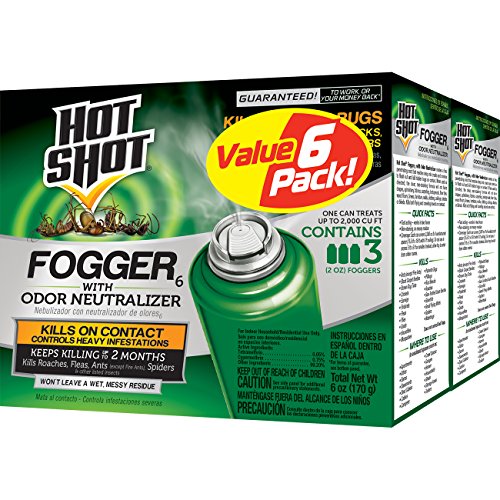
| Item Form | Aerosol |
|---|---|
| Target Species | Insects |
| Unit Count | 12 Ounce |
| Active Ingredients | Tetramethrin, Cypermethrin |
The HOT SHOT Total Release Fogger delivers a fine aerosol mist that penetrates cracks and crevices to kill many common household insects on contact and provide residual control for up to two months. It is used by placing a covered stand in the center of the room, activating a single can, exiting the area, and allowing the mist to settle and work in enclosed spaces such as basements, attics, garages, sheds and campers. Notable features include a clear, non-staining formula that the manufacturer says will not harm fabrics or most furnishings and an odor neutralizer to reduce lingering smell. Practical benefits are rapid knockdown of visible infestations, reach into hidden hiding spots, and a long residual effect that helps suppress re-emergence. Important limitations are that it is a broad-spectrum insecticide containing tetramethrin and cypermethrin so safety precautions are required, it is not labeled for bed bug control, and it should not be used in very small or poorly ventilated spaces or near ignition sources. Follow all label directions before use.
Best for: A cautious homeowner who wants a product that quickly treats visible and hidden infestations in enclosed rooms and values a non-staining formula and reduced odor.
Less Ideal for: People seeking a pesticide-free, low-toxicity option or a targeted solution for bed bugs should consider alternative control methods or specialist treatments.
- Penetrating fine mist reaches cracks and crevices to target hidden insects.
- Clears a wide range of flying and crawling pests on contact and provides up to two months residual activity.
- Clear non-staining formula safe for most fabrics and household surfaces when used as directed.
- Includes an odor neutralizer to reduce chemical smell after application.
- Contains synthetic insecticides (tetramethrin and cypermethrin) requiring strict safety and ventilation precautions.
- Not effective or labeled for bed bug control.
Verdict: Choose this fogger when you need a fast, wide-reaching treatment that knocks down and helps suppress common household spiders and other insects in enclosed spaces.
Choosing the Right Gnat Insecticide: Key Factors to Consider
Mode of Action
Different gnat products work in different ways. Contact adulticides kill flying adults on contact, which gives rapid visual relief but usually does not affect larvae in the potting mix. Larvicides target the immature stages in the soil and provide longer control but may take days or weeks to reduce adult numbers.
Understanding the mode of action helps you plan timing and frequency. For an active infestation combine a fast adult-control method with a larval-control option to break the lifecycle. For preventative use, focus on larvicidal or biological approaches that reduce need for repeated sprays.
Plant Safety And Label Directions
Houseplants, seedlings, and container ornamentals vary in sensitivity. Always check label directions for foliage contact, soil drench allowances, and plant species restrictions. Some formulations are safe as a soil drench but can cause leaf burn if sprayed on tender foliage when the plant is under stress.
Temperature, light intensity, and recent fertilization can influence phytotoxicity. When in doubt, test a small area or wait until plants are not actively under heat or drought stress before applying treatments that contact foliage or roots.
Residual Activity And Frequency
How long a treatment suppresses larvae or repels adults determines how often you need to reapply. Products with short residual action require repeated treatments and more monitoring, while longer-lasting larvicides reduce application frequency but may require attention to resistance management.
Consider seasonal factors and cultural practices that influence reinfestation risk. Frequent wetting of media or bringing infested plants indoors from outdoors will shorten the effective interval of any product and may require integrating nonchemical tactics.
Application Method And Practicality
Home gardeners need treatments that fit into their routines. Spot sprays, ready-to-use sprays, soil drenches, granules, and biological nematodes all have different preparation and application demands. Granules and drenches are good for soil-focused control, while sprays are useful for visible adult swarms.
Factor in mixing steps, safety gear required, and whether the product can be applied in tight indoor spaces. If you manage many pots, choose methods that scale without excessive time investment.
Environmental And Household Safety
Consider the presence of children, pets, and beneficial insects when choosing a product. Biological options and targeted soil treatments typically lower non-target risk. Labels will indicate precautions about reentry times, ventilation, and pet access to treated areas.
If you keep pollinator-attractive plants on a patio, avoid broad-spray treatments during bloom and opt for soil-targeted or timed applications to reduce exposure risk.
Compatibility With Cultural Controls
Good gnat management blends chemical or biological products with cultural steps like allowing surface media to dry, top-dressing with coarse grit, and reducing overwatering. Choose products that complement these practices: for example, soil drenches work well when you plan to let the surface dry between waterings.
Products that require saturated media for activation may conflict with drought-avoidance strategies, so match the product to your watering habits for best results.
When to Use Quick-Action Treatments
Quick-action adulticides are useful when you see visible swarms or when gnats interfere with indoor living spaces and seed trays. These options reduce the immediate nuisance but rarely solve the underlying soil infestation on their own.
Plan a follow-up larval control step after knockdown. Use quick sprays in the evening or when plants are not in direct sun to reduce leaf burn risk, and ventilate indoor spaces if the label recommends it.
- Best for acute flare-ups of flying adults
- Often needs pairing with a soil-targeted treatment
- Use with caution on tender seedlings and recently fertilized plants
Biological Options and How They Fit Into Integrated Control
Biological controls, such as microbial larvicides and predatory nematodes, attack larvae in the soil with minimal impact on foliage and beneficial insects. They are especially useful in container production, greenhouses, and around food plants when label directions allow.
These treatments often need specific soil moisture and temperature conditions to work effectively. Read product guidance on application intervals and conditions so biological agents are active when larvae are present.
- Lower non-target risk compared with broad chemical sprays
- May require repeat applications timed to larval life stages
- Works best when combined with cultural dryness at the soil surface
Practical Tips for Treating Container Media
Treating the potting mix directly is the most reliable way to reduce future generations. Options include soil drenches, top dressings with granular products, and replacing or sterilizing heavily infested media for severe cases.
When applying drenches, water thoroughly after treatment only if the label instructs. Surface granules or grit can reduce adult emergence by making the surface less hospitable and by interrupting larval movement to the surface.
- Consider repotting if media is heavily infested or reused
- Apply drenches near the crown but avoid overwatering immediately after unless directed
- Top dress with coarse materials to speed surface drying
Preventing Reinfestation
Simple cultural changes can dramatically lower reinfestation risk. Allow the surface of potting media to dry between waterings, use well-draining mixes, and avoid overwatering cuttings and seedlings.
Inspect new plants and fresh potting soil for signs of infestation before bringing them indoors. Quarantine new additions for a few weeks and use sticky traps to monitor adult activity so you can act early.
- Use sticky traps near pot rims to monitor adult activity
- Adjust irrigation schedules and improve drainage
- Quarantine and inspect new plants before mixing with existing collections
Safe Use Around Children and Pets
If children or pets frequent treated areas, select products labeled for household safety and follow all reentry and handling precautions. Place treated pots out of reach until the product has settled or dried according to label instructions.
When possible use soil-targeted or biological approaches to reduce airborne residues and limit surface exposure. Store all insecticides securely and keep mixing and application areas ventilated.
- Prefer soil drenches or biologicals in occupied indoor environments
- Follow label reentry times and wash hands after handling treated media
- Keep pets away from pots until treatments have fully dried or settled
How We Chose the Best Gnat Insecticide
We selected products that address the two main gardener needs for fungus gnat management: immediate reduction of flying adults and suppression of soil-dwelling larvae. Our filters favored formulations that are labeled for use on indoor or container-grown plants, provide clear application instructions, and offer measurable modes of action such as contact adulticide, larvicide, or biological control. Key evaluation criteria included speed of adult knockdown, level and duration of larval suppression in potting mix, safety for foliage and roots, suitability for use around children and pets when following label directions, and ease of application for typical home gardeners. We excluded products intended only for landscape broadcast or agricultural field use, formulations with unclear labeling for container or houseplant use, and treatments that require specialized equipment beyond normal homeowner capabilities. Where possible we prioritized options with integrated approaches, such as combined adult and larval activity or biological agents that reduce reliance on repeated chemical sprays. Products were also reviewed for clear dosage guidance, resistance-management considerations, and compatibility with common container media and irrigation practices.
FAQ
How long does it take to see results after treating gnats?
Results vary with the product type. Contact adult-control sprays usually reduce flying insects within hours. Larval-focused treatments and biological agents can take several days to a few weeks to noticeably reduce adult emergence as the lifecycle is interrupted.
Are there safe options for use on seedlings and young plants?
Yes. Many soil-targeted biologicals and gentle drench products are labeled for seedlings, but some contact sprays can cause leaf burn. Always follow label instructions and consider testing on a single plant before treating a whole batch.
Can I use the same product on indoor houseplants and outdoor patio containers?
Often you can, but check the label for site and plant restrictions. Some formulations are intended specifically for indoor use, while others are labeled for ornamental containers outdoors. Match the product to the use site and follow safety guidance.
Will replacing the potting mix solve a severe infestation?
Replacing heavily infested media can remove most larvae and eggs, but it is labor-intensive and may spread pests if not done carefully. Combine repotting with sanitation of pots and tools, and use a preventive treatment to avoid reinfestation.
Do sticky traps alone control gnats effectively?
Sticky traps help monitor and reduce adult numbers but rarely eliminate a soil infestation on their own. They are best used alongside soil treatments and cultural changes to break the lifecycle.
Final Verdict
Treating gnats effectively requires matching the tactic to the infestation stage. For immediate relief combine a quick adult-control measure with a larval-focused product or biological agent to interrupt the lifecycle. Prioritize plant safety, label directions, and how the application fits your watering and growing habits. Balance speed and longevity: use fast knockdown when adults are a problem, then switch to or add soil-targeted control for lasting suppression. With the right combination of cultural changes and targeted treatments, you can regain plant health and keep fungus gnat populations down.
