

Note: This article contains affiliate links. If you click on these links and make a purchase, I may earn a small commission at no extra cost to you. This helps support my research and content. Read my full affiliate disclosure here.
Choosing the right grow bag for vegetables changes how well your plants develop roots, how often you water, and how much space you need. Whether you are working on a patio, balcony, or small backyard, the right bag makes it easier to get strong, well-aerated root systems and steady yields. This guide covers seven shortlisted grow bags for vegetables that suit a range of growing situations and container setups. We evaluated each pick on practical garden criteria gardeners care about, so you can pick an option that fits your soil, watering routine, and the crops you want to grow.
Top Picks at a Glance
| Best Overall The best all-around choice for most situations | VIVOSUN 5-Pack 10 Gallon Fabric Grow Bags with Handles |  |
| Best Quality Built to a higher standard if you want something more solid | AC Infinity Heavy-Duty 500G Fabric Grow Bags, 5 Gallon (5-Pack) |  |
| Best Value The sweet spot between price and what you get | FEED GARDEN 5 Gallon Grow Bags, 4-Pack (300G Thickened Non-Woven Fabric) |  |
| Best Budget The cheapest option that still gets the job done reliably | Land Guard 4-Pack 5‑Gallon Nonwoven Fabric Grow Bags with Handles |  |
| Highest Rated A top-rated pick with lots of positive feedback | GlenLan 10 Gallon Thick Nonwoven Fabric Grow Bags, 5-Pack |  |
| Most Popular A crowd favorite that many people choose with confidence | VIVOSUN 5-Pack 5 Gallon Fabric Grow Bags with Handles |  |
| Best Seller A high-volume bestseller chosen again and again | VIVOSUN 5-Pack 20 Gallon Fabric Grow Bags with Handles |  |
VIVOSUN 5-Pack 10 Gallon Fabric Grow Bags with Handles

| Capacity | 10 gallons |
|---|---|
| Number of Pieces | 5 |
| Material Type | Nonwoven Fabric |
| Indoor Outdoor Usage | Indoor, Outdoor |
| Other Special Features of the Product | Drainage Hole |
These VIVOSUN 10‑gallon fabric grow bags are a straightforward, versatile option for container gardening. Made from thickened nonwoven fabric they breathe well, which improves drainage and helps keep roots cooler and more oxygenated than plastic pots. Each bag has reinforced serged handles so you can move filled bags around the garden or patio without tearing the material. Typical uses include growing vegetables, herbs, and flowering plants in raised beds, patios, balconies, or inside a grow tent; the breathable sides promote air pruning for healthier, fibrous root systems and make repotting easier. The set is reusable and reasonably durable for seasonal use, though the fabric will eventually wear with heavy abrasion or prolonged sun exposure. Because the bags rely on fabric drainage you will water more frequently than with a rigid pot, and they do not have a rigid shape so they can slump when empty. Overall these are a practical, portable choice when you want better root health and easier handling than standard plastic containers.
Best for: Gardeners who want a durable, easy-to-move container that promotes healthy root development and who value reusability across seasons.
Less Ideal for: People who need rigid, decorative planters or who prefer low-maintenance containers that retain moisture for long periods.
- Breathable nonwoven fabric improves drainage and root oxygenation
- Reinforced serger-stitched handles support moving filled bags
- Reusable construction suitable for multiple seasons with proper care
- Lightweight and collapsible for easy storage when not in use
- Fabric can wear over time with heavy abrasion or constant UV exposure
- Requires more frequent watering than rigid containers due to fast drainage
Verdict: Buy these grow bags if you want breathable, portable containers that encourage strong, healthy roots and make seasonal planting and moving plants easy.
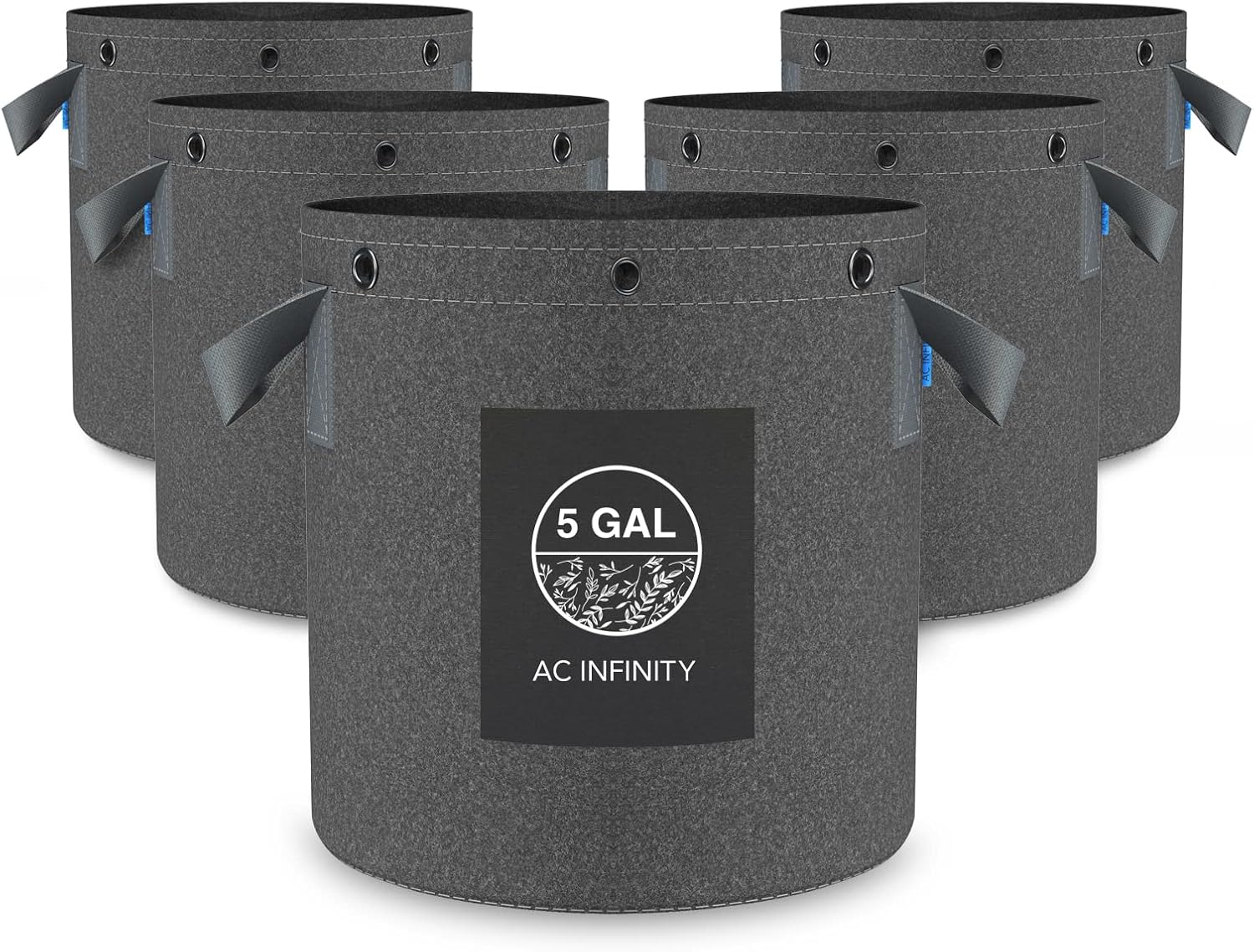
AC Infinity Heavy-Duty 500G Fabric Grow Bags, 5 Gallon (5-Pack)
| Material Type | Nonwoven Fabric |
|---|---|
| Capacity | 5.39 gallons |
| Number of Pieces | 5 |
| Other Special Features of the Product | Aeration, Durable, Permeable |
These AC Infinity fabric grow bags are built for gardeners who prioritize plant performance. The nonwoven 500G fabric promotes air pruning of roots and better oxygen flow, which helps prevent circling and encourages a denser root system. Each bag holds about 5.39 gallons and includes reinforced nylon handles and stitching for easier moving and longer life compared with thinner fabric bags. Metal rings at the top let you run twist-ties for low-stress training of vines or to hold plant supports without cutting or modifying the bag. In practice they drain well and dry faster than plastic pots, reducing the risk of overwatering; the breathable sides also let root temperature moderate on warm days. Limitations are that they are designed for outdoor use only and will need a saucer or tray if you want to protect decking from runoff, and very small or very large plants will need a different capacity. Overall they deliver a durable, grow-focused container option for gardeners who want healthier roots and easier plant handling.
Best for: Gardeners focused on maximizing root health and plant performance who want durable, reusable containers for outdoor vegetable and flower beds.
Less Ideal for: People needing very large or permanent planters for big shrubs or trees or those who want indoor-ready pots without trays or liners.
- Thick 500G nonwoven fabric improves aeration and encourages air pruning
- Reinforced nylon handles and stitching make lifting and moving easier
- Built-in metal rings allow twist-tie passthrough for low-stress plant training
- Reusable and drains faster than solid pots to reduce overwatering risk
- Designed for outdoor use only so indoor setups require extra containment
- True 5.39 gallon capacity may be small for larger or long-season plants
Verdict: Choose these heavy-duty 500G fabric grow bags when you want breathable, reusable outdoor containers that improve root structure and plant performance.
FEED GARDEN 5 Gallon Grow Bags, 4-Pack (300G Thickened Non-Woven Fabric)

| Capacity | 5 gallons |
|---|---|
| Material Type | Nonwoven |
| Other Special Features | Breathable, Drainage Hole, Lightweight, Portable, Weather Resistant |
| Unit Count | 4 Count |
These FEED GARDEN 5 gallon grow bags are a practical choice for container gardening on patios, balconies, and small yards. Made from 300 g/m² nonwoven fabric, the bags hold their shape when filled and let water and air pass through the walls so roots are air-pruned instead of circling. That improves feeder-root development and reduces the risk of root rot compared with sealed plastic pots. Each bag has double-stitched woven handles reinforced with box-X stitching so you can move planted bags around to chase sun or store them flat in winter. The 5 gallon size fits herbs, salad greens, strawberries, compact peppers, and flowering annuals, while the set of four gives enough capacity for a small edible or ornamental grouping. Because they drain through the fabric, place them on saucers indoors to protect surfaces. For deeper-rooted crops you will need larger sizes, but for small-space growers who value easy storage, breathability, and sturdy handles these bags deliver reliable season-to-season performance.
Best for: Buyers who want a space-efficient, reusable container solution for herbs, salad greens, strawberries, and small peppers and who prioritize root health and easy seasonal storage.
Less Ideal for: Gardeners planning to grow large, deep-rooted vegetables or single large specimens should choose larger grow bags or deeper containers instead.
- 300 g/m² nonwoven fabric walls provide shape retention and improved durability over thinner bags
- Breathable fabric construction promotes air-pruned root systems and whole-wall drainage
- Double-stitched woven handles with box-X reinforcement support repeated moving and repositioning
- Folds flat for compact off-season storage, saving space in small apartments or sheds
- 5 gallon depth is not sufficient for large vegetables like full-size tomatoes, potatoes, or squash
Verdict: A compact, durable four-pack of breathable 5 gallon grow bags ideal for small-space growers who want healthier root development and easy off-season storage.
Land Guard 4-Pack 5‑Gallon Nonwoven Fabric Grow Bags with Handles

| Capacity | 18.93 liters |
|---|---|
| Number of Pieces | 4 |
| Material Type | Nonwoven Fabric |
| Other Special Features of the Product | Breathable |
| Indoor Outdoor Usage | Outdoor |
These Land Guard grow bags are basic, no-frills fabric planters designed for everyday container gardening. Made from nonwoven fabric, they promote drainage and air pruning of roots, which helps prevent circling and keeps plants healthier than standard plastic pots. The set includes four 5‑gallon bags with stitched handles so you can move filled containers when needed. In use they work well for vegetables, herbs, and small ornamentals in patios, balconies, or garden beds where space is limited. The material is lightweight and stores flat when not in use, and the breathable fabric reduces overwatering by improving soil aeration. Expect them to last through a growing season or two under regular outdoor use; they are not reinforced plastic tubs so they will wear faster if exposed to rough handling or constant sun without rotation. Overall these are a practical, low-cost option for growers who want the benefits of fabric pots without spending much.
Best for: Gardeners watching their budget who need multiple inexpensive containers for vegetables, herbs, or small ornamentals on a patio, balcony, or compact garden.
Less Ideal for: People who need long-term, heavy-duty containers for large shrubs or trees or those who prefer rigid pots that resist UV wear and accidental damage.
- Breathable nonwoven fabric improves drainage and air pruning for healthier roots
- Comes as a four-pack, giving multiple planting spots at a low cost
- Stitched handles make it easy to lift and move filled bags
- Lightweight and folds flat for compact storage when not in use
- Fabric is not as durable as rigid planters and may degrade faster under constant sun exposure
- Limited to smaller-scale plantings due to 5‑gallon capacity
Verdict: An affordable four-pack of breathable fabric grow bags that gives budget-focused gardeners multiple reliable containers for small-scale outdoor growing.
GlenLan 10 Gallon Thick Nonwoven Fabric Grow Bags, 5-Pack

| Capacity | 10 gallons |
|---|---|
| Material | 300G nonwoven fabric |
| Set | 5-Pack |
| Usage | Outdoor |
| Features | Breathable, reinforced handles |
These GlenLan 10‑gallon grow bags are heavy-duty fabric planters intended for outdoor vegetable and flower growing. Made from thick 300G nonwoven material they use air‑pruning to prevent root circling, which encourages dense fibrous root systems and can improve nutrient uptake. The porous fabric drains well so standing water is minimized, and reinforced cross‑stitched handles make lifting or repositioning full bags manageable. Typical uses include growing tomatoes, peppers, potatoes, herbs, and seasonal flowers on patios, balconies, and in greenhouses. They are washable and reusable across seasons and flatten for compact storage when not in use. Important limitations are that fabric bags dry faster than rigid pots so they need more frequent watering and that fabric will eventually wear after repeated outdoor exposure even though it is described as tear resistant. Also these are single‑size 10‑gallon containers so gardeners wanting multiple size options should look elsewhere.
Best for: Gardeners who prioritize reliable, durable container solutions and want consistent root health for edibles and ornamentals; good for people who value reusable, easy‑to‑move planters for patios or balconies.
Less Ideal for: Those who prefer low‑maintenance containers that hold moisture for long periods or gardeners who need a variety of pot sizes for different plant stages.
- Thick 300G nonwoven fabric supports air pruning to reduce root circling
- Good drainage through porous material reduces risk of root rot
- Reinforced cross‑stitched handles make lifting and repositioning easier
- Washable and reusable for multiple growing seasons
- Fabric dries out faster than rigid pots and requires more frequent watering
- Single fixed size limits flexibility for different crops or stages
Verdict: Choose these grow bags if you want a sturdy, reusable 10‑gallon fabric planter that improves root structure and is easy to move around the garden.
VIVOSUN 5-Pack 5 Gallon Fabric Grow Bags with Handles

| Material Type | Nonwoven fabric |
|---|---|
| Capacity | 5 Gallons |
| Included Components | [5 Bags] |
| Other Special Features of the Product | Drainage Hole |
| Indoor Outdoor Usage | Indoor, Outdoor |
These VIVOSUN grow bags are a straightforward, no-frills option for container gardeners who want breathable, reusable pots. Made from 300g nonwoven fabric, the bags promote air pruning and strong root development by allowing excess moisture to drain and air to reach the root zone. Each set includes reinforced serger-stitched handles so you can move filled bags around a patio or raised bed without ripping the seams. Typical uses include growing herbs, vegetables, and small to medium annuals either in a greenhouse, on a balcony, or directly on the ground. The fabric feels durable compared with thin alternatives and the manufacturer notes the material is BPA-free. Expect healthy root structure and easier repotting because roots are less likely to circle. Limitations are that fabric pots need frequent watering compared with rigid containers and they can stiffen or discolor over long outdoor exposure, so plan for seasonal use or indoor storage when not in use.
Best for: Gardeners who value proven, low-cost container solutions and prefer products with a strong track record and visible durability for balcony, patio, or raised-bed planting.
Less Ideal for: People who want permanent, decorative planters or those who prefer low-maintenance containers that retain moisture for long periods.
- Breathable 300g nonwoven fabric encourages air pruning and cooler root zones
- Reinforced serger-stitched handles make moving filled bags easier and more reliable
- Good drainage prevents waterlogging and reduces root rot risk
- Reusable construction intended for multiple seasons of container gardening
- Fabric pots require more frequent watering than rigid containers
- Prolonged outdoor exposure may cause fading or reduced stiffness over time
Verdict: A dependable, well-constructed set of 5-gallon fabric grow bags that deliver breathable, reusable containers for healthier roots and easy repositioning.
VIVOSUN 5-Pack 20 Gallon Fabric Grow Bags with Handles

| Capacity | 20 gallons |
|---|---|
| Number of Pieces | 5 |
| Material Type | Nonwoven Fabric |
| Other Special Features of the Product | Drainage Hole |
| Indoor Outdoor Usage | Outdoor |
These VIVOSUN grow bags are heavy-duty, 20-gallon fabric planters made for outdoor use. Constructed from thick nonwoven fabric, they let air and water pass through the sides so roots stay cooler and better oxygenated than in plastic pots. Each pack includes five cylindrical bags with reinforced serged handles that make it practical to lift and reposition filled containers around a patio or garden. The fabric construction also encourages air pruning of roots, which reduces circling and helps plants develop a dense fibrous root system. Built-in drainage and the breathable material reduce waterlogging risk, so they work well for flowers, herbs, and other garden plants. Expect a simple, low-tech product: there is no rigid structure so bags can flop when empty and they will eventually show wear if left in constant sun or frost. They are best used on a stable surface with periodic inspection of stitching and fabric if you plan to reuse them year after year.
Best for: Gardeners who prefer predictable, low-maintenance outdoor container gardening and want durable, easy-to-handle planters that lower the chance of overwatering and root circling.
Less Ideal for: People who need rigid, decorative planters or who require a long-term permanent container solution that must resist constant UV exposure without replacement.
- Breathable nonwoven fabric improves root oxygenation and reduces overheating
- Reinforced serged handles make it feasible to lift and move bags when filled
- Good drainage built into the fabric to help prevent waterlogged soil
- Air pruning encourages healthier, more fibrous root systems
- Set of five gives enough units to outfit a small patio or raised-bed area
- No rigid frame so bags collapse when empty and need support or mulch to keep shape
- Fabric will degrade over multiple seasons if exposed continually to UV and frost
Verdict: Buy this pack if you want a reliable set of breathable, handle-equipped grow bags that make outdoor container gardening lower-risk and easier to move.
Choosing the Right Grow Bag for Vegetables: Key Factors to Consider
Fabric Breathability and Root Aeration
Breathable fabric encourages a fibrous, healthy root system instead of roots circling inside the container. When air can reach the root zone, roots naturally prune themselves at the fabric edge and produce denser feeder roots that improve nutrient and water uptake.
Breathability also affects soil temperature and moisture cycles. Highly breathable materials cool the root zone in hot weather and reduce the risk of anaerobic conditions after heavy watering. If you grow heat-sensitive crops or plan to place bags on a hot surface, prioritize fabrics that permit good air exchange.
Drainage Performance
Effective drainage prevents standing water and reduces the risk of root rot for vegetables that prefer evenly moist but not waterlogged soil. Look for bags with consistent permeability across the base and sides so excess water can escape evenly rather than pooling in low spots.
Drainage interacts with your watering routine and potting mix. If you water frequently or use a moisture-retentive mix, you will want a bag that sheds excess quickly. For drier climates or infrequent watering schedules, a bag that retains a bit more moisture can be beneficial, but it must still avoid trapped saturation.
Durability and Construction
Vegetable gardening often means moving bags, filling and emptying them seasonally, and exposing them to UV and moisture. Strong seams and reinforced stitching at handles extend a bag's service life and reduce the chance of tearing during handling.
Durable construction matters if you plan to reuse bags for multiple seasons, move them when plants are heavy, or store them folded in winter. Thicker, multi-layer fabrics resist abrasion and puncture better but should still maintain sufficient breathability for root health.
Size, Volume, and Root Depth
Different vegetables need different amounts of soil volume and depth. Deep-rooted crops like carrots and larger tomatoes require more depth for unobstructed root growth, while leafy greens and herbs do well in shallower volumes. Choose a bag size that matches the crop's mature root space to avoid stunting.
Volume also influences watering frequency and nutrient buffering. Larger volumes provide more stable moisture and nutrient reserves but take longer to heat up and can be heavier to move once filled. Consider where the bag will sit and how many plants you want per container when selecting size.
Handle Design and Portability
Handles let you reposition bags for sun, shade, or protection from wind, and they make emptying and storing easier. Stitched, reinforced handles are more reliable than thin cut-outs that can tear under weight.
Portability also affects where you can place bags. If you plan frequent rearrangement to follow sun angles or to bring containers inside during extreme weather, choose bags with ergonomically placed, strong handles and manageable sizes so one person can safely lift them when needed.
Compatibility with Potting Mix and Irrigation
Not all potting mixes behave the same in fabric containers. Lightweight, well-draining mixes compliment breathable bags by keeping moisture balanced and allowing roots to explore. Dense mixes or garden soil can compact and impede drainage in fabric bags.
Think about how you will water. Drip irrigation or soaker systems work well with grow bags and reduce surface evaporation, but they need even distribution. If you plan to hand-water, choose a bag and mix combination that avoids rapid runoff and ensures moisture reaches the root zone.
Best Bag Sizes by Vegetable Type
Size determines whether a crop will reach its potential. For small herbs and lettuce, a 3 to 5 gallon-equivalent bag provides enough room for several plants without taking up too much space. For bush beans, peppers, and dwarf tomatoes, medium bags that simulate 7 to 12 gallons give better stability and moisture reserve. For indeterminate tomatoes, larger root vegetables, and multiple plants in one container, choose deeper, high-volume bags to avoid crowding roots.
Think in terms of root space rather than only above-ground size. If you plan succession planting, use deeper bags to give later crops room to establish without replanting immediately.
- Shallow bags: best for salad greens, herbs
- Medium bags: suitable for peppers, bush beans
- Deep/large bags: required for indeterminate tomatoes, potatoes, large root crops
Preparing and Filling Grow Bags
Use a light, well-draining potting mix blended with compost to supply nutrients and structure. Fill bags so there is room to water without overflow and to allow mulch on top. Avoid heavy garden soil alone; it compacts and reduces drainage in fabric containers.
Consider pre-wetting the mix to settle it and avoid air pockets. When transplanting seedlings, gently spread roots and plant at the same depth as in their nursery cells. For seed-sown crops, follow depth recommendations and keep soil consistently moist until seedlings emerge.
- Blend potting mix with compost for fertility
- Pre-wet mix to reduce settling
- Leave headspace for watering and mulch
Drainage and Watering Tips
Watering frequency depends on bag volume, crop type, and climate. Smaller bags dry faster and may need daily attention in hot weather, while larger bags retain moisture longer. Check moisture by squeezing a handful of the mix or using a probe to see how deep wetness extends.
Mulching the surface reduces evaporation and keeps soil temperatures stable. If using drip irrigation, position lines so the root zone gets even coverage. Avoid overwatering by allowing brief surface drying between sessions for most vegetable crops.
- Smaller bags need more frequent checks
- Mulch to stabilize moisture and temperature
- Use probes or simple squeeze tests to gauge moisture
Seasonal Care and Reuse
At season end, empty and inspect bags for seam wear, rot, or persistent salt buildup from fertilizers. Many quality bags can be cleaned, allowed to dry, and folded for storage. Replace or repair bags with compromised seams to avoid mid-season failures.
Rotating crops and refreshing potting mix reduces disease pressure and nutrient depletion. If storing bags outdoors, keep them raised and covered to limit UV degradation and waterlogging during the off season.
- Inspect seams before each reuse
- Refresh mix or replace annually for heavy feeders
- Store folded in a dry, shaded area to extend life
Troubleshooting Common Problems
Yellowing leaves and stunted growth often indicate inconsistent moisture, poor drainage, or nutrient deficiency. Check drainage first and adjust watering and mix texture before assuming disease. Overly wet mix can cause root issues that mimic nutrient problems.
If bags dry out too quickly, increase mulch, move them to a slightly shadier spot during heat waves, or use larger volume bags for long-term crops. For pest problems, keep foliage dry, rotate locations, and inspect the underside of leaves where pests hide.
- Address drainage and moisture before diagnosing nutrients
- Adjust placement or add mulch to prevent rapid drying
- Inspect regularly for pests and rotate crops to reduce pressure
How We Chose the Best Grow Bag for Vegetables
We focused on attributes that have real impact in a vegetable garden rather than abstract ratings. Key evaluation criteria included fabric breathability and root aeration because vegetables depend on oxygen at the root zone for steady growth; drainage performance to avoid waterlogging and root rot; construction durability and seam strength for multi-season reuse; handle strength and sizing options to match common planting densities; and ease of filling and storage for seasonal use and crop rotation. We also considered how well a bag supports common vegetable crops by assessing depth and width relative to root systems for tomatoes, peppers, leafy greens, and root vegetables. We excluded products intended only for ornamental container displays or for single-use landscaping fabric that lacks sufficient depth or drainage for vegetables. Very thin, non-breathable containers were not shortlisted because they impair root health. The final list favors bags that strike a balance between aeration, drainage, and durability so they perform reliably in real-world garden conditions.
FAQ
How deep should a grow bag be for tomatoes?
Tomatoes generally do better in deeper bags that provide ample root volume. A deep, high-volume bag gives stability and a moisture buffer for heavy-feeding tomato varieties, while smaller patio varieties can manage in medium-depth bags.
Can I reuse grow bags from last season?
Often you can reuse bags if they are structurally sound. Empty the bag, remove old soil, inspect seams, and refresh or replace potting mix. Sanitize if you had disease issues and store in a dry place to prevent further degradation.
Do grow bags need a special potting mix?
Use a light, well-draining potting mix with organic matter rather than dense garden soil. Mixes designed for containers retain moisture while allowing drainage, which pairs well with breathable fabric bags to maintain healthy roots.
How often should I water plants in grow bags?
Watering frequency depends on bag size, crop, and weather. Smaller bags may require daily watering in hot weather, while larger bags need less frequent attention. Check moisture by feeling the mix or using a probe and adjust for evaporation and plant size.
Will grow bags keep soil temperature stable?
Breathable bags moderate temperature better than black plastic pots because they allow heat to dissipate, which can prevent overheating in intense sun. However, they may cool faster at night, so location and mulch choice matter for temperature-sensitive crops.
Final Verdict
Prioritize breathable fabric, reliable drainage, and appropriate volume when choosing a grow bag for vegetables. Match bag depth to the crops you plan to grow and consider handle strength and construction if you will move or store bags seasonally. Tradeoffs include durability versus breathability and size versus portability; decide which matters most for your space and crops. Choose a bag that balances root aeration and moisture control for the best chance at healthy plants and consistent harvests. With the right size and fabric, a grow bag can simplify container vegetable growing and produce strong, productive plants.
