

Note: This article contains affiliate links. If you click on these links and make a purchase, I may earn a small commission at no extra cost to you. This helps support my research and content. Read my full affiliate disclosure here.
Choosing the right hand saw for cutting baseboard trim matters if you want smooth miters, tight joints, and minimal tear-out on painted or veneered millwork. The wrong blade or tooth pattern can splinter softwood and hardwood molds, forcing extra sanding and touch-up. This guide covers six shortlisted hand saws suited for cutting baseboard trim. We focus on attributes that matter in real trim work: how the saw tracks, the bite and finish of the cut, ease of handling in tight corners, and durability of the edge. Read on to see the evaluation criteria we used and what to prioritize when picking a saw for precise molding work.
Top Picks at a Glance
| Best Overall The best all-around choice for most situations | SUIZAN Ryoba 7" Double-Edge Japanese Pull Saw |  |
| Best Quality Built to a higher standard if you want something more solid | CRAFTSMAN 20" Fine Finish Hand Saw (CMHT20881) |  |
| Best Value The sweet spot between price and what you get | RUITOOL 6" Japanese Ryoba Pull Saw with SK5 Blade and Beech Handle |  |
| Best Budget The cheapest option that still gets the job done reliably | WFOEJEJ 6-Inch Japanese Pull Saw with SK5 Double-Edge Blade |  |
| Highest Rated A top-rated pick with lots of positive feedback | Magicbox 4‑Piece Japanese Hand Saw Set, SK5 Steel Pull Saws |  |
| Most Popular A crowd favorite that many people choose with confidence | SUIZAN Flush Cut Saw 5" (Japanese Pull Saw) |  |
SUIZAN Ryoba 7" Double-Edge Japanese Pull Saw
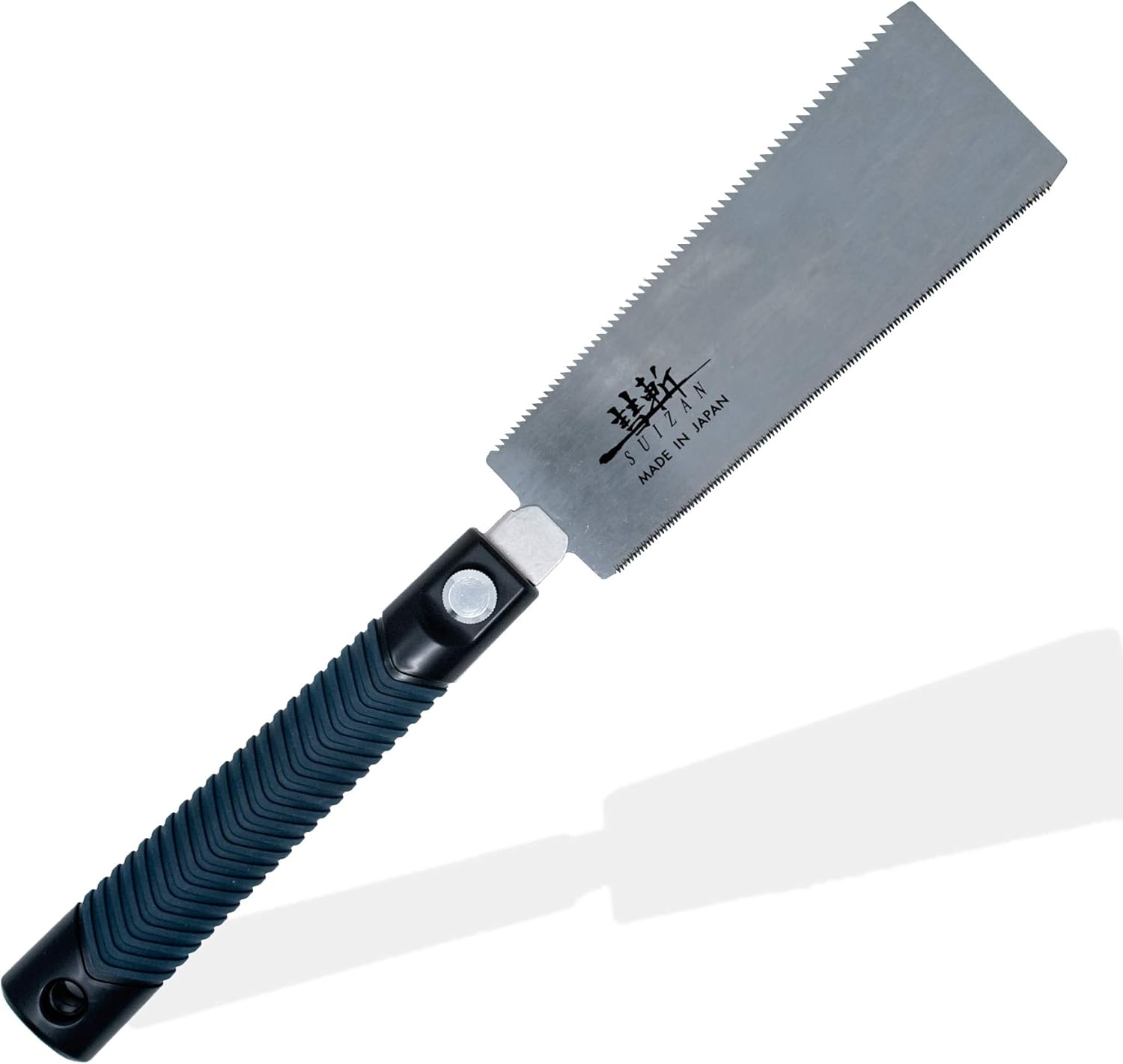
| Blade Length | 7 inches |
|---|---|
| Blade Material | Japanese Steel |
| Blade Thickness | 0.02" (0.5mm) |
| TPI | 19 (crosscut) / 7-11 (rip) |
| Handle Material | Elastomer |
The SUIZAN Ryoba 7" is a compact Japanese pull saw built for clean, low-effort cuts on small woodworking tasks like trim and joinery. It has two tooth profiles on the same blade: coarser rip teeth for cutting with the grain and fine 19 TPI crosscut teeth for clean end and trim cuts. The 0.02" thin blade and narrow 0.03" kerf produce minimal waste and tight-fitting joints, which makes it well suited for baseboard and molding work where visible finish matters. Its razor-sharp Japanese steel and traditional tooth setting deliver smooth cuts with a pull stroke, reducing user fatigue compared with push saws. The elastomer handle gives a secure grip and the blade is replaceable without tools, so upkeep is straightforward. Limitations are the short 7" blade length, which means longer crosscuts or deep stock require multiple passes or a larger saw, and the thin blade is less forgiving on heavy demolition. For fine finish carpentry and detailed trim work this saw offers excellent control and cut quality, but it is not intended as a one-tool solution for ripping large boards quickly.
Best for: Buyers who do finish carpentry or regular trim work and want a precise, low-fatigue saw for tight-fitting baseboard and molding cuts.
Less Ideal for: Those needing a general-purpose saw for large ripping jobs, heavy demolition, or long crosscuts should choose a larger handsaw or power saw instead.
- Double-edge (ryoba) design provides both rip and crosscut teeth in one tool
- Very thin 0.02" blade and 0.03" kerf for precise, minimal-waste cuts ideal for trim and joinery
- Razor-sharp Japanese steel produces smooth cuts with less effort using the pull stroke
- Replaceable blade with tool-free change and non-slip elastomer handle for comfortable control
- 7-inch blade is short for longer boards or deeper cuts requiring extra passes
- Thin blade is not designed for heavy demolition or fast ripping of large stock
Verdict: Choose this compact Ryoba if you want a precise, low-kerf pull saw made for tidy baseboard and trim work.
CRAFTSMAN 20" Fine Finish Hand Saw (CMHT20881)

| Blade Length | 20 inches |
|---|---|
| Number of Teeth | 6 |
| Blade Material | High Speed Steel |
| Power Source | Manual Power |
| Handle Material | Composite Materials |
The CRAFTSMAN 20" Fine Finish hand saw is a straightforward wood-cutting tool designed for clean, fast cuts in panel and dimensional lumber. Its 20-inch high-speed steel blade with induction-hardened teeth delivers lasting sharpness and the six teeth per inch profile is tuned for smooth crosscuts and general carpentry tasks. The bi-material ergonomic handle gives good control and includes simple 45- and 90-degree references for square and miter work, which helps when cutting without a box or guide. Because the blade is rectangular and built for fine finish work, it performs best on wood, plywood, and laminate rather than heavy demolition. The saw is lightweight and easy to use for extended periods, making it suitable for finish carpentry, trimming, and DIY projects where a neat edge matters. It lacks specialized features like replaceable blades or extra teeth density for ultra-fine joinery, but as a durable, no-frills hand saw it balances performance and comfort for everyday woodworking tasks.
Best for: A practical homeowner or carpenter who wants a reliable, easy-to-use saw for general woodworking and finish cuts around the house.
Less Ideal for: Woodworkers who need ultra-fine joinery blades, frequent ripping, or modular saw systems with replaceable blades should consider more specialized saws.
- Durable high-speed steel blade with induction-hardened teeth for longer edge life
- Six TPI fine-finish tooth pattern for clean crosscuts in wood and panel materials
- Ergonomic bi-material handle that improves grip and control during cuts
- Lightweight design suitable for extended use and general carpentry
- Tooth count and blade design prioritize finish cuts over aggressive ripping or heavy demolition
- No replaceable blade option for specialized or worn-edge replacements
Verdict: Choose this saw if you need a durable, comfortable 20" hand saw that delivers clean, fast finish cuts for everyday woodworking.
RUITOOL 6" Japanese Ryoba Pull Saw with SK5 Blade and Beech Handle

| Blade Material | SK5 steel |
|---|---|
| Blade Length | 6 inches |
| Number of Teeth | 17 |
| Handle Material | Beechwood |
| Power Source | Hand Powered |
This RUITOOL 6" Ryoba pull saw is a small, precision-oriented hand saw designed for flush and finish cuts on trim and millwork. It uses a thin, flexible SK5 high-carbon steel blade that cuts on the pull stroke, which improves control and helps produce clean edges when trimming baseboards and moldings. The double-edge design gives two tooth pitches (approximately 14 and 17 TPI) so you can switch between finer crosscuts and slightly coarser rip-style cuts without changing tools. The beechwood handle is comfortable for light repetitive work and the hardened three-edge teeth stay sharp for fast chip removal. Its compact blade and lightweight construction make it easy to maneuver in tight corners and for flush cutting where longer saws are awkward. Limitations are its short 6-inch blade, which is not intended for long straight rips or heavy demolition, and the thin blade can flex if abused, requiring a steady hand for perfectly straight long cuts.
Best for: Buyers who want a precise, easy-to-control saw for trimming and finishing baseboards and moldings and who prioritize clean edges and maneuverability in tight spaces.
Less Ideal for: Carpenters who need to cut long stock, do heavy ripping, or perform demolition should choose a longer or stiffer saw designed for those tasks.
- Flexible SK5 high-carbon steel blade enables precise flush and finish cuts
- Double-edge 14/17 TPI gives both finer crosscuts and coarser rip-style cuts in one tool
- Hardened three-edge teeth for faster chip removal and longer edge life
- Compact, lightweight design is easy to maneuver in tight corners and around baseboard profiles
- 6-inch blade is too short for long straight cuts or trimming long runs of baseboard
- Thin flexible blade can bow under heavy pressure, so not suited for heavy demolition
Verdict: If you need a compact, controllable saw for clean flush and finish cuts on baseboard trim, this 6" Ryoba delivers precision and versatility in a single tool.
WFOEJEJ 6-Inch Japanese Pull Saw with SK5 Double-Edge Blade

| Blade Material | Sk5 steel |
|---|---|
| Blade Length | 6 inches |
| Number of Teeth | 168 |
| Power Source | Hand Powered |
This 6-inch Japanese pull saw is built for precise trimming and small-scale woodworking tasks like baseboard and trim work. It has a double-edge SK5 steel blade with 14 and 17 TPI, so you can choose the coarser side for faster material removal or the finer side for smoother finish cuts. The thin, flexible blade lets you make flush cuts on dowels and protruding trim without gouging surrounding surfaces, and the pull-stroke design helps keep the blade taut for controlled, accurate cutting. A soft non-slip plastic grip improves comfort during repetitive strokes and helps maintain a steady hand for detail work. Because the blade is small and flexible, it excels in tight corners and behind baseboards where a larger saw would be awkward. The trade-off is that the short, thin blade is not intended for heavy ripping or long straight cuts, and plastic handle construction is basic compared with premium saws. For budget projects and occasional finish carpentry, this saw gives good control and useful versatility.
Best for: Homeowners and DIYers on a tight budget who need a compact, precise saw for trimming baseboards, cutting small molding, and other finish carpentry tasks.
Less Ideal for: Professionals or users who regularly perform long rip cuts or heavy-duty framing should choose a full-size saw or higher-end tool designed for extended use.
- Double-edge 14/17 TPI blade provides both faster cutting and finer finish options
- Thin, flexible SK5 blade enables flush trimming of dowels and protruding trim
- Compact 6-inch blade is easy to maneuver in tight corners and behind baseboards
- Soft non-slip grip improves control and reduces hand fatigue during repeated strokes
- Short, thin blade is not suited for long straight cuts or heavy ripping
- Basic plastic handle is less durable and comfortable than higher-end handles
Verdict: A low-cost, compact pull saw that delivers precise flush cuts and versatile finish trimming for baseboard and molding work.
Magicbox 4‑Piece Japanese Hand Saw Set, SK5 Steel Pull Saws

| Blade Material | Carbon Steel |
|---|---|
| Power Source | hand powered |
| Other Special Features of the Product | Ergonomic Handle |
| Surface Recommendation | Wood |
| Included Components | Case |
This Magicbox set supplies four Japanese-style pull saws that cover most small to medium woodworking tasks. The kit includes large and compact double-edge pull saws for rip and crosscuts, a flush-cut saw for trimming dowels and joints, and a pointed fine saw for tight spaces. SK5 spring steel blades are heat-treated and have fine triple-ground teeth to deliver clean cuts with reduced tear-out, and the included blade guards make storage safer. Wooden ergonomic handles give a comfortable grip for controlled strokes and longer sessions. The set is lightweight and portable, so it works well for hobbyists, trim carpenters, and furniture makers who need reliable hand tools on the bench or at a job site. Limitations are that the blades are hand tools only so they require proper technique for fast work on large stock, and the wooden handles and carbon steel blades will need occasional care to prevent moisture-related wear. Overall this is a dependable, versatile hand saw set that emphasizes clean cutting and practical storage for everyday woodworking use.
Best for: Buyers who prioritize reliable, precise hand tools for furniture making, trim work, and detailed woodworking and who prefer a complete set that covers multiple cutting needs.
Less Ideal for: Users who need high-speed production cutting of large lumber or who prefer low-maintenance synthetic handles and stainless blades should consider other options.
- Includes four complementary saw types (large and compact double-edge, flush cut, and pointed fine saw) for a wide range of cuts
- SK5 spring steel, heat-treated blades with fine triple-ground teeth for cleaner cuts and durability
- Ergonomic non-slip wooden handles for comfortable control during extended use
- Protective blade covers included for safer storage and transport
- Requires basic pull-saw technique and more time than power tools for large or repetitive cuts
- Wood handles and carbon steel blades need occasional maintenance to avoid rust and wear
Verdict: A versatile, dependable four-piece Japanese saw set that delivers clean, controlled cuts for furniture, trim, and detailed woodworking.
SUIZAN Flush Cut Saw 5" (Japanese Pull Saw)

| Blade Material | Japanese Steel |
|---|---|
| Blade Length | 5 inches |
| Blade Thickness | 0.012" (0.3mm) |
| TPI | 17 & 25 |
| Handle Material | Wood |
The SUIZAN 5" flush cut saw is a small Japanese pull saw made for precise trimming tasks around baseboards and finish carpentry. Its 0.012" thin, highly flexible blade and zero-set teeth let you trim dowels, plugs, and molding flush to the surface without marring the surrounding wood. One edge has 17 TPI for hardwood and the other 25 TPI for softwood, so you can choose a coarser or finer cut depending on the material. The pull-stroke cutting action reduces effort and improves control in confined spots where larger saws cannot reach. The beech handle fits comfortably for one-handed trimming, and the razor-sharp Japanese steel holds an edge for detailed work. Limitations are that the blade is fixed and not replaceable, and the saw is specialized for flush and small crosscut tasks rather than ripping larger stock or heavy demolition. For baseboard trim and final finish work this saw offers clean results with minimal tear-out, but it is not a substitute for a full-size carpentry saw for larger jobs.
Best for: A buyer who prioritizes clean, professional-looking finish work on baseboards and trim and wants a compact tool for one-handed flush trimming and small crosscuts.
Less Ideal for: Carpenters who need to cut large pieces, rip boards, or perform heavy-duty rough work should choose a larger saw or powered tool instead.
- Extremely thin, flexible blade that lets the saw lie flat for true flush cuts
- Zero-set teeth prevent scratching surrounding surfaces when trimming dowels or plugs
- Double-edged blade (17 TPI and 25 TPI) for effective cutting in both hardwoods and softwoods
- Pull-stroke design reduces effort and improves control in tight finish carpentry spaces
- Blade is fixed to the handle and cannot be replaced when it dulls
Verdict: Buy this if you need a compact, razor-sharp pull saw that delivers clean flush cuts and precise trim work on baseboards and molding.
Choosing the Right Hand Saw for Cutting Baseboard Trim: Key Factors to Consider
Blade Tooth Geometry and TPI
Tooth shape and teeth per inch determine how the saw slices through painted, veneered, or composite baseboards. Finer TPI and a crosscut or hybrid tooth pattern reduce large splinters and leave a smoother surface that needs less sanding.
Too coarse a tooth will cut faster but can tear out the face or pull fibers, especially on veneered trim. Conversely, extremely fine teeth give cleaner results but can be slower and may clog when cutting painted surfaces. Consider the common materials you work with and choose a tooth geometry that balances speed with finish quality.
Cut Surface Finish
How smooth and consistent the kerf is affects the amount of cleanup after cutting. A clean cut with minimal raised grain or chipping saves time on sanding and paint touch-up and helps miters come together tightly.
Cut finish depends on both blade teeth and the saw's ability to track straight. For visible trim work, prioritize tools that consistently produce an even face with little tear-out on the face side of the board.
Control and Handling
Trim work often requires one-handed work, tight angles, and careful approach near walls and floors. Handle shape, grip material, and balance influence how well you can guide the saw for precise miters and coping cuts.
A saw that feels secure and predictable in your hand reduces the chance of overcutting or angled blows that spoil a joint. Also consider whether the saw blade length allows comfortable stance and reach in your typical workspace.
Blade Stiffness and Length
Blade stiffness keeps cuts straight and prevents flex that makes miters gap. For long runs of baseboard or repeating identical cuts, consistent blade behavior is critical to maintain accuracy across pieces.
Length matters too: a blade that is too short forces awkward wrist angles, while an overly long blade can be hard to maneuver near walls. Match blade length to the typical pieces you cut and look for blades that resist bending under moderate pressure.
Edge Retention and Sharpening
A blade that stays sharp longer reduces the need to replace or resharpen blades frequently. For trim work you want reliable edges that keep producing clean cuts over time, especially when cutting painted or abrasive surfaces.
Consider whether the saw is designed for easy sharpening, has replaceable blades, or uses hardened teeth. Ease of maintenance preserves cut quality and lowers long-term effort.
Best Techniques For Cutting Baseboards
Start cuts with a light scoring pass along the face side to reduce paint and veneer tear-out. When making miters, support the board firmly and use steady, even strokes rather than aggressive pushes that can dig in and chip the face. For coping, cut at a slight angle and follow with a careful cope to the profile, keeping the saw perpendicular to the face to avoid undercutting the molding.
- Score the painted face lightly before full-depth cutting
- Use steady, controlled strokes for miters and avoid forcing the saw
- Clamp or brace pieces when possible to stabilize the board during the cut
Preparing Work Area and Protecting Finished Surfaces
Protect floors and adjacent wall surfaces with thin scrap or cardboard to avoid scratches while maneuvering large lengths of baseboard. If you work with painted trim, lay the board face-down on a soft surface to prevent surface damage. Use small wedges or blocks to lift the board slightly so the blade clears the work surface and you get a full-depth, clean cut.
- Place face-down on soft padding to protect finished surfaces
- Use temporary blocks to allow full-depth cuts without marring the floor
- Keep a scrap piece beneath miters to capture splinters
When To Score, When To Use a Backing Board
Scoring the finished face is a quick way to reduce tear-out on visible cuts, but for repetitive cuts or fragile veneers, a backing board provides more consistent support. A backing board clamped to the workpiece or held behind the cut gives the face fibers something to bear against, producing cleaner edges on every cut.
- Use scoring for one-off or small repairs
- Employ a backing board for repeatable, high-quality finish cuts
- Backing boards are particularly useful on veneered or soft-faced mouldings
Maintenance and Blade Care
Keep blades clean of paint and glue residue, which can clog teeth and reduce cutting efficiency. If your saw allows resharpening, establish a routine where you touch up teeth before cuts become ragged. Replace or refurbish blades that show significant tooth deformation or bending to maintain straight, accurate cuts.
- Clean paint and adhesive from teeth after use
- Sharpen or replace blades before finish quality degrades
- Store saws flat or hung to avoid bending the blade
How We Chose the Best Hand Saw for Cutting Baseboard Trim
We prioritized tools that make accurate, clean cuts in delicate trim materials and that work well in typical interior finishing setups. Our editorial filters rated blade tooth geometry and finish quality first because those directly affect how much tear-out you get on painted or veneered baseboards. Control and ergonomics came next, since a stable grip and predictable tracking reduce mistakes on miters and coping cuts. Blade stiffness and length were important for maintaining straight cuts without wobble when cutting long runs of baseboard. Cutting finish and ease of sharpening or blade replacement factored into durability and long-term cost of ownership. We also considered versatility across common trim materials such as softwood, MDF, and engineered moulding. Exclusions included multi-purpose construction saws that are too aggressive for fine trim, tools intended only for rough framing, and saws that require workstation jigs to perform acceptable finish cuts. The final list reflects a balance of cut quality, user control, blade longevity, and suitability for indoor finish carpentry.
FAQ
What tooth count is best for cutting painted baseboard trim?
A finer tooth count, typically 11 to 14 TPI, often balances clean finish and reasonable cutting speed on painted or veneered baseboards. Finer teeth reduce tear-out but may cut slower, so pick the finest you can handle comfortably.
Should I cut from the face side or the back when mitering baseboards?
Cutting face-down on a soft support reduces damage to the finished side, but scoring the face or using a backing board before cutting helps preserve paint or veneer on the visible edge. The face-down approach plus light scoring gives the best outcomes for visible joints.
Can I use a general-purpose handsaw for trim work?
General-purpose construction saws are often too aggressive and can cause tear-out on finished surfaces. For baseboard trim, choose a saw with finer teeth and a finish-oriented tooth geometry to avoid extra sanding and touch-up.
How do I keep miters tight when cutting baseboard?
Use a saw that tracks straight, take light finishing passes, and verify your miter saw or miter box angles before cutting. Supporting the board fully and cleaning up any small irregularities with a fine file or sanding block helps joints seat tightly.
How often should I sharpen or replace a trim saw blade?
Frequency depends on use and material. For regular interior trim work, sharpen or replace blades once you notice increased tear-out or slow cutting. Cutting painted or abrasive materials will accelerate dulling, so check the blade periodically.
Final Verdict
Prioritize blades and saws that give clean, predictable cuts and that feel controllable in tight indoor spaces. Tooth geometry, blade stiffness, and handle ergonomics determine how much sanding and touch-up you will need after each cut. Expect tradeoffs between speed and finish: finer teeth yield better surfaces but slower cuts. Choose a saw that fits the length of the trim you commonly cut, that offers stable tracking, and that you can maintain easily. When you match blade characteristics to the materials and techniques described here, you will save time and get neater baseboard installations.
