

Note: This article contains affiliate links. If you click on these links and make a purchase, I may earn a small commission at no extra cost to you. This helps support my research and content. Read my full affiliate disclosure here.
A hand saw designed for cutting bone performs differently than a general-purpose saw. You need predictable tooth geometry, a stout blade that resists bending, and a handle that keeps the tool steady when you apply force. Whether you are processing game in the field, working in a backyard butchery setup, or preparing specimens for taxidermy, the right saw reduces effort, improves cut accuracy, and lowers the risk of slips. This guide shortlists seven top hand saws suited for cutting bone and explains the features that matter in real-world use. We evaluated designs for blade stiffness, tooth pattern, ergonomics, and safety to highlight tools that deliver reliable, controllable cuts. Read on for the practical criteria and extra tips to help you pick the best saw for your needs.
Top Picks at a Glance
| Best Overall The best all-around choice for most situations | Wicked WTG-007 Bone Saw, 7" Carbon Steel Blade |  |
| Best Quality Built to a higher standard if you want something more solid | LEM 16" Meat Hand Saw with Tightening Cam |  |
| Best Value The sweet spot between price and what you get | Outdoor Edge GrizSaw T‑Handle Fixed Blade Camp Saw with 8" 65Mn Spring Steel Blade and Locking Sheath |  |
| Best Budget The cheapest option that still gets the job done reliably | Uopyeri 8" Folding Hand Saw with Safety Guard |  |
| Highest Rated A top-rated pick with lots of positive feedback | SAGEN Hunter's Field Saw I — Compact Hunting Bone Saw |  |
| Most Popular A crowd favorite that many people choose with confidence | Weston Butcher Meat and Bone Saw with 16" Stainless Steel Serrated Blade |  |
| Best Seller A high-volume bestseller chosen again and again | Weston Butcher Meat and Bone Saw, 22" Stainless Steel Serrated Blade |  |
Wicked WTG-007 Bone Saw, 7" Carbon Steel Blade
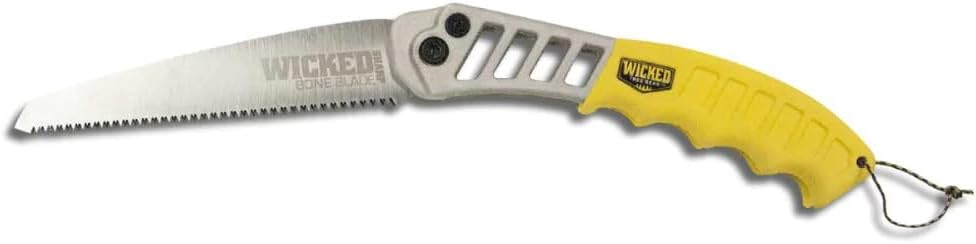
| Power Source | Manual |
|---|---|
| Blade Material | Carbon Steel |
| Blade Length | 7 inches |
| Handle Material | Aluminum |
| Number of Teeth | 70 |
The Wicked WTG-007 is a folding bone saw built for demanding cutting tasks where a compact, reliable tool is needed. It uses a 7-inch impulse-hardened high-carbon steel blade with 70 teeth and a curved arborist-style profile that slices through dense material efficiently. The cast aluminum handle and ergonomic rubber over-mold provide a secure grip while the hardened steel lock-pin and hardware eliminate plastic failure points common on cheap folders. Typical use cases include field dressing, butchery, and heavy-duty camping or hunting chores where portability and a strong lock are important. Practical benefits include a durable blade that holds up to hard use and a compact closed length for easy storage. Limitations are its single blade length—7 inches may be short for large cuts—and the carbon steel blade will need regular maintenance to prevent corrosion. The saw is manual so cutting requires effort and technique versus powered options, but it excels where control and toughness matter.
Best for: Buyers who want a rugged, portable manual saw for field dressing, hunting, or occasional butchery and prioritize reliability and a solid locking mechanism.
Less Ideal for: Those who need long-reach cutting for large carcasses or prefer low-maintenance stainless blades or powered saws for heavy continuous work.
- High-carbon steel blade with 70 teeth for effective cutting of dense material
- Cast aluminum handle and rubber over-mold for a secure, comfortable grip
- Hardened steel lock-pin and hardware reduce risk of locking failure
- Folding design gives compact closed length for easy transport and storage
- Blade is carbon steel and requires regular cleaning and oiling to avoid rust
- 7-inch blade may be short for very large or deep cuts
Verdict: A compact, tough folding bone saw that prioritizes durability and a secure lock for field and hunting use.
LEM 16" Meat Hand Saw with Tightening Cam
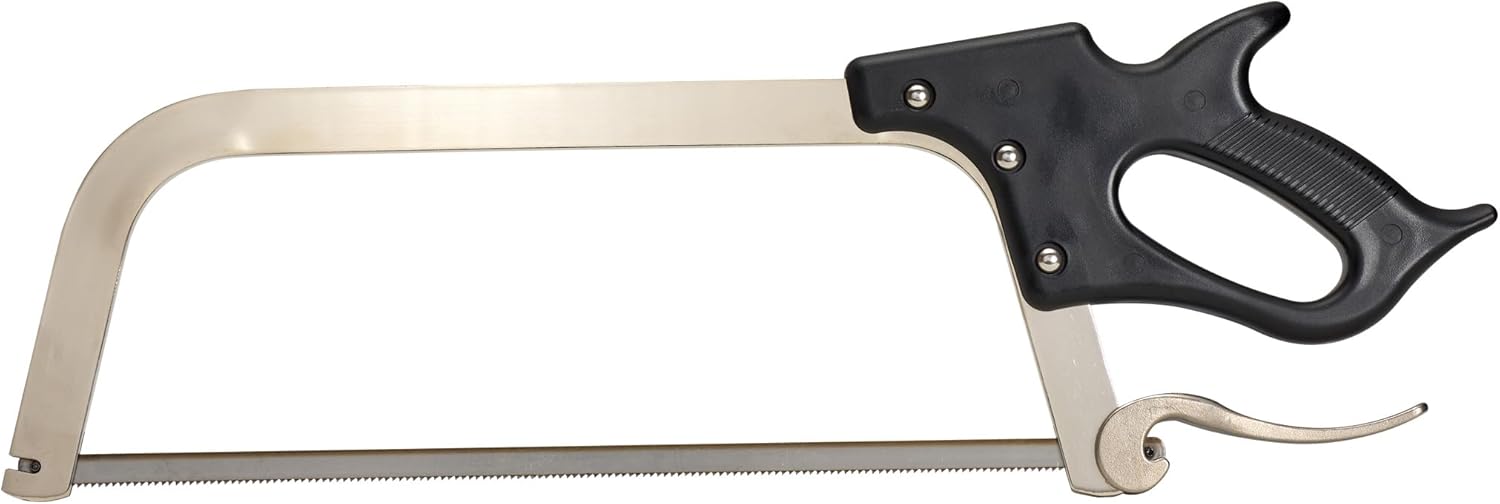
| Blade Length | 16 inches |
|---|---|
| Blade Material | Stainless Steel |
| Number of Teeth | 160 |
| Power Source | hand powered |
The LEM 16" Meat Hand Saw is built for serious, performance‑oriented use when you need to saw meat and bone by hand. Its heavy nickel‑plated frame and high‑speed tool steel blade give the saw the stiffness and edge retention required to cut through large joints and thicker bones. The blade is 1/2" wide with about 10 TPI and a serrated profile, which helps it bite into frozen or fresh bone without wandering. A large cam‑lock tightening lever keeps the blade taut for smoother strokes and makes blade changes quick during heavy use. The ergonomic metal handle improves control during long sessions, but because this is a manual tool it still requires good technique and effort on very dense bone. This saw is compact enough for field or workshop use and pairs well with a cut‑resistant glove. If you need consistent, heavy‑duty hand sawing capacity without power tools, this delivers professional results; expect more physical work and slower throughput than a powered bandsaw.
Best for: Buyers who prioritize cutting performance and reliability and who want a robust hand saw for breaking down large carcasses or cutting through tough joints without power tools.
Less Ideal for: People who need high throughput or minimal manual exertion should choose a powered bandsaw or meat saw instead.
- Sturdy nickel‑plated frame provides rigidity for straight, controlled cuts through meat and bone
- High‑speed tool steel blade with serrated teeth (10 TPI) bites into tough material
- Large cam‑lock lever keeps blade tensioned and allows fast blade changes
- Ergonomic handle enhances grip and control during extended sawing
- Manual operation requires significant physical effort on very dense bone
- Not as fast as powered saws for high‑volume processing
Verdict: A rugged, performance‑focused 16" hand meat saw that gives reliable, professional cuts through meat and bone without needing power.
Outdoor Edge GrizSaw T‑Handle Fixed Blade Camp Saw with 8" 65Mn Spring Steel Blade and Locking Sheath

| Blade Length | 8 inches |
|---|---|
| Blade Material | Spring Steel |
| Number of Teeth | 12 |
| Included Components | Sheath |
| Handle Material | Wood |
The Outdoor Edge GrizSaw is a handheld camp and field saw built for heavy cutting tasks like bone processing and small‑wood work. Its T‑shaped handle keeps the wrist aligned for straight, low‑fatigue cuts while you push and pull, and the 8‑inch chrome‑coated 65Mn spring steel blade with aggressive teeth is intended to slice through bone and dense wood cleanly. The saw ships with a locking glass/nylon sheath that secures the blade and offers a swivel clip for belt attachment, making it easy to carry in the field. Practical features include a replaceable style blade and a simple, durable wooden handle that balances control with a lightweight overall package. Limitations to note are that this is a manual saw best suited to small to medium jobs rather than large timber cutting, and the wooden handle will need basic care after heavy wet use. For someone who needs a rugged, portable saw for processing game or occasional campsite woodwork, the GrizSaw delivers focused performance without extra bulk.
Best for: Buyers who want a compact, durable hand saw for field processing of game and occasional campsite wood tasks and who prioritize efficient, controlled cutting over power tools.
Less Ideal for: People who need to fell large trees, process large quantities of lumber, or prefer powered saws for repetitive heavy work should choose a different tool.
- T‑handle design reduces wrist fatigue and promotes straight cutting strokes
- Chrome‑coated 65Mn spring steel blade with aggressive teeth for cutting bone and dense wood
- Locking glass/nylon sheath with swivel clip for secure, convenient carry
- Lightweight and portable for field use and campsite tasks
- Manual saw only suitable for small to medium cutting jobs, not for large logs
- Wooden handle requires occasional maintenance after heavy or wet use
Verdict: Choose the GrizSaw if you want a lightweight, T‑handle hand saw built specifically to cut bone and dense wood in the field with secure carry.
Uopyeri 8" Folding Hand Saw with Safety Guard

| Power Source | Hand |
|---|---|
| Other Special Features of the Product | Anti-Slip Grip, Ergonomic Handle, Foldable, Heavy Duty, Safety Lock |
| Number of Teeth | 10 |
| Blade Shape | Serrated |
| Blade Material | High Carbon Steel |
This folding hand saw uses a high-carbon steel serrated blade with aggressive, triple-cut teeth for fast cutting of wood and similar materials. It folds into a compact tool with a gear-lock safety that keeps the blade open during use and closed for transport. The rubber anti-slip handle and ergonomic shape help reduce hand fatigue for repeated cuts, and the blade profile is designed to clear chips for smoother strokes. Typical uses are pruning small to medium branches, trimming lumber for projects, and general campsite cutting where portability matters. For cutting bone specifically, the saw’s sharp, serrated teeth and sturdy blade can make clean, controlled cuts on small pieces, but it is not a medical instrument and will perform best on thinner bone or butchery tasks where a handheld serrated blade is appropriate. Limitations include a short blade length that reduces reach and requires more passes on larger pieces, and the saw lacks specialized tooth geometry for dense, very hard bone or heavy-duty butchering where a dedicated bone saw would be safer and faster.
Best for: Buyers who want an inexpensive, portable saw for pruning, campsite tasks, and occasional home butchery where a compact serrated blade is sufficient.
Less Ideal for: Professionals or users who need a dedicated bone or surgical saw for heavy-duty, precise bone cutting should choose a purpose-built tool instead.
- High-carbon steel serrated blade for aggressive, fast cutting
- Foldable design with gear-lock for safe transport and storage
- Ergonomic rubber anti-slip handle reduces hand fatigue
- Triple-cut tooth pattern improves cutting speed and chip clearance
- Blade is relatively short so it takes more strokes on larger pieces
- Not designed as a specialized bone-cutting medical or industrial tool
Verdict: A compact, budget-friendly folding saw that delivers aggressive serrated cutting for pruning and light bone-cutting tasks when a portable hand tool is needed.
SAGEN Hunter's Field Saw I — Compact Hunting Bone Saw

| Power Source | Corded Electric |
|---|---|
| Speed | 4500 rpm |
| Number of Teeth | 24 |
| Blade Material | Hardened,Steel |
| Blade Length | 5 inches |
The SAGEN Hunter's Field Saw I is a compact field dressing saw built to speed up bone and rib cutting during game processing. It uses a hardened steel rectangular blade with 24 teeth and runs at 4500 rpm, which lets it slice through pelvic bone and ribs much faster than a knife and with less effort. Its small footprint and included camouflaged sheath and belt attachment make it easy to carry on hunts and deploy at the game. The manufacturer notes the blade never needs sharpening, which increases reliability in the field, and the plastic handle provides a lightweight, ergonomic grip. Important limitations are the corded-electric power source, which requires access to a power supply or a compatible portable power station, and the blade length is short so deep or large carcass jobs may require multiple passes or a larger saw. For hunters who prioritize consistent cutting performance and minimal maintenance, this saw offers a practical, time-saving tool for bone work, but expect to plan for power when using it away from basecamp.
Best for: Hunters who want a dependable, low-maintenance saw to speed up field dressing and focus on consistent cutting performance in the field.
Less Ideal for: Backcountry hunters who will be far from any electrical power or processors who need a long blade for very large animals.
- Hardened steel blade with 24 teeth for efficient bone cutting
- Runs at 4500 rpm for quick, low-effort cutting
- Blade advertised as never needing sharpening reduces field maintenance
- Compact and lightweight with a sheath and belt attachment for easy carry
- Ergonomic handle designed for secure grip during dressing
- Requires corded electric power, limiting off-grid use without a power source
- Short blade length may be less efficient on very large carcasses
Verdict: Buy this saw if you want a reliable, low-maintenance field tool that cuts bone quickly and is easy to carry on hunting trips.
Weston Butcher Meat and Bone Saw with 16" Stainless Steel Serrated Blade

| Power Source | Manual |
|---|---|
| Blade Material | Stainless Steel |
| Blade Length | 16 inches |
| Other Special Features of the Product | Ergonomic Handle |
The Weston butcher and bone saw is a purpose-built hand saw for processing large cuts of meat and field-dressed game. It uses a 16-inch serrated stainless steel blade mounted in a sturdy frame and a quick-release trigger for fast blade changes and tensioning. Typical uses are cutting through muscle, connective tissue, and small-to-medium bone when butchering at home or in a field setting. The ergonomic high-impact plastic handle reduces fatigue during extended use and is easy to clean after contact with meat. Practical benefits include corrosion-resistant stainless steel for longevity and a tensioning trigger that keeps the blade tight for straight, efficient cuts. Limitations are that it is manual so cutting very large or dense bone takes physical effort and steady technique, and the plastic handle and exposed frame are not intended for repeated heavy industrial use compared with powered equipment. Replacement blades and careful sharpening will be required over time to maintain peak cutting performance.
Best for: Buyers who want a reliable manual saw for processing large home-raised meat or game and who prioritize proven construction and straightforward operation. Ideal for users who value clear product history and prefer a tool that performs consistently under typical butchering tasks.
Less Ideal for: Not a good fit for commercial processors who need powered cutting or for users who prefer a lighter instrument for delicate boning and trimming work.
- 16-inch stainless steel serrated blade suitable for cutting meat and bone
- Quick-release trigger handle for fast blade replacement and consistent blade tension
- Ergonomic handle designed to reduce user fatigue during extended use
- Stainless steel frame and blade resist corrosion for durable outdoor or kitchen use
- Manual operation requires significant physical effort on large or dense bones
- Handle is plastic which may feel less robust than metal for heavy-duty commercial use
Verdict: A rugged, no-frills manual bone saw that delivers dependable blade tensioning and corrosion-resistant performance for home butchering and field processing.
Weston Butcher Meat and Bone Saw, 22" Stainless Steel Serrated Blade

| Power Source | Manual |
|---|---|
| Blade Length | 22 inches |
| Blade Material | Stainless Steel |
| Other Special Features of the Product | Ergonomic Handle |
The Weston butcher and bone saw is a manual hand saw built for breaking down large cuts of meat and cutting through bone. It uses a 22-inch corrosion-resistant stainless steel serrated blade mounted in a sturdy stainless steel frame, and the trigger lock keeps blade tension constant for cleaner, more reliable cuts. The ergonomic high-impact plastic handle makes prolonged work less tiring and is easy to clean after use. Blade replacement is straightforward with the quick-release design, so you can swap in a fresh Weston replacement blade when the teeth dull. Because it is manual, the saw gives good control and predictable cutting speed but requires physical effort and a secure work surface; it is not suited for very small precision trimming. The saw is simple, durable, and made to last with parts that are easy to service, which will appeal to anyone who wants a dependable tool for processing whole carcasses, large roasts, or game at home.
Best for: Buyers who prioritize a reliable, low-maintenance tool for home butchering or processing game and large cuts, and who prefer predictable, durable equipment over powered alternatives.
Less Ideal for: Users who need fast, power-assisted cutting for heavy commercial use or those who require very fine precision trimming should consider powered saws or specialty small knives instead.
- 22-inch stainless steel serrated blade resists corrosion and cuts through muscle and bone
- Trigger lock maintains consistent blade tension for straighter, more efficient cuts
- Ergonomic high-impact plastic handle reduces fatigue during extended use
- Sturdy stainless steel frame for durability and long-term use
- Quick-release blade design allows fast, tool-free blade changes
- Manual operation requires significant physical effort on very large or dense bones
- Plastic handle may feel less premium than all-metal alternatives
- Not designed for fine trimming or delicate precision cutting
Verdict: A dependable manual butcher saw built to cut through meat and bone with consistent blade tension and simple, serviceable construction.
Choosing the Right Hand Saw for Cutting Bone: Key Factors to Consider
Blade Stiffness and Thickness
Blade stiffness determines whether the saw will track straight when you push or pull through hard material. Cutting bone places lateral and torsional loads on the blade, so a thin, flexible blade will tend to wander, bind, or even buckle. Thicker blades and stiffer steels resist deflection, giving a predictable kerf and reducing the need for corrective strokes.
Thickness also influences how much material the blade removes and how much force you must apply. A balance is necessary: overly thick plates add weight and increase resistance, while too thin blades sacrifice control. For bone work, choose blades engineered to stay rigid under intermittent heavy loads.
Tooth Geometry and Sharpness
Tooth shape, size, and set affect how the saw clears chips and bites into dense, sometimes brittle material. Coarse teeth remove more material per stroke but can be harder to control and may produce rougher cuts. Finer teeth give a smoother finish but may clog or dull quickly on mineralized surfaces.
A tooth pattern optimized for hard, fibrous cutting is best. Look for teeth that cut aggressively without excessive set into the sides, and consider whether the blade can be resharpened or replaced. Sharp, well-shaped teeth reduce binding and make each stroke more effective, which matters when you are working on awkward angles or under time pressure.
Handle Design and Grip Security
A handle that fits your hand and offers a secure, non-slip surface is crucial when using force near bone. Ergonomics affect control, fatigue, and safety. Handles with a pronounced palm swell, textured surfaces, or molded finger placements improve purchase during wet or bloody conditions.
Also consider handle orientation relative to the blade. Straight handles are versatile, while pistol-style grips can provide better leverage for short, powerful strokes. The material and attachment method matter too: a loose or flexing handle transfers less force and increases the chance of a miscut.
Blade Length and Accessibility
Blade length determines reach and leverage. Longer blades let you make fewer long strokes on larger bones, while shorter blades are easier to manage in tight spaces or when you need precise cuts. For field dressing and small to medium bones, a mid-length blade often offers the best compromise between control and capability.
Consider the typical work environment. If you frequently work in confined or awkward positions, prioritize compact blades that permit accurate, controlled strokes. For larger cuts where straight, sweeping motions are possible, longer blades improve efficiency.
Safety Features and Control Enhancements
Cutting bone carries a higher risk of sudden slips and kickback compared with soft-tissue cutting. Safety features that improve control are important. Features like finger guards, blade covers, and secure locking pins for foldable models reduce accidental contact and protect the edge between uses.
Non-slip coatings and handle geometry that prevent hand migration toward the blade improve safety in messy conditions. Also factor in how easily you can position the cut and whether the saw allows you to maintain a predictable stroke under variable resistance.
Durability, Corrosion Resistance, and Maintenance
Exposure to blood, moisture, and environmental grit demands materials and finishes that resist corrosion and wear. Stainless or properly coated steels and sealed handle materials extend service life and reduce maintenance chores. Fasteners and blade mounts that resist loosening under cyclic loads are also important.
Maintenance considerations include how easy it is to clean the blade, whether teeth can be resharpened, and the availability of replacement blades or parts. A tool that is easy to maintain will stay safe and effective for many seasons.
Best Tooth Patterns for Bone
Different tooth patterns suit different cutting tasks. For dense, mineralized bone, alternating or tapered-set teeth that prioritize chip clearance and aggressive bite often work best. These patterns reduce clogging and help the blade advance with less force.
Skip or impulse-cut patterns can be effective for fast removal but may leave a rough finish, which is acceptable for field dressing. If finish matters, choose a pattern that balances chip removal with a finer cut.
- Coarse aggressive teeth: faster stock removal, rougher finish
- Medium tooth counts: balance speed and control
- Fine teeth: smoother cut, slower and may clog
Safe Cutting Techniques
Adopt strokes that maximize control: short, deliberate pushes or pulls with steady pressure let the blade do the work and reduce the chance of sudden slips. Keep your non-dominant hand clear of the cut line and use clamps, a vice, or a stable holding surface when possible.
Position the work so the bone is supported and cannot shift. If you must cut freehand, brace yourself and use a saw stroke that maintains contact with the material on both the forward and return motions to prevent grabbing.
- Use short controlled strokes rather than long aggressive ones
- Support the bone to prevent sudden movement
- Keep a clear hand position and use guards when available
Field Versus Workshop Use
Tools intended for field use should favor compactness, ease of cleaning, and protective sheaths. Corrosion-resistant finishes and sealed handle interfaces help when exposure to moisture and organic matter is likely. Portable models with folding blades or protective covers reduce transport risk.
Workshop setups can prioritize larger blades and fixed handles that offer more leverage and a longer cutting stroke. In a controlled environment you can also use jigs, vises, and other aids to improve cut accuracy and safety.
- Field tools: compact, sealed, easy-to-clean
- Workshop tools: larger blades, fixed handles, compatible with jigs
Maintenance and Sharpening Tips
Clean blades after each use to remove residue and slow corrosion. Use a mild disinfectant or warm soapy water, dry thoroughly, and apply a light protective oil if the blade material is prone to rust. For folding saws, open and clean the pivot area to prevent grit buildup.
Sharpening depends on tooth style. Individual teeth can be dressed with appropriate files, while some blades are designed to be replaced rather than sharpened. Follow manufacturer guidance for tooth filing angles if sharpening is intended.
- Wipe and dry blades after use, apply protective oil when needed
- File teeth only if the pattern allows; otherwise replace blades
- Inspect fasteners and tighten as part of routine maintenance
Choosing Accessories and Protective Gear
Using the right accessories improves safety and effectiveness. A sturdy sheath or blade cover protects both the edge and the user during transport and storage. Non-slip gloves improve grip in wet conditions and reduce hand fatigue, but ensure gloves do not impair fine control.
Vices, clamps, and cutting jigs stabilize the workpiece and reduce the chance of slips. For transport and cleaning, have a small brush and cloth to remove debris, and a compact oil bottle for corrosion protection.
- Use a sheath for transport
- Wear non-slip gloves that still allow hand feel
- Bring clamps or a compact vise for field stabilization
How We Chose the Best Hand Saw for Cutting Bone
We screened a wide range of hand saw designs and focused on attributes that affect bone cutting in real use. Key evaluation points included blade stiffness and thickness to ensure the blade holds a straight kerf under lateral load, and tooth geometry and set for efficient removal of hard, fibrous material without excessive binding. We assessed handle ergonomics and grip security because controlled strokes and safe hand placement are essential when cutting through bone. We also considered blade length and tooth-per-inch combinations to match different bone sizes and access constraints, and construction quality such as corrosion-resistant finishes and secure blade-to-handle joints for repeated field use. Durability under heavy intermittent loads and ease of resharpening or replacement were factored in as well. Excluded items were saws intended only for pruning, fine woodworking, or soft-material cutting where tooth design and blade stiffness are unsuitable for bone. We favored tools with clear safety and handling advantages for this application. The final selections balance cutting effectiveness, user control, and long-term serviceability.
FAQ
What tooth count is best for cutting bone?
Tooth count depends on the bone size and desired finish. Lower tooth-per-inch counts cut faster and remove more material, which is helpful for large bones. Medium tooth counts provide a balance of speed and control. Very fine teeth give a smoother cut but may clog or dull faster on hard sections.
Can folding saws be safe for bone work?
Folding saws can be safe if they lock solidly and the blade and pivot are robust. They offer portability and built-in protection when closed, but ensure the locking mechanism is reliable and the blade is stiff enough for the loads you will encounter.
How do I prevent a saw from binding in bone?
Use a blade with good chip clearance and keep the teeth sharp. Support the workpiece to prevent flexing, use controlled strokes, and avoid forcing the blade through a cut. Clearing debris from the kerf while cutting also reduces binding.
Is a serrated edge better than a straight-cut tooth for bone?
Serrated edges designed for aggressive removal can work well for quick stock removal, but they may leave a rougher surface. Straight-cut or taper-ground teeth that are sized correctly often offer a better balance of control and efficient cutting for many bone tasks.
How should I clean and store a saw after cutting bone?
Thoroughly wash the blade to remove organic residue, dry it completely, and apply a light protective oil if the steel is not fully stainless. Store blades covered or sheathed and keep folding saw pivots lightly lubricated to prevent grit buildup.
Final Verdict
Selecting the right hand saw for cutting bone means prioritizing blade rigidity, appropriate tooth geometry, and a handle that keeps you in control. Tradeoffs are inevitable: faster, coarser blades remove more material but can be harder to steer, while finer blades give cleaner cuts at the cost of speed and potential clogging. Decide based on the typical bones you cut and the environments where you work. Favor tools that are easy to maintain, offer reliable safety features, and match the blade length to your access needs. With those priorities in mind you can choose a saw that delivers precise, repeatable cuts and long-term service.
