

Note: This article contains affiliate links. If you click on these links and make a purchase, I may earn a small commission at no extra cost to you. This helps support my research and content. Read my full affiliate disclosure here.
When you are fitting trim, baseboard, or crown molding, the right hand saw makes tight miters and clean end grain cuts much easier. A saw built for molding work behaves differently from a general-purpose panel saw: it needs fine, consistent teeth, a stable blade, and a grip that lets you guide short, delicate strokes without overcutting. This guide covers our top five hand saws for cutting molding, shortlisted for their ability to produce accurate joints and smooth finished edges. Below we explain the practical reasons these tools matter in a real woodworking or finishing project, and outline the evaluation points used to pick the best options.
Top Picks at a Glance
| Best Overall The best all-around choice for most situations | SUIZAN Ryoba 7" Double-Edge Japanese Pull Saw |  |
| Best Value The sweet spot between price and what you get | SUIZAN 5" Flush Cut Japanese Pull Saw |  |
| Best Budget The cheapest option that still gets the job done reliably | VPQZUPG 6" Japanese Pull Saw SK5 Double-Edge (14/17 TPI) |  |
| Highest Rated A top-rated pick with lots of positive feedback | SUIZAN Ryoba 9.5" Double-Edge Japanese Pull Saw |  |
| Most Popular A crowd favorite that many people choose with confidence | RUITOOL 6" Japanese Ryoba Pull Saw with SK5 Blade and Beech Handle |  |
SUIZAN Ryoba 7" Double-Edge Japanese Pull Saw
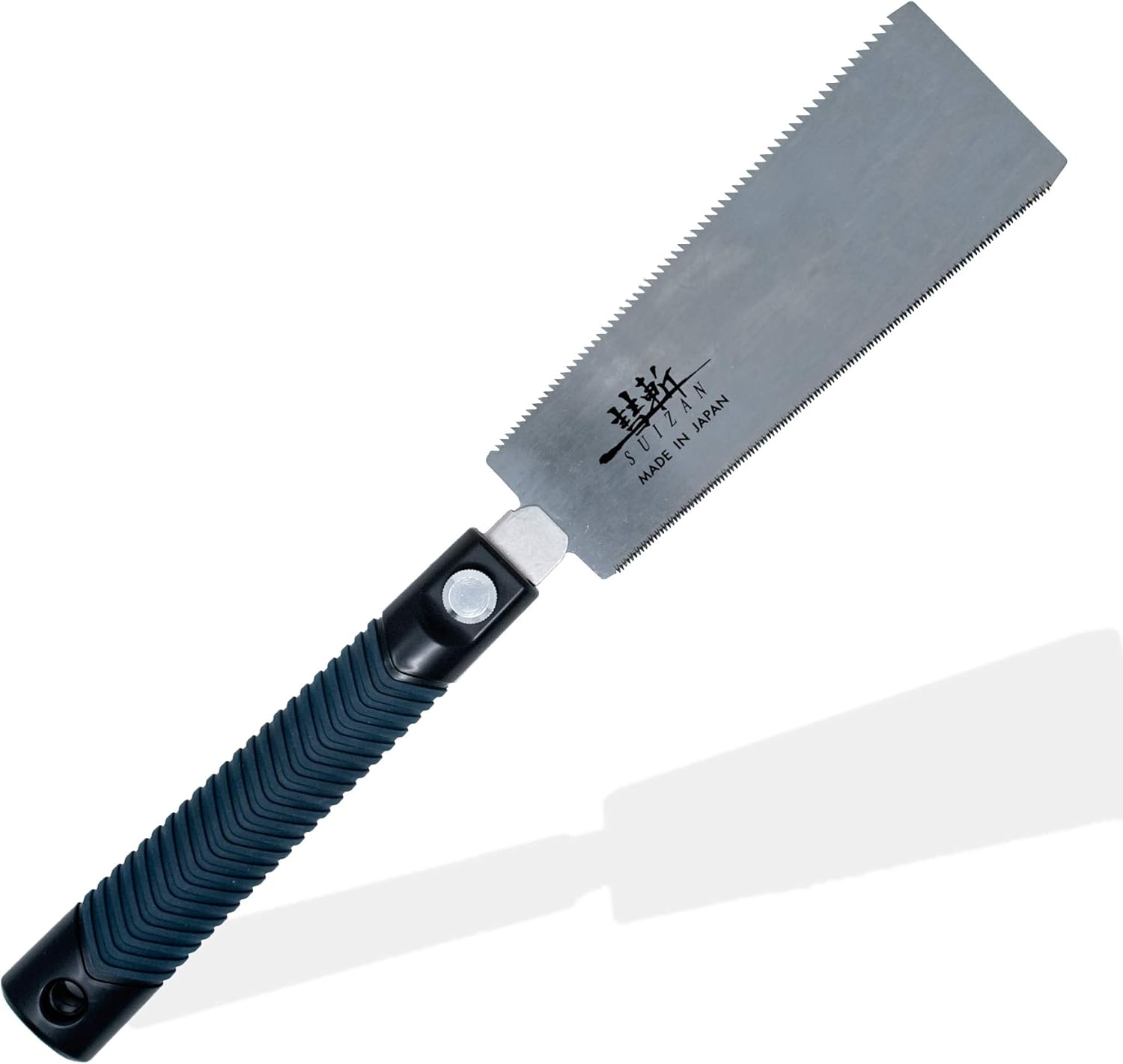
| Blade Length | 7 inches |
|---|---|
| Blade Material | Japanese Steel |
| Blade Thickness | 0.02" (0.5mm) |
| Kerf Width | 0.03" (0.8mm) |
| TPI | 19 (crosscut), 7-11 (rip) |
The SUIZAN 7" Ryoba is a compact Japanese pull saw built for precise finish work like trim, molding, and joinery. It uses a very thin 0.02 in Japanese steel blade that cuts on the pull stroke, producing a narrow 0.03 in kerf and clean cross sections that make tight-fitting joints easier. The double-edge design gives you rip teeth on one side and fine crosscut teeth on the other so you can switch between cutting along and across the grain without changing tools. The elastomer handle offers a secure, non-slip grip and the blade is replaceable without tools by loosening a single screw. Where it really helps is on controlled, small cuts and finish carpentry where accuracy and a smooth cut matter. Expect excellent edge life and durability from the high-quality steel, but know that the thin blade is not intended for heavy framing or cutting large stock quickly. For thicker or rough framing tasks, a sturdier saw or larger Ryoba is a better choice.
Best for: Woodworkers and home DIYers who prioritize clean, accurate cuts for molding, trim, and fine joinery and want a single compact saw that handles both rip and crosscut tasks.
Less Ideal for: Contractors or users who need to cut large lumber quickly or perform heavy demolition should choose a larger handsaw or power saw instead.
- Very thin 0.02 in blade delivers narrow kerf and smooth, precise cuts ideal for molding and trim
- Double-edge (rip and crosscut) blade covers both along-grain and cross-grain cuts without swapping tools
- High-quality Japanese steel and hand‑crafted teeth provide long edge life and clean finish cuts
- Elastomer non-slip handle for secure grip and tool-free blade replacement for easy maintenance
- Blade thickness and length make it unsuitable for heavy framing or fast removal of large sections
Verdict: Choose this compact Ryoba when you need a single, high-precision pull saw that produces clean, narrow-kerf cuts for molding and finish carpentry.
SUIZAN 5" Flush Cut Japanese Pull Saw

| Blade Material | Japanese Steel |
|---|---|
| Blade Length | 5 inches |
| Blade Thickness | 0.012" (0.3mm) |
| TPI | 17 (hardwood) / 25 (softwood) |
| Handle Material | Wood (beech) |
The SUIZAN 5" Flush Cut Japanese Pull Saw is a purpose-built hand saw for precision trimming and flush cutting in woodworking and molding work. It uses a thin, flexible 0.012" Japanese steel blade with zero-set teeth so you can trim dowels, plugs, and molding flush to a surface without scratching the surrounding wood. One edge has 17 TPI for hardwood and the other 25 TPI for softwood, giving you a finer cut or slightly faster removal depending on the material. Its compact length and beech handle make it easy to reach tight spots where a larger saw cannot, and the pull-stroke cutting action reduces effort and improves control during delicate finishes. The blade is fixed to the handle and not replaceable, so longevity depends on care and sharpening ability. This saw excels at finishing tasks and small crosscuts but is not intended for ripping large boards or heavy stock removal. Proficient hobbyists and tradespeople will appreciate its clean, narrow kerf and low-damage cuts for molding and trim work.
Best for: Buyers who prioritize precise, low-damage finishing for molding, trim, and dowel work and want a small, easy-to-control saw for tight spaces.
Less Ideal for: People who need a general-purpose saw for ripping large boards, framing, or heavy demolition should choose a larger saw designed for heavy stock removal.
- Zero-set teeth allow flush trimming of dowels and molding without scratching the workpiece
- Double-edged blade with 17 and 25 TPI covers both hardwood and softwood finishing
- Very thin, flexible blade (0.012") produces a narrow kerf and smooth surface
- Compact overall length and comfortable beech handle reach tight areas for molding and trim
- Blade is fixed to the handle and not replaceable, so full replacement is required when worn
- Not suited for heavy ripping or large stock removal due to thin blade and small size
Verdict: If you need a small, precision pull saw to trim molding and flush-cut dowels without marring the surface, this SUIZAN flush cut saw is an excellent choice.
VPQZUPG 6" Japanese Pull Saw SK5 Double-Edge (14/17 TPI)

| Blade material | SK5 steel |
|---|---|
| Blade length | 6 inch |
| Tooth count | 14/17 TPI (double edge) |
This compact Japanese pull saw is built for precision trimming and small finish work like cutting molding, trim, dowels, and joinery. The 6-inch SK5 steel blade has two edges with different tooth densities (14 and 17 TPI), so you can choose the faster, coarse edge for rough cuts or the finer edge for cleaner, controlled slices along molding profiles. Because it cuts on the pull stroke the blade tracks well and requires less push force, which helps keep cuts accurate when working on short, awkward pieces. The simple wood handle is comfortable for short sessions and keeps the tool lightweight and maneuverable in tight corners. Expect good value for basic finishing tasks, but note the short blade length limits long rip cuts and heavy structural work and the saw lacks a protective cover or advanced ergonomic features. For budget-minded DIYers doing trim and molding, this provides precise control without a large investment.
Best for: Home DIYers and budget-conscious makers who need an inexpensive, precise saw for cutting molding, trim, and small woodworking detail work.
Less Ideal for: Carpenters who regularly cut long boards, perform heavy framing, or need advanced ergonomics and blade protection should choose a larger or professional-grade saw.
- Double-edge blade with 14 and 17 TPI gives flexibility between faster cuts and finer finish cuts
- SK5 steel construction for a sharp, durable edge suitable for trim work
- Pull-cut design improves control and reduces push force for accurate cuts on molding
- Compact 6-inch blade and simple wood handle make it easy to maneuver in tight corners
- Short 6-inch blade is not suitable for long rip cuts or large boards
- Basic wood handle and no blade cover limit comfort and storage protection
Verdict: A low-cost, compact Japanese pull saw that gives accurate, controlled cuts for molding and trim without a big investment.
SUIZAN Ryoba 9.5" Double-Edge Japanese Pull Saw

| Blade Material | Japanese Steel |
|---|---|
| Blade Length | 9.5 inches |
| Number of Teeth | 15 |
| Power Source | Hand Powered |
| Surface Recommendation | Wood |
The SUIZAN Ryoba 9.5" is a double-edge pull saw built for accurate trim and molding work. It has one coarse side for rip cuts and a finer 15-TPI side for crosscuts, so you can switch teeth depending on whether you follow or cut across the grain. The thin 0.02" blade and narrow kerf produce clean, low-resistance cuts that reduce tear-out on molding profiles and make precise miter-box work easier. A traditional wooden handle wrapped by hand gives a secure, tactile grip during controlled pull strokes and the blade is user-replaceable with a single screw for long-term use. Because it cuts on the pull stroke, the saw tracks well and requires less force, which helps maintain accuracy on delicate trim pieces. Limitations are that the blade is thin and designed for woodworking rather than heavy demolition, and the handle’s natural wrap can vary in finish and may show small cosmetic cracks that do not affect function.
Best for: A buyer who prioritizes a dependable, precise hand saw for finish carpentry and molding work and values consistent, repeatable cuts for trim, tenons, and miters.
Less Ideal for: Not the right choice for someone needing a heavy-duty framing or demolition saw or for tasks that require aggressive stock removal.
- Double-edge design provides both rip and crosscut teeth for versatility on molding and trim
- Very thin Japanese steel blade gives a narrow kerf and smooth, low-tear cuts
- Replaceable blade held by one screw makes maintenance straightforward
- Pull-stroke cutting reduces user fatigue and helps the blade track for accurate miter cuts
- Blade thickness and tooth pattern are optimized for finish carpentry not heavy ripping or demolition
- Wood handle finish can vary and may show small cosmetic cracks from manufacturing
Verdict: Choose this Ryoba if you want a reliable, thin Japanese pull saw that delivers consistently clean, accurate cuts for molding and finish carpentry.
RUITOOL 6" Japanese Ryoba Pull Saw with SK5 Blade and Beech Handle

| Blade Material | SK5 steel |
|---|---|
| Blade Length | 6 inches |
| Number of Teeth | 14 & 17 TPI |
| Blade Thickness | 0.67mm |
| Handle Material | Beechwood |
This 6" RUITOOL Ryoba pull saw is a compact Japanese-style handsaw built for precise trim and molding work. It features a thin, flexible SK5 high-carbon steel blade with a double-edged tooth pattern: 17 TPI on one side for finer crosscuts and 14 TPI on the other for faster rip or softer woods. The beechwood handle gives a traditional comfortable grip for controlled pull-stroke cutting, and the hardened three-edge teeth are shaped for sharper, cleaner cuts with less tearing. In practice the thin 0.67mm blade lets you get close to flush surfaces and makes finish cuts on molding and trim easier than a bulky western saw. Because the blade is thin and flexible it excels at detail work but is not intended for heavy structural cutting or very long rip cuts. The saw is lightweight and easy to maneuver in tight corners, though users who prefer a pistol grip or require replaceable blades may prefer a different style. For trimming, coping, and accurate finish work this Ryoba offers good balance between control and cutting speed.
Best for: Buyers who need a precise, easy-to-control saw for coping and trim work and who prioritize clean finish cuts and maneuverability over heavy-duty cutting power.
Less Ideal for: Woodworkers who need a replaceable-blade saw, a pistol-grip handle, or a tool for long structural or heavy ripping tasks should consider other saw types.
- Thin, flexible SK5 blade enables close flush and finish cuts
- Double-edge 14/17 TPI covers both rip and fine crosscut needs for molding
- Hardened three-edge teeth for sharper, cleaner cutting and faster chip removal
- Compact, lightweight design is easy to maneuver in tight trim and corner work
- Blade is thin and flexible so it is not suited for heavy-duty or long rip cuts
- Fixed wooden handle means blade replacement or different handle styles are not available
Verdict: A precise, thin-bladed Ryoba pull saw made for neat flush and molding cuts where control and finish quality matter.
Choosing the Right Hand Saw for Cutting Molding: Key Factors to Consider
Tooth Count and Geometry
The number of teeth per inch and their geometry determine how cleanly a hand saw severs wood fibers. For molding you usually want a higher TPI and a tooth shape meant for crosscutting so the teeth slice the fibers rather than tear them. Finer teeth create smoother edges on delicate profiles, which reduces sanding and clean-up time.
Different tooth geometries influence how aggressively the saw cuts and how much control you have. A slightly more aggressive tooth will cut faster but can risk chipping thin crown profiles, while extra-fine teeth cut slowly but leave a near-finished surface. Think about the molding species you work with and whether you need a compromise between speed and finish.
Blade Thickness and Stiffness
A blade that is too thin can flex and wander during short cuts, producing inaccurate miters and uneven edges. A stiffer blade holds a true line and resists bending when you pause mid-stroke or work close to corners. For molding cuts, stability is often more valuable than maximum tooth aggressiveness because you are aiming for precision joints.
Blade width also affects how close you can cut into a corner or tight profile. Narrower blades let you negotiate curved or complex profiles, but they must retain adequate stiffness. Consider blades that balance a slim kerf with reinforcing features to maintain straightness.
Handle Shape and Grip Control
Handle ergonomics influence how steadily you can guide the saw across short, controlled strokes. A handle that forces the wrist into an awkward angle increases the chance of overshooting a miter or producing a wavy cut. Look for handles with comfortable contours, a non-slip surface, and a shape that keeps the saw aligned with your forearm for consistent sawing lines.
Many finish carpenters prefer slightly shorter handles that allow a secure hold close to the blade for better control. If you do extended trim runs, factor in cushioning and hand fatigue; repetitive small cuts can become uncomfortable with thin or poorly placed grips.
Compatibility With Miter Boxes and Jigs
Most finish cuts for molding are made in a controlled guide such as a miter box, shooting board, or small bench jig. A saw that fits snugly and slides smoothly in those guides will produce far better results than a saw that binds or has an awkward blade profile. Check blade width and tooth set to ensure it does not catch on common miter box rails.
Consider whether you plan to use powered or manual fixtures and whether the saw can be reskinned into the jig for precise 45 and 90-degree cuts. Some blades have lower clearance or unusual toe shapes that interfere with guides, so think about the fixtures you already own.
Ease of Sharpening and Maintenance
Even the best hand saw will dull with use, especially on painted or hard woods often found in molding. A saw that can be easily sharpened or whose teeth profile is common makes long-term ownership simpler and cheaper. Look at tooth patterns and whether they can be maintained with commonly available files or require specialty tools.
Also evaluate rust resistance and blade finish. A blade that resists corrosion will stay truer longer and need less cleaning, which matters when you store tools in a damp workshop or an unheated garage.
Kerf Width and Waste
Kerf width affects how much material the saw removes and therefore how tight your joints can be. For fine trim work, a thinner kerf helps produce tight-fitting miters with less visible seam, but very thin kerfs can be more prone to bending and choking in guides. Balance kerf considerations with blade stiffness and the type of molding you commonly cut.
Remember that a thinner kerf may also require more frequent sharpening if the teeth are smaller, so weigh initial precision against ongoing maintenance.
When a Hand Saw Beats a Power Tool
Hand saws remain the preferred choice for many finish carpenters when working on interior trim because they offer tactile feedback and fine control that is hard to replicate with a power tool. In tight corners or delicate profiles you can stop mid-stroke, hone in on a waste line, and make incremental adjustments without risking tearout from high-speed blades.
Hand sawing is also quieter and cleaner, producing less dust and vibration. For on-site touch-ups, repairs, or the occasional replacement board, a well-chosen hand saw often saves time by avoiding set-up and power access needs.
- Better control for small, precise cuts
- Easier to use inside assembled rooms
- Less dust and cleaner finish on fragile profiles
Best Practices for Cutting Crown and Baseboard
Set up a stable guide and mark your stock clearly before cutting. Use a sharp pencil and transfer angles carefully; poor layout is the most common cause of ill-fitting miters. When possible, cut a single test piece to verify fit before sawing final stock.
Use light, steady strokes and let the saw do the work rather than forcing aggressive cuts. Support the molding close to the cut to prevent splintering. If you need to cut long runs, rest your forearm or use a small bench rest to reduce fatigue and maintain a consistent line.
- Make a trial cut on scrap
- Support profile close to the blade
- Use light strokes and prioritize control
Finishing and Repair Techniques After Cutting
After cutting, examine the miter faces and lightly sand only where necessary. A card scraper or very fine sandpaper will remove tiny burrs without changing the angle. For visible joints, use a small hand plane or sharp chisel to remove high spots before assembly.
If the cut shows minor tearout on delicate moldings, glue a thin veneer of matching wood or grain filler and re-sand. When repairing a bad miter, sometimes the simplest fix is to recut a slightly larger miter and adjust the opposing piece to match, preserving the visual line of the trim.
- Use a scraper or fine sandpaper for minimal removal
- Resurface high spots with a plane or chisel
- Patch small tearout with veneer or filler
Storage and Care to Keep Teeth Sharp
Store hand saws in a dry place and consider a blade protector or hanging rack to prevent nicks. Wipe blades clean after use and apply a thin coat of light oil to resist rust. Avoid contact with other metal tools to keep teeth from being damaged in a crowded toolbox.
Schedule periodic maintenance: true the blade if it warps, and file teeth as needed to restore geometry. Replacing or re-setting teeth is more advanced but unnecessary for most hobbyists if regular light sharpening is kept up.
- Hang blades or use protectors to prevent nicks
- Wipe and oil blades to prevent rust
- Perform light sharpening regularly
Working With Different Molding Materials
Natural hardwoods, softwoods, and engineered composites each behave differently under the saw. Hardwoods require sharper, slightly more aggressive teeth to avoid burning the cut, while softwoods and MDF are prone to tearout and often need very fine teeth or a scoring cut on the face side.
When cutting painted or previously finished molding, take care because the finish can clog teeth and change cutting characteristics. Keep a spare blade or sharpen more frequently when you expect to work with a variety of materials.
- Use finer teeth for MDF and softwoods
- Sharpen more often when cutting finished surfaces
- Adjust technique by material to minimize tearout
How We Chose the Best Hand Saw for Cutting Molding
We focused on features that directly affect how well a hand saw performs when cutting molding and trim. Key evaluation criteria were tooth geometry and TPI because finer, well-shaped teeth produce cleaner miters and reduce tearout on delicate profile work. Blade thickness and stiffness were assessed to ensure the blade stays true through short crosscuts and when working near corners. Handle ergonomics and control were judged for comfort during repetitive cuts and for the ability to make short, accurate strokes without hand fatigue. Cutting setup compatibility was checked to make sure the saw works well with common miter boxes and shooting boards used for trim work. Finally, maintenance and durability were considered, including ease of sharpening or replacement and corrosion resistance for a tool that will live in a toolbox. We excluded large panel or rip saws and any blades designed primarily for rough framing since they do not provide the tooth fineness or control needed for molding. We also excluded specialty powered tools because this roundup focuses on hand saw performance and decision factors relevant to finish carpentry and interior trim.
FAQ
What tooth count is best for cutting molding?
For most molding work a higher tooth count is preferable because it produces a smoother finish and reduces tearout. Teeth in the range commonly used for finish crosscutting will give cleaner miters, but the ideal TPI depends on the material species and how fine you want the finished edge.
Can I use a general-purpose handsaw for trim work?
A general-purpose saw can work in a pinch, but it often has a lower TPI and a coarser cut that increases sanding and touch-up. For consistent, visible trim work it is worth using a saw with finer teeth and better control characteristics.
How do I reduce tearout on delicate crown molding?
Support the molding close to the cut, score the face side with a sharp utility blade before sawing, and use a fine-toothed saw. Cutting slowly and using a guide or miter box also helps prevent pull-out on intricate profiles.
How often should I sharpen a hand saw used for molding?
Frequency depends on use and materials, but light maintenance after several sessions is common if you cut finished or hardwood stock. Sharpen sooner if you notice increased resistance, chatter, or a dull, crushed edge on the cut face.
Is blade thickness more important than tooth count for accurate miters?
Both matter. Blade thickness and stiffness keep the cut true, while tooth count controls finish quality. For accurate miters you want a balance: a blade stiff enough to prevent flex with teeth fine enough to leave a smooth edge.
Final Verdict
Prioritize the attributes that directly affect fit and finish: tooth geometry for a clean cut, blade stiffness for straight miters, and a comfortable handle for control during short, precise strokes. Expect tradeoffs between cut speed and surface smoothness, and choose a saw that matches the materials and fixtures you already use. With a focus on these criteria, you can pick a hand saw that makes molding and trim work faster, cleaner, and more predictable.
