

Note: This article contains affiliate links. If you click on these links and make a purchase, I may earn a small commission at no extra cost to you. This helps support my research and content. Read my full affiliate disclosure here.
Cutting plastic requires tools that make clean, controlled cuts without melting or chipping the material. The right hand saw reduces finishing work, preserves part fit, and keeps edges crisp whether you are trimming PVC pipe, acrylic sheet, or an old plastic gutter. This guide presents seven shortlisted hand saws chosen for their tooth geometry, control, and suitability across common plastic types. We evaluate each pick on cutting quality, user handling, and durability to help you choose the best tool for your projects. Read on to see the selection and the criteria used to assess them.
Top Picks at a Glance
| Best Overall The best all-around choice for most situations | HAUTMEC 11-Inch PVC Pipe Saw with Adjustable Angle Handle |  |
| Best Quality Built to a higher standard if you want something more solid | Jorgensen 15" Pro Hand Saw with Ergonomic Grip, 8 TPI |  |
| Best Value The sweet spot between price and what you get | KATA 10" Mini Hacksaw with 3 Bi‑Metal Blades |  |
| Best Budget The cheapest option that still gets the job done reliably | Stanley 20-807 10-Inch Mini Hacksaw |  |
| Highest Rated A top-rated pick with lots of positive feedback | Goldblatt Folding Drywall Saw, 5-Inch Jab Saw with Soft-Grip Handle |  |
| Most Popular A crowd favorite that many people choose with confidence | RUITOOL 6" Japanese Double-Edge Ryoba Pull Saw |  |
| Best Seller A high-volume bestseller chosen again and again | TOOLAN 8-in-1 Multi-Blade Hand Saw with Quick-Change Handle |  |
HAUTMEC 11-Inch PVC Pipe Saw with Adjustable Angle Handle

| Power Source | Manual |
|---|---|
| Number of Teeth | 10 |
| Cutting Angle | 70 degrees |
| Blade Material | 65Mn steel |
| Handle Material | Aluminum |
This 11-inch HAUTMEC hand saw is built for precise cuts in plastic pipe, PVC, ABS and light woodworking tasks around the house. The 1mm heat-treated 65Mn steel blade and double-ground 10 TPI teeth give a stiff, razor-sharp edge that resists wobble and produces clean, chip-minimized cuts in acrylic and PVC. A keyless blade-change system and an 11-position quick-release angle adjustment let you set the blade for confined spaces such as under sinks or inside wall cavities. The die-cast aluminum core handle with a non-slip TPR overmold provides a secure grip and reduces hand fatigue during repetitive cuts. Its compact size and included protective sleeve make it easy to carry in a tool bag for plumbing or general home repairs. Limitations are its fine 10 TPI tooth pattern, which favors clean cuts in plastic and thin wood but will be slower on large-diameter lumber or heavy pruning tasks, and the shorter blade length which limits reach on very wide stock.
Best for: Homeowners and DIYers who need a reliable, portable saw for plumbing work and clean cuts in PVC, ABS and light woodworking around the house.
Less Ideal for: Contractors or users who frequently cut large-diameter lumber, branches, or need long-reach ripping capacity should choose a larger coarse-tooth saw instead.
- Stiff 1.0mm heat-treated 65Mn steel blade reduces flex for straight cuts
- 10 TPI double-ground teeth deliver smooth, chip-minimized cuts in plastic and thin wood
- 11-position quick-release adjustable angle for cutting in tight or awkward spaces
- Die-cast aluminum core handle with non-slip TPR grip for secure, comfortable control
- Keyless blade change for fast, tool-free blade replacement
- 11-inch blade length limits cutting reach on wide stock
- Fine 10 TPI tooth pattern cuts slowly through thick or coarse wood
Verdict: Choose this saw if you want a compact, stiff, adjustable hand saw that produces clean, chip-free cuts in plastic pipe and light woodworking tasks.
Jorgensen 15" Pro Hand Saw with Ergonomic Grip, 8 TPI
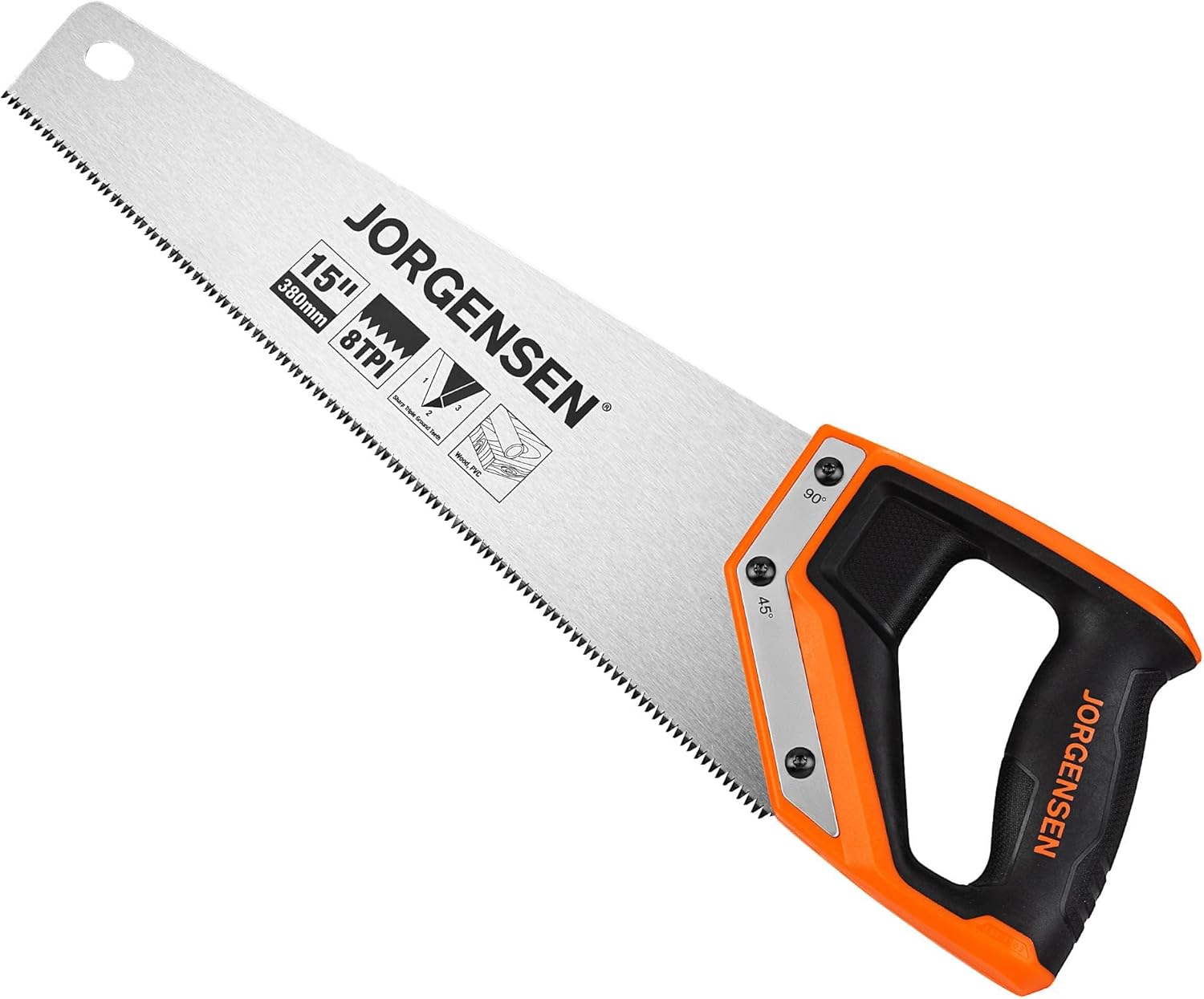
| Blade Length | 15 inches |
|---|---|
| Number of Teeth | 120 |
| Blade Material | High Carbon Steel |
| Handle Material | ABS+TPE |
The Jorgensen 15" Pro Hand Saw is a straightforward, performance-focused manual saw that pairs a 0.85 mm high-carbon steel blade with triple-ground 8 TPI teeth for fast, aggressive cutting. It is typically used for trimming plywood, wall panels, PVC pipe and other workshop or yard tasks where a coarse, fast-cut blade is appropriate. Notable features include the induction-hardened teeth for sustained sharpness, deep tooth gullets for quick chip removal, and an ABS+TPE non-slip ergonomic handle with built-in 45° and 90° guide angles for repeatable cuts. Practical benefits are quick push-and-pull cutting action, a rigid blade that resists wobble, and included blade protection for safe storage. Limitations are that the 8 TPI tooth count favors speed over ultra-smooth finish so additional sanding may be needed on visible plastic or finish-grade work, and the saw is optimized for straight cuts rather than fine detail or joinery. For buyers who prioritize reliable, fast manual cutting power this saw performs well, but it will not replace finer-tooth saws or powered tools for ultra-smooth plastic trimming.
Best for: Buyers who need a durable, fast manual saw for general cutting tasks and prioritize cutting speed and edge life over ultra-smooth finishes.
Less Ideal for: Not a good fit for users who need ultra-fine, finished cuts on delicate plastics or for precision joinery that requires a very high tooth-per-inch blade or a powered saw.
- 8 TPI induction-hardened, triple-ground teeth for fast, durable cutting
- High-carbon steel blade provides blade stability and long-lasting edge
- Non-slip ABS+TPE ergonomic handle with 45° and 90° guide angles for controlled cuts
- Deep tooth gullets and tooth geometry speed chip removal for efficient cutting
- Coarse 8 TPI produces a rougher finish that may need sanding for visible plastic surfaces
- Designed for straight, general-purpose cuts rather than fine-detail or precision trim work
Verdict: Choose this saw if you want a sturdy, fast-cutting hand saw that stays sharp and tackles everyday plastic and wood cutting tasks reliably.
KATA 10" Mini Hacksaw with 3 Bi‑Metal Blades

| Power Source | Hand Operation / Manual |
|---|---|
| Surface Recommendation | Metal, Wood, Plastic |
| Blade Material | Flexible Bi-metal HSS Blades |
| Blade Length | 10 inches |
The KATA 10" mini hacksaw is a small, hand-operated saw built for tight spaces and precise short cuts. Its aluminum frame keeps the tool rigid while the ergonomic soft TPR handle gives a comfortable, non-slip grip for controlled strokes. It ships with one blade installed and two extra 24 TPI bi‑metal HSS blades that are flexible enough for cutting PVC, plastic, thin metal rods, tubing and bolts. Typical use is one‑handed trimming and repair work around the house, in a toolbox, or on plumbing and small DIY projects where a full-size hacksaw is awkward. The compact size makes it easy to store and maneuver in confined areas, and the included spare blades mean you can replace dull blades quickly. Limitations are that it is intended for light-duty tasks only and will struggle with thick hardened steel or large lumber; progress on thicker material is slow and requires firm clamping and steady strokes. If you need a simple, reliable saw for plastic and light metal work, this is a practical, space-saving option.
Best for: Buyers who prioritize a compact, practical tool for occasional home repairs and plumbing or for cutting plastic and thin metal in confined spaces.
Less Ideal for: Professionals or users who regularly cut thick steel, large lumber, or need a high‑speed, heavy‑duty saw for continuous industrial work.
- Compact aluminum frame fits tight spaces and toolbox storage
- Ergonomic soft TPR handle for a comfortable, non-slip grip
- Includes three 24 TPI flexible bi‑metal blades suited to PVC, plastic and thin metal
- Lightweight and easy to control for short, precise cuts
- Not intended for heavy‑duty or thick hardened steel cutting
Verdict: A small, easy-to-control hacksaw that’s ideal for cutting PVC and plastic in tight spots and for practical home repair tasks.
Stanley 20-807 10-Inch Mini Hacksaw

| Power Source | Manual |
|---|---|
| Blade Length | 10 inches |
| Blade Material | Carbon Steel |
| Number of Teeth | 6 |
The Stanley 20-807 mini hacksaw is a straightforward, low-cost tool for small cutting jobs where space and control matter. Its 10-inch carbon steel blade and compact frame let you work inside tight areas that full-size hacksaws cannot reach, and the ergonomic handle with thumb rest improves grip during repetitive cuts. A blade guard stored in the handle adds a simple safety feature when the saw is not in use. It is built for light-duty tasks such as trimming plastic pipe, cutting small metal rods, and other workshop or DIY chores rather than heavy demolition. Because the frame is lightweight and the blade has only six teeth, cuts take more strokes on thicker or harder materials, so expect slower progress on dense plastics. For basic plastic cutting and occasional workshop use this saw gives reliable control and durability from a known brand, but professionals needing high-speed or heavy-capacity cutting will want a more robust option.
Best for: Buyers who need an inexpensive, easy-to-control saw for occasional plastic trimming, small plumbing cuts, and general DIY tasks in tight spaces.
Less Ideal for: Users who cut large-diameter plastic, thick metal, or who require high-speed production cutting should choose a larger hacksaw or power cutting tool instead.
- Compact frame fits and works well in tight or hard-to-reach spaces
- Ergonomic grip with thumb rest for better control during repetitive cuts
- Carbon steel blade suitable for cutting plastic and light metal
- Integrated blade cover in the handle improves safety when storing the saw
- Light-duty design and six-tooth blade make cutting thick or very hard plastics slower
- Not intended for heavy or continuous professional use
Verdict: A compact, budget-friendly mini hacksaw that gives precise control for occasional plastic and light-metal cuts in tight spaces.
Goldblatt Folding Drywall Saw, 5-Inch Jab Saw with Soft-Grip Handle

| Blade Length | 5 inches |
|---|---|
| Blade Material | High Speed Steel |
| Number of Teeth | 40 |
| Cutting Angle | 180 degrees |
| Other Special Features of the Product | Folding blade, ergonomic and soft handle |
The Goldblatt folding drywall saw is a pocketable jab saw built around a 5-inch bi-metal blade with 8 TPI triple-ground teeth and a locking folding handle. It is used by punching the sharpened tip through panels then sawing in push-and-pull strokes, so it works well for small access cuts, electrical or plumbing openings, and trimming sheet materials. Notable features include a lock button that keeps the blade open during use, deep gullets that help clear debris, and an ergonomic anti-slip grip that reduces hand fatigue on repetitive cuts. The bi-metal construction and triple-ground teeth make the blade cut quickly and stay sharp longer than inexpensive stamped blades, though the short blade length limits long straight cuts and requires more strokes on wide panels. The folding design makes it easy to carry and store, but the compact size and 5-inch reach mean this saw complements rather than replaces a full-size handsaw for larger plastic or plywood jobs.
Best for: Buyers who prioritize a dependable, portable cutting tool for occasional panel and plastic work and want a blade that holds its edge during repeated cuts.
Less Ideal for: Users who need long straight cuts across large plastic sheets or continuous cutting sessions should consider a full-size handsaw or powered saw instead.
- Bi-metal 8 TPI triple-ground blade for faster, cleaner cutting and improved edge life
- Sharpened tip suitable for jabbing through panels to start internal cuts
- Locking foldable handle for safe transport and compact storage
- Ergonomic anti-slip soft-grip handle reduces hand fatigue during use
- 5-inch blade length limits reach and makes long straight cuts slower
- Plastic/rubber handle may wear faster than full metal-bodied saws under heavy use
Verdict: A compact, reliable folding jab saw with a durable bi-metal blade and secure lock that is ideal for dependable on-the-go cuts in panels and rigid plastics.
RUITOOL 6" Japanese Double-Edge Ryoba Pull Saw

| Blade Material | Sk5,Steel |
|---|---|
| Blade Length | 6 inches |
| Number of Teeth | 17 |
| Handle Material | Beechwood |
| Blade Thickness | 0.67mm |
The RUITOOL 6" ryoba pull saw is a compact hand saw built around a thin, flexible SK5 high-carbon steel blade with double-edge teeth (14 and 17 TPI) and a beechwood handle. It is designed for pull-cutting, which gives fine control for flush and finish cuts in trim, joinery, and detailed woodworking. The two TPI sides let you choose a finer cut for hardwood or a slightly coarser cut for softer wood, and the hardened three-edge teeth improve sharpness and chip removal so cuts feel smooth and efficient. The thin 0.67mm blade reduces binding and lets you cut close to surfaces. Because it is hand powered and small, it is easy to maneuver in tight spaces and comfortable for delicate tasks, but it is not intended for heavy ripping of thick plastic or repetitive high-volume cutting. For occasional plastic trimming or soft plastic profiles the fine teeth can work, but expect slower progress and more careful technique than using a saw specifically for plastics. The saw’s lightweight, traditional handle and flexible blade make it a good shop or hobby tool for precise manual work, especially where control and a clean edge matter more than speed.
Best for: Buyers who prioritize precise, controllable hand cuts for finish carpentry, trim work, and hobby woodworking and who value proven design and good user feedback.
Less Ideal for: People who need a dedicated, high-speed tool for cutting large volumes of plastic or thick plastic stock should choose a saw or blade specifically designed for plastics.
- Flexible SK5 high-carbon steel blade for close, precise cuts
- Double-edge design (14 and 17 TPI) for versatility between finer and coarser cuts
- Hardened three-edge teeth for improved sharpness and smoother chip removal
- Slim blade profile (0.67mm) minimizes binding for flush and finish work
- Comfortable beechwood handle suited to controlled pull strokes
- Small 6" blade limits efficiency on thick or large-dimension materials
- Designed for wood so it cuts plastic more slowly and may require careful technique
Verdict: Choose this compact ryoba saw when you need a highly controllable, fine-cutting hand saw for precise finish work where a clean edge matters most.
TOOLAN 8-in-1 Multi-Blade Hand Saw with Quick-Change Handle

| Power Source | Manual |
|---|---|
| Blade Material | Alloy Steel |
| Handle Material | Thermoplastic Elastomers |
| Included Components | 1 pcs handle, 8 pcs blade |
| Blade Length | 6 inches |
This TOOLAN 8-in-1 hand saw is a compact, manual cutting kit that uses a single ergonomic handle and eight interchangeable reciprocating-style blades to tackle a variety of materials including plastic. You insert the blade into the self-locking clamp and the quick-change mechanism secures it for plunge or push-pull cutting. The blade set includes thin, fine-tooth blades suited for precise plastic and PVC cuts and thicker blades for plywood, drywall, and metal. The thermoplastic elastomer handle has an anti-slip texture that reduces hand fatigue during repeated short cuts, and the compact design fits a toolbox easily. Because it is fully manual there is no motor vibration or heat that can melt plastic, which helps on delicate plastic trimming, but longer straight cuts require steady hand control and more physical effort than a powered reciprocating saw. Replacement blades use standard hole patterns so you can find spares locally. For cautious buyers who value control and a simple, low-risk tool, this kit covers most small plastic cutting jobs well.
Best for: Buyers who want a low-risk, easy-to-control hand cutting tool for small plastic and general DIY jobs and prefer a simple manual solution over powered saws.
Less Ideal for: Professionals or users who need to cut large volumes of plastic, thick sheet stock, or perform lengthy straight cuts should choose a powered reciprocating or circular saw instead.
- Includes eight different blades for cutting plastic, PVC, wood, drywall and metal
- Quick-change, self-locking clamp makes blade swaps fast and secure
- Ergonomic non-slip TPR handle reduces hand fatigue during repeated manual cuts
- Uses standard reciprocating blade hole patterns so replacements are widely available
- Manual operation requires more physical effort and steady control for long straight cuts
- Not suitable for heavy industrial or continuous cutting tasks that need a power saw
Verdict: A compact, low-risk manual saw kit that gives precise, controllable plastic cuts through an ergonomic handle and a set of fine blades.
Choosing the Right Hand Saw for Cutting Plastic: Key Factors to Consider
Tooth Geometry and Pitch
Tooth shape and spacing determine how the saw removes material from plastic. Finer teeth with a consistent gulley tend to slice plastic cleanly rather than tearing or melting it. A higher tooth count per inch produces smoother edges on thin sheets and brittle plastics, while a slightly more open pitch can work better for thicker, softer plastics to prevent clogging.
Understanding tooth geometry helps you match the saw to the plastic type. For brittle acrylic, choose a fine, rip-style or crosscut-style tooth that shears cleanly. For PVC pipe or softer polymers, a coarser profile with larger gullets reduces heat and pack-up. The right pitch minimizes finishing sanding and preserves accuracy at cut lines.
Blade Stiffness and Flatness
A blade that flexes or twists will wander when you start a cut, leading to uneven edges and extra sanding. Stiff blades maintain a straight path, especially on long cuts and when cutting long-run sheet or pipe. Blade thickness, tempering, and any back-reinforcement all contribute to how well the saw resists bending under light side pressure.
Flatness matters for flush cuts and for keeping a marked line visible as you cut. If you plan to cut long stretches of plastic or need perfectly straight edges for bonding, prioritize blades known for their rigidity. A slightly more rigid blade can slow hand speed a little but will improve accuracy.
Handle Ergonomics and Control
Cutting plastic often requires precise starts and controlled strokes, so handle shape and grip material influence results more than raw blade aggressiveness. Handles that fit your hand and provide a secure, non-slip grip let you apply steady pressure and maintain the correct blade angle without fatigue.
Consider handle length and finger clearance when you need to keep the saw aligned to tight marks or work in confined spaces. A well-designed handle reduces chatter and improves control for clean cuts, especially when making detailed trimming or curved cuts.
Resistance to Heat Buildup and Gumming
Plastic can melt if the cutting edge generates too much heat, which creates sticky gumming on teeth and a rough, melted finish. Materials and coatings that dissipate heat or reduce friction help avoid this. Tooth configurations that eject chips efficiently also reduce heat concentration along the cutting edge.
For frequent plastic work or thicker sections, prioritize blades with anti-gumming finishes or tooth profiles designed for chip clearance. That reduces downtime for cleaning teeth and preserves cutting performance across multiple cuts.
Sharpening, Blade Life, and Maintenance
How easy it is to sharpen or replace a blade affects long-term usability. Hardened teeth retain an edge longer but can be harder to sharpen by hand. Blades designed for simple replacement let you swap in a fresh blade quickly when precision matters.
Think about how much maintenance you are willing to do. If you cut plastics occasionally, a moderately durable blade that is easy to replace might be best. For frequent use, a blade that holds its geometry and accepts professional sharpening will save time and deliver consistent cuts.
Matching Saw Type to the Plastic You Cut
Different plastics behave differently under a hand saw. Rigid sheet materials like acrylic and polycarbonate tend to crack or chip if the teeth are too coarse, while flexible or soft plastics compress and smear when teeth generate heat. Match the saw tooth pattern and blade stiffness to the material to prevent cracking or melting.
For thin rigid sheets, prioritize fine-toothed blades and light, steady strokes. For thicker or softer plastics, choose a blade with larger gullets and a more aggressive cut that clears chips quickly. Test on a scrap piece if you are unsure, and adjust stroke speed and pressure to reduce friction.
- Fine teeth for thin, brittle plastics
- Coarser pitch for thick, soft plastics
- Stiffer blades for long straight cuts
- Softer grips for controlling short, detailed cuts
Techniques to Minimize Melting and Chipping
Control stroke speed and avoid forcing the saw. Fast, aggressive sawing generates heat and can melt the plastic along the kerf. Use steady, moderate strokes that let the teeth remove material without overheating the edge.
Use a backing board when cutting sheet materials to support the material at the cut line and reduce chipping. For pipes, clamp the work securely and roll the saw smoothly around the circumference rather than hacking at one spot.
- Keep strokes steady and moderate
- Back support sheet plastic for edge support
- Clamping reduces vibration and wandering
- Pause to clear chips and inspect the kerf
Preparing and Marking Plastic for Accurate Cuts
Mark cuts with a non-permanent fine marker or a scoring tool for brittle plastics. Scoring a shallow line first on acrylic or PVC sheet gives the saw a guided path and reduces wandering. For curved cuts, use a template and make multiple shallow passes rather than a single deep cut.
Clean the material and remove dust or residue before cutting. Residue can clog the teeth and affect the cut quality. For precise work, measure twice and clamp securely to keep the marked line visible during sawing.
- Use a shallow score for brittle sheets
- Clamp and support for consistent kerf depth
- Make multiple shallow passes for curves
- Keep the marked line clean and visible
Maintaining Your Hand Saw After Plastic Cutting
Plastic residue and softened chips can stick to teeth and reduce cutting efficiency. Clean the blade after use with a brush and a mild solvent suitable for the blade finish. Inspect teeth for burrs and file or replace when the edge dulls noticeably.
Store saws in a dry place to prevent corrosion and protect the cutting edge from damage. For replaceable-blade saws, keep spare blades rated for plastic on hand so you can swap and continue working with minimal interruption.
- Brush and solvent-clean teeth to remove gumming
- Check and file burrs or replace dull blades
- Store blades flat to preserve straightness
- Keep spare blades for uninterrupted work
Working Safely with Hand Saws on Plastics
Wear eye protection to guard against chips, which can be sharp and unpredictable with brittle plastics. Gloves can help with grip but avoid bulky gloves that reduce control. Secure the workpiece with clamps to keep hands away from the blade path.
Keep hands and body clear of the blade line and stop sawing if the blade binds. Use controlled pressure and let the saw do the cutting to avoid slips or sudden releases when the cut breaks free.
- Wear eye protection and use secure clamping
- Avoid excessive pressure that causes binding
- Use proper posture and a steady work surface
- Keep blades out of children reach
How We Chose the Best Hand Saw for Cutting Plastic
We shortlisted hand saws that are well suited to cutting a variety of plastics and excluded general-purpose carpentry saws that perform poorly on non-wood materials. Selection focused on practical dimensions that affect real-world results: blade tooth count and geometry for reduced melting and clean chips, blade stiffness and flatness to prevent wandering, handle ergonomics for sustained control during fine trimming, and blade material/coating that resists heat buildup and gumming. We also considered ease of blade replacement or sharpening and overall durability for repeated use on plastic substrates. We excluded any tools designed only for metal or masonry and tools that require specialist training. The final list reflects tools that balance precise cutting, user comfort, and low maintenance for DIY and light professional plastic-cutting tasks.
FAQ
What tooth count is best for cutting acrylic sheet?
A higher tooth count is usually better for acrylic. Fine teeth produce a cleaner shear and reduce the risk of chipping. Use gentle strokes and consider scoring first for especially thin sheets.
How can I prevent PVC from melting when sawing?
Use a blade with good chip clearance and avoid fast, forceful strokes that create heat. Pause occasionally to let the blade cool and clear chips to prevent gumming and melting.
Is a back-reinforced saw necessary for long straight cuts?
Back-reinforced blades add stiffness that helps with long straight cuts, keeping the blade from wandering. They can be helpful when you need highly accurate, straight edges on sheet materials.
Can I use a wood saw on plastic?
Some wood saws can work on plastic, but many are optimized for wood tooth geometry and pitch. They may chip brittle plastics or generate heat on soft plastics. Choose a saw with an appropriate tooth pattern or use a dedicated plastic-cutting blade.
How often should I replace or sharpen a blade used on plastic?
It depends on frequency and material. Occasional DIY use might let a blade last a long time, while frequent cutting of abrasive plastics requires more frequent sharpening or replacement. Inspect the teeth for dulling and loss of clean-cut performance.
Final Verdict
Pick a hand saw for cutting plastic by prioritizing tooth geometry and blade stiffness first, then consider handle ergonomics and heat-resistance features. Expect tradeoffs: finer teeth give cleaner edges but may slow cutting on thick or soft plastics, while coarser pitches speed material removal but need more finishing. Focus on the plastic types you cut most often and choose a saw that matches those behavior patterns for consistent, low-melt results.
