

Note: This article contains affiliate links. If you click on these links and make a purchase, I may earn a small commission at no extra cost to you. This helps support my research and content. Read my full affiliate disclosure here.
A good hand trowel is one of the most-used tools in a gardener's kit. Whether you are transplanting seedlings in pots, working in narrow flower beds, or loosening compacted soil around roots, the right trowel saves effort and reduces wrist strain. This guide gathers seven top hand trowels that stand out for durability, comfort, and real-world performance. Each shortlisted trowel was evaluated for the way it handles in a garden setting and how long it holds up under frequent use. We focus on build quality, ergonomics, and usefulness across common tasks so you can match a tool to how you garden. Read on for the practical factors we used to choose these picks and guidance to help you pick the best option for your plots and pots.
Top Picks at a Glance
| Best Overall The best all-around choice for most situations | Fiskars Ergo Garden Trowel (Cast-Aluminum Head, Ergonomic Grip) |  |
| Best Quality Built to a higher standard if you want something more solid | DeWit Forged Hand Trowel (Short Handle) |  |
| Best Value The sweet spot between price and what you get | GARDEN WEASEL Oversized Potting Scoop |  |
| Best Budget The cheapest option that still gets the job done reliably | HortiHub Garden Hand Trowel with Ergonomic Wood Handle |  |
| Most Popular A crowd favorite that many people choose with confidence | Fiskars FiberComp Hand Trowel |  |
Fiskars Ergo Garden Trowel (Cast-Aluminum Head, Ergonomic Grip)

| Material Type | Aluminum |
|---|---|
| Grip Type | Ergonomic |
| Included Components | Trowel |
| Item Type Name | Ergo Garden Hand Trowel |
| Manufacturer | Fiskars Garden |
The Fiskars Ergo Garden Trowel is a straightforward, heavy-duty hand tool built for everyday gardening use. Its cast-aluminum head provides extra digging power and resists rust, so it cuts through compact or slightly rocky soil more easily than thinner steel trowels. The polished blade holds an edge through routine use, making tasks like planting, transplanting, and loosening soil faster. The molded ergonomic grip reduces hand fatigue during longer sessions and gives good control when scooping soil or working around roots. A convenient hang hole keeps the trowel accessible in a shed or on a pegboard. Limitations are few but notable: the all-aluminum construction is strong and corrosion resistant but less forgiving than tempered steel if used as a pry bar, so avoid levering heavy roots or rocks. For general garden beds, pots, and everyday planting chores this trowel is reliable, comfortable to hold, and designed to last.
Best for: Gardeners who want a dependable, comfortable all-purpose trowel for beds, containers, and routine planting tasks and value durability and ease of use.
Less Ideal for: People who frequently need a tool for heavy prying, splitting roots, or digging large stones should consider a heavier-duty digging tool or a tempered-steel trowel instead.
- Cast-aluminum head offers strong digging power and rust resistance
- Ergonomic non-slip grip reduces hand fatigue and improves control
- Polished blade holds up to regular use for planting and transplanting
- Hang hole for easy, space-saving storage
- Backed by a full lifetime warranty (manufacturer-stated)
- Not intended for heavy prying or levering large roots or rocks
- All-aluminum construction can bend under extreme leverage compared with tempered steel alternatives
Verdict: A comfortable, rust-resistant trowel built for dependable everyday digging and planting in garden beds and containers.
DeWit Forged Hand Trowel (Short Handle)

| Material Type | Boron Steel, Ash Hardwood |
|---|---|
| Blade Material | Tempered Steel |
| Handle Material | Ash Wood |
| Unit Count | 1 Count |
| Manufacturer Warranty Description | Guaranteed a lifetime. |
The DeWit Forged Hand Trowel is a performance-focused garden tool built for heavy use. Its forged boron steel blade is fully sharpened along the length, which makes slicing through compacted soil, cutting roots, and precise planting noticeably easier than with stamped blades. The short European ash hardwood handle offers a firm, comfortable grip and some natural flex to resist breakage during tough jobs. At about 13 inches overall the trowel balances digging capacity and maneuverability so you can work in beds, containers, and tighter spaces without feeling cumbersome. Notable features include a tempered steel construction, FSC-sourced ash handle, and a limited lifetime guarantee that reflects durable craftsmanship. The main limitations are its short handle, which gives less leverage for deep digging compared with long-handled tools, and the relatively narrow head that can move less soil per scoop than wider garden spades. This trowel is best when you need a long-lasting, sharp hand tool for frequent planting, transplanting, and root work rather than large-scale soil moving.
Best for: Gardeners who prioritize a durable, high-performance hand tool for frequent planting, transplanting, and root work and value long-term reliability over budget options.
Less Ideal for: People who need maximum leverage for deep post-hole style digging or those who mostly move large volumes of soil should choose a long-handled spade instead.
- Forged boron steel blade for strength and abrasion resistance
- Full-length sharpened edge for easier cutting and precise planting
- European ash hardwood handle provides comfortable grip and resilience
- Compact overall length balances control and digging capacity
- Backed by a limited lifetime guarantee indicating durable construction
- Short handle limits leverage for deep digging
- Narrow head moves less soil per scoop compared with larger spades
Verdict: If you want a professional-grade, long-lasting hand trowel that cuts through soil and roots with precision, this forged DeWit trowel is the top choice.
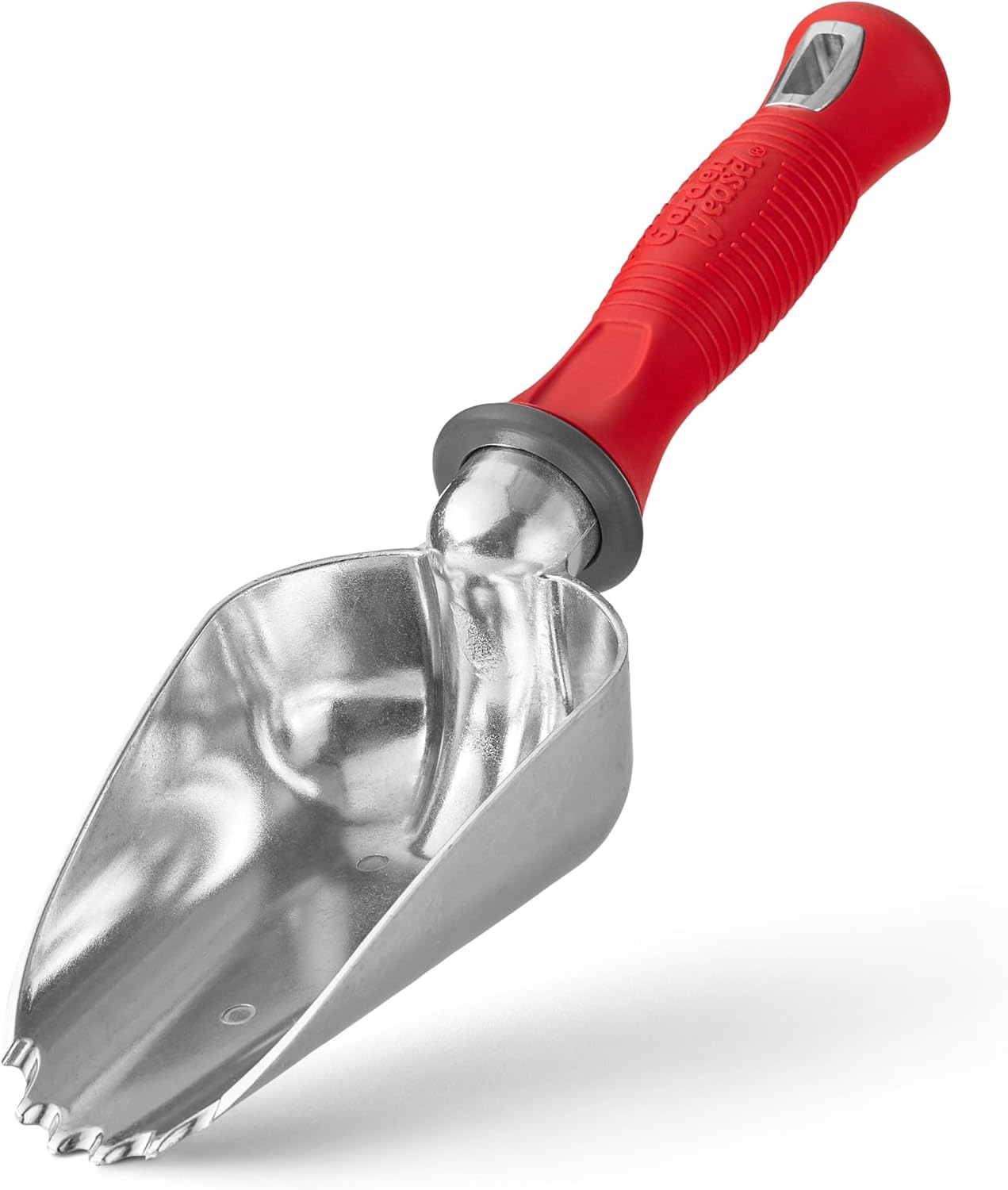
GARDEN WEASEL Oversized Potting Scoop
| Material Type | Aluminum |
|---|---|
| Blade Material | AluminIron |
| Handle Material | Thermoplastic Rubber (TPR) |
| Grip Type | Textured |
The Garden Weasel oversized potting scoop is a one-piece hand tool designed to dig, cut and scoop soil, compost, and fertilizer with minimal spillage. Its deep, 1.25-inch scoop and tall sides let you transfer loose material from bags or containers directly into pots and planting holes, while the serrated tip breaks up clumps and slices through small roots so you do not need a separate knife. Construction uses a proprietary Aluminiron alloy for a lightweight yet rust-resistant blade and a full-length tang for strength, and the 6-inch textured non-slip rubberized grip reduces hand fatigue during repetitive tasks. The tool hangs easily when not in use and rinses clean after a day in the garden. It is not intended for prying large rocks or heavy-duty digging in compacted clay where a full-size spade would be better, and very large roots will blunt the serration over time, so occasional sharpening or replacement may be needed for intensive root cutting.
Best for: Buyers who want a single, durable hand tool that speeds routine potting, planting, and bag-to-bed transfers while minimizing mess and wrist strain.
Less Ideal for: Gardeners who need a heavy digging tool for rocky or compacted soils or who frequently tackle large roots should choose a full-size spade or root saw instead.
- Deep scoop with tall sides reduces spillage when transferring soil and amendments
- Serrated tip cuts roots and breaks up clumps so you can use one tool for multiple tasks
- One-piece Aluminiron construction offers lightweight strength and corrosion resistance
- Ergonomic textured TPR grip reduces hand fatigue during extended use
- Built-in eyelet for hanging makes storage simple
- Not suitable for heavy prying or breaking up very compacted ground
- Serration can dull if used persistently on large roots
Verdict: If you want a durable, multiuse hand scoop that reduces spillage and replaces several small tools during potting and planting, this is a top practical choice.
HortiHub Garden Hand Trowel with Ergonomic Wood Handle

| Handle Material | Wood |
|---|---|
| Blade Material | Iron |
| Grip Type | Ergonomic |
| Unit Count | 1 Count |
The HortiHub garden hand trowel is a simple, no-frills tool designed for everyday planting and potting tasks. Its iron blade handles light digging, soil loosening, and transplanting seedlings in containers, raised beds, and balcony planters, while the compact head gives good control for precise work around small plants. The wooden ergonomic handle is comfortable for short sessions and keeps the overall weight low so it is easy to carry while moving between pots. Because the construction is straightforward, it performs well for routine garden chores without unnecessary features. Expect the blade to require occasional cleaning and drying to avoid surface rust since it is iron rather than stainless steel, and the wooden handle will need basic care to stay in good condition over time. For gardeners who want a durable, budget-friendly trowel for everyday container and small-bed work, this is a practical pick.
Best for: Gardeners on a tight budget who need a reliable everyday trowel for container gardening, balcony planters, and small raised beds and prefer a simple, functional tool over premium materials.
Less Ideal for: Those who frequently work in heavy clay or rocky soil or who want a stainless steel, maintenance-free tool should consider a heavier-duty or rust-resistant alternative.
- Sturdy iron blade suitable for regular digging and transplanting
- Ergonomic wooden handle offers a comfortable grip for short tasks
- Compact head provides precise control in containers and tight spaces
- Lightweight design is easy to maneuver between pots and beds
- Iron blade can surface-rust if not cleaned and dried after use
- Wooden handle needs occasional maintenance to prevent wear
Verdict: A practical, low-cost trowel that delivers precise control for container and small-space gardening without unnecessary extras.
Fiskars FiberComp Hand Trowel

| Material Type | Plastic |
|---|---|
| Handle Material | Composite |
| Blade Material | Aluminum |
| Grip Type | Ergonomic |
| Item Type Name | Hand Trowel |
The Fiskars FiberComp Hand Trowel is a compact digging tool built for everyday garden work. It pairs a polished, oversized aluminum blade with a fiber-reinforced composite handle so the trowel feels light in use while resisting rust and bending. Typical uses include planting, transplanting, digging holes in compacted turf, and turning soil in beds or containers. The ergonomic non-slip grip improves control and reduces hand fatigue during longer sessions, and the hang hole makes storage simple. Because the head is generous in size and sharpened, it cuts through turf and roots more effectively than narrower hobby trowels. Limitations are few: the blade is aluminum rather than thicker forged steel, so extremely heavy prying in rocky ground will feel less robust than a full-steel professional tool, and the composite handle prioritizes lightness over the feel of traditional wooden or all-metal handles. For most home gardeners this trowel balances power, rust resistance, and ease of use in a reliable, low-maintenance package.
Best for: Gardeners who want a dependable, low-maintenance trowel for regular planting and bed work and who value lightweight tools that resist rust and reduce hand fatigue.
Less Ideal for: Professional landscapers or users who need a heavy-duty pry tool for rocky or compacted ground should consider a forged-steel or full-metal trowel instead.
- Oversized polished aluminum blade increases digging power and resists rust
- FiberComp composite construction keeps the tool very lightweight while remaining strong
- Ergonomic non-slip grip reduces hand fatigue and improves control
- Generous blade size is useful for planting, transplanting, and cutting through turf
- Hang hole for easy storage
- Aluminum blade is less suited to heavy prying or levering in rocky soil compared with forged-steel trowels
- Composite handle gives a lighter feel that some users may find less substantial than traditional wooden or metal handles
Verdict: A lightweight, rust-resistant hand trowel that gives home gardeners extra digging power and comfortable control for everyday planting and bed work.
Choosing the Right Hand Trowel: Key Factors to Consider
Blade Material
The blade material determines how well a hand trowel cuts through roots and how resistant it is to bending or breaking. Hardened steel blades keep their edge and resist wear when you dig in compacted or gritty soil, while softer steels or stamped metal may deform over time. Stainless steel blades resist rust but vary in strength depending on thickness and heat treatment.
Think about the type of soil you work in and how often you use the trowel. For heavy clay or gravelly ground, a stronger, thicker blade matters more. For mostly potting mix and light bed work, a thinner stainless blade may be sufficient and easier to maneuver.
Corrosion Resistance
A hand trowel will get wet and will contact moist soil frequently, so corrosion resistance affects longevity. Stainless steel resists rust better than plain carbon steel, but plated finishes and quality coatings can also protect a carbon blade if applied correctly. Pay attention to how seams between blade and handle are finished, since exposed metal there can start to corrode first.
Higher corrosion resistance reduces maintenance and keeps the tool looking and performing well. If you often work in a greenhouse or wet climate, prioritize finishes and materials that stand up to repeated exposure to water and fertilizer salts.
Handle Ergonomics
Comfortable handles reduce fatigue and the risk of blisters during repetitive tasks like planting dozens of seedlings. Handle shape, diameter, and the presence of a soft grip or palm swell influence how secure and comfortable the tool feels. Ergonomic handles that fit your hand size help maintain control when digging or levering roots.
Also consider how the handle meets the tang or shaft. A smooth transition without gaps prevents dirt accumulation and reduces pressure points. For gardeners with joint pain, look for handles that distribute force across the palm rather than concentrating it on the fingers.
Blade Shape and Size
Blade shape and width determine the trowel's ideal tasks. Narrow, pointed blades excel at digging deep, precise holes for bulbs and transplants, while wider, scoop-shaped blades move more soil quickly and are better for potting. A pronounced tip can pry roots while a flat leading edge helps slice through sod and roots.
Match blade geometry to your common tasks. If you rotate between container gardening and border work, a medium-width blade with a defined point provides the best compromise between digging depth and soil moving capacity.
Weight and Balance
Weight influences how easy the trowel is to swing and control. Heavy tools can be sturdy but tire your wrist faster during repetitive motions. Lighter trowels reduce fatigue but may transmit more shock when hitting rocks. Balance-how the tool's center of mass sits between blade and handle-affects precision when planting small seedlings or working in tight spaces.
Consider your typical session length and any physical limitations. A well-balanced midweight trowel often offers the best trade-off between control and endurance for general garden use.
Construction and Joint Strength
How the blade attaches to the handle is where many failures occur. A full-tang or welded joint tends to be stronger than a simple riveted socket, especially under lateral stress when levering roots. Check for secure fastenings, solid welds, or reinforced sockets in construction descriptions.
Sturdy construction reduces the chance of loosening or breakage during common garden tasks. For frequent, heavy use, favor designs that minimize moving parts and weak joints.
Best Hand Trowel Uses by Garden Task
Different trowels suit different garden chores. Narrow pointed blades are ideal for planting bulbs and seedlings where precision matters. Scoop-shaped blades speed up potting and repotting because they move more soil per pass.
For edging and cutting shallow roots, a blade with a sharp, flat leading edge works better than a rounded scoop. For breaking up compacted soil or prying stubborn roots, a stiffer blade and strong joint are most helpful.
- Precision planting: narrow, pointed blade
- Potting and scooping: wide, deep scoop
- Root work and prying: thicker, stiff blade with solid joint
- Edging and slicing: flat leading edge
Care and Maintenance to Extend Tool Life
Regular cleaning after use prevents soil and moisture from accelerating corrosion. Wipe blades dry, remove sticky sap or dirt with a brush, and occasionally rub a light layer of oil to protect metal surfaces.
Sharpen dull blades with a file to improve penetration and reduce effort. Tighten or inspect joints and handles seasonally to find early signs of loosening. Store hand trowels in a dry place or hang them to avoid prolonged contact with moist soil.
- Clean and dry after each use
- Oil metal surfaces occasionally
- Sharpen edges when dull
- Inspect handle joints for looseness
Ergonomic Grip Choices for Long Sessions
Grip materials range from wood and hard plastic to rubberized, cushioned handles. Wood feels warm and natural and can be shaped to fit a hand, but it may require occasional oiling. Soft grips reduce slippage and cushion pressure points during extended planting sessions.
Handle diameter and palm swell both influence comfort. Thicker handles distribute pressure but can be harder to clutch for small hands. If you spend long periods planting or potting, prioritize grip comfort and a shape that matches your hand size.
- Wood: traditional feel, needs care
- Rubberized: slip resistance and cushioning
- Plastic: durable, easy to clean
- Consider hand size when choosing diameter
Matching a Trowel to Soil Type
Soil composition affects how a trowel performs. In sandy loam and potting mixes, almost any well-made trowel will work because the media is loose. In heavy clay or rocky soils, you need a thicker, harder blade and a solid joint to resist bending and chipping.
If you often encounter stones, choose a trowel with a tough edge and expect to do a bit of sharpening occasionally. For raised beds filled with amended soil, a lighter trowel optimizes comfort without sacrificing function.
- Loose mixes: lighter blades are fine
- Clay and gravel: choose thicker, hardened blade
- Rocky conditions: expect more maintenance
Storing and Transporting Hand Trowels
Protecting the blade and grip during storage keeps a trowel ready for the season. Hang trowels indoors when possible, and consider blade covers when transporting them in a tote to prevent damage and accidental contact.
If you keep tools in a shed, use pegboards or wall hooks to keep them off the floor and away from dampness. For mobile gardeners who work in multiple beds or allotments, a compact trowel with a protective sheath is useful for safe transport.
- Hang tools indoors when possible
- Use blade covers for transport
- Keep tools off damp floors
How We Chose the Best Hand Trowel
We prioritized criteria that matter to gardeners who use a hand trowel for routine planting, potting, and small digging tasks. Key evaluation points included material durability, how the blade penetrates and holds soil, handle ergonomics for comfort during extended use, corrosion resistance for wet conditions, and the tool's balance and weight for precision work. We also considered blade shape and width because those determine how well the trowel digs narrow holes, scoops soil, or pries roots. We excluded tools that are clearly meant for heavy-duty digging or are multi-tool gimmicks that sacrifice core trowel function. We favored simple, serviceable designs that perform reliably in containers, raised beds, and landscape borders. Products that failed to show sufficient corrosion protection, had thin or brittle blades, or lacked comfortable grips were removed from contention. The final list reflects a balance of longevity, in-garden handling, and task-specific usefulness.
FAQ
What is the difference between a pointed trowel and a scoop trowel?
A pointed trowel has a narrow tip for digging deep, precise holes and prying roots, while a scoop trowel has a wider, bowl-like shape for moving larger volumes of soil. Choose a pointed blade for transplanting and a scoop for potting.
How do I prevent my trowel from rusting?
Wipe the blade dry after each use and remove soil that can hold moisture against the metal. Apply a light coat of oil periodically and store the trowel in a dry place. Stainless steel blades resist rust more than untreated carbon steel.
Can I use a hand trowel in rocky soil?
You can, but expect more wear and the need for occasional sharpening. For rocky or compacted ground, use a trowel with a thicker, stronger blade and robust construction to resist bending and chipping.
What handle style is best for gardeners with hand pain?
Look for trowels with cushioned, ergonomically shaped handles that distribute force across the palm. Thicker grips with a palm swell reduce strain, and lighter tools cut down on repetitive stress during long sessions.
How often should I sharpen my hand trowel?
Sharpening frequency depends on use and soil type. For light potting use, once or twice a season may be enough. In gritty or rocky soils, sharpen more often when you notice the blade no longer slices easily through roots or compacted soil.
Final Verdict
Choose a hand trowel by matching blade shape and material to your common garden tasks and soil conditions. Prioritize a strong, corrosion-resistant blade and a handle that fits your hand for comfort during long sessions. Expect tradeoffs between weight and durability: heavier, thicker blades last longer in tough soil but tire your wrist faster, while lighter trowels are easier to use in pots and raised beds. Focus on the few criteria that matter most to you-blade strength for rough soils, narrow points for precision planting, or soft grips for comfort-and you will end up with a trowel that makes everyday gardening easier and more enjoyable.
