

Note: This article contains affiliate links. If you click on these links and make a purchase, I may earn a small commission at no extra cost to you. This helps support my research and content. Read my full affiliate disclosure here.
If you manage a large yard, heavy thatch, or frequent leaf fall you need a sweeper that can collect big volumes without constant dumping or repairs. The right heavy duty lawn sweeper saves hours of manual raking, reduces strain on your back and shoulders, and keeps turf healthier by removing debris quickly. This guide covers the top shortlisted heavy duty lawn sweepers that hold up in tougher conditions. We evaluated capacity, durability, tow and push handling, and ease of maintenance to narrow the field. Read on to see how those criteria affect real-world performance and which features matter most for your lawn size and debris load.
Top Picks at a Glance
| Best Overall The best all-around choice for most situations | Brinly 42" Tow-Behind Lawn Sweeper with 20 cu ft Hamper |  |
| Best Quality Built to a higher standard if you want something more solid | Agri-Fab 50 in Heavy Duty Tow-Behind Lawn Sweeper with 26 cu ft Hopper |  |
| Best Value The sweet spot between price and what you get | MAXSA 26" Push Lawn Sweeper with 7 cu ft Hopper |  |
| Most Popular A crowd favorite that many people choose with confidence | VEVOR 26-inch Push Lawn Sweeper with 7 cu. ft. Hopper |  |
| Best Seller A high-volume bestseller chosen again and again | Dapper Supply 26-Inch Push Lawn Sweeper with 7 cu. ft. Hopper | 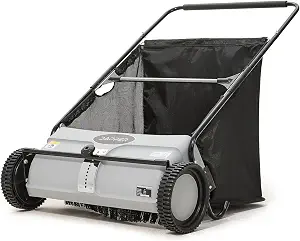 |
Brinly 42" Tow-Behind Lawn Sweeper with 20 cu ft Hamper

| Operation Mode | Manual |
|---|---|
| Cutting width | 42 inches |
| Material Type | Metal |
| Maximum Adjustable Cutting Height | 10 centimeters |
| Minimum Adjustable Cutting Height | 5 centimeters |
The Brinly 42" tow-behind lawn sweeper is a heavy-duty accessory that mounts behind a lawn tractor to collect leaves, pine needles, grass clippings and light debris without raking. It uses six high-velocity brushes driven at a 5:1 gear ratio to lift material into a 20 cu ft fabric hamper that empties via a pull-rope and T-handle from the tractor seat. Height adjusts with a twist-lock system so you can dial brush-to-ground contact for different surfaces and debris depths, and the high brush-to-wheel ratio reduces skipping during turns for more consistent pickup. The swept width and large hamper cut the number of passes and emptying trips on medium to large lawns, and the collapsible hamper braces help save storage space when not in use. Limitations to note are that it is a manual, tow-behind unit requiring a tractor for operation and it is best for loose debris rather than heavy wet material or large sticks.
Best for: Homeowners with a compact tractor who want a robust, low-effort way to sweep large yards and reduce time spent raking and bagging seasonal debris.
Less Ideal for: People with small yards who do not own a tow vehicle or who primarily need a tool for heavy woody debris should consider other options.
- Large 20 cu ft fabric hamper reduces frequency of emptying on bigger jobs
- Six high-velocity brushes with 5:1 gear ratio for consistent pickup, even during turns
- Twist-lock height adjustment lets you set brush contact for different surfaces
- Collapsible hamper braces allow upright storage to save garage space
- Requires a lawn tractor or tow vehicle so not suitable for walk-behind-only users
- Not intended for heavy wet debris or large branches which can clog the brushes
Verdict: If you have a tractor and large lawns to maintain, this 42" Brinly sweeper dramatically cuts raking time with a big-capacity hamper and powerful brushes.
Agri-Fab 50 in Heavy Duty Tow-Behind Lawn Sweeper with 26 cu ft Hopper

| Working width | 50 in |
|---|---|
| Overall width | 58 in |
| Hopper capacity | 26 cu ft |
| Brushes | Four 10 in diameter brushes |
The Agri-Fab 50 in Heavy Duty Tow-Behind Lawn Sweeper is built for large yards and frequent cleanups where speed and capacity matter. It tows behind a tractor or riding mower and covers a wide 50 inch swath so you complete passes faster than smaller sweepers. The 26 cu ft flow-thru hopper reduces stops to dump and lets the bag fill more completely, while the solid brush shaft and four 10 inch brushes with extra bristles maintain consistent ground contact for reliable pickup even when turning. A single-lever toolless infinite brush height adjustment makes it quick to dial in brush position for different turf conditions without tools. Practical benefits include fewer passes, less stopping to empty, and steady performance across varied lawns. The unit is purpose-built for heavy use, but its size and tow requirement mean it is best for owners with tractors or larger riding mowers and substantial lawn area to maintain.
Best for: Owners of lawn tractors or riding mowers who need a high-capacity, dependable sweeper to quickly clear leaves and clippings over large yards and maintain strong pickup performance during frequent use.
Less Ideal for: People with small yards, only walk-behind mowers, or those who need a compact, storage-friendly solution should consider smaller or non-tow alternatives.
- Wide 50 in working width covers large areas quickly
- 26 cu ft flow-thru hopper reduces dumping frequency
- Solid brush shaft and four 10 in brushes deliver consistent debris pickup, even while turning
- Single-lever toolless infinite brush height adjustment for fast on-the-go tuning
- Universal tow-behind design fits common lawn tractors and riding mowers
- Large overall footprint and tow requirement make it unsuitable for small yards
- Brushed collection depends on ground contact so very uneven terrain may reduce efficiency
Verdict: If you run a lawn tractor and need fast, high-capacity debris pickup for large lawns, this heavy-duty sweeper delivers consistent, efficient results.
MAXSA 26" Push Lawn Sweeper with 7 cu ft Hopper

| Power Source | manual |
|---|---|
| Number of Positions | 5 |
| Cutting width | 26 |
| Item Weight | 37.9 pounds |
This MAXSA push lawn sweeper is built for routine, heavy-duty yard cleanup. The 26-inch brush path and four high-density brushes pick up leaves, grass clippings, and pine needles efficiently so you can cover large areas quickly. The oversized 7 cu ft breathable mesh hopper holds a lot of debris between stops and releases via a quick-release for relatively tidy emptying. You get five positions of tool-free height adjustment to tune brush contact for lawns, sidewalks, driveways or artificial turf, and the steel frame plus rubber wheels aim for stable, rust-resistant performance on uneven ground. Assembly and storage are straightforward thanks to one-click folding and an ergonomic padded handle that makes pushing easier for longer sessions. Expect the unit to be manual-push work rather than a powered substitute, and the weight and size mean it is better handled by users comfortable moving heavier garden tools and storing something substantial in the shed.
Best for: Buyers who want a durable, no-fuel solution to speed leaf and debris cleanup on medium to large lawns and who prioritize efficiency and fewer hopper empties over powered convenience.
Less Ideal for: Those who need zero-effort pickup for very large estates, steep slopes, or who prefer motorized equipment and compact, ultra-light tools for tight storage spaces.
- Large 26-inch brush path clears wide swaths for faster coverage
- 7 cu ft breathable mesh hopper reduces emptying frequency
- Tool-free 5-position height adjustment adapts to different surfaces
- Heavy-duty steel frame and rubber wheels for durable, stable operation
- Manual push operation requires physical effort on very large or steep properties
- Relatively heavy and bulky for tight storage or for users who need very lightweight equipment
Verdict: A robust manual sweeper that speeds up yard cleanup for medium to large lawns by combining a wide 26" sweep and a large 7 cu ft hopper.
VEVOR 26-inch Push Lawn Sweeper with 7 cu. ft. Hopper

| Power Source | manual |
|---|---|
| Working Width | 26" |
| Hopper Capacity | 7 cu.ft. |
| Wheel | 10" Rubber Wheels |
| Material Type | Iron |
The VEVOR 26-inch push lawn sweeper is a straightforward, mechanically driven yard tool intended to speed up leaf and grass cleanup on even ground. You push the unit and the rotating quad brushes pull debris into a large 7 cu. ft. hopper, reducing the number of passes needed compared with a rake. Height is adjusted with a simple tool-free knob so you can tune brush contact for turf or hard surfaces, and the angled handle improves comfort during longer jobs. The steel frame and rubber-coated 10-inch wheels give this model a robust feel and help it roll smoothly across lawns and driveways. Practical benefits include sizable collection capacity that means fewer stops to empty and a compact footprint for storage. Expect assembly and occasional brush maintenance, and performance is best on relatively level yards rather than steep or very rough terrain; very fine grass clippings or wet, matted leaves may not be picked up as completely as larger debris. For buyers prioritizing a proven, heavy-duty sweeper for routine yard cleanup, this is a capable and no-nonsense option.
Best for: Buyers who want a sturdy, proven mechanical sweeper to cut time on routine leaf and grass cleanup and who value build quality and large collection capacity over powered convenience.
Less Ideal for: People with steep, highly uneven yards or those who need a motorized machine for very large properties should consider tow-behind or powered alternatives.
- Heavy-duty steel frame provides durable, stable construction for regular use
- Large 7 cu. ft. hopper reduces trips to empty and speeds up cleanup
- Four spinning brushes cover a wide swath for efficient pickup of leaves and pine needles
- Tool-free height adjustment allows quick tuning for different surfaces
- Manual push operation can be tiring on large or hilly properties
- Less effective on very uneven turf, wet debris, or finely chopped grass clippings
Verdict: If you want a durable, no-frills push sweeper that gathers large volumes of leaves and debris in fewer passes, this heavy-duty 26-inch model is a practical, reliable choice.
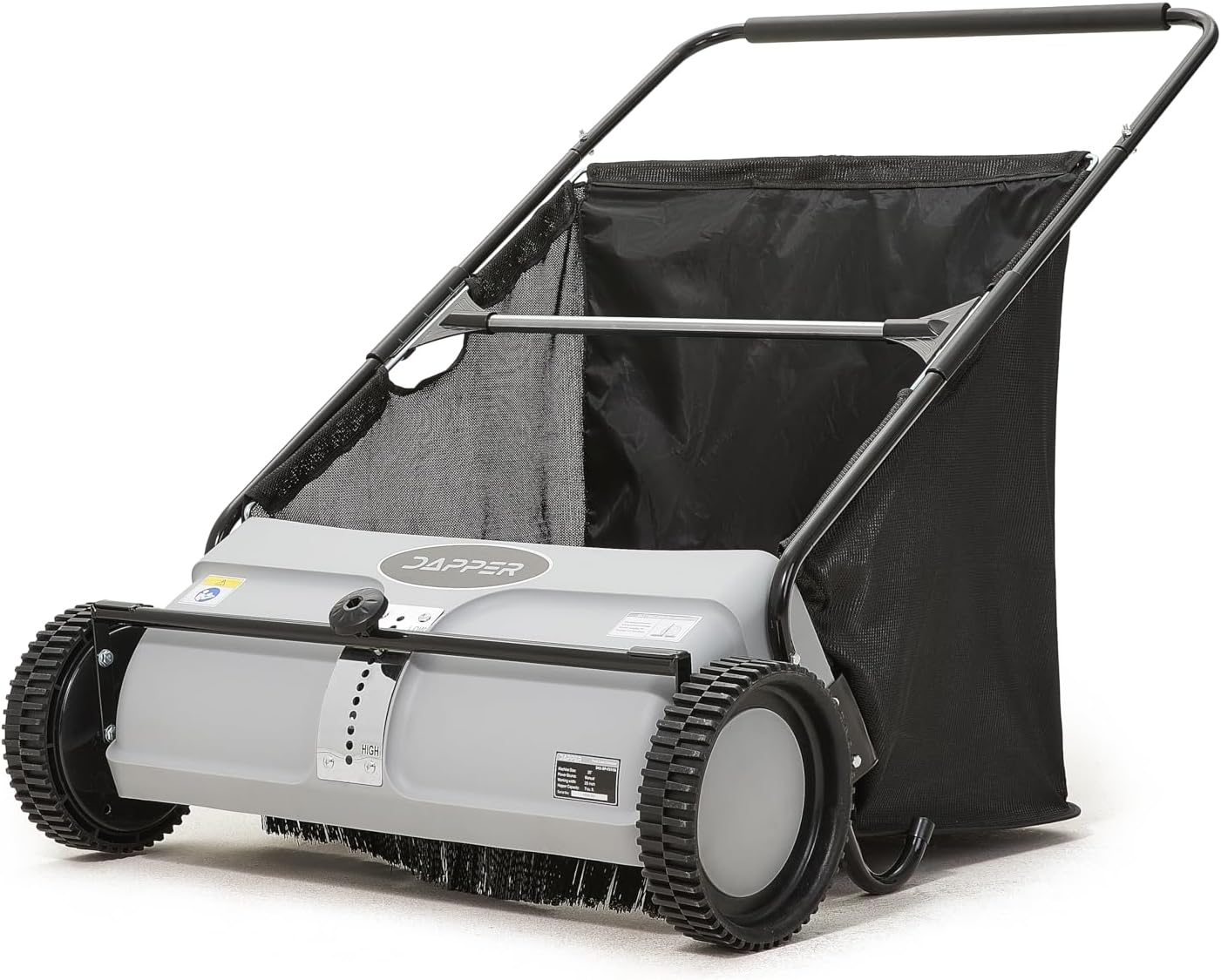
Dapper Supply 26-Inch Push Lawn Sweeper with 7 cu. ft. Hopper
| Power Source | hand_powered |
|---|---|
| Operation Mode | Manual |
| Material Type | Plastic |
The Dapper Supply 26-inch push lawn sweeper is a manual, hand-powered tool for picking up grass clippings, leaves, and light yard debris without a blower or mower attachment. It is used by pushing across the lawn so the two spinning brushes sweep debris into a removable 7 cubic foot mesh hopper, and brush height is adjusted with a hand knob to suit different surfaces. The unit pairs a reinforced steel frame with plastic components and rubber wheels to balance durability with lower weight, and quick clips make assembly and storage straightforward. Practical benefits include a wide 26-inch sweep that reduces passes, the large collection bag that cuts down on stops to empty, and adjustable brush height for uneven lawns or driveways. Important limitations are that it is manual so performance depends on user push effort and pace, and it may struggle with very heavy, wet debris compared with powered sweepers or vacuums. Replacement parts and a one-year limited warranty are available, which helps risk-averse buyers who want service options.
Best for: Buyers who prefer a low-maintenance, mechanical solution for routine leaf and grass cleanup and who value a simple, serviceable machine with replacement parts and warranty support.
Less Ideal for: Anyone who needs a hands-free powered solution for very large properties or frequent heavy wet debris removal should consider a gas or electric-powered sweeper instead.
- Large 7 cu. ft. mesh hopper reduces frequency of emptying
- Adjustable brush height adapts to lawns, driveways, and uneven terrain
- Sturdy thickened steel frame for improved durability
- Dual spinning brushes provide efficient single-pass pickup
- Rubber wheels offer smoother maneuvering across different surfaces
- Manual operation requires physical effort and steady walking speed
- Plastic components may be less durable than fully metal constructions
- Performance drops with very wet or compacted debris
Verdict: A dependable manual sweeper that covers a wide swath and holds a lot of debris, making it a practical choice for homeowners who want a low-tech, serviceable cleanup tool.
Choosing the Right Heavy Duty Lawn Sweeper: Key Factors to Consider
Hopper Capacity and Dumping Mechanism
A large hopper matters because it reduces how often you pause to empty debris when working a big lawn. For heavy-duty sweeper use, capacity directly affects productivity on properties with many trees or heavy grass clippings. Consider how the hopper attaches and whether it uses reinforced materials or a rigid frame to resist flexing when full.
Also evaluate the dumping mechanism. A quick-release or high-elevation dump lets you empty into a trailer or compost bin without repeatedly bending. If the mechanism is flimsy, a full hopper can become awkward and increase wear on mounting points.
Brush Design and Material
Brush type and configuration determine how well a sweeper lifts different debris. Stiffer, mixed-bristle brushes handle wet leaves, pine needles, and small twigs better than soft brushes. The diameter and number of brush rolls affect contact time with the turf and the amount of debris collected in a single pass.
Because brushes wear, check how easy it is to replace or adjust them. Heavy-duty brush mounts, sealed bearings, and accessible adjustment points reduce downtime and keep pickup consistent over seasons.
Frame Strength and Build Quality
A rugged frame keeps alignment stable under heavy loads and rough terrain. Look for thicker gauge steel, welded joints, and corrosion-resistant finishes that stand up to repeated exposure to moisture and fertilizer residues. Weak frames can bend or loosen, making the sweeper harder to tow and reducing brush contact.
Attachment hardware and axle supports should be reinforced. Pay attention to how the hopper connects to the frame since this is a common stress point when hauling full loads.
Tow and Manoeuvrability
How the sweeper tows behind a riding mower or handles as a push unit affects efficiency. Heavy-duty sweepers should track straight, resist fishtailing, and follow the contour of the lawn so brushes remain at a consistent height. Larger, pneumatic or semi-pneumatic tires smooth bumps and reduce the chance of the unit bouncing and missing debris.
Consider hitch design and whether vertical articulation or a swivel allows better cornering without shearing fasteners. Ease of attaching and detaching matters if you use the sweeper seasonally.
Height Adjustment and Ground Contact Control
Precise height adjustment prevents turf damage while maximizing pickup. On uneven ground you need a reliable range of settings so brushes skim debris rather than gouge the soil. Look for simple, tool-free adjustment mechanisms or clearly marked indexed holes that let you repeat settings after maintenance.
Consistent ground contact also reduces missed debris and prevents rapid brush wear from repeated hard impacts with the turf.
Serviceability and Parts Accessibility
Even heavy-duty machines need regular maintenance. Easy access to brush bearings, drive chains or belts, and tire fittings minimizes time spent on upkeep. Standardized parts and visible wear indicators speed repairs and prevent small problems from becoming failures in peak seasons.
Consider whether replacement parts are straightforward to install and whether common wear items like brushes, bearings, and belts can be swapped without disassembling major assemblies.
Matching Sweeper Capacity to Yard Size
Estimate how much debris your yard produces during peak drop. A heavily treed property with broadleaf species will fill hoppers faster than a trimmed lawn with sparse trees. Choose a sweeper whose hopper size and expected coverage per pass reduce emptying frequency to avoid constant stops.
Think about collection logistics. If you plan to unload into compost piles, trailers, or a waste container, pick a hopper height and dumping design that fits those targets so you are not lifting or dumping awkwardly.
- Large hoppers cut downtime on big properties
- Higher dump points are easier for trailers and bins
- Smaller hoppers may be fine for lighter debris loads
Using a Sweeper Behind a Riding Mower
When towing behind a mower, balance and hitch geometry change how the unit tracks. Test for aligned tracking and minimal sway before working steep or uneven areas. A stable tow setup keeps brushes at a consistent height and preserves pickup efficiency.
Mind the tow speed. Most sweepers pick best at moderate speeds that allow brushes to agitate and lift debris rather than just pushing it. Riding mower RPM and ground speed together influence effective brush rotation and collection.
- Check hitch articulation for turns
- Avoid excessive ground speed to improve pickup
- Ensure tires absorb shocks to maintain brush contact
Winter Storage and Off-Season Care
Proper winter storage extends service life. Clean out the hopper and brush area to prevent trapped moisture and organic matter from corroding metal or freezing components. Lubricate bearings and moveable joints before storing the unit in a dry place.
If you store outdoors, elevate the sweeper off the ground and cover it with a breathable tarp to reduce condensation. Remove brushes or secure them so bristles are not deformed by long-term pressure against racks or shelves.
- Clean debris and dry components before storage
- Lubricate moving parts and protect from moisture
- Store raised off the ground if possible
Common Maintenance Tasks and Intervals
Inspect brushes regularly for fraying and uneven wear. Replace worn brushes before they reduce pickup performance significantly. Check bearings, seals, and drive linkages every season or after heavy use and replace any worn parts.
Check tire pressure and axle fasteners periodically. Tighten hardware that loosens under vibration. Keep a small toolkit and a spare brush or two on hand during peak leaf seasons so you are not delayed by a minor replacement.
- Seasonal brush and bearing checks
- Regular hardware and tire inspections
- Keep spare consumables available during peak use
Maximizing Pickup on Wet Leaves and Pine Needles
Wet material is heavier and clumps easily, which reduces brush effectiveness. Work in slightly drier windows when possible, and make multiple passes with higher brush engagement to break clumps. Stiffer brush settings and slower ground speed improve pickup of moist debris.
For long, thin pine needles, maintain a lower brush height so bristles can reach the turf surface and scoop the needles. Increasing brush contact time by lowering speed or adding additional passes often yields better results than forcing the sweeper to do everything in a single pass.
- Work when surfaces are less saturated if possible
- Adjust brush height lower for needles and small twigs
- Consider multiple passes at slower speeds for heavy wet loads
How We Chose the Best Heavy Duty Lawn Sweeper
We screened a wide range of heavy duty lawn sweepers for features that matter most in larger or more demanding yards. Priority went to collection capacity and hopper durability because larger hoppers reduce trips across the lawn and robust materials resist denting and rust during heavy-duty use. We checked brush system design and brush material for consistent pickup of wet leaves, pine needles, and grass clippings. Tow and push handling were evaluated for stability and maneuverability behind a riding mower or when used as a walk-behind. Adjustment range and ease of height changes were scored for fine-tuning pickup without damaging turf. We also considered maintenance needs, such as brush replacement access and drive components that are easy to service or shielded from debris. Products were excluded if they lacked heavy-duty components, had very small collection volumes inappropriate for large properties, or used construction materials likely to fail under continual heavy use. The final picks prioritize long-term durability, practical capacity, and user-friendly adjustments over cosmetic extras.
FAQ
Can a heavy duty lawn sweeper handle wet leaves?
Often yes, but performance depends on brush type and ground speed. Stiffer brushes and slower towing speeds pick up wet leaves better. Multiple passes and emptying the hopper more frequently help when material is heavy and clumpy.
How often should I replace the sweeper brushes?
It depends on use, but inspect brushes each season and replace when bristles are noticeably worn or uneven. Heavier debris and abrasive materials shorten brush life, so heavy-use lawns may need replacement annually or biannually.
Will a heavy duty sweeper damage my lawn?
Usually not if height is set correctly and you avoid excessive ground speed. Proper adjustment prevents gouging. On very soft or wet turf take care with weight distribution and consider lighter loads per pass to reduce compaction.
Are there maintenance tasks I should perform after each use?
After heavy use, clear debris from the hopper and around brush mounts, check for any lodged material, and inspect fasteners. A quick visual check reduces the chance of hidden damage and makes seasonal maintenance easier.
Can I tow a sweeper with any riding mower?
Most riding mowers with a standard hitch can tow a heavy duty sweeper, but check hitch compatibility and towing capacity. Ensure the mower can handle the added load without compromising braking or traction on slopes.
Final Verdict
When choosing a heavy duty lawn sweeper prioritize hopper capacity, brush design, and frame durability relative to your property size and debris type. Accept tradeoffs between larger capacity and the added weight that affects towing and maneuverability. Focus on adjustable height controls, easy maintenance access, and proven tow stability so the unit works reliably season after season. With those priorities in mind you can pick a sweeper that reduces manual raking, speeds cleanups, and lasts through heavy seasonal use.
