

Note: This article contains affiliate links. If you click on these links and make a purchase, I may earn a small commission at no extra cost to you. This helps support my research and content. Read my full affiliate disclosure here.
If you regularly process large rounds or need dependable performance through a long season, choosing the right heavy duty log splitter matters. A correctly matched splitter reduces the time you spend turning and repositioning logs, cuts fuel or electricity use, and lowers strain on your body and equipment. This guide covers the top shortlisted heavy duty log splitters suited for demanding woodcutting work, evaluating factors that matter in real yards: raw splitting force, motor or engine durability, cycle speed, and how easy machines are to move and service. Read on for a practical look at what to prioritize before you pick the model that fits your workload and workspace.
Top Picks at a Glance
| Best Overall The best all-around choice for most situations | BILT HARD 40-Ton Gas Log Splitter with 389cc 13 HP Engine (Horizontal/Vertical) |  |
| Best Quality Built to a higher standard if you want something more solid | BILT HARD 35-Ton Towable Gas Log Splitter with 10 HP Engine and Log Lift |  |
| Best Value The sweet spot between price and what you get | Landworks Portable 20-Ton Gas Log Splitter, 7 HP, Rapid Auto Return |  |
| Best Budget The cheapest option that still gets the job done reliably | Ezasin 20-Ton Gas Log Splitter with 209cc 7HP Engine |  |
| Highest Rated A top-rated pick with lots of positive feedback | GasXcel 20-Ton Gas-Powered Horizontal Log Splitter (209CC) |  |
| Most Popular A crowd favorite that many people choose with confidence | SuperHandy 20-Ton Portable Gas Log Splitter with 7HP Engine |  |
BILT HARD 40-Ton Gas Log Splitter with 389cc 13 HP Engine (Horizontal/Vertical)

| Splitting force | 40T |
|---|---|
| Engine | 389cc 13 HP OHV |
| Cycle time | 16 Second |
| Hydraulic reservoir capacity | 6 Gallons |
This BILT HARD 40-ton gas log splitter is built for fast, demanding work: a 389cc 13 HP OHV engine powers a hydraulic system that produces 40 tons of splitting force and completes a full cycle in about 16 seconds. It runs in both horizontal and vertical positions, so you can process large, heavy logs without constant lifting, and the hardened 8-inch steel wedge handles tough hardwoods up to roughly 24 inches long. Designed to be towable, it includes a 2-inch ball coupler, DOT-approved tires, and a sturdy frame for moving between sites. The large hydraulic reservoir and 14 GPM operating speed support continuous splitting with less heat and contamination risk. Expect a substantial machine that boosts throughput for homeowners or small contractors who need high-speed, heavy-duty splitting; assembly and initial setup require space and mechanical familiarity and the unit is heavy to maneuver when unhitched. Regular maintenance of the engine and hydraulic system is important to sustain cycle speed and longevity.
Best for: Buyers who prioritize throughput and power for frequent heavy-duty splitting, such as homeowners with large woodlots or small operators who need a fast, towable splitter that handles dense hardwoods.
Less Ideal for: Casual users who split only occasionally or those without space and means to handle a very large, heavy machine should consider smaller electric or lower-tonnage models.
- Very high splitting force suitable for dense hardwoods (40 tons)
- Fast cycle time (approximately 16 seconds) for high-volume firewood processing
- Dual-position horizontal and vertical operation reduces lifting and speeds large-log handling
- Towable design with DOT-approved tires and 2" ball coupler for easy transport to job sites
- Heavy and bulky which makes solo moving and setup difficult
- Requires routine engine and hydraulic maintenance to preserve performance
Verdict: Choose this splitter when you need maximum power and high-speed cycles for heavy, high-volume firewood production.
BILT HARD 35-Ton Towable Gas Log Splitter with 10 HP Engine and Log Lift

| Splitting force | 35 Ton |
|---|---|
| Engine | 10 HP, 306cc OHV 4-stroke |
| Cycle time | 15 second |
| Maximum log diameter | 20'' |
| Hydraulic capacity | 7.4 gal |
The BILT HARD 35-ton gas log splitter is built for high-volume, heavy-duty wood processing. It uses a 10 HP, 306cc OHV engine paired with a Bucher 2-stage hydraulic pump to deliver a fast 15-second cycle time and steady 18 GPM flow, letting you split through large, dense logs efficiently. The unit accepts logs up to 20 in diameter and 24 in length and ships with interchangeable 4-way and 6-way 12-inch wedges so you can tailor split size and throughput. A powered 700 lb log lift and 5-inch hydraulic lifting stroke reduce manual handling and speed staging. The towable design, DOT tires, 2-inch ball coupler, and safety chains make it straightforward to move between sites. Practical limitations are its large footprint and over-1000-pound weight, which require a suitable vehicle or freight delivery and space for storage and assembly, and the machine’s size makes it more than most homeowners need for occasional light use. For users focused on sustained, performance-oriented splitting, it delivers power and throughput in a durable package.
Best for: Buyers who need a high-capacity, durable splitter for frequent or commercial-style wood processing and who prioritize power and steady throughput over portability or occasional use convenience.
Less Ideal for: Casual users with small yards, infrequent splitting needs, or those who cannot accommodate freight delivery and a heavy machine should consider smaller, lighter options.
- High splitting force rated at 35 tons for tackling large, hard logs.
- Fast 15-second cycle time driven by a 2-stage hydraulic pump for high throughput.
- Interchangeable 4-way and 6-way wedges for flexible split sizes and increased productivity.
- Integrated 700 lb log lift and hydraulic lift stroke reduce manual handling and speed workflow.
- Towable with DOT tires, 2-inch coupler, and safety chains for easy transport between sites.
- Very heavy and large, requiring freight delivery, a towing vehicle, and significant storage space.
- Fuel and hydraulic fluid capacities are modest, so expect periodic refueling and maintenance during long jobs.
Verdict: If you need a rugged, high-throughput splitter that can handle large logs day after day, this 35-ton towable machine delivers the power and features to get the job done.
Landworks Portable 20-Ton Gas Log Splitter, 7 HP, Rapid Auto Return

| Engine | 7 HP gas |
|---|---|
| Splitting force | 20 ton |
| Max log length | 20 inches |
| Max log diameter | 16 inches |
This Landworks 20-ton log splitter is a gas-powered, horizontal beam machine designed to handle sizable firewood quickly. It pairs a 7 HP engine with a two-stage Bucher gear pump and a stainless steel wedge to split logs up to 20 inches long and 16 inches in diameter. The rapid auto-return ram and a quoted 7.5-second cycle time make it well suited to high-speed splitting tasks where you need to process a lot of wood. Built-in transport wheels and a full-steel beam simplify moving it around a yard or site. Practical benefits include consistent linear power for smoother splits and user-friendly control lever placement for prolonged use. Important limitations are that it is gas only, so it requires outdoor use, fuel and routine engine and hydraulic maintenance, and hydraulic fluid is not included. Assembly and familiarity with safe operating practices are required before use.
Best for: Buyers who need a fast, portable gas splitter for processing large volumes of firewood and who prefer a proven mechanical design over experimental electric alternatives.
Less Ideal for: People who need a low-maintenance, indoors-compatible, or electric-powered splitter or who cannot manage fuel storage and routine engine upkeep.
- High 20-ton rated splitting force for heavy logs
- Fast 7.5-second cycle time with rapid auto-return for high throughput
- 7 HP gas engine provides portable power without needing electricity
- Stainless steel wedge and steel thrust plate for durable splitting performance
- 10-inch transport wheels and compact horizontal design for easier site movement
- Requires gasoline and regular engine and hydraulic maintenance
- Hydraulic fluid is not included so you must supply AW32 or equivalent before use
Verdict: Choose this Landworks 20-ton gas splitter if you want a portable, high-speed machine that can quickly process large quantities of firewood without relying on electrical power.
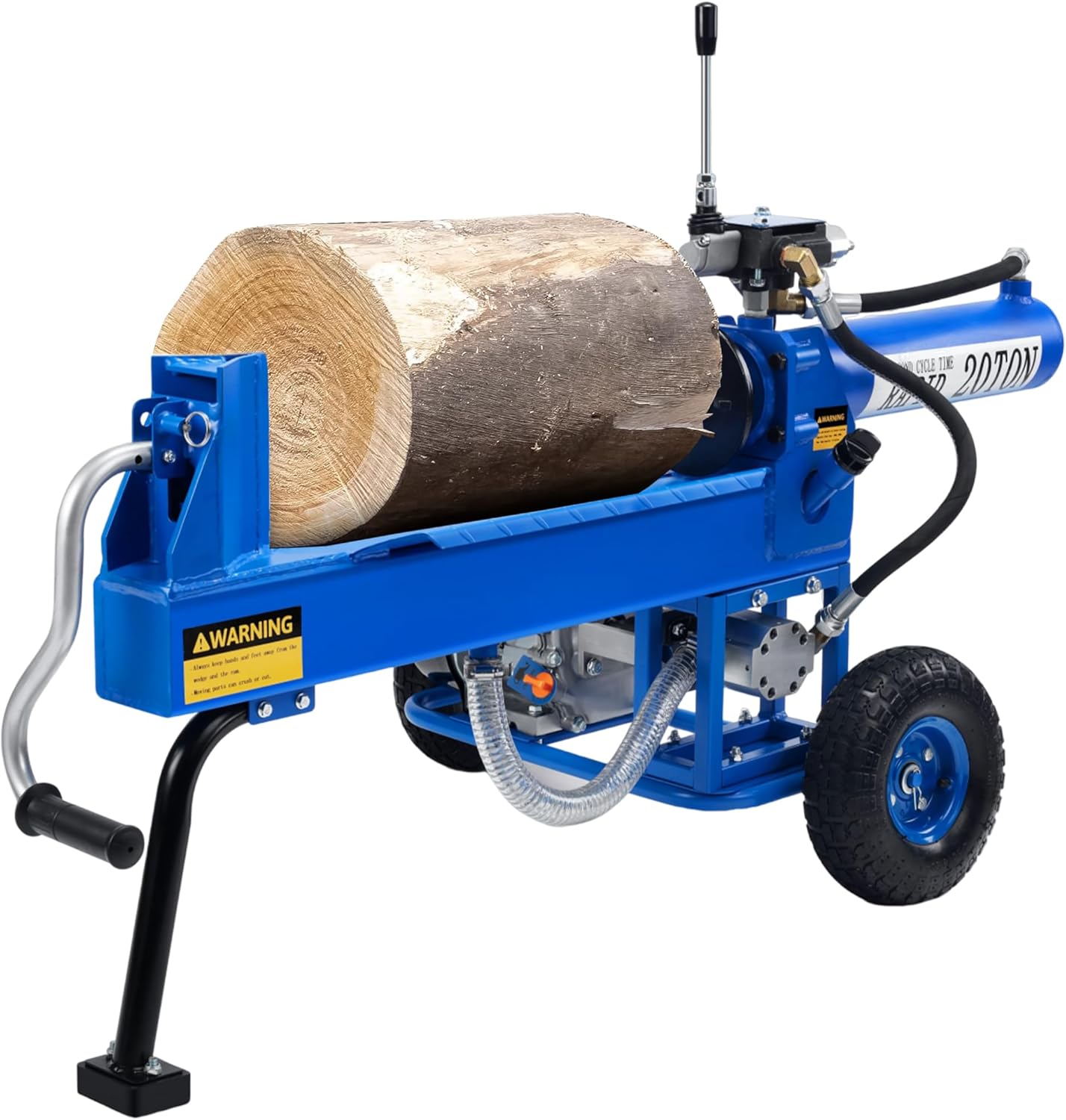
Ezasin 20-Ton Gas Log Splitter with 209cc 7HP Engine
| Splitting force | 20 ton |
|---|---|
| Engine | 209CC 7HP |
| Cycle time | 8 seconds |
| Log capacity | Up to 20.5" long and 16" wide |
This Ezasin 20-ton gas log splitter pairs a 209cc 7HP engine with a dual-stage hydraulic pump to deliver fast, powerful splits for household and small-farm use. It is typically used on rounds and knotty hardwoods up to the listed capacity, with an alloy steel 90° wedge and an auto-return valve that speeds workflow by automatically retracting the ram after each split. The dual-stage pump gives quick approach speed for positioning the ram and switches to high pressure for stubborn logs, which together with an advertised 8-second cycle time makes it suitable for high-throughput tasks. Practical features include pneumatic 10-inch tires for yard mobility and a relatively low-maintenance layout, though it requires pre-filling specific hydraulic and engine oils and regular servicing like any gas unit. Expect typical gas-engine noise, the need for fuel storage, and occasional maintenance of the hydraulic system. For someone who wants fast, mechanical splitting without electric hookups, this model delivers strong performance with the usual upkeep of a gasoline hydraulic machine.
Best for: Buyers who prioritize fast, mechanical splitting for regular firewood or farm work and need a portable gas-powered solution that maximizes throughput over convenience.
Less Ideal for: Those who want a quieter, low-maintenance electric splitter or who lack space and resources for fuel storage and engine upkeep should consider other options.
- High 20-ton splitting force suitable for hardwoods and knotty logs
- Fast 8-second cycle time enabled by a dual-stage hydraulic pump
- Auto-return valve streamlines repeated splitting and reduces operator fatigue
- 209cc 7HP gas engine provides off-grid power and strong torque
- Pneumatic 10-inch tires and steel frame make it reasonably mobile around a yard or job site
- Requires gasoline and specific hydraulic and engine oils and routine maintenance
- Gas engine produces noise and emissions compared with electric alternatives
Verdict: If you need high-speed, off-grid splitting for hardwoods, this 20-ton gas splitter delivers strong, efficient performance with mobile convenience.
GasXcel 20-Ton Gas-Powered Horizontal Log Splitter (209CC)

| Power source | Gas (209CC four-stroke engine) |
|---|---|
| Splitting force | 20 tons |
| Max log length | 20 inches |
| Max log diameter | 18 inches |
This GasXcel 20-ton gas log splitter is built to clear large batches of firewood quickly for homeowners who need consistent performance. It uses a 209CC four-stroke engine and a two-stage gear pump to drive a hydraulic system that pushes a hardened steel wedge through logs up to 20 inches long and 18 inches in diameter. The machine cycles in about 8 seconds and features an automatic ram return, which speeds repetitive splitting and reduces fatigue during seasonal hauling and stacking. A steel frame, pneumatic 10-inch tires, and ergonomic handles make it reasonably portable around yards and driveways despite its 130 pound weight. Controls are straightforward, so operators with basic mechanical experience can run it without an electrical hookup. Notable limitations are its nonzero assembly and storage footprint and the need for routine engine and hydraulic maintenance typical of gas equipment. It is a practical, powerful choice when electric models lack the torque or mobility for large, knotted logs.
Best for: Homeowners who need a reliable, high‑power splitter to process large volumes of firewood quickly and who prioritize performance over minimal maintenance.
Less Ideal for: People who prefer near-silent operation, zero engine upkeep, or who only split small logs occasionally should consider electric or manual alternatives.
- High splitting force rated at 20 tons for large or knotted logs
- Fast 8-second cycle with automatic ram return for high throughput
- Powered by a 209CC gas engine so it runs off-grid without electricity
- Hardened steel wedge and sturdy steel frame for repeated heavy use
- Pneumatic tires and handles improve maneuverability across uneven yards
- At 130 pounds it still requires effort to move and needs storage space
- Being gas-powered requires regular engine and hydraulic maintenance
Verdict: Choose this splitter if you want a rugged, high‑torque gas unit that processes large, knotted logs quickly for heavy seasonal or ongoing firewood work.
SuperHandy 20-Ton Portable Gas Log Splitter with 7HP Engine

| Splitting force | 20 Ton |
|---|---|
| Engine | 7HP gas engine |
| Max log length | 20 inches |
| Max log diameter | 16 inches |
This SuperHandy log splitter is a portable, gas-powered horizontal splitter designed to handle large batches of firewood quickly. The 7HP engine drives a two-stage Bucher hydraulic gear pump to deliver a constant 20-ton splitting force, and the ram returns automatically so you can keep a steady rhythm while working through a woodpile. It splits logs up to about 20 inches long and 16 inches in diameter and uses a steel wedge and full-beam frame aimed at field durability. Mobility is practical for a machine this size thanks to 10-inch transport wheels and a setup that is straightforward on level ground. Cycle time is short, so it is suited to high-speed splitting tasks where you need throughput without an electrical outlet. Important limits are that it is gas powered so it needs outdoor, well-ventilated use and regular engine and hydraulic maintenance; hydraulic fluid is not included. Assembly and moving the unit alone may be awkward given the overall mass despite the wheels.
Best for: Buyers who need a fast, field-capable splitter to process large amounts of firewood without depending on electricity and who prefer a proven mechanical design backed by user feedback.
Less Ideal for: People who only split a few logs occasionally or who need a lightweight, fully portable unit for one-person lifting and storage.
- 20 tons of consistent splitting force driven by a 7HP gas engine for heavy-duty splitting
- Rapid auto-return ram and short cycle time for high throughput
- Portable horizontal design with 10-inch wheels for site-to-site movement
- Full-beam steel wedge construction for durability in field use
- Requires gasoline and outdoor ventilation which limits indoor or garage use
- Hydraulic fluid is not included and routine engine/hydraulic maintenance is necessary
Verdict: Choose this splitter if you want a high-throughput, gas-powered 20-ton machine built to move between sites and handle large firewood workloads.
Choosing the Right Heavy Duty Log Splitter: Key Factors to Consider
Splitting Force and Log Capacity
Tonnage or hydraulic splitting force is the single most important spec for heavy duty log splitters. Higher tonnage lets you split larger, knotty, or wetter rounds without stalling the ram or forcing multiple passes. Pay attention to the rated maximum log length and diameter too, because a machine with high tonnage but a short bed may still be awkward for big maple or oak rounds.
Match the rated force to the hardest wood you plan to process. If you routinely handle dense species or logs with big knots, choose higher force to avoid repeated repositions. For occasional large rounds, consider how the splitter handles partial loads and whether the control scheme lets you work safely with irregular pieces.
Motor or Engine Power and Duty Cycle
The declared horsepower or kilowatt rating gives an initial sense of capability, but duty cycle and cooling matter more for sustained jobs. Heavy duty splitters should have engines or motors designed for extended run times without overheating. Gas engines intended for commercial use and electric motors with continuous-duty ratings will perform differently under a long shift.
Also check fuel or electrical requirements and expected runtimes. A high-power engine with poor cooling will require frequent breaks, slowing productivity. For electric units, ensure your power source can supply continuous current, and for gas models consider ease of starting and access to serviceable parts.
Cycle Speed and Efficiency
Cycle speed measures how quickly the ram advances and returns and directly affects throughput. Faster cycles reduce time per log, but efficiency also depends on stroke length and wedge design. A quick ram with a short stroke might still take extra moves to finish a large log, while a slightly slower unit with a long, powerful stroke can finish in fewer passes.
Consider typical job flow: if you are splitting many medium logs, cycle speed is a big time-saver. If you mostly do occasional very large logs, stroke length and force matter more than raw cycles per minute.
Construction Quality and Serviceability
Robust frame construction, thicker steel in stress areas, and quality hydraulic components extend working life. Look for accessible service points such as fill and drain ports, replaceable hoses, and removable panels that make maintenance straightforward. Corrosion-resistant finishes and guarded moving parts help in outdoor environments.
Serviceability means less downtime. Splitters that allow easy access to filters, pumps, and belts keep you working through a season rather than waiting for complex repairs. Also evaluate warranty terms and the availability of replacement parts for heavy-use scenarios.
Stability and Safety Features
A heavy duty splitter must remain stable under load. A wide footprint, solid feet or stabilizers, and options to bolt or anchor the unit reduce tipping risk when handling uneven rounds. Safety controls such as two-handed operation, emergency stops, and guarded wedges prevent common injuries.
Consider how the machine performs on soft or uneven ground typical to many yards. Units that include support stands or integrated log cradles make handling large logs safer and faster, reducing the need for extra rigging.
Mobility and Onsite Setup
Heavy duty equipment still needs to be moved between jobs. Towable frames, integrated wheels and hitches, and folding handles make it easier to reposition a heavy splitter. Consider how much on-site assembly is required and whether the splitter can be deployed by one person or needs a crew.
Also weigh transport constraints such as trailer capacity and access points in your property. A very heavy, non-towable machine can be excellent for a fixed yard but impractical if you take equipment to multiple sites.
Hydraulics and Wedge Design That Matter
Hydraulic system design influences how force is delivered. Look beyond peak tonnage to how the pump and valve control the ram under load. A steady, well-regulated flow avoids stalling on knots and delivers the power where it is needed in the stroke.
Wedge shape and material affect splitting behavior. A narrower, sharper wedge slices through wood more easily but may be more prone to wear on frozen or rocky logs. A broader wedge can split stubborn sections with fewer repositions but requires more power.
- Check pump flow rating and whether the system has pressure relief settings
- Consider replaceable wedge inserts to extend service life
- Observe whether the valve control allows fine incremental movement for tricky logs
Power Options: Gas Versus Electric for Heavy Use
Gas-powered units typically offer higher mobility and are common for remote or multi-site work, while electric splitters provide quieter operation and lower maintenance in a stationary yard setup. For heavy duty use, choose gas engines built for commercial duty or electric motors rated for continuous operation.
Electric options need a robust power supply and may be limited by cord length or inverter capacity if used off-grid. Gas units require fuel storage and periodic tuning, so factor in the operational logistics of your property.
- Electric: quieter, simpler maintenance, requires stable power
- Gas: more mobile, higher peak power potential, needs fuel and service
Site Preparation and Safe Workflow
Preparing a stable, level work area improves both safety and productivity. Lay out a clear feed and stacking zone so logs move smoothly from split to pile. Use chocks, stands, or log cradles to stabilize rounds before splitting.
Plan a workflow that minimizes heavy lifting. Use ramps, dollies, or mechanical aids where possible and always keep bystanders clear. Regularly inspect the splitter for loose fasteners, hydraulic leaks, or worn parts before each session.
- Leave clear space around the splitter for handling long logs
- Position waste and split wood piles downhill from the work area when possible
- Keep basic tools and spare hydraulic hose or fittings on hand
Winter and Wet-Weather Considerations
Cold and wet conditions change how wood behaves and how equipment responds. Frozen wood can be harder and more brittle, requiring more force and potentially different wedge behavior. Hydraulics thicken in cold weather, so proper fluid selection and pre-warming routines help maintain cycle speed.
Protect electrical components and engine air intakes from snow and moisture. Consider a simple shelter or position the splitter under an overhang during inclement weather to reduce corrosion and improve starting reliability.
- Use hydraulics fluids rated for expected temperature ranges
- Keep a dry storage spot for spare parts and fuel
- Allow engines to warm up before heavy work in cold conditions
Maintenance Routines That Keep Splitters Working
Regular maintenance preserves splitting power and reduces downtime. Schedule checks for hydraulic fluid level and contamination, inspect hoses and fittings, and follow recommended filter change intervals. Tighten bolts and check welds on the frame periodically.
Create a simple maintenance log to track service intervals and component changes. Early detection of minor leaks or belt wear prevents more extensive repairs during the busy season.
- Change hydraulic fluid and filters at manufacturer-recommended intervals
- Inspect blade or wedge edge and set up sharpening or replacement plans
- Keep an eye on engine tune-up items like spark plugs and air filters
How We Chose the Best Heavy Duty Log Splitter
We prioritized machines engineered for sustained, heavy use and real-world yard workflows. Selection focused on measurable performance specs and serviceability rather than marketing claims. Key evaluation criteria included hydraulic force or tonnage to handle large-diameter logs, motor or engine power and duty cycle for consistent throughput, cycle speed and efficiency to judge time per split, construction quality and materials that determine longevity, and transportability plus service access for moving and maintaining the unit. Products were excluded if rated for light-duty, residential-only use or if they lacked clear hydraulic or power specifications. We also removed units with poor user-serviceability such as sealed components that block routine maintenance. The final shortlist emphasizes splitters suited to multi-hour daily use, straightforward maintenance, and clear specification transparency so gardeners and land managers can match capacity to expected workloads.
FAQ
How much tonnage do I need for oak and other dense hardwoods?
It depends on log diameter and condition, but dense hardwoods often require higher tonnage to split cleanly. For regular large oak rounds, choose a machine with a strong force rating and a longer stroke; occasional dense logs may be manageable with less tonnage but will take more passes.
Can I use an electric heavy duty splitter on a property without three-phase power?
Many electric splitters are designed for single-phase residential power, but high-capacity units sometimes require three-phase or higher amperage circuits. Check the motor current and your supply capacity. Portable inverter generators can work for some electric splitters, but confirm continuous output specifications first.
What maintenance should I perform after each day of heavy splitting?
After each session, wipe away debris, check hydraulic fluid level and look for leaks, and inspect fasteners for loosening. Clean off sap and sawdust from moving parts and cover or shelter the machine to prevent moisture buildup overnight.
Is a towable frame necessary for a heavy duty splitter?
Not always. Towable frames add flexibility for multi-site work, but they increase weight and complexity. If the splitter stays on a single property, a fixed, heavily braced frame can offer better stability and lower maintenance. Consider how often you will move the unit before deciding.
How do I handle very irregular or knotty logs safely?
Stabilize irregular logs with cradles or wedges and use incremental ram control to apply steady pressure. It is safer to reposition the log than to force multiple passes that can shift the piece unpredictably. Wear protective gear and keep hands clear of the splitting line.
Will a higher cycle speed always increase productivity?
Not necessarily. Higher cycle speed helps when processing many medium-sized logs, but for large or knotted rounds the stroke length and force determine how many passes are needed. Match cycle speed to the typical log sizes you process.
Final Verdict
Pick a heavy duty log splitter by matching splitting force and duty cycle to the hardest, most frequent tasks you expect to do. Prioritize machines with accessible maintenance points, a stable footprint, and safety controls that fit your work habits. Expect tradeoffs between mobility and rugged fixed-frame stability; choose the configuration that matches how and where you will use the splitter. With the right balance of tonnage, power, and serviceability, you will reduce time at the woodpile and extend the machine's useful life.
