

Note: This article contains affiliate links. If you click on these links and make a purchase, I may earn a small commission at no extra cost to you. This helps support my research and content. Read my full affiliate disclosure here.
If you tackle large driveways, heavily soiled siding, or commercial cleanup tasks, a heavy duty pressure washer changes how quickly and thoroughly you finish jobs. The right machine balances raw pressure and flow with a robust pump and durable frame so you can run long jobs without overheating or breakdowns. This guide shortlists the top picks for heavy duty pressure washers and explains why each option made the cut. We evaluate machines for their cleaning output, build longevity, hose and accessory quality, and real-world handling. Read on to match a washer to your workload and operating conditions.
Top Picks at a Glance
| Best Overall The best all-around choice for most situations | SIMPSON Aluminum Series 4200 PSI Gas Pressure Washer with Honda GX390 |  |
| Best Quality Built to a higher standard if you want something more solid | Simpson PowerShot PS60869 4000 PSI Gas Pressure Washer, 3.5 GPM, Honda GX270 | 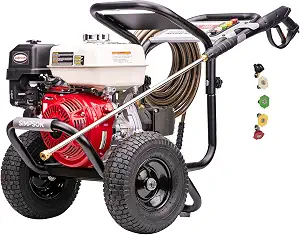 |
| Best Value The sweet spot between price and what you get | Westinghouse WPX3400 Gas Pressure Washer (3400 PSI, 2.6 GPM) |  |
| Best Budget The cheapest option that still gets the job done reliably | FOTING 4800 Max Electric Pressure Washer with 4 Quick‑Connect Nozzles and Foam Cannon |  |
| Highest Rated A top-rated pick with lots of positive feedback | commowner Heavy Duty Electric Pressure Washer (5000 PSI) |  |
| Most Popular A crowd favorite that many people choose with confidence | Westinghouse ePX3500 Electric Pressure Washer (2500 PSI, 1.76 GPM) |  |
| Best Seller A high-volume bestseller chosen again and again | Westinghouse WPX3000e Electric Pressure Washer (3000 PSI, 1.76 GPM) |  |
SIMPSON Aluminum Series 4200 PSI Gas Pressure Washer with Honda GX390

| Power Source | Gasoline |
|---|---|
| Maximum Flow Rate | 4 gpm |
| Maximum Pressure | 4200 psi |
| Hose Length | 50 inches |
| Tank Volume | 2.5 gallons |
The SIMPSON Aluminum Series ALH4240 is built for heavy-duty cleaning tasks contractors face: decks, equipment, graffiti removal, and paint prep. It pairs a reliable Honda GX390 engine with a CAT triplex plunger pump to deliver 4200 PSI at 4.0 GPM, providing the pressure and flow needed to strip grime quickly. The unit comes with a 50 foot dual-braided hose, an ergonomic gun and 16 inch wand, and five quick-connect nozzles that let you switch from a wide rinse to a narrow stripping jet or soap application. An aircraft-grade aluminum frame keeps the package lighter and corrosion resistant compared with steel frames, while 13 inch pneumatic tires and a balanced layout make it manageable on job sites. Important downsides are its commercial weight and the noise and fueling needs of a gas engine, which make it less convenient for small residential chores. Assembly and routine maintenance are required to keep peak performance, but the durable pump and engine warranties back up long-term professional use.
Best for: Best for professional contractors and serious DIYers who need a durable, high-performance washer for frequent heavy cleaning jobs and value uptime and serviceability.
Less Ideal for: Not a good fit for casual homeowners who prefer quiet, low-maintenance electric machines or need something lightweight for occasional use.
- High power output (4200 PSI at 4.0 GPM) suitable for heavy cleaning and paint prep
- Reliable Honda GX390 engine with low-oil shutdown for dependable starts
- Commercial-grade CAT triplex pump with thermal relief to protect against overheating
- 50 foot dual-braided hose and five quick-connect nozzles for versatile reach and spray options
- Large and heavy which requires two people or a good handle/tow method to load and transport
- Gas engine operation produces noise and requires fuel and regular maintenance
Verdict: Choose this SIMPSON if you need a rugged, contractor-grade gas pressure washer that delivers professional-level pressure and flow for frequent heavy-duty cleaning.
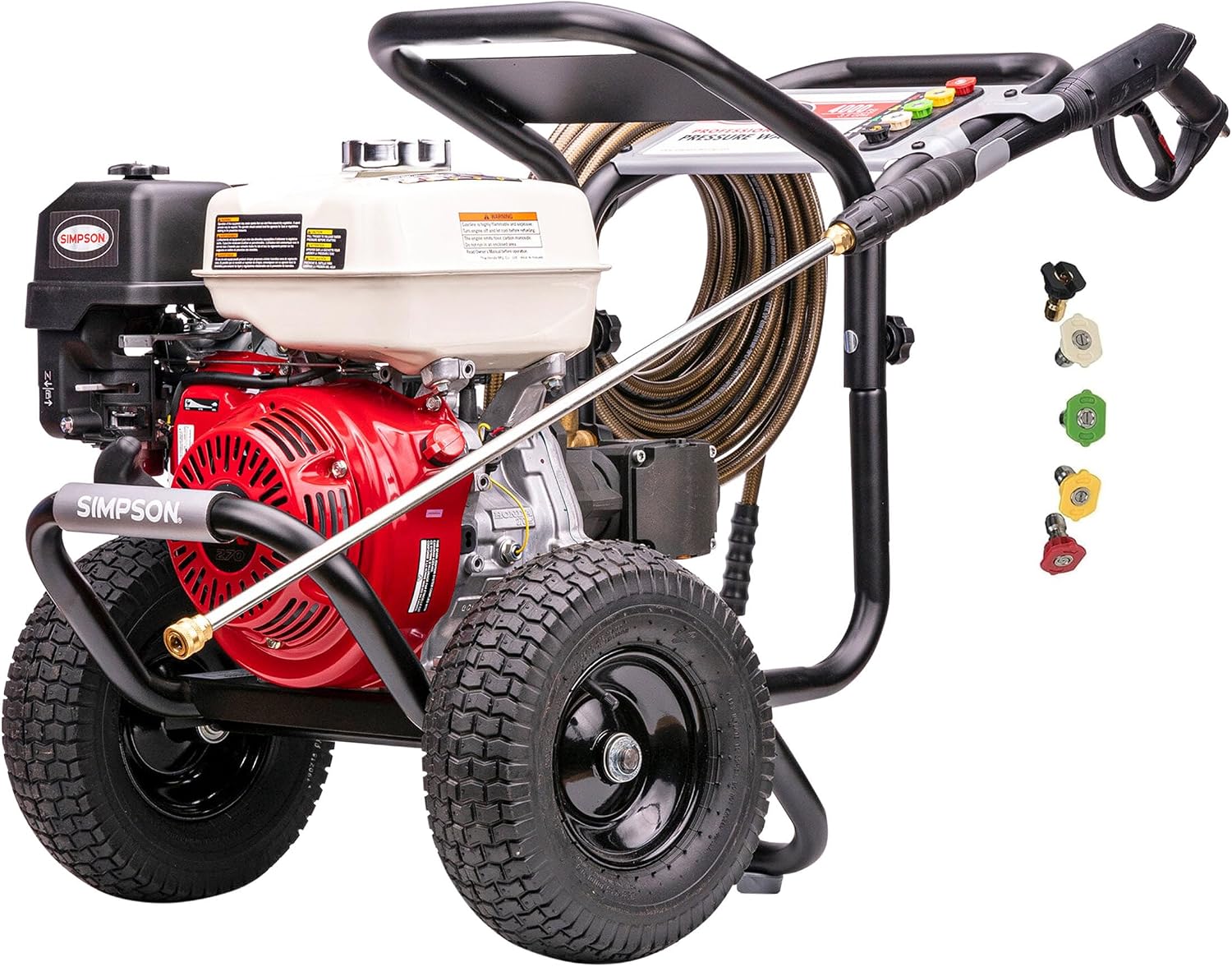
Simpson PowerShot PS60869 4000 PSI Gas Pressure Washer, 3.5 GPM, Honda GX270
| Power Source | gas_powered |
|---|---|
| Maximum Flow Rate | 3.5 gpm |
| Maximum Pressure | 4000 psi |
| Hose Length | 50 feet |
| Tank Volume | 3.5 gallons |
The Simpson PowerShot PS60869 is a contractor-focused gas pressure washer meant for demanding exterior cleaning like deck restoration, paint prep, and graffiti removal. It pairs a Honda GX270 engine with an AAA industrial triplex plunger pump that produces 4000 PSI and 3.5 GPM, and PowerBoost technology raises nozzle pressure for tougher stains. The unit ships on a welded steel frame with 13-inch pneumatic tires and includes a 50-foot kink-resistant high-pressure hose, five quick-connect nozzles, an ergonomic gun, and a 31-inch steel wand. In real work, that package translates to reliable high-impact cleaning power, long continuous run capability thanks to the commercial pump, and mobility across uneven job sites. The tough frame and thermal relief on the pump improve durability under heavy use. Expect the unit to be heavy and more maintenance-intensive than consumer electric washers, and it requires proper fuel, oil, and pump care for long life and EPA compliance in most states. This is a performance-first machine built for pros or serious DIYers who need commercial-level cleaning output.
Best for: Buyers who prioritize raw cleaning performance for commercial or heavy residential projects and need a durable, high-pressure machine that can tackle large, stubborn jobs.
Less Ideal for: Casual users with small yards, occasional car washing needs, or those who prefer low-maintenance, lightweight, or electric options should look elsewhere.
- Commercial-grade AAA triplex plunger pump rated 4000 PSI at 3.5 GPM for high cleaning force
- Honda GX270 engine for dependable starting and sustained power on heavy jobs
- Includes long 50-foot kink- and abrasion-resistant high-pressure hose and five quick-connect nozzle tips
- Welded steel frame and pneumatic tires for job-site durability and easier maneuvering
- Thermal relief on pump and PowerBoost at the nozzle help prevent overheating and increase cleaning impact
- At about 120 pounds it is heavy and not suited to lift-and-carry jobs
- Gas engine and industrial pump require regular maintenance and fuel handling
- Lacks the near-silent operation and low maintenance of electric models
Verdict: Choose this Simpson PowerShot when you need commercial-level pressure and flow for heavy-duty cleaning jobs and reliable on-site performance.
Westinghouse WPX3400 Gas Pressure Washer (3400 PSI, 2.6 GPM)

| Power Source | fuel_powered |
|---|---|
| Maximum Flow Rate | 2.6 gpm |
| Maximum Pressure | 3400 psi |
| Hose Length | 25 feet |
| Tank Volume | 0.5 gallons |
The Westinghouse WPX3400 is a gas-powered workhorse designed to tackle tough outdoor cleaning jobs like concrete, decks, siding, fences, and patio furniture. It pairs a 212cc 4-stroke OHV Westinghouse engine with a maintenance-free axial cam pump to deliver up to 3400 PSI at 2.6 gallons per minute, and includes five quick-connect nozzles plus a half-gallon onboard soap tank for detergent work. Practical features such as a 25-foot abrasion-resistant hose, never-flat high-profile wheels, and an included pro-style wand make it straightforward to move and operate on larger projects. The unit ships with oil, tools, and basic accessories so you can get started quickly, and its M22-compatible fittings work with surface cleaners and foam cannons for expanded use. Expect typical gasoline equipment considerations: occasional engine maintenance, fuel handling, and louder operation compared with electric models. For someone who needs sustained pressure and mobility for regular heavy cleaning, this washer delivers solid performance; casual users who only need occasional light cleaning might find it more capability than necessary.
Best for: Buyers who prioritize efficient, regular heavy-duty outdoor cleaning and want a portable gasoline unit that handles large driveways, decks, and siding without relying on an electrical outlet.
Less Ideal for: Those who only need occasional light cleaning, need near-silent operation, or prefer low-maintenance electric models for small urban yards.
- High cleaning power with up to 3400 PSI and 2.6 GPM for deep cleaning stubborn grime
- Onboard 0.5 gallon soap tank and five quick-connect nozzles for flexible detergent and spray options
- 25 ft abrasion-resistant hose and never-flat wheels improve reach and portability across larger properties
- Maintenance-free axial cam pump reduces pump upkeep compared with older pump designs
- M22-compatible fittings and included wand allow use of surface cleaners and foam cannons for faster area cleaning
- Gas engine requires regular fuel and oil maintenance and runs louder than electric alternatives
- Relatively heavy and bulkier than electric models which can make storage and one-person lifting harder
Verdict: Choose the WPX3400 if you need a portable gas pressure washer that reliably delivers heavy-duty cleaning power for frequent, large-scale outdoor jobs.
FOTING 4800 Max Electric Pressure Washer with 4 Quick‑Connect Nozzles and Foam Cannon

| Power Source | ac |
|---|---|
| Maximum Flow Rate | 7.6 gpm |
| Maximum Pressure | 4800 psi |
| Hose Length | 7 meters |
| Tank Volume | 1 gallons |
This FOTING 4800 Max electric pressure washer is built to tackle heavy dirt on driveways, fences, patios and vehicles by delivering up to 4800 psi and a high flow rate. It comes with four quick‑connect nozzles (0°, 15°, 25°, 40°) so you can switch from a powerful pinpoint spray for stubborn stains to a gentler fan for siding and windows, plus a 500 ml foam cannon for pre‑soaking cars. The unit includes a total stop system that shuts the pump off when idle and a GFCI‑protected power cord for safety. In practical use it is plug‑and‑play for homeowners: attach the inlet hose, select a nozzle, and you have strong cleaning performance without complex setup. Important trade‑offs are that the spec sheet lists high maximum pressure and flow that are ambitious for an electric consumer washer, so professional contractors who need sustained industrial duty cycles may find it less robust than gasoline models, and the tank and wand sizes favor typical residential jobs rather than large commercial sites. For budget‑minded buyers who want strong cleaning power for home use, this is a capable choice.
Best for: Budget‑conscious homeowners who need a powerful, ready‑to‑use washer for cleaning cars, patios, driveways and siding without the complexity of gas equipment.
Less Ideal for: Professional contractors or users who require continuous, all‑day commercial duty and the higher endurance of gasoline pressure washers.
- High maximum pressure rated at 4800 psi for tackling stubborn grime
- Four quick‑connect nozzles cover a wide range of tasks from heavy duty to delicate surfaces
- Includes 500 ml foam cannon for efficient car and vehicle washing
- Total stop system and GFCI power cord add safety and help protect the pump
- Electric design may not sustain continuous heavy commercial use like gas units
- Manufacturer specs for flow and pressure may reflect peak values rather than continuous output
Verdict: If you want strong, versatile cleaning for home and automotive jobs on a budget, this electric 4800 psi washer delivers the most power for the money.
commowner Heavy Duty Electric Pressure Washer (5000 PSI)

| Maximum Pressure | 5000 psi |
|---|---|
| Hose Length | 33 feet |
| Power Cord Length | 35ft with GFCI |
| Includes | 4 nozzles and 500ml soap bottle |
This commowner electric pressure washer is built for heavy-duty cleaning around the home, delivering up to 5000 psi for blasting dirt from driveways, decks, siding, and patio furniture. It ships with four quick-connect nozzles plus a foam cannon so you can switch between pinpoint high-pressure blasting and wider, gentler fan sprays for vehicles and painted surfaces. The 33 foot high-pressure hose and 35 foot power cord with GFCI give long reach for two-story homes or large yards without constant repositioning. Practical touches include all-terrain wheels, a telescopic handle, and onboard storage for the gun, cord, and soap bottle, while a reinforced metal inlet improves durability. The unit also uses a Total Stop System that automatically shuts the pump off when the trigger is released to reduce wear and save energy, and an IPX5 rating for splash resistance. Expect a heavier, trolley-style machine to move around and occasional setup to purge air from the hose before reaching full pressure, but for reliability-focused users who need strong cleaning performance this model is a solid option.
Best for: Homeowners who prioritize dependable, heavy-duty cleaning power and want a durable electric washer that handles large driveways, multi-story exteriors, and frequent use without complex maintenance.
Less Ideal for: People who need a very lightweight, compact unit for occasional spot cleaning or who prefer a gas-powered machine for remote jobs without a power outlet.
- High maximum pressure rating of 5000 psi for tough, deep cleaning
- Includes 4 quick-connect nozzles plus foam cannon for versatile spray patterns
- Long reach with 33 ft high-pressure hose and 35 ft power cord with GFCI
- TSS auto-stop pump and IPX5 splash resistance improve durability and safety
- Unit is relatively heavy and built like a trolley, so moving it requires more effort
- Requires purging air from the hose during setup to achieve rated pressure
Verdict: Choose this washer if you need a reliable, high-pressure electric unit that covers large cleaning areas with versatile spray options and built-in durability features.
Westinghouse ePX3500 Electric Pressure Washer (2500 PSI, 1.76 GPM)

| Power Source | ac |
|---|---|
| Maximum Pressure | 2500 psi |
| Maximum Flow Rate | 1.76 gpm |
| Hose Length | 25 feet |
| Tank Volume | 20 fluid ounces |
The Westinghouse ePX3500 is a compact electric pressure washer designed for routine heavy-duty home cleaning like driveways, decks, fences, and vehicles. It provides up to 2500 max PSI and 1.76 max GPM (2000 PSI rated at 1.2 GPM), and includes a pro-style steel extendable wand with five quick-connect nozzles including a turbo and soap applicator for tackling everything from baked-on grime to delicate rinsing. The unit is built for maneuverability: a low center of gravity, four quick-lock wheels with 360° steering and an anti-tipping layout make it easy to move around larger areas without frequent repositioning. Practical additions include a 25-foot easy-coil hose, a 20-ounce onboard detergent tank, and a Total Stop System that shuts the pump off when the trigger is released to reduce wear. Trade-offs are its electric power limit compared with gas models and the modest detergent tank size for extended commercial runs. For typical homeowners this balances power, portability, and straightforward maintenance in a small footprint.
Best for: A practical homeowner who values proven performance and ease of use for periodic heavy cleaning around the yard and vehicle maintenance, and who prefers a lower-maintenance electric option backed by broad customer feedback.
Less Ideal for: Commercial users or contractors who need long continuous runtime, higher flow rates, or larger detergent capacity for repeated professional jobs.
- Delivers strong cleaning force up to 2500 PSI suitable for most household heavy-duty tasks
- Five quick-connect nozzles including turbo and soap give versatile spray patterns without extra purchases
- Anti-tipping 360° four-wheel steering and low center of gravity improve maneuverability over varied surfaces
- Total Stop System stops the pump when not in use to conserve energy and extend pump life
- Electric motor limits continuous power compared with gas-powered commercial washers
- 20-ounce onboard soap tank is small for long or repeated detergent-heavy jobs
Verdict: A maneuverable, reliable electric pressure washer that packs near-2500 PSI cleaning power and useful accessories for homeowners who want heavy-duty results without gas engine upkeep.
Westinghouse WPX3000e Electric Pressure Washer (3000 PSI, 1.76 GPM)

| Power Source | ac |
|---|---|
| Maximum Pressure | 3000 psi |
| Maximum Flow Rate | 1.76 gpm |
| Hose Length | 25 feet |
| Tank Volume | 0.45 gallons |
The Westinghouse WPX3000e is an electric pressure washer built to handle tougher residential jobs like driveways, decks, fences and exterior siding without the maintenance of a gas unit. It delivers a 3000 psi peak and up to 1.76 gpm (1.1 gpm rated), runs on a heavy-duty AC 120V induction motor and uses a maintenance-free axial pump, so you get strong cleaning power with minimal upkeep. The unit includes a 25 ft abrasion-resistant hose, a metal spray gun and wand with five quick-connect nozzles (0°, 15°, 25°, soap and turbo) plus a 0.45 gallon soap tank for foaming cleaners. Mobility is straightforward thanks to the steel frame and 10-inch never-flat wheels, and the 35 ft GFCI cord increases reach from outlets. Expect reliable performance for patios, garage floors, siding and vehicle cleaning, though the electric power and cord limit absolute portability compared with gas models and peak psi is intermittent rather than continuous. For buyers who prefer lower maintenance and safer operation around homes, this is a robust electric option that balances power and convenience.
Best for: A cautious homeowner who wants near-gas cleaning power without gas engine maintenance and values ease of use and safety for regular outdoor cleaning tasks.
Less Ideal for: Contractors or users who need fully portable, long-run cleaning away from power outlets or continuously higher flow and pressure for commercial workloads.
- High peak pressure (3000 psi) and strong max flow for deep cleaning light to medium surface grime
- Maintenance-free axial pump and AC motor reduce upkeep compared with gas engines
- Five quick-connect nozzles and onboard 0.45 gallon soap tank for versatile cleaning and detergent use
- Long reach with 25 ft abrasion-resistant hose and 35 ft GFCI power cord plus never-flat wheels for easy mobility
- Electric cord limits use far from outlets and reduces portability compared with gas models
- Reported max psi is peak value; rated continuous output is lower at 2600/1.1 gpm
Verdict: Choose the WPX3000e if you want near-commercial cleaning power with low maintenance and safe, reliable electric operation for heavy residential jobs.
Choosing the Right Heavy Duty Pressure Washer: Key Factors to Consider
Pressure and Flow Balance
Pressure (PSI) and flow rate (GPM) are the two core measures of cleaning capability. High PSI helps break loose caked-on dirt and weeds from concrete, while higher GPM rinses detached material faster. A machine with very high pressure but low flow can cut into surfaces but leave residue; conversely, high flow with too little pressure may just splash water without dislodging grime.
Consider the typical surface and soil you clean. Porous concrete, commercial grease, or clinging biological growth benefit from both strong pressure and generous flow. Match nozzle choices to the PSI and use wider spray angles for flow-intensive rinsing when delicate surfaces are involved.
Pump Type and Serviceability
Pump construction largely determines lifespan and long-term cost. Triplex axial pumps and commercial-rated pump designs tolerate continuous duty cycles better than inexpensive wobble pumps. Look for machines where seals, valves, and oil reservoirs are accessible for routine checks and replacement. Pumps that require full replacement after a single failure increase ownership cost and downtime.
Regular maintenance matters: scheduled oil changes, inlet filtration, and easy part access reduce the chance of sudden failure. Verify whether the pump uses common, replaceable parts and that seals and valves can be serviced without specialized tools.
Engine or Motor Cooling and Duty Cycle
Cooling capacity and the rated duty cycle determine how long you can run a washer before risking overheating. Heavy duty tasks often require sustained operation, so machines with better cooling fins, external fan drives, or electric motors rated for continuous duty perform more reliably. Gas engines intended for commercial use typically have higher torque and cooling designed for repeated starts and stops.
If you plan long sessions, prioritize models with explicit duty-cycle ratings and measurable cooling features. Also consider whether the machine supports rest breaks without complex shutdown or restart procedures to maintain productivity on the job.
Hose, Wand, and Accessory Quality
The hoses and wand are the user interface you interact with for hours. Reinforced, kink-resistant hoses with sturdy fittings reduce leaks and downtime. Wands should be rigid enough to maintain aim under pressure and have comfortable grips and reliable trigger assemblies. Nozzles and quick-connect fittings matter because they determine spray angle options and ease of swapping tips.
Accessories that wear out easily or use proprietary connectors can limit field repairs. Prefer common nozzle standards and spare parts that are widely available so you can keep working if a tip or fitting fails.
Frame, Wheels, and Portability
Durable frames and adequate wheels help a heavy duty pressure washer survive transport across rough yards, mud, and job sites. A compact but rugged frame design prevents tipping and protects the pump and engine from impact. Large, pneumatic or heavy-duty wheels smooth movement over uneven terrain and reduce operator strain when repositioning the machine.
Consider how often you will move the washer and whether it needs to be hoisted into trucks or stored in a tight shed. Built-in storage for hoses and wands improves on-site organization and reduces wear on components.
Safety Features and Ergonomics
Safety measures such as thermal shutoffs, pressure relief valves, and trigger locks prevent accidents and component damage during heavy use. Ergonomics also matters because sustained spraying can fatigue the operator and increase risk of mishandling. Features like vibration-dampened handles, easily reached controls, and clear pressure adjustment help keep work consistent and safer.
Prioritize machines that balance force with user control. Simple, robust safety features reduce the chance of misuse and extend machine life by preventing overpressure and overheating.
Matching Washer Power to the Job
Different heavy duty tasks demand different blends of PSI and GPM. For stripping paint or removing oil stains from concrete you need higher pressure and precise nozzling. For large-area rinsing, such as cleaning muddy equipment or rinsing off fresh concrete dust, prioritize higher flow rates to cover ground quickly.
Estimate the square footage and soil type of your regular projects. If you do a mix of stubborn spots and broad rinsing, look for machines that let you swap nozzle types and adjust flow so a single machine remains useful across tasks.
- High PSI with narrow nozzles for targeted removal
- Higher GPM for rinsing and overall throughput
- Adjustable nozzles let one machine handle varied jobs
Setting Up and Maintaining Peak Performance
Proper setup reduces wear and improves cleaning results. Use the correct nozzle size for the surface, secure all fittings, and let the pump prime before full-load operation. Regularly check inlet filters for debris and change pump oil according to manufacturer guidance.
Store the unit in a dry place and winterize metal components if you live in freezing climates. Cleaning salt and chemical residues from pumps and hoses after coastal or heavy detergent use prevents accelerated corrosion.
- Verify inlet screen and water supply before each run
- Change pump oil and inspect seals at recommended intervals
- Flush detergents and rinse hoses after chemical use
Choosing Nozzles and Spray Techniques
Nozzle angle and distance to the surface control both cleaning force and surface safety. Use narrow angles at greater distances for stubborn buildup and wider angles for gentler rinsing. Keep the wand moving to avoid creating etch marks on wood or soft concrete.
Practice on an inconspicuous area when switching settings to ensure you are not damaging the substrate. For delicate surfaces, step back and reduce pressure or use a fan nozzle to spread the force.
- Test settings on hidden areas before full cleaning
- Maintain consistent wand movement to avoid damage
- Match detergent types to nozzle and pressure for best results
Using Detergents and Chemical Cleaners Safely
Detergents can dramatically improve results on oil, mildew, and organic stains but choose formulas intended for pressure-washer use. Some cleaners require low-pressure application followed by a high-pressure rinse. Read instructions for dwell time and dilution to avoid harming plantings or surfaces.
Contain runoff where possible and avoid spraying near sensitive vegetation. Rinse thoroughly after chemical application and consider biodegradable cleaners if you frequently clean around landscaped areas.
- Apply detergents at low pressure when specified
- Rinse chemical residues away from plants and soil
- Choose biodegradable options where runoff is unavoidable
Transport and On-Site Handling Tips
Plan how you will move a heavy duty pressure washer on site. Use ramps or tailgates for truck loading, and secure the unit to prevent tipping during transit. Keep spare nozzles, fittings, and a basic tool kit on hand for quick field repairs.
When working in tighter yards or around fragile plantings, use longer hoses or reels so the machine can remain in one position while you clean multiple areas.
- Secure unit during transport to avoid damage
- Carry spare fittings and a tool kit for fast fixes
- Use hose reels to protect hoses and improve mobility
How We Chose the Best Heavy Duty Pressure Washer
We focused on features that matter when you expect frequent, demanding cleaning sessions. Important evaluation criteria included flow rate and pressure capacity to determine real cleaning speed and the ability to remove entrenched grime. Pump construction and rated duty cycle were assessed to predict long-term reliability under continuous use. Frame, wand, and hose durability were considered so the unit stands up to drops, kinks, and outdoor storage. We also looked at maintenance accessibility such as easy oil checks, replaceable seals, and serviceable components. Noise and vibration were factored for operators who run machines for extended periods. Units were excluded if they were clearly intended for light domestic chores only, lacked replaceable key components, or had inadequate duty-cycle specifications. The final list favors machines with documented heavy-duty design elements and straightforward maintenance paths. These selection filters align with the scoring metrics below and help gardeners, contractors, and homeowners choose machines that handle long runs and tough debris without frequent service.
FAQ
What PSI and GPM do I need for heavy-duty driveway cleaning?
For heavily soiled driveways, aim for higher PSI to break up grime and a moderate to high GPM to rinse debris. Exact needs depend on the stain type, but machines combining strong pressure with at least moderate flow will complete the job faster and with fewer passes.
How often should I service the pump on a heavy-duty washer?
Service frequency depends on usage. For regular heavy use, check pump oil and seals every few months and follow any manufacturer maintenance intervals. More frequent checks are wise if you run long sessions or use detergents often.
Can I use a heavy duty pressure washer around plants and gardens?
You can, but take precautions. Avoid directing high-pressure streams at plants and contain or divert runoff when using detergents. Use biodegradable cleaners and low-pressure application methods where landscaping is nearby.
Is an electric heavy duty pressure washer as reliable as a gas model?
Electric machines can be reliable for many heavy tasks if they are rated for continuous duty and have adequate cooling. Gas models often provide higher torque and longer run independence from outlets, but electric units reduce fumes and can be simpler to maintain depending on the setup.
What hose length and type should I choose for large properties?
Longer hoses increase reach but can reduce effective pressure and are heavier to manage. Reinforced, kink-resistant hoses with sturdy fittings are best. Consider carrying spare reels or extension hoses to balance reach and handling.
How do I prevent surface damage when pressure washing wood or painted siding?
Use wider spray angles, lower pressure settings, and maintain a greater distance from the surface. Keep the wand moving and test on an inconspicuous area to confirm the setting does not strip paint or etch wood.
Final Verdict
Choose a heavy duty pressure washer by prioritizing the cleaning metrics that match your tasks. Balance PSI and GPM for both removal and rinsing, and pick a pump and frame designed for continuous use. Consider hose and accessory quality because these components determine how reliably you can work day after day. Accept tradeoffs between raw power and portability, and prioritize serviceable pumps and common replacement parts to reduce downtime. With those priorities in mind, you can select a machine that delivers dependable heavy-duty performance for years.
