

Note: This article contains affiliate links. If you click on these links and make a purchase, I may earn a small commission at no extra cost to you. This helps support my research and content. Read my full affiliate disclosure here.
Choosing the right herb pruning shears makes a real difference in a kitchen or small-space garden. Properly sized and sharpened shears let you harvest and deadhead without crushing delicate stems, reduce disease entry points, and help herbs regrow faster. This guide covers five top picks chosen for how they perform in herb beds, containers, and windowsill planters. We shortlisted options that deliver precise blade geometry, comfortable grips, corrosion resistance, and easy maintenance. Below you will find the evaluation criteria we used and practical notes to help match a pair of shears to how you grow herbs.
Top Picks at a Glance
| Best Overall The best all-around choice for most situations | Fiskars 5" Herb Scissors with SoftGrip Handle and Sheath |  |
| Best Value The sweet spot between price and what you get | BEoffer 4-Pack 6.5" Bypass Pruning Shears |  |
| Best Budget The cheapest option that still gets the job done reliably | VIVOSUN 6.5" Garden Pruning Scissors — Curved Stainless Steel |  |
| Most Popular A crowd favorite that many people choose with confidence | VIVOSUN 6.5" Gardening Pruning Shears with Straight Stainless Steel Blades |  |
| Best Seller A high-volume bestseller chosen again and again | Fiskars Bypass Pruning Shears with Nonstick Coating |  |
Fiskars 5" Herb Scissors with SoftGrip Handle and Sheath

| Cutting width | 5 inches |
|---|---|
| Blade Type | Bypass |
| Blade Material | Stainless Steel |
| Hand Orientation | Ambidextrous |
These Fiskars 5" herb scissors are small handheld snips built for quick, precise harvesting and light pruning in herb gardens and kitchen windowsills. The stainless steel bypass blades are pointed for control in tight spaces and are precision-ground to keep a sharp edge through frequent use. An EasyAction spring between the handles reduces hand fatigue during repetitive snips, and the SoftGrip touchpoints improve comfort and control. They come with a sheath for safe storage and the blades are dishwasher-safe for easy cleaning after harvesting edible herbs. The tool is ambidextrous so either hand can use it comfortably. Limitations are their size and cutting width, which make them unsuitable for thicker stems or heavier pruning tasks, and the plastic handle will not offer the same longevity as full-metal grips under very heavy use. For everyday trimming, harvesting, and quick detail work on herbs and small plants these snips are convenient, ergonomic, and easy to maintain.
Best for: Buyers who want a compact, comfortable snip for frequent herb harvesting and detail trimming in a home or kitchen garden and who prioritize ease of use and low fatigue.
Less Ideal for: Gardeners who need a tool for woody stems, heavy pruning, or large-scale trimming should choose larger pruners designed for thicker material.
- Sharp stainless steel bypass blades for clean cuts
- EasyAction spring reduces hand fatigue during repetitive snipping
- SoftGrip handle improves comfort and control
- Dishwasher-safe blades and included sheath for easy cleaning and safe storage
- Small cutting width not suitable for thick stems or heavier pruning
- Handle is plastic which may wear faster than metal under very heavy use
Verdict: A compact, comfortable herb snip that makes quick, precise harvesting and frequent trimming easy and low effort.
BEoffer 4-Pack 6.5" Bypass Pruning Shears

| Blade Material | Stainless Steel |
|---|---|
| Blade Type | Bypass |
| Hand Orientation | Ambidextrous |
| Handle Material | Rubber, Plastic |
| Number of Items | 4 |
These BEoffer pruning shears are small, spring-loaded bypass snips sold in a four-pack for everyday garden chores. They are designed for precise cutting of herbs, flowers, bonsai and other small stems thanks to pointed stainless steel blades and a 6.5-inch cutting width. The ambidextrous ergonomic handles with rubber overmold and a spring action make repetitive deadheading and herb harvesting comfortable, and a simple safety lock and protective tip help prevent accidental nicks when stored. Because the set includes four identical shears, it is convenient to keep one at the kitchen, one in a potting bench and extras for gifts or backup. These are made for light to medium pruning rather than heavy woody branches, so they will not replace a heavy-duty pruner for thick stems. Expect to resharpen periodically if you use them heavily, and the basic plastic/rubber handles are functional but not premium-feeling for long sessions.
Best for: Practical gardeners who want a cost-effective set of precise snips for routine herb harvesting, deadheading, and light pruning and prefer keeping spares around the yard or kitchen.
Less Ideal for: If you primarily prune thick woody stems or need a single high-end professional pruner for heavy daily use, choose a dedicated heavy-duty bypass pruner instead.
- Four identical shears let you stage tools around the garden or share with helpers
- Sharp stainless steel bypass blades deliver clean cuts suited to herbs and flowers
- Spring-loaded, ambidextrous design and rubber grips reduce hand fatigue during repetitive tasks
- Built-in safety lock and protective tip make storage safer
- Not intended for cutting thick or woody branches and will struggle on larger stems
- Handles are basic plastic and rubber rather than higher-end materials for heavy daily use
Verdict: A practical four-pack of sharp, comfortable bypass snips ideal for herb trimming and routine light pruning around the kitchen garden.
VIVOSUN 6.5" Garden Pruning Scissors — Curved Stainless Steel

| Blade Type | Bypass |
|---|---|
| Blade Material | Stainless Steel |
| Hand Orientation | Ambidextrous |
| Blade Edge | Curved |
These VIVOSUN 6.5-inch garden scissors are a simple, no-frills hand tool for precise deadheading, trimming, and shaping of small stems and flowers. The curved stainless steel bypass blades and micro tip design let you get into tight spots without crushing nearby stems, which is handy for roses, annuals, bonsai, and other detailed work. A spring-loaded action reopens the blades between cuts to reduce hand strain during repetitive use, and the sideways locking mechanism keeps the blades closed for safe storage. Because the handles and blades are stainless steel with a polished finish, the tool feels sturdy for light garden tasks and is easy to wipe clean after use. Limitations are its small cut capacity and single-piece stainless handles, which mean it is not intended for thicker branches or heavy pruning and may transfer more vibration to the hand than larger, padded-handle shears. For gardeners who need an inexpensive, compact snip for everyday deadheading and fine pruning, these deliver good performance for the price.
Best for: Gardeners who want an affordable, compact snip for frequent deadheading and fine trimming and prefer a simple, durable tool that works equally well left or right handed.
Less Ideal for: People who need a heavy-duty pruner for thick branches or who prioritize cushioned ergonomic handles for long sessions of heavy cutting.
- Curved stainless steel bypass blades for clean, precise cuts on small stems
- Spring-loaded action reduces hand fatigue during repetitive snipping
- Ambidextrous design and secure sideways lock for easy, safe storage
- Compact size that reaches tight spaces around flowers and bonsai
- Small cutting capacity not suitable for thicker branches or heavy pruning
- All-metal handles offer less cushioning than padded-grip models
Verdict: A budget-friendly, compact snip that makes precise deadheading and light pruning quick and easy with minimal hand strain.
VIVOSUN 6.5" Gardening Pruning Shears with Straight Stainless Steel Blades
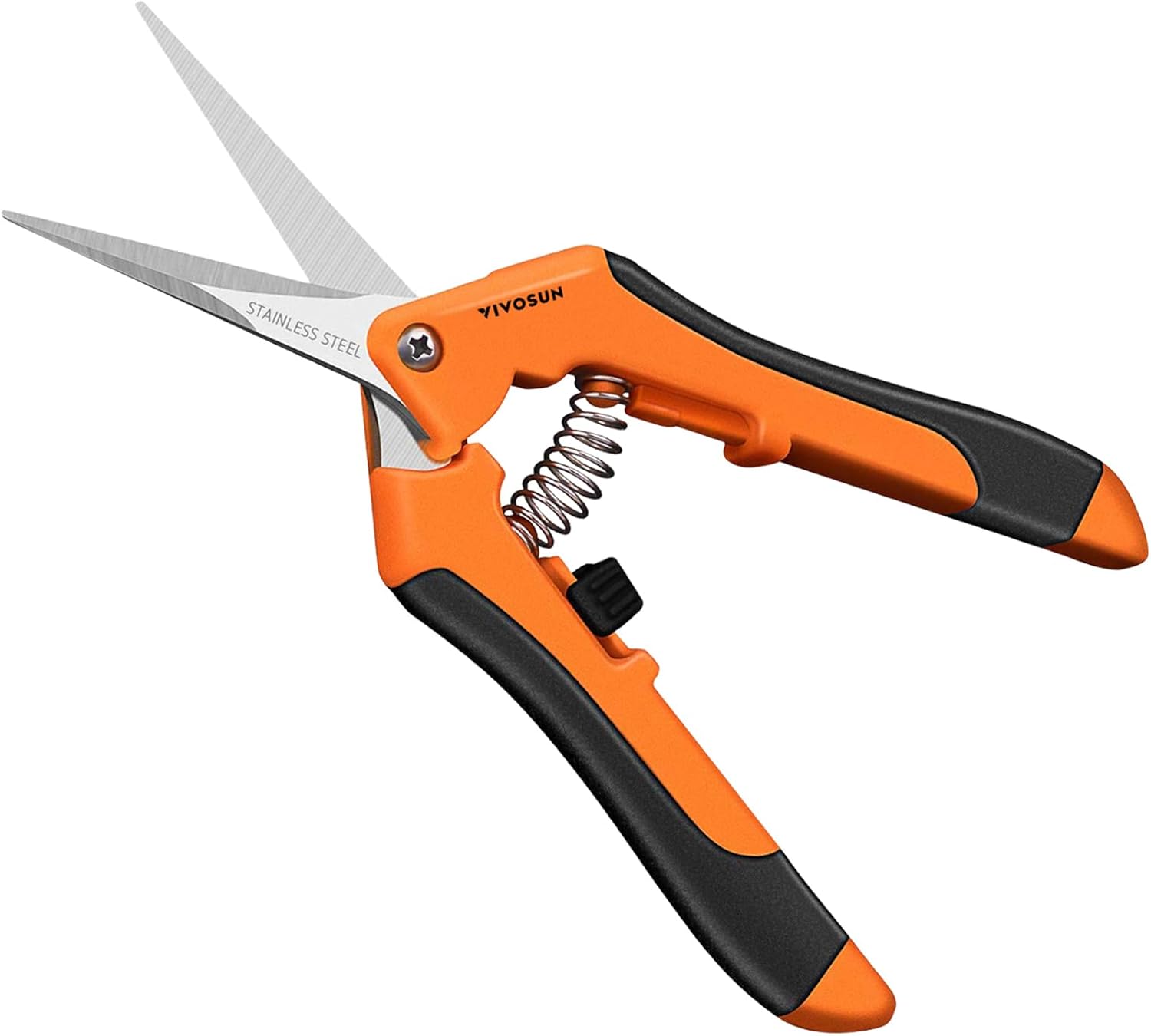
| Blade Type | Anvil |
|---|---|
| Blade Material | Stainless Steel |
| Hand Orientation | Ambidextrous |
| Blade Edge | Straight |
These VIVOSUN 6.5-inch pruning shears are small, light, and built for precise cutting of flowers, small stems, and detailed garden tasks. The straight, precision-sharpened stainless steel blades and micro tip design let you get into tight spaces for deadheading, shaping, and bonsai work without disturbing nearby stems. An ambidextrous polished stainless steel handle keeps the tool simple and durable while a sideways locking mechanism secures the blades when not in use. Because it is an anvil-style cutter with a short 2.1-inch blade, it excels at delicate snips rather than thick branch work; expect best results on softwood and thin-diameter growth. The low weight and ergonomic grip reduce hand fatigue for long sessions, though heavier pruning or cutting branches near 3/4 inch will require a larger bypass pruner. For gardeners who want a budget-friendly, fuss-free snipping tool for everyday trimming, these shears cover the basics reliably with minimal maintenance required.
Best for: A no-frills, cost-conscious gardener who needs an easy-to-use snipping tool for daily deadheading, shaping, and light pruning around flowers and small shrubs.
Less Ideal for: Gardeners who regularly cut thick woody branches or need a shear for heavy-duty tree pruning should choose a larger bypass pruner or lopper instead.
- Precision micro-tip stainless steel blades for tight, detailed cuts
- Ambidextrous design and comfortable grip reduces hand strain
- Sideways locking mechanism keeps blades closed and safe when stored
- Lightweight construction makes it easy to use for extended trimming sessions
- Anvil blade and short blade length limit effectiveness on thicker woody stems
Verdict: A simple, affordable micro pruning shear that delivers precise, low-effort snips for everyday deadheading and light pruning.
Fiskars Bypass Pruning Shears with Nonstick Coating
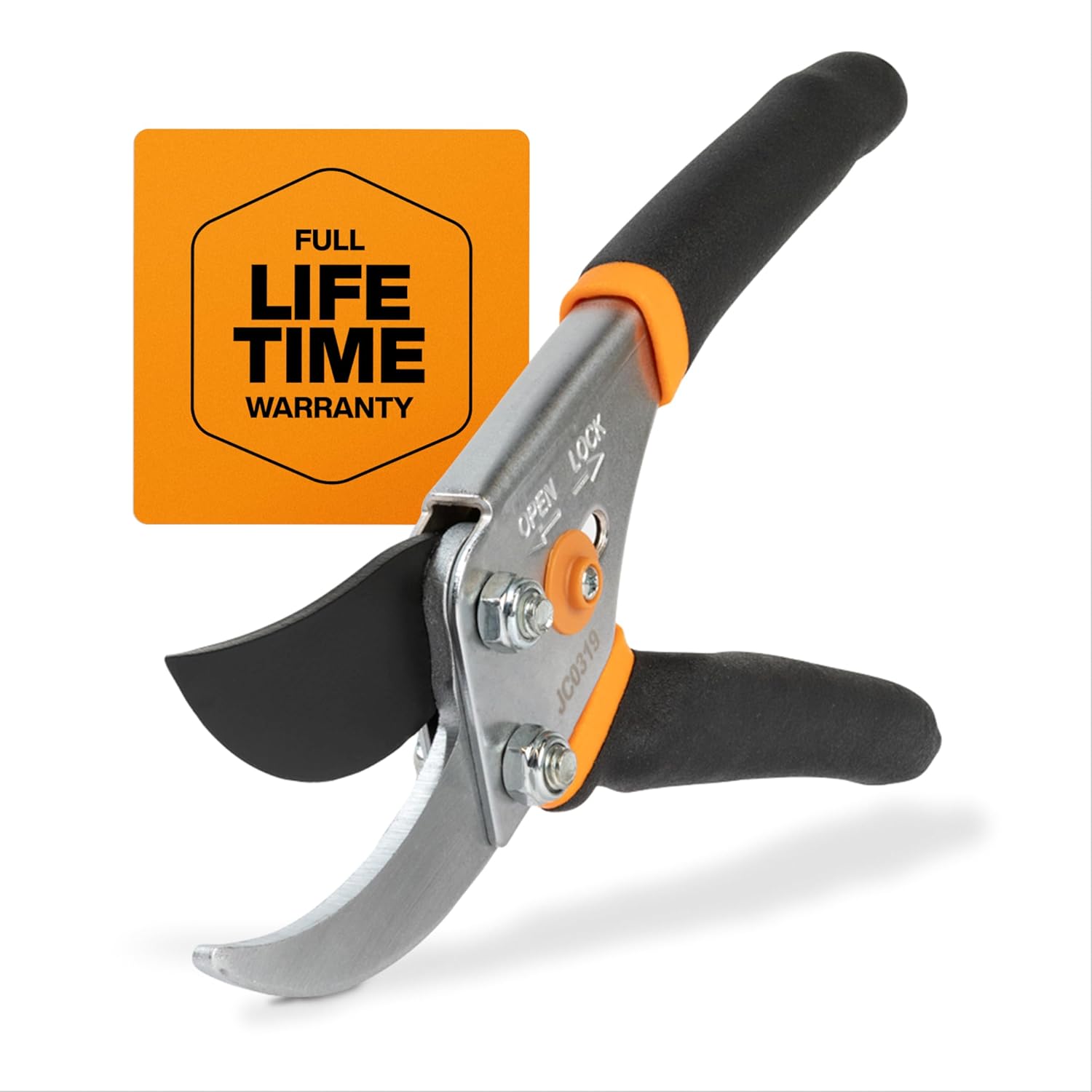
| Cutting width | 0.63 inches |
|---|---|
| Blade Edge | Serrated |
| Blade Material | Alloy Steel |
| Hand Orientation | Ambidextrous |
These Fiskars bypass pruning shears are a straightforward, reliable tool for everyday garden pruning. They use a bypass cutting action with precision-ground alloy steel blades and a low-friction coating so stems and green growth are sheared cleanly without crushing, which is helpful for flowers, shrubs, and small woody shoots up to about 5/8 inch. The pruners include a sap groove and nonstick finish to reduce sticking and rust, and an ergonomic non-slip handle that makes repeated trimming more comfortable. Because they are all-steel construction they feel solid and hold an edge through routine use, and the safety lock keeps the blades closed for storage. The main limitations are the modest cutting capacity, which is not suited for thick branches, and the simpler design lacks compound leverage for heavy cutting, so they work best for regular maintenance rather than heavy-duty pruning. For gardeners who want a durable, easy-to-maintain daily pruner, these are a dependable choice.
Best for: Home gardeners who want a dependable, low-maintenance pruner for routine trimming, deadheading, and shaping of flowers and small shrubs and who value proven, widely used tools.
Less Ideal for: People who need a pruner for larger woody branches or frequent heavy-duty cutting should choose a lopper or powered/pruning tool instead.
- Bypass blades and precision-ground steel deliver clean cuts on live stems
- Low-friction blade coating and sap groove reduce sticking and resist rust
- Ergonomic non-slip handle improves control and reduces hand fatigue
- All-steel construction offers durable, long-lasting performance
- Cut capacity limited to about 5/8 inch so not suitable for thicker branches
- No compound leverage mechanism, making heavy or woody cuts harder
Verdict: A tough, no-nonsense pruner that provides clean cuts and low-maintenance blades for everyday garden grooming.
Choosing the Right Herb Pruning Shears: Key Factors to Consider
Blade Material and Edge Geometry
Blade composition determines how long an edge stays sharp and how cleanly a stem is cut. Stainless steels resist rust but vary in hardness; harder steels hold an edge longer but can be more brittle. Blade finish and edge geometry influence whether the cut slices or crushes delicate herb stems, which affects regrowth and disease risk. For herb pruning shears, a thin, sharp bevel that produces a slicing action is usually preferable.
Pay attention to whether the blades are ground for precision and whether they are replaceable. Replaceable blades extend tool life and make it easier to restore peak cutting performance without replacing the whole tool.
Handle Fit and Comfort
Shears that fit your hand reduce fatigue and improve accuracy during repeated harvesting sessions. Look for handle shapes that match your grip style and hand size, whether you pinch the handles or wrap all fingers. Soft-touch coatings add comfort but can trap moisture; molded grips provide secure contact even when hands are damp.
Consider whether the shear design allows for one-handed operation of any safety lock and whether the handles clear container rims when reaching into tight pots. For gardeners with joint issues, a larger loop or spring-assisted action can make frequent use far more comfortable.
Corrosion Resistance and Coatings
Herb gardening often involves moist soil, frequent washing, and working near kitchen environments, so resistance to rust is important. Stainless steel blades, corrosion-resistant coatings, and sealed pivots extend tool life and reduce the need for immediate drying after use. Coatings can also reduce sap buildup, making cleaning easier.
Check whether the construction leaves trap points where water and soil collect. Tools with accessible pivot bolts and simple disassembly are easier to fully dry and lubricate, which prolongs usable life in humid conditions.
Maintenance, Sharpening, and Serviceability
Sharp, well-maintained blades produce cleaner cuts and reduce plant stress. Evaluate how easily the blades can be sharpened with a simple stone or whether the design requires special tools. Some shears have replaceable blades or an accessible pivot that can be tightened if the action loosens. Simpler maintenance routines mean the tool will stay in service longer and perform better over seasons.
Consider whether the manufacturer or design allows replacement parts for springs, bolts, or blades. Even if you do light maintenance yourself, having common replacement parts available keeps a favorite pair of shears working for years.
Weight, Balance, and Control
Lightweight shears reduce hand fatigue during frequent picking, while balanced tools provide better control for precise cuts near buds and tender stems. Overly heavy shears can be unwieldy in small pots or when holding a plant steady, and poorly balanced tools can slip or require excessive force.
Think about the typical use case: frequent light harvesting favors the lightest balanced option you can find, while occasional heavier trimming can tolerate more mass if it improves durability.
Cutting Capacity and Tip Shape
Herbs present a range of stem diameters and textures, from soft basil shoots to woodier rosemary branches. Shears with narrow pointed tips allow you to reach into tight clusters and snip individual stems cleanly. Conversely, a robust rounded tip can handle slightly thicker growth without pinching.
Match the shear tip and maximum cutting diameter to the herbs you grow. If you cultivate a mix of soft and woody herbs, a mid-range cutting capacity with a fine tip offers the most versatility.
Sizing Shears for Pots and Windowsills
In container and windowsill herb gardens you want shears that are compact and maneuverable. Short blades and narrow tips help you reach into crowded pots without damaging neighboring plants. Compact handles reduce interference when you are working close to pot rims.
If storage space is limited, consider a slim folding shear or a pair that hangs neatly on a small hook. Size choices also affect safety, since smaller shears are easier to stow away from children and pets.
- Short blades enable precise cutting in crowded containers
- Narrow handles reduce jostling when reaching into pots
- Folding designs can save space and add safety
Care Routine to Keep Shears Performing
Establish a simple post-use routine: wipe blades clean, dry them, apply a drop of lubricant to the pivot, and store in a dry place. Wiping sap and soil from the cutting edge prevents buildup that dulls blades and harbors pathogens.
Periodic sharpening with a small whetstone or a diamond rod restores a slicing edge. If blades are easily removable, take them apart for deep cleaning at the end of the growing season to prevent corrosion and to check the spring and fasteners.
- Wipe and dry after each use
- Lubricate pivot monthly during active season
- Sharpen lightly as soon as cuts look ragged
Designs That Reduce Plant Stress
For herbs you want a cutting action that slices cleanly rather than crushing stems. Bypass-style blades generally offer a shearing action better suited to living shoots, resulting in quicker healing and less risk of disease entry. An anvil-style cut can crush soft stems and is better reserved for dead wood.
Other design features such as a fine pointed tip, narrow throat, and tight blade alignment all contribute to less tear and faster recovery for harvested stems.
- Bypass blades are preferred for living herb stems
- Fine tips reach into dense growth without harm
- Tight blade alignment produces cleaner cuts
Ergonomic Options for Different Hands
Ergonomics vary widely between models. Gardeners with small hands should look for narrower handle spacing and lighter springs. Those with larger hands or arthritis may prefer larger loops and cushioned grips. Try to test the grip shape and spring tension where possible to ensure it suits your typical session length.
Spring-assisted options reduce pinch effort but add mechanical complexity. If you harvest often, a light spring or assisted opening can reduce fatigue and speed up work.
- Match handle spacing to your hand size
- Consider spring-assisted designs for frequent harvesting
- Cushioned grips help during longer sessions
Using Shears for Harvest Vs Light Pruning
Harvesting tender shoots and frequent snipping require a different feel than occasional shaping or removing woody stems. For harvest-focused use, prioritize a razor-sharp thin edge and light weight for fast, repetitive cuts. For light pruning of sturdier herbs, a slightly sturdier construction and higher cutting capacity matter more.
If you plan to do both, prioritize a balanced pair that can handle daily harvesting while tolerating occasional shaping tasks without damage.
- Harvest pairs should be light and fast cutting
- Light pruning needs slightly stronger blades and pivot
- One versatile pair can serve both roles for casual gardeners
How We Chose the Best Herb Pruning Shears
We focused on features gardeners actually notice day to day when working with herbs. Key evaluation criteria included blade sharpness and edge retention because herb stems are tender and benefit from clean slicing. Ergonomics and handle size were judged to reflect long sessions of snipping or frequent harvests. Corrosion resistance and coating were considered for use near kitchen sinks, overwatering, and wet climates. Ease of maintenance covered how readily blades can be cleaned, sharpened, or swapped. Weight and balance were assessed for fine cutting control in tight pots and crowded foliage. We excluded heavy-duty or long-handled pruning tools that are designed for woody shrubs and trees, since those designs are unsuitable for delicate herb stems. We also filtered out novelty designs lacking replaceable blades or adequate corrosion protection. The result is a selection focused on practical performance for herb harvesting, deadheading, and light shaping.
FAQ
How often should I sharpen herb pruning shears?
Sharpen lightly whenever cuts start to crush stems rather than slice cleanly. For frequent use in a kitchen garden this might be every few weeks; for lighter seasonal use sharpening every few months is usually sufficient.
Are bypass blades always better for herbs?
Bypass blades are generally preferred for living herb stems because they slice rather than crush. However, for very woody or dried stems an anvil-style shear can sometimes be useful. Match the blade type to the primary task.
Can I use household sharpeners on pruning shears?
Simple whetstones or a ceramic rod work well for most pruning shears. Avoid coarse power grinders unless you know the steel type, since overheating can ruin temper. Keep sharpening light and preserve the original bevel angle.
What is the best way to clean shears after cutting scented or sticky herbs?
Wipe blades with a damp cloth to remove sap, then dry thoroughly. For sticky residues use a little rubbing alcohol or soapy water, then dry and lubricate the pivot. Regular cleaning prevents flavor transfer between herbs and prolongs blade life.
How do I store shears to prevent rust?
Store shears dry and lightly oiled in a drawer, box, or hanging rack where they are not exposed to moisture. If you wash them frequently, ensure they are fully dry before storage and consider a silica packet in enclosed containers.
Should I choose a spring-assisted model for everyday harvesting?
Spring-assisted shears reduce hand strain and speed repetitive cuts, making them a good choice for frequent harvesting. They add mechanical parts that may need occasional replacement, so weigh convenience against long-term serviceability.
Final Verdict
Pick shears that match how you grow herbs and how often you harvest. Prioritize a sharp slicing edge and a handle that fits your hand for frequent harvests, and factor in corrosion resistance if you work in damp conditions or wash tools often. Expect tradeoffs between light weight and long-term durability; choose the balance that fits your routine. Focusing on blade geometry, ergonomics, and maintainability will get you the most useful tool for kitchen and small-space herb gardening. That approach helps you make confident choices without overbuying features you will not use.
