

Note: This article contains affiliate links. If you click on these links and make a purchase, I may earn a small commission at no extra cost to you. This helps support my research and content. Read my full affiliate disclosure here.
If you are battling persistent blackberry canes in a garden, fence row, or pasture, selecting the right herbicide matters for long-term control and for protecting nearby desirable plants. The best herbicide for blackberries combines strong uptake by woody cane growth with appropriate persistence so you do not create a long-lasting soil hazard. This guide shortlists six top options suited to the blackberry control challenge and evaluates them against key gardener concerns such as residual soil activity and plant selectivity. Read on to understand the tradeoffs and which product features matter most for your situation.
Top Picks at a Glance
| Best Overall The best all-around choice for most situations | Roundup Ready-to-Use Poison Ivy Plus Tough Brush Killer, 1 gal |  |
| Best Quality Built to a higher standard if you want something more solid | Roundup Poison Ivy Plus Tough Brush Killer with Comfort Wand, 1 gal. |  |
| Best Value The sweet spot between price and what you get | BioAdvanced Poison Ivy Killer Plus Concentrate, 32 oz |  |
| Best Budget The cheapest option that still gets the job done reliably | Bonide Poison Ivy & Brush Killer BK-32 Concentrate, 16 oz |  |
| Highest Rated A top-rated pick with lots of positive feedback | Ortho GroundClear Poison Ivy & Tough Brush Killer, 1 gal. |  |
| Most Popular A crowd favorite that many people choose with confidence | BioAdvanced Brush Killer Plus Ready-to-Use 1 Gal |  |
Roundup Ready-to-Use Poison Ivy Plus Tough Brush Killer, 1 gal
| Unit Count | 128 Fluid Ounces |
|---|---|
| Item Form | Spray |
| Included Components | Weed Killer |
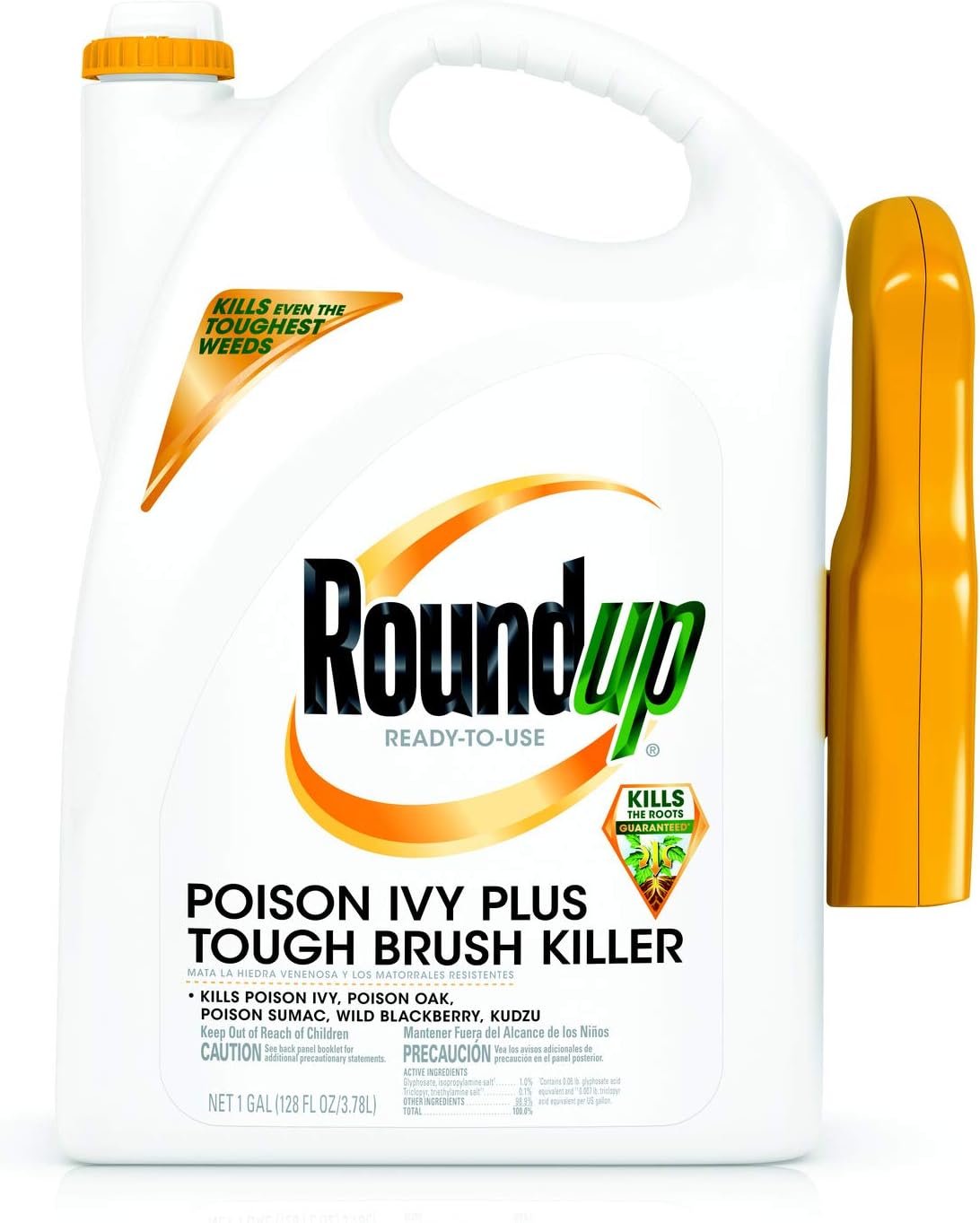
This ready-to-use Roundup formula is designed to tackle stubborn brush, vines, and broadleaf weeds such as poison ivy, poison oak, kudzu, and wild blackberry. You use it straight from the bottle with the trigger sprayer and apply directly to leaves; the product absorbs on contact and claims visible dieback in about 24 hours and rainproofing in roughly 30 minutes. For homeowners dealing with established blackberry patches along fences, paths, or foundations this product simplifies spot treatment because it kills to the root and is intended for hard-to-control plants. Notable features are the large one-gallon ready-to-use volume and the trigger applicator that makes targeted spraying simple. Important limitations are the need for careful application to avoid contact with desirable plants and a waiting period before replanting in treated areas. Also, because it is a nonselective herbicide, it is best used as a spot treatment rather than broadcast spraying in mixed planting areas.
Best for: Homeowners who need a straightforward, powerful spot-treatment for persistent blackberry thickets and other tough brush around fences, walkways, or foundations and who prioritize ease of use and fast visible control.
Less Ideal for: Gardeners who want to preserve surrounding plants in mixed beds or who need a selective lawn-safe option should consider products made for those specific uses instead.
- Ready-to-use trigger sprayer simplifies spot treatment without mixing
- Formulated to kill tough brush and invasive vines down to the root
- Visible results often within 24 hours and becomes rainproof quickly
- Large one-gallon volume covers multiple treatment areas
- Nonselective formula can damage desirable plants if contacted
- Requires caution and temporary exclusion of people and pets until spray dries
Verdict: A large ready-to-use spray that delivers fast, reliable spot control of blackberries and other tough brush without mixing or special equipment.
Roundup Poison Ivy Plus Tough Brush Killer with Comfort Wand, 1 gal.

| Unit Count | 128 Fluid Ounces |
|---|---|
| Item Form | Spray |
| Coverage | 300 square feet |
| Liquid Volume | 1 gallons |
This 1 gallon Roundup formula is designed to tackle poison ivy, poison oak, poison sumac, wild blackberry, kudzu and other tough weeds by killing them down to the root. The container includes a reusable Comfort Wand that snaps on for one-touch, precision spraying so you can treat vines, fence lines, around trees and foundations without bending over. The product is rainproof in about 30 minutes and reports visible wilting within hours, and the label gives guidance for replanting 1 to 30 days after application depending on the site. Practical benefits include broad-spectrum control of woody vines and brush, a large coverage area (about 300 sq ft per gallon), and easier application with the wand. Important limitations are typical of strong herbicides: treated areas must be kept free of people and pets until dry and care is required near desirable plants to avoid drift or overspray. Also the formula contains multiple active ingredients, so follow label instructions for safe use and site-specific planting intervals.
Best for: Buyers who want an all-purpose, easy-to-apply solution for stubborn brush and poison ivy around yards, fence lines, and foundations, and who prioritize straightforward application and fast visible results.
Less Ideal for: Not a good choice for gardeners who need a selective lawn-safe product or who must treat areas where children, pets, or desirable plants cannot be kept away during drying and planting intervals.
- Targets woody vines and tough brush as well as broadleaf weeds and grasses
- Includes a reusable Comfort Wand for precision, reduce bending and easier spot treatment
- Rainproof in about 30 minutes so treatment holds up to light weather soon after application
- Covers roughly 300 square feet per gallon for treating fence lines, foundations and small infestations
- Contains potent active herbicide ingredients requiring careful handling and strict adherence to label safety directions
- Not selective so it can harm desirable plants if sprayed or if drift occurs
Verdict: A convenient, large-format ready-to-use herbicide with a precision Comfort Wand that makes fast, effective control of poison ivy and tough brush simple for typical homeyards.
BioAdvanced Poison Ivy Killer Plus Concentrate, 32 oz

| Unit Count | 32 Fluid Ounces |
|---|---|
| Coverage | Up to 4,000 square feet |
| Item Form | Liquid |
| Active Ingredients | Triclopyr, triethylamine salt 8.8% |
This BioAdvanced concentrate is a targeted solution for removing poison ivy, kudzu, blackberry and many other hard-to-control brush and vines by working systemically from leaf to root. It is typically mixed or applied undiluted for stump treatment and can treat up to 4,000 square feet from a single 32 oz bottle, which makes it useful for fence lines, wooded edges, trails, and overgrown patches. The active ingredient triclopyr moves through foliage into stems and roots so treated plants tend not to resprout, and the product is marketed to handle more than 70 listed species. Practical benefits include one-time applications that keep working after you spray and the ability to paint stumps to prevent regrowth. Limitations are that it is a nonselective brush control chemical so care is needed to avoid desirable plants and follow label directions for timing and application, and it requires standard protective measures when mixing and applying concentrated herbicides.
Best for: Gardeners and property owners looking to clear established patches of woody brush and invasive vines quickly and with lasting results who prioritize efficiency and fewer repeat treatments.
Less Ideal for: Those who need a selective solution for weeds in mixed beds with desirable plants nearby or users uncomfortable handling concentrated herbicides should consider alternative targeted methods.
- Systemic action with triclopyr that kills roots and reduces regrowth
- Concentrate covers up to 4,000 sq ft from a 32 oz bottle, efficient for large patches
- Works on a broad list of tough brush and vines including poison ivy, kudzu, and blackberry
- Can be applied undiluted to stumps to stop resprouting
- Nonselective herbicide so it can damage desirable plants if not applied carefully
- Requires handling precautions and following label instructions when mixing and applying
Verdict: Choose this concentrate when you need an efficient, single-product solution to eliminate large patches of poison ivy and other tough brush down to the roots.
Bonide Poison Ivy & Brush Killer BK-32 Concentrate, 16 oz

| Unit Count | 16 Fluid Ounces |
|---|---|
| Item Form | Concentrate |
| Coverage | over 240 weed species |
| Item Type Name | WEED_MOSS_CONTROL_AGENT |
Bonide Poison Ivy & Brush Killer BK-32 is a concentrated non-selective brush and broadleaf weed herbicide designed for spot and area treatments. You mix the concentrate with water for application through a tank or hose-end sprayer to treat vines, woody brush, and many common lawn weeds; the label also permits undiluted application to freshly cut stumps with a brush. Its primary strengths are broad species coverage and the ability to target tough weeds that standard lawn products miss, plus a formulation claimed to be harmless to grass when used properly. Practical use requires careful measuring, proper protective gear, and strict adherence to label directions to avoid contact with skin, eyes, and desirable plants. Expect visible results after a single treatment on many weeds, though repeated applications may be needed for large infestations or deep-rooted perennials. The product is best for targeted control rather than routine blanket spraying across mixed planting beds where non-target damage is a concern.
Best for: Buyers who prioritize efficient, targeted control of persistent weeds and brush and who are comfortable following label directions and safety precautions when mixing and applying concentrates.
Less Ideal for: People who need an all-purpose selective weed control for mixed flower beds or who prefer ready-to-use products that do not require measuring and mixing.
- Concentrated formula covers many applications from a 16 fl oz bottle
- Effective on a wide range of species including poison ivy, poison oak, and woody brush
- Can be applied undiluted to freshly cut stumps for stump-killing
- Mixes for use with common tank or hose-end sprayers for flexible application methods
- Requires careful handling and protective equipment due to safety risks on contact
- Not selective to all desirable broadleaf plants if overspray occurs
- Label directions must be followed closely to avoid turf or landscape damage
Verdict: A compact, concentrated solution for homeowners who want a practical, targeted herbicide to rid lawns and edges of poison ivy, brush, and many stubborn weeds.
Ortho GroundClear Poison Ivy & Tough Brush Killer, 1 gal.

| Unit Count | 128 Fluid Ounces |
|---|---|
| Item Form | Spray |
| Coverage | Over 60 types of listed tough weeds and brush |
| Active Ingredients | Triclopyr, Triethylamine Salt, Pelargonic Acid |
Ortho GroundClear Poison Ivy & Tough Brush Killer is a one-gallon ready-to-use herbicide with a Comfort Wand sprayer designed for targeted control of stubborn brush and broadleaf weeds. It contains triclopyr and pelargonic acid to move through foliage and kill over 60 listed species including poison ivy, poison oak, kudzu and wild blackberry. The battery-powered wand gives controllable spray patterns for precise application along fences, trails and around structures so you can avoid desirable plants. Results begin to show within an hour and the product becomes rainproof after about two hours, which helps reliability in variable weather. Use when weeds are actively growing and thoroughly wet foliage for best uptake; retreatment may be necessary for very persistent regrowth. Because it is nonselective, care is required to avoid contact with desirable plants and it is not recommended for lawns or garden beds with valued plants. The Comfort Wand reduces bending and hand fatigue compared with pump sprayers, but proper protective equipment and attention to runoff guidance are still important.
Best for: Homeowners who prioritize dependable, fast-acting control of poison ivy and tough brush around buildings, fences and trails and who prefer a ready-to-use sprayer that reduces bending and hand fatigue.
Less Ideal for: Gardeners who need selective weed control in planted beds or people wanting an herbicide safe for turf should look at lawn-safe or selective products instead.
- Targets and kills over 60 listed tough weeds and brush including poison ivy and kudzu
- Ready-to-use with battery-powered Comfort Wand for accurate, low-effort spraying
- Visible results in about 1 hour and rainproof after 2 hours for dependable performance
- Moves through foliage for systemic control rather than just contact wilting
- Nonselective formula can damage desirable plants if oversprayed
- Not suitable for use on lawns or in garden beds with plants you want to keep
Verdict: Choose this ready-to-use, wand-equipped herbicide when you need fast, reliable control of poison ivy and other persistent brush around structures and non-garden areas.
BioAdvanced Brush Killer Plus Ready-to-Use 1 Gal

| Unit Count | 128 Fluid Ounces |
|---|---|
| Item Form | Spray |
| Active Ingredients | triclopyr |
| Coverage | treats a large area with various types of weeds and brush |
This one-gallon ready-to-use BioAdvanced Brush Killer Plus is a straight‑forward option for tackling poison ivy, poison oak, blackberry, kudzu and other woody vines without mixing concentrates. The built-in sprayer makes it easy to spot-spray individual plants or to treat larger patches along fences, trails, and wooded edges. Its active ingredient, triclopyr, moves through leaves and stems into the root system so treated plants gradually wilt and die over the following 1 to 6 weeks, which helps prevent quick regrowth. It becomes rainproof in about four hours, so you do not need perfect weather windows to use it. Expect visible results to appear slowly rather than immediately, and understand that it is designed for selective brush and vine control rather than broad-spectrum turf treatment. For anyone who prefers an off-the-shelf, no-mix solution, this bottle balances convenience with the systemic control needed to remove persistent vines.
Best for: Buyers who want a convenient, no-mix solution to remove poison ivy and other woody vines around yards and edges and who prioritize proven, widely used chemistry over experimental products.
Less Ideal for: Gardeners seeking fast cosmetic dieback within days or a product for general-purpose lawn weed control should consider other specialized herbicides.
- Ready-to-use with built-in sprayer for easy spot treatments and larger areas
- Systemic action with triclopyr that moves to the roots for lasting control
- Marked as rainproof in about four hours, offering flexibility with timing
- Effective against a long list of tough brush and vines including poison ivy and kudzu
- Acts slowly with visible decline taking 1 to 6 weeks rather than immediate knockdown
- Not formulated for broad turf or non-woody weed control
Verdict: A convenient ready-to-use systemic brush killer that reliably kills poison ivy and tough vines without mixing.
Choosing the Right Herbicide for Blackberries: Key Factors to Consider
Translocation and Timing
Blackberries are perennial shrubs that regrow from established crowns and roots, so herbicides that move from leaves into root and crown tissues are more likely to provide lasting control. Translocating active ingredients usually work best when canes are actively growing and leaves are healthy, because movement depends on the plant's internal transport systems. Applications made in late spring through summer frequently achieve better uptake than early spring or dormant-season sprays.
Timing also matters relative to cutting or mowing. If you plan to cut canes before spraying, wait for regrowth with fresh leaves rather than spraying immediately after cutting. That new growth provides the pathway for the herbicide to reach the roots.
Residual Soil Activity
Residual activity in soil determines how long a herbicide will affect seeds and newly emerging plants after application. For small garden beds or near desirable ornamentals, you may prefer shorter residual life to avoid harming subsequent plantings. In larger, unmanaged areas or fence rows, a longer residual can help suppress resprouting and seedlings for an extended period.
Consider the persistence under local conditions. Soil type, organic matter, and rainfall influence how long an herbicide remains active. Read label guidance on replanting intervals and sensitive crops to plan follow-up vegetation management safely.
Selectivity and Non-Target Risk
Selectivity describes how much the herbicide harms blackberries versus other plants. Non-selective options can provide quick results but will damage any vegetation they contact. If blackberries grow near desirable shrubs, trees, or groundcovers, choose products and application methods that reduce drift and root uptake by nontarget plants.
Physical barriers, shielded sprayers, and spot treatments limit exposure. Also consider root connections in thickets; treated roots can extend into adjacent perennial plants, so avoid broadcast applications where roots of desirable species intermingle with the blackberry root mass.
Application Method and Equipment
Herbicides come in several formulations: ready-to-use sprays, concentrated liquids for backpack or handheld sprayers, and spot-treatment wipers or gels. Equipment compatibility affects the precision and efficiency of treatments. Backpack sprayers and wipers let you treat individual canes and reduce drift, while boom or broadcast sprayers cover large areas faster but increase non-target risk.
Calibration matters for safety and effectiveness. Using the correct nozzle, pressure, and spray volume ensures the herbicide reaches foliage at the intended dose. For homeowners, ease of mixing and cleaning equipment without cross-contamination is a practical consideration.
Safety, Label Restrictions, and Re-entry
Herbicide labels include legal directions for personal protective equipment, buffer zones, and re-entry intervals after application. Those instructions protect applicators and reduce unintended exposure to people, pets, and wildlife. Gardeners should follow label PPE requirements, especially when using concentrated formulations or applying in breezy conditions.
Pay attention to restrictions for use near water, edible crops, and pollinator-attractive plants. Some products have specific instructions to avoid contamination of irrigation ditches or ponds and to limit impacts to pollinators by avoiding flowering weeds during application.
Follow-up Control and Monitoring
Because blackberries resprout from roots and crowns, a single application often does not eliminate a mature thicket. Monitor treated sites for regrowth and plan follow-up spot treatments during the next active growth period. Combining mechanical removal of large canes with targeted herbicide applications to regrowth can reduce the number of chemical treatments required.
Keep records of treatment dates, weather conditions, and observed regrowth to refine timing for future applications and to comply with any label-mandated retreatment intervals.
Preparing the Site Before Application
Good preparation improves herbicide uptake and reduces waste. Clear loose debris and mow surrounding vegetation if it interferes with access, but avoid heavy disturbance of roots immediately before treatment. If you plan to cut back canes, do so weeks before spraying to allow healthy regrowth, which improves translocation into root systems.
Mark nearby desirable plants and create physical barriers if needed to prevent spray drift. Check weather forecasts and avoid application on windy days or when heavy rain is expected within 24 hours, unless the label specifies rainfast times.
- Remove loose litter that might intercept spray
- Allow regrowth after pruning for better uptake
- Use protective tarps or shields near ornamentals
- Apply in calm, dry weather for best coverage
Spot Treatment Techniques
Spot treatments concentrate the herbicide where it is needed and limit non-target impact. For scattered or small patches, use a backpack sprayer with a low-volume setting, a gel or paste applicator for stem painting, or a wick/wiper that transfers herbicide only to the cane surfaces.
Ensure thorough wetting of leaves but avoid runoff. Apply to both sides of leaves when possible for better absorption. For stem painting, target new regrowth when bark is not overly thick to allow movement into the cambium and root system.
- Use low-volume, high-concentration mixes for spot work
- Wipers are useful along fence lines and paths
- Avoid broadcast spray when desirable plants are present nearby
Managing Large Thickets and Broadcast Needs
Large infestations may justify broadcast application, but that approach requires careful planning. Create buffer zones around water and sensitive plantings and follow label buffer distance instructions. Consider treating in phases to reduce shock to wildlife and to allow monitoring between passages.
Mechanical removal followed by targeted herbicide application to stumps or regrowth can reduce the volume of chemical needed while improving long-term success.
- Plan phased treatments to monitor effectiveness
- Combine mowing or cutting with chemical follow-up
- Respect label buffer distances for water and crop areas
Safe Disposal and Equipment Cleaning
Rinse sprayers and mixing containers according to label directions to avoid contaminating water or soil. Triple-rinse equipment and dispose of rinse water as directed, typically by applying it to labeled target plants at the correct dilution or taking it to an appropriate disposal facility if prohibited.
Store concentrated products in a locked, labeled area away from food and livestock. Keep records of purchases and applications if your property is subject to regulatory inspection or if you need to track replanting intervals.
- Triple-rinse sprayers and use rinse water per label
- Do not pour excess concentrate into drains or onto soil
- Store products securely and follow local disposal rules
How We Chose the Best Herbicide for Blackberries
We prioritized products built to control woody perennial cane species and that offer practical application options for homeowners and land managers. Evaluation focused on how quickly a product translocates into roots, the length and behavior of residual soil activity, labeled use sites that match garden and pasture settings, and options for targeted application to minimize damage to nearby ornamentals or crops. We also weighed formulation types and mixing flexibility for spot treatments versus broadcast use, plus label clarity about required personal protective equipment and re-entry intervals. Excluded items included products labeled only for annual weeds, unregistered formulations for the intended use, and herbicides with unclear or excessively long soil persistence that raise unacceptable risks in small gardens. The final shortlist favors products that balance effective root kill with predictable persistence, clear directions for cane-cutting or foliar timing, and practical safety and application details for gardeners.
FAQ
When is the best time of year to apply herbicide for blackberries?
Applications are most effective when canes are actively growing and leaves are healthy, typically late spring through summer. Timing after regrowth following cutting provides a strong pathway for translocation into roots.
Can I use a non-selective herbicide near my ornamental shrubs?
Using non-selective products near ornamentals risks harming desirable plants. Use spot treatments, shielded sprayers, or stem-specific applications to limit contact, and maintain buffer zones between treatment and sensitive species.
How long should I wait to replant an area after treating blackberries?
Replanting intervals depend on the herbicide's residual soil activity and the label instructions. Some products allow replanting within weeks, while others require months or more. Always follow the label for safe replant timelines.
Will a single treatment eliminate an established blackberry thicket?
Often it will not. Mature thickets usually require follow-up monitoring and additional spot treatments as regrowth appears. Combining mechanical removal with targeted herbicide applications improves the chance of long-term control.
How can I reduce off-target drift during application?
Apply on calm days, use low-pressure nozzles and larger droplet sizes, employ shields or wipers for spot work, and avoid fine misting. Maintaining correct nozzle height and using drift-reduction agents when labeled can also help.
Final Verdict
Choosing the right herbicide for blackberries involves balancing root-killing translocation with acceptable soil persistence and minimal harm to desirable plants. Focus on products and application methods that provide systemic uptake, allow precise application, and have label guidance compatible with your site and replanting intentions. Prioritize timing, safety, and follow-up monitoring. For small patches, targeted spot treatments and mechanical removal reduce non-target risk. For larger infestations, plan phased treatments and respect label buffer and re-entry rules to achieve durable control while protecting surrounding vegetation.
