

Note: This article contains affiliate links. If you click on these links and make a purchase, I may earn a small commission at no extra cost to you. This helps support my research and content. Read my full affiliate disclosure here.
Kudzu is one of the most persistent invasive vines in many landscapes, and choosing the right herbicide for killing kudzu makes the difference between repeated resprouting and long-term control. In the field, you need a product that moves to roots, tolerates variable weather, and can be applied without harming nearby desirable plants. This guide walks through the top shortlisted herbicides for killing kudzu and explains why each made the cut. We evaluated systemic activity, persistence, application methods, and user safety so you can pick an approach that fits your site and season. Read on to understand the practical tradeoffs before you start treatment.
Top Picks at a Glance
| Best Overall The best all-around choice for most situations | ALLIGARE Triclopyr 4 EC Selective Herbicide (1 Quart) |  |
| Best Quality Built to a higher standard if you want something more solid | Ortho GroundClear Poison Ivy & Tough Brush Killer, 1 gal. |  |
| Best Value The sweet spot between price and what you get | Compare-N-Save 75324 Herbicide, 1-gallon (glyphosate concentrate) |  |
| Best Budget The cheapest option that still gets the job done reliably | Ortho MAX Poison Ivy & Tough Brush Killer Ready-to-Use, 24 oz | 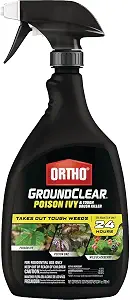 |
| Highest Rated A top-rated pick with lots of positive feedback | ALLIGARE Sonora Broadleaf Herbicide, 1 Gallon |  |
| Most Popular A crowd favorite that many people choose with confidence | BioAdvanced Brush Killer Plus Concentrate (32 fl oz) |  |
| Best Seller A high-volume bestseller chosen again and again | Roundup Poison Ivy Plus Tough Brush Killer with Comfort Wand, 1 gal. |  |
ALLIGARE Triclopyr 4 EC Selective Herbicide (1 Quart)

| Unit Count | 32 Fluid Ounces |
|---|---|
| Item Form | Liquid |
| Coverage | Pastures, rangelands, rights-of-way, lawns, golf courses, sod farms, industrial properties, ditches |
| Active Ingredients | Triclopyr |
ALLIGARE Triclopyr 4 EC is a concentrated liquid herbicide used to target woody plants, broadleaf weeds, and brush in large outdoor areas. It is typically mixed into a spray tank at recommended rates (about 3.2 to 6.4 oz per gallon) with a penetrant and applied to foliage or cut stems to achieve systemic control. Notable features include an ester formulation that improves leaf and bark absorption and compatibility with many tank-mix partners, which lets you customize treatments for stubborn species. In practice it is effective for restoring pastures, clearing rights-of-way, and reducing invasive broadleaf growth while leaving grasses largely unharmed when used as directed. Important limitations are that it is a professional-strength chemical requiring careful PPE and adherence to safety and application instructions, it can harm non-target broadleaf plants if drift or overspray occurs, and restrictions apply in some states and situations. For spot treatments or large-area brush control it is a dependable option when handled responsibly.
Best for: Gardeners or land managers who need a reliable, selective herbicide to control woody and broadleaf invasives across pastures, rangelands, or larger outdoor areas and who follow safety procedures for concentrated chemicals.
Less Ideal for: Casual home gardeners with small ornamental beds or indoor herb gardens seeking a gentle, non-chemical solution should consider mechanical removal or lower-strength spot treatments instead.
- Targets woody plants, broadleaf weeds, and brush for effective control of invasive species
- Ester formulation promotes absorption through leaves and bark for systemic action
- Tank-mix compatible so you can combine with other herbicides or adjuvants
- Suitable for a wide range of large outdoor sites including pastures, rangelands, and rights-of-way
- Professional-strength concentrate that requires protective clothing and careful mixing
- Can damage non-target broadleaf plants if it contacts desirable species
- Not suitable for use where restrictions or local regulations prohibit triclopyr products
Verdict: Choose ALLIGARE Triclopyr 4 EC when you need a professional-strength, tank-mix compatible herbicide to reliably remove woody and broadleaf invasives across large outdoor areas.
Ortho GroundClear Poison Ivy & Tough Brush Killer, 1 gal.

| Unit Count | 128 Fluid Ounces |
|---|---|
| Item Form | Spray |
| Coverage | Over 60 types of listed tough weeds and brush |
| Active Ingredients | Triclopyr, Triethylamine Salt, Pelargonic Acid |
Ortho GroundClear Poison Ivy & Tough Brush Killer is a one-gallon ready-to-use herbicide with a Comfort Wand sprayer designed for targeted control of stubborn brush and broadleaf weeds. It contains triclopyr and pelargonic acid to move through foliage and kill over 60 listed species including poison ivy, poison oak, kudzu and wild blackberry. The battery-powered wand gives controllable spray patterns for precise application along fences, trails and around structures so you can avoid desirable plants. Results begin to show within an hour and the product becomes rainproof after about two hours, which helps reliability in variable weather. Use when weeds are actively growing and thoroughly wet foliage for best uptake; retreatment may be necessary for very persistent regrowth. Because it is nonselective, care is required to avoid contact with desirable plants and it is not recommended for lawns or garden beds with valued plants. The Comfort Wand reduces bending and hand fatigue compared with pump sprayers, but proper protective equipment and attention to runoff guidance are still important.
Best for: Homeowners who prioritize dependable, fast-acting control of poison ivy and tough brush around buildings, fences and trails and who prefer a ready-to-use sprayer that reduces bending and hand fatigue.
Less Ideal for: Gardeners who need selective weed control in planted beds or people wanting an herbicide safe for turf should look at lawn-safe or selective products instead.
- Targets and kills over 60 listed tough weeds and brush including poison ivy and kudzu
- Ready-to-use with battery-powered Comfort Wand for accurate, low-effort spraying
- Visible results in about 1 hour and rainproof after 2 hours for dependable performance
- Moves through foliage for systemic control rather than just contact wilting
- Nonselective formula can damage desirable plants if oversprayed
- Not suitable for use on lawns or in garden beds with plants you want to keep
Verdict: Choose this ready-to-use, wand-equipped herbicide when you need fast, reliable control of poison ivy and other persistent brush around structures and non-garden areas.
Compare-N-Save 75324 Herbicide, 1-gallon (glyphosate concentrate)

| Active Ingredients | glyphosate |
|---|---|
| Liquid Volume | 1 gallons |
| Item Form | Spray |
| Coverage | 25000 square_feet |
This one-gallon Compare-N-Save concentrate uses glyphosate to kill a wide range of annual and perennial weeds and grasses by foliar uptake down to the roots. It is mixed with water to create ready-to-use spray: the label recommends about 1.5 ounces per gallon for general use and up to 2.5 ounces per gallon for tougher perennials, with the full gallon making multiple gallons of spray for larger areas. Typical uses include clearing driveways, walkways, fence lines, garden preparation, lawn renovation, and stump or brush treatment. Notable features are fast visible results in 2 to 4 days, rainproofing within about two hours, and broad area coverage when diluted (manufacturer states it can cover thousands of square feet at recommended rates). Important limitations are that glyphosate will kill any green plant it contacts so careful targeting and protective gear are required, it has no residual pre-emergent activity, and label directions must be followed for safe use around edible gardens. For commercial lawn work, its concentration and economy make it effective but it demands disciplined application to avoid off-target damage.
Best for: Commercial landscapers or property managers who need an economical, fast-acting nonselective herbicide for clearing large areas and preparing sites for renovation while following safety protocols.
Less Ideal for: Home gardeners seeking a selective lawn-safe product or people who need a long-lasting pre-emergent should consider alternatives.
- Concentrated formula stretches to many gallons of ready-to-use spray for large-area work.
- Fast visible control with results often in 2 to 4 days and rainproofing in about two hours.
- Broad-spectrum activity against annual and perennial weeds and grasses, including root kill.
- Simple dilution instructions let crews mix strength for general or tougher targets.
- Nonselective glyphosate will damage or kill desirable plants if drift occurs.
- No residual activity so repeat treatments or follow-up prevention are required for long-term control.
Verdict: A cost-effective, concentrated glyphosate concentrate that delivers fast, large-area weed and grass control when used with proper precautions.
Ortho MAX Poison Ivy & Tough Brush Killer Ready-to-Use, 24 oz
| Unit Count | 24 Fluid Ounces |
|---|---|
| Item Form | Spray |
| Coverage | non-selective broad spectrum coverage |
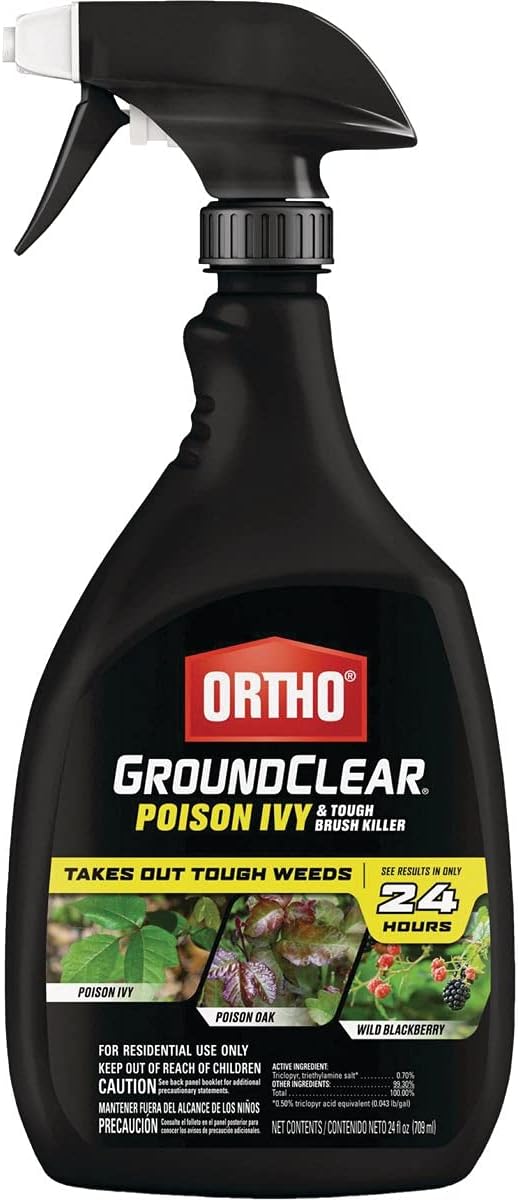
This ready-to-use Ortho MAX spray is designed for homeowners who need a straightforward way to tackle persistent brushy weeds like kudzu and poison ivy without mixing concentrates. It kills more than 60 types of tough brush and woody plants and is formulated to be rainproof two hours after application, which makes timing treatments easier. Typical use is spot-spraying mature, actively growing leaves in non-garden areas such as fence lines, trails, and around outbuildings; directions warn not to spray desirable plants because the formula is non-selective. The convenience of a pre-mixed bottle removes the guesswork on dilution and reduces preparation time, and the product specifically lists woody plants and stumps among targets, so it is useful for clearing vines and brush. The main limitation is that as a non-selective ready-to-use spray it offers less coverage per dollar than concentrates and is best for spot treatments rather than large-scale applications.
Best for: Homeowners needing a simple, no-mix solution to spot-treat kudzu and other brushy weeds around property edges and non-garden areas who prioritize ease of use over bulk coverage.
Less Ideal for: People managing very large kudzu infestations or commercial applicators who need cost-effective high-coverage treatments should consider concentrated herbicides or professional services.
- Ready-to-use spray removes need to mix or measure
- Effective on over 60 tough brush and woody weeds including kudzu
- Becomes rainproof in two hours for flexible application timing
- Targets woody plants, vines, and stumps as well as broadleaf weeds
- Non-selective formula will damage desirable plants if drift occurs
- Ready-to-use format is less economical for treating large infestations compared with concentrates
Verdict: A convenient ready-to-use spray that reliably kills kudzu and other tough brush for budget-minded homeowners who need targeted spot treatments.
ALLIGARE Sonora Broadleaf Herbicide, 1 Gallon

| Unit Count | 128 Fluid Ounces |
|---|---|
| Item Form | Liquid |
| Coverage | broadleaf weeds and woody brush |
| Included Components | 1 gallon jug of Alligare Sonora Herbicide |
| Active Ingredients | Herbicide |
ALLIGARE Sonora is a concentrated post-emergent herbicide designed for targeted control of stubborn broadleaf weeds and woody brush such as thistle, kudzu, locust, and mesquite. It is typically mixed and applied to actively growing plants with an agricultural surfactant for best coverage and faster kill. Notable features include labeled effectiveness on brush species, residual suppression to reduce regrowth, and a formulation that carries no grazing or hay-harvest restrictions, so treated pastures can remain in productive use. Practical benefits are a reliable reduction in thistle re-emergence, suitability for large-acreage applications like pastures and rights-of-way, and fewer repeat treatments thanks to residual activity. Important limitations are that specific application rates and methods are not provided on the listing so users must follow the product label for safe and effective dosing, and it should not be applied where it could reach surface water or contaminate irrigation sources. Protective handling and drift control are necessary to avoid off-target damage.
Best for: Farmers and land managers who need a dependable herbicide to reduce thistle and woody brush across pastures, rangeland, or rights-of-way while keeping land available for grazing.
Less Ideal for: Gardeners with small ornamental beds or those who cannot follow strict drift and water-protection measures should consider spot treatments or more targeted products.
- Targets tough broadleaf weeds and woody brush including thistle and kudzu
- Residual activity helps suppress regrowth and reduces repeat treatments
- No grazing or hay-harvest restrictions so land remains usable for livestock
- Concentrated 1-gallon jug is suitable for treating larger areas
- Label/application details are not shown in the listing so users must consult the full product label for correct rates and timing
- Must avoid application near surface water and take protective measures to prevent drift
Verdict: Choose Sonora when you need a reliable, pasture-safe post-emergent that suppresses thistle and woody brush while allowing continued grazing.
BioAdvanced Brush Killer Plus Concentrate (32 fl oz)

| Unit Count | 32 Fluid Ounces |
|---|---|
| Coverage | 4000 square_feet |
| Item Form | Spray |
| Active Ingredients | triclopyr |
BioAdvanced Brush Killer Plus is a concentrated spray-on herbicide designed to control tough vines and woody brush such as poison ivy, poison oak, kudzu, blackberry and many listed weeds. You mix the concentrate with water using the bottle’s measuring marks, apply it to actively growing, leafed-out plants, and the triclopyr-based formula moves systemically through foliage and roots so treated plants die back over 1 to 6 weeks. It becomes rainproof in about four hours, which helps avoid reapplication after light rain. The product covers up to 4,000 square feet per bottle when diluted to the recommended rate, so it is suited to larger patches rather than single small weeds. Because results take time to appear and the herbicide is selective for brush and broadleaf plants, you may need follow-up treatments for re-sprouts or for species not on the label. Handle with care and follow label directions to avoid contact with desirable plants and to meet local safety and disposal rules.
Best for: Buyers who want an efficient, science-based solution to remove patches of vines and woody brush without repeated spot-spraying and who plan treatments when plants are actively growing.
Less Ideal for: Gardeners who need instant knockdown, require a non-chemical mechanical approach, or who only need to remove small single weeds by hand should consider alternatives.
- Systemic triclopyr formula kills brush down to the root for longer control
- Concentrate mixes for economical coverage up to 4,000 sq ft per bottle
- Rainproof in about 4 hours so light rain is less likely to wash it away
- Label lists many targeted tough species including poison ivy, poison oak, kudzu and blackberry
- Works slowly with visible decline over 1–6 weeks so immediate removal is not achieved
- Selective to brush and broadleaf weeds so not effective on all plant types
Verdict: Choose this concentrated systemic brush killer when you need a practical, economical product to eliminate established vines and woody brush down to the roots.
Roundup Poison Ivy Plus Tough Brush Killer with Comfort Wand, 1 gal.

| Unit Count | 128 Fluid Ounces |
|---|---|
| Item Form | Spray |
| Coverage | 300 square feet |
| Liquid Volume | 1 gallons |
This 1 gallon Roundup formula is designed to tackle poison ivy, poison oak, poison sumac, wild blackberry, kudzu and other tough weeds by killing them down to the root. The container includes a reusable Comfort Wand that snaps on for one-touch, precision spraying so you can treat vines, fence lines, around trees and foundations without bending over. The product is rainproof in about 30 minutes and reports visible wilting within hours, and the label gives guidance for replanting 1 to 30 days after application depending on the site. Practical benefits include broad-spectrum control of woody vines and brush, a large coverage area (about 300 sq ft per gallon), and easier application with the wand. Important limitations are typical of strong herbicides: treated areas must be kept free of people and pets until dry and care is required near desirable plants to avoid drift or overspray. Also the formula contains multiple active ingredients, so follow label instructions for safe use and site-specific planting intervals.
Best for: Buyers who want an all-purpose, easy-to-apply solution for stubborn brush and poison ivy around yards, fence lines, and foundations, and who prioritize straightforward application and fast visible results.
Less Ideal for: Not a good choice for gardeners who need a selective lawn-safe product or who must treat areas where children, pets, or desirable plants cannot be kept away during drying and planting intervals.
- Targets woody vines and tough brush as well as broadleaf weeds and grasses
- Includes a reusable Comfort Wand for precision, reduce bending and easier spot treatment
- Rainproof in about 30 minutes so treatment holds up to light weather soon after application
- Covers roughly 300 square feet per gallon for treating fence lines, foundations and small infestations
- Contains potent active herbicide ingredients requiring careful handling and strict adherence to label safety directions
- Not selective so it can harm desirable plants if sprayed or if drift occurs
Verdict: A convenient, large-format ready-to-use herbicide with a precision Comfort Wand that makes fast, effective control of poison ivy and tough brush simple for typical homeyards.
Choosing the Right Herbicide for Killing Kudzu: Key Factors to Consider
Mode of Action and Root Translocation
Kudzu survives by storing carbohydrates in extensive roots and crowns, so a herbicide that only damages foliage will not give long-term control. Systemic chemistries that move from leaves to roots are necessary to interrupt carbohydrate flow and cause root mortality. When assessing products, check whether the active ingredient is known for downward translocation and whether the label lists perennial vine or woody vine control.
Timing and plant condition affect translocation. Treatments applied when the plant is actively transporting sugars-typically late summer into early fall-are more likely to move the herbicide to roots. Understanding mode of action helps you set realistic expectations for how many seasons of follow-up might be needed.
Application Method and Coverage
How you apply the herbicide determines how well it contacts leaves and how much reaches the vascular system. Foliar sprays require thorough wetting of leaves and stem surfaces; missed foliage means missed translocation. Cut-stump or basal bark treatments deliver concentrated material directly to the vascular cambium and are useful for large vines or when you want to avoid spray drift.
Equipment matters. A handheld pump sprayer can be sufficient for spot treatments, while a backpack sprayer gives better control on larger patches. For cut-stump work you will need a low-pressure sprayer or brush. Always follow label dilution rates and use adjuvants only when the label permits them, because adding the wrong surfactant can change how the herbicide moves or increase risk to non-target plants.
Timing and Seasonal Considerations
Kudzu is most vulnerable when it is actively translocating sugars to roots. Late summer and early fall are often optimal because the vine is moving resources to storage. Spring treatments can reduce canopy but may not kill roots unless paired with follow-up treatments later in the season.
Weather around application affects uptake. Avoid treating before heavy rain or when dew and high humidity will prevent quick drying; also avoid high heat that stresses plants. For multi-year infestations, plan for repeat monitoring and retreatment in subsequent seasons, since complete elimination of roots can take time.
Non-target Plant and Environmental Safety
Many effective root-translocating herbicides are broad-spectrum and will injure or kill desirable woody plants and ornamentals if they contact foliage or are taken up through roots. Consider buffer distances, physical barriers, and application techniques like cut-stump or basal bark that reduce off-target exposure.
If your site is near water or sensitive habitats, select products and label directions that account for runoff and aquatic risk. Read product labels for reentry intervals and drip-line root zone warnings. Personal protective equipment requirements also vary; choose options you can handle safely and legally in your area.
Residual Activity and Soil Persistence
Residual soil activity can help suppress regrowth from seed and shallow-rooted sprouts, but excessive persistence increases risk to desirable plantings and to future land uses. For kudzu, sufficient persistence to control resprouts is beneficial, but extreme soil longevity can prevent replanting and harm non-target species.
Assess label language about half-life and planting restrictions. Where long persistence is undesirable, choose formulations and application rates that provide effective vine control while minimizing long-term soil residues. Follow label limits on maximum annual application rates to avoid cumulative soil buildup.
Regulatory Labeling and Local Restrictions
Herbicide labels are legal documents that dictate how products can be used. Some effective formulations have restrictions near water, sensitive habitats, or in certain regions. Local regulations or extension recommendations may limit certain active ingredients for homeowner use.
Before buying or applying any herbicide, check local guidelines and the product label for permitted uses, required buffer zones, and disposal instructions. Labels also provide specific instructions for treating perennial vines and required timing, which directly impact efficacy and compliance.
When to Use Foliar Spray Vs Cut-Stump Treatments
Foliar spray is best for continuous, accessible canopies where you can thoroughly wet leaves without excessive drift to nearby plants. It is efficient for treating patches of kudzu with lots of leaf area and when the vine is actively growing. Use a surfactant only if the label allows it to improve leaf coverage and uptake.
- Foliar spray pros: faster for large areas, less manual cutting required
- Foliar spray cons: higher risk to non-target plants, requires careful weather conditions
- Cut-stump pros: direct delivery to vascular tissue, low drift, safer near desirable plants
- Cut-stump cons: labor intensive, not practical for very large infestations
Best Timing Through the Growing Season
Aim for treatments when kudzu is transporting carbohydrates to the roots. Late summer and early fall are typically ideal because the vine is still green and moving sugars but has less vigorous new growth. Spring and early summer applications can suppress canopy but often require follow-up later in the season to affect roots.
- Avoid treating before heavy rain or during extreme heat
- Spot-check treated areas in the following season for resprouts
Protecting Nearby Ornamentals and Lawns
Plan your application area and create physical buffers to prevent spray drift and root uptake by neighboring plants. Use precise application methods such as cut-stump or carefully directed basal bark treatments where ornamental roots are at risk. Consider temporary watering adjustments after treatment, since water movement can redistribute soluble herbicides in some conditions.
- Mask or cover sensitive plants during spray
- Use low-pressure nozzles for better control of droplets
Managing Large-Scale Infestations Over Multiple Seasons
Large kudzu patches rarely clear with a single treatment. Lay out a multi-year plan that sequences targeted removals, follow-up herbicide applications, and revegetation with competitive species where appropriate. Mechanical removal of heavy biomass followed by systemic herbicide to stumps and roots often speeds recovery of desirable cover. Track treated areas with flags or maps and monitor regrowth in spring and late summer. Reapplication windows depend on the product label and the observed vigor of resprouts.
- Combine mechanical and chemical tactics for dense stands
- Prioritize access routes and safety when treating steep or heavily infested slopes
Safety and Personal Protective Equipment
Follow the label for required personal protective equipment and reentry intervals. Even homeowner formulations can have respirator, glove, or long-sleeve requirements when mixing or applying. Mix and measure in a well-ventilated area and avoid applying on windy days. Store chemicals securely out of reach of children and pets, and dispose of rinse water according to local regulations. Keep spill kits or absorbent materials on hand for accidental drips during transport or application.
- Wear chemical-resistant gloves and eye protection
- Keep pets and people out of treated areas until safe reentry intervals have passed
How We Chose the Best Herbicide for Killing Kudzu
Our selection process focused on tools and formulations that are effective against vigorous perennial vines and that fit common homeowner and land manager situations. We prioritized systemic modes of action that translocate to roots because kudzu regrows from established root crowns and rhizomes. Persistent activity and documented mortality rates on perennial broadleaf vines were also considered. Application method versatility was important: options that offer foliar spray, cut-stump, or basal treatments expand usability across slopes, fences, and mixed planting. We looked at safety profiles for use near ornamentals and waterways and considered required reapplication intervals to estimate season-long labor. Ease of mixing and compatibility with common spray equipment were included so gardeners can apply treatments without specialized gear. Products were excluded if they were strictly short-residual contact herbicides or labeled only for annual weeds because those do not reliably kill perennial roots. We also excluded formulations that lack clear labeled instructions for vine control or that require commercial licensing for standard uses. The final picks reflect a balance of root-killing efficacy, practical application options, and reasonable safety precautions for home and small-acreage use.
FAQ
How long after treatment will kudzu stop growing?
Response time varies by product and timing. With systemic treatments applied at the right time, aboveground decline can appear within weeks, but root mortality and full dieback may take a season or more. Monitor regrowth and plan for follow-up treatments.
Can I spray herbicide near desirable trees and shrubs?
You can if you use application methods that limit exposure, such as cut-stump or basal bark, and follow label buffer instructions. Foliar sprays carry a higher risk of drift and root uptake, so protect or avoid spraying near sensitive plants.
Is mowing or cutting before treatment helpful?
Cutting to reduce topgrowth can improve access but may reduce translocation if done immediately before foliar application. For cut-stump treatments, cutting followed by immediate application to the fresh stump is effective. If you mow, allow regrowth so the plant is actively transporting sugars before foliar treating.
Will a single season of treatment eliminate kudzu?
A single season may significantly reduce canopy but often will not eliminate deep roots. Complete control typically requires monitoring and retreatment across seasons, especially for long-established patches.
What precautions should I take around water or wetlands?
Select products labeled for use near water and follow buffer and application restrictions exactly. Avoid treating immediately before heavy rain and prevent rinse water or concentrated mixtures from entering water bodies.
Final Verdict
Choose an herbicide strategy that matches the scale of the infestation, the season, and the sensitivity of nearby plants. Prioritize systemic modes of action and application methods that deliver herbicide to the vascular system if your goal is to kill kudzu roots. Expect to combine mechanical work with targeted chemical treatments and to monitor treated sites for at least one growing season. The practical choice comes down to access and acceptable tradeoffs: foliar sprays cover more area faster but require careful drift management, while cut-stump and basal techniques are more precise but labor intensive. Plan for follow-up treatments and site restoration to reduce the chance of reinfestation.
