

Note: This article contains affiliate links. If you click on these links and make a purchase, I may earn a small commission at no extra cost to you. This helps support my research and content. Read my full affiliate disclosure here.
Trumpet vine is fast-growing and can smother fences, trellises, and neighboring plants if not controlled. Choosing the right herbicide for trumpet vine matters because this vine spreads by tough roots and vigorous stems, so a product that only weakens foliage often fails to stop regrowth. This guide covers seven shortlisted options that gardeners rely on for different situations around yards, patios, and rural edges. We evaluate how well each product kills roots, how to apply it safely near desirable plants, and how often retreatment is typically needed. Read on for practical notes that help you match a control approach to the spot, soil, and regrowth risk.
Top Picks at a Glance
| Best Overall The best all-around choice for most situations | Hi-Yield Triclopyr Ester Concentrate, 16 oz |  |
| Best Quality Built to a higher standard if you want something more solid | ALLIGARE Triclopyr 4 EC Selective Herbicide (1 Quart) |  |
| Best Value The sweet spot between price and what you get | RM43 Total Veg Control Glyph Imazapyr Weed Preventer, 32 oz |  |
| Best Budget The cheapest option that still gets the job done reliably | Bonide Poison Ivy & Brush Killer BK-32 Concentrate, 16 oz |  |
| Highest Rated A top-rated pick with lots of positive feedback | Corteva Agriscience Remedy Herbicide |  |
| Most Popular A crowd favorite that many people choose with confidence | Bonide Stump-Out Stump & Vine Killer, 8 oz with Applicator | 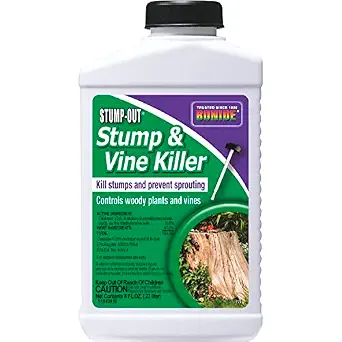 |
| Best Seller A high-volume bestseller chosen again and again | Southern Ag Brush Killer 8.8% Triclopyr, 1 Gallon |  |
Hi-Yield Triclopyr Ester Concentrate, 16 oz

| Item Form | Liquid |
|---|---|
| Liquid Volume | 16 fluid ounces |
| Active Ingredients | triclopyr |
| Coverage | Medium |
This 16 ounce Hi-Yield triclopyr ester concentrate is designed for spot-treatment of woody plants, vines, brush, and stubborn broadleaf weeds in non-crop areas and selected turf types. It is typically mixed according to the label and applied with a hand sprayer for targeted control of species like oxalis and wild violet, or as a bluegrass suppressor in perennial turf. Notable features include a liquid concentrate form for adjustable dilution and an active ingredient proven to control woody and broadleaf targets. In practice it delivers reliable knockdown on brush and woody regrowth and lets you treat individual problem areas without treating an entire lawn. Important limitations are that it is not safe for use on many warm-season grasses such as Bermuda, St. Augustine, zoysia, centipede, or bahiagrass and application rates vary by grass and situation, so careful reading of the label is required. Users should follow safety directions and avoid broadcast over desirable plants. For homeowners wanting focused woody and broadleaf weed control, it is an effective spot-treatment option when used as directed.
Best for: Buyers who prioritize predictable, targeted control of woody plants and persistent broadleaf weeds and who will follow label instructions and safety precautions for spot treatment.
Less Ideal for: Homeowners who need a general-purpose, whole-lawn weed killer for warm-season grasses or those unwilling to follow mixing and safety guidelines should consider alternative products.
- Effective active ingredient for killing woody plants, vines, brush and many broadleaf weeds
- Liquid concentrate allows adjustable dilutions for spot treatments
- Suitable for targeted use in non-crop areas and certain cool-season turf grass like bluegrass and tall fescue
- 16 ounce bottle is convenient for multiple spot applications without large storage needs
- Not safe for many warm-season grasses and can damage or kill sensitive turf species
- Requires careful mixing and strict adherence to label directions for safe and effective use
- Contains a herbicidal active ingredient that demands personal protective equipment and caution during application
Verdict: Choose this concentrate when you need a reliable spot-treatment herbicide to remove woody plants, vines, and tough broadleaf weeds while following label safety and turf restrictions.
ALLIGARE Triclopyr 4 EC Selective Herbicide (1 Quart)

| Unit Count | 32 Fluid Ounces |
|---|---|
| Item Form | Liquid |
| Coverage | Pastures, rangelands, rights-of-way, lawns, golf courses, sod farms, industrial properties, ditches |
| Active Ingredients | Triclopyr |
ALLIGARE Triclopyr 4 EC is a concentrated liquid herbicide used to target woody plants, broadleaf weeds, and brush in large outdoor areas. It is typically mixed into a spray tank at recommended rates (about 3.2 to 6.4 oz per gallon) with a penetrant and applied to foliage or cut stems to achieve systemic control. Notable features include an ester formulation that improves leaf and bark absorption and compatibility with many tank-mix partners, which lets you customize treatments for stubborn species. In practice it is effective for restoring pastures, clearing rights-of-way, and reducing invasive broadleaf growth while leaving grasses largely unharmed when used as directed. Important limitations are that it is a professional-strength chemical requiring careful PPE and adherence to safety and application instructions, it can harm non-target broadleaf plants if drift or overspray occurs, and restrictions apply in some states and situations. For spot treatments or large-area brush control it is a dependable option when handled responsibly.
Best for: Gardeners or land managers who need a reliable, selective herbicide to control woody and broadleaf invasives across pastures, rangelands, or larger outdoor areas and who follow safety procedures for concentrated chemicals.
Less Ideal for: Casual home gardeners with small ornamental beds or indoor herb gardens seeking a gentle, non-chemical solution should consider mechanical removal or lower-strength spot treatments instead.
- Targets woody plants, broadleaf weeds, and brush for effective control of invasive species
- Ester formulation promotes absorption through leaves and bark for systemic action
- Tank-mix compatible so you can combine with other herbicides or adjuvants
- Suitable for a wide range of large outdoor sites including pastures, rangelands, and rights-of-way
- Professional-strength concentrate that requires protective clothing and careful mixing
- Can damage non-target broadleaf plants if it contacts desirable species
- Not suitable for use where restrictions or local regulations prohibit triclopyr products
Verdict: Choose ALLIGARE Triclopyr 4 EC when you need a professional-strength, tank-mix compatible herbicide to reliably remove woody and broadleaf invasives across large outdoor areas.
RM43 Total Veg Control Glyph Imazapyr Weed Preventer, 32 oz

| Unit Count | 32 Ounce |
|---|---|
| Item Form | Spray |
| Coverage | 4324 square foot |
| Liquid Volume | 0.25 gallons |
RM43 Total Veg Control combines two herbicides plus a surfactant to deliver long-lasting bare-ground control for noncrop areas. It is formulated for spot treatments around fence rows, gravel driveways, farm buildings and other places where no vegetation is desired. A 32 oz bottle makes up to about 5 gallons of spray solution and is labeled to treat roughly 4,324 square feet. The formula is rainfast in two hours and the product claims prevention of new growth for up to 12 months, which is useful for low-maintenance driveway and roadside applications. Important practical points are clear directions to avoid desirable plants and to apply only where you want no vegetation; there are no post-application entry restrictions once the spray has dried. On the downside this is a nonselective, persistent herbicide so it is not suitable for areas adjacent to turf or ornamentals and requires careful application to avoid runoff or drift. Protective handling and adherence to label directions are essential when using it on gravel driveways and similar sites.
Best for: Buyers who need a high-performance, long-lasting solution to keep gravel driveways and other noncrop areas free of weeds and brush with minimal repeat applications.
Less Ideal for: Homeowners who need selective control near lawns, gardens, trees or ornamentals should choose a more targeted product or consult a professional applicator.
- Combination of two active herbicides plus surfactant for strong, long-lasting control
- Covers approximately 4,324 sq ft per bottle when mixed as directed
- Rainfast in about two hours so treated areas are less affected by short-term rain
- Labeled for use on noncrop areas and makes up to about 5 gallons of spray solution for spot work
- Nonselective and persistent so it can damage desirable plants if misapplied
- Contains concentrated active ingredients that require careful protective handling
Verdict: Choose RM43 Total Veg Control when you want a powerful, long-lasting bare-ground herbicide to keep gravel driveways and similar noncrop areas clear of vegetation for up to a year.
Bonide Poison Ivy & Brush Killer BK-32 Concentrate, 16 oz

| Unit Count | 16 Fluid Ounces |
|---|---|
| Item Form | Concentrate |
| Coverage | over 240 weed species |
| Item Type Name | WEED_MOSS_CONTROL_AGENT |
Bonide Poison Ivy & Brush Killer BK-32 is a concentrated non-selective brush and broadleaf weed herbicide designed for spot and area treatments. You mix the concentrate with water for application through a tank or hose-end sprayer to treat vines, woody brush, and many common lawn weeds; the label also permits undiluted application to freshly cut stumps with a brush. Its primary strengths are broad species coverage and the ability to target tough weeds that standard lawn products miss, plus a formulation claimed to be harmless to grass when used properly. Practical use requires careful measuring, proper protective gear, and strict adherence to label directions to avoid contact with skin, eyes, and desirable plants. Expect visible results after a single treatment on many weeds, though repeated applications may be needed for large infestations or deep-rooted perennials. The product is best for targeted control rather than routine blanket spraying across mixed planting beds where non-target damage is a concern.
Best for: Buyers who prioritize efficient, targeted control of persistent weeds and brush and who are comfortable following label directions and safety precautions when mixing and applying concentrates.
Less Ideal for: People who need an all-purpose selective weed control for mixed flower beds or who prefer ready-to-use products that do not require measuring and mixing.
- Concentrated formula covers many applications from a 16 fl oz bottle
- Effective on a wide range of species including poison ivy, poison oak, and woody brush
- Can be applied undiluted to freshly cut stumps for stump-killing
- Mixes for use with common tank or hose-end sprayers for flexible application methods
- Requires careful handling and protective equipment due to safety risks on contact
- Not selective to all desirable broadleaf plants if overspray occurs
- Label directions must be followed closely to avoid turf or landscape damage
Verdict: A compact, concentrated solution for homeowners who want a practical, targeted herbicide to rid lawns and edges of poison ivy, brush, and many stubborn weeds.
Corteva Agriscience Remedy Herbicide

| Manufacturer | Corteva Agriscience |
|---|---|
| Part Number | Remedy |
| Coverage | 1 acre |
Corteva Remedy is a targeted herbicide designed for controlling woody plants and broadleaf weeds on rangeland, permanent grass pastures, CRP acres, fence rows, and non-irrigation ditch banks. It is typically mixed and applied with standard ground equipment by land managers, ranchers, or contractors to treat large areas up to the labeled coverage. Notable features include professional-grade formulation and one-acre coverage per unit as stated by the manufacturer, plus labeled directions for specific noncropland uses. In practice Remedy delivers effective broadleaf and woody plant control when applied according to label directions, and the product's concentrated form reduces the number of trips required to treat a field. Important limitations are that it is intended for noncropland settings only and requires protective equipment during application, so it is not suitable for casual home-garden use and needs someone comfortable with herbicide handling and compliance with label restrictions.
Best for: Buyers who need a reliable, professional herbicide for managing weeds and woody plants across pasture, rangeland, or conservation acres and who follow labeled application practices.
Less Ideal for: Casual gardeners, homeowners, or anyone seeking a multipurpose home garden weed killer or a product for irrigated turf should look for consumer-labeled alternatives.
- Professional-strength formulation for woody plant and broadleaf weed control
- Labeled for large-area uses such as rangeland, pastures, and CRP acres
- Concentrated product covers one acre per unit as indicated by manufacturer
- Clear label directions for the specified noncropland applications
- Not formulated or labeled for general home or ornamental garden use
- Requires use of protective equipment and familiarity with herbicide handling
Verdict: Choose Remedy when you need a dependable, professional-strength herbicide for managing woody plants and broadleaf weeds on pasture and rangeland.
Bonide Stump-Out Stump & Vine Killer, 8 oz with Applicator

| Unit Count | 8 Ounce |
|---|---|
| Item Form | Spray |
| Coverage | Stumps, woody plants, vines, broadleaf weeds |
| Liquid Volume | 8 fluid ounces |
| Active Ingredients | 3,5,6-Tricloro-2-Pyridinyloxyacetic Acid |
Bonide Stump-Out is a concentrated herbicide designed for targeted stump and vine control around homes and walkways. It is typically used undiluted on freshly cut stumps or as a foliar spray on woody vines and broadleaf weeds; the included brush applicator helps apply the product directly to the cut surface to prevent resprouting. The active ingredient listed is a pyridinyloxyacetic acid derivative, and the formula is intended to work within one to six weeks depending on the plant. Practical benefits include focused application that reduces drift onto turf, a small 8 ounce size that is easy to store, and compatibility with hose-end or tank sprayers for foliar work. Important limitations are that it must be applied according to label directions for safety and effectiveness, it is a specialized product for woody plants rather than a general lawn weed killer, and multiple applications or physical stump removal may still be necessary for large or well-established stumps.
Best for: Buyers who want a focused, proven solution to stop stump sprouting and eliminate woody vines around yards and structures and who prioritize products with established user feedback and clear instructions.
Less Ideal for: Homeowners seeking a general yard or turf weed control product or those who need large-volume treatments for extensive properties should consider broader-coverage herbicides or professional services.
- Targeted brush applicator for direct application to stumps and cut surfaces
- Effective on woody plants, vines and broadleaf weeds when used as directed
- Works relatively quickly with visible results in 1–6 weeks
- Can be applied undiluted for stump treatment or via hose/tank sprayer for foliar use
- Small 8 oz volume may require multiple purchases for many or large stumps
- Specialized formulation not intended as a broad-spectrum lawn herbicide
Verdict: Choose this product when you need a targeted, easy-to-apply stump and vine killer that prevents resprouting with minimal off-target spray.
Southern Ag Brush Killer 8.8% Triclopyr, 1 Gallon

| Active ingredient | 8.8% Triclopyr |
|---|---|
| Unit count | 128 Fluid Ounces |
| Item form | Spray concentrate |
| Coverage | 4096 square feet |
Southern Ag Brush Killer is a one-gallon concentrated herbicide with 8.8% triclopyr designed for controlling vines, woody brush, and treating freshly cut stumps. Typical use is as a foliage spray diluted at roughly 4 to 8 ounces per gallon for general brush and vines, or applied undiluted to a fresh stump to prevent resprouting. The active ingredient is the same herbicidal chemistry used in professional formulations, so it is effective against persistent plants such as trumpet vine when applied carefully to foliage or cut-stem areas. Practical benefits include broad control of hard-to-kill woody plants, a large coverage claim useful for larger lots, and flexibility in application methods. Important limitations are that this product is intended for noncrop areas only and requires careful, targeted application to avoid damage to desirable plants; protective equipment and following label directions are necessary. It is not a quick spot spray for delicate garden beds and may not be appropriate where roots of desirable plants intermingle with the target vines.
Best for: Homeowners who need a reliable, professional-strength solution to remove persistent woody vines like trumpet vine from noncrop areas and who prefer a concentrated product they can apply selectively.
Less Ideal for: Gardeners seeking a safe option for use in flower beds, lawns with desirable plants nearby, or vegetable gardens should choose a product labeled for those settings or use mechanical removal instead.
- Contains 8.8% triclopyr, effective on woody vines and tough brush
- Concentrated formula allows foliage dilution or undiluted stump treatment
- Large 1 gallon volume covers a substantial area (listed coverage 4096 sq ft)
- Same active ingredient as professional-grade brush killers
- Labeled for noncrop areas only, so not suitable for use around edible plants
- Requires careful, targeted application to avoid harming desirable plants
- Safety precautions and protective gear are necessary when mixing and applying
Verdict: Choose this concentrated triclopyr brush killer when you need a proven, professional-strength product to remove stubborn woody vines and stump sprouts from noncrop areas.
Choosing the Right Herbicide for Trumpet Vine: Key Factors to Consider
Mode of Action and Root Translocation
Systemic modes of action matter because trumpet vine regrows from an extensive root and crown system. A herbicide that translocates from foliage or cut stems down into roots increases the chance of killing the whole plant instead of just browning leaves. Understanding whether a product moves through phloem, xylem, or both affects timing and technique.
Applying at the right growth stage improves uptake. Treating actively growing vines in spring or early summer usually gives better translocation than late-season browning. Follow label guidance on surfactants or adjuvants only when recommended, since these can change uptake rates and increase risk to nearby plants.
Formulation and Application Method
Herbicides come as ready-to-use sprays, concentrates for dilution, gels, and stump paints; each suits different control tactics. Broadcast sprays cover large infestations but raise the risk to non-target plants. Spot sprays let you target stems but may need careful shielding. Cut-stem or stump applications allow you to drill and paint or apply immediately after cutting to move active ingredient into exposed vascular tissue.
Consider whether you can safely access the vine for stump treatment or if only foliar spraying is practical. Equipment needs also matter: some formulations require hand sprayers, others are for backpack or spray rigs.
Selectivity and Non-target Safety
Many effective systemic herbicides are non-selective and will harm any plant they contact. When trumpet vine grows near desirable shrubs, trees, or lawn, choose tactics that limit drift and runoff. Shielding with cardboard or using wicking and targeted stump treatments reduces collateral damage.
Also consider pollinator exposure. Avoid foliar sprays on blooming plants and follow label restrictions for application timing to protect bees and beneficial insects.
Soil Persistence and Environmental Impact
Residual activity in soil affects both the longevity of control and the risk to next-year plantings. Some active ingredients bind tightly to soil and remain effective against resprouts; others break down quickly and require repeat management. Think about what you plan to plant after removal and choose a product with persistence that matches that timeline.
Runoff potential is also important near water features. Use containment practices and follow buffer zone instructions to reduce contamination of streams or ponds.
Timing and Seasonality for Best Results
Application timing influences uptake and control. Early- to mid-season treatments on actively growing foliage generally result in better translocation to roots. Late-season treatment can still be effective if the vine is transporting carbohydrates to roots, but frosts and drought-stressed plants absorb less herbicide.
Multiple treatments across a season are often necessary for established stands. Plan for monitoring and repeat applications, especially for large or long-established infestations.
Regrowth Management and Follow-up
Killing top growth is only part of the job. Expect to follow up on resprouts for at least one growing season. Mechanical removal of dead vines helps reduce re-rooting opportunities, but roots left in place may generate new shoots. Combine chemical treatment with cutting, pulling, or root excavation where feasible to reduce long-term labor.
Follow-up also includes watching for seedling recruitment; trumpet vine can spread by seed in disturbed areas, so reseeding or mulching treated ground limits reinfestation.
When to Use Cut-Stem Versus Foliar Treatment
Cut-stem or stump applications are useful when trumpet vine stems are large or intertwined with desirable plants. Cutting the vine close to the ground and immediately applying a targeted product to the exposed cambium concentrates the herbicide into the plant's transport tissues and reduces drift risks.
Foliar sprays work well for smaller stems and isolated patches that can be carefully targeted. Use shielded nozzles, low-pressure settings, and short boom widths to avoid drift onto nearby ornamentals and young trees.
- Cut-stem: better for large, woody stems and to minimize non-target exposure
- Foliar: practical for small patches and when rapid access to all foliage is possible
- Repeat visible treatments as needed; monitor for regrowth
Protecting Nearby Plants and Pollinators
Protect desirable vegetation by creating physical barriers or by applying herbicide only to targeted surfaces. Work on calm days to reduce drift and avoid spraying when pollinators are active. If flowering plants are nearby, delay treatment until after bloom or use non-blooming windows to minimize exposure.
Use low-drift nozzle types and consider wicking or paint-on methods for the closest contacts. Remember that soil-applied residuals may affect herbaceous plants later, so plan planting schedules accordingly.
- Shield sensitive plants with cardboard or plastic
- Avoid spraying during windy or hot conditions
- Use targeted application methods near pollinator habitat
Managing Large Infestations and Replanting
For large stands, prioritize containment and staged removal. Treat outer perimeter plants to limit spread before tackling interior patches. Mechanical removal of dead vines after herbicide has taken effect reduces future rooting material but avoid soil disturbance that could stimulate seedlings.
When replanting, wait the interval recommended for the product chosen to avoid damage to new vegetation. Consider competitive groundcovers or shrubs that establish quickly to shade out seedlings and reduce recolonization.
- Stage control from edges inward to limit spread
- Remove heavy litter only after plants have died back
- Choose robust replacements and allow appropriate waiting periods before planting
Safety Gear and Application Best Practices
Always wear chemical-resistant gloves, long sleeves, eye protection, and a respirator if recommended by the product label. Clean equipment after use and dispose of rinse water according to local regulations. Read and follow label instructions for mixing, surfactant use, and reentry intervals.
Calibrate sprayers for accurate application, and avoid over-application which increases environmental risk without improving control. Keep pets and children away from treated areas until products have dried or the label allows reentry.
- Use PPE per label instructions
- Calibrate and rinse application equipment carefully
- Observe reentry and rainfall timing recommendations
Non-chemical Alternatives and Integrated Strategies
Non-chemical options include repeated cutting, digging out roots, smothering with heavy mulch or landscape fabric, and persistent manual removal. These methods can work over time, but they are labor intensive and may not be feasible for large, deeply rooted stands.
Integrated strategies combine mechanical and chemical tactics: cut and treat stumps, follow with spot herbicide on resprouts, and establish competitive plantings to reduce recruitment. Integration reduces reliance on any single method and lowers the chance of rebound.
- Manual removal is time-consuming but avoids chemical use
- Combine tactics for better long-term control
- Monitor and maintain replacement plantings to prevent reinfestation
How We Chose the Best Herbicide for Trumpet Vine
We focused on control methods that actually address trumpet vine biology: a vigorous vine with extensive root systems and a tendency to resprout from crowns. Selection criteria prioritized products and formulations that offer systemic root translocation, multiple application methods, and documented effectiveness on woody or perennial vines. We evaluated persistence in soil and the expected time to visible dieback so gardeners know if follow-up treatment is likely. Safety around desirable plants and pollinators was a key filter, including recommended buffer practices and label restrictions. Ease of application and equipment needs were included so homeowners can choose options suitable for spot treatment, stump painting, or broadcast use. We excluded fast-acting contact-only products that do not translocate to roots because those rarely stop trumpet vine long term. We also excluded approaches that require professional-only equipment. Final picks span ready-to-use and concentrated formulas and reflect the balance between control strength, safety precautions, and practical application in home gardens.
FAQ
Will a single application kill trumpet vine?
Often a single application will not fully eradicate established trumpet vine. Many infestations require multiple treatments because roots can resprout. Follow-up monitoring and targeted retreatment for new shoots are usually necessary.
Is cut-stump treatment better than spraying the leaves?
Cut-stump treatment concentrates the herbicide into transport tissues and reduces drift, making it effective for large, woody stems. Foliar spraying can work for smaller patches but raises the risk to nearby plants if not carefully applied.
Can I protect nearby trees when treating trumpet vine?
Yes. Use physical barriers, apply herbicide directly to cut stems or use wick applicators, and avoid broadcast sprays near tree roots and trunks. Follow label instructions about buffer zones and root uptake risks.
How long after treatment can I replant the area?
Replanting time varies with the active ingredient and formulation. Some products require only a short waiting period while others recommend longer intervals to avoid harm to new plantings. Check label guidance and allow a conservative buffer if you plan to establish sensitive species.
Will herbicide runoff be a problem near water?
Runoff is a concern. Choose application methods that limit runoff, avoid treating before heavy rain, and observe any label restrictions about aquatic buffer zones. Use containment practices when working on slopes or near ponds.
Are there effective non-chemical control options?
Non-chemical methods such as repeated cutting, root excavation, and smothering can reduce trumpet vine but are often slower and more labor intensive. Integrating mechanical removal with targeted chemical treatments usually gives faster, more reliable results.
Final Verdict
Successful trumpet vine control balances a method that reaches roots with protection for nearby plants, pollinators, and soil. Prioritize products and techniques that translocate to roots if eradication is the goal, and reserve broadcast methods for isolated infestations where drift is not a concern. Expect multiple visits and combine chemical treatments with mechanical cleanup and smart replanting to reduce regrowth. Decide based on access, proximity to desirable vegetation, and how quickly you need results. With careful timing, targeted application, and follow-up monitoring you can bring trumpet vine under control while protecting the rest of your garden.
