

Note: This article contains affiliate links. If you click on these links and make a purchase, I may earn a small commission at no extra cost to you. This helps support my research and content. Read my full affiliate disclosure here.
Choosing the right high efficiency pond pump changes how your pond looks, sounds, and performs across every season. A pump that moves the right volume of water while minimizing electricity use keeps filters working, supports healthy oxygenation, and limits algae and debris buildup. For anyone balancing energy costs, wildlife needs, and mechanical reliability, picking a pump suited to the pond size and flow requirements matters. This guide shortlists the five top high efficiency pond pumps for a range of small to medium water gardens and fountains. We evaluate each option on practical garden factors like real-world flow rate, energy consumption, durability in outdoor conditions, and ease of installation and maintenance. Read on to match pump capacity and efficiency to your pond's size and feature type.
Top Picks at a Glance
| Best Overall The best all-around choice for most situations | Alpine Corporation PAL8000 8000 GPH Submersible Pond Pump |  |
| Best Quality Built to a higher standard if you want something more solid | Aquascape AquaSurge PRO 4000-8000 GPH Pond Pump with Smart Remote |  |
| Best Value The sweet spot between price and what you get | Alpine Corporation PEG3000 3000 GPH Vortex Energy-Saving Submersible Pump |  |
| Highest Rated A top-rated pick with lots of positive feedback | WaterRebirth PSA5100 Submersible Pond Pump, 5500 GPH, 325W, Adjustable Flow |  |
| Best Seller A high-volume bestseller chosen again and again | VIVOSUN 100W Submersible Pond Pump — 1600 GPH |  |
Alpine Corporation PAL8000 8000 GPH Submersible Pond Pump

| Flow Rate | 133.33 gpm |
|---|---|
| Maximum Lifting Height | 33 feet |
| Power Source | Corded Electric |
| Voltage | 120 volts |
| Material Type | Acrylonitrile Butadiene Styrene (ABS) |
The Alpine PAL8000 is a heavy-duty submersible pond pump intended for large ponds, waterfalls, and fountain systems that need strong continuous circulation. It uses a 540-watt motor to produce a high flow rate (advertised up to 8000 GPH) and can lift water to significant heights, which makes it suitable for moving water through filtration and up cascades. The unit supports vertical or horizontal installation and includes a 33-foot power cord and an adjustable multi-angle outlet so you can position and aim the discharge without extra plumbing. Built from corrosion-resistant ABS, the pump is compact enough to fit into tight sumps while offering quiet operation for backyard settings. Expect reliable, continuous use for season-long circulation, though the higher power draw means you should plan for appropriate electrical protection and occasional maintenance to clear debris. This model is best when you need sustained high flow and directional flexibility rather than a lightweight or ultra-quiet ornamental pump.
Best for: Buyers who need a robust, high-flow pump to keep large water gardens, multi-tiered waterfalls, or substantial filtration systems moving reliably and who prioritize performance and flexibility.
Less Ideal for: Not a good choice for owners of small ornamental ponds or tabletop fountains who need a low-power, compact, or ultra-quiet pump.
- Very high maximum flow suitable for large ponds and waterfalls
- 540-watt heavy-duty motor for continuous, reliable circulation
- 33-foot power cord and multi-angle outlet for flexible placement and directional control
- Corrosion-resistant ABS construction for outdoor, submerged use
- Supports vertical and horizontal installation to fit different sump layouts
- Higher power consumption compared with small or mid-size pumps
- Larger-capacity design may be overkill for small ponds or decorative fountains
Verdict: Choose the PAL8000 when you want a durable, high-flow submersible pump that reliably powers large ponds and waterfalls with flexible installation options.
Aquascape AquaSurge PRO 4000-8000 GPH Pond Pump with Smart Remote

| Power Source | AC |
|---|---|
| Flow Rate | 129.88 gpm |
| Maximum Lifting Height | 27.89 feet |
| Voltage | 115 volts |
| Included Components | Pump, Smart Control Receiver, and multiple fittings |
The Aquascape AquaSurge PRO 4000-8000 is a heavy-duty asynchronous pond pump built for high-flow water features and continuous operation. It delivers up to about 7,793 GPH and a maximum head near 28 feet, making it suitable for large skimmers, waterfall filters, and pondless waterfall systems. The asynchronous motor is energy-efficient and oil-free, which reduces operating cost and eliminates the risk of contaminating pond water. Practical touches include a wireless remote and receiver for on-the-fly flow adjustment, a rotational ball output for easy discharge orientation, multiple fittings for installation, rubber feet to cut vibration, and a 20-foot cord for flexible placement. Because it is sized for high flow, it is best used where strong circulation or tall heads are required rather than small decorative ponds. The unit is robust and aimed at installers and experienced hobbyists, and it comes with a three-year limited warranty for added confidence.
Best for: Buyers who prioritize performance and efficiency for large ponds or pondless waterfalls and who want remote flow control for tuning water flow and sound.
Less Ideal for: Not a good choice for casual buyers with very small ponds, simple fountain kits, or those who need a compact, lightweight pump for limited spaces.
- Very high maximum flow rate suitable for large ponds and waterfall systems
- Asynchronous, energy-efficient motor reduces electricity use compared with traditional pumps
- Wireless remote and receiver let you adjust flow and turn the pump on or off without rewiring
- Includes multiple fittings and a rotational discharge for easier installation and alignment
- Oil-free design prevents pond contamination and rubber feet reduce noise and vibration
- Large physical size and power make it overkill for small ponds or tabletop features
- Requires appropriate plumbing and electrical setup for safe, reliable operation
Verdict: If you need a high-flow, energy-efficient pump with wireless flow control for large ponds or pondless waterfalls, this Aquascape unit is a top-performing choice.
Alpine Corporation PEG3000 3000 GPH Vortex Energy-Saving Submersible Pump

| Flow Rate | 3000 liters per hour |
|---|---|
| Maximum Lifting Height | 14.8 feet |
| Power Source | Corded Electric |
| Horsepower | 132 watts |
| Material Type | 90% ABS,5% aluminium,5% copper |
The Alpine PEG3000 is a high-flow submersible pump built to keep larger ponds, multi-tiered waterfalls, and fountains moving without a big power bill. It delivers up to 3000 gallons per hour while drawing about 132 watts, which makes it a sensible choice when you need strong circulation but want to limit electricity use. The vortex impeller helps move debris and maintain steady flow, and the unit can be mounted vertically or horizontally to fit tight skimmers or pond floors. The pump ships with a mesh bag and adapters to simplify basic installation and protection from larger solids. In real-world use you can expect quiet operation and steady oxygenation for fish ponds or waterfeatures, but like other powerful submersibles it is relatively compact rather than lightweight and will need routine checks for clogging and wear. The PEG3000 is a practical, workmanlike option if your priority is efficient, continuous circulation with minimal fuss rather than ultra-compact portability or specialty filtration features.
Best for: Buyers who prioritize efficient, reliable circulation for larger ponds or multi-tier waterfalls and want to lower ongoing energy costs while keeping maintenance straightforward.
Less Ideal for: Those who need a very small, ultra-portable pump for temporary use or users who require integrated filtration or advanced smart controls in the pump itself.
- High flow rate suitable for large ponds and multi-tier waterfalls (3000 GPH).
- Energy-efficient operation at 132 watts for continuous use.
- Vortex impeller design helps maintain steady circulation and resists clogging by larger debris.
- Flexible installation with vertical or horizontal placement and included adapters.
- Not designed as a lightweight or highly portable unit for frequent relocation.
- Requires periodic inspection and cleaning to maintain performance in debris-prone ponds.
Verdict: Choose the PEG3000 when you need high, energy-efficient flow for larger ponds or waterfalls without complicated installation.
WaterRebirth PSA5100 Submersible Pond Pump, 5500 GPH, 325W, Adjustable Flow
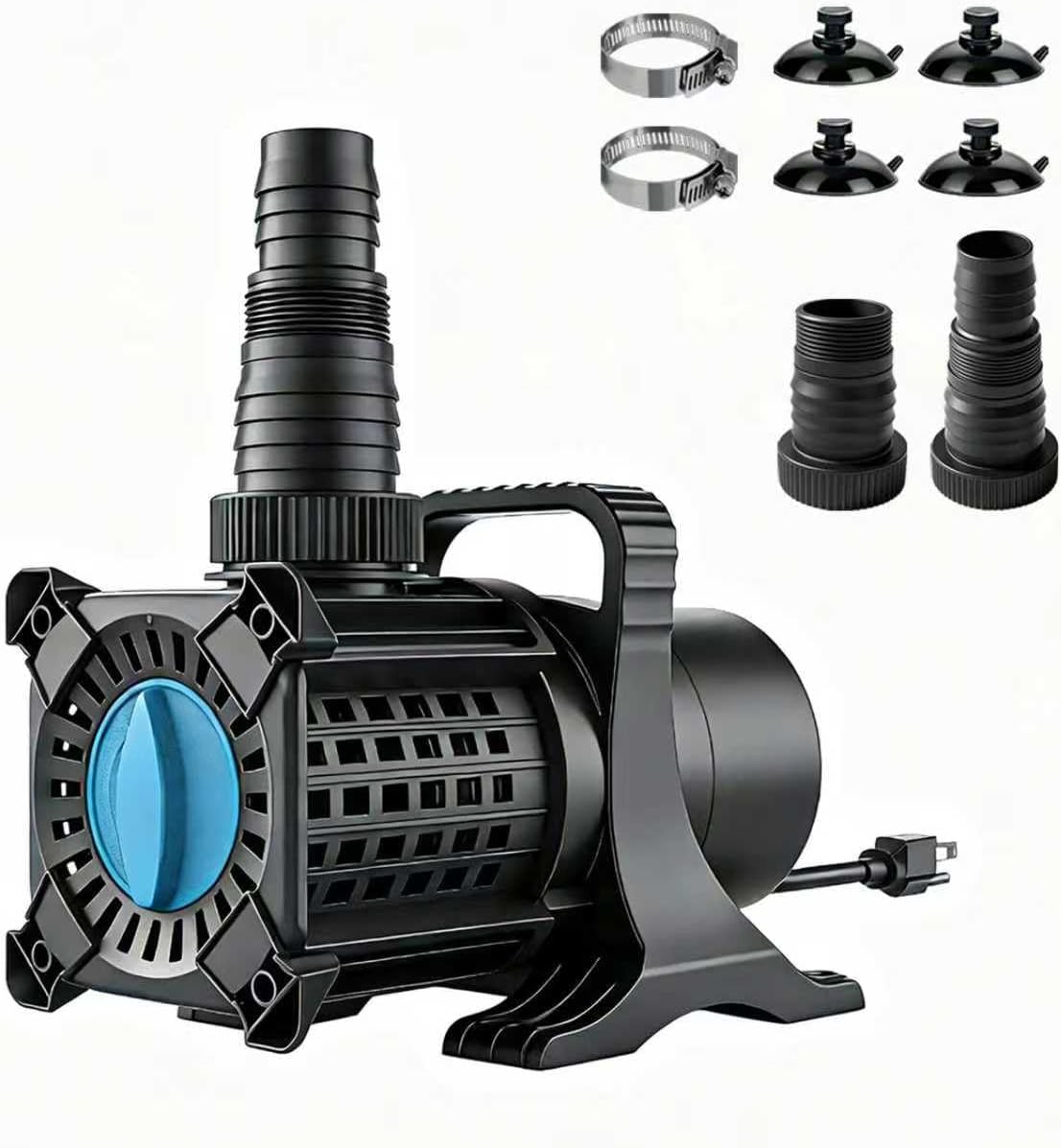
| Flow Rate | 91.67 gpm |
|---|---|
| Maximum Lifting Height | 18.7 feet |
| Power Source | Corded Electric |
| Horsepower | 0.43 hp |
The WaterRebirth PSA5100 is a heavy-duty submersible pond pump built for large outdoor water features and continuous circulation. It delivers up to 5500 GPH (rated at zero lift) using a 325W copper motor and can push water as high as 18.7 feet, making it suitable for tall waterfalls or sizable pond recirculation. A front-mounted 90° flow control knob lets you fine-tune output without extra valves, and the rotatable pump head plus included hose adapters simplify alignment with 1-1/2" or 2" piping. The pump is oil-free and uses a ceramic shaft for wear resistance and quiet 24/7 operation, and the removable front filter cover makes routine debris cleaning straightforward. Expect actual flow to drop as lift increases so match the pump to your waterfall profile using the lift-flow chart. This model is intended for freshwater use only and is not rated for pools or hot tubs. For installers who prioritize continuous, dependable circulation, the PSA5100 provides the capacity and controls needed for large ponds and waterfalls, with easy maintenance access and fish-safe operation.
Best for: Buyers who need a reliable, high-capacity pump for large ponds or tall waterfalls and who value continuous, fish-safe circulation and easy flow adjustment.
Less Ideal for: Those looking for a small, low-power pond pump for tiny water features or users needing a pump rated for chlorinated pools, hot tubs, or spa use.
- Very high maximum flow rate suitable for large waterfalls and pond circulation
- Adjustable front flow control knob for precise output without extra valves
- Rotatable pump head and included adapters ease installation with common pond hose sizes
- Oil-free design and ceramic shaft make it safe for fish and quiet during continuous operation
- Flow rating is measured at zero lift so performance decreases as lift increases
- Designed only for freshwater installations and not for pools, hot tubs, or spas
Verdict: Choose the PSA5100 when you need a dependable, high-flow freshwater pump that delivers strong lift and easy on-the-fly flow control for large ponds and waterfalls.
VIVOSUN 100W Submersible Pond Pump — 1600 GPH

| Power Source | AC |
|---|---|
| Flow Rate | 6000 liters per hour |
| Maximum Lifting Height | 14 feet |
| Voltage | 120 volts |
| Horsepower | 100 watts |
The VIVOSUN 100W submersible pump is designed to move a lot of water while keeping noise and power use low. It delivers up to 1600 GPH (listed as 6000 LPH) with a maximum lift around 14 to 15 feet, so it suits small-to-medium backyard ponds, waterfalls, and larger fountains. The unit is fully submersible with a detachable intake screen for easier cleaning, an adjustable outlet direction and two common hose size fittings for basic plumbing. Silicon carbide components and overload protection are intended to improve durability, and the manufacturer rates the pump as energy efficient for the output it provides. Practical benefits include quiet operation, a long power cord for flexible placement, and the ability to run inline or submerged. Limitations to note are the plastic housing which may be less impact-resistant than metal options and the pump’s design is targeted at general-purpose use rather than heavy commercial duty, so very large ponds or continuous high-stress applications may require a heavier industrial pump.
Best for: Buyers who want a reliable, energy-conscious pump for backyard ponds, decorative waterfalls, or fountain systems and who prioritize quiet, low-maintenance operation.
Less Ideal for: Landscape professionals or owners of very large or commercial ponds that need industrial-grade, metal-bodied pumps with continuous heavy-duty duty cycles.
- High flow capacity suitable for small to medium ponds and waterfalls
- Relatively low power draw (100W) for the stated flow, helping energy efficiency
- Detachable intake filter and adjustable outlet simplify maintenance and installation
- Silicon carbide shaft components and overload protection increase expected service life
- Plastic exterior may be less durable under heavy impact or long-term outdoor exposure
- Not specified as a commercial-grade unit for continuous heavy-duty pumping
Verdict: A quiet, energy-efficient 100W submersible pump that reliably handles small-to-medium ponds and garden water features.
Choosing the Right High Efficiency Pond Pump: Key Factors to Consider
Matching Pump Capacity to Pond Volume
Getting the pump size right is the most important functional decision. A pump rated for the correct gallons per hour at the working head will keep filters and waterfalls operating without overworking the motor. If a pump is undersized it will stall filters and allow debris build-up; oversized pumps waste energy and can create excessive currents that stress plants and fish.
Estimate your pond volume and calculate the desired turnover rate for your feature. Decorative ponds with fish typically benefit from full turnover every hour to two hours, while plant-focused shallow ponds may need less aggressive circulation. Use the pump's performance curve to verify flow at the actual static head created by your plumbing and any vertical lift.
Energy Use and Running Costs
A high efficiency pump should move more water per watt than a standard model. Look beyond peak flow numbers and compare wattage at the flow you will actually need. Over the season, small differences in consumption add up on electricity bills and can be significant for continuous 24/7 circulation.
Consider pumps with variable-speed capability because they let you slow the flow during low-demand periods like cooler months, which reduces running costs. Also check whether a pump supports timer or controller integration to match circulation to daylight or feeding schedules.
Head Height and Plumbing Losses
Head height is the combined vertical lift and friction losses caused by plumbing length, fittings, and filters. A pump's stated flow is only meaningful when measured at the correct head height. Long runs, tight bends, and narrow hoses reduce flow and increase the load on the motor.
Measure the vertical distance from the pump to the highest point water must reach and estimate friction loss for your hose size and fittings. Pick a pump whose flow curve leaves headroom so it does not run at maximum effort continuously. This preserves seals and reduces heat buildup.
Durability in Outdoor Pond Conditions
Pond pumps operate in wet, sometimes cold or hot outdoor conditions, often submerged for long periods. Materials used for wet ends, shafts, and seals determine resistance to corrosion, mineral buildup, and wear from sand or grit. Durable seals and robust housings lengthen service life and minimize the risk of leaks.
Look for pumps with replaceable wet-end parts and widely available seals or impellers. UV-stable housings and corrosion-resistant fasteners matter for exposed installations. Consider how winter shutdown or freeze protection will be handled in your climate.
Noise, Vibration, and Wildlife Impact
Noise from a pump or its vibrations transmitted through hard plumbing can be disruptive in a quiet garden. Louder pumps also often indicate higher mechanical stress and less efficient designs. For ponds with wildlife, gentle, low-turbulence flows are less stressful for fish and beneficial insects.
Check for anti-vibration mounts, rubber feet, or flexible hose connections that isolate motor buzz. Submerged pumps can be quieter than external models, but they may still transmit vibration to liners and stonework. Balance acoustic performance with ease of access for maintenance.
Serviceability and Installation Practicalities
Easy access for cleaning impellers, replacing seals, and clearing blockages reduces downtime and the chance you will postpone necessary maintenance. Pumps that allow basic service without special tools are better for weekend gardeners.
Also consider the fittings included, cord length, and whether the pump accepts common hose sizes. Installation complexity influences whether you can DIY the job or need professional help, which affects total lifecycle convenience.
Sizing Guides and Turnover Rates
Decide how quickly you want the pond's total volume circulated. For fish ponds a common target is a full turnover every 1 to 2 hours, while ornamental fountains often require less. Use the pond volume and desired turnover to calculate required gallons per hour, then consult the pump's flow curve at your actual head height to confirm performance.
- Calculate pond volume in gallons, then divide by desired turnover time to get GPH target.
- Account for plumbing losses: longer runs and smaller diameters reduce effective flow.
- When in doubt, choose a pump with a bit more capacity at your head height so it is not constantly at maximum load.
Variable Speed Options and Control Strategies
Variable-speed pumps give you control over flow for different seasons and features. Lower flow in cool months reduces energy use and stress on fish, while higher flow in summer improves oxygenation and filtration. Some units integrate with simple controllers or are compatible with external timers and smart garden controllers.
- Use lower speeds for nights or feeding times to reduce stress on aquatic life.
- Program higher speeds during warm afternoons when oxygen demand peaks.
- Check compatibility with existing controllers and whether the pump requires a dedicated variable-speed driver.
Submersible Vs External Pump Considerations
Submersible pumps sit in the water and tend to be quieter because the water dampens motor noise. They are compact and often simpler to install. External pumps live out of the water, which can make servicing easier and reduce wear from grinding debris but typically require weatherproof housings and priming strategies.
When choosing between the two, weigh noise, access for maintenance, and the type of feature you are running. Submersibles are common for small decorative ponds while external pumps often serve larger filtration systems and waterfall circuits.
- Submersible benefits: quieter, simpler install, compact footprint.
- External benefits: easier maintenance, potentially better heat dissipation, suitable for larger flows.
Winter Care and Freeze Protection
In climates where surface water freezes, protecting the pump and plumbing is critical. Some gardeners remove and store submersible pumps indoors for the winter, while others install freeze-proof housings or position external components above frost lines. Running a small current through an aerator can keep a breathing hole open for wildlife in mild freezes.
- Drain external pumps and hoses before freezing temperatures arrive.
- Consider removable mounts or quick-disconnect fittings to ease winter removal.
- If leaving a pump in place, consult its cold-weather operating limits and use insulation or partial sheltering as needed.
Noise Reduction and Mounting Tips
Reduce noise by isolating the pump from rigid surfaces. Use rubber mounts, flexible hose connections, or place the pump on a bed of compacted sand or rubber matting. For submerged units, ensure they sit on stable, level ground to avoid resonance against liners or stonework.
- Avoid hard clamping of hoses to stone to reduce vibration transfer.
- Inspect mounting points after a season of operation; loose fittings can amplify noise.
- Regularly clean impellers because worn or obstructed impellers often cause rattling and increased vibration.
How We Chose the Best High Efficiency Pond Pump
We focused on attributes that matter to gardeners managing outdoor ponds and water features. Selection began with models specifically designed for high efficiency operation and suitable for small to medium ponds and decorative water features. We prioritized clear performance specifications over marketing claims and excluded general-purpose submersible pumps intended only for drainage or temporary dewatering. Key evaluation criteria included measured flow rate across head heights, rated power draw and energy efficiency, durability of wet-end components and seals for outdoor pond use, and serviceability such as access to impellers and replaceable parts. We also considered silent or low-vibration operation because noise affects garden enjoyment, and compatibility with common fittings for easy plumbing. Units that lacked adequate weatherproofing, had unclear performance curves, or were intended solely for fountains without filtration compatibility were excluded.
FAQ
How do I calculate the right pump size for my pond?
Estimate the pond volume in gallons and decide on a turnover rate, such as once per hour for fish ponds. Divide volume by turnover time to get the target GPH, then check a pump's flow at your measured head height to confirm it meets that target.
Can I run a high efficiency pump continuously?
Many high efficiency pumps are designed for continuous duty, but confirm the manufacturer's rated duty cycle and operating temperature range. Running at reduced speeds during low-demand periods often extends motor life and lowers energy use.
Will a more powerful pump harm my fish or plants?
Excessive flow can stress fish and uproot marginal plants. Match flow to the pond design and use baffles, diffusers, or bypass piping to reduce turbulence in fish and planting areas while still supplying adequate filtration.
Are variable speed pumps worth the extra complexity?
Variable speed pumps add control and energy savings because you can adjust flow to seasonal needs and feature types. They require compatible controllers and sometimes more careful setup, but for many gardeners the flexibility and reduced running costs make them worthwhile.
How often should I service a pond pump?
Inspect and clean the pump and impeller every 1 to 3 months during the active season, more often if the pond has heavy debris. End-of-season service before winter storage helps prevent corrosion and seal damage.
Can I install a pond pump myself?
Many gardeners can install small submersible pumps with basic tools and plumbing knowledge. External pumps and larger systems may need more complex plumbing, priming, or electrical work, in which case professional help is sensible. Always follow electrical safety and local codes.
Final Verdict
Prioritize a pump that matches the pond's flow needs at the actual head height while minimizing energy use and operating quietly. Tradeoffs are common: higher capacity gives flexibility but uses more power, while very compact quiet pumps may be harder to service. Focus on realistic flow curves, durable wet-end materials, and serviceability. With those priorities, choose a high efficiency pump that leaves operational headroom, allows seasonal flow control, and can be maintained without special tools. That approach keeps water clear, supports pond life, and reduces long-term running costs.
