

Note: This article contains affiliate links. If you click on these links and make a purchase, I may earn a small commission at no extra cost to you. This helps support my research and content. Read my full affiliate disclosure here.
A well-made high end watering can changes everyday watering into a gentle, controlled task that helps fragile seedlings and mature container displays thrive. If you spend time tending pots, window boxes, or small raised beds, the right can makes it easier to deliver the right amount of water without drenching foliage or compacting soil. This guide shortlists the top options for gardeners who want durable materials, ergonomic handling, and predictable pour control. We evaluated candidates on construction, balance when full, and how finely they regulate flow so you can pick a can that suits your gardening routine and plant types.
Top Picks at a Glance
| Best Overall The best all-around choice for most situations | Bosmere V500 Large Copper Watering Can with Brass Rose (2.5 Pint) |  |
| Best Quality Built to a higher standard if you want something more solid | Behrens 2.5-Gallon Hot-Dipped Galvanized Steel Watering Can with Wooden Handle |  |
| Best Value The sweet spot between price and what you get | REMIAWY Stainless Steel Long-Spout Watering Can, 40 oz |  |
| Highest Rated A top-rated pick with lots of positive feedback | Achla Designs Dainty Copper Watering Can (3‑pint) |  |
| Most Popular A crowd favorite that many people choose with confidence | Achla Designs Dainty Hammered Copper Watering Can, 3 Pint |  |
Bosmere V500 Large Copper Watering Can with Brass Rose (2.5 Pint)

| Capacity | 2.5 pints |
|---|---|
| Material Type | Brass, Copper |
| Included Components | Brass Rose |
The Bosmere V500 is a small, high-quality copper watering can designed for careful watering of houseplants, seedlings and container specimens. Made from copper with a brass-finished rose, it holds about 2.5 pints, which is enough for spot-watering several pots without being heavy to carry. The narrow spout and removable brass rose produce a gentle, even flow that makes it easy to water orchids, African violets and other plants that need delicate handling. Because it is copper, the can will develop a greenish-blue patina over time, which many buyers find attractive but which changes the original finish. The can is compact and decorative, so it works both as a functional tool and a display piece on a shelf or potting bench. Expect limited capacity compared with larger outdoor cans and avoid using it for long-distance watering across large beds. For buyers who want a premium, long-lasting indoor watering tool that also adds visual character, this is a practical and tasteful option.
Best for: Buyers who prioritize a high-quality, attractive watering can for indoor plants and container gardens and who appreciate a tool that also serves as a decorative accent.
Less Ideal for: Gardeners who need to water large outdoor beds or want a high-capacity, heavy-duty can for long watering sessions.
- Solid copper construction offers long-term durability and develops an attractive patina with age
- Brass rose and narrow spout deliver a gentle, controlled flow suited to delicate plants
- Compact 2.5 pint capacity is easy to handle and ideal for indoor or container watering
- Attractive traditional styling works as both a tool and decorative piece
- Small capacity means more frequent refills for multiple pots or outdoor beds
- Not intended for heavy-duty outdoor use or watering large garden areas
Verdict: Choose this if you want a compact, premium copper watering can that provides gentle, precise watering and doubles as an attractive accent.
Behrens 2.5-Gallon Hot-Dipped Galvanized Steel Watering Can with Wooden Handle

| Capacity | 2.5 gallons |
|---|---|
| Material Type | Metal |
| Indoor Outdoor Usage | Outdoor |
| Included Components | Unit^Instruction Guide |
The Behrens 2.5-gallon hot-dipped galvanized steel watering can is built for gardeners who want a durable, no-nonsense tool that stands up to regular outdoor use. It holds a substantial amount of water so you can water multiple containers or raised beds between refills, and the hot-dipped galvanizing resists corrosion for season-to-season longevity. A wooden top handle and side grip give good control when pouring, and the fixed rosehead creates a gentle, even spray that is ideal for seedlings and flowering plants. Because the rosehead is not designed to be removed, cleaning or switching to a direct pour is not possible without risking damage. The metal construction makes it heavier than plastic when full, which can be tiring for long watering sessions but also contributes to stability and a premium feel. If you value strength and a classic look over ultra-lightweight portability, this watering can performs reliably and should last many seasons.
Best for: Gardeners who prioritize durability and consistent performance and want a high-quality metal can that handles frequent outdoor use without quickly degrading.
Less Ideal for: People who need an ultra-lightweight can for long-distance carrying or who want interchangeable spouts and easy internal cleaning.
- Hot-dipped galvanized steel resists rust for long-term outdoor use
- 2.5 gallon capacity reduces the number of refills for moderate to large jobs
- Wooden top handle plus side grip gives controlled, comfortable pouring
- Fixed rosehead provides a gentle, even spray suitable for seedlings and flowers
- Heavier than plastic cans when filled, which can be tiring over extended use
- Rosehead is not removable, limiting cleaning options and preventing a direct pour
Verdict: Buy this if you want a rugged, long-lasting steel watering can that delivers reliable, gentle watering for high-end garden tasks.
REMIAWY Stainless Steel Long-Spout Watering Can, 40 oz

| Capacity | 1300 ml |
|---|---|
| Material | 201 stainless steel |
| Spout length | 10.3" |
This REMIAWY watering can is built from 201 stainless steel with a polished finish that resists rust and daily wear, so it looks decorative while staying functional. Its narrow, 10.3 inch long spout and tapered outlet let you target soil at the base of plants without splashing leaves, which is ideal for succulents, bonsai, and potted houseplants. The rounded 3/4-circle handle is comfortable for one-handed use and easier on arthritic hands, and the protective cap on the spout helps prevent spills when carrying a full can. At 40 ounces it is small enough to fill under most faucets and light enough to maneuver on shelves or balconies, yet large enough for several small pots. The finish and welds suggest durable construction, though the capacity and compact footprint limit how many plants you can water before refilling. If you want a precise, attractive waterer for everyday indoor use, this combines style and practicality in a high-end-feeling package.
Best for: Buyers who prioritize precise, attractive tools for daily indoor or balcony plant care and want a durable, easy-to-handle waterer that looks at home in a styled space.
Less Ideal for: People who need to water large containers, many plants at once, or garden beds where a larger capacity or hose-fed option is more efficient.
- 201 stainless steel construction resists rust and corrosion
- Long tapered spout provides precise, low-splash watering for potted plants
- Ergonomic 3/4-circle handle is comfortable for one-handed use
- Protective spout cap prevents spills when carrying a full can
- 40 oz capacity requires frequent refills for larger collections or outdoor beds
- Compact size limits use for large pots or extensive watering tasks
Verdict: A durable, stylish stainless steel waterer that delivers precise, low-splash watering for indoor plants and small collections.
Achla Designs Dainty Copper Watering Can (3‑pint)

| Capacity | 3 pints |
|---|---|
| Material Type | Copper |
| Item Weight | 16 ounces |
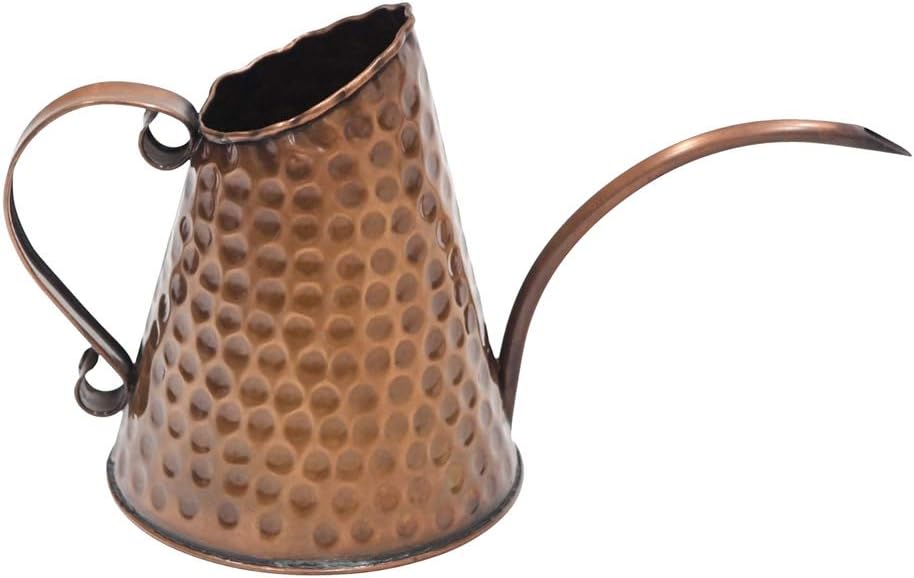
The Achla Designs Dainty Copper Watering Can is a compact, decorative watering jug made from solid copper and finished with a hammered texture that will develop a natural patina over time. It holds about 3 pints, making it best suited for houseplants, windowsill collections, succulents, and gentle watering of individual containers. The long, narrow spout lets you reach beneath leaves and place water at the soil line for controlled, splash-free delivery. Because it is metal rather than plastic, the can feels sturdy and is unlikely to crack or break with normal use; the copper construction also gives it an upscale look if you display it as a decorative piece between uses. Limitations are its small capacity, which requires frequent refills for multiple plants, and the natural patination means the finish will change with time rather than stay bright and polished. If you want a reliable, attractive can for precise indoor watering, this one performs well; if you need high-volume outdoor watering you will likely prefer a larger utilitarian model.
Best for: Buyers who prioritize a dependable, long-lasting watering tool for indoor plants and value a refined, decorative aesthetic as part of their care routine.
Less Ideal for: Not a good fit for gardeners who need to water large beds, many containers at once, or who prefer a lightweight plastic can for heavy outdoor use.
- Solid copper construction provides durability and an upscale look.
- Long narrow spout enables precise, splash-free watering at the soil line.
- Compact 3‑pint capacity is convenient for indoor plant care and easy to handle.
- Small capacity means frequent refills when watering multiple pots.
- Copper finish will naturally patina over time, changing the original appearance.
Verdict: A durable, attractive copper watering can that delivers precise, reliable watering for indoor plants and small container collections.
Achla Designs Dainty Hammered Copper Watering Can, 3 Pint
| Capacity | 3 Pint |
|---|
This Achla Designs dainty watering can is a decorative yet functional copper jug intended for indoor plants and light outdoor use. The solid hammered copper body gives it a vintage look that will develop a natural patina with time, while the long, narrow spout is useful for delivering water directly to soil and reaching beneath foliage without splashing. At three pints capacity it is compact enough to sit on shelves or counters and is easy to carry around the home for spot watering houseplants, succulents, and small containers. Because it is metal rather than plastic, it feels substantial and durable though it is not intended for heavy garden use or large beds. Expect the finish to change over time and occasional hand-cleaning to keep mineral deposits from building up. If you want an attractive, long‑spout can for precise indoor watering, this blends style and function; if you need large-capacity or heavy-duty outdoor performance this is not designed for that task.
Best for: Buyers who prioritize a stylish, well-made watering can for indoor plants and precise spot watering and who value social proof and low-risk choices backed by positive user experience.
Less Ideal for: Gardeners who need a high-capacity or rugged can for frequent outdoor bed and large container watering should choose a larger, heavy-duty option.
- Solid hammered copper construction for a durable, attractive finish
- Long narrow spout delivers water precisely to soil and under foliage
- Compact 3 pint capacity fits on shelves and is easy to carry
- Decorative vintage look that develops a natural patina over time
- Small capacity not suitable for watering large containers or garden beds
- Requires hand care to avoid mineral buildup and will change appearance as it patinas
Verdict: Choose this if you want a small, high-end copper watering can that looks decorative while giving precise, splash-free watering for indoor plants.
Choosing the Right High End Watering Can: Key Factors to Consider
Build Material and Corrosion Resistance
The material a watering can is made from determines how long it lasts and how it weathers outdoor conditions. Metal cans like copper, brass, or heavy-gauge steel are often durable but need proper finishes to resist rust. Powder-coated or lacquered finishes extend life and protect appearance.
Plastic and resin models can resist corrosion and be very lightweight, but look for UV-stable formulations and sturdy wall thickness to avoid cracking. Consider how the material feels in your hands when wet, whether it will stain light-colored decking, and if it can be stored outdoors without degrading quickly.
Pour Control and Rose Options
How a can pours is the single most important functional trait for many gardeners. A fine, even spray from a removable rose is ideal for seedlings and delicate foliage because it prevents soil displacement and leaf damage. Narrow spouts or gooseneck shapes provide precise flow for targeted watering of potted plants and troughs.
Some high-end designs offer interchangeable roses or specialized spout shapes that change flow rate. Think about the types of plants you grow and whether you need a gentle shower, a steady narrow stream, or both. Ease of clearing blockages and cleaning rose holes also affects long-term usefulness.
Handling, Balance, and Ergonomics
A can that is comfortable to lift, carry, and tip will reduce strain over repeated use. Handle placement and shape affect grip and wrist angle; dual handles or a wide top handle can make filling and pouring easier. Balance matters when the can is full: poorly balanced cans can tip or require awkward wrist torque to pour steadily.
Consider whether you typically water from the ground, a bench, or standing, and choose a design that matches that posture. Weight when full is also important for gardeners with limited strength; a high-capacity metal can might be beautiful but heavy when filled.
Capacity Relative to Use
Capacity determines how often you need to refill and how portable the can remains when filled. Smaller cans of one to two liters are ideal for indoor plants, small patios, and precision work. Larger cans of four liters or more reduce refill frequency for larger gardens but increase lifting effort.
Think about the number of containers you water in a typical session, the distance between your water source and planting areas, and whether you prefer frequent short trips or fewer long carries. Also factor in storage space and how a larger can will dry out or accumulate algae if stored wet.
Finish, Aesthetics, and Maintenance
High-end watering cans are often chosen for both function and appearance. Durable finishes resist scratching and staining while still being easy to clean. Matte or painted finishes may hide wear, while polished metals patina over time and require different maintenance approaches.
Consider how much upkeep you are willing to do: some finishes need occasional polishing or careful drying to avoid spots, while others are nearly maintenance-free. Check how easy it is to access the interior for cleaning, especially if you add fertilizers to water or let water sit between uses.
Choosing the Right Spout for Your Plants
Different spout shapes change how water leaves the can and therefore how it interacts with soil and foliage. A long, narrow gooseneck offers precision, letting you water tight pots and the base of plants without splashing leaves. A shorter, wider spout with a rose distributes water more broadly and gently, which is useful for seedlings and fine-textured soil.
If you frequently water a mix of houseplants and outdoor containers, look for designs that combine a precise spout and a removable rose. Removable roses allow you to switch between a shower and a stream without changing cans.
- Gooseneck spouts for precision at pot rims and tight spaces
- Removable roses for gentle, even showers over seedlings
- Short spouts for faster filling of large containers
Balancing Capacity and Portability
Large-capacity cans reduce trips but increase lifting strain. For gardeners with many containers spread across a yard, a bigger can makes sense if you are comfortable carrying it. For balcony or indoor growers, a smaller can is easier to manage and control.
Also consider how the can will be filled. If you must carry water a long distance from a tap, smaller loads reduce fatigue. If you have hands-free filling or a nearby tap, a larger can reduces interruptions in your watering routine.
- Match capacity to session length and carry distance
- Consider refill frequency and storage when wet
Care and Winter Storage
Proper care extends the life of a high-end can. Empty and dry cans before storing to prevent corrosion or algae buildup. For metal cans with decorative finishes, avoid leaving water in them over winter to limit freeze damage and rust formation.
Store cans indoors or under cover when not in use. If the can has a removable rose, store it detached so holes dry completely. Clean the interior occasionally to remove mineral deposits if you use hard water.
- Dry interior and exterior before storage
- Detach roses to dry fully and prevent clogging
- Wipe painted finishes gently to preserve coating
Materials and Sustainability Considerations
Sustainability can factor into the choice of a high-end can. Recycled metals and long-lasting construction reduce replacement frequency. Durable designs that are repairable or that accept replacement roses extend service life compared with single-use plastic models.
Consider the end-of-life of the material. Metals are typically recyclable, while some mixed-material plastics are harder to process. A can built to be repairable or with replaceable parts offers better long-term value and lower environmental impact.
- Look for recycled or recyclable materials
- Prefer replaceable parts over sealed assemblies
Using a Watering Can as Part of Routine Care
A high-end watering can is most effective when integrated into a consistent watering routine. Water in the morning or early evening to reduce evaporation and let foliage dry before night. Use the can to target root zones and avoid wetting foliage when possible to limit disease risk.
For fertilizing, use a separate can or rinse thoroughly after use to avoid buildup. Make small adjustments to pour distance and speed to match soil texture and pot drainage so water soaks in rather than runs out the drainage hole.
- Water root zones, not foliage, unless necessary
- Rinse thoroughly after any fertilizer use
How We Chose the Best High End Watering Can
We focused on practical performance characteristics that matter in real garden use. Primary evaluation criteria included build material and corrosion resistance, because long-lasting cans must withstand repeated exposure to water and sunlight. We assessed pour control and rose options to see how well each can delivers a steady, even stream or a gentle shower for seedlings. Handling and balance when full were tested conceptually to judge wrist strain and tipping risk, especially for gardeners who water from standing positions or on benches. Capacity and portability were considered so the selection covers both frequent, light watering and less frequent, larger-volume needs. Finally, finish and maintenance were evaluated for how easy cans are to clean and keep looking good. We excluded novelty or decorative-only pieces that lack functional pour control or durable construction. Plastic garden toys and flimsy thin-gauge metals were also filtered out. The resulting list emphasizes durable materials, useful pour performance, manageable weight and balance, and simple maintenance. These are the dimensions that truly affect day-to-day watering in a practical garden.
FAQ
What is the ideal capacity for a high-end watering can?
Ideal capacity depends on your routine. Small gardeners and indoor plant owners often prefer one to two liters for precision and ease of use. Those servicing many containers or a small garden may choose three to five liters to reduce refill frequency, balancing that against the increased weight when full.
Are metal watering cans better than plastic ones?
Metal cans can be very durable and age attractively, but they require finishes to resist corrosion. Quality plastics resist rust and are lighter, but lower-grade plastics may crack with UV exposure. The best choice balances durability, weight, and how you plan to store the can.
How do I maintain the rose and spout to prevent clogs?
Remove and rinse the rose periodically, and run a small brush or water through the spout to dislodge mineral deposits. If holes are very small, soak the rose in vinegar to loosen scale, then rinse thoroughly. Regular cleaning prevents uneven flow and prolongs performance.
Can I use a watering can for diluted liquid fertilizers?
You can, but rinse the can thoroughly after use to avoid residue buildup and potential corrosion. Consider a dedicated can for fertilizing to prevent accidental overfeeding when you use the same can for plain water.
How important is handle placement on a watering can?
Handle placement greatly affects ergonomics and balance. A top handle helps when filling and carrying, while a rear or dual-handle configuration can improve control when pouring. Choose a layout that matches how you typically hold and tip the can.
Final Verdict
Pick a high-end watering can by prioritizing the traits that matter most in your routine: choose materials and finishes that hold up to weather and storage conditions, then match spout type to the plants you water most often. Balance capacity against how far you carry water and how much weight you can comfortably manage. A thoughtful choice trades off capacity, pour control, and maintenance needs. Favor a design with reliable pour performance and comfortable handling so watering becomes an efficient, low-stress part of your gardening practice.
