

Note: This article contains affiliate links. If you click on these links and make a purchase, I may earn a small commission at no extra cost to you. This helps support my research and content. Read my full affiliate disclosure here.
A well-chosen homeowner greenhouse kit changes how you grow by extending the season, protecting tender plants, and making propagation predictable. Whether you want earlier tomatoes, a place to pot up seedlings, or shelter for overwintering perennials, a greenhouse creates a controlled microclimate that responds to real backyard conditions like wind, sun exposure, and winter lows. This guide covers seven shortlisted greenhouse kits suited to home gardens and patios. We evaluated each kit for thermal performance, durability, and ease of setup so you can match a kit to your yard, gardening goals, and maintenance tolerance. Read on to understand the tradeoffs and practical considerations before you pick the right structure for your space.
Top Picks at a Glance
| Best Overall The best all-around choice for most situations | ROCKRAIN Heavy-Duty Polycarbonate Greenhouse Kit with Aluminum-Steel Frame |  |
| Best Quality Built to a higher standard if you want something more solid | Backyard Discovery Bellerose XL Cedar Walk-In Greenhouse with Polycarbonate Panels and Pergola |  |
| Best Value The sweet spot between price and what you get | IDEALHOUSE 8×10 ft Walk-In Greenhouse with Polycarbonate Panels and Aluminum Frame |  |
| Best Budget The cheapest option that still gets the job done reliably | Sannwsg Walk-In Portable Greenhouse with PE Cover and Steel Frame |  |
| Highest Rated A top-rated pick with lots of positive feedback | Modern Shade 6.5' x 10' Cedar Wood Greenhouse with Polycarbonate Panels and Built-in Faucet |  |
| Most Popular A crowd favorite that many people choose with confidence | Greengro Small Walk‑In Greenhouse with Zippered Door and PE Cover |  |
| Best Seller A high-volume bestseller chosen again and again | EAGLE PEAK 6×8 Easy-Setup Pop-Up Greenhouse with Roll-Up Door |  |
ROCKRAIN Heavy-Duty Polycarbonate Greenhouse Kit with Aluminum-Steel Frame

| UV protection | 90% (dual-wall polycarbonate) |
|---|---|
| Snow load capacity | 104 lb |
| Wind resistance | 55 mph |
| Footprint | 6.3 ft x 8.2 ft |
This ROCKRAIN greenhouse kit is designed for homeowners who want a sturdy, compact structure for year-round vegetable and flower growing. It uses dual-wall polycarbonate panels that block about 90% of UV while letting light through, which helps seedlings and leafy greens thrive without sunburn in mixed climates. The hybrid aluminum and steel frame is reinforced and includes integrated rain gutters, and the manufacturer rates it to support a 104 lb snow load and withstand 55 mph winds, so it will handle typical Pacific Northwest weather and similar conditions. The 6.3 ft by 8.2 ft footprint fits small backyards and balconies and can hold up to four growing shelves; a sliding door with seal strips helps keep temperature and humidity stable for seedlings. Panels are pre-drilled and the tool-free panel system with a visual guide keeps assembly straightforward for a two-person DIY project, typically taking 6 to 8 hours. Expect to invest time in careful assembly and anchoring; the size is compact so it is not meant for large-scale production or very heavy snowfall beyond the stated load rating.
Best for: Homeowners who want a durable, weather-resistant greenhouse for hobby vegetable and herb growing in small yards or balconies and who value year-round protection over maximum growing area.
Less Ideal for: Gardeners seeking large-scale production, very tall crops, or a greenhouse for heavy snow regions should consider larger or differently rated structures.
- Dual-wall polycarbonate panels with approximately 90% UV protection create a stable light and heat environment for seedlings
- Reinforced aluminum and steel hybrid frame with integrated rain gutters increases durability in rainy, windy climates
- Rated to support 104 lb snow load and resist 55 mph winds for year-round use in moderate climates
- Compact 6.3 ft by 8.2 ft footprint fits urban backyards and balconies while accommodating multiple growing shelves
- Tool-free, pre-drilled panel assembly with visual guide simplifies DIY setup without specialized tools
- Compact size limits planting area and vertical growing space compared with larger greenhouse models
- Assembly still requires several hours and at least two people for safe handling of panels and frame
Verdict: A compact, robust greenhouse built for small-yard homeowners who need reliable, weather-resistant year-round growing space.
Backyard Discovery Bellerose XL Cedar Walk-In Greenhouse with Polycarbonate Panels and Pergola

| Size | 13×11 ft |
|---|---|
| Cover Material | Polycarbonate (PC) |
| Frame Material | Wood |
| Number Of Vents | 2 |
| Closure Type | Sliding Doors |
The Bellerose XL is a purpose-built backyard greenhouse that gives hobby and performance-minded gardeners a robust year-round growing space. It combines a cedar structural frame with commercial-grade 4-wall polycarbonate panels to improve heat retention and withstand heavy snow and high winds when properly anchored. Use it as a seed-starting nursery, winter protection for tender plants, or a staging area for larger projects thanks to five fixed staging shelves, eight moveable plant hooks, hose hook-ups inside and out, and a built-in workstation. The temperature-activated exhaust fan plus two easy-open windows provide both forced and natural ventilation for better climate control. The integrated PowerPort (three outlets and three USB ports) makes it simple to add lights, fans, or heaters. Practical strengths are its weather-tested durability, generous interior space, and thoughtful utility features that reduce trips for extension cords and hoses. Expect a multi-person assembly and the need for a solid foundation and anchoring; it is heavy and requires planning for installation and electrical hookup.
Best for: Gardeners who want a durable, high-capacity backyard greenhouse to extend seasons and run serious growing projects and who are prepared to plan for installation and utilities.
Less Ideal for: Casual gardeners seeking a small, portable greenhouse or anyone who needs a simple, instant setup without hiring help or preparing a permanent foundation.
- Commercial-grade 4-wall polycarbonate panels for improved heat retention and durability
- Cedar frame naturally resistant to rot and engineered to handle heavy snow loads and high winds when anchored
- Integrated PowerPort with three outlets and three USB ports for powering lights, fans, and accessories
- Built-in workstation with multiple fixed shelves, moveable hooks, and interior/exterior hose hook-ups for organized, efficient workflow
- Temperature-activated exhaust fan and two operable windows for active and passive ventilation control
- Large, heavy kit requires multiple people, a stable foundation, and time-consuming assembly
- Electrical supply and anchoring are required but not included
- Stain saturation may vary across panels which could affect appearance
Verdict: If you need a rugged, well-equipped backyard greenhouse for season extension and high-performance growing, this cedar-built Bellerose XL delivers the space, insulation, and utility features to support serious gardening.
IDEALHOUSE 8×10 ft Walk-In Greenhouse with Polycarbonate Panels and Aluminum Frame

| Size | 8×10 FT |
|---|---|
| Cover Material | Polycarbonate (PC) |
| Frame Material | Aluminum Steel |
| Number Of Vents | 1 |
| Indoor Outdoor Usage | Outdoor |
This IDEALHOUSE 8×10 walk-in greenhouse is a homeowner-oriented kit that turns an exposed corner of the yard into a year-round growing area. It uses slide-in 720g/m² polycarbonate panels on an aluminum-steel frame to deliver good light transmission while blocking most UV, and the top roof vent plus the adjustable ventilation system helps you control internal temperature and airflow. The built-in gutter channel collects rainwater for reuse and simplifies runoff management. Assembly is designed to be straightforward: slide-in panels, numbered parts, and a clear manual plus provided tools should make setup faster than typical framed greenhouses, though it may still require two people and a few hours. The structure is described as resilient against heavy rain and wind, but like most kit greenhouses it relies on correct anchoring and careful sealing to perform in extreme conditions. This model is practical for homeowners who want a durable, usable greenhouse footprint without custom construction, while those needing a permanent, heavy-duty commercial structure should consider steel-framed alternatives.
Best for: Homeowners who want a durable, easy-to-assemble walk-in greenhouse to extend the growing season and reuse rainwater for their garden beds, prioritizing practicality and straightforward installation.
Less Ideal for: People seeking a permanent, commercial-grade greenhouse for heavy snow loads or industrial use should consider heavier steel or fully custom structures instead.
- Reinforced polycarbonate panels for high light transmission and UV protection
- Aluminum-steel frame offers a balance of strength and lower maintenance
- Slide-in panel design and included tools simplify and speed assembly
- Integrated gutter system for rainwater drainage and collection
- Adjustable roof vent improves airflow and internal climate control
- Requires significant time and at least two people to assemble despite simplified design
- Performance in extreme winds or snow depends on proper anchoring and local conditions
Verdict: A practical, homeowner-friendly walk-in greenhouse that balances durability, light transmission, and simplified assembly for reliable year-round gardening.
Sannwsg Walk-In Portable Greenhouse with PE Cover and Steel Frame

| Cover Material | Polyethylene (PE) |
|---|---|
| Frame Material | Alloy Steel |
| Number of Doors | 1 |
| Indoor Outdoor Usage | Outdoor |
This Sannwsg walk-in greenhouse is a budget-friendly, portable option for homeowners who want a simple protected space for seedlings, potted vegetables, and small ornamentals. It assembles from fully detachable galvanized alloy steel poles and a PE cover, and includes multiple heavy-duty shelves spaced about 17.5 inches apart to hold trays and pots. The cover retains heat and moisture for winter protection and propagation while a zippered door provides easy access. Practical extras mentioned include ground pegs, ropes and a complimentary indoor thermometer to help monitor conditions. Because the cover is PE and the frame is light-gauge alloy, the structure is best placed in a sheltered spot and the cover should be removed in extreme weather to avoid damage. Setup is tool-free and the unit is easy to relocate, but it is not a permanent, heavy-duty greenhouse for large specimens or very exposed sites.
Best for: Homeowners who want an affordable, easy-to-assemble greenhouse to start seeds, overwinter small plants, or expand a patio garden without committing to a permanent structure.
Less Ideal for: Gardeners needing a heavy-duty, permanent greenhouse for large plants or for use in very exposed, high-wind or heavy-snow climates should look at more robust, framed greenhouses.
- Galvanized alloy steel frame resists rust and provides stable support
- Multiple shelving levels with about 17.5 inches between layers for trays and pots
- Portable, tool-free assembly and fully detachable components for seasonal relocation
- PE cover that helps retain heat and moisture for seed starting and winter protection
- PE cover and light-frame design are vulnerable in extreme wind or heavy snow
- Small nominal size limits larger plants and long-term permanent use
Verdict: A cost-conscious, portable walk-in greenhouse that gives homeowners easy seed starting and seasonal plant protection without a permanent installation.
Modern Shade 6.5' x 10' Cedar Wood Greenhouse with Polycarbonate Panels and Built-in Faucet

| Cover Material | Polycarbonate (PC) |
|---|---|
| Frame Material | Wood |
| Number Of Vents | 4 |
| Indoor Outdoor Usage | Outdoor |
This Modern Shade cedar wood greenhouse is designed as a durable, walk-in workspace for homeowners who want a reliable, year-round structure. The sturdy cedar frame and 6mm polycarbonate roof panels give solid insulation and light transmission while an architectural overhang helps keep panels cleaner and reduces splashback at the doorway. The unit includes four vents with roof windows operated by a pull rod, a symmetrical fan arrangement for cross circulation, and built-in shelving and workspace that make potting and storage convenient. A factory-installed faucet kit with internal piping and a 1/2" brass faucet lets you hook up a standard garden hose directly for easy watering. Practical extras include USB, USB-C and two standard outlets for charging tools or lights. Expect a substantial assembly effort typical of wood greenhouses and ongoing maintenance to preserve cedar outdoors, but the result is a roomy, functional greenhouse that prioritizes climate control and organized work space for serious home gardening.
Best for: Homeowners who want a long-lasting, walk-in greenhouse as a primary potting and propagation workspace and who are prepared to assemble and maintain a wooden structure.
Less Ideal for: Gardeners needing a lightweight, temporary, or easily relocated greenhouse or those who prefer a no-maintenance plastic frame solution.
- Solid cedar frame for durability and natural resistance to rot
- 6mm polycarbonate panels for improved thermal retention and plant protection
- Integrated faucet kit with internal piping and standard hose interface for convenient watering
- Built-in shelving and workspace that simplify organization and potting tasks
- Multiple vents and fan layout for balanced ventilation and climate control
- Requires significant assembly and periodic cedar maintenance to retain longevity
- Larger footprint and wood construction make it less portable than metal or plastic hobby greenhouses
Verdict: Choose this cedar wood greenhouse if you want a roomy, well-ventilated, and professionally equipped home greenhouse built for long-term dependable use.
Greengro Small Walk‑In Greenhouse with Zippered Door and PE Cover
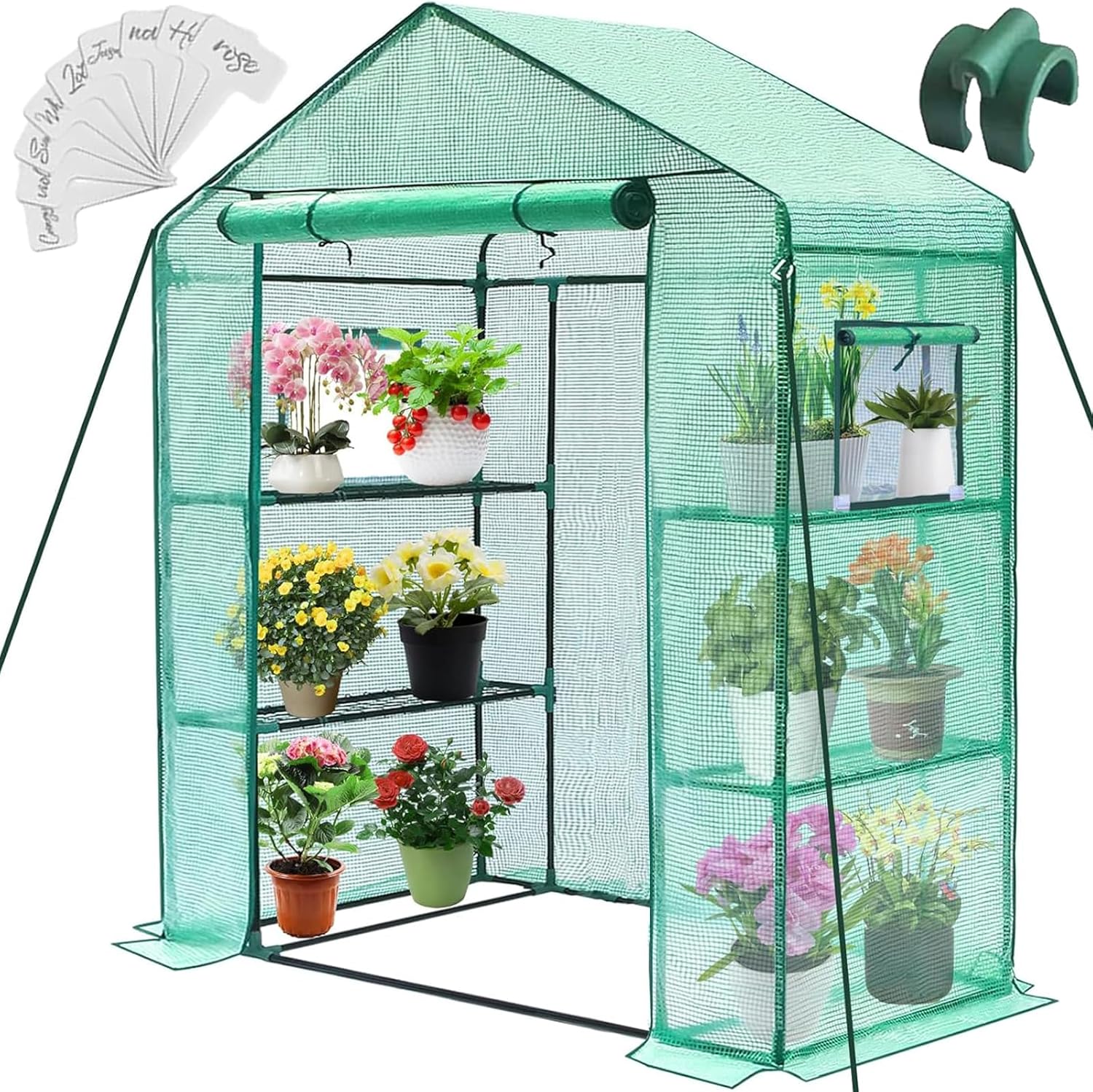
| Cover Material | Polyethylene (PE) |
|---|---|
| Frame Material | Metal |
| Closure Type | Zipper |
| Included Accessories | Ropes and ground stakes, plant tags, watering globes |
This Greengro small walk-in greenhouse creates a sheltered microclimate for potted plants and seedlings through winter and transitional seasons. It assembles without tools and uses a metal frame with a heavy PE cover, zippered door and screened ventilation windows to balance protection and airflow. The kit includes shelves, guy ropes and ground stakes so you can store up to a dozen small to medium pots and keep plants off the ground. The thick, grid-reinforced cover is waterproof and designed to cut UV exposure while resisting wind gusts commonly encountered in backyard settings. Because it is portable and detachable you can move it to a porch or garage when storms approach or take it down for storage. Important limitations are its small footprint and relatively light-duty frame compared with permanent greenhouses, so it is best for overwintering tender pots and starting seedlings rather than long-term heavy staging or large plants. Expect some care with anchoring in strong winds and routine inspection of the PE cover for wear.
Best for: Buyers wanting an inexpensive, no-fuss way to protect potted plants and seedlings through cold months who value portability and easy setup over permanent construction.
Less Ideal for: Gardeners who need a heavy-duty, permanent greenhouse to house large plants or long-term benching should consider sturdier, framed options instead.
- Thick, grid-reinforced PE cover provides waterproofing and UV reduction for winter protection
- Zippered door and screened windows offer easy access and adjustable ventilation
- Includes shelves, ropes and ground stakes so plants can be organized and the structure secured
- Tool-free assembly and detachable design make it easy to set up, relocate or store
- Small footprint limits the number and size of plants you can overwinter
- Lightweight frame and PE cover are less durable than rigid, permanent greenhouses in severe weather
Verdict: A budget-friendly, portable greenhouse that reliably shelters small pots and seedlings through winter while remaining easy to assemble and move.
EAGLE PEAK 6×8 Easy-Setup Pop-Up Greenhouse with Roll-Up Door

| Size | 6×8 |
|---|---|
| Cover Material | Polyethylene (PE) |
| Frame Material | Alloy Steel |
| Number of Doors | 2 |
| Number Of Vents | 2 |
This EAGLE PEAK 6×8 pop-up greenhouse is built for gardeners who want a quick, sturdy shelter for winter protection and seed starting. The preassembled alloy steel frame uses a patented center-lock that lets one person raise the structure without tools, while the powder-coated finish, wind ropes, and stakes improve outdoor stability. The PE cover is water- and UV-resistant, which helps retain humidity and filter sunlight through cold months. Two roll-up zippered doors and mesh windows provide adjustable ventilation and keep small animals out. Practical benefits include fast setup, walk-in access for tending plants, and compatibility with optional shelving to increase growing capacity. Limitations to consider are that the PE cover is less durable than polycarbonate in heavy snow or prolonged abrasion, and pop-up frames generally need careful anchoring in high winds; long-term outdoor exposure may require occasional cover replacement. For a risk-averse buyer wanting simple winter protection and easy assembly, this greenhouse delivers predictable, straightforward performance.
Best for: Buyers who want a low-effort, dependable winter greenhouse for frost protection and seed starting and who prefer easy single-person setup and predictable performance.
Less Ideal for: Growers needing a permanent, heavy-duty greenhouse for heavy snow loads or long-term all-season use should consider rigid-frame polycarbonate or wood greenhouses instead.
- One-person pop-up setup with patented center-lock for fast assembly
- Alloy steel frame with powder coating and included wind ropes and stakes for improved outdoor stability
- Water-resistant and UV-resistant PE cover that helps retain humidity for winter protection
- Walk-in size with two zippered roll-up doors and mesh windows for ventilation and access
- PE cover is less impact- and snow-resistant than rigid panels and may need replacement over time
- Pop-up frames require good anchoring and may not perform as well in very high winds
Verdict: A fast, one-person pop-up greenhouse that reliably extends the growing season with simple setup and practical winter protection.
Choosing the Right Homeowner Greenhouse Kit: Key Factors to Consider
Thermal Performance
How well a greenhouse retains heat determines how large a temperature buffer you get between outside lows and the interior. Insulation depends on glazing type, panel thickness, and how well joints are sealed. Good thermal performance reduces supplemental heating needs and protects roots and buds during cold snaps.
Thermal behavior also affects humidity and condensation. Kits with multiwall polycarbonate or insulated glazing provide steadier temperatures and less midday overheating than single-layer plastic. Consider how much supplemental heat you are willing to manage and pick a kit with insulation matching that commitment.
Frame Strength and Weather Resistance
The frame is the greenhouse skeleton, so material choice and connection methods matter for long-term performance. Aluminum frames resist rust and are lightweight, while steel offers higher strength for windy sites if properly coated. Bolt-together or interlocking connections are easier to secure than thin snap-fit pieces.
Think about typical site exposure: an exposed yard or rooftop will demand sturdier framing and better anchoring than a sheltered patio. Also evaluate the expected snow load and whether the frame profile sheds precipitation or traps snow. Reinforced corners, cross-bracing, and quality fasteners extend lifespan and reduce maintenance.
Assembly and Ongoing Maintenance
Homeowner greenhouse kits should balance doable assembly with long-term reliability. Clear instructions, labeled parts, and a reasonable tool list make installation manageable. Larger kits may require two people for safe handling and square assembly.
Maintenance tasks include re-tightening fasteners, replacing wear items like gaskets or door seals, and periodic cleaning of glazing to maintain light transmission. Consider how easy it will be to replace panels or order spare parts. A design that allows simple panel removal and reattachment reduces the effort for repairs and seasonal work.
Ventilation and Climate Control
Proper ventilation prevents overheating, reduces disease pressure, and balances humidity. Look for roof vents, louvered side vents, or the ability to fit automatic vent openers. Doors that allow cross-breeze and the option to add circulating fans or shade cloth are practical upgrades.
Passive ventilation designs work well in small backyard greenhouses, but if you plan intense summer use or have high internal loads from many containers, active ventilation or shading becomes important. Consider how easily fans, thermostats, or heating cables can be integrated into the kit.
Interior Layout and Usable Space
A kit's listed footprint is only part of the story. Internal headroom, shelf options, and door placement determine how much usable growing area you actually have. Tall, narrow designs maximize vertical space for hanging or shelving, while wider footprints make bench layout and plant access simpler.
Think about the plants you grow now and in future seasons. Seed starting needs benches and lighting access, while overwintering container specimens need room for plant canopies. Kits with modular shelving or the ability to add benches let you customize the interior for changing uses.
Sizing the Right Kit for Your Site
Measure available space before you shop and allow room for doors to open and for you to move around inside. Also consider access to water and sunlight. A narrow strip along a sunny fence can work for seed starting, but a larger footprint is better when you want to keep full-size shrubs or a workbench.
Think about future uses. If you anticipate overwintering substantial containers, prioritize kits with higher ceiling height and stronger framing. If space is limited, compact lean-to or freestanding mini greenhouses can still offer meaningful season extension for seedlings and herbs.
- Leave clearance for door swing and maintenance access
- Check local ordinances or HOA rules for structures
- Plan for water runoff and anchoring in soft ground
Site Preparation and Anchoring
A level, firm base extends the life and performance of a greenhouse. Concrete pads, compacted gravel, or pressure-treated wood bases provide stable footing and simplify anchoring. Avoid placing the structure directly on vegetation that will decompose beneath it.
Proper anchoring matters for wind resistance. Kits should include or allow for ground anchors, base plates, or the option to bolt to a foundation. For windy or sloped sites, add extra anchor points and consider tying down shelving and heavy equipment inside.
- Use a base that resists settling
- Seal gaps at the base to limit drafts
- Verify anchoring hardware is corrosion resistant
Glazing Options and Light Management
Glazing choice affects light diffusion, heat gain, and durability. Clear panels maximize direct sunlight but can lead to hot spots. Diffusing multiwall panels scatter light for more even illumination and often provide better insulation.
Light management also includes shading for hot months. Removable shade cloth, reflective paint for short-term use, or external shading sails help prevent overheating and sunburn on delicate seedlings. Choose glazing that balances your climate needs and seasonal use.
- Multiwall panels reduce heat swings
- Single-layer glazing increases light but may need shade
- Check UV resistance ratings for polycarbonate panels
Integrating Irrigation and Electricity
Plan for how you will provide water and, if needed, power. A simple hose connection or drip system keeps pots evenly watered with minimal daily effort. If you use timed lights, heaters, or fans, plan wiring and safe electrical connections before assembly.
Locate outlets and water sources close to the greenhouse to avoid long runs of extension cords or hoses. Consider weatherproofing electrical components and keeping controllers and outlets elevated and protected from moisture.
- Consider a drip irrigation line for benches
- Use GFCI-protected outlets and weatherproof boxes
- Keep water supply accessible for hand watering and cleaning
Seasonal Use and Year-Round Care
Think through how your greenhouse will be used across seasons. In spring and fall, passive solar gains may be enough. In winter you may need supplemental heat for tender crops, while in summer you will rely on ventilation and shading.
Routine care such as cleaning glazing, lubricating door tracks, and checking seals before extreme weather reduces wear and keeps the structure performing. Plan a simple seasonal checklist so the greenhouse is ready when you need it most.
- Create a winter prep list for seals and anchors
- Schedule cleaning to maintain light transmission
- Adjust ventilation features seasonally to control humidity
How We Chose the Best Homeowner Greenhouse Kit
We selected greenhouse kits that suit typical homeowner needs: season extension, simple maintenance, and reliable structural performance in ordinary yard conditions. Our filters prioritized panel or glazing quality, frame strength, and insulation characteristics because those determine how well a greenhouse holds heat and resists weather. We required clear assembly systems and available hardware so backyard gardeners can erect the structure without specialty tools or contractor help. We evaluated ventilation and access features because air exchange prevents mold, and practical doors and shelving options matter for daily use. Size and footprint diversity was included so the list covers compact patio kits through small ground-level hobby greenhouses. We excluded temporary hoop tents and purely decorative cold frames that lack full enclosure and durable framing. Kits missing clear instructions or lacking basic anchoring provisions were also excluded. The final choices balance thermal control, durability, ease of assembly, ventilation, and usable interior layout.
FAQ
What size greenhouse kit is best for a beginner homeowner?
A compact kit with a few benches or shelves is usually best for beginners because it is easier to manage heating and ventilation. Start with a footprint that fits your available space and allows comfortable access; you can expand later if you want more capacity.
Can a homeowner greenhouse kit handle snow and strong winds?
It depends on the kit's frame strength and anchoring. Look for reinforced frames, cross-bracing, and clear snow-load ratings. In exposed locations, add extra anchors and consider a steeper roof pitch to shed snow more effectively.
Do greenhouse kits need a foundation?
Not always, but a stable base makes installation easier and improves durability. Options include compacted gravel, treated wood bases, or concrete pads. A solid foundation also simplifies anchoring and reduces settling.
How important is ventilation in a small home greenhouse?
Ventilation is critical to prevent overheating and manage humidity, which reduces disease risk. Even small greenhouses benefit from roof vents or adjustable side vents, and fixtures that allow passive and active airflow are ideal.
What maintenance tasks should I plan for each year?
Annual tasks include cleaning glazing to preserve light, inspecting and tightening fasteners, checking seals and gaskets, and testing ventilation and heating components. Replace worn panels or seals promptly to maintain thermal performance.
Final Verdict
Choose a greenhouse kit that matches the conditions in your yard and the level of commitment you want for seasonal control. Prioritize thermal performance and sturdy framing if you need reliable winter protection, or focus on ventilation and compact footprints if you mainly want earlier starts and summer shade experiments. Balance assembly complexity against long-term maintenance needs so the structure serves you with minimal headaches. With a clear sense of your space, climate, and how you plan to use the greenhouse, you can select a kit that provides predictable growing conditions and expands what is possible in your home garden.
