

Note: This article contains affiliate links. If you click on these links and make a purchase, I may earn a small commission at no extra cost to you. This helps support my research and content. Read my full affiliate disclosure here.
If you want automated watering without rewiring valves or installing a complicated manifold, a hose bib irrigation controller lets you add schedules and timers directly at an outdoor faucet. These controllers range from basic mechanical timers to weather-aware units that adjust runtime, so choosing the right type changes how hands-off your watering becomes. This guide covers the seven best hose bib irrigation controllers suited to quick-install setups and small to medium landscapes. We shortlisted models that balance durable hose connections, accurate flow control, and simple programming. Below you will find the criteria we used, practical advice on installation and winter care, and the factors that matter most for steady plant health and water efficiency.
Top Picks at a Glance
| Best Overall The best all-around choice for most situations | Orbit B-hyve XD 4-Port Smart Hose Watering Timer | 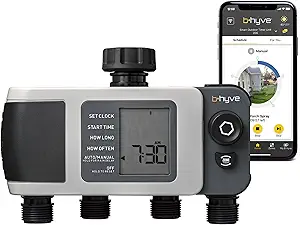 |
| Best Quality Built to a higher standard if you want something more solid | RAINPOINT Brass Sprinkler Timer — 100% Metal Hose Water Timer (1‑Zone) |  |
| Best Value The sweet spot between price and what you get | Insoma 1-Zone Outdoor Water Timer with Brass Inlet |  |
| Best Budget The cheapest option that still gets the job done reliably | Orbit Mechanical Water Timer (Model 62034) |  |
| Highest Rated A top-rated pick with lots of positive feedback | MOES 1-Zone Programmable Hose Timer with Brass 3/4" Inlet and Outlet |  |
| Most Popular A crowd favorite that many people choose with confidence | Orbit Programmable Digital Hose Watering Timer (1-Outlet) |  |
| Best Seller A high-volume bestseller chosen again and again | Orbit Programmable Digital 3-Outlet Hose Watering Timer with LCD and Rain Delay |  |
Orbit B-hyve XD 4-Port Smart Hose Watering Timer
| Brand Name | Orbit |
|---|---|
| Item Type Name | Sprinkler Timer |
| Number of settings | 6 |
| Material Type | Plastic |
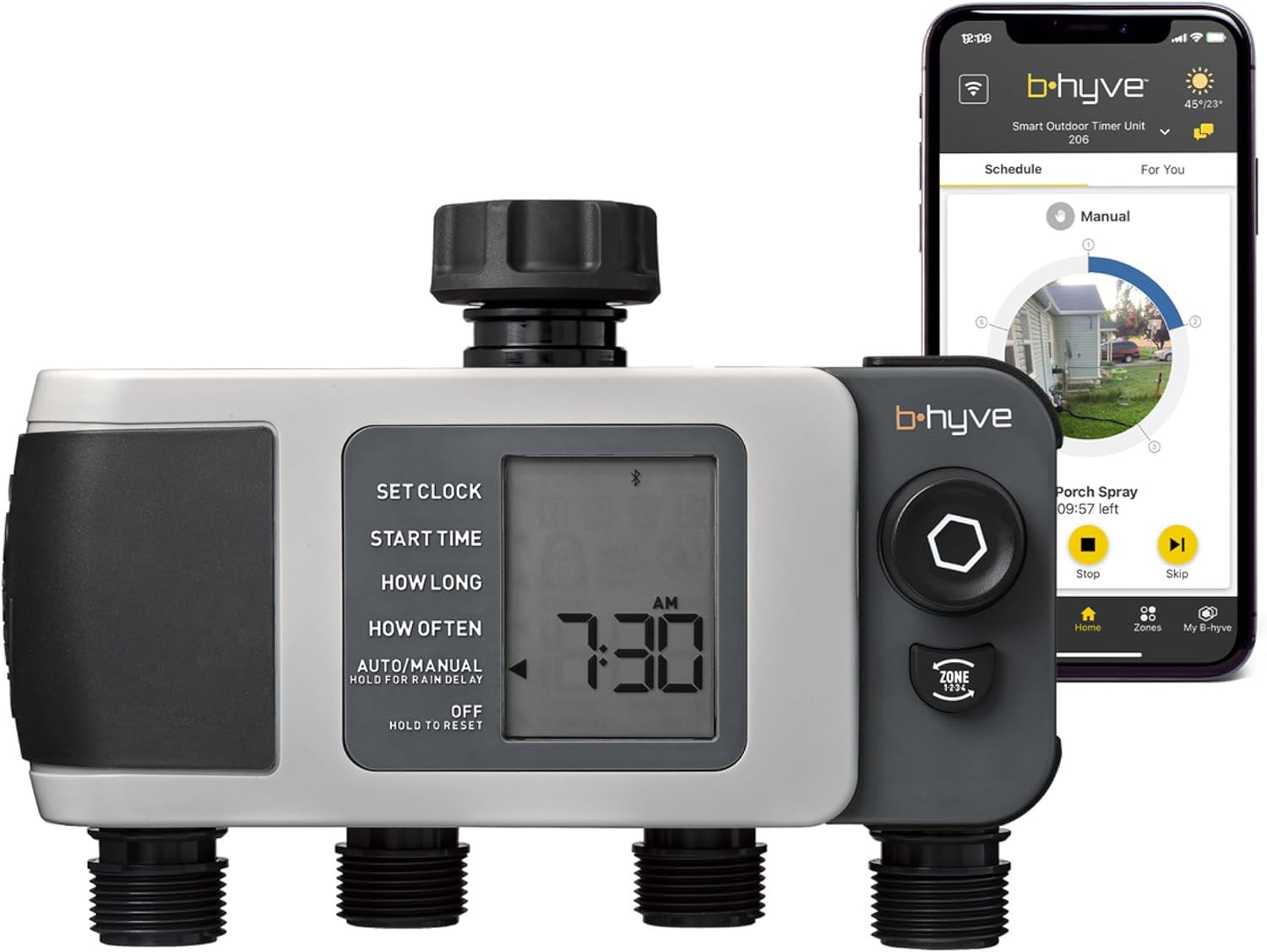
The Orbit B-hyve XD 4-Port Smart Hose Watering Timer turns a single outdoor faucet into a four-zone irrigation hub that is aimed at homeowners who want reliable, automated watering without constant fuss. Each of the four outlets can be scheduled independently using the B-hyve mobile app over Bluetooth, and the device supports remote smart functions when paired with an optional Wi-Fi hub. WeatherSense automatically adjusts watering based on local conditions and drought alerts so the system reduces overwatering during rainy or cool periods. The unit is rated IPX-5 for outdoor durability and includes a simple on-device interface for local programming when a phone is not handy. Practical benefits include consolidated control of multiple garden areas, water savings from weather-based adjustments, and straightforward Bluetooth setup for nearby control. Limitations to note are the dependency on a Wi-Fi hub for full remote/Wi-Fi features and that more advanced networked automation requires that additional accessory. For risk-averse buyers the proven brand, WeatherSense automation, and weatherproof design provide reassuring reliability for a smart sprinkler solution.
Best for: Homeowners who want a low-maintenance, dependable smart sprinkler that automates multiple garden zones and prioritizes water-efficient schedules and simplicity.
Less Ideal for: Users who need full cloud-based remote control out of the box or who require integration with wider smart-home systems without adding the Wi‑Fi hub.
- Four independently programmable outlets for separate zones
- WeatherSense adjusts schedules automatically using local weather data
- Bluetooth control with on-device programming for local access
- IPX-5 rated for outdoor use so it tolerates typical yard conditions
- Full remote Wi-Fi control requires purchasing and pairing a separate Wi‑Fi hub
Verdict: Buy this if you want a durable, water‑saving four-port smart hose timer that automates multiple zones with reliable weather-based scheduling.
RAINPOINT Brass Sprinkler Timer — 100% Metal Hose Water Timer (1‑Zone)

| Material Type | Brass, Metal |
|---|---|
| Number of settings | 24 |
| Inlet connection | 3/4" GHT |
| IP Rating | IP65 |
The RAINPOINT sprinkler timer is a one‑zone, mechanical/digital hose controller built around an all‑metal water path and a brass 3/4" inlet for outdoor irrigation. It installs between a spigot and hose and is used to run scheduled watering cycles or to open the line manually when needed. Notable features include a full‑flow metal ball valve and larger bore that the manufacturer tested at roughly 10 gal/min at high pressure, an IP65 rating for outdoor use, a rain delay (24/48/72 hours), and flexible timing options for frequency (hourly to daily) and run duration (1 minute up to nearly 4 hours). In practice that means stronger flow to sprinklers or soaker lines and a robust connection that resists twisting and leaks. The unit suits gardeners who prioritize reliability and steady flow under pressure, but it is a single‑zone, non‑smart controller so you will not get app control, multi‑zone scheduling, or remote status monitoring. Setup is straightforward and the metal construction should outlast many plastic alternatives, though advanced automation users may prefer a WiFi multi‑zone model.
Best for: Gardeners who need a rugged, performance‑focused hose timer that prioritizes reliable flow and long service life over smart features, ideal for single‑zone lawns, vegetable beds, or soaker hose setups.
Less Ideal for: People who want multi‑zone automation, smartphone control, or remote monitoring should consider a WiFi or multi‑zone smart controller instead.
- 100% metal water path and brass inlet for durability and higher pressure tolerance
- Full‑flow metal ball valve design that reduces flow loss and supports strong output
- Programmable schedules with a wide range of frequencies and durations
- Rain delay and manual modes for flexible temporary control
- IP65 waterproofing and anti‑twist inlet design for secure outdoor installation
- Single‑zone controller with no WiFi or app integration for remote control
- Lacks advanced multi‑zone scheduling or smart automation features
Verdict: Buy this if you want a heavy‑duty, single‑zone hose timer that prioritizes metal construction and consistent full‑flow performance over smart features.
Insoma 1-Zone Outdoor Water Timer with Brass Inlet

| Battery Type | AA Alkaline |
|---|---|
| Material Type | Brass Inlet |
| Number of settings | 5 |
| Battery Life | 6 months |
This Insoma water timer is a straightforward single-zone controller designed to automate one hose or sprinkler line. It mounts at the faucet and uses a rotary dial and buttons to set clock, start time, frequency and duration, with watering intervals from 1 minute up to 23 hours 59 minutes or 1 to 7 days. Notable features include a 100% brass inlet and metal-threaded connection for improved durability and heat resistance, an enlarged LCD for easier reading, a child lock, and an IP55-rated waterproof housing with an upgraded battery cover seal. The unit runs on two AA batteries and the manufacturer claims around six months of battery life. Practical benefits are reliable mechanical connections and flexible scheduling that fit most small lawns, garden beds, and drip setups, plus a rain-delay to pause schedules during wet weather. Limitations are that it only controls one zone, has no WiFi or app integration for remote changes, and programming is done on the device which can be slower than app-driven controllers.
Best for: Budget-minded gardeners who need a durable, no-frills controller for a single faucet or irrigation line and prefer a simple, reliable on-device interface.
Less Ideal for: Homeowners who want multi-zone automation, cloud control, or regular remote adjustments from a smartphone should look at multi-zone WiFi controllers instead.
- Brass inlet and metal-threaded connection for greater durability and resistance to heat and cracking
- Large LCD and child lock for easier use and protection from accidental changes
- IP55 waterproofing with upgraded battery cover seal suitable for outdoor exposure
- Flexible scheduling with minute-to-day duration and frequency plus rain delay
- Single-zone controller without WiFi or app control for remote scheduling
- Programming requires using the onboard dial and buttons which can be slower than touchscreen or app interfaces
Verdict: A tough, inexpensive single-zone timer that gives reliable on-site scheduling with a brass inlet and waterproof housing for straightforward garden automation.
Orbit Mechanical Water Timer (Model 62034)

| Material Type | Plastic |
|---|---|
| Watering Duration | 15-120 minutes |
| Power Source | No batteries required |
| Included Components | Timer |
The Orbit Mechanical Water Timer is a simple, reliable hose faucet timer that works like an egg timer: twist the oversized dial to set watering from 15 to 120 minutes and the clockwork mechanism shuts the water off when the time is up. It installs directly on an outdoor faucet with a swivel coupling for quick hose connection and includes a manual bypass so you can water without removing the unit. Because it is fully mechanical there are no batteries or electronics to fail, which makes it low maintenance and dependable for routine lawn or garden watering. The clear, easy-grip dial is usable with wet or gloved hands, and the plastic housing is rust-proof for outdoor use. Limitations are its single fixed-duration runs and lack of programmable schedules or remote control, so it is best for straightforward tasks like run-once lawn watering, filling a watering can, or timed sprinkler sessions rather than automated multi-day schedules.
Best for: Buyers who want a low-cost, low-maintenance way to time single watering sessions for lawns or garden beds and prefer a straightforward mechanical solution over smart features.
Less Ideal for: Users who need multi-day automated schedules, app control, or multiple zone programming should consider programmable or smart timers instead.
- Battery-free mechanical operation eliminates the need for replacements or electronics maintenance
- Oversized, easy-grip dial that is usable with wet or gloved hands
- Manual bypass allows instant faucet use without removing the timer
- Swivel coupling for quick and secure hose and faucet connection
- Not programmable for recurring schedules or multiple daily runs
- No remote, app, or smart connectivity for off-site control
Verdict: Choose this if you want an inexpensive, maintenance-free mechanical timer that reliably times single watering runs without batteries or electronics.
MOES 1-Zone Programmable Hose Timer with Brass 3/4" Inlet and Outlet

| Brand Name | MOES |
|---|---|
| Item Highlight | Independent Single-Outlet Sprinkler Timer, Programmable Irrigation Controller with Rain Delay & Manual Mode, Battery Powered |
| Manufacturer | WENZHOU NOVA NEW ENERGY CO., LTD |
| Number of Items | 1 |
The MOES 1-zone hose timer is a straightforward, reliability-minded controller that attaches to a standard outdoor faucet and runs a single watering schedule. It uses two AA batteries and an easy knob-and-button interface to set start times, run duration from 1 minute to 24 hours, watering frequency from hourly to weekly, plus rain-delay and manual modes for ad hoc sessions. The unit’s standout practical feature is its 3/4-inch solid brass inlet and outlet fittings, which resist cracking and stripping better than typical plastic connectors and should last through seasons of use. Because it has no WiFi or app dependency, programming is quick and it avoids connectivity headaches. Limitations include single-outlet control, so you cannot run truly independent dual schedules without a second timer, and performance can be affected by very low faucet pressure, long hose runs, or clogged filters. For routine lawn, garden, and vacation watering this timer delivers dependable, no-friction operation with durable hose connections.
Best for: Buyers who prioritize a durable, fuss-free hose timer that just works without apps or WiFi and who want dependable seasonal performance for lawns, garden beds, or while away from home.
Less Ideal for: Users who need multi-zone control from a single faucet or who require remote app control and integration with smart home systems.
- Solid 3/4-inch brass inlet and outlet fittings for greater durability than plastic connectors
- Simple dial-and-button programming with rain delay and manual override requires no app or WiFi
- Wide scheduling range: run times from 1 minute to 24 hours and frequencies from hourly to weekly
- Battery powered with common AA cells for easy replacement
- Single-outlet design cannot control two independent zones from one faucet
- No smart connectivity for remote control or cloud scheduling
Verdict: Choose this timer if you want a simple, long-lasting hose controller with brass fittings and no-app programming for reliable everyday watering.
Orbit Programmable Digital Hose Watering Timer (1-Outlet)

| Power Source | 2 AA batteries (not included) |
|---|---|
| Watering Duration | 1-240 minutes |
| Watering Frequency | Every 6 hours to once every 7 days |
| Rain Delay | 24, 48, or 72 hours |
The Orbit programmable digital hose timer converts a standard outdoor faucet into a simple, dependable automated watering station. You program start times, watering duration (1 to 240 minutes) and frequency (every 6 hours up to once every 7 days) on the oversized LCD and single dial, then let it run the schedule. Useful features include a manual water button for instant watering without reprogramming and a 24/48/72-hour rain delay to pause cycles after rainfall. The unit is water-resistant for outdoor use and runs on two AA batteries, making placement flexible where no power is available. Practical benefits are consistent, repeatable watering for lawns, beds, and containers and measurable water savings by avoiding overwatering. The main limitations are that it is a basic non-networked timer with only one outlet and no remote or app control, so managing multiple zones requires additional units and on-site programming for changes.
Best for: Buyers who prioritize a proven, straightforward timer with clear on-device controls and want reliable automated watering without needing smart-home features.
Less Ideal for: Gardeners who want central control of multiple zones or remote app scheduling should consider multi-outlet or smart Wi‑Fi-enabled controllers instead.
- Wide watering duration range (1–240 minutes) for flexible run times
- Clear, oversized LCD and single-dial controls for easy programming
- Built-in rain delay and manual watering button to conserve water and handle exceptions
- Water-resistant construction suitable for outdoor faucet mounting
- Battery power allows installation without external power source
- Single outlet only so multiple watering zones need extra timers or splitters
- No Wi-Fi or app control for remote scheduling or notifications
- Plastic construction may feel less durable than metal alternatives
Verdict: A dependable, easy-to-program single-outlet timer that saves water and removes guesswork when you want reliable on-site automation without smart features.
Orbit Programmable Digital 3-Outlet Hose Watering Timer with LCD and Rain Delay

| Power type | Battery powered |
|---|---|
| Outlets | 3 |
| Display | LCD screen |
| Feature | Built-in rain delay |
The Orbit Programmable Digital 3-Outlet Hose Watering Timer converts a single faucet into a small automatic irrigation station so you can schedule watering without manual attention. You attach it to an outdoor spigot and connect up to three hoses or splitters to run drip lines, soaker hoses, or small sprinklers on independent schedules. The clear LCD and straightforward controls make programming start times and run durations quick, and the built-in rain delay pauses cycles during wet weather to avoid overwatering. Battery power and a water-resistant housing mean it keeps working outdoors without a wired connection. Practical benefits include consistent, repeatable watering that saves time and helps maintain plant health while reducing waste. Limitations are that it runs on batteries so you will need to replace them periodically and it is designed for residential setups rather than large irrigation systems, so it is best for yards, garden beds, and container gardens rather than acreage.
Best for: A homeowner who wants a reliable, low-effort way to automate watering for lawns, garden beds, and container plants and values predictable, easy-to-use controls and weather-aware pauses.
Less Ideal for: People managing large properties or complex multi-zone irrigation who need flow metering, central controller integration, or wired power should consider more advanced systems.
- Three independent outlets let you run separate lines or zones from one faucet
- Simple LCD interface and programming make schedule setup fast and clear
- Water-resistant housing and built-in rain delay improve outdoor reliability
- Battery powered so no electrical hookup is required for installation
- Requires periodic battery replacement which can interrupt operation if not monitored
- Not suitable as a replacement for a full underground or professional irrigation system
Verdict: A dependable, easy-to-program three-outlet timer that automates small garden and container watering with weather-aware controls.
Choosing the Right Hose Bib Irrigation Controller: Key Factors to Consider
Connection Type and Threading
Most hose bib controllers attach directly to a standard outdoor faucet with female hose threads or connect inline with male fittings. Check whether the controller uses standard garden hose threads or requires an adapter. A snug, tapered seat and quality O-ring are important because a poor seal leads to slow leaks that are hard to detect but waste water and can cause erosion around foundations.
Thread condition on your existing faucet matters. Older or corroded threads may need cleaning or a simple brass adapter to get a reliable fit. Metal-to-metal threads can be more durable than plastic threads where frequent attachment and removal occurs.
Flow Range and Adjustability
Controllers differ in how much flow they allow and how finely you can adjust it. Some devices simply open or close and rely on the faucet pressure, while other timers include a built-in valve that lets you throttle flow for drippers, soaker hoses, or sprinklers. If you plan to run multiple emitters or a small spray zone, choose a controller with a wider flow range and a smooth adjustment mechanism.
Pay attention to minimum and maximum flow specifications. Too little minimum flow can stall a timer valve, while too high a maximum could overwhelm low-capacity emitters and lead to runoff. A controller that lists flow in gallons per minute or liters per minute lets you match it to your irrigation components.
Programming Features and Schedule Flexibility
The usefulness of a controller mostly comes down to how easily you can set schedules. Basic mechanical timers offer simple intervals and duration dials that are intuitive and reliable. Electronic units add clock-based schedules, multiple start times per day, and sometimes seasonal adjustments that change run times across the year.
Consider how many programs and start times you need. Vegetable beds and new plantings often require twice-daily short runs, while established shrubs may be fine with a single longer run. If you prefer hands-off operation, look for units that store multiple programs or let you skip watering temporarily without erasing saved schedules.
Power Source and Battery Life
Battery-powered timers are common because they avoid wiring, but battery life varies widely. Units with simple LCD displays and modest circuitry can run through a season on alkaline cells, while Bluetooth or Wi-Fi models draw more power and may need yearly battery replacement or a rechargeable option.
Check how the unit indicates low battery and whether you can change batteries without disassembling the entire timer. Long battery life reduces maintenance visits, especially for vacation watering. Consider whether the controller offers a manual override that works even with dead batteries to prevent irrigation interruptions.
Material Durability and UV Resistance
Because a hose bib controller sits outside all season, housing material and UV resistance matter. UV-stabilized plastics resist brittle cracking and color fading, while metal housings can handle knocks but may corrode if not properly finished. Look for materials rated for outdoor use and components like stainless steel screws or brass fittings in the wet path.
Seals and internal valve parts should resist mineral buildup. If you live in an area with hard water, internal components that tolerate scale or are easy to clean will extend service life. Also factor in whether the controller will sit in full sun or a shaded porch; extreme sun exposure accelerates wear on plastics.
Winterization and Freeze Protection
A hose bib controller must be winterized in climates that drop below freezing. Some controllers offer frost-resistant housings or built-in drain paths that minimize trapped water, reducing the chance of freeze damage. Others provide screw-off modules for easy removal before winter.
If you cannot access the controller in cold months, choose a model that self-drains or that can be left on the faucet without cracking. Also plan where to store the device off-season and whether a simple faucet cover plus draining will be sufficient to protect it.
Installation Tips for Quick Faucet Hookup
Most hose bib controllers are designed for tool-free or minimal-tool installation. Start by shutting off the faucet and then threading the controller by hand to avoid cross-threading. Use PTFE tape only if the manufacturer permits it and avoid overtightening plastic bodies onto metal spindles to prevent cracking.
- Confirm the faucet has a pressure washer or standard garden hose thread.
- Clean threads and remove debris before attaching the controller.
- Hand-tighten first, then use a gentle quarter turn with pliers if needed.
Matching Controllers to Common Garden Setups
Think about the actual irrigation equipment you plan to run from the hose bib. Drip kits and soaker hoses typically need lower, steady flow and benefit from throttle control. Small spray sprinklers demand higher instantaneous flow. Choose a controller whose flow characteristics match the most demanding device you will attach.
- Low-flow drip: choose fine adjustability and anti-drain features.
- Sprinklers: ensure the controller supports the required gallons per minute.
- Multiple small zones: consider using a simple splitter plus a controller with stable pressure control.
Maintenance and Seasonal Care
Regular maintenance keeps a hose bib controller working for seasons. Flush the controller and attached hose annually to clear sediment. Inspect seals and O-rings for cracking and replace them as needed. If the device has removable screens or filters, check and clean them during the growing season to prevent clogging.
- Replace batteries before peak season and when low-battery alerts appear.
- Remove and store the controller indoors over winter if it is not rated for freeze protection.
- Lubricate moving parts with a manufacturer-appropriate lubricant if access is provided.
Using Smart Features Carefully
Some hose bib controllers include Bluetooth or Wi-Fi for remote scheduling, weather adjustment, or irrigation reminders. While these features add convenience, they also add complexity and power draw. If you prefer simplicity, stick with straightforward mechanical or electronic timers that offer reliable local controls.
- Confirm app compatibility and update policy if selecting a connected controller.
- Ensure Bluetooth range will cover your typical management spots if you rely on your phone for programming.
- Balance convenience of remote control against battery consumption and potential connectivity issues.
How We Chose the Best Hose Bib Irrigation Controller
We focused on straightforward criteria gardeners can verify before buying and that predict long-term, trouble-free use at a hose bib. Selection began with devices designed to mount directly to a standard outdoor faucet or to sit inline on a hose connection. We prioritized build materials and sealing details, since threads and valves face constant exposure to sun and freeze cycles. Key evaluation criteria were flow accuracy and control, programming simplicity and schedule flexibility, connection durability and leak resistance, battery life or power options, and winterization features. We also considered resistance to common failure modes such as clogging from sediment and compatibility with standard hose fittings. Products were excluded if they required additional plumbing work, specialized adapters not commonly available, or indoor-only installations. We did not include complex multi-zone controllers that require solenoids or manifold installs. The final list favors solutions that gardeners can install and maintain with basic tools and without professional help.
FAQ
Will a hose bib irrigation controller work with drip irrigation?
Often yes. Many controllers offer fine flow adjustment suitable for drip lines and soaker hoses. Verify the controller's minimum flow rating and ensure the combined flow of your drip lines stays above the unit's required minimum to avoid stalling.
Can I leave the controller on the faucet year-round?
It depends on the model and your climate. In freezing conditions it is usually best to remove and store the controller or ensure it self-drains. In mild climates some controllers are designed to remain attached if they offer freeze-resistant features.
How do I prevent leaks at the connection?
Clean the faucet threads and replace old washers or O-rings before attaching the controller. Hand-tighten initially and inspect after the first run for slow drips. Replace worn seals promptly and avoid overtightening plastic housings onto metal threads.
Do smart controllers save water compared with mechanical timers?
Smart features like weather-based adjustments can reduce unnecessary runtimes, but savings depend on proper setup and local conditions. Mechanical timers can be water-efficient when you set appropriate durations and frequencies for your soil and plant needs.
What power options are common for these controllers?
Most are battery-powered using replaceable alkaline cells. A few have rechargeable batteries or optional solar trickle chargers. Connected units that use Bluetooth or Wi-Fi will usually require more frequent battery changes than basic electronic timers.
Final Verdict
For gardeners who want automated watering with minimal plumbing, hose bib irrigation controllers are a practical way to add schedules and flow control directly at a faucet. Focus your choice on connection durability, appropriate flow range for the emitters you plan to run, and programming features that match how often you need to water. Balance convenience versus complexity when considering smart features and prioritize models with clear winterization options if you face freezing temperatures. Selecting a controller that fits your faucet threads, matches your irrigation demand, and is easy to maintain will give you reliable, low-effort watering all season long.
