

Note: This article contains affiliate links. If you click on these links and make a purchase, I may earn a small commission at no extra cost to you. This helps support my research and content. Read my full affiliate disclosure here.
If you need quick, even weed control across a turf area, a hose-end application can cut treatment time and reduce mixing errors. Choosing the right hose-end weed killer matters because different formulations, dilution settings, and spray patterns affect how well weeds are controlled and how much stress your lawn will see. This guide shortlists five top hose-end weed killers for lawns and explains the practical differences that matter in real yards: coverage rate, selective turf safety, ease of application, and re-entry intervals. Read on to see which product features gardeners prioritize when treating common lawn weeds and how we evaluated each option.
Top Picks at a Glance
| Best Overall The best all-around choice for most situations | Ortho WeedClear Lawn Weed Killer Ready-to-Spray, 32 fl. oz. |  |
| Best Quality Built to a higher standard if you want something more solid | Ortho WeedClear Weed Killer for Lawns with Comfort Wand, 1 gal. | 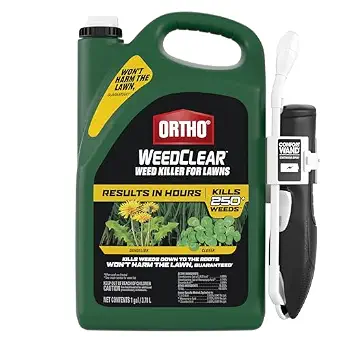 |
| Best Value The sweet spot between price and what you get | Spectracide Weed Stop for Lawns Concentrate, 40 oz |  |
| Best Budget The cheapest option that still gets the job done reliably | Spectracide Weed Stop for Lawns Concentrate Ready-to-Spray, 32 oz | 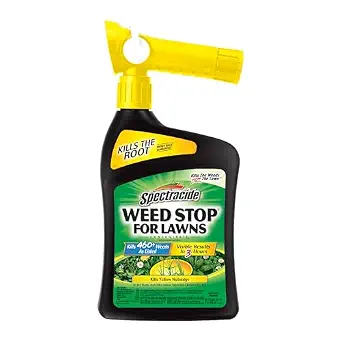 |
| Most Popular A crowd favorite that many people choose with confidence | Scotts Liquid Turf Builder with Plus 2 Weed Control, 32 fl. oz. |  |
Ortho WeedClear Lawn Weed Killer Ready-to-Spray, 32 fl. oz.

| Unit Count | 32 Fluid Ounces |
|---|---|
| Coverage | 5000 square_feet |
| Item Form | Spray |
| Active Ingredients | 2,4-D, Quinclorac, Dicamba (dimethylamine salts) |
Ortho WeedClear Ready-to-Spray is a hose-end applicator that targets common lawn weeds like dandelion, clover, chickweed and crabgrass with a fast-acting herbicide formula. You attach it to a garden hose, turn the water on, switch the sprayer to ON and sweep evenly until the grass surface is wet. The product advertises visible results within hours and becomes rainproof in about an hour, so treated areas can withstand light weather soon after application. It is formulated for use on many northern lawn grasses and claims to kill weeds down to the root with a single application over up to 5,000 sq. ft. Practical benefits include the convenience of a ready-to-use hose connection, broad weed coverage, and quick action. Important limitations are the turf restrictions and temperature guidance in the directions if you have sensitive grass types or live in very warm climates, and the need to keep people and pets off treated areas until sprays dry. The ready-to-spray format is convenient but less flexible than a concentrate for custom mixing or spot treatments.
Best for: Homeowners who want a straightforward, low-effort solution to reduce common lawn weeds across a medium-sized yard and prefer a fast-acting hose-end product over mixing concentrates.
Less Ideal for: Gardeners who need precise dilution control, who maintain sensitive or excluded turf species, or who regularly treat very large properties where concentrates are more economical.
- Ready-to-use hose-end applicator for quick, low-effort application
- Kills a wide range of broadleaf and grass weeds down to the root
- Covers up to 5,000 sq. ft. per 32 fl. oz. container
- Rainproof within one hour so treated lawns tolerate light weather quickly
- Not suitable for several warm-season and specialty grasses and must follow temperature limits
- Ready-to-use bottle offers less dosing flexibility than a concentrate option
Verdict: A convenient ready-to-spray hose applicator that quickly controls a broad list of common lawn weeds across up to 5,000 sq. ft., ideal for homeowners seeking an easy, fast solution.
Ortho WeedClear Weed Killer for Lawns with Comfort Wand, 1 gal.

| Item Form | Spray |
|---|---|
| Coverage | 16000 square feet |
| Liquid Volume | 128 fluid ounces |
This Ortho WeedClear ready-to-use gallon is designed for homeowners who want fast, targeted control of broadleaf lawn weeds. The bottle comes with a Comfort Wand applicator for continuous, precise spraying so you can spot-treat dandelions, clover, poison ivy and many other listed weeds without mixing or pumping. The formula combines three active ingredients that work down to the root and produces visible wilting within hours; treated areas become rainproof after about an hour once dry. For larger coverage the label gives a broadcast mixing rate to treat lawn area evenly. Practical benefits include the convenience of a wand for accuracy, reduced overspray compared with a pump sprayer, and suitability for spring or fall applications when weeds are actively growing. Important limitations are that it is a chemical herbicide requiring care around desirable plants, it is intended for broadleaf weeds rather than grassy weeds, and label directions and reentry drying times must be followed to protect people and pets.
Best for: Buyers who prioritize fast, reliable weed knockdown and want a simple wand-equipped solution for targeted lawn spot treatment and modest broadcast use.
Less Ideal for: Do not choose this if you need long‑term year‑round prevention or a product that controls tough brush and woody vines, or if you prefer nonchemical or organic weed control methods.
- Ready-to-use with attached Comfort Wand for precise spot application
- Formula targets over 250 listed broadleaf weeds and works down to the root
- Visible results in hours and becomes rainproof about one hour after drying
- Includes broadcast mixing instructions to treat larger lawn areas
- Not formulated for grassy or grassy-type weeds so may not control all lawn weed types
- Chemical active ingredients require careful handling and adherence to safety directions
- Not a year-long preventer; best when weeds are small and actively growing
Verdict: A convenient, wand‑equipped ready‑to‑use herbicide that delivers quick, root‑killing control of common broadleaf lawn weeds.
Spectracide Weed Stop for Lawns Concentrate, 40 oz

| Unit Count | 40 Fluid Ounces |
|---|---|
| Coverage | 20000 square_feet |
| Item Form | Liquid |
Spectracide Weed Stop for Lawns Concentrate is a liquid herbicide designed to mix with water and apply with a garden sprayer to kill common broadleaf weeds by contact and down to the root. Typical use is mowing first, mixing the recommended rate, then spraying affected areas in spring when weeds are small or in fall to prevent next season's growth. The formula lists control for over 200 weed types including dandelion, clover and chickweed, and the 40 fl oz bottle covers up to 20,000 square feet. It produces visible results within hours and becomes rainfast in about six hours, which helps avoid loss from light showers. Because it is a concentrate, you can treat large lawns without frequent repurchases, but you will need a separate garden sprayer and careful measuring to avoid overapplication. Tough perennial weeds may require a repeat spot treatment after a few weeks. Follow label directions closely to avoid off-target damage and to ensure safe handling.
Best for: Homeowners who want an efficient, cost-conscious solution to knock back common broadleaf weeds across a medium to large lawn and who are comfortable mixing and spraying a concentrate.
Less Ideal for: People who prefer ready-to-use hose-end applicators or who need a product specifically for non-broadleaf weeds or brush control should consider alternatives.
- Concentrated formula covers up to 20,000 sq ft from a 40 fl oz bottle
- Kills over 200 listed broadleaf weeds including dandelion, clover and chickweed
- Works quickly with visible results in hours and becomes rainfast in about six hours
- Designed to kill to the root when used as directed, reducing regrowth
- Requires a separate garden sprayer and accurate mixing to apply properly
- Tough perennial weeds may need follow-up spot treatments
Verdict: A concentrated, fast-acting lawn weed killer that treats large areas efficiently for homeowners who want to minimize product cost per square foot.
Spectracide Weed Stop for Lawns Concentrate Ready-to-Spray, 32 oz

| Unit Count | 32 Ounce |
|---|---|
| Coverage | 8,000 square feet |
| Item Form | Liquid |
| Active Ingredients | 2,4-D; Mecoprop-P; Dicamba; Sulfentrazone |
This ready-to-spray Spectracide concentrate is designed to make spot and whole-lawn weed control quick and simple. The QuickFlip sprayer connects to a garden hose so you flip the valve and walk the yard, spraying until weeds are wet; the formula kills by contact down to the root and declares visible results in about three hours. It is labeled for common turf types such as bluegrass, fescue, Bermuda and perennial rye, and the 32-ounce bottle covers a large area when diluted or used as directed. Practical benefits include fast action, broad weed coverage and a hose-end applicator that removes the need to mix in a separate tank. Important limitations are temperature restrictions and safety precautions: do not apply when daytime temps exceed 90°F and keep people and pets off treated areas until dry, and wait several weeks before reseeding. Also avoid use on zoysiagrass just coming out of dormancy. For everyday lawn weed control this product is effective and convenient, but it requires careful timing and adherence to label directions for safe, lawn-friendly results.
Best for: Buyers who want a low-effort, affordable hose-end solution to control common broadleaf lawn weeds quickly across medium to large yards.
Less Ideal for: Those who need an all-season product for hot summer applications or who prefer a non-chemical, organic weed control approach.
- QuickFlip hose-end sprayer for easy application without separate mixing
- Fast visible results in about three hours for many broadleaf weeds
- Targets over 460 listed weed types and kills down to the root
- Labeled for common lawn grasses like bluegrass, fescue, Bermuda and perennial rye
- Not to be applied when daytime temperatures exceed 90°F which limits summer use
- Contains strong herbicide ingredients so people and pets must avoid the treated lawn until dry
Verdict: An inexpensive, easy-to-use hose-end concentrate that delivers fast, broad-spectrum control of common lawn weeds.
Scotts Liquid Turf Builder with Plus 2 Weed Control, 32 fl. oz.

| Item Form | Spray |
|---|---|
| Coverage | 6000 square_feet |
| Liquid Volume | 32 fluid ounces |
| Active Ingredients | Nitrogen |
This ready-to-spray Scotts product connects to a garden hose to deliver liquid fertilizer plus a selective broadleaf weed killer across a lawn. It supplies nitrogen to green up grass while targeting common weeds such as dandelions, clover, chickweed, and ground ivy, and is formulated for both warm- and cool-season turf. Use is straightforward: attach the bottle to a hose, spray when weeds are actively growing and when temperatures are below 85°F, then avoid watering for 48 hours to let the active ingredients work. Notable conveniences include the hose-end applicator that eliminates separate mixing and a single 32 fl. oz. bottle that covers up to 6,000 sq ft on warm-season turf (4,000 sq ft for cool-season). Limitations to expect are the restricted weed list and the recommendation to reapply for stubborn weeds in 3 to 4 weeks; bermudagrass may show temporary injury in some cases. Also follow label directions closely to avoid treating non-lawn areas where it can harm plants.
Best for: Buyers who want a simple, no-mess lawn treatment that feeds grass while killing common broadleaf weeds and who value clear usage directions and visible results.
Less Ideal for: People needing a broad-spectrum herbicide for non-lawn beds, or those who prefer granular schedules or professional application services.
- Hose-end ready-to-spray design removes need for measuring or mixing
- Provides a quick nitrogen boost to green up lawns
- Targets a wide list of common broadleaf lawn weeds
- Large coverage per bottle for typical yard sizes
- Controls only listed broadleaf weeds so some species may require repeat treatments or alternative herbicides
- Not safe for gardens or flower beds and must be used only on listed grass types
Verdict: A convenient hose‑end solution to quickly feed your lawn and knock back common broadleaf weeds without mixing or special equipment.
Choosing the Right Hose End Weed Killer for Lawns: Key Factors to Consider
Coverage Rate and Dilution Control
How much lawn area a single bottle or reservoir covers depends on the product's dilution options and the hose-end dial. Products with clear calibration marks and multiple dilution settings let you choose a heavier mix for spot treatments or a lighter setting for broad coverage. That affects how often you stop to refill and whether you can finish a full front- or backyard without interruptions.
Coverage also affects cost of use and application time in practice. A finer spray delivered evenly across turf reduces missed patches and uneven results. Consider whether the nozzle pattern wets just the plant foliage or soaks the soil, because that determines how contact or translocated the active ingredient will be.
Turf Safety and Timing
Selective formulations are designed to harm broadleaf weeds while leaving grasses intact, but tolerance varies by turf species and the product's concentration. Labels often list cool- and warm-season grasses and any temperature or mowing restrictions. Applying during heat stress or immediately after fertilizing can increase turf injury risk.
Timing matters too: many products recommend treating early morning or late evening to reduce drift and to allow foliage to dry before irrigation. Also note any seasonal limits or maximum number of applications per year to avoid stressing your lawn.
Weed Spectrum and Expected Control
No single product controls every weed equally. Some hose-end formulations are optimized for broadleaf weeds like dandelions, clover, and plantain, while others include components to help with grassy weeds or hard-to-kill perennials. Knowing which species dominate your lawn informs whether a hose-end selective product will be adequate or if a targeted spot treatment or follow-up is needed.
Expect variable speed of visible control. Contact actives show effects quickly but may need repeat treatments for regrowth. Systemic actives move into the root and take longer to wilt but often give longer control. Read label guidance on expected visual timing so you know when to expect results and whether to retreat.
Ease of Application and Calibration
A hose-end applicator that is easy to attach, has clear dilution markings, and offers a consistent spray pattern reduces user error. Look for units with a simple on/off and leak-resistant fittings. If the product requires priming or has a complex dial, you are more likely to get inconsistent mixes across multiple applications.
Practical concerns also include how the unit performs on varying water pressure. Some applicators require a minimum pressure to deliver the intended dilution. Consider whether the device gives an adjustable spray width so you can treat narrow strips next to beds without overspray onto desirable plants.
Runoff Risk and Environmental Precautions
Because hose-end applications use water to deliver actives across turf, there is a real risk of runoff into drains, garden beds, or water features if you overapply or treat before heavy rain. Choose products with label directions for buffer zones near water and follow guidance on rainfall windows after application.
Also consider the toxicity to non-target plants and pollinators. Even selective herbicides can damage nearby ornamentals if sprayed or if spray drifts. Plan treatments on calm days and avoid watering for the period specified on the label to let the chemistry act where applied.
When a Hose-End Applicator Makes Sense
Hose-end weed killers shine when you need to treat large turf areas quickly and want to avoid mixing concentrated liquid or granular products by hand. They reduce time spent measuring and generally speed up blanketing a lawn with a uniform dilution.
These applicators are most practical for routine maintenance on established turf where the dominant problems are common broadleaf weeds. For small, isolated patches or for hard-to-control deep-rooted perennials, a handheld spot treatment may be more precise and use less chemical overall.
- Good for large lawns with evenly distributed weeds
- Saves time versus repeated handheld mixing
- Less ideal for tiny patches or near sensitive plantings
Application Best Practices
Attach the applicator to a hose with adequate pressure and check the dial setting before you begin. Treat on a calm day and avoid windy periods to prevent drift onto beds or neighboring plants. Walk at a steady pace and overlap swaths slightly to prevent untreated stripes.
Do not mow immediately before or after application unless the label permits it. Allow the spray to dry on foliage when recommended, and wait the indicated period before irrigating. Keep children, pets, and edible gardens away from treated areas until the re-entry interval has passed.
- Check water pressure and dilution setting
- Treat in low wind and appropriate temperatures
- Follow label timing for mowing and irrigation
Dealing With Resistant or Tough Weeds
Some perennial broadleaf weeds and certain grasses may show limited response to a single hose-end application. In those cases, plan a follow-up strategy that may include a second application at the label interval, a different mode-of-action product for rotation, or targeted spot-spraying with a stronger formulation.
Physical removal is still an effective option for isolated deep-rooted weeds. Use mechanical control in combination with chemical treatments rather than relying solely on one method for persistent species.
- Expect repeats for tough perennials
- Rotate modes of action when possible
- Combine mechanical removal for isolated plants
Protecting Non-Target Plants and Pollinators
Keep spray drift away from flower beds and pollinator foraging areas. Use the lowest effective dilution and apply when pollinators are less active, typically early morning or late evening. If nearby ornamentals are sensitive, consider a physical barrier or treat those areas by hand.
Read label statements about pollinator effects and take extra care around native plantings. Avoid broadcast treatments immediately adjacent to flowering plants to reduce unintended exposure.
- Apply during low pollinator activity
- Create barriers for sensitive beds
- Use the lowest effective dilution
Storing and Disposing Hose-End Products Safely
Store concentrates and hose-end bottles in a cool, dry place out of reach of children and pets. Keep original labels intact for reference to mixing, application rates, and first-aid instructions.
Follow local regulations for disposal of leftover product and rinse water. Never pour concentrated residues into storm drains or onto bare soil. Triple-rinse applicator components when required and dispose of rinse water according to label directions.
- Keep labels and original containers
- Triple-rinse applicators when instructed
- Dispose of residues according to local rules
How We Chose the Best Hose End Weed Killer for Lawns
We evaluated options that are specifically formulated for use through a hose-end applicator and intended for turf or lawn settings. Key filters included: proven selective activity on common broadleaf lawn weeds, labeled compatibility with cool- and warm-season turfgrass, and adjustable dilution settings for easy coverage control. We prioritized products that list clear application rates and spray patterns, because those details determine how much product reaches the canopy versus the soil. Safety and turf tolerance were critical: we checked label guidance on maximum season applications, required re-entry intervals, and temperature or mowing restrictions that affect when you can treat. Ease of use was measured by how simple the dial, nozzle, and calibration instructions are, along with whether the applicator reduces spills and mixing errors. Finally, we excluded any products labeled only for non-turf uses, broadcast granules, or those requiring separate handheld mixing for every application. The scorecard used the same dimensions gardeners care about: coverage, turf safety, spectrum of weed control, ease of use, and environmental/runoff precautions.
FAQ
Can I use a hose-end weed killer on all types of turfgrass?
It depends on the product label. Many hose-end formulations list specific cool- and warm-season grasses they are safe on. Check the label for your turf species and any temperature or growth-stage restrictions before treating.
How long after treatment should I wait to water or mow?
Wait times vary by product. Some labels require the spray to dry before irrigation or mowing, while others allow mowing after a set number of hours. Follow the label guidance to avoid reducing effectiveness or increasing turf injury risk.
Will a hose-end applicator control deep-rooted perennial weeds?
Some systemics can control perennials, but deep-rooted species often need repeat applications or supplemental spot treatments. Mechanical removal combined with chemical control is a practical approach for tough perennials.
What should I do to reduce spray drift when using a hose-end sprayer?
Treat on calm days, use a coarser spray setting if available, and avoid high-pressure nozzles that produce fine mist. Keep a slow, steady walking pace and prevent overspray onto neighboring plants and landscape features.
Are there environmental risks with hose-end herbicide use?
Yes. Runoff and drift can affect water bodies and non-target vegetation. Follow buffer zone instructions on the label, avoid treating before heavy rain, and use the smallest effective dilution to reduce environmental exposure.
Final Verdict
Hose-end weed killers offer a fast, low-effort way to treat broad areas of lawn, but they require careful product selection and responsible application. Prioritize turf-safe formulations, clear dilution controls, and products labeled for the specific grass type in your yard. Balance coverage needs against runoff risk and the weed species you have. For widespread broadleaf issues, a well-chosen hose-end applicator can save time. For isolated or stubborn weeds, plan for spot treatments or mechanical removal as part of an integrated approach.
