

Note: This article contains affiliate links. If you click on these links and make a purchase, I may earn a small commission at no extra cost to you. This helps support my research and content. Read my full affiliate disclosure here.
Pests on indoor plants can spread quickly and stress or kill prized foliage if not treated promptly. Choosing the right houseplant bug spray matters because indoor environments demand both effective pest control and products that are safe for delicate leaves, potting mix, and indoor air quality. This guide shortlists top-performing options suited for common indoor infestations and explains the practical tradeoffs between knockdown speed, residual protection, and plant tolerance. Below you will find our top picks for houseplant bug spray, plus clear guidance on what to consider and how we evaluated each spray for typical home and apartment gardening situations.
Top Picks at a Glance
| Best Overall The best all-around choice for most situations | Bonide Captain Jack's Insecticidal Super Soap Ready-to-Use, 32 oz | 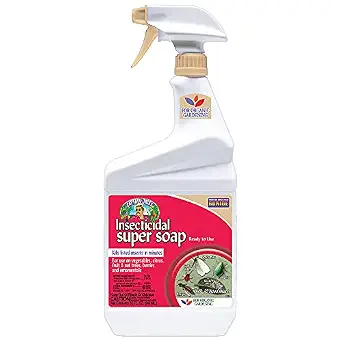 |
| Best Quality Built to a higher standard if you want something more solid | Big Leaf Energy Organic Neem Oil Spray for Plants, 16 oz |  |
| Best Value The sweet spot between price and what you get | BioAdvanced Houseplant Insect & Mite Control Spray, 24 fl oz |  |
| Best Budget The cheapest option that still gets the job done reliably | Natria Neem Oil Ready-to-Use Spray, 24 oz |  |
| Highest Rated A top-rated pick with lots of positive feedback | Athena IPM Ready-to-Use Insecticide & Fungicide Spray, 32 fl oz |  |
| Best Seller A high-volume bestseller chosen again and again | Bonide Captain Jack's Ready-to-Use Neem Oil Spray, 32 oz |  |
Bonide Captain Jack's Insecticidal Super Soap Ready-to-Use, 32 oz

| Unit Count | 32 Ounce |
|---|---|
| Liquid Volume | 32 fluid ounces |
| Item Form | Spray |
| Active Ingredients | Potassium Salts of Fatty Acids, Spinosad |
| Specification Met | USDA |
Bonide Captain Jack's Insecticidal Super Soap is a ready-to-use spray that controls more than 30 common garden pests including aphids, caterpillars, mites, and whiteflies while also addressing powdery mildew. It is typically applied directly to infested foliage with the built-in spray nozzle, giving fast contact and ingestion-based kill for soft-bodied insects and leaf-feeding pests. Notable features are its USDA specification and active ingredients of potassium salts of fatty acids plus spinosad, which combine a soap-based knockdown with a biologically derived insecticide for broader effectiveness. Practical benefits include easy deployment without mixing, suitability for organic gardening, and use across vegetables, herbs, fruit, ornamentals, containers, and greenhouses. Important limitations are that it requires direct contact or ingestion so thorough coverage is necessary and results may be reduced against heavy or hard-shelled pests; repeated applications may be needed for full control and care should be taken around beneficial insects. For gardeners who prioritize reliable, ready-to-use performance on a wide range of outdoor plants this product offers a practical, effective option.
Best for: Gardeners who want a performance-focused, ready-to-use insect control for edible and ornamental outdoor plants and who value organic-approved options that work quickly on common soft-bodied pests.
Less Ideal for: People who require systemic long-term control of soil-borne pests or need a single-application solution for armored insects should consider alternative chemistries or integrated approaches.
- Ready-to-use spray with built-in nozzle for immediate application
- Active ingredients include potassium salts of fatty acids and spinosad for both contact and ingestion kill
- Approved for organic gardening and labeled for vegetables, fruits, herbs, ornamentals, and greenhouses
- Fast acting formula that also addresses powdery mildew
- Requires complete coverage and direct contact or ingestion, so thorough spraying is necessary
- Less effective against hard-shelled or heavily protected pests and may need repeat applications
Verdict: Choose this ready-to-use, organic-approved spray when you need fast, broad-spectrum control of soft-bodied garden pests across edible and ornamental plants.
Big Leaf Energy Organic Neem Oil Spray for Plants, 16 oz

| Unit Count | 16 Fluid Ounces |
|---|---|
| Item Form | Spray |
| Target Species | Plants |
| Special Features | Biodegradable, Fast-Acting |
| Active Ingredients | Azadirachtin, Coconut Oil, Rosemary, Clove, Cinnamon, Eucalyptus, Lemon, Cedarwood |
Big Leaf Energy Neem Oil Spray is a ready-to-use, plant-safe botanical spray designed to control pests and support leaf and soil health. It delivers a higher concentration of azadirachtin than many premixed sprays and combines cold-pressed neem oil with seven essential oils to provide insect deterrence, a natural leaf shine, and modest systemic support when used as a soil drench. Typical use is as a foliar spray on tops and undersides of leaves or as a diluted soil drench; the label recommends shaking before use, patch testing sensitive plants, and avoiding spraying in direct sun. Notable features include a premium fine-mist sprayer for even coverage, a biodegradable alcohol-free formula, and the option to dilute for gentler, more frequent applications. Practical benefits are effective, multi-purpose pest suppression across vegetables, ornamentals, and houseplants and a pleasant citrus-wood aroma compared with straight neem. Important limitations are the need to warm and shake if natural separation or solidifying occurs in cold conditions and caution around pets or people with sensitivities to essential oils.
Best for: Gardeners focused on effective, performance-driven pest control who want an organic, concentrated neem spray that can be adjusted for different plant types and application rates.
Less Ideal for: People who need fragrance-free products or who keep pets and household members highly sensitive to essential oils should consider an alternative with milder ingredients.
- Higher concentration of azadirachtin for stronger pest control compared with many ready-to-use neem sprays
- Fine-mist sprayer provides even coverage on tops and undersides of leaves to reduce runoff and waste
- Alcohol-free, biodegradable formula made with cold-pressed neem and a blend of seven essential oils
- Can be used straight or diluted up to 4x to adjust strength for sensitive plants or frequent applications
- Natural formula can separate or thicken in cold temperatures requiring warming and shaking
- Contains essential oils that require caution around pets and people with sensitivities
Verdict: Choose this concentrated, organic neem spray when you want a performance-minded, adjustable botanical insect control that works on both houseplants and garden beds.
BioAdvanced Houseplant Insect & Mite Control Spray, 24 fl oz

| Unit Count | 24 Fluid Ounces |
|---|---|
| Item Form | Spray |
| Target Species | Insects |
| Active Ingredients | Sulfur 0.20%, Pyrethrins 0.01% |
This ready-to-use BioAdvanced spray combines an insecticide, miticide, and fungicide in one bottle for straightforward houseplant care. It is used by shaking the bottle and thoroughly spraying both upper and lower leaf surfaces, including new growth, to contact-kill listed pests like aphids, whiteflies, fungus gnats, and spider mites while also controlling fungal problems such as powdery mildew and leaf spot. The active ingredients include sulfur and pyrethrins, and the label allows application up to one day before harvest on herbs, making it practical for indoor edible plants as well as ornamentals. Its main benefits are convenience and breadth of coverage in one product, so you can treat multiple problems without mixing. Limitations are that effectiveness requires direct contact with pests and disease symptoms, and it is not a systemic treatment so it will not protect new growth after application for long periods. Users should follow safety instructions and avoid contact with children and pets during application.
Best for: Practical plant owners who want a single, easy spray to treat both pests and common fungal diseases on indoor ornamentals and herbs without mixing concentrates.
Less Ideal for: Growers seeking long-lasting systemic protection or targeted treatments for pest infestations that live inside soil or roots should consider specialized systemic products instead.
- Combines insect, mite, and fungal disease control in a single ready-to-use spray
- Works by contact to quickly kill listed pests including aphids, whiteflies, and fungus gnats
- Label permits use up to one day before harvest, so safe for herbs and edible plants when directions are followed
- Large 24 fluid ounce bottle provides multiple treatments for several houseplants
- Not systemic so it does not provide long-term internal protection for new growth
- Requires direct contact with pests or affected tissue to be effective
Verdict: A convenient all-in-one ready-to-use spray that quickly kills listed insects and treats common fungal diseases on houseplants and herbs.
Natria Neem Oil Ready-to-Use Spray, 24 oz

| Unit Count | 24 Fluid Ounces |
|---|---|
| Item Form | Spray |
| Target Species | Insects |
| Active Ingredients | Clarified Hydrophobic Extract of Neem Oil – 0.9% |
Natria Neem Oil Spray is a 24 oz ready-to-use botanical spray formulated to kill common pests like aphids, whiteflies, spider mites and to suppress fungal diseases such as powdery mildew and black spot. You simply point and spray for spot treatments or broader coverage on roses, vegetables, ornamentals and houseplants without measuring or mixing. The product’s active ingredient is a clarified neem oil extract (0.9%) and the label allows use up to the day of harvest, which makes it practical for vegetable gardens and edible container crops. The spray combines insecticidal and fungicidal action, so it can reduce the number of separate products you need to keep on hand. Limitations to expect are that it is a contact product, so thorough coverage and repeat applications are required for good control, and it will be less effective against pests hidden in dense foliage or inside buds. For gardeners who prefer a low-toxicity botanical option and want a convenient ready-to-use format, this is an easy-to-use, multi-purpose choice.
Best for: Gardeners who want a low-toxicity, all-purpose spray they can use on vegetables, ornamentals and houseplants without mixing or juggling multiple products.
Less Ideal for: Growers needing a systemic or long-residual insecticide or those managing severe, established infestations that require professional-strength treatments.
- Ready-to-use trigger spray requires no mixing for quick application
- Controls both listed insects and several fungal diseases with a single product
- Label allows use up to the day of harvest, so safe for many edible crops when used as directed
- Active ingredient concentration is relatively low, so repeated applications may be needed for heavy infestations
- Effectiveness depends on thorough contact coverage and will be limited against hidden or systemic pests
Verdict: A convenient ready-to-use neem spray that delivers combined insect and fungal control for gardeners who want a low-toxicity, easy application.
Athena IPM Ready-to-Use Insecticide & Fungicide Spray, 32 fl oz

| Brand | Athena |
|---|---|
| Unit Count | 32 Fluid Ounces |
| EPA Status | 25(b) minimum risk |
| Pest Targets | Spider mites, aphids, thrips |
| Use Type | Ready to use |
Athena IPM is a 32-ounce ready-to-use spray that combines botanical insecticidal and fungicidal action for routine plant protection. It is formulated to kill spider mites, aphids, thrips and contact-treat powdery mildew, so you use it by shaking the bottle and spraying affected leaves, stems, and surrounding foliage. Because it meets EPA 25(b) minimum risk criteria, it is positioned as an eco-friendlier option that can be used around people and pets when directions are followed. The product is versatile for outdoor beds, ornamental plants, vegetables, fruit trees and greenhouse use, and it requires no mixing or special equipment which simplifies regular preventive treatments. Practical limitations are that it is a contact-control product so it works best on visible infestations and vulnerable life stages rather than as a long-lasting residual solution, and repeated applications may be required for complete control of heavy infestations. Follow safety guidance for storage and keep away from children and pets while applying.
Best for: Gardeners and plant stewards who prioritize dependable, easy-to-use pest and mildew control and prefer lower-toxicity, ready-made solutions for routine outdoor plant care.
Less Ideal for: Anyone needing a long-lasting residual insecticide or rapid systemic control for severe, established infestations should consider professional or stronger systemic products.
- Ready-to-use formula requires no measuring or mixing
- Broad-spectrum action against common pests and powdery mildew on contact
- EPA 25(b) minimum risk ingredients for reduced chemical exposure when used as directed
- Suitable for a wide range of plant settings including gardens, greenhouses, and hydroponics
- Contact-only action provides limited residual control against re-infestation
- May require multiple applications for heavy or established pest problems
Verdict: A simple, lower-toxicity ready-to-use spray that reliably handles common outdoor plant pests and powdery mildew for gardeners who want straightforward, repeatable protection.
Bonide Captain Jack's Ready-to-Use Neem Oil Spray, 32 oz

| Item Form | Liquid |
|---|---|
| Target Species | Insects |
| Liquid Volume | 32 fluid ounces |
| Active Ingredients | Clarified Hydrophobic Extract of Neem Oil |
This ready-to-use neem oil spray is a multipurpose garden treatment that kills insects at all life stages while also serving as a miticide and preventative fungicide. Packaged in a 32-ounce trigger bottle, it is applied by shaking and thoroughly spraying plant surfaces, including leaf undersides, at the first sign of pests or disease and reapplying every 7 to 14 days as needed. The active ingredient is a clarified hydrophobic extract of neem oil, which is approved for organic gardening and labeled safe to use on vegetables up to the day of harvest. Practical benefits include broad pest coverage (aphids, whiteflies, spider mites and others), disease suppression such as powdery mildew, and convenience from a ready-to-use sprayer. Important limitations are that results are slower than synthetic contact insecticides and application timing matters to avoid leaf burn in full sun; repeated applications may be needed for heavy infestations. Follow label safety directions and keep the product away from children and pets.
Best for: Gardeners who want a single, organic-approved product to manage common vegetable garden pests and fungal problems and who prefer products with strong user feedback.
Less Ideal for: Growers needing rapid knockdown of severe infestations or commercial producers who require fast-acting, high-throughput treatments.
- Kills multiple pest stages including eggs, larvae and adults for more complete control.
- Also acts as a fungicide and miticide so one product covers pests and common fungal issues.
- Ready-to-use trigger bottle requires no mixing and is easy to apply to leaves and undersides.
- Approved for organic gardening and can be used on vegetables up to day of harvest.
- Slower-acting than many synthetic contact insecticides, so it may take several applications to see control.
- Must avoid spraying in peak sunlight to reduce risk of leaf burn.
Verdict: A convenient, organic-approved all-in-one neem spray that controls common vegetable garden pests and fungal issues with minimal fuss.
Choosing the Right Houseplant Bug Spray: Key Factors to Consider
Pest Target Range
Different sprays target different groups of pests. Some are formulated mainly for soft-bodied insects like aphids, mealybugs, and spider mites, while others also work on scale or fungus gnats. Knowing which pest you are treating helps narrow choices and reduces unnecessary exposure of plants to stronger chemistries.
A broad-spectrum product can be useful for mixed infestations but may carry higher risk of residue. For a single identifiable pest, a focused formulation often delivers faster, safer results for sensitive foliage.
Plant Sensitivity and Phytotoxic Risk
Many houseplants have thin, hairy, or variegated leaves that are more prone to burn or discoloration after treatment. Review the spray's guidance about test-spraying a hidden leaf and avoid using highly concentrated contact sprays on tender growth, recently repotted specimens, or plants under heat stress.
Time of day and humidity affect phytotoxicity. Applying sprays in the evening or on cooler, less sunny days and rinsing treated plants when appropriate reduces the risk of leaf damage.
Formulation Type and Indoor Air Considerations
Sprays come as contact insecticides, systemic drenches, insecticidal soaps, horticultural oils, and botanical or microbial formulations. Contact sprays act quickly but can have stronger odors and residues. Systemic options require uptake through roots and can protect new growth but take longer to control visible populations.
For indoor use, low-odor, low-residue formulations are often preferable. Water-based insecticidal soaps and horticultural oils are usually gentler on foliage and have minimal lingering smell, while some synthetic actives may require more ventilation after application.
Application Method and Precision
Look at how the product is applied. Trigger-spray bottles give control for spot treatments and underside-of-leaf coverage. Foggers or aerosols may reach hidden pests but increase indoor exposure and risk to delicate plants. Concentrates require mixing and offer cost efficiency but depend on accurate dilution for safety.
Precision matters when you have a varied collection of plants; a fine mist applicator helps treat individual pots without affecting neighboring surfaces or fabrics.
Residue Persistence and Reapplication Frequency
Products differ in how long they leave an active residue on foliage or in the potting mix. Longer residual activity reduces reapplication frequency but may increase build-up on leaves and affect beneficial insects in a home greenhouse.
Evaluate how often you are willing to treat and whether you prefer repetitive light treatments or fewer, longer-lasting applications. For edible houseplants, take extra care with residues and follow wait-time guidance before harvesting herbs.
Safety for People and Pets
Indoor use raises concerns about inhalation and accidental contact by children or pets. Choose formulations labeled for indoor use with clear safety instructions and consider products with lower mammalian toxicity when household exposure is likely.
Always follow label directions for ventilation, drying time, and storage. If you keep pets that groom fur or nibble leaves, select sprays with minimal residue and keep treated plants out of reach until they are fully dry.
Common Houseplant Pests and Signs
Recognizing the pest is the first step to effective control. Mealybugs appear as white cottony masses on stems and leaf axils. Aphids cluster on new growth and excrete sticky honeydew. Spider mite infestations often show fine webbing and stippled, discolored leaves. Scale insects look like small bumps attached to stems or undersides of leaves. Fungus gnat adults fly near soil surface while their larvae damage roots.
Inspect plants regularly, checking undersides of leaves, leaf axils, and the soil surface. Early detection allows for targeted spot treatment and reduces the need for stronger, broader-acting sprays.
- Look for sticky residue and sooty mold as signs of sap-sucking pests
- Check new growth weekly, especially after bringing a new plant home
- Monitor soil moisture to reduce fungus gnat risk
Safe Test Applications and Spot Treatment
Before treating an entire plant, choose a small inconspicuous leaf and apply the spray at the recommended dilution. Wait 24 to 48 hours to check for sensitivity such as browning, wilting, or leaf drop. This step prevents accidental damage to rare or sensitive specimens.
When treating, target undersides of leaves and the base of the plant where many pests hide. Use a small brush or cotton swab for isolated pests like scale or mealybugs to apply treatment precisely and avoid soaking soil unless the product is designed for drench use.
- Test-spray a hidden leaf on every new plant
- Use targeted applications to protect nearby foliage and surfaces
- Avoid treating during active flowering when possible
Integrating Sprays with Cultural Controls
Chemical or botanical sprays work best alongside good cultural practices. Reduce overwatering to suppress fungus gnats, increase air circulation to deter spider mites, and quarantine new plants for a few weeks to catch problems early. Regularly removing heavily infested leaves reduces pest populations and improves spray contact with remaining insects.
Combining sanitation, mechanical removal, and targeted sprays reduces total chemical use and helps prevent resistance. For example, repeated physical removal of mealybugs followed by a safe contact spray can clear infestations faster than either method alone.
- Quarantine new plants for 2 to 4 weeks
- Prune and dispose of heavily infested material
- Adjust watering and light to reduce pest-friendly conditions
When to Consider Systemic Treatments
Systemic treatments are absorbed through roots and translocated into plant tissues, protecting new growth that contact sprays might miss. They are useful for persistent sap-suckers that hide in leaf axils or for collections with many plants where repeated foliar applications are impractical.
Because systemics require time to move through the plant, they are not ideal for rapid knockdown of heavy infestations. Also consider the implications for edible houseplants and for beneficial invertebrates if you maintain a small indoor pollinator setup or biological controls.
- Use systemics for hard-to-reach or recurring infestations
- Allow several days to weeks for full plant protection
- Avoid systemics on plants intended for consumption without clear label guidance
Storage, Reuse, and Disposal Best Practices
Store sprays in a cool, dry place out of direct sunlight and away from children and pets. Keep original labels and dilution instructions intact. Avoid transferring concentrates into unmarked containers to prevent accidental misuse.
Dispose of leftover concentrate or heavily contaminated materials according to local regulations. Empty or low-residue spray bottles that contained benign soap or oil formulations can often be rinsed and recycled, but always follow local waste guidelines.
- Keep products in original labeled containers
- Follow local disposal rules for concentrates and unused product
- Clean applicators after use to prevent cross-contamination
How We Chose the Best Houseplant Bug Spray
We evaluated sprays based on criteria that matter for indoor plant care and real-world pest control. Primary filters included documented pest efficacy against common houseplant pests, demonstrated plant safety on a wide range of species, and formulation type that affects residue and indoor air. We also considered ease of application and control duration so gardeners can match treatment style to plant collections and living spaces. Packaging and delivery method were assessed for precise spot treatment and minimizing overspray. Excluded items included agricultural-strength formulations intended for outdoor field use, products requiring professional application, and unproven homemade remedies without reliable efficacy information. We focused on sprays and ready-to-use formulations appropriate for typical apartments and home greenhouses. Our selection prioritized options that balance quick knockdown with minimal phytotoxicity, low indoor-odor profiles, and practical application for varied houseplant habits. Final picks reflect a mix of contact and systemic approaches where appropriate, based on these measured editorial criteria.
FAQ
How soon will a spray show results on visible pests?
It depends on the formulation. Contact sprays often knock down visible insects within hours, while systemic treatments can take days to affect pests. For heavy infestations, expect multiple treatments combined with physical removal.
Are insecticidal soaps safe for all houseplants?
Soaps are generally gentle but some sensitive species may react with leaf burn, especially under bright sun or heat stress. Always test on a hidden leaf and avoid using soaps on recently repotted or actively growing tender shoots without a trial.
Can I use outdoor garden sprays on indoor plants?
Many outdoor formulations are too strong or have odors unsuitable for indoor spaces. Use products labeled for indoor or houseplant use and follow dilution and ventilation instructions carefully to reduce risk to people and pets.
How often should I reapply a houseplant bug spray?
Reapplication frequency varies by product and infestation level. Some contact treatments are repeated every 7 to 14 days until the infestation is controlled, while longer-residual or systemic options may offer multi-week protection. Follow label guidance and monitor pest levels.
Will sprays harm soil microbes or beneficials in potting mix?
Some systemic or broad-spectrum chemistries can affect soil organisms. Water-based soaps and light horticultural oils have lower impact on soil microbiota. If you rely on root-associated beneficials, choose gentler formulations and avoid repeated soil drenches where possible.
Final Verdict
Prioritize plant safety and the specific pest when choosing a houseplant bug spray. For delicate collections, start with low-odor, low-residue options and use spot applications after a sensitivity test. For recurring or hidden pests, consider systemic approaches but weigh the slower onset and residue implications. Balance speed of knockdown against phytotoxic risk and indoor air concerns. Regular monitoring and integrating cultural controls will reduce the need for stronger treatments and help you keep indoor plants healthy with minimal disruption.
