

Note: This article contains affiliate links. If you click on these links and make a purchase, I may earn a small commission at no extra cost to you. This helps support my research and content. Read my full affiliate disclosure here.
Picking the right mix of indoor house plant soil changes how well your plants grow, how often you water, and how resistant they are to root issues. In containers and pots, the soil is the environment your plant's roots live in, so texture, aeration, and water-holding capacity matter for both foliage and flowering varieties. This guide covers seven shortlisted indoor house plant soils chosen for common houseplant needs from succulents to tropicals. We evaluate mixes by drainage, moisture retention, nutrient content, and ease of use to help you match a soil to your light level and watering habits. Read on to see which soil traits matter most for your plants and why those traits influence everyday care.
Top Picks at a Glance
| Best Overall The best all-around choice for most situations | Miracle-Gro Moisture Control Potting Mix, 8 qt. (2-Pack) |  |
| Best Quality Built to a higher standard if you want something more solid | FoxFarm Ocean Forest Potting Soil, 12 qt |  |
| Best Value The sweet spot between price and what you get | Miracle-Gro Indoor Potting Mix for All Plants, 16 qt. |  |
| Best Budget The cheapest option that still gets the job done reliably | Back to the Roots Organic Indoor Potting Mix, 6 Quart |  |
| Highest Rated A top-rated pick with lots of positive feedback | circle soil Houseplant Potting Mix (Peat-Free, 4 qt) |  |
| Most Popular A crowd favorite that many people choose with confidence | Miracle-Gro Indoor Potting Mix for All Plants, 6 qt., 2-Pack |  |
| Best Seller A high-volume bestseller chosen again and again | Back to the Roots Organic Indoor Potting Mix, 12 Quart |  |
Miracle-Gro Moisture Control Potting Mix, 8 qt. (2-Pack)

| Number of Packs | 2 |
|---|---|
| Unit Count | 512 Ounce |
| Item Type Name | Potting Mix |
| Feeds Plants | Up to 6 months |
| Style Name | 8 qt. |
Miracle-Gro Moisture Control Potting Mix is designed for potted plants and is typically used to fill planters, hanging baskets, and indoor containers. Its AquaCoir formula blends sphagnum peat moss, coir, and a wetting agent to absorb more water than basic potting soils while remaining airy so roots can breathe. The mix includes slow-release nutrients that feed plants for up to six months, which reduces the frequency of fertilizing for busy plant owners. In practice it helps prevent the extremes of over- and under-watering, so plants in indoor pots or outdoor containers tolerate irregular watering better. The product comes in two 8-quart bags, enough to refill several small to medium pots. Important limitations are that container plants still need annual repotting to avoid compaction and nutrient depletion, and users should follow drainage and watering guidance because moisture-control does not eliminate the need for proper pot drainage. Also it is formulated for containers rather than for amending in-ground beds.
Best for: Houseplant owners and casual gardeners who want an easy, low-maintenance potting mix that moderates moisture and provides extended feeding for container plants.
Less Ideal for: Gardeners looking to amend in-ground beds or those who need a specialized mix for cacti, succulents, or orchids should choose a product formulated specifically for those uses.
- AquaCoir formula absorbs up to 33% more water than basic potting soil, helping reduce watering frequency.
- Feeds plants for up to six months with slow-release nutrients.
- Airy texture that promotes healthy root oxygenation and fast drainage in containers.
- Sold as a two-bag bundle that fills multiple small to medium pots.
- Not intended for in-ground garden beds or to replace garden soil.
- Will compact over time and requires annual repotting to refresh nutrients and structure.
Verdict: For indoor and container plant owners who want a fuss-minimizing potting mix that controls moisture and feeds for months, this is a reliable choice.
FoxFarm Ocean Forest Potting Soil, 12 qt

| Item Form | Granules |
|---|---|
| Specific Uses For Product | Dry Fertilizer |
| Coverage | 4.8 sq ft |
| Mixing Ratio | 1:1 |
FoxFarm Ocean Forest is a pre-mixed potting soil designed for immediate use with houseplants and container gardens. The mix combines aged forest products, sandy loam, and sphagnum peat moss to create a light, aerated texture that promotes drainage while holding enough moisture for seedlings and established plants. It also contains organic amendments such as fish meal, crab meal, and earthworm castings so young plants get starter nutrients without additional feed for the first month. Typical use is filling pots or top-dressing containers and planting directly from the bag; the manufacturer recommends watering in after planting and suggests no extra fertilizer for about 30 days. Practical benefits include strong initial nutrient availability for quick starts, good root aeration that reduces risk of waterlogging, and a mix that works straight away. Important limitations are that it is sold in moderate-sized bags so larger projects require multiple bags and the organic nutrient charge will taper, so planned fertilization is needed after the first month for long-term feeding schedules.
Best for: Practical growers who want a high-performing, out-of-the-bag potting mix to give houseplants and seedlings a vigorous start without fussing over custom blends.
Less Ideal for: Large-scale growers or those needing bulk soil for beds should choose bulk-size soils or make a custom mix to control long-term nutrient profiles.
- Ready-to-use blend with organic amendments for initial nutrient boost
- Light, aerated texture that supports drainage and root growth
- Formulated for container and houseplants so no immediate mixing required
- Nutrient supply fades after the first 30 days so follow-up feeding is necessary
- 12 quart bag size means multiple bags are required for larger collections or repots
Verdict: Choose this soil when you want a performance-focused, ready-made potting mix that jumpstarts houseplants and seedlings with aeration and organic nutrients.
Miracle-Gro Indoor Potting Mix for All Plants, 16 qt.

| Unit Count | 128 Ounce |
|---|---|
| Item Type Name | Soil |
| Style Name | All Purpose Indoor Potting Mix |
| Volume | 16 quarts |
| Item Highlight | Feeds for up to 6 Months |
Miracle-Gro Indoor Potting Mix is a lightweight, ready-to-use soil designed for common houseplants, herbs, tropicals, foliage specimens, and flowering container plants. It combines sphagnum peat moss, coconut coir, and perlite to hold and release moisture, which helps reduce overwatering stress while keeping the root zone airy. The formula is bark- and compost-free to lower the chance of fungus gnat infestations and it contains starter nutrients intended to feed plants for up to six months. Use it straight from the bag when repotting: fill a pot with drainage, set the plant, backfill, and water. Practical benefits include consistent texture that eases repotting, predictable water handling for indoor conditions, and an all-purpose mix that reduces the need for custom blends. Limitations are that the bag is a single 16 qt. size so frequent repotters may need multiple bags and the six-month nutrient claim means you should plan to fertilize afterward for ongoing growth.
Best for: Buyers who want a dependable, no-mix indoor potting soil that makes repotting quick and gives houseplants predictable moisture control and short-term feeding.
Less Ideal for: Specialist growers needing custom soil blends or long-term slow-release fertilization strategies should consider more targeted mixes or larger bulk options.
- Ready-to-use blend of peat moss, coir, and perlite for good moisture retention and drainage
- Bark- and compost-free formula that helps reduce fungus gnat habitat
- Includes nutrients formulated to feed plants for up to six months
- Lightweight, consistent texture that simplifies repotting and root growth
- Only available in a 16 qt. bag which may be small for frequent repotting or larger collections
- Nutrient boost lasts about six months so follow-up fertilizing is necessary for longer-term feeding
Verdict: A convenient all-purpose indoor potting mix that simplifies repotting and delivers reliable moisture control and short-term nutrition for houseplants.
Back to the Roots Organic Indoor Potting Mix, 6 Quart

| Unit Count | 192 Fluid Ounces |
|---|---|
| Item Type Name | Indoor Potting Mix 6qt |
| Item Highlight | Peat-free, 100% organic, made in the USA |
| Ingredients | Coconut Coir, Yucca, Mycorrhizae, Perlite, Horticultural Sand |
This 6-quart Back to the Roots Indoor Potting Mix is designed specifically for houseplants such as pothos, monstera and ferns. It blends coconut coir, yucca extract, mycorrhizae and horticultural sand to improve moisture retention, support root growth and keep drainage balanced. Typical use is repotting small to medium indoor pots, topping up containers, or starting seedlings; the yucca helps the mix hold water longer so you do not need to water as often while the mycorrhizae encourage stronger root systems. It is peat-free and made in the USA, which appeals to buyers who prefer organic and lower-impact growing media. On the downside the 6-quart size is modest for large projects and heavier users will need multiple bags; the mix also does not include slow-release fertilizer so growers who want built-in feeding will need to add amendments. For everyday indoor potting tasks this mix strikes a practical balance of moisture control, plant health support, and eco-conscious ingredients.
Best for: Buyers looking for an affordable, eco-friendly indoor potting mix that keeps houseplants hydrated and promotes root health without peat; good for routine repotting and topping up pots.
Less Ideal for: People who want a single large bag for dozens of plants or a mix with built-in fertilizer and long-term feeding in one product.
- Peat-free organic formula using coconut coir for lighter, airier texture
- Yucca extract improves moisture retention to reduce watering frequency
- Included mycorrhizae supports root development and nutrient uptake
- Formulated for indoor plants and less prone to indoor gnats due to lack of bark or compost
- Small 6-quart bag may require buying multiple units for several plants or larger pots
- No built-in fertilizer so additional feeding is needed for sustained growth
Verdict: A compact, peat-free indoor potting mix that holds moisture and boosts roots, making it a smart, eco-minded choice for everyday houseplant care.
circle soil Houseplant Potting Mix (Peat-Free, 4 qt)
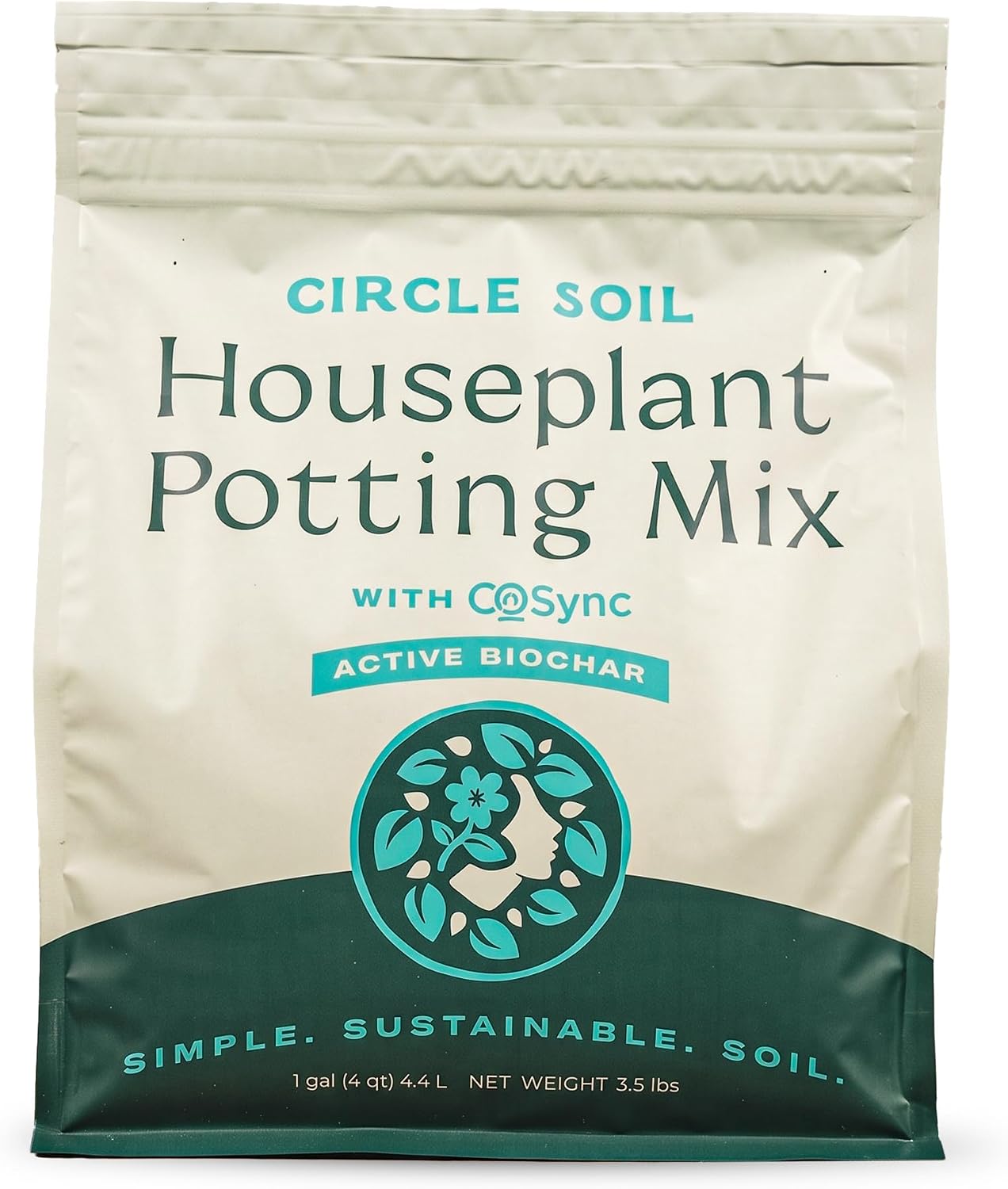
| Unit Count | 56 Ounce |
|---|---|
| Item Highlight | Active Biochar, Worm Castings, Expanded Shale, Peat-Free, Organic |
| Manufacturer | Circle Soil |
| Style Name | Houseplant Potting Mix |
This houseplant potting mix is designed as an all-purpose indoor soil for common houseplants, herbs and small tropicals. It combines active biochar, coconut coir, expanded shale and worm castings to hold nutrients and moisture while keeping the mix light and well aerated so roots do not sit in water. In practice it repots seedlings and mature potted plants easily from small to medium containers and reduces the need for extra drainage additives like perlite. The peat-free formula and added recycled compost mean you get living nutrients and improved microbial support without peat moss. Packaging is resealable which helps store leftover mix between uses. Expect a slightly chunkier, moisture-retentive feel compared with straight cactus mixes, so it is best for plants that prefer steady moisture rather than rapid drainage. No listed fertilizer analysis means you may want to monitor feeding schedules for heavy feeders.
Best for: Buyers who want a dependable, low-maintenance all-purpose indoor soil that supports healthy root development and steady moisture for everyday houseplants.
Less Ideal for: Not the best choice for growers who need very fast-draining media for cacti and succulents or those who prefer a mix with specified fertilizer analysis.
- Peat-free blend with biochar supports microbial life and nutrient retention.
- Natural aeration from expanded shale and coir helps prevent root waterlogging.
- Includes worm castings and local compost for organic nutrient input.
- Resealable recycled packaging for convenient storage between repots.
- No fertilizer N-P-K numbers provided so initial nutrient levels are unspecified.
- 4 quart unit may require multiple bags for larger collections or frequent repotting.
Verdict: A reliable, peat-free everyday potting mix that balances moisture retention and aeration to keep common houseplants healthy.
Miracle-Gro Indoor Potting Mix for All Plants, 6 qt., 2-Pack

| Number of Packs | 2 |
|---|---|
| Item Highlight | Feeds for up to 6 Months |
| Ingredients | Sphagnum Peat Moss, Coir, Perlite, Fertilizer, Wetting Agent |
| Brand Name | Miracle-Gro |
Miracle-Gro Indoor Potting Mix is a lightweight, ready-to-use soil blend intended for a wide range of houseplants from herbs and foliage to flowering and tropical varieties. The mix combines sphagnum peat moss, coconut coir, and perlite to hold and release moisture, while an included slow-release fertilizer feeds plants for up to six months. Because it is bark- and compost-free the product is formulated to lower the likelihood of fungus gnat habitat compared with mixes that contain compost. Typical use is simple: fill a drained container, plant or repot, and water thoroughly; one 6 qt. bag claims to fill four 6-inch pots. Practical benefits include consistent moisture control for indoor conditions, built-in nutrition so you can delay feeding after repotting, and a clean texture that stays light and easy to work with. Limitations are that the fertilizer is pre-mixed so you cannot tailor nutrient levels for sensitive species, and heavier watering schedules or large-rooted plants may need extra volume or drainage adjustments. For buyers who prefer a trusted, no-mix solution, this bundle provides two convenient bags.
Best for: Buyers who want a simple, reliable indoor potting soil that minimizes fuss and gives quick, consistent results for common houseplants backed by many users' experience.
Less Ideal for: Specialist growers who need custom nutrient profiles or very large container plantings should look for raw components or larger-volume mixes instead.
- Ready-to-use blend of peat moss, coir, and perlite for good water retention and aeration
- Includes slow-release fertilizer that feeds plants for up to six months
- Bark- and compost-free formula reduces common fungus gnat habitat
- Lightweight, fluffy texture that makes repotting and root inspection easy
- Pre-mixed fertilizer cannot be adjusted for species with special nutrient needs
- A 6 qt. bag is modest in volume and may require multiple bags for larger collections
Verdict: A convenient, widely used indoor potting mix that delivers consistent moisture control and built-in nutrition for common houseplants.
Back to the Roots Organic Indoor Potting Mix, 12 Quart

| Volume | 12 quarts |
|---|---|
| Organic | 100% organic |
| Peat free | Yes |
| Made in | USA |
This indoor potting mix is designed for houseplants like pothos, monstera and ferns and comes ready to use straight from the bag. It combines organic ingredients with yucca extract to help retain moisture and a mycorrhizal inoculant to support root development and nutrient uptake. The mix is peat‑free and includes dolomitic limestone to balance pH, which makes it suitable for a wide range of common houseplants and reduces the need for immediate amendments. Typical use is potting new plants, repotting rootbound specimens, or refreshing topsoil in indoor containers. Practical benefits include being easier on the environment than peat mixes, lower likelihood of indoor gnats because it contains no bark or compost, and a balanced medium that helps beginners avoid basic pH or moisture mistakes. Limitations are that it is a general all‑purpose mix rather than a specialty formula for succulents or orchids, and experienced growers who need very fast‑draining or custom nutrient profiles may still prefer to amend it further.
Best for: Buyers who want a dependable, low‑maintenance potting mix for everyday houseplants and prefer an organic, ready‑to‑use option that minimizes common indoor problems.
Less Ideal for: Growers who focus on specialty pots such as cacti, succulents, or orchids that require extremely fast drainage and highly tailored blends should choose a specialized medium instead.
- Peat‑free organic formula reduces environmental impact
- Yucca extract helps the mix retain moisture for indoor conditions
- Includes mycorrhizae to encourage stronger root growth and nutrient uptake
- Balanced pH from dolomitic limestone so plants can access nutrients reliably
- Not formulated for high‑drainage needs of succulents or epiphytic orchids
Verdict: A reliable, ready‑to‑use organic potting mix that makes routine indoor repotting and seed starting simple for risk‑averse houseplant owners.
Choosing the Right Indoor House Plant Soil: Key Factors to Consider
Particle Size and Structure
Particle size controls how quickly water moves through the pot and how much air remains around roots. Coarse components like perlite, pumice, or coarse sand create channels for excess water to escape, which reduces the risk of root rot.
A balanced structure mixes coarse mineral pieces with finer organic material so roots have stable contact for moisture uptake while still getting oxygen. Very fine, compacted soils can hold water too tightly and suffocate roots, while overly coarse soils drain too rapidly and force very frequent watering.
Water-Holding Capacity
Different plants need different water availability between pots. A mix with higher water-holding capacity uses more peat, coir, or fine compost to retain moisture longer, which suits moisture-loving tropical houseplants.
Conversely, plants that prefer to dry between waterings benefit from mixes that include larger mineral particles and less fine organic matter. Consider your watering schedule and how often you want to be hands-on; water-holding capacity directly affects how often you need to water and how forgiving the soil is of missed waterings.
Organic Content and Nutrient Release
Organic components supply nutrients and help bind moisture, but they break down over time. A moderate proportion of composted material or long-fiber coir offers steady, slow nutrient release without creating a nitrogen-sapping environment during decomposition.
Too much fresh organic matter can lead to rapid breakdown and compaction, changing the mix behavior after a few months. Look for mixes that indicate stabilized compost or processed components so nutrient release is steady and predictable for indoor feeding routines.
pH and Chemical Balance
Most common houseplants prefer a slightly acidic to neutral pH. A soil's pH affects nutrient availability, so a mix that is too alkaline or too acidic can create deficiencies even when nutrients are present.
Some mixes are formulated for specific groups and include pH adjusters or buffered components. If you grow a mix of species, choose a neutral, well-balanced mix or be prepared to monitor pH and adjust feeding accordingly.
Weight and Pot Suitability
Soil weight matters for hanging pots, tall narrow containers, and lightweight planters. Heavier mixes usually contain denser mineral materials and more moisture-retentive organics, which can stabilize top-heavy plants but may stress delicate mounts or railing planters.
Lighter mixes with high pumice or perlite content are easier to move and can help keep modern lightweight containers from sagging. Consider the planter material and where the pot will sit when choosing a soil based on weight.
Longevity and Resistance to Compaction
Indoor soils are reused by many gardeners across repotting cycles, so a mix that resists compaction retains structure and drainage longer. Materials like pumice, expanded clay, and coarse bark hold open pore space as organics age.
Mixes that compact quickly will reduce aeration and increase watering frequency over time, often necessitating earlier repotting or amendment. For low-maintenance setups, favor mixes labeled for structural longevity or those containing a high percentage of stable mineral components.
Matching Soil to Light and Watering Style
Light levels and your watering routine determine the ideal soil balance. Bright, sunny windows often host plants that can tolerate drier conditions between waterings; pair those locations with faster-draining mixes that include more coarse mineral grit. Shadier spots usually call for soils that retain moisture a bit longer because lower light reduces plant uptake and evaporation.
- Sunny, dry locations: choose coarser mixes with increased pumice or perlite.
- Low-light rooms: prefer mixes with higher moisture-holding organic content.
- Frequent travelers or irregular watering: choose mixes with moderate water retention to reduce stress on plants.
Repotting Tips for Best Results
When repotting, gently tease the root ball and remove any obviously rotten roots before setting the plant into fresh soil. Use a pot with an appropriate drainage hole and add a layer of coarse material at the bottom only when needed to raise soil level in very deep pots; generally the soil mix itself should provide drainage.
Avoid packing soil too tightly around roots. Fill the pot so there is a small air gap around thicker roots and firm lightly to remove large voids. After repotting, water thoroughly until excess drains to help settle the mix and allow roots to reestablish contact with surrounding particles.
- Inspect roots and trim only dead tissue.
- Do not compress the soil; keep some pore space.
- Water after repotting to eliminate air pockets.
Amending Existing Soil Rather Than Full Replacement
You can extend the life of potting soil by top-dressing with fresh mix or gently loosening the old soil and mixing in coarse mineral amendments like pumice. This approach preserves established root systems while improving drainage and aeration without the shock of full repotting.
If compaction is the main issue, work in porous materials and add a small amount of slow-release organic matter for nutrition. For plants showing signs of overwatering, increase the proportion of mineral grit to speed drying and monitor recovery over several weeks.
- Top-dress with fresh mix every 6 to 12 months for nutrient refresh.
- Work in pumice or perlite to improve compacted soils.
- Avoid adding raw compost directly to the root zone.
Soil Storage and Handling
Store unopened mixes in a cool, dry place to prevent mold growth and anaerobic odors. Once opened, keep the bag sealed or transfer the mix to a covered container to maintain the intended moisture balance and prevent pests.
When blending your own mixes, measure coarse and fine components by volume and mix thoroughly to avoid layers in the pot. Wet mixes can be more difficult to blend evenly, so handle slightly damp but not saturated materials for best results.
- Keep mixes dry and covered between uses.
- Measure by volume when mixing components.
- Blend slightly damp materials for uniform mixes.
How We Chose the Best Indoor House Plant Soil
We narrowed choices by focusing on characteristics that most affect plant health in pots rather than brand reputation. Editorial filters prioritized physical mix properties and gardener experience. The primary evaluation dimensions were texture and particle size for drainage and aeration, the mix's organic content for gentle nutrient release, moisture retention capacity for different watering routines, and pH suitability for common indoor species. We also considered ease of use when repotting and how well the mix resists compaction over time. Products were excluded if they were specialized blends intended only for a single species group or if they had unclear composition labels that prevented a reliable assessment. We skipped mixes that required extensive amendments to reach a usable state for average indoor gardeners. The resulting shortlist emphasizes ready-to-use mixes that cover a range of light and watering conditions and that score well across the concrete, gardener-facing criteria above.
FAQ
How often should I repot indoor plants into fresh soil?
It depends on species and growth rate. Most houseplants benefit from fresh soil every 12 to 24 months. Fast growers or plants showing root bound symptoms may need repotting more often, while slow growers can go longer.
Can I use garden soil in indoor pots?
Garden soil is usually too dense for containers and tends to compact, reducing aeration. It is better to use a purpose-made indoor potting mix or to amend garden soil heavily with coarse mineral components before using it indoors.
Is peat-free mix better for indoor plants?
Peat-free mixes can work well and are often based on coir or composted bark. They may hold moisture differently, so expect slight changes to watering frequency. Choose a peat-free mix that still provides stable structure and adequate water retention for your plants.
Should I fertilize immediately after repotting?
Wait at least a few weeks before beginning a regular fertilizing schedule unless the fresh mix is nutrient-free. Roots need time to recover after repotting, and some mixes already contain slow-release nutrients that make early feeding unnecessary.
How can I tell if my soil is compacted?
Compacted soil drains slowly, stays soggy for long periods, and may smell musty. You might see roots circling densely near the surface. If water pools on the surface or the pot is much heavier than expected, compaction is likely.
Final Verdict
Choose a soil mix that matches your light conditions and how often you want to water. Prioritize drainage and aeration for sun-loving, fast-draining plants and favor mixes with higher water retention for shade-tolerant species or gardeners who prefer less frequent watering. Balance organic content for steady nutrients while keeping stable mineral components to prevent compaction. Focus on the key tradeoffs outlined above and pick the soil traits that align with your plants and routine to get the best results indoors.
