

Note: This article contains affiliate links. If you click on these links and make a purchase, I may earn a small commission at no extra cost to you. This helps support my research and content. Read my full affiliate disclosure here.
Keeping indoor plants tidy and healthy starts with clean, precise cuts. The right indoor plant pruning shears let you remove dead growth, shape stems, and harvest cuttings without crushing delicate tissue or transmitting disease. This guide covers the top five indoor plant pruning shears shortlisted for common houseplant tasks, from fine-detail trimming to thicker stem snips. We evaluated each tool for blade sharpness, ergonomic comfort, safety features, and ease of cleaning so you can pick shears that match your typical houseplant mix and pruning habits. Read on for what matters most and practical tips for maintaining shears at home.
Top Picks at a Glance
| Best Overall The best all-around choice for most situations | Modern Sprout Pruning Shears — Lightweight Garden Snips (1-Pack) |  |
| Best Value The sweet spot between price and what you get | gonicc 8" Professional Titanium-Coated Bypass Pruning Shears |  |
| Best Budget The cheapest option that still gets the job done reliably | Fondwell 6.5" Garden Pruning Shears, Stainless Steel Micro-Tip |  |
| Highest Rated A top-rated pick with lots of positive feedback | Fondwell 6" Bypass Pruning Shears |  |
| Best Seller A high-volume bestseller chosen again and again | Fiskars Bypass Pruning Shears with Nonstick Coating |  |
Modern Sprout Pruning Shears — Lightweight Garden Snips (1-Pack)

| Blade Type | Bypass |
|---|---|
| Hand Orientation | Ambidextrous |
| Blade Material | High Carbon Steel |
| Handle Material | Aluminum |
These Modern Sprout pruning shears are a lightweight, user-friendly option for everyday indoor plant care. The fine-tipped bypass blades are made from high-carbon steel, which makes precise cuts on herbs, small flowers, and bonsai branches easy without crushing delicate stems. An ambidextrous handle and ergonomic shape reduce hand fatigue during repetitive trimming while the easy-lock safety latch keeps the blades closed for safer storage. Because the blades are narrow, the tool excels at reaching tight spots in pots and crowded foliage, making it a practical choice for regular maintenance and harvest of basil, mint, and similar plants. The construction uses aluminum handles, so the shears feel light in hand but are less heavy-duty than full-sized pruners, so they are best for fine stems rather than thick branches. You may want a separate heavy pruner for woody pruning, but for routine indoor trimming this set balances precision, comfort, and simple safety features well.
Best for: A balanced indoor gardener who wants a reliable, comfortable shears for daily trimming, harvesting herbs, and precise work around potted plants.
Less Ideal for: People who need a single tool for heavy pruning of woody stems or larger outdoor shrubs should choose a sturdier bypass pruner or lopper instead.
- High-carbon steel bypass blades deliver clean, precise cuts on fine stems
- Ambidextrous ergonomic handles reduce hand fatigue for extended use
- Easy-lock safety latch keeps blades closed for safe storage
- Lightweight aluminum construction is comfortable for frequent indoor trimming
- Not designed for cutting thick or woody branches, so it cannot replace full-sized pruners
Verdict: A lightweight, precise indoor pruning shear that makes everyday trimming and herb harvesting fast, comfortable, and safe.
gonicc 8" Professional Titanium-Coated Bypass Pruning Shears

| Cutting width | 0.75 inches |
|---|---|
| Blade Edge | Serrated |
| Blade Type | Bypass |
| Blade Material | Alloy Steel |
| Hand Orientation | Ambidextrous |
These gonicc 8" bypass pruning shears are built for regular garden use and small woody work. The SK-5 steel blades receive a titanium coating and fine polishing to stay sharp and resist rust, while the serrated edge and sap groove reduce slipping and sticking when cutting live stems. Drop-forged construction and alloy steel handles wrapped in PVC give the tool a solid, durable feel without becoming overly heavy, and the ambidextrous design suits either hand. In practice the shears excel on stems, roses, and small fruiting wood under the advertised 3/4" cut capacity, and the non-slip grip helps reduce hand fatigue during longer sessions. Limitations to note are the 3/4" maximum cut diameter, which rules out thicker branches, and the blade requires occasional sharpening and cleaning to maintain peak performance. Overall, these shears strike a practical balance of durability, comfort, and cutting performance for routine pruning tasks.
Best for: Gardeners who want a durable, no-nonsense pruner for routine shrub, rose, and small fruit tree maintenance and who prioritize reliable cutting and comfortable handling over heavy-duty branch cutting.
Less Ideal for: People who regularly need to prune large-diameter limbs or do heavy-duty arborist work should choose larger loppers or a pruning saw instead.
- Titanium-coated SK-5 steel blades for sharpness and improved rust resistance
- Drop-forged construction and alloy-steel handles for durability
- Ergonomic non-slip PVC-wrapped handles reduce hand fatigue
- Sap groove and serrated edge help prevent blade sticking and slipping
- Cut capacity is limited to about 3/4 inch, not suitable for thicker branches
- Blade will need periodic sharpening and cleaning to stay at peak performance
Verdict: A practical, comfortable pruning shear offering sharp, rust-resistant blades and durable construction ideal for everyday pruning of stems and small branches.
Fondwell 6.5" Garden Pruning Shears, Stainless Steel Micro-Tip

| Blade Length | 2 inches |
|---|---|
| Cutting width | 1.2 inches |
| Blade Type | Bypass |
| Hand Orientation | Ambidextrous |
| Blade Material | Stainless Steel |
These Fondwell 6.5" pruning shears are a small, budget-friendly tool built for precise indoor plant work. The stainless steel micro-tip bypass blades cut cleanly in tight spaces, making them useful for deadheading, shaping bonsai, and trimming houseplants. The lightweight 6.5-inch frame, TPR grips, and spring action help reduce hand fatigue for longer sessions, while a push-to-lock keeps the blades closed for safe storage. A non-stick, rust-resistant finish reduces sap buildup and simplifies cleanup. Because they are compact and ambidextrous, they are easy to maneuver around stems and small fruits but not intended for thicker branches or heavy-duty pruning. The simple construction keeps the price low but means you should expect occasional sharpening and moderate longevity compared with professional-grade tools. For everyday indoor pruning and detailed work, these shears provide good value and consistent performance.
Best for: Indoor plant owners who want an inexpensive, easy-to-use trimmer for deadheading, shaping bonsai, and routine maintenance of houseplants.
Less Ideal for: Gardeners who need a durable tool for large stems, woody branches, or frequent heavy pruning should choose a heavier-duty pruner instead.
- Micro-tip stainless steel bypass blades provide precise, clean cuts for delicate stems
- Lightweight 6.5-inch design with spring action and TPR grips reduces hand fatigue
- Non-stick, rust-resistant finish minimizes sap buildup and eases cleaning
- Push-to-lock mechanism secures blades for safer storage and transport
- Not suitable for cutting thick branches or heavy-duty pruning tasks
- Lower-cost construction may require more frequent sharpening than premium shears
Verdict: A compact, affordable pruning shear that delivers precise, low-effort trimming for indoor plants and detailed gardening tasks.
Fondwell 6" Bypass Pruning Shears

| Blade Type | Bypass |
|---|---|
| Hand Orientation | Ambidextrous |
| Blade Material | Stainless Steel |
| Item Highlight | Lightweight Pruning Shears, Rust Resistant, Comfortable Use |
The Fondwell 6" bypass pruning shears are a compact, reliable tool for indoor plant care and precision trimming. They use razor-sharp stainless steel bypass blades that make clean cuts on stems, herbs, buds and bonsai without crushing tissue, which helps reduce plant stress and speed healing. The metal handles, ergonomic grip and smooth spring action make repetitive tasks comfortable and help reduce hand fatigue during longer sessions. A push-to-lock safety keeps the blades closed between uses and the corrosion-resistant blade finish plus reinforced handles mean the shears stand up to regular indoor use. Because they are small and lightweight they are particularly easy to handle for detailed work, though the compact size limits them to light to medium stems rather than heavy woody branches. For someone wanting a dependable, precise indoor pruner that stays sharp and comfortable through frequent use, these deliver consistent, plant-friendly cuts.
Best for: Indoor gardeners who prioritize a dependable, plant-friendly pruner for frequent trimming of herbs, houseplants, bonsai and cut flowers and who value consistent, low-fatigue performance.
Less Ideal for: People who need a tool for heavy-duty outdoor pruning or cutting thick woody stems should choose a larger, stronger pruner instead.
- Bypass stainless steel blades produce clean, non-crushing cuts that are gentle on delicate stems
- Ergonomic, lightweight design with smooth spring action reduces hand fatigue during extended trimming
- Corrosion-resistant blades and reinforced metal handles for durable, all-weather indoor use
- Push-to-lock safety secures blades between tasks for safer storage and handling
- 6-inch size limits cutting to light and medium stems and is not suited for thick or woody branches
- Handle material is metal which may transfer cold to hands during long sessions without gloves
Verdict: A reliable, comfortable small bypass pruner that delivers precise, plant-safe cuts for frequent indoor trimming.
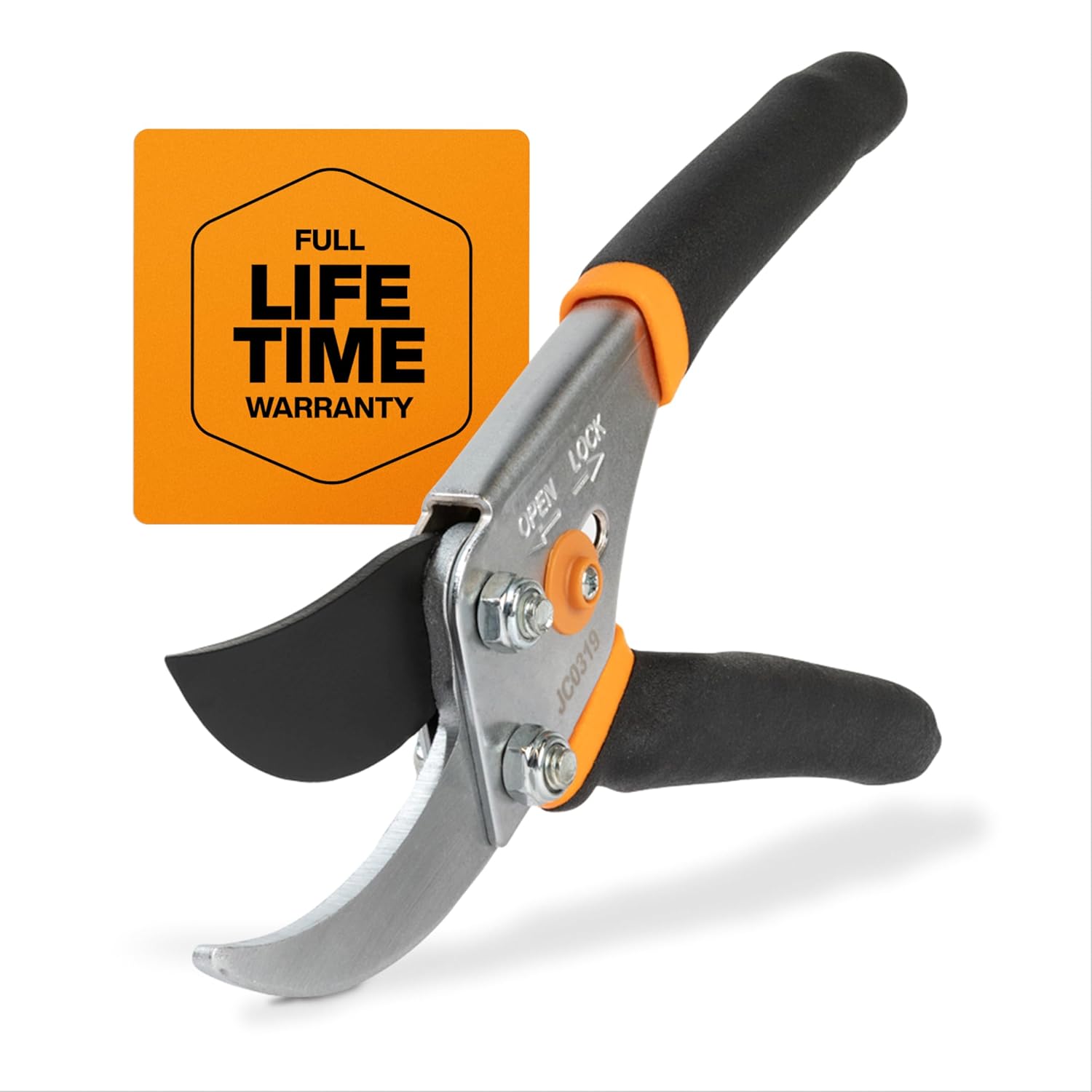
Fiskars Bypass Pruning Shears with Nonstick Coating
| Cutting width | 0.63 inches |
|---|---|
| Blade Edge | Serrated |
| Blade Material | Alloy Steel |
| Hand Orientation | Ambidextrous |
These Fiskars bypass pruning shears are a straightforward, reliable tool for everyday garden pruning. They use a bypass cutting action with precision-ground alloy steel blades and a low-friction coating so stems and green growth are sheared cleanly without crushing, which is helpful for flowers, shrubs, and small woody shoots up to about 5/8 inch. The pruners include a sap groove and nonstick finish to reduce sticking and rust, and an ergonomic non-slip handle that makes repeated trimming more comfortable. Because they are all-steel construction they feel solid and hold an edge through routine use, and the safety lock keeps the blades closed for storage. The main limitations are the modest cutting capacity, which is not suited for thick branches, and the simpler design lacks compound leverage for heavy cutting, so they work best for regular maintenance rather than heavy-duty pruning. For gardeners who want a durable, easy-to-maintain daily pruner, these are a dependable choice.
Best for: Home gardeners who want a dependable, low-maintenance pruner for routine trimming, deadheading, and shaping of flowers and small shrubs and who value proven, widely used tools.
Less Ideal for: People who need a pruner for larger woody branches or frequent heavy-duty cutting should choose a lopper or powered/pruning tool instead.
- Bypass blades and precision-ground steel deliver clean cuts on live stems
- Low-friction blade coating and sap groove reduce sticking and resist rust
- Ergonomic non-slip handle improves control and reduces hand fatigue
- All-steel construction offers durable, long-lasting performance
- Cut capacity limited to about 5/8 inch so not suitable for thicker branches
- No compound leverage mechanism, making heavy or woody cuts harder
Verdict: A tough, no-nonsense pruner that provides clean cuts and low-maintenance blades for everyday garden grooming.
Choosing the Right Indoor Plant Pruning Shears: Key Factors to Consider
Blade Material and Geometry
Blade material affects how long the cutting edge stays sharp and how the blade responds to routine sharpening. High-carbon steel offers excellent edge retention but needs more care against rust. Stainless steel resists corrosion better and is easier for casual indoor gardeners to maintain. Ceramic blades stay sharp long and do not corrode, but they can chip if used on thicker or woody stems.
Blade shape matters too. Thin, straight blades are ideal for precision trimming and snipping fine shoots, while slightly curved bypass blades help produce clean cuts on round stems. Avoid thick anvil-style blades for most houseplants because they can crush soft tissue and slow recovery.
Handle Ergonomics and Hand Size Fit
How the shears feel in your hand determines whether you will actually use them for regular maintenance. Ergonomic handles with contours and soft grips reduce pressure points and prevent slipping when your hands are damp from watering. Consider the hand size of the primary user: some indoor shears target small hands and allow finer control, while others provide longer handles for extra leverage when cutting through thicker stems.
Weight distribution matters as well. Lightweight aluminum or composite bodies reduce wrist strain during repetitive pruning, while a slightly heavier tool can offer stability when making single deliberate cuts. If you have arthritis or limited grip strength, look for shears with wider handles and low-clamp force designs that cut without requiring high pinch strength.
Cutting Capacity and Typical Houseplant Use
Match the rated maximum cutting diameter to the stems you most often prune. Many indoor pruning shears are optimized for thin to medium soft stems, typically up to about 10 to 12 millimeters. Succulents, herbs, and most tropical houseplants fall well within that range. If you regularly prune thick-stemmed plants or semi-woody cuttings, choose a shear with higher cutting capacity or complementary tools.
Using a tool beyond its intended capacity will dull blades faster and may damage stems. For occasional thicker branches, consider keeping a separate heavier cutter, but for everyday indoor tasks prioritize a tool tuned for fine, clean snips.
Maintenance, Sharpening, and Cleaning
Indoor shears pick up sticky sap, soil, and moisture that accelerate wear and disease transfer if not cleaned. Tools that disassemble or have smooth surfaces are easier to wipe down, disinfect, and dry. Blades that accept standard sharpening files or stones give you a way to restore a keen edge at home.
Regular maintenance routines include wiping blades after use, drying thoroughly, and applying a thin film of light oil to steel components. For plants prone to disease, routinely disinfect blades between plants to prevent cross-contamination. Consider whether replacement parts or sharpening guides are readily available when choosing a long-term tool.
Safety Features and Storage
Indoor environments often include pets, children, and confined spaces, so secure storage and safety locks are important. A positive locking mechanism that holds the blades closed prevents accidental cuts while reaching into plant shelves or drawers. Some shears include blade guards or foldable designs that reduce exposed sharp edges when stored.
Think about how and where you store shears. Magnetic racks, wall hooks mounted away from reach, or a dedicated drawer with a blade cover make it less likely the tool will be left within reach of curious pets or kids. A visible lock also helps when passing the tool between plant-care sessions.
When to Use Indoor Shears Vs Other Cutters
Indoor plant pruning shears excel at everyday tasks such as deadheading, removing yellowing leaves, taking softwood cuttings, and shaping foliage. They give the control needed for precise, close cuts near the plant crown or delicate growth points. Use them for clean trimming of succulents, herbs, ferns, and most tropical houseplants.
- Use lighter shears for delicate stems and propagation cuttings.
- Reserve heavier branch cutters for thicker, semi-woody stems or structural pruning.
- Match tool choice to the stem diameter to avoid tearing or blunt cuts.
Basic Indoor Pruning Techniques
Make clean bypass cuts close to the node or growth point without damaging adjacent leaves. For flowering houseplants, remove spent blooms at the base of the flower spike to encourage new growth. When removing diseased tissue, cut beyond visibly affected areas into healthy tissue to reduce the chance of recurrence.
- Hold stems steady to avoid accidental crushing.
- Angle the cut slightly to shed water and reduce rot on succulents and orchids.
- Disinfect blades between plants when pathogens are suspected.
Caring for Shears Between Jobs
After each session, wipe blades with a clean cloth to remove sap and soil. If sticky residue remains, use a mild solvent or soapy water, rinse, and dry thoroughly. Apply a light oil sparingly to pivot points and steel blades to prevent rust and keep the action smooth.
- Tighten pivot screws if the shears become wobbly, but avoid over-tightening.
- Store shears closed and locked in a dry spot away from humidity.
- Sharpen blades when you notice crushing rather than slicing.
Best Practices for Propagating with Shears
For propagation, make clean cuts at a 45-degree angle where appropriate to increase rooting surface area and reduce rot. Use shears dedicated to propagation or disinfect between specimens to avoid transferring pathogens. Choose shears with a fine tip for snipping small stems and a smooth blade finish to prevent frayed cuttings.
- Label cuttings immediately to track parent plants.
- Take longer, healthy sections rather than many tiny pieces that risk desiccation.
- Keep propagation cuttings shaded and humid until roots form.
Storage and Child/Pet Safety Tips
Designate a specific storage spot such as a high shelf or a locked gardening box to keep shears out of reach. Use the built-in lock if available and consider adding a blade cover for extra protection. Regularly inspect stored tools for signs of corrosion or loosening hardware to prevent accidents.
- Avoid leaving shears on plant shelves or tables where they can be knocked down.
- Consider a small wall-mounted rack in your plant care area for quick, safe access.
- Teach household members basic tool safety if others might handle the shears.
How We Chose the Best Indoor Plant Pruning Shears
We focused on features that matter when pruning houseplants rather than outdoor hedging or woody landscaping. First, blade geometry and material were prioritized because thin, sharp blades produce the cleanest cuts on soft, succulent, and herbaceous stems. Second, we considered handle ergonomics and weight to reduce hand fatigue during extended sessions or for gardeners with smaller hands. Ease of maintenance was a key filter: tools that come apart for sharpening and cleaning or that resist sap buildup scored higher. Safety features such as reliable locking mechanisms and secure grips were required for indoor use around pets and children. We also screened for durable construction and corrosion resistance because indoor humidity and watering can accelerate rust. Excluded from consideration were heavy-duty bypass shears sized for landscapers, pruners designed for woody branches thicker than typical houseplant stems, and any tools lacking basic safety locking. The final shortlist balances precise cutting performance with comfort and low-maintenance design appropriate for indoor gardening. Our scoring emphasized blade sharpness, ergonomic comfort, ease of cleaning, corrosion resistance, and safety features.
FAQ
How often should I sharpen indoor plant pruning shears?
Often depends on use, but many indoor gardeners sharpen blades a few times per season. Light daily maintenance like wiping and oiling extends sharpness, while visible crushing or ragged cuts signal it is time to sharpen.
Can I sterilize my shears between plants?
Yes. Wipe blades with isopropyl alcohol or a diluted bleach solution and let dry before use. Sterilizing is especially important when trimming diseased plants or moving between different species prone to infection.
Are ceramic blades a good choice for houseplants?
Ceramic stays sharp and resists corrosion, making it good for many indoor tasks. However, ceramic chips more easily than metal and is less forgiving on thicker or woody stems.
What cutting capacity do most indoor pruning shears need?
Most houseplants are handled with shears rated for thin to medium stems, often up to about 10 to 12 millimeters. If you frequently work with thicker, semi-woody stems, choose a tool with greater capacity or keep a heavier cutter for those jobs.
How should I disinfect shears after cutting diseased growth?
Remove debris, then wipe blades with a 70 percent isopropyl alcohol solution or a 1:9 bleach-to-water dilution. Rinse if using bleach and dry thoroughly, then apply a thin oil film to protect the metal.
Final Verdict
Focus on the tradeoffs that matter most for indoor plants: a razor-sharp thin blade for clean cuts, plus ergonomics that let you prune comfortably without crushing stems. Prioritize corrosion resistance and easy cleaning if you work in humid indoor spaces or frequently move between plants. Choose a shear that matches the thickness of the stems you normally trim and that feels secure in your hand. With regular maintenance and safe storage, the right indoor plant pruning shears will keep houseplants healthier and make routine care faster and more enjoyable.
