

Note: This article contains affiliate links. If you click on these links and make a purchase, I may earn a small commission at no extra cost to you. This helps support my research and content. Read my full affiliate disclosure here.
Choosing the right insect control for roses matters because these plants are both visually central in the garden and particularly attractive to a range of chewing and sucking pests. The wrong product can leave blooms discolored, foliage thin, or beneficial insects harmed. This guide focuses on insect repellent options for roses and explains how each shortlisted choice performs in a real garden setting. We evaluated sprays and contact repellents that reduce pest pressure while prioritizing plant safety and ease of use. Below you will find our top picks and the practical criteria we used to assess them before the product list.
Top Picks at a Glance
| Best Overall The best all-around choice for most situations | BioAdvanced All-in-One Rose & Flower Plant Care Spray, 24 fl oz | 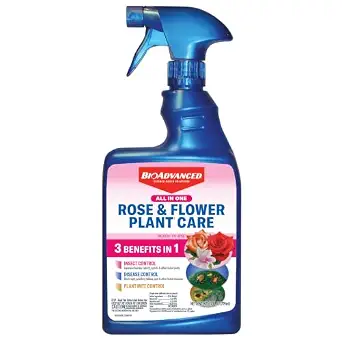 |
| Best Quality Built to a higher standard if you want something more solid | Bonide Rose Shield Spray Concentrate, 16 oz |  |
| Best Value The sweet spot between price and what you get | Ortho Rose & Flower Insect Killer Ready-to-Use, 24 oz |  |
| Best Budget The cheapest option that still gets the job done reliably | BioAdvanced Rose & Flower Insect Killer Spray, 24 oz |  |
| Highest Rated A top-rated pick with lots of positive feedback | BioAdvanced All‑in‑One Rose & Flower Care Granules, 64 oz |  |
| Most Popular A crowd favorite that many people choose with confidence | BioAdvanced 3-in-1 Insect, Disease and Mite Control, 32 fl oz |  |
BioAdvanced All-in-One Rose & Flower Plant Care Spray, 24 fl oz

| Unit Count | 24 Fluid Ounces |
|---|---|
| Item Form | Liquid |
| Target Species | Fungus |
| Included Components | CARE ROSE&FLOWER RTU 3IN1 24OZ |
This ready-to-use BioAdvanced spray delivers three actions in one bottle: it kills listed insects on contact, controls common fungal diseases, and tackles spider mites while leaving a protective residue that lasts up to 14 days. You use it like a normal garden spray—apply to rose bushes, ornamentals, vines, shrubs, and similar plants when pollinators are not present. The product lists active ingredients (bifenthrin and myclobutanil) and is formulated to be rainproof within about four hours, so it holds up in typical garden conditions. Practical benefits include saving time by combining insect, disease, and mite control in a single application and being convenient as a ready-to-spray bottle. Important limitations are that it targets only the listed pests and diseases, must be used with pollinator safety in mind, and contains synthetic active ingredients that some gardeners prefer to avoid. Follow label directions and safety guidance for effective and responsible use.
Best for: Gardeners who want a simple, time-saving solution to keep roses and ornamental flowers healthy without mixing concentrates and who prioritize broad, short-term protection.
Less Ideal for: Growers seeking strictly organic or pollinator-safe products or those who need treatment for pests or diseases not listed on the label should look elsewhere.
- Three-in-one formula combines insecticide, fungicide, and miticide for fewer separate treatments
- Ready-to-use spray is convenient for spot and whole-plant applications
- Rainproof within about four hours and provides protection up to 14 days
- Kills listed pests on contact for fast visible results
- Active ingredients are synthetic and may be undesirable for organic gardeners
- Protection only covers pests and diseases specifically listed on the label
Verdict: Choose this ready-to-use spray if you want a convenient, single-product solution to kill common rose pests, control fungal diseases, and suppress mites with up to two weeks of protection.
Bonide Rose Shield Spray Concentrate, 16 oz

| Unit Count | 16 Ounce |
|---|---|
| Item Form | Spray |
| Target Species | Insects |
| Liquid Volume | 16 fluid ounces |
Bonide Rose Shield is a concentrated spray that combines a systemic insecticide with a systemic and contact fungicide so you can treat insects and common rose diseases with a single application. It is typically mixed and applied to roses, flower beds, shrubs and other landscape plants; the insect control claims to last up to 30 days while disease control should be reapplied every 7 to 14 days. Notable features include contact plus systemic activity for both pests and diseases and a formulation that becomes rainproof about 60 minutes after application. In practice this means you can kill sap-sucking pests on contact and have plant-absorbed protection working for weeks afterward, while also reducing black spot and powdery mildew when used on the label-listed diseases. Important limitations are that disease control requires more frequent reapplication than the insect protection and the product must be mixed and applied according to label directions to avoid harm to beneficial insects and non-target plants.
Best for: Gardeners focused on strong, lasting pest control who want a single product that also helps manage common fungal diseases on roses and nearby ornamentals.
Less Ideal for: Organic gardeners or those who prefer to avoid systemic chemical treatments should consider alternative organic or purely contact-only products.
- Combines systemic insecticide and systemic/contact fungicide in one concentrate
- Insect protection lasts up to 30 days after application
- Works on a wide range of listed pests and common rose diseases
- Becomes rainproof about 60 minutes after application
- Disease control requires reapplication every 7–14 days, so more frequent treatments are needed
- Contains active ingredients that require careful adherence to label instructions to protect beneficial insects
Verdict: Choose Rose Shield when you want one concentrated product that delivers both multiweek insect control and active disease suppression for roses.
Ortho Rose & Flower Insect Killer Ready-to-Use, 24 oz

| Item Form | Spray |
|---|---|
| Target Species | Insects |
| Manufacturer | The Scotts Company LLC |
Ortho Rose & Flower Insect Killer is a ready-to-use spray designed to control a long list of insect pests on roses and other flowering plants. You use it by adjusting the spray nozzle and applying directly to foliage and blooms; the product combines contact knockdown with a systemic action so treated plants continue to control listed pests for up to four weeks. It is labeled for both indoor and outdoor use and is formulated to avoid harming blooms when used as directed. Practical benefits include simple application from the bottle with no mixing, multi-week residual control that reduces re-spraying, and a formulation targeted specifically for ornamentals rather than general lawn use. Limitations are that protection is limited to the insects listed on the label and the stated duration, so heavy or recurring infestations may still require repeat treatments or integrated pest practices. As with any insecticide, follow label directions and safety precautions when applying around pollinators and during bloom periods.
Best for: Gardeners who want a straightforward, low-fuss insect control for roses and ornamental flowers and value multi-week residual protection with minimal setup.
Less Ideal for: Organic gardeners or those seeking an all-in-one solution for every garden pest should look at non-synthetic or broader integrated pest approaches instead.
- Ready-to-use spray requires no mixing and is simple to apply
- Dual-action formula provides immediate contact kill plus systemic control
- Labeled safe for use on roses and flowers without harming blooms when used as directed
- Provides up to four weeks of residual protection against listed insects
- Protection applies only to pests listed on the label and may not cover every garden pest
- Repeated applications may be needed for heavy infestations or new pest introductions
Verdict: A simple, ready-to-use spray that gives targeted multi-week insect control for roses and flowering plants with minimal effort.
BioAdvanced Rose & Flower Insect Killer Spray, 24 oz

| Unit Count | 24 Fluid Ounces |
|---|---|
| Item Form | Spray |
| Target Species | Insects |
| Active Ingredients | Cyfluthrin |
| Specification Met | EPA |
This ready-to-use BioAdvanced spray is designed for quick control of common rose pests like aphids, whiteflies, Japanese beetles, caterpillars, and other listed insects. You use it by spraying foliage until evenly coated but not dripping, which makes spot treatments and whole-plant applications straightforward for home gardeners. The formula contains the pyrethroid cyfluthrin and claims knockdown on contact plus residual protection for up to 14 days, so you can expect fewer repeat treatments compared with non-residual soaps. Its trigger sprayer and 24-ounce bottle suit small-to-medium beds and periodic maintenance in a seasonal program. Important limitations are that it is a conventional insecticide so it will affect beneficial insects on contact and should not be used on edible parts being harvested immediately; follow label precautions. Also it is not a systemic product so it will not protect new growth after application. For gardeners seeking an economical, easy-to-apply contact spray for roses, this handles most common pest outbreaks effectively.
Best for: Home gardeners who want a straightforward, low-effort solution to knock down common rose pests and reduce reapplication frequency while sticking to a budget.
Less Ideal for: Organic-minded growers or anyone needing systemic long-term protection for new growth should consider organic or systemic alternatives instead.
- Ready-to-use trigger spray for easy spot or whole-plant application
- Kills a wide range of listed rose pests on contact
- Provides residual protection up to 14 days so treatments are less frequent
- Suitable for use on roses, flowers, shrubs and vegetable gardens
- Contains a conventional insecticide that can harm beneficial insects on contact
- Not systemic so new growth is unprotected after application
Verdict: An affordable, ready-to-use contact spray that quickly knocks down common rose pests and gives up to two weeks of protection.
BioAdvanced All‑in‑One Rose & Flower Care Granules, 64 oz

| Unit Count | 64 Ounce |
|---|---|
| Item Form | Granules |
| Target Species | Insects |
| Specification Met | EPA |
BioAdvanced All‑in‑One Rose & Flower Care combines fertilizer, insect control, and fungicide in a single granular formula intended for easy, rainproof application around roses and flowering shrubs. You apply the granules at the plant base—pull back mulch first—and the systemic active ingredients are taken up by the roots so you do not need to spray. The product lists control for aphids, leafhoppers, adult Japanese beetles and other pests and also protects against common fungal problems such as black spot and powdery mildew for up to six weeks per application. Practical benefits include reduced application time compared with separate treatments, steady nutrient delivery that supports bloom production, and a rainproof effect that holds up during wet weather. Important limitations are that the active ingredients are chemical controls so follow label directions carefully and some regional sale restrictions apply; it is not a spot spray substitute for immediate knockdown of heavy infestations. For gardeners who value a reliable, low‑effort approach to keeping roses healthy, this simplifies routine protection and feeding.
Best for: Gardeners who want dependable, low‑effort protection for roses and flowering shrubs and prefer a single product that feeds and defends plants on a regular schedule.
Less Ideal for: Growers seeking organic controls, immediate spray‑style knockdown of heavy pest outbreaks, or those restricted from using systemic insecticides in their area.
- 3‑in‑1 formula fertilizes, controls listed insects, and prevents common fungal diseases
- Systemic granules are rainproof and work for up to six weeks per application
- Easy granular application around plant base eliminates the need for spraying
- Promotes stronger roots and better blooms while providing pest and disease protection
- Contains chemical active ingredients that require careful label reading and safe handling
- Not intended for immediate knockdown of large infestations compared with some sprays
Verdict: If you want a reliable, low‑maintenance way to feed roses while preventing common insects and diseases for weeks at a time, this all‑in‑one granular treatment delivers.
BioAdvanced 3-in-1 Insect, Disease and Mite Control, 32 fl oz
| Unit Count | 32 Fluid Ounces |
|---|---|
| Item Form | Spray |
| Target Species | Aphids, caterpillars, leafminers, whiteflies and other listed pests |
| Active Ingredients | Tau-fluvalinate 0.61%, Tebuconazole 0.65%, Imidacloprid 0.47% |
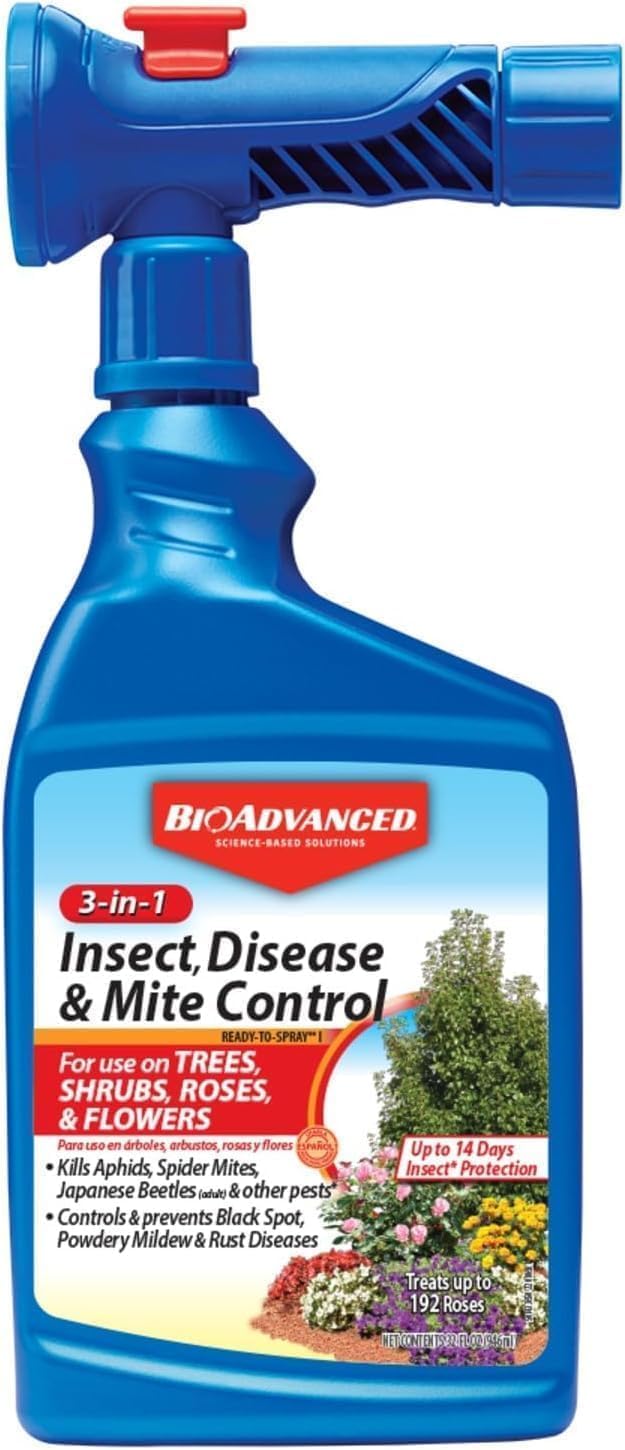
This BioAdvanced 3-in-1 spray is a ready-to-use hose-attach treatment designed to kill common rose pests, control fungal diseases, and suppress spider mites in one application. You attach the sprayer to a garden hose, spray evenly over plants including leaf undersides, and the systemic formula provides rainproof protection for up to 14 days. Notable features are its combined active ingredients that target aphids, caterpillars, whiteflies and listed diseases like black spot and powdery mildew, plus claims of up to 30 days systemic protection in some descriptions and coverage for roughly 192 rose bushes per bottle. The practical benefit is convenience: one product replaces separate insecticide and fungicide steps and is simple to apply over larger plantings. Important limitations are that it is a chemical treatment containing imidacloprid and other active ingredients, so follow safety directions and keep it away from children and pollinators; it is not labeled for sale in some states. Expect effective short-term control when used as directed, but integrate it with cultural practices for longer term disease and pest management.
Best for: Gardeners who want a straightforward, time-saving solution to protect rose beds from common pests and diseases and who prioritize products backed by established brand formulations.
Less Ideal for: Organic gardeners or those who avoid systemic insecticides and anyone seeking exclusively non-chemical or pollinator-safe treatments should look for alternative products.
- Three-in-one formula treats insects, fungal diseases, and spider mites with a single application
- Hose-attach ready-to-use spray makes application quick and suitable for multiple plants
- Rainproof protection that continues working for up to 14 days after application
- Covers a large number of rose bushes per bottle when used according to directions
- Contains systemic insecticide ingredients that require careful safety handling and may affect non-target insects
- Not permitted for sale in certain states which limits availability in some regions
Verdict: If you want a convenient single-spray solution to control common rose pests and fungal diseases across multiple bushes, this combines both functions in one ready-to-use treatment.
Choosing the Right Insect Repellent for Roses: Key Factors to Consider
Target Pest Spectrum
Different repellents and insect controls vary in which pests they deter or kill. Roses commonly face sap-suckers like aphids, small chewing insects such as caterpillars, and adult beetles that skeletonize leaves. A product that lists the specific pests you have will save time and reduce unnecessary applications.
Understanding the pest spectrum also helps you choose between products that primarily repel versus those that have knockdown contact action. Repellents can reduce feeding behavior without large non-target mortality, while contact insecticides may provide faster visible reduction but risk affecting beneficials.
Plant Safety and Phytotoxicity
Roses are sensitive to some active ingredients and to application timing. Hot sun, high humidity, or spraying while plants are stressed increases the chance of leaf scorch or petal spotting. Always check labels for warnings about blooming-stage applications and temperature limits.
Some products are formulated specifically for ornamentals and include surfactants or buffers that reduce tissue damage. If plant safety is a priority, choose options tested on ornamental shrubs and follow dilution and timing instructions carefully to avoid harming blooms.
Residual Protection and Reapplication Frequency
How long a repellent lasts determines how often you need to treat. Short-residual repellents may need applications every week after heavy pest pressure or rainfall, while longer-residual formulas can cut maintenance to once every two to four weeks. Consider how much time you can dedicate to repeat treatments when selecting a product.
Residual life also affects timing around bloom cycles. Longer-lasting products reduce visits during peak flowering, but some longer-residual materials carry higher risk to pollinators. Balance longevity with safety for bees and other beneficial insects.
Application Method and Coverage
Ease of application matters in a shrub like a rose bush where you need thorough coverage of both upper and underside of leaves and blooms. Some repellents come as ready-to-use sprays with fan nozzles that quickly cover canopies, while concentrates require mixing in a separate sprayer. Choose a delivery form that matches your equipment and comfort with mixing chemicals.
Also consider droplet size and nozzle type for reaching tight leaf axils and the undersides of leaves. Even distribution reduces missed pockets where pests can survive and reinfest the plant.
Impact on Pollinators and Beneficial Insects
Roses attract pollinators and host beneficial predators that keep pest populations in check. Choose repellents that are labeled as less toxic to bees or that degrade quickly, and schedule applications for early morning or late evening when pollinators are less active. Avoid broad-spectrum products that indiscriminately kill beneficial insects if preserving garden ecology is a priority.
Consider non-lethal options that discourage pests without extensive mortality, and pair treatments with cultural controls like pruning and sanitation to reduce overall chemical use.
Residue and Scent Effects
Some repellents leave visible residue or a strong scent that can cling to blossoms. A heavy residue can attract dust or reduce the visual appeal of cut blooms. Fragrance or oil-based formulas may also coat petals, which matters if you grow roses for display or cutting.
If residue or scent is a concern, look for low-odor, low-residue formulations and test on a single plant before treating an entire bed. Follow label guidance about harvest intervals if you use rose petals for crafts.
Non-Chemical Strategies to Reduce Pest Pressure
Before relying solely on repellents, consider cultural and mechanical tactics that reduce pest establishment. Regular inspection, timely pruning to improve air flow, and removing spent blooms and heavily infested growth lower the overall pest load and make any repellent application more effective.
Introduce or encourage beneficial predators such as lacewings and lady beetles by planting companion flowers and providing habitat. Sticky traps and water sprays can remove early infestations of soft-bodied insects without chemical use.
- Prune for airflow to reduce humidity that favors pests
- Hand-remove large infestations or egg masses where practical
- Plant nectar sources to attract predators
Timing Applications Around Bloom and Weather
Apply repellents in the cooler parts of the day to reduce the risk of phytotoxicity and avoid spraying during peak pollinator activity. Avoid treating when rain is expected within 24 hours unless the product specifies rainfast protection.
Plan treatments to avoid direct application to open, delicate petals if the label warns about bloom sensitivity. When possible, target sprays to leaves and stems where pests congregate rather than heavy coverage of flowers.
- Spray early morning or late evening when pollinators are less active
- Avoid applications in full midday sun or high heat
- Reapply after heavy rain only if residual protection is lost
Combining Repellents With Integrated Pest Management
Use repellents as one component of an integrated pest management plan. Start with monitoring and identification, then apply the least disruptive option that will reduce pest damage to acceptable levels. Rotate modes of action where appropriate to avoid resistance in pest populations.
Keep records of pest activity and treatment timing. That helps determine which approaches give the best balance of control and plant safety in your particular garden microclimate.
- Monitor weekly during active pest season
- Rotate active ingredients if repeated applications are necessary
- Pair chemical or botanical repellents with habitat management
Safe Storage, Mixing, and Disposal Practices
Follow label instructions for dilution and never mix products unless specifically allowed. Improper mixing can increase plant damage or reduce effectiveness. Store concentrates out of direct sunlight and away from children and pets.
Dispose of leftover solution according to local guidance. Rinse sprayers in an area where rinse water will not contact flower beds or waterways and follow any label directions about container disposal.
- Label mixed spray bottles with date and contents
- Clean equipment after use to prevent cross-contamination
- Follow local hazardous waste rules for unused concentrate
When to Choose Rapid Knockdown Vs Repellent Action
If you are dealing with a heavy, visible infestation that is defoliating plants, a product with rapid knockdown may be necessary to get visible control fast. For low-level or recurring pests, a true repellent or antifeedant that reduces damage without large non-target effects may be a better long-term choice.
Consider the visual tolerance in your garden. In cut-flower gardens or show beds where any feeding damage is unacceptable, faster-acting options are often chosen despite higher non-target risk. For casual beds, slower-acting repellents combined with manual removal often suffice.
- Use knockdown formulations for acute outbreaks
- Use repellents for maintenance and prevention
- Balance aesthetic goals with ecological impact
How We Chose the Best Insect Repellent for Roses
We assembled the shortlist by applying practical garden-focused filters. First, we prioritized products with documented effectiveness against common rose pests such as aphids, thrips, Japanese beetles, and rose chafers. Second, we favored options formulated or packaged for ornamental use rather than broad agricultural spray mixes. Third, plant safety in bloom and on foliage was a major factor; we excluded treatments that commonly cause petal burn, leaf spotting, or heavy phytotoxic reactions on roses. Application practicality guided selection: we kept products that offer easy coverage for shrubs and can be applied with common garden sprayers or ready-to-use bottles. Residual activity and how frequently repeat applications are needed were considered, since frequent re-application is a real burden for small-scale gardeners. Environmental impact and non-target effects were weighed, emphasizing repellents that reduce harm to pollinators and beneficial insects when used as directed. We excluded industrial formulations and any product intended only for agricultural row crops. The final picks represent a balance of effectiveness, rose-specific safety, ease of application, and lower non-target risk.
FAQ
How often should I reapply insect repellent on roses?
Reapplication frequency depends on the product's residual protection and weather. Many repellents need treatment every 7 to 14 days under active pest pressure, while longer-residual options may last three to four weeks. Always follow label guidance and reapply after heavy rain if the product is not rainfast.
Can I spray repellent while roses are in full bloom?
Spraying during full bloom increases risk to pollinators and to delicate petals. If you must treat during bloom, choose a product labeled safe for ornamentals, apply in early morning or late evening, and avoid directly coating open flowers. Testing on a single plant first reduces the risk of widespread petal damage.
Will repellents harm bees and beneficial insects?
Some repellents have lower toxicity to pollinators and break down quickly, while others can be harmful. Use products labeled as pollinator-friendly when possible and schedule applications when bees are inactive. Non-chemical tactics reduce the need for treatments that affect beneficials.
Are botanical repellents effective on rose pests?
Botanical repellents can reduce feeding and deter some pests, especially in light to moderate infestations. They often require more frequent application and may provide shorter residual protection than synthetic options. They can be a useful component of integrated management when combined with cultural controls.
Can repeated repellent use cause pest resistance?
Resistance is more commonly associated with insecticides that have a specific mode of action and are used repeatedly. True repellents and broad-contact agents tend to exert less selection pressure, but rotating modes of action and alternating tactics helps minimize resistance risks over time.
Final Verdict
Decide which tradeoffs matter most for your roses: immediate knockdown when an infestation is visible, or gentler repellency that preserves pollinators and requires more frequent applications. Prioritize plant-safe formulations, correct timing, and complete coverage of foliage and undersides of leaves. Use repellents as part of an integrated approach that includes inspection, pruning, and encouraging beneficial insects. With those priorities in mind you can select an option that protects blooms while keeping your garden ecology healthy.
