

Note: This article contains affiliate links. If you click on these links and make a purchase, I may earn a small commission at no extra cost to you. This helps support my research and content. Read my full affiliate disclosure here.
Pests can strip foliage, transmit disease, and reduce yields quickly, so picking the right insecticide for plants matters for every gardener. You want an option that controls the target pest without damaging the plant or the useful insects in the bed. This guide shortlists the top products tested for common garden situations and explains the performance and safety tradeoffs gardeners face. We evaluated candidates on protection duration, spectrum of control, and plant safety so you can match a product to your planting situation and pest pressure. Read on to see the top options and the practical criteria used to select them.
Top Picks at a Glance
| Best Overall The best all-around choice for most situations | BioAdvanced 3-in-1 Insect, Disease and Mite Control Spray, 32 fl oz |  |
| Best Quality Built to a higher standard if you want something more solid | Athena IPM Ready-to-Use Insecticide & Fungicide Spray, 32 fl oz |  |
| Best Value The sweet spot between price and what you get | BioAdvanced Organics Neem Oil Spray, Ready-to-Use, 24 fl oz |  |
| Best Budget The cheapest option that still gets the job done reliably | BioAdvanced Rose & Flower Insect Killer Spray, 24 oz |  |
| Highest Rated A top-rated pick with lots of positive feedback | Sevin Insect Killer Concentrate II, 32 oz |  |
| Most Popular A crowd favorite that many people choose with confidence | Bonide Captain Jack's Neem Oil Spray for Plants, 32 oz Ready-to-Use |  |
| Best Seller A high-volume bestseller chosen again and again | Atticus Talak 7.9% Bifenthrin Indoor/Outdoor Insecticide Concentrate (32 oz) |  |
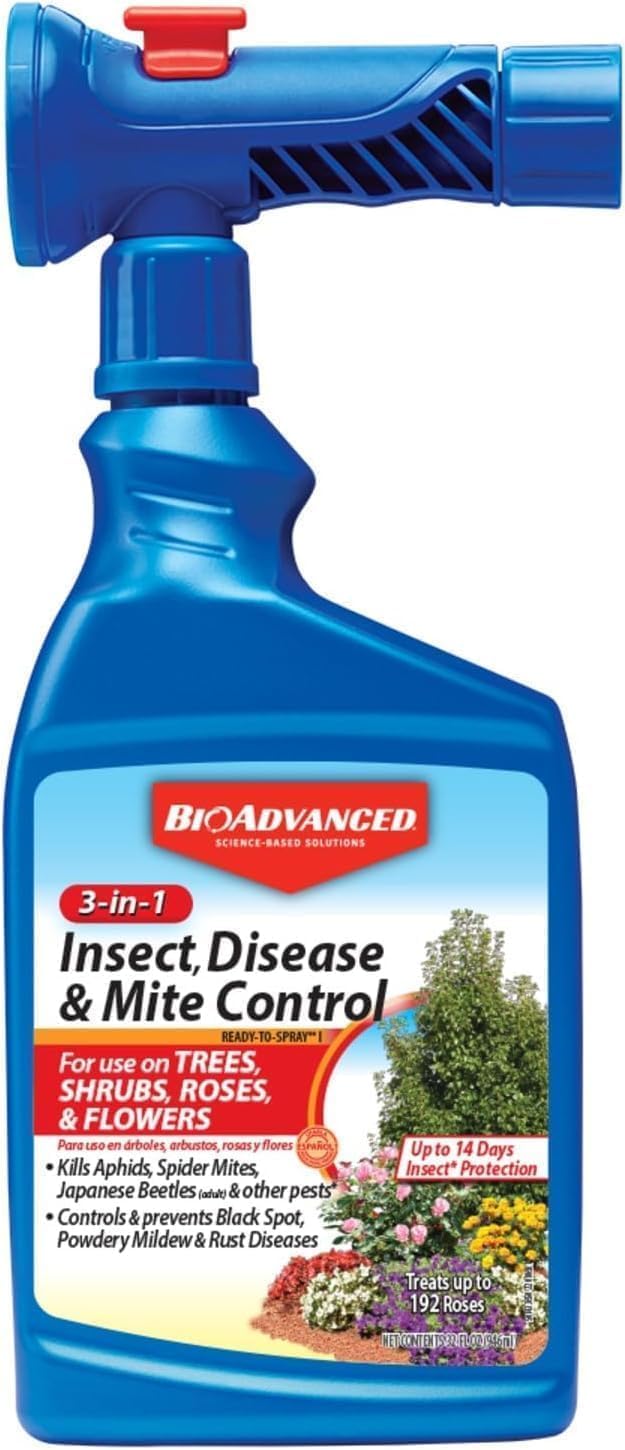
BioAdvanced 3-in-1 Insect, Disease and Mite Control Spray, 32 fl oz
| Unit Count | 32 Fluid Ounces |
|---|---|
| Item Form | Spray |
| Target Species | Aphids, caterpillars, leafminers, whiteflies and other listed pests |
| Active Ingredients | Tau-fluvalinate 0.61%, Tebuconazole 0.65%, Imidacloprid 0.47% |
The BioAdvanced 3-in-1 spray combines contact and systemic ingredients to kill common pests, control fungal diseases, and suppress spider mites in one step. It hooks to a garden hose and delivers an even spray over leaves and undersides, making it convenient for covering beds, rose bushes, shrubs, and small trees. Notable features include multi-target pest control, disease prevention against problems like black spot and powdery mildew, and rainproof protection that lasts up to two weeks per application. The product claims systemic activity, so treated plants get both immediate knockdown and longer residual effect, which reduces treatment frequency for busy gardeners. Important limitations are that it is a chemical treatment with specific active ingredients, so users should follow safety directions and avoid using it on unintended plants or in areas with pollinator activity; it is not labeled for sale in New York. For gardeners seeking broad-spectrum, easy-to-apply protection, this bottle covers many rose bushes and beds, but those wanting organic or pollinator-safe options should look elsewhere.
Best for: Gardeners who want a single, easy-to-use chemical treatment to control common pests and fungal diseases on roses, ornamentals, and shrubs without making frequent manual applications.
Less Ideal for: Growers who prioritize organic, pollinator-safe, or contact-only treatments or who manage edible vegetable gardens should choose alternative products designed for those needs.
- Combines insect, disease, and mite control in one ready-to-use spray
- Hose-end applicator lets you treat large areas quickly including leaf undersides
- Provides rainproof residual protection for up to 14 days
- Covers a large number of plants per bottle (manufacturer coverage stated for roses)
- Contains synthetic active ingredients requiring careful safety precautions
- Not suitable where pollinator safety or organic certification is required
- Restricted sale in at least one state which may affect availability
Verdict: If you want simple broad-spectrum protection for roses and ornamentals, this hose-end 3-in-1 spray delivers insect, disease, and mite control in one convenient application.
Athena IPM Ready-to-Use Insecticide & Fungicide Spray, 32 fl oz

| Brand | Athena |
|---|---|
| Unit Count | 32 Fluid Ounces |
Athena IPM is a ready-to-use spray that combines insecticidal and fungicidal action to control spider mites, aphids, thrips and to treat powdery mildew on contact. It is typically used by shaking and spraying directly on affected foliage in homes, greenhouses, raised beds and hydroponic systems without measuring or mixing. The formula is made from EPA 25(b) minimum risk ingredients and marketed as safe for use around people and pets when directions are followed, which makes routine applications straightforward for frequent monitoring and spot treatments. Practical benefits include broad-spectrum control across many plant types, simple application from a trigger bottle, and suitability for growers who prefer low-toxicity, professional-grade products. Important limitations are that it is a contact product so coverage matters for effectiveness and it carries a California Prop 65 warning so users should follow safety guidance and avoid contact with skin and eyes.
Best for: Growers who prioritize effective, easy-to-apply pest and mildew control and want a low-toxicity, professional-style product for regular monitoring and spot treatments.
Less Ideal for: Those who need systemic control for root-feeding or hard-to-reach pests or who cannot follow protective handling instructions should consider alternative chemistries or application methods.
- Ready-to-use formula requires no mixing or special equipment
- EPA 25(b) minimum risk ingredients suitable for frequent use around occupied spaces when directions are followed
- Broad-spectrum action controls common pests and treats powdery mildew on contact
- Works across a variety of settings including houseplants, gardens, greenhouses and hydroponics
- Contact-only action requires thorough coverage so multiple sprays may be needed for heavy infestations
- Contains a Proposition 65 chemical warning and requires careful handling to avoid exposure
Verdict: A convenient, low-toxicity ready-to-use spray that delivers broad-spectrum contact control for gardeners who need fast, frequent pest and mildew protection.
BioAdvanced Organics Neem Oil Spray, Ready-to-Use, 24 fl oz

| Unit Count | 24 Fluid Ounces |
|---|---|
| Item Form | Oil |
| Target Species | Spider |
| Specification Met | OMRI |
| Active Ingredients | Clarified Hydrophobic Extract of Neem Oil 0.9% |
This ready-to-use BioAdvanced Organics Neem Oil spray provides a convenient single-bottle solution for common garden pests and fungal problems. It is applied with the trigger sprayer to roses, flowers, vegetables, fruit trees, houseplants, and shrubs to kill aphids, whiteflies, spider mites, mealybugs, and other listed insects on contact while also preventing and treating fungal diseases such as blackspot and powdery mildew. The product is OMRI listed and labeled for use up to the day of harvest, so it fits edible gardens where organic-approved products are preferred. Typical use is a preventive 7 to 14 day spray schedule or a 7 day interval when treating active disease or infestations. Practical benefits include an easy spray applicator, broad-spectrum coverage that reduces the need for multiple products, and effectiveness across egg, larval, and adult stages. Limitations are that it is a contact product so thorough coverage is required for good control and repeated applications are necessary for persistent problems; it also contains a low percentage of active neem extract which may act more slowly than synthetic insecticides for heavy infestations.
Best for: Gardeners who want a single, organic-approved spray to manage both common pests and fungal diseases across ornamentals and edible plants and prefer simple, ready-to-use solutions.
Less Ideal for: Those needing immediate knockdown for severe infestations or commercial growers who require high-concentration, fast-acting synthetic controls should consider stronger alternatives.
- Ready-to-use trigger sprayer for easy application
- Combines insecticide, miticide, and fungicide actions in one product
- OMRI listed and labeled for use up to day of harvest suitable for edible plants
- Effective against eggs, larvae, and adults of many common garden pests
- Works by contact so requires thorough, repeated coverage to be effective
- Lower percentage of active neem means slower knockdown on heavy infestations
Verdict: A convenient, organic-approved all-in-one neem spray for home gardeners who want simple, broad protection against common insects and fungal diseases.
BioAdvanced Rose & Flower Insect Killer Spray, 24 oz

| Unit Count | 24 Fluid Ounces |
|---|---|
| Item Form | Spray |
| Target Species | Insects |
| Active Ingredients | Cyfluthrin |
| Specification Met | EPA |
This ready-to-use BioAdvanced spray delivers quick, broad-spectrum control of common garden pests such as aphids, whiteflies, caterpillars, and Japanese beetles. You use it by spraying foliage until evenly coated but not dripping, which makes it convenient for spot treatments or treating individual plants and small beds. The active ingredient cyfluthrin acts fast on contact and the formula claims protection for up to 14 days, so repeat applications are infrequent during an active pest period. The built-in sprayer removes the need to mix concentrate, saving effort and reducing dosing mistakes. Limitations to consider are that it is a chemical insecticide so you should avoid spraying beneficial insects and follow label precautions for edible crops and pollinator safety. It is intended for outdoor use and is best for gardeners who want a simple, effective, no-mix option rather than an organic or insect-specific approach.
Best for: Practical home gardeners who want an easy, no-mix spray to quickly control a wide range of common plant pests without fuss. Good for people managing small beds, roses, or mixed borders who prioritize convenience and immediate results.
Less Ideal for: Gardeners focused on organic practices, pollinator-friendly plantings, or those who need selective biological controls should consider organic or targeted alternatives.
- Ready-to-use sprayer for easy spot application
- Kills over 100 listed insects on contact
- Provides up to 14 days of residual protection
- Suitable for roses, flowers, shrubs and vegetable gardens
- Contains a synthetic pyrethroid so avoid spraying when pollinators are active
Verdict: A user-friendly ready-to-use spray that quickly controls a wide range of garden pests and gives up to two weeks of protection, ideal for budget-minded gardeners who want fast, no-mix results.
Sevin Insect Killer Concentrate II, 32 oz

| Item Form | Liquid |
|---|---|
| Liquid Volume | 32 fluid ounces |
| Target Species | Insects |
| Active Ingredients | Zeta Cypermethrin |
Sevin Insect Killer Concentrate II is a ready-to-measure liquid concentrate intended for gardeners who need reliable broad-spectrum insect control. You measure the concentrate with the included cap (label rate 4 fl. oz per gallon), dilute it in a handheld, hose-end, or tank sprayer, and apply to plants one foot from the target area. The formula contains zeta cypermethrin and kills by contact, with claims for more than 500 insect pests and residual protection for up to three months on many surfaces. It is suitable for vegetables, fruits, ornamentals, shrubs, and lawns when used according to label directions. Practical benefits include an easy measuring cap, flexible application methods, and coverage of a long list of garden pests including beetles, aphids, loopers, and armyworms. Important limitations are that it is a contact insecticide (so thorough coverage is needed), some pests and uses are excluded in certain states, and it can harm pollinators if applied to blooming plants, so timing and careful targeting matter.
Best for: Gardeners who prioritize dependable, broad insect control for vegetables, fruits, and ornamentals and who follow label directions to target treatments responsibly.
Less Ideal for: People seeking an organic or pollinator-safe solution or those who prefer systemic or selective insecticides that require less frequent spray coverage.
- Broad-spectrum control listed for over 500 insect pests including common garden beetles and caterpillars
- Concentrate format with measuring cap lets you mix variable amounts for small beds or larger areas
- Multiple application options: handheld, hose-end, or tank sprayers
- Residual activity reported to protect treated surfaces for up to three months
- Kills by contact so thorough coverage is required for effectiveness
- Can harm pollinators if applied to open blooms and requires careful timing
- Not registered for some uses in certain states which limits where it can be applied
Verdict: Choose this concentrate when you need a proven, flexible contact insecticide that controls a large range of garden pests across edible and ornamental plants.
Bonide Captain Jack's Neem Oil Spray for Plants, 32 oz Ready-to-Use

| Item Form | Liquid |
|---|---|
| Target Species | Insects |
| Active Ingredients | Clarified Hydrophobic Extract of Neem Oil |
| Liquid Volume | 32 fluid ounces |
Bonide Captain Jack's Ready-to-Use Neem Oil is a single-bottle, spray-on treatment that combines insecticidal, miticidal, and fungicidal action so you can manage common pests and fungal problems with one product. In practice you shake the bottle and spray foliage thoroughly, including undersides of leaves, at the first sign of aphids, spider mites, whiteflies, powdery mildew, or rust. Its clarified neem oil active ingredient works against eggs, larvae, and adults and is labeled for use on vegetables, fruits, roses, shrubs, trees, and houseplants, which makes it practical for mixed gardens. The trigger bottle arrives ready to use and can be applied up to harvest for organic production, simplifying timing and handling. Important limits are that it is a contact treatment so coverage matters for effectiveness, it may require reapplication every 7 to 14 days, and you should avoid spraying in peak sunlight to reduce leaf burn risk. Safety directions note keeping it away from children and pets and following label instructions for best results.
Best for: Gardeners who want a convenient, broadly effective product backed by lots of user feedback and who prioritize organic-approved options for mixed beds, edibles, and ornamentals.
Less Ideal for: Those seeking a systemic or long-lasting residual product who prefer a single application solution rather than regular spot treatments.
- Multi-action formula that serves as insecticide, miticide, and fungicide
- Ready-to-use trigger bottle requires no mixing for quick application
- Approved for organic gardening and can be used up to day of harvest
- Effective on multiple life stages of pests including eggs and larvae
- Contact-only mode requires thorough coverage and repeat applications
- Can cause leaf damage if applied in peak sunlight
Verdict: Choose this ready-to-use neem oil spray when you want a single, organic-approved product that controls insects, mites, and common fungal diseases across edible and ornamental plants.
Atticus Talak 7.9% Bifenthrin Indoor/Outdoor Insecticide Concentrate (32 oz)

| Liquid Volume | 32 fluid ounces |
|---|---|
| Item Form | Liquid |
| Active Ingredients | Bifenthrin |
| Specification Met | EPA |
| Target Species | Insects |
Talak 7.9% is a water-based bifenthrin concentrate designed to control a wide range of indoor and outdoor pests on lawns, landscapes, hardscapes and around the home. You mix measured teaspoons with water to create a spray for lawns, plants, perimeter barriers and indoor baseboards, and one gallon of mixed solution treats about 1,000 square feet at recommended rates. Notable features include a high 7.9% active ingredient concentration, a formula that dries clear and is odor-free, and label guidance for uses from turf treatments to mound drenches for fire ants. For practical use this means flexible, multi-purpose applications with visible knockdown on contact plus residual effect for up to three months when applied as directed. Important limitations are that diluted spray cannot be stored and must be mixed fresh for same-day use, it is not approved for foggers, and state registration varies so it may not be available everywhere. Users should read and follow label directions for safe handling, pet re-entry after drying, and appropriate application rates for different target areas.
Best for: Buyers who prioritize dependable, conventional pest control for both garden plants and home perimeters and want a single product they can use across yards and indoor spaces with predictable label directions.
Less Ideal for: Home gardeners who need organic, non-synthetic options or who require products labeled for fogger use should consider other solutions.
- Broad-spectrum control listed for more than 75 indoor and outdoor pests
- Water-based formula that dilutes easily, dries clear and is odor-free
- Versatile application options for lawns, landscapes, perimeter barriers and indoor sites
- Long residual control up to three months when applied at label rates
- Mixed spray cannot be stored and must be used the same day
- Not approved for fogger application
Verdict: Choose Talak 7.9% when you want a single, water-dilutable bifenthrin concentrate that provides broad, up-to-three-month control for common garden and household insect problems.
Choosing the Right Insecticide for Plants: Key Factors to Consider
Residual Protection
How long an insecticide keeps working after application matters for how often you must treat. Products with longer residual protection reduce reapplication frequency but can increase exposure risk to pollinators and beneficial insects if used improperly. For short-lived pests or when you need to protect blooms, choose options with a known, short-to-moderate residual and follow label timing to avoid peak pollinator activity.
Residual longevity also affects labor and cost over a season. Consider the cropping cycle of your plants: fast-growing veggies or regularly-harvested herbs might tolerate shorter residuals and more frequent spot treatments, while ornamentals or winter crops benefit from longer control windows.
Plant Safety & Phytotoxicity
Not all insecticides are safe on all species or under all environmental conditions. Some formulations can scorch tender leaves, cause spotting, or interfere with fruit set if applied in high heat or bright sun. Read label guidance on temperature and plant stage restrictions and test new products on a small area before broad application.
Concentration and dilution instructions matter for plant safety. Systemic treatments that are taken up by the roots behave differently than contact sprays, so matching product chemistry to the plant type and growth stage reduces the risk of harm.
Spectrum Of Control
Different products target different groups of pests. Broad-spectrum contact insecticides can knock down a wide range of chewing and sucking insects immediately, while more selective options focus on specific pests like aphids or caterpillars. Knowing the likely pest and life stage helps you choose a product that will be effective without unnecessary impact on non-target species.
For recurring or mixed infestations, a product with both immediate knockdown and residual activity may be desirable. For beneficial insect conservation, consider selective options or targeted application methods to reduce collateral impact.
Application Flexibility
How you can apply a product affects its usefulness in different parts of the garden. Ready-to-use sprays are convenient for container plants and small beds, while concentrates give more flexibility for larger areas and specific dilution rates. Compatibility with different spray equipment, hose-end applicators, and soil drench use expands where and how you can deploy a product.
Application flexibility also includes tank-mix compatibility with other pest or nutrient products and whether the product allows spot treatment versus broadcast application. Choose formulations that match the scale and tools you plan to use.
Impact On Beneficials and Pollinators
Protecting pollinators and beneficial predators is essential for long-term garden health. Some insecticides are highly toxic to bees and lacewings even at low rates. Others break down quickly or are selective for specific pest groups and are less harmful when used properly.
Timing applications to avoid bloom periods, using targeted spot treatments, and choosing products with lower toxicity to beneficials can preserve biological control in the garden. Always follow label guidance on bloom and re-entry intervals to reduce non-target impacts.
Matching Product Chemistry to Pest Type
Different active ingredients work in different ways. Contact insecticides kill pests they touch and are best for visible infestations, whereas systemic options move inside the plant and protect new growth from sucking pests. Choose chemistry based on whether you need immediate knockdown or longer-term protection from feeding larvae.
For small outbreaks on individual plants, a targeted contact spray or hand application is often sufficient. For repeated or hard-to-reach infestations, a systemic soil application or a product with longer residual activity may be more practical.
- Contact sprays: fast knockdown on contact pests
- Systemics: protect new growth and roots-fed pests
- Insect growth regulators: disrupt life cycles for long-term control
Application Timing and Weather Considerations
Timing applications around weather can make treatments more effective. Rain soon after a spray will wash off contact products and shorten their effective window, while hot, sunny days can increase phytotoxic risk. Early morning or late evening applications reduce pollinator exposure and can improve uptake for some products.
Plan treatments when wind is low to prevent off-target drift and avoid spraying during bloom unless the product label allows it and precautions for pollinator safety are taken.
- Avoid spraying before rain for contact products
- Do not apply during bloom unless label permits and precautions are used
- Cooler parts of the day reduce plant stress during application
Application Methods and Equipment
Sprayer type influences coverage and efficacy. Fine mist sprayers are good for foliar coverage on ornamentals, while coarse sprays reduce drift for windy conditions. For soil drench systemics, ensure even wetting of the root zone to achieve consistent uptake.
Calibrating equipment and following dilution instructions prevents under- or over-application, which can lead to control failure or plant damage. Use personal protective equipment recommended on the label to protect yourself during mixing and application.
- Choose sprayer type to match plant size and location
- Calibrate for consistent dose and avoid streaking
- Wear recommended protective gear during mixing and spraying
Integrated Pest Management and Nonchemical Options
Insecticides are one tool in an integrated pest management strategy. Start with cultural controls such as crop rotation, resistant varieties, and sanitation to reduce initial pest pressure. Encourage beneficial insects with diverse plantings and avoid broad-spectrum treatments when possible.
Physical controls like handpicking, sticky traps, and row covers are effective for many small gardens and can delay or reduce the need for chemical interventions.
- Combine cultural, physical, and biological tactics before chemical use
- Use selective products to preserve beneficial predators
- Monitor regularly and treat only when thresholds are exceeded
Safety and Storage Best Practices
Store insecticides in original containers, locked away and out of reach of children and pets. Keep products in a cool, dry place away from foodstuffs and avoid exposure to extreme temperatures that might alter efficacy or cause container failure.
Dispose of unused product and rinsate according to local regulations. Clean sprayers thoroughly between different chemistries to avoid harmful tank-mix interactions, and always follow label instructions for protective equipment and re-entry intervals.
- Store in original container and follow label storage instructions
- Rinse and triple-rinse equipment and dispose of rinsate properly
- Keep a log of applications and observed effects for future reference
How We Chose the Best Insecticide for Plants
We focused on products that are formulated for use directly on ornamental and edible plants in home gardens and container plantings. Our evaluation emphasized control effectiveness against common garden pests, documented plant safety and phytotoxicity risk across a range of species, and the length of residual protection under typical outdoor conditions. We also considered application flexibility and user safety: ease of dilution or ready-to-use formulations, compatibility with foliar sprays and soil drench where appropriate, and clear labeling for protective gear and re-entry intervals. Environmental impact factors were weighed, particularly documented effects on pollinators and beneficial insects when used according to label directions. Excluded items include products intended only for structural pest control, seed treatments, or those labeled strictly for agricultural commodity use. We prioritized formulations and active ingredients commonly available to home and small-scale gardeners. The resulting shortlist balances immediate knockdown, duration of control, and plant compatibility to fit a range of garden situations from container herbs to established beds.
FAQ
Can I use the same insecticide on edible vegetables and ornamentals?
It depends on the product label. Some insecticides are formulated and labeled for use on both edibles and ornamentals, while others are restricted to nonfood plants. Always follow label directions for pre-harvest intervals and application rates to ensure food safety.
How soon will I see results after applying an insecticide?
Contact insecticides often produce noticeable knockdown within hours, while systemic products can take several days as the active ingredient moves into the plant. Expect variable timing depending on pest type, life stage, and environmental conditions.
Will insecticides harm bees and other pollinators?
Some insecticides are highly toxic to pollinators, especially during bloom. The risk depends on product toxicity, timing, and application method. Avoid spraying during bloom and choose products or application times that minimize exposure to foraging insects.
Can repeated use of the same insecticide cause resistance?
Yes. Repeated use of the same mode of action can select for resistant pest populations. Rotate products with different modes of action and integrate nonchemical controls to reduce resistance risk.
How do I avoid burning my plants when spraying?
Follow label dilution rates and avoid spraying during the heat of the day or under intense sunlight. Test a small area first and allow several days to observe for phytotoxic symptoms before treating the entire planting.
Final Verdict
Choosing the right insecticide for plants requires balancing immediate pest control with plant safety and protection of beneficial insects. Prioritize products whose residual profile, spectrum of control, and application method match the crop and pest you are treating. Consider nonchemical tactics and rotate chemistries to reduce resistance risk. Focus on the decision factors that matter most in your garden: whether you need fast knockdown, longer residual protection, or a selective option that preserves pollinators. Those priorities will guide you to a suitable product for your planting situation.
