

Note: This article contains affiliate links. If you click on these links and make a purchase, I may earn a small commission at no extra cost to you. This helps support my research and content. Read my full affiliate disclosure here.
If you grow succulents, treating pest outbreaks quickly and gently matters more than broad-spectrum sprays. Succulents have thin, water-storing tissues that show damage from harsh chemicals, and many live indoors or in tight container groupings where safety and residue matter. This guide reviews six top insecticide options for succulents and explains how each type balances pest control with plant safety. The shortlisted products cover contact sprays, systemic options, and targeted biological controls. We evaluated knockdown speed, safety for succulent tissue, and ease of use to help you pick the right fit for your planting situation. Read on to see the factors that should guide your choice and practical application tips before the product blocks below.
Top Picks at a Glance
| Best Overall The best all-around choice for most situations | BioAdvanced Organics Neem Oil Spray, Ready-to-Use, 24 fl oz |  |
| Best Quality Built to a higher standard if you want something more solid | ferti-lome Spinosad Soap Insecticide Ready-to-Use, 32 oz |  |
| Best Value The sweet spot between price and what you get | Garden Safe Insecticidal Soap Ready-to-Use Spray, 32 oz |  |
| Best Budget The cheapest option that still gets the job done reliably | Bonide Captain Jack's Neem Max 12 oz Ready-to-Use Spray for Houseplants |  |
| Highest Rated A top-rated pick with lots of positive feedback | Bonide Captain Jack's Neem Max Concentrate, 8 oz | 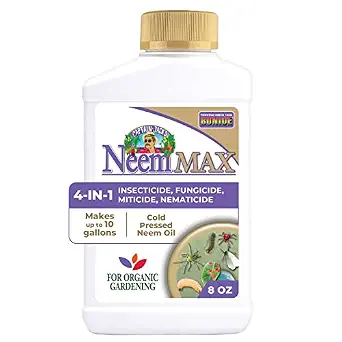 |
| Most Popular A crowd favorite that many people choose with confidence | Bonide Captain Jack's Ready-to-Use Neem Oil Spray, 32 oz |  |
BioAdvanced Organics Neem Oil Spray, Ready-to-Use, 24 fl oz

| Unit Count | 24 Fluid Ounces |
|---|---|
| Item Form | Oil |
| Target Species | Spider |
| Specification Met | OMRI |
| Active Ingredients | Clarified Hydrophobic Extract of Neem Oil 0.9% |
This BioAdvanced Organics Neem Oil spray is a ready-to-use 3-in-1 treatment for home gardeners who need broad protection from both pests and common fungal diseases. The trigger bottle applies neem oil in a clarified hydrophobic extract formulation that kills eggs, larvae, and adults of listed insects such as aphids, whiteflies, and spider mites on contact while also helping prevent and control fungal problems like black spot, powdery mildew, and rust when used on a 7 to 14 day schedule. It is labeled for roses, flowers, vegetables, fruits and shrubs and can be used up to the day of harvest, making it suitable for edible gardens. Practical benefits include convenience of a pre-mixed spray, multi-target control in one treatment, and OMRI recognition for organic gardening. Limits to expect are that it is a contact-based product so full coverage is required for effectiveness and repeated applications are needed for prevention, and results can be slower than synthetic pesticides for heavy infestations. The bottle is best for small to medium gardens and spot treatments rather than large-scale applications.
Best for: Gardeners who want a single, organic-friendly spray to manage common insects and fungal issues on roses, ornamentals, and edible plants without mixing concentrates.
Less Ideal for: Those managing very large beds or commercial plantings who need high-volume coverage or fast knockdown from systemic synthetic products should consider concentrate or professional options.
- Ready-to-use trigger spray for easy application
- Combines insecticide, miticide, and fungicide action in one product
- Labeled for use on edible plants and permitted up to day of harvest
- OMRI listed formulation suitable for organic gardening
- Effectiveness depends on thorough coverage because it works primarily on contact
- Requires repeated applications on a regular schedule for disease prevention
Verdict: A convenient ready-to-use organic neem spray that gives home gardeners broad, multi-purpose protection against common insects and fungal diseases.
ferti-lome Spinosad Soap Insecticide Ready-to-Use, 32 oz

| Unit Count | 32 Fluid Ounces |
|---|---|
| Item Form | Oil |
| Target Species | Insects |
| Special Features | Ready-to-Use |
| Active Ingredients | Spinosad, Potassium Salts of Fatty Acids |
This ready-to-use spinosad soap combines spinosad with potassium salts of fatty acids to target caterpillars, aphids, beetles and other chewing and soft-bodied insects. It is supplied in a spray bottle for direct application to leaves, including undersides, and is labeled for use on vegetables, flowers, shrubs and ornamentals. For succulent growers the OMRI listing is a strong point because it indicates suitability for organic production when used per label. The spray wets foliage well and the spinosad provides a targeted insecticidal action while the soap helps disrupt soft-bodied pests on contact. Limitations to consider are that spinosad is more effective against chewing insects than sap-sucking pests and repeated applications may be needed for heavy infestations. Also, as an outdoor-use product it is formulated for garden and greenhouse plants rather than delicate indoor-only succulent collections where runoff or drift could be a concern. Follow label directions and spot-test on sensitive succulents before broad application.
Best for: Succulent growers who prioritize effective, OMRI-listed, contact-plus-ingestible control for outdoor or greenhouse plants and prefer a ready-to-use spray for quick spot treatments.
Less Ideal for: Collectors who only keep succulents indoors in small pots or who need systemic, long-lasting control for persistent sap-sucking pests should consider alternative products.
- Contains spinosad plus fatty acid salts for combined insecticidal and contact action
- Ready-to-use spray bottle makes direct application simple with full-plant coverage
- OMRI listed for use in organic gardening when label directions are followed
- Labeled for a wide range of outdoor plants including ornamentals and greenhouse use
- Less effective against some sap-sucking insects compared with systemics
- Formulated for outdoor/greenhouse use so care is needed with indoor succulent setups
Verdict: A convenient OMRI-listed spinosad spray that gives succulent growers fast contact and ingestion control of many chewing and soft-bodied garden pests.
Garden Safe Insecticidal Soap Ready-to-Use Spray, 32 oz

| Item Form | Spray |
|---|---|
| Target Species | Insects |
| Liquid Volume | 32 fluid ounces |
| Active Ingredients | Potassium Salts Of Fatty Acids |
Garden Safe Insecticidal Soap is a ready-to-use contact spray formulated with potassium salts of fatty acids to control aphids, mealybugs, mites, whiteflies and similar soft-bodied pests. You use it like a normal garden spray: thoroughly coat insects and all plant surfaces including undersides of leaves, ideally in calm weather and not in full sun. It is safe for use on vegetables, fruit trees, ornamentals, shrubs, flowers and in greenhouses and may be applied to edibles up to the day of harvest, which simplifies timing for vegetable growers. The spray works on direct contact so thorough coverage is essential and multiple applications may be needed for heavy infestations. The product is convenient because no mixing is required, but it can be washed off by rain and is hazardous to aquatic invertebrates so care is needed to avoid runoff into water. For routine control of common garden pests this soap is a practical, low-toxicity option when used as part of an integrated pest management approach.
Best for: Gardeners who prioritize practical, low-toxicity pest control and want a ready-made spray that can be used on edible crops without pre-harvest delays.
Less Ideal for: People needing a long-residual or systemic pesticide for heavy infestations or for pests hidden inside plant tissues should consider other control methods.
- Ready-to-use formula requires no mixing for quick spot treatments
- Labeled for use on vegetables and may be applied up to the day of harvest
- Controls a broad list of soft-bodied pests including aphids, mites and whiteflies
- Plant-safe when used as directed and usable indoors, outdoors and in greenhouses
- Only kills pests by direct contact so it has limited residual or systemic activity
- Can be washed off by rain and must be reapplied after watering or heavy rainfall
- Harmful to aquatic invertebrates so it requires careful application near water
Verdict: A convenient, low-toxicity ready-to-use soap spray that gives effective contact control of common soft-bodied garden pests and is safe to use up to harvest.
Bonide Captain Jack's Neem Max 12 oz Ready-to-Use Spray for Houseplants

| Item Form | Spray |
|---|---|
| Target Species | Insects |
| Liquid Volume | 12 fluid ounces |
| Item Weight | 12 ounces |
Bonide Captain Jack’s Neem Max is a 12 oz pump-spray formulated from cold-pressed neem oil to protect houseplants from insects, fungal diseases, mites and nematodes. It arrives ready to use in a spray bottle so you simply shake and mist affected foliage and soil areas for treatment and prevention. The product advertises broad-spectrum control, including aphids, spider mites, beetles and common fungi like powdery mildew, and the surfactant formulation is intended to improve coverage and contact. Practical benefits include an organic-approved active ingredient, multi-target action that reduces the need for multiple products, and the convenience of a small pump bottle for spot treatments indoors. Limitations are that the ready-to-use volume is modest for larger collections, and as with all neem products it works best with repeat applications and proper timing rather than as a single curative spray. Users should follow label directions for sensitive plants and avoid application under heat or direct sun.
Best for: Ideal for houseplant owners who want an organic, all-in-one product to treat occasional pest and disease problems without mixing concentrates. It fits gardeners who prioritize convenience and natural ingredients on a budget.
Less Ideal for: Not a good choice for commercial growers or those with large greenhouse collections who need concentrated product and bulk volume; those seeking a single-application fast kill may prefer a different approach.
- Ready-to-use pump spray for easy spot treatment indoors
- Cold-pressed neem oil approved for organic gardening
- Multi-action formula that targets insects, mites, fungi and nematodes
- Surfactant-enhanced spray for more even coverage
- Only 12 fl oz bottle may require frequent repurchasing for multiple or large plants
- Effects rely on repeat applications and correct timing rather than instant eradication
Verdict: A convenient, organic-ready spray that gives budget-minded houseplant owners multi-target protection in a small, easy-to-use bottle.
Bonide Captain Jack's Neem Max Concentrate, 8 oz

| Item Form | Concentrate |
|---|---|
| Target Species | Multi-Purpose |
| Liquid Volume | 8 fluid ounces |
| Unit Count | 8 Ounce |
Bonide Captain Jack's Neem Max is a concentrated cold-pressed neem oil designed to be mixed with water and applied as a spray or soil drench to protect vegetables and ornamentals. It combines fungicidal and insecticidal activity with miticide and nematicide action, so it targets common cucumber pests such as aphids and mites while also helping prevent fungal problems like powdery mildew. The concentrate format keeps storage space small and lets you mix only what you need for each treatment. Because it is plant-based and labeled for organic gardening, it is a good fit for gardeners who prefer less synthetic chemistry. Important limitations are that it must be diluted correctly and applied according to label directions to avoid plant damage, and results are generally best when used as part of an integrated program rather than as a one-time fix. Expect repeat applications at label intervals for disease control and careful timing to avoid spraying during heat or when pollinators are active.
Best for: Gardeners who prioritize low-toxicity, organic-compatible options and want a single product to manage both pests and fungal issues on cucumbers and other vegetables.
Less Ideal for: Those seeking an immediate knockdown chemical or a one-application cure for advanced infections should consider targeted synthetic controls instead.
- Multi-purpose action: fungicide, insecticide, miticide and nematicide in one concentrate
- Cold-pressed neem oil formulation approved for organic gardening
- Concentrate lets you mix custom volumes to treat only affected plants
- Targets multiple life stages of pests, including eggs and larvae
- Requires correct dilution and repeat applications for effective control
- Can cause phytotoxicity if applied improperly or in hot conditions
Verdict: A compact, organic-approved neem concentrate that lets cautious gardeners treat cucumber pests and powdery mildew with a single plant-based product.
Bonide Captain Jack's Ready-to-Use Neem Oil Spray, 32 oz

| Item Form | Liquid |
|---|---|
| Target Species | Insects |
| Liquid Volume | 32 fluid ounces |
| Active Ingredients | Clarified Hydrophobic Extract of Neem Oil |
This ready-to-use neem oil spray is a multipurpose garden treatment that kills insects at all life stages while also serving as a miticide and preventative fungicide. Packaged in a 32-ounce trigger bottle, it is applied by shaking and thoroughly spraying plant surfaces, including leaf undersides, at the first sign of pests or disease and reapplying every 7 to 14 days as needed. The active ingredient is a clarified hydrophobic extract of neem oil, which is approved for organic gardening and labeled safe to use on vegetables up to the day of harvest. Practical benefits include broad pest coverage (aphids, whiteflies, spider mites and others), disease suppression such as powdery mildew, and convenience from a ready-to-use sprayer. Important limitations are that results are slower than synthetic contact insecticides and application timing matters to avoid leaf burn in full sun; repeated applications may be needed for heavy infestations. Follow label safety directions and keep the product away from children and pets.
Best for: Gardeners who want a single, organic-approved product to manage common vegetable garden pests and fungal problems and who prefer products with strong user feedback.
Less Ideal for: Growers needing rapid knockdown of severe infestations or commercial producers who require fast-acting, high-throughput treatments.
- Kills multiple pest stages including eggs, larvae and adults for more complete control.
- Also acts as a fungicide and miticide so one product covers pests and common fungal issues.
- Ready-to-use trigger bottle requires no mixing and is easy to apply to leaves and undersides.
- Approved for organic gardening and can be used on vegetables up to day of harvest.
- Slower-acting than many synthetic contact insecticides, so it may take several applications to see control.
- Must avoid spraying in peak sunlight to reduce risk of leaf burn.
Verdict: A convenient, organic-approved all-in-one neem spray that controls common vegetable garden pests and fungal issues with minimal fuss.
Choosing the Right Insecticide for Succulents: Key Factors to Consider
Target Pest Spectrum
Know which pests you are treating before picking an insecticide. Mealybugs and scale hide in crevices and under leaves and often respond better to systemic or oil-based contact treatments that penetrate waxy coatings. Fungus gnats live in potting mix and require products or cultural controls that reach the soil layer. Aphids and spider mites are usually controlled with contact sprays or targeted systemic action.
Matching the product to the pest saves time and reduces unnecessary exposure of the plant to harsh chemistry. For mixed infestations, select an option with a broader labeled spectrum or plan a rotation of complementary treatments to address both foliar and soil-dwelling pests.
Plant Sensitivity and Phytotoxicity Risk
Succulents are prone to leaf burn and tissue damage when exposed to strong solvents, high pH sprays, or treatments applied in direct sun. Always consider the plant's sensitivity: soft-leaved succulents like echeveria or aeonium can show spotting faster than tougher-leaved species.
Look for products with explicit ornamental or succulent-safe labeling and follow dilution and timing instructions closely. Test any new spray on a hidden leaf and wait 24 to 48 hours before treating the whole plant to check for adverse reactions.
Application Method and Practicality
How you apply the insecticide matters for both effectiveness and safety. Foliar contact sprays work well for exposed pests but may need thorough coverage and repeat applications. Systemic drenches spare delicate foliage but depend on active root uptake, so timing with watering is important. Oils and soaps are low-toxicity options for light infestations and can be applied directly to insects.
Consider where you will be treating plants: indoor growers often prefer ready-to-use sprays or low-odor formulations, while outdoor succulent gardens can tolerate broader options. Ease of measuring, mixing, and cleanup will influence how reliably you can follow label directions.
Residue and Reapplication Interval
Residue persistence determines how often you need to reapply and how long plants remain potentially hazardous to touch or to beneficial insects. Contact insecticides typically have shorter residual activity but provide immediate control. Systemics and longer-acting chemistries reduce the frequency of treatment but can leave residues in plant tissue or potting mix.
For potted succulents that may be handled frequently, choose products with short-to-moderate residue or clear guidance on safe reentry intervals.
Safety for Beneficial Insects and Household Members
Many succulent growers keep plants where bees, pollinators, children, or pets might contact treated foliage. Consider products that are less harmful to beneficial insects and have lower toxicity to mammals when used as directed. Biological controls and insecticidal soaps are gentler on beneficials, while broad-spectrum neurotoxic chemistries pose greater risk.
Always follow label precautions for people and animals, avoid spraying open blooms, and consider timing applications when pollinators are not active. For indoor plants, ventilate the area and keep children and pets away until the product label allows reentry.
Compatibility With Potting Media And Watering Practices
Some insecticides interact with soil components or require a moist or dry substrate for best uptake. Systemic drenches depend on root activity, so apply when the potting mix is slightly moist to ensure movement into the plant. Conversely, soil-applied granulars can alter moisture retention or salt balance if used incorrectly.
Choose products that fit your routine: if you prefer infrequent watering, pick options that work with that schedule. For succulents in mixed containers, ensure the insecticide will not damage companion plants or beneficial soil organisms you rely on.
Common Pest Signs On Succulents
Learning the visual clues of infestation helps you act before damage becomes severe. Mealybugs appear as white cottony clusters in leaf axils and stem seams, often accompanied by honeydew and sooty mold. Scale insects look like small, rounded bumps that may be mistaken for natural plant texture. Aphids cluster on new growth and can cause distortion, while spider mites produce fine webbing and stippling on leaves. Fungus gnat adult flies are small and black and indicate larvae in the potting mix.
- White cottony masses or clumps under leaves suggest mealybugs.
- Small, immobile bumps on stems or leaves often signal scale.
- Tiny, fast-moving insects on new growth are typically aphids.
- Fine webbing and speckled foliage point to spider mites.
- Adult flies hovering near pots usually mean fungus gnat larvae in soil.
Safe Application Practices For Succulents
Always test a small, inconspicuous area before full treatment to check for leaf sensitivity. Apply sprays in the early morning or late afternoon to avoid direct sun exposure, which can increase the risk of burn. For indoor plants, treat in a well-ventilated area and isolate the plant from others to prevent drift or accidental contact.
Avoid soaking the potting mix when foliar contact is the goal, unless the product label calls for soil drench. Wear gloves and follow the dilution instructions exactly. For heavily infested plants, combine physical removal, such as wiping mealybugs with alcohol-soaked cotton swabs, with a carefully selected insecticide to reduce overall chemical use.
- Test-spray a hidden leaf before treating the whole plant.
- Apply out of direct sunlight and during cooler parts of the day.
- Isolate treated plants and ventilate indoor spaces.
- Follow label dilution and timing for both foliar sprays and soil drenches.
Nonchemical and Cultural Controls To Use First
Cultural controls reduce pest pressure and sometimes eliminate the need for stronger chemistries. Quarantine new plants for several weeks and inspect regularly for eggs or tiny insects. Improve air circulation and avoid overwatering to reduce fungus gnat reproduction and to keep scale and mealybug populations from exploding. Hand removal and brushing can manage small infestations without chemical intervention.
Sticky traps catch adult fungus gnats and help monitor population levels. Clean growing benches and pots between uses to remove hiding pests. For biological options, beneficial predators like predatory mites or parasitic wasps can be useful in greenhouse settings where they can establish and find hosts.
- Quarantine new plants and inspect closely before adding to collections.
- Reduce watering frequency and improve drainage to lower fungus gnat risk.
- Use sticky traps to monitor and reduce flying adult numbers.
- Hand-remove visible pests and scrub stems or leaf axils when practical.
Timing Treatments With Watering And Growth Cycles
Succulent metabolism changes with watering and seasonal growth. Systemic products rely on active uptake, so applying them when the plant is actively growing and the potting mix is slightly moist improves movement into tissues. Avoid systemic drenches during dormancy or extreme heat when uptake is minimal and phytotoxicity risk can rise.
For foliar sprays, do not apply immediately after fertilizing if the label warns of increased sensitivity. Stagger treatments to allow the plant to recover, and plan follow-up applications based on label reapplication intervals and observed pest pressure.
- Apply systemics when plants are actively growing and roots are functional.
- Avoid foliar sprays under extreme heat or immediately after fertilizing if the label warns.
- Schedule follow-ups according to the product's stated reapplication interval.
How We Chose the Best Insecticide for Succulents
We focused on insecticide options that are appropriate for succulents and similar fleshy ornamentals. Our selection criteria prioritized efficacy against the pests most commonly found on succulents, including mealybugs, scale, aphids, and fungus gnats, while also weighing the potential for phytotoxicity on thin, water-rich leaves and stems. We favored formulations that offer precise application methods-such as ready-to-use sprays, concentrates with clear dilution rates, or systemic drenches that minimize foliar contact-because application style affects safety for potted and indoor plants. Other important filters included label guidance for ornamental use, documented activity spectrum (contact versus systemic), and compatibility with common succulent practices like infrequent watering and low fertilizer regimes. We excluded heavy-duty agricultural formulations and products labeled only for food crops or turf, along with any options that require specialized equipment or professional licensing. The final list balances quick knockdown, residual control, and low risk of leaf burn or discoloration for succulent gardeners.
FAQ
Can I use general garden insecticides on succulents?
Often you can, but many general-use products are too harsh for succulent tissue or are formulated for larger outdoor plants. Choose products labeled for ornamentals and follow dilution guidelines. When in doubt, test on a hidden leaf to check for burn or discoloration.
How do I treat mealybugs on compact rosettes without damaging the plant?
Start by physically removing visible insects with a cotton swab dipped in isopropyl alcohol. For remaining populations, use a low-toxicity contact spray or a targeted systemic labeled safe for ornamentals. Apply carefully to avoid soaking rosette centers and test on a small area first.
Will systemic insecticides harm my succulent if I water infrequently?
Systemic products need some level of root uptake to move through the plant. If you water very infrequently, uptake may be limited and control reduced. Apply a systemic when the potting mix is slightly moist and the plant is not dormant to promote movement.
Are insecticidal soaps safe for all succulents?
Insecticidal soaps are generally low in toxicity but can cause spotting or burn on thin or sun-exposed leaves. Test on an inconspicuous area before full application and avoid using soaps during the hottest part of the day or on recently transplanted specimens.
How long should I isolate a treated succulent from other plants?
Isolation depends on the product and application type. For foliar sprays, keep plants separated until sprays have dried and any odor has dissipated. For soil drenches or systemics, shorter isolation is often sufficient since contact risk is lower, but follow label safety directions regarding reentry.
Final Verdict
Choose an insecticide for succulents by matching the treatment method to the pest and prioritizing plant safety. For visible, soft-bodied pests, low-toxicity contact options and horticultural oils are often effective with minimal risk. For hidden or soil-dwelling pests, consider products that act through the root system so you avoid saturating delicate foliage. Weigh tradeoffs between immediate knockdown and residue persistence, and always follow label instructions and do a spot test before full application. Prioritize cultural and nonchemical measures first, and select targeted chemistries only when necessary to preserve the long-term health of your succulent collection.
