

Note: This article contains affiliate links. If you click on these links and make a purchase, I may earn a small commission at no extra cost to you. This helps support my research and content. Read my full affiliate disclosure here.
If you grow tomatoes you know how quickly a small pest problem can become a harvest-ruining infestation. The right insecticide spray for tomatoes helps you stop chewing and sucking insects while protecting developing fruit and pollinators in the garden. This guide looks at seven shortlisted sprays suited to tomato plots, patios, and small greenhouse setups and explains the practical tradeoffs gardeners face. We evaluate coverage against common tomato pests and how safe each option is for foliage and fruit to help you pick a spray that fits your growing style. Below are our top picks followed by clear buying guidance and answers to common tomato pest-control questions.
Top Picks at a Glance
| Best Overall The best all-around choice for most situations | Bonide Captain Jack's Deadbug Brew Concentrate, 32 oz |  |
| Best Quality Built to a higher standard if you want something more solid | Monterey B.t. Caterpillar & Worm Killer Concentrate, 32 oz |  |
| Best Value The sweet spot between price and what you get | Bonide Captain Jack's Deadbug Brew Ready-to-Use Spray, 32 oz |  |
| Best Budget The cheapest option that still gets the job done reliably | Sevin Ready-to-Use Insect Killer Spray, 32 oz |  |
| Highest Rated A top-rated pick with lots of positive feedback | Bonide Captain Jack's Bt Thuricide Ready-to-Use Spray, 32 oz |  |
| Most Popular A crowd favorite that many people choose with confidence | Bonide Captain Jack's Ready-to-Use Neem Oil Spray, 32 oz |  |
| Best Seller A high-volume bestseller chosen again and again | Bonide Captain Jack's Tomato & Vegetable 3-in-1 Ready-to-Use Spray, 32 oz |  |
Bonide Captain Jack's Deadbug Brew Concentrate, 32 oz

| Unit Count | 32 Ounce |
|---|---|
| Item Form | Liquid |
| Target Species | Insects |
| Active Ingredients | Spinosad |
Bonide Captain Jack's Deadbug Brew is a concentrated spinosad-based insecticide designed for use on vegetables, fruits, flowers, and ornamentals in organic gardens. You mix the concentrate with water and apply it with a trigger, hand-held, backpack, or hose-end sprayer to target caterpillars, beetles, borers, leaf miners, thrips, spider mites and other listed pests. Because the active ingredient is spinosad, the product targets many chewing and some sucking insects while having limited impact on predatory beneficials when used as directed. The concentrate format keeps storage and transport compact and lets you treat multiple beds or trees from one bottle. Important limitations are following label directions closely for application rates and timing and taking normal safety precautions; like all insecticides it will not selectively remove a single pest species and repeated use can require integrated pest management strategies. For gardeners seeking a broadly effective, organic-eligible spray, this is a practical go-to option.
Best for: Gardeners who want a single, broadly effective insecticide approved for organic use to protect vegetables, fruits and ornamental beds and who prefer a concentrate that treats multiple areas.
Less Ideal for: People seeking an immediate-contact knockdown spray for household pests or those unwilling to follow dilution and safety instructions should consider other options.
- Contains spinosad, an organic-approved active ingredient effective against many caterpillars, beetles, borers and leaf-feeding pests
- Concentrate mixes easily with water and works with common sprayers including trigger, backpack and hose-end models
- Approved for use on a wide range of edible and ornamental plants, including vegetables, fruits and ornamentals
- Formulation is designed to have limited impact on predatory beneficial insects when used according to the label
- Requires careful dilution and adherence to label directions for safe and effective use
- Not selective to a single pest species and may require integration with other IPM practices
Verdict: Choose this concentrated spinosad spray if you want a versatile, organic-approved insecticide to protect a wide range of garden plants.
Monterey B.t. Caterpillar & Worm Killer Concentrate, 32 oz

| Unit Count | 32 Fluid Ounces |
|---|---|
| Item Form | Oil |
| Target Species | Insects |
| Liquid Volume | 32 fluid ounces |
Monterey B.t. Caterpillar & Worm Killer is a concentrate designed to target caterpillars and similar leaf-eating larvae on tomato plants and other garden crops. Mixes instantly with water and can be applied with a trigger spray bottle or pressure tank sprayer to treat infestations of cabbage loopers, bagworms, gypsy moths and related species. Its active biological ingredient is compatible with organic gardening and is OMRI listed, so it fits into an organic tomato pest program. The label notes that it is safe for bees and earthworms when used as directed, which is important for maintaining beneficial insect activity in a tomato patch. Practical limitations are that it requires correct identification of the pest and timely reapplication for larvae at vulnerable stages, and it does not provide contact knockdown for non‑target chewing insects outside its spectrum. Handle with standard protective gear while mixing and applying concentrate to avoid skin and eye exposure.
Best for: Gardeners focused on protecting tomato plants through targeted biological control and who prioritize an organic-compatible solution for chewing caterpillars.
Less Ideal for: Growers who need a fast-contact broad-spectrum knockdown for mixed insect problems or who prefer a ready-to-use spray instead of a concentrate to mix.
- OMRI listed and suitable for organic tomato production
- Targets common caterpillars and worm pests that damage tomato foliage and fruit
- Instantly mixes with water for easy use with common sprayers
- Safe for bees and earthworms when label directions are followed
- Works only against susceptible larval stages so timing and monitoring are necessary
- Requires protective clothing during mixing and application to avoid skin or eye contact
Verdict: Choose this OMRI-listed B.t. concentrate when you need an organic-compatible, targeted treatment for caterpillars and worm pests on tomatoes.
Bonide Captain Jack's Deadbug Brew Ready-to-Use Spray, 32 oz

| Item Form | Spray |
|---|---|
| Target Species | Insects |
| Liquid Volume | 32 fluid ounces |
| Active Ingredients | Spinosad 0.5% |
Bonide Captain Jack's Deadbug Brew is a 32 oz ready-to-use spinosad spray formulated for organic gardening and aimed at controlling chewing and some leaf-feeding insects. You use it like a typical foliar spray, shaking the bottle and applying thoroughly to the tops and undersides of leaves on vegetables, fruit trees, and ornamentals. The active ingredient spinosad is effective against caterpillars, beetles, loopers, thrips, and similar pests and is labeled to spare many predatory beneficial insects when used as directed, which helps maintain biological control in the garden. The built-in spray nozzle makes application quick for small to medium beds and container crops. Limitations are that it is a contact and stomach poison so thorough coverage is required and repeat applications may be necessary for heavy infestations; it is not systemic and will not protect new growth after application. Also users must follow safety directions and avoid use when pollinators are active.
Best for: Gardeners who prioritize practical, low-fuss pest control for vegetables and fruit and who want an organic-approved spray they can apply quickly without mixing.
Less Ideal for: Large acreage growers or those who need long-lasting systemic protection should look for professional or systemic options instead.
- Contains spinosad, an approved active ingredient for organic gardening that targets many chewing pests
- Ready-to-use spray with integrated nozzle for simple, no-mixing application
- Label supports use on a wide variety of vegetables and fruit crops
- Designed to have limited impact on many predatory beneficial insects when used properly
- Works by contact and ingestion so thorough coverage and repeat applications are necessary
- Not systemic, so new growth after treatment is unprotected
Verdict: A convenient, organic-approved spinosad spray that delivers effective contact control of common foliage-feeding pests on cucurbits and other garden crops.
Sevin Ready-to-Use Insect Killer Spray, 32 oz

| Item Form | Liquid Ready to Use |
|---|---|
| Target Species | Insects |
| Liquid Volume | 32 fluid ounces |
| Included Components | Sevin Insect Killer Ready to Use 32 ounces |
Sevin Ready-to-Use Insect Killer is a pre-mixed spray designed for quick, broad-spectrum control of common garden pests on tomatoes and other edibles. Use it by shaking, holding the nozzle about a foot from plants and applying an even narrow fan spray to affected foliage; the product advertises contact kill of more than 700 listed insects and visible results within minutes. Practical benefits include the convenience of a ready-to-use bottle with an adjustable nozzle and clear directions, plus labeled use on 75+ fruits and vegetables so it fits common tomato garden needs. It is effective against pests like aphids, hornworms, whiteflies and Colorado potato beetles that hit tomato plants. Important limitations are that it is a conventional insecticide, so you should avoid spraying open blooms to protect pollinators and wait at least 24 hours before watering; users looking for organic or pollinator-safe options will want alternatives. Follow safety directions to avoid contact with eyes and to limit exposure to beneficial insects.
Best for: Gardeners who need a straightforward, no-mix solution to quickly reduce pest pressure on tomato plants and value convenience and fast results.
Less Ideal for: Growers committed to organic methods, backyard habitats prioritizing pollinators, or those who prefer insecticidal soaps or biological controls should consider other options.
- Ready-to-use bottle requires no mixing and is simple to apply
- Labelled for use on many fruits and vegetables including tomatoes
- Broad-spectrum control of many common tomato pests such as aphids and hornworms
- Adjustable nozzle for a narrow fan spray to target foliage
- Conventional insecticide that can harm pollinators if used on open blooms
- Not an organic product, so unsuitable for strictly organic gardens
Verdict: A convenient ready-to-use spray that delivers fast, broad control of common tomato pests for gardeners who prioritize ease and effectiveness.
Bonide Captain Jack's Bt Thuricide Ready-to-Use Spray, 32 oz

| Unit Count | 32 Ounce |
|---|---|
| Item Form | Spray |
| Target Species | Insects |
| Active Ingredients | Bacillus Thuringiensi,Lapidapteran Active Toxins |
Bonide Captain Jack's Bt Thuricide is a ready-to-use biological spray that delivers Bacillus thuringiensis (Bt) to control caterpillars and worm-stage insects. You apply it with the trigger sprayer directly to the tops and undersides of leaves when you first see feeding damage; it is labeled for use on vegetables, fruit, shade trees and ornamentals and can be used up to the day of harvest on edibles. Because it kills by ingestion, treated pests stop feeding within a couple of days while birds, earthworms and many beneficial insects are largely unharmed. The product is convenient for small-to-medium infestations since it needs thorough coverage and repeat applications for new larvae. It is approved for organic gardening and comes in a 32-ounce bottle that is easier to use than concentrates for spot treatments, but using a ready-to-use bottle across a large property can become time consuming compared with hose-end or pressurized sprayers.
Best for: Gardeners who prioritize proven, low-risk biological control and want an easy spray for spot treating caterpillars on edible and ornamental plants; ideal for those who value safety around beneficials and pets.
Less Ideal for: People needing fast-contact knockdown for a large-scale outbreak or who must treat many acres quickly should consider concentrates or professional application methods instead.
- Targets caterpillars and worm-stage pests with a proven Bt active ingredient
- Safe for use on edible plants up to day of harvest when label directions are followed
- Ready-to-use trigger bottle requires no mixing for quick spot treatments
- Labeled for a wide range of plants including vegetables, ornamentals and shade trees
- Requires insects to ingest product so results are not immediate and depend on good spray coverage
- Ready-to-use bottle is less efficient for treating large areas compared with concentrates or hose-end applicators
Verdict: A convenient, organic-ready Bt spray that reliably controls caterpillars and worm pests while protecting beneficials, ideal for careful gardeners treating spot infestations.
Bonide Captain Jack's Ready-to-Use Neem Oil Spray, 32 oz

| Item Form | Liquid |
|---|---|
| Target Species | Insects |
| Liquid Volume | 32 fluid ounces |
| Active Ingredients | Clarified Hydrophobic Extract of Neem Oil |
This ready-to-use neem oil spray is a multipurpose garden treatment that kills insects at all life stages while also serving as a miticide and preventative fungicide. Packaged in a 32-ounce trigger bottle, it is applied by shaking and thoroughly spraying plant surfaces, including leaf undersides, at the first sign of pests or disease and reapplying every 7 to 14 days as needed. The active ingredient is a clarified hydrophobic extract of neem oil, which is approved for organic gardening and labeled safe to use on vegetables up to the day of harvest. Practical benefits include broad pest coverage (aphids, whiteflies, spider mites and others), disease suppression such as powdery mildew, and convenience from a ready-to-use sprayer. Important limitations are that results are slower than synthetic contact insecticides and application timing matters to avoid leaf burn in full sun; repeated applications may be needed for heavy infestations. Follow label safety directions and keep the product away from children and pets.
Best for: Gardeners who want a single, organic-approved product to manage common vegetable garden pests and fungal problems and who prefer products with strong user feedback.
Less Ideal for: Growers needing rapid knockdown of severe infestations or commercial producers who require fast-acting, high-throughput treatments.
- Kills multiple pest stages including eggs, larvae and adults for more complete control.
- Also acts as a fungicide and miticide so one product covers pests and common fungal issues.
- Ready-to-use trigger bottle requires no mixing and is easy to apply to leaves and undersides.
- Approved for organic gardening and can be used on vegetables up to day of harvest.
- Slower-acting than many synthetic contact insecticides, so it may take several applications to see control.
- Must avoid spraying in peak sunlight to reduce risk of leaf burn.
Verdict: A convenient, organic-approved all-in-one neem spray that controls common vegetable garden pests and fungal issues with minimal fuss.
Bonide Captain Jack's Tomato & Vegetable 3-in-1 Ready-to-Use Spray, 32 oz
| Unit Count | 32 Ounce |
|---|---|
| Active Ingredients | sulfur |
| Item Type Name | Tomato & Vegetable 3-in-1 Ready-To-Use |
| Special Features | organic |
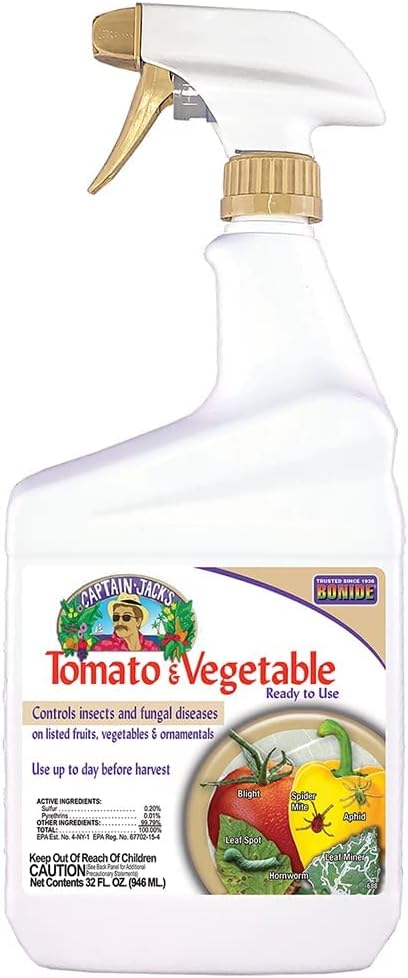
Bonide Captain Jack's Tomato & Vegetable Ready-to-Use is a 32 oz spray formulated to control common insect pests and a range of fungal diseases on tomatoes and other garden plants. It is used as a contact spray applied to foliage and new growth with a trigger nozzle that makes spot or whole-plant coverage straightforward. The product lists sulfur as an active ingredient and claims control of aphids, spider mites, caterpillars and more while also suppressing problems like powdery mildew, leaf spot and blight when applied preventively. Practical benefits include the convenience of a pre-mixed bottle, suitability for many listed vegetables and ornamentals, and a broad target list that lets one treat mixed beds without swapping products. Limitations are that it works by contact so thorough coverage is required and it is intended for preventive or early-season use rather than curing severe established infections. Users who need systemic control or highly targeted biological products may prefer an alternative formula.
Best for: Gardeners who want a simple, all-in-one spray to prevent and manage common insect pests and early fungal problems on tomatoes and mixed vegetable beds.
Less Ideal for: Growers seeking systemic fungicides, targeted biological controls, or solutions for severe, established diseases should consider other products.
- Ready-to-use bottle with trigger nozzle for quick application
- Controls a broad range of common garden insects and several fungal diseases
- Suitable for use on tomatoes, many vegetables and ornamentals
- Contains sulfur, a long-established option for organic-compatible fungal control
- Contact-only action requires thorough coverage and repeat applications for good control
- Not formulated for systemic action so it will not cure deep or established infections
Verdict: Pick this ready-to-use spray if you want a convenient, broad-spectrum preventive product to manage common tomato pests and early fungal issues.
Choosing the Right Insecticide Spray for Tomatoes: Key Factors to Consider
Pest Spectrum and Mode of Action
Different sprays target different types of pests. Some are broad-spectrum contact sprays that knock down chewing caterpillars, beetles, and adult insects on contact. Others include systemic components or translaminar action that move into leaf tissue to control sap-sucking insects and larvae hidden inside foliage.
Understanding the mode of action matters because it determines when and how the spray will work. Contact sprays require thorough coverage and may miss pests on undersides of leaves or inside rolled foliage, while systemic or translaminar options provide protection even if coverage is imperfect. Rotating modes of action also helps prevent resistance when a pest pressure persists across a season.
Safety for Fruit, Foliage, and Beneficial Insects
Tomato growers must balance pest control with the need to protect developing fruit and pollinators. Look for sprays labeled safe for edible crops and follow pre-harvest intervals closely to avoid residues on ripe fruit.
Some formulations are less harmful to bees and predatory insects when used late in the day or applied to targeted areas. Cultural timing and spray placement can reduce collateral damage to beneficials that help keep pest populations down over time.
Residual Activity and Reapplication Frequency
Residual control tells you how long a single application suppresses pests. Short-residual contact sprays may require reapplication every few days under heavy pressure, while longer-residual or systemic sprays can protect plants for a week or more.
Frequent reapplication increases labor and cumulative exposure, while products with longer persistence can reduce repeat work but may have different implications for beneficial insects and harvest intervals. Choose based on how often you can scout and spray and the severity of the pest outbreak.
Application Method and Coverage Needs
How easy a spray is to apply affects whether you can realistically treat all affected plants thoroughly. Ready-to-use hand-sprayers are simple for a few containers, while hose-end or pump sprayers work better for larger plots. Some concentrates require careful mixing which adds time and potential for dosing mistakes.
Good coverage is especially important on tomatoes because pests often hide under leaves and near stem joints. Look for sprays that produce a fine, even mist and plan for follow-up checks to ensure the undersides of leaves are treated.
Compatibility With Integrated Pest Management
Insecticide selection should fit into an integrated pest management approach. Consider how a spray works with cultural controls like row covers, trap crops, and hand-picking, and whether it allows you to preserve beneficial predators and parasitoids.
Products that fit into IPM often have targeted modes of action, shorter persistence, or label guidance that reduces non-target harm when used correctly. Choosing sprays that complement biological controls helps maintain long-term garden resilience.
Ease of Use and Label Clarity
Clear labeling and straightforward application instructions reduce misuse and increase safety. Labels that list specific tomato pests, clear dilution rates, timing for application, and pre-harvest intervals make it easier to use the product correctly.
Also check for guidance on protective equipment, reentry intervals, and environmental cautions. Practical labels save time and help you avoid damaging plants or exposing household members and pollinators to unnecessary risk.
Common Tomato Pests and How Sprays Help
Tomatoes attract a predictable set of pests: aphids, whiteflies, flea beetles, tomato hornworms, and leafminers among them. Each pest behaves differently so the right spray approach varies. For example, hornworms are large and visible so contact sprays can be effective when you target the caterpillar directly, while aphids and whiteflies inhabit leaf undersides where systemic or translaminar sprays provide more consistent control.
scouting and early detection let you choose the least disruptive control. Light infestations are often managed with targeted sprays and cultural practices, while heavy infestations may require higher-coverage treatments and repeated applications.
- Chewing pests often require thorough leaf surface contact.
- Sap-sucking insects are easier to control with translaminar or systemic actions.
- Timing sprays to pest life stages improves efficacy and lowers reapplication needs.
Timing Applications Around Bloom and Fruit Development
Application timing is critical on fruiting tomatoes. Many sprays have pre-harvest intervals and specific guidance for use during flowering. Avoid spraying during peak pollinator activity and follow label guidance for bloom-stage applications if pollination is in progress.
When possible, schedule treatments in late evening or early morning to reduce exposure to bees and other pollinators. For ripe fruit nearing harvest, adhere to the required waiting period to ensure residue levels meet safety instructions.
- Check pre-harvest interval before treating fruiting plants.
- Apply outside pollinator activity windows when practical.
- Use targeted spot treatment during light infestations to reduce exposure.
Safe Practices for Spraying in Small Gardens and Containers
Small spaces and container-grown tomatoes require a cautious approach to avoid overdosing and drift. Use low-volume, targeted sprays and hold the nozzle close to the plant to limit off-target deposition. Always mix concentrates carefully and label any leftover solution to prevent accidental misuse.
Container plants can absorb sprays differently than in-ground plantings. Monitor plants after application for signs of leaf burn or stress, especially on hot days or with sensitive varieties.
- Use fine-mist sprayers for even coverage without excess runoff.
- Avoid spraying on hot, sunny afternoons to reduce phytotoxicity risk.
- Rinse spray equipment thoroughly after use to avoid cross-contamination.
Nonchemical Options to Reduce Spray Needs
Reducing reliance on sprays starts with cultural steps: crop rotation, row covers for young transplants, hand-removal of large pests, and encouraging beneficial insects through habitat and companion planting. Sticky traps and pheromone traps can also help monitor and reduce certain pest populations.
When chemical control is needed, integrate it with these practices so you can use lower doses, shorter spray windows, or more targeted products. That approach reduces overall chemical exposure and preserves beneficial populations that help control pests naturally.
- Use physical barriers for early-stage protection.
- Attract predators with flowering plants and undisturbed habitat.
- Combine traps and scouting to apply sprays only when thresholds are exceeded.
Mixing, Application Safety, and Personal Protection
Follow label instructions for mixing rates and personal protective equipment. Even products labeled for edible crops can cause skin or eye irritation when concentrated. Use gloves, eye protection, and protective clothing as recommended, and avoid inhaling sprays by not working upwind of treated plants.
Dispose of leftover mixes and rinsate according to label directions. Clean equipment after each use to prevent accidental exposure to other garden inputs and to maintain sprayer performance.
- Measure concentrates precisely to avoid overdosing.
- Store products locked away from children and pets.
- Follow reentry intervals to protect household members and helpers.
How We Chose the Best Insecticide Spray for Tomatoes
We focused on products and formulations that deliver effective control of the pests tomato growers see most often while keeping fruit integrity and plant health front of mind. Evaluation criteria emphasized breadth of pest coverage, contact versus systemic action, safety for edible fruit and nearby beneficial insects, and ease of application in small-scale gardens. We also considered residual activity and reapplication intervals to balance convenience with crop protection. Excluded items included broad agricultural formulations intended only for large-scale commercial use, products not labeled for tomatoes or edible crops, and options with application requirements impractical for typical backyard gardeners. The final shortlist contains sprays that represent different modes of action and application styles so gardeners can choose based on pest pressure, timing, and tolerance for reapplication.
FAQ
How soon can I harvest tomatoes after spraying an insecticide?
Harvest timing depends on the product's specified pre-harvest interval. Many sprays labeled for edible crops have a waiting period measured in days; follow the label instructions before harvesting. When in doubt, rinse fruit before use and adhere to the longest interval specified.
Will spraying harm pollinators visiting my tomato flowers?
Some sprays can harm pollinators if applied during bloom or when pollinators are active. To reduce risk, apply treatments early morning or late evening, avoid spraying open flowers when possible, and choose products with lower toxicity to beneficial insects if pollination is occurring.
Can I use the same spray for both aphids and hornworms?
It depends on the spray's mode of action. Broad-contact sprays may work on both, but aphids often require systemic or translaminar activity for consistent control. Read label pest lists and select a product whose action matches the specific pest biology.
How often should I reapply sprays on tomatoes?
Reapplication frequency depends on residual activity and pest pressure. Short-residual contact sprays may need treatment every few days under heavy infestation, while systemic options can last a week or more. Scout regularly and follow label reapplication intervals.
Are there sprays safe for use in small greenhouses or on container plants?
Yes. Many products labeled for edible crops are appropriate for containers and greenhouse use, but application methods and ventilation needs can differ. Use lower-volume, targeted applications and monitor plants closely for signs of stress after treatment.
How can I avoid resistance when using insecticide sprays on tomatoes?
Rotate modes of action and avoid repeated use of the same active ingredient across a season. Integrate cultural controls and biological measures to reduce reliance on chemical control, and apply treatments only when scouting indicates pest populations exceed action thresholds.
Final Verdict
Choosing an insecticide spray for tomatoes means balancing effective pest control with fruit safety and protection of beneficial insects. Prioritize a product whose mode of action matches the pests you face, follow pre-harvest and reapplication guidance, and use precise application techniques to limit non-target effects. Combining targeted spray use with cultural and biological controls offers the most sustainable path to healthy tomato harvests.
