

Note: This article contains affiliate links. If you click on these links and make a purchase, I may earn a small commission at no extra cost to you. This helps support my research and content. Read my full affiliate disclosure here.
Japanese beetles can strip leaves and flowers in a few days, turning a productive bed into bare stems. Choosing the right japanese beetle trap matters because lure strength, trap placement, and bycatch control determine whether you remove pests or harm pollinators and other helpful insects. This guide presents seven shortlisted traps that fit common home-garden situations, from small patios to larger vegetable and ornamental beds. We evaluated each option for how far its attractant works, how well the trap reduces nontarget captures, and how practical it is to use around plants. Read on to understand which trap traits matter most so you can pick the right approach for your garden's size and priorities.
Top Picks at a Glance
| Best Overall The best all-around choice for most situations | Spectracide Bag-A-Bug Japanese Beetle Trap, 3-Pack |  |
| Best Quality Built to a higher standard if you want something more solid | Catchmaster Japanese Beetle Trap Bags, 6-Pack with Dual Lure |  |
| Best Value The sweet spot between price and what you get | Spectracide Bag-A-Bug Japanese Beetle Trap Bundle with 2 Replacement Refills |  |
| Best Budget The cheapest option that still gets the job done reliably | Safer Brand Japanese Beetle Trap with Lure and Jumbo Bags |  |
| Highest Rated A top-rated pick with lots of positive feedback | RESCUE! Japanese Beetle Trap – Reusable 3-Pack |  |
| Most Popular A crowd favorite that many people choose with confidence | Spectracide Bag-A-Bug Japanese Beetle Trap, 2 Count |  |
| Best Seller A high-volume bestseller chosen again and again | RESCUE! Japanese Beetle Trap, Reusable Bag, 2 Pack |  |
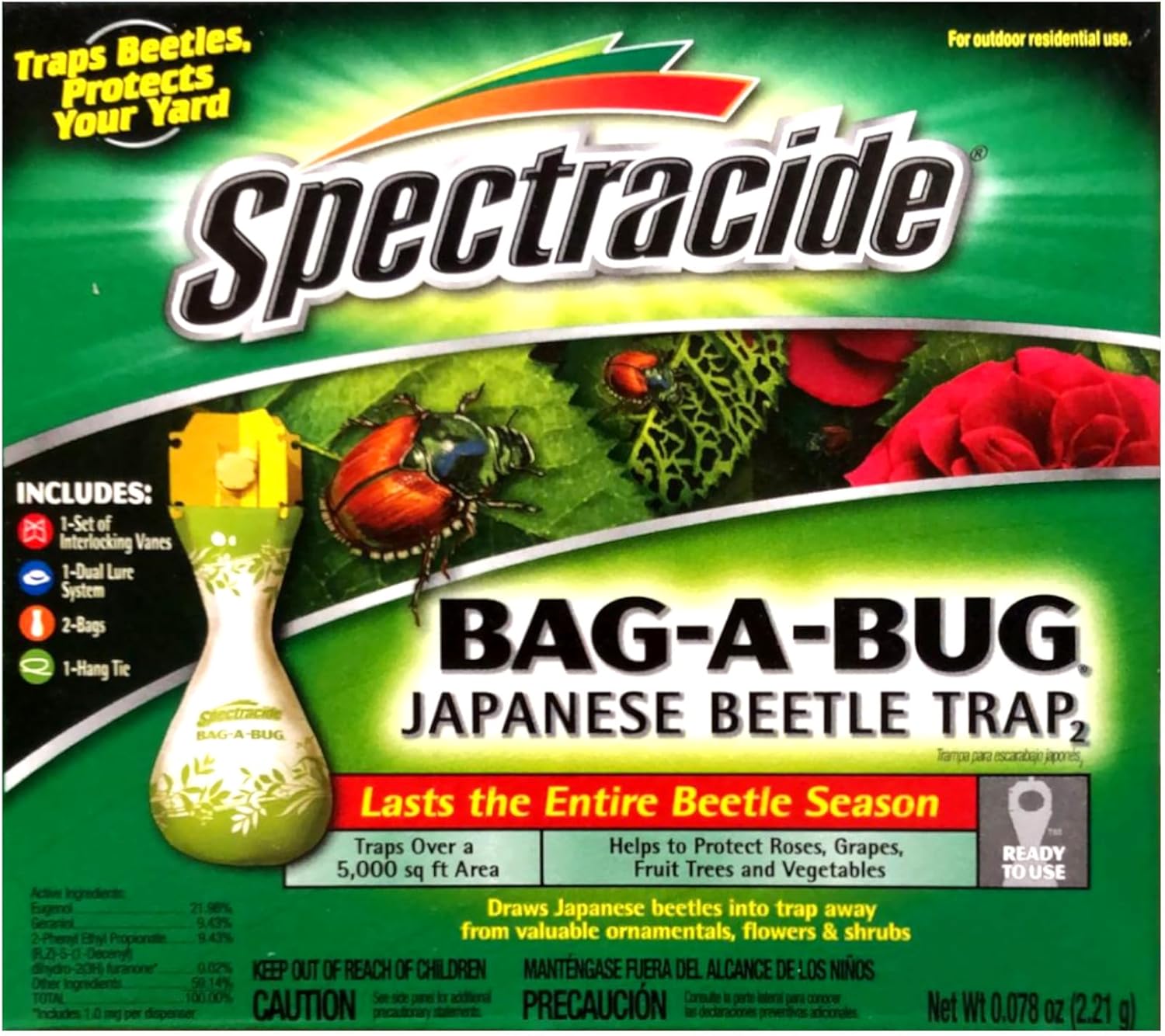
Spectracide Bag-A-Bug Japanese Beetle Trap, 3-Pack
| Brand Name | Spectracide |
|---|---|
| Unit Count | 3 Count |
| Target Species | Beetle |
| Power Source | manual |
The Spectracide Bag-A-Bug Japanese Beetle Trap is a simple hanging trap that uses a beetle sex attractant combined with a floral lure to draw adult Japanese beetles away from plants. You assemble and hang the plastic trap in the garden or near susceptible trees and shrubs, and captured beetles collect in the detachable bag for disposal. The lure is the notable feature here because the manufacturer claims it attracts several times more beetles than floral-only lures, which makes these traps an effective nonchemical option for reducing local populations. Practical benefits include straightforward setup, a compact form that takes little space, and the convenience of a three-pack so you can position multiple traps around a yard. Important limitations are that traps work best when placed away from plants you want to protect so they do not inadvertently draw beetles toward them, and they target adult beetles only so they do not control grubs in the soil. Expect ongoing maintenance to check and empty bags and to replace lures as their effectiveness wanes.
Best for: Gardeners who want a low-effort, nonchemical way to reduce adult Japanese beetle pressure across a yard and prefer using multiple traps for balanced coverage.
Less Ideal for: People looking for soil grub control or a one-time cure for heavy infestations should consider complementary strategies rather than relying on these traps alone.
- Includes three traps for multi‑point coverage around a yard
- Uses a beetle sex attractant plus floral lure to increase capture rates
- Simple hanging design that is quick to assemble and deploy
- Nonchemical method that reduces reliance on sprays
- Only captures adult beetles and does not address larvae or grubs
- Can attract beetles if placed too close to plants you want to protect
Verdict: A practical three-pack of scent-lured hanging traps for gardeners who want an easy nonchemical way to cut adult Japanese beetle numbers across a landscape.
Catchmaster Japanese Beetle Trap Bags, 6-Pack with Dual Lure

| Unit Count | 6 Count |
|---|---|
| Material Type | Cardboard/Paperboard, Adhesive Glue |
| Recommended Uses For Product | Beetle Traps |
This Catchmaster kit is built for people who want a high‑performance way to reduce Japanese beetle pressure around ornamentals and fruiting plants. Each trap assembles in a few simple steps and uses a dual lure combining a sex attractant and a floral/food lure, which the manufacturer says draws notably more beetles than single-lure traps. The hourglass disposable bags and adhesive bait strip make it straightforward to deploy and replace traps across the yard, and the lid design keeps rain out so trapped beetles do not soak the collection bag. Placement guidance — hang 3 to 5 feet high and 10 to 30 feet from plants — makes it easy to use the traps as part of an integrated approach. Limitations to expect are that traps concentrate beetles and can attract them toward your property if placed too close to plants, and you will need to check and replace bags through the season. For gardeners focused on catching large numbers of beetles and protecting several hundred to several thousand square feet, these ready-to-hang traps deliver measurable, low-effort performance.
Best for: Gardeners and small‑acre property owners who prioritize maximizing beetle capture and reducing plant damage with a low‑effort, ready‑to‑deploy trapping system.
Less Ideal for: People who want a hands‑off, permanent solution with no ongoing maintenance or those who prefer non‑attractant control methods that do not draw beetles into the yard.
- Dual-lure system attracts both male and female beetles for higher catch rates
- Ready-to-use design with adhesive bait strip and disposable hourglass bags for easy setup
- Rain-resistant lid helps keep collection bags dry and effective
- Each kit includes six traps to cover larger areas or multiple planting zones
- Requires periodic bag replacement and lure refresh during the season
- If placed too close to plants, traps can draw beetles toward protected areas
Verdict: Choose these ready-to-hang dual-lure traps when you want a high-catch, easy-to-deploy way to protect gardens from Japanese beetles.
Spectracide Bag-A-Bug Japanese Beetle Trap Bundle with 2 Replacement Refills

| Lure duration | Up to 12 weeks |
|---|---|
| Coverage | Up to 5,000 sq ft |
| Included | Dual lure, interlocking vanes, 2 bags, hang tie |
The Spectracide Bag-A-Bug bundle is a complete, easy-to-use trap kit that draws Japanese beetles away from ornamentals and edible plants with a dual lure of pheromone plus floral attractant. Typical use is to hang the trap 30 feet downwind of vulnerable shrubs, roses or fruit trees, then replace the disposable bag and lure as needed; the lure lasts up to 12 weeks. The kit includes interlocking vanes, disposable bags and a hang tie so you can deploy it right away and simply seal and dispose of full bags. The dual-lure formulation and advertised coverage up to 5,000 sq ft make it a practical option for backyard gardeners who want a non-chemical method to reduce beetle pressure across multiple plants. Limitations are that it is a lure-based trap so placement matters for effectiveness and it may attract beetles into a yard if placed too close to prized plants, so following the downwind placement guidance is important.
Best for: Gardeners who want a straightforward, low-maintenance way to reduce Japanese beetle damage across a backyard and prefer a bait-and-trap approach over spot spraying or manual removal.
Less Ideal for: People with very small planting areas where there is no suitable downwind location or those who need immediate elimination of beetles on individual plants rather than area-level reduction.
- Dual lure combines natural pheromones and floral attractant to increase beetle capture
- Lure lasts up to 12 weeks, reducing how often you need to replace it during the season
- Includes disposable bags, vanes, and hang tie so the trap is ready to use out of the box
- Disposable bag design makes cleanup simple by sealing and throwing away collected insects
- Effectiveness depends on correct placement and wind direction
- May draw beetles toward the property if not sited 30 feet downwind of plants
Verdict: A ready-to-use, dual-lure trap that delivers season-long beetle control for backyard gardeners who prioritize low-maintenance, area-level protection.
Safer Brand Japanese Beetle Trap with Lure and Jumbo Bags

| Included components | 1 trap, 1 lure, 2 bags |
|---|---|
| Target Species | Insects |
| Material Type | Plastic |
| Recommended Uses For Product | Outdoor Japanese beetle control |
The Safer Brand Japanese Beetle Trap is a simple, no-frills solution for reducing Japanese beetle pressure around gardens and plantings. The trap hangs from a collapsible galvanized stand (sold separately) and uses a time-released dual-action lure to draw beetles into a disposable jumbo bag where they are contained. Typical use is to place traps at least 10 feet upwind of vulnerable plants and space roughly one per 50 linear feet of perimeter, replacing bags when full. Notable features are the controlled-release lure that extends effective life and the larger collection bags that reduce how often you need to swap them. Practical benefits include lowering local beetle numbers without spraying chemicals and reusing the trap across seasons with replacement bags and bait. Limitations are that traps must be sited carefully to avoid drawing beetles toward plantings and that the stand is not included, so you may need to buy or improvise a hanger; the unit itself is basic plastic and offers no electronic or weatherproofing features.
Best for: Buyers who want a low-cost, chemical-free way to reduce Japanese beetles around flower beds and shrubs and who are willing to place and maintain traps according to placement guidance.
Less Ideal for: Gardeners who need immediate, complete eradication or who cannot keep traps at least 10 feet from plantings should consider other control methods.
- Uses a dual-action food and sex attractant for stronger lure effect
- Controlled-release lure extends time between replacements
- Includes two jumbo disposable bags to reduce maintenance frequency
- Reusable trap body with available replacement baits and bags
- Galvanized hanging stand is sold separately so additional purchase may be needed
- Basic plastic construction offers limited weather protection and longevity
Verdict: An inexpensive, reusable trap that uses a time-released dual attractant and jumbo bags to cut Japanese beetle numbers without chemical sprays.
RESCUE! Japanese Beetle Trap – Reusable 3-Pack

| Product type | Japanese beetle trap |
|---|---|
| Pack quantity | 3 traps |
| Attractant | Included seasonal cartridge |
| Made in | USA |
The RESCUE! Japanese Beetle Trap is a simple, purpose-built solution for reducing populations of Japanese and Oriental beetles around gardens and ornamental plantings. It uses a pheromone attractant cartridge and large green funnel panels to draw beetles in and stun them on impact so they fall into an attached collection bag that can be emptied through an easy-lock bottom. Typical use is hanging the traps at least 30 feet from vulnerable plants to lure beetles away, then replacing or reusing the traps and the seasonal cartridge as needed. Notable features include the reusable bag, a single-season attractant cartridge, and clear instructions for placement. Practical benefits are straightforward setup, low maintenance during the season, and the ability to remove large numbers of pests without sprays. Limitations are that the attractant draws beetles from a distance so placement matters to avoid pulling pests toward sensitive plants, and the cartridge must be replaced each season for continued effectiveness.
Best for: Gardeners who want a low-maintenance, proven trapping method to reliably reduce beetle pressure without routine spraying and who value a reusable, season-long solution.
Less Ideal for: People who need immediate complete eradication or who cannot place traps at recommended distances from sensitive plants should consider alternative integrated pest strategies.
- Pheromone attractant effective for both Japanese and Oriental beetles
- Reusable bag with easy-lock bottom for simple emptying and repeat use
- Includes an attractant cartridge that lasts an entire season
- Straightforward hanging setup that requires minimal maintenance
- Attractant can draw beetles from surrounding areas so traps must be sited carefully
Verdict: Choose this reusable, pheromone-based trap when you want a reliable, low-maintenance way to cut Japanese beetle numbers across a growing season.
Spectracide Bag-A-Bug Japanese Beetle Trap, 2 Count

| Unit Count | 2 Count |
|---|---|
| Target Species | Beetle |
| Power Source | manual |
The Spectracide Bag-A-Bug Japanese Beetle Trap is a simple, manual hanging trap kit that uses a dual lure to attract and capture Japanese beetles. It is intended to be hung near affected plants or around the perimeter of a yard and includes interlocking vanes, a dual lure system, two collection bags, and a hang tie. The dual lure combines pheromones and a floral attractant to increase capture rates compared with single floral lures, and the kit claims coverage for up to about a 5,000 sq ft area. Practical benefits are easy setup, disposable bags for straightforward cleanup, and a lure designed to draw beetles away from ornamentals and shrubs. Limitations to expect are that traps can also draw beetles into the area if placed too close to prized plants so placement matters, the stand is sold separately if you do not want to hang the trap, and lures need periodic replacement to remain effective. For gardeners who want a low-effort, lure-based way to reduce beetle pressure, this is a usable option; it is less suitable as a standalone solution for severe infestations without additional control measures.
Best for: Gardeners who want a low-effort, evidence-backed way to reduce Japanese beetle pressure using a proven lure system and value peer-tested solutions.
Less Ideal for: People facing very heavy infestations who need immediate knockdown should consider integrated measures rather than relying solely on lure traps.
- Dual lure combines pheromone and floral attractant to increase beetle captures
- Includes interlocking vanes and two disposable collection bags for easy setup and cleanup
- Claims coverage for a large area suitable for yard perimeter protection
- Simple manual operation with no power source required
- May attract beetles toward the trap if poorly placed near vulnerable plants
- Hanging stand is not included and must be purchased separately if needed
Verdict: A practical, easy-to-use dual-lure trap for gardeners who want a low-effort, lure-based method to reduce Japanese beetle damage.
RESCUE! Japanese Beetle Trap, Reusable Bag, 2 Pack

| Unit Count | 2 Count |
|---|---|
| Target Species | Beetle, Fly |
| Power Source | manual |
| Material Type | Plastic |
The RESCUE! Japanese Beetle Trap is a simple, manually operated trap that uses a pheromone lure and large green panels to attract and capture Japanese and oriental beetles. You hang the trap 30 feet away from vulnerable plants, insert the included attractant cartridge, and beetles fly into the panels, are stunned, and fall into the attached collection bag. The bag has an easy-lock bottom so you can empty beetles into soapy water and reseal the trap for reuse, and the cartridge lasts an entire season. Practical benefits include straightforward setup, no electricity or complex maintenance, and the reusable bag that reduces waste compared with single-use traps. Important limitations are that the trap attracts both beetles and some flies, so placement is critical to avoid drawing pests toward prized plants, and it depends on correctly spacing traps in the landscape to be effective. The plastic construction is lightweight and portable but may be less durable over many seasons if exposed to harsh weather without occasional care.
Best for: Gardeners who want a low-effort, proven way to reduce Japanese beetle pressure and prefer a reusable, easy-to-operate solution over chemical treatments.
Less Ideal for: Those who need immediate broad-spectrum pest control or who cannot place traps at the recommended distance from plants should consider other methods.
- Reusable bag with easy-lock bottom allows simple emptying and resealing
- Season-long attractant cartridge included so one lure lasts a full season
- Manual, no-power design is easy to install and requires minimal maintenance
- Large panels effectively guide beetles into the collection bag
- Attracts non-target flies as well as beetles, requiring careful placement
- Plastic parts may wear faster if left outdoors year-round without protection
Verdict: Choose this trap if you want a low-maintenance, reusable pheromone trap that lures Japanese beetles away from plants for a full season.
Choosing the Right Japanese Beetle Trap: Key Factors to Consider
Attractant Strength and Duration
How strongly a lure draws adult Japanese beetles and how long it remains active determines how well a single trap protects a planting. Strong attractants pull beetles from a wider radius, which can be helpful in larger yards but can concentrate insects if traps are placed too close to prized plants. Longevity matters because frequent re-luring increases cost and handling; many gardeners prefer lures that remain effective for several weeks to a month during peak flight.
Consider seasonality as well. Peak beetle activity lasts a limited window, so a lure that releases consistently during that period is more useful than one with a high initial spike and rapid fade. Short-lived lures may be okay for short infestations or small areas where traps can be checked and refilled often.
Bycatch Control and Selectivity
Traps differ in how they separate target beetles from bees and other beneficial insects. Designs that use downward funnels, adjustable entry points, or mesh sizes that favor the larger-bodied Japanese beetle can reduce accidental captures. This factor is vital if you keep flowering plants or have active pollinators nearby; a trap that removes many bees can cause more harm than the beetles themselves.
Placement strategy ties into selectivity. Placing traps away from bloom-rich areas and near margins or lawn edges reduces risk to pollinators. Choose a trap with features that limit nontarget entry if you cannot position it far from flowering beds.
Trap Design and Installation
How a trap mounts and sits in the landscape affects durability and convenience. Stakes, hanging options, and free-standing designs each have pros and cons. A stake-mounted trap is steady in wind and easy to position at a consistent height. Hanging traps can be moved out of the way and placed in shrubs. Ease of installation also matters if you need multiple traps across a property; quick, tool-free setups save time.
Consider stability against wind and animals. Secure attachment prevents spills and reduces the chance that a trap is knocked over into plants, which can spread attracted beetles into the very beds you want to protect.
Capacity and Maintenance
Trap capacity determines how often you must empty or replace collection containers during heavy infestations. Larger-capacity traps reduce maintenance but can be bulkier and more visible in the landscape. Easy-access collection chambers, simple latch systems, and clear fill-level indicators make routine maintenance faster and cleaner.
Also evaluate how easy it is to handle bait replacement and cleaning. Removable liners or buckets that detach without spilling are preferable. The less fiddly the maintenance, the more likely you will keep traps operating through the entire beetle flight period.
Weather Resistance and Materials
Exposure to sun, rain, and wind affects both lures and physical trap components. UV-stabilized plastics and rust-resistant hardware last longer without warping or corroding. Lures that are packaged to resist rain and heat maintain predictable release rates; poorly protected lures can break down faster in hot, humid conditions.
Consider color and finish as well. Bright colors may attract or repel various insects and will fade over time. Choose traps built for outdoor use that keep their shape and function through the season to avoid frequent replacement.
Where to Place Traps for Best Effect
Trap location matters more than trap style in many home gardens. Place traps at the outer edges of lawns or along borders between turf and beds to lure beetles away from flowers and vegetables rather than toward them. Height matters too; mounting traps at about head height or just above the canopy of the plants you are protecting tends to intercept flying adults moving into beds.
Avoid hanging traps directly over bloom patches or fruiting plants. If you cannot site traps away from flowers, choose a trap with strong bycatch controls and check it frequently. Orientation relative to prevailing winds can also influence how scent plumes travel, so experiment with positions early in the season.
- Place traps 30 to 50 feet from high-value plantings when possible.
- Mount traps above the canopy to intercept flying adults.
- Move traps slightly if captures are low after a few days.
Using Traps with Cultural Controls
Traps work best when combined with cultural practices. Hand-picking adults in the morning when they are sluggish and dropping them into soapy water reduces numbers without relying solely on traps. Maintaining healthy, vigorous plants through proper fertilization and watering can reduce insect impact, since stressed plants often suffer more from feeding.
Monitor for grub presence as well. Adult beetle traps reduce adult populations but do not directly control soil-dwelling larvae. Rotate practices like aeration, targeted biological controls, and maintaining a diverse garden habitat to address both life stages.
- Inspect foliage regularly and remove heavily damaged leaves.
- Combine trapping with manual removal during peak flight.
- Check soil for grubs if adult pressure persists year to year.
Safety and Nonchemical Alternatives
Many gardeners prefer traps as a nonchemical tool to reduce beetle numbers without spraying insecticides. When using traps, follow safe handling practices: wear gloves when emptying collection containers and avoid placing traps where pets or children can reach them easily. Clean traps with mild detergent between uses to remove residual attractants.
If you want to reduce beetle pressure further, consider companion planting or barrier plants that deter feeding. These methods do not replace traps but can reduce localized damage and lower the number of traps needed.
- Empty traps away from planted beds and dispose of captured beetles responsibly.
- Store unused lures in a sealed container to preserve potency.
- Use physical barriers like netting on small high-value plants during peak flight.
Timing Your Trapping Strategy
Japanese beetles have a concentrated adult flight period that varies regionally. Begin monitoring earlier than you expect the peak and deploy traps as soon as adults appear. Early deployment can intercept the first wave and reduce the buildup of beetle populations in a yard.
Check traps frequently during peak weeks to prevent overflow and to gauge whether you need to change trap placement or increase the number of units in use.
- Start monitoring in late spring to early summer depending on local climate.
- Replace or refresh lures according to manufacturer guidance or when captures drop.
- Remove traps at the end of the flight period to avoid attracting beetles in off-season.
How We Chose the Best Japanese Beetle Trap
We focused on attributes that directly affect effectiveness and garden safety. Key evaluation criteria included attractant reach and consistency to estimate how many adult beetles a trap can draw in at typical home-garden distances; trap design and bycatch reduction to judge how well the trap minimizes captures of pollinators and beneficial insects; installation flexibility for placing traps in beds, borders, or containers; weather durability and longevity so a trap remains effective through heat and rain; ease of emptying and maintenance to reduce labor and accidental releases; and overall material quality to assess whether a trap gives reliable service season after season. We excluded homemade lure blends and traps not intended for residential outdoor use. Devices that rely only on visual cues without an attractant were not considered unless paired with a long-lasting lure. We prioritized real-world practicality over industrial-scale solutions, focusing on traps suited to yards, patios, and small acreage. The selected products met multiple criteria above and offered distinct tradeoffs between attraction strength and nontarget protection.
FAQ
Do traps attract more beetles to my yard?
Traps do attract beetles from surrounding areas, but properly sited traps placed away from flower beds and fruit trees tend to draw insects out of the garden rather than toward valued plants. Placement and the number of traps used determine whether you see net reduction or localized increases.
How many traps do I need for a typical home garden?
It depends on garden size and infestation level. Small yards often need one or two traps placed at opposite edges. Larger properties may require several traps spaced around the perimeter. Monitor captures and adjust numbers if beetle pressure remains high.
Will traps catch bees and other pollinators?
Some trap designs are more selective than others. Traps with smaller entry points, funnels, or bycatch guards reduce accidental captures. Regardless of design, avoid placing traps near blooming plants to minimize impacts on pollinators.
Can I use traps with organic gardening practices?
Yes. Traps are a nonchemical option compatible with organic gardens. They reduce adult beetle numbers without applying pesticides to plants. Combine traps with cultural and biological controls for a more integrated approach.
When should I take traps down for the season?
Remove traps after adult flight ends and captures cease, typically later in summer or early fall depending on your region. Leaving traps out too long can attract late-season beetles or other insects that are not present during peak flight.
Final Verdict
Choose a trap based on how large an area you need to protect and how important bycatch reduction is for your garden. If pollinator protection is a priority, favor designs with bycatch controls and site them away from blooms. For larger yards, prioritize attractant range and capacity so fewer traps can cover more ground. Balancing lure strength, placement, and maintenance effort gives the most consistent results. Use traps as one part of an integrated strategy that includes monitoring and cultural controls to keep beetle populations manageable without harming beneficial insects.
