

Note: This article contains affiliate links. If you click on these links and make a purchase, I may earn a small commission at no extra cost to you. This helps support my research and content. Read my full affiliate disclosure here.
A good Japanese hand saw changes how you work with wood. Unlike Western saws that cut on the push stroke, these saws cut on the pull stroke, which gives you thinner, more controlled cuts and less tear-out on delicate joinery. Whether you need a saw for fine indoor carpentry, trim work, or trimming branches and small timbers around the yard, choosing the right Japanese hand saw affects cut quality, tool control, and how long the blade stays sharp. This guide walks through the top shortlisted options for Best Japanese Hand Saw, highlighting strengths and tradeoffs. We evaluated each saw on cutting accuracy, blade longevity, handle ergonomics, and suitability for typical shop and garden tasks. Read on to find the saw style that matches the types of cuts and materials you work with.
Top Picks at a Glance
| Best Quality Built to a higher standard if you want something more solid | SUIZAN Ryoba 9.5" Japanese Double-Edge Pull Saw |  |
| Best Value The sweet spot between price and what you get | WFOEJEJ 6-inch Japanese Pull Saw with SK5 Double-Edge Blade |  |
| Best Budget The cheapest option that still gets the job done reliably | NVKLBEA 6" Ryoba Japanese Pull Saw with Double-Edge SK5 Blade and Beechwood Handle |  |
| Highest Rated A top-rated pick with lots of positive feedback | Magicbox 4‑Piece Japanese Hand Saw Set, SK5 Steel Pull Saws |  |
| Most Popular A crowd favorite that many people choose with confidence | RUITOOL 6" Ryoba Japanese Hand Saw (Double-Edge Pull Saw) |  |
| Best Seller A high-volume bestseller chosen again and again | SUIZAN Ryoba 7" Double-Edge Japanese Pull Saw |  |
SUIZAN Ryoba 9.5" Japanese Double-Edge Pull Saw

| Blade Material | Japanese Steel |
|---|---|
| Blade Length | 9.5 inches |
| Number of Teeth | 15 |
| Power Source | Hand Powered |
| Surface Recommendation | Wood |
The SUIZAN Ryoba 9.5" is a double-edge Japanese pull saw designed for accurate rip and crosscuts in both hardwoods and softwoods. It is used by pulling the blade toward you, which keeps the thin 0.02" blade tracking straight and requires less force than push saws. Notable features include two tooth patterns (9 TPI rip and 15 TPI crosscut), a razor-sharp Japanese steel blade, and a hand-wrapped wooden handle for a traditional grip. The replaceable blade held by a single screw and included blade guard make maintenance straightforward for regular use. In practice the narrow kerf and fine teeth deliver clean surfaces useful for joinery, trim, tenons, and dovetails, and the saw suits prolonged hand work thanks to the low cutting resistance. Limitations are that the thin blade is more delicate than Western push saws and can be less efficient on very coarse demolition tasks, and occasional care is needed to avoid bending or damaging the edge during heavy use.
Best for: Skilled woodworkers and serious hobbyists who prioritize cutting accuracy and finish quality for joinery, trim, and furniture work and who prefer a traditional pull-saw technique.
Less Ideal for: Casual users who need a heavy-duty demolition saw or landscapers who cut large, fibrous green wood frequently.
- Double-edge design gives dedicated rip and crosscut teeth in one tool
- 0.02" thin blade and fine teeth produce a narrow kerf and smooth, accurate cuts
- High-quality Japanese steel and artisan-made teeth hold a sharp edge for precise work
- Replaceable blade and simple single-screw attachment simplify maintenance and longevity
- Thin blade is more fragile than thicker Western saws and can bend or chip if misused
- Not intended for heavy demolition or cutting large green timber
Verdict: Choose the SUIZAN Ryoba if you want a precision, pro-quality Japanese pull saw that delivers clean rip and crosscuts with a narrow kerf.
WFOEJEJ 6-inch Japanese Pull Saw with SK5 Double-Edge Blade

| Power Source | Hand Powered |
|---|---|
| Number of Teeth | 168 |
| Blade Material | Sk5, steel |
| Blade Length | 6 inches |
| Other Special Features of the Product | Double Edge, Flexible Blade, Flush Cut, Soft Grip Handle, Non-Slip |
This 6-inch Japanese pull saw is built for precision woodworking and small-scale carpentry tasks. It has a double-edge SK5 steel blade: a 14 TPI side for faster material removal and a 17 TPI side for finer, smoother cuts, so you can switch between rough and finish work without changing tools. The thin, flexible blade makes flush trimming of dowels, tenons, and pegs straightforward, and the pull-stroke design keeps the blade under tension for predictable, controllable cutting. The soft, non-slip plastic handle improves grip and reduces hand fatigue during repetitive use. Because the blade is compact and lightweight, the saw excels in tight spaces and on furniture repair or craft projects where larger saws are awkward. Important limitations are its short 6-inch blade and pull-stroke operation, which make it unsuitable for long rip cuts or heavy demolition; users expecting power cutting or long crosscuts will need a larger saw. For routine joinery, trimming, and detailed DIY, this saw offers a practical, versatile option.
Best for: Buyers who prioritize precise, efficient results on small woodworking tasks and furniture repair and want a single compact saw that covers rough and finish cuts.
Less Ideal for: Woodworkers who need long rip cuts, heavy-duty demolition, or sustained power cutting should choose a larger or specialty saw instead.
- Double-edge SK5 blade offers two TPI choices for both faster and finer cuts
- Flexible thin blade enables close flush trimming of dowels and tenons
- Pull-stroke design improves control by keeping the blade under tension
- Soft, non-slip handle increases comfort during repetitive or detailed work
- 6-inch blade limits use to short cuts and small workpieces
- Plastic handle and lightweight construction may feel less robust for heavy-duty use
Verdict: A compact, dual‑TPI Japanese pull saw that's ideal for precise trimming and detailed small woodworking jobs.
NVKLBEA 6" Ryoba Japanese Pull Saw with Double-Edge SK5 Blade and Beechwood Handle

| Blade Length | 6 inches |
|---|---|
| Blade Material | Chrome Vanadium Steel |
| Other Special Features of the Product | Double Edge |
| Handle Material | Wood |
This NVKLBEA ryoba Japanese hand saw is a compact pull-stroke saw built for precise joinery and small to medium woodworking tasks. It has a 6-inch double-edge blade with fine crosscut teeth on one side and coarser rip teeth on the other, so you can switch between clean crosscuts and faster rip cuts without changing tools. The blade is described as SK5/manganese steel with induction hardening and three-sided ground teeth, which should hold an edge longer and remove chips efficiently for smoother cuts. The thin kerf and pull action reduce effort and give good control for flush trimming, dovetails, and trim work. A solid beechwood handle is shaped for comfort and two-handed control, helping reduce hand fatigue during longer sessions. Limitations are its short 6-inch blade, which is best for smaller pieces and not suited to ripping large boards quickly, and the wooden handle may require occasional care to keep it in good condition. For budget shoppers this saw delivers core ryoba functionality and decent blade quality for basic to intermediate woodworking needs.
Best for: A cost-conscious woodworker or DIYer who needs a capable, compact ryoba for trim, joinery, and small shop tasks and prefers a single versatile saw over multiple specialty blades.
Less Ideal for: Users who routinely cut long boards or large dimension lumber or who need a nonwood, high-grip handle for heavy-duty outdoor use should look at larger or specialized saws.
- Double-edge ryoba blade covers both rip and crosscut needs without changing tools
- SK5/manganese steel blade with induction hardening for longer edge retention
- Thin kerf and pull-stroke design reduce effort and improve cut precision
- Solid beechwood handle shaped for comfort and control during detailed work
- Short 6-inch blade limits capacity for long cuts and large stock
- Wood handle requires care and may not be as grippy when wet
Verdict: A budget-friendly ryoba pull saw that gives both rip and crosscut capability in a compact, easy-to-control package.
Magicbox 4‑Piece Japanese Hand Saw Set, SK5 Steel Pull Saws

| Blade Material | Carbon Steel |
|---|---|
| Power Source | hand powered |
| Other Special Features of the Product | Ergonomic Handle |
| Surface Recommendation | Wood |
| Included Components | Case |
This Magicbox set supplies four Japanese-style pull saws that cover most small to medium woodworking tasks. The kit includes large and compact double-edge pull saws for rip and crosscuts, a flush-cut saw for trimming dowels and joints, and a pointed fine saw for tight spaces. SK5 spring steel blades are heat-treated and have fine triple-ground teeth to deliver clean cuts with reduced tear-out, and the included blade guards make storage safer. Wooden ergonomic handles give a comfortable grip for controlled strokes and longer sessions. The set is lightweight and portable, so it works well for hobbyists, trim carpenters, and furniture makers who need reliable hand tools on the bench or at a job site. Limitations are that the blades are hand tools only so they require proper technique for fast work on large stock, and the wooden handles and carbon steel blades will need occasional care to prevent moisture-related wear. Overall this is a dependable, versatile hand saw set that emphasizes clean cutting and practical storage for everyday woodworking use.
Best for: Buyers who prioritize reliable, precise hand tools for furniture making, trim work, and detailed woodworking and who prefer a complete set that covers multiple cutting needs.
Less Ideal for: Users who need high-speed production cutting of large lumber or who prefer low-maintenance synthetic handles and stainless blades should consider other options.
- Includes four complementary saw types (large and compact double-edge, flush cut, and pointed fine saw) for a wide range of cuts
- SK5 spring steel, heat-treated blades with fine triple-ground teeth for cleaner cuts and durability
- Ergonomic non-slip wooden handles for comfortable control during extended use
- Protective blade covers included for safer storage and transport
- Requires basic pull-saw technique and more time than power tools for large or repetitive cuts
- Wood handles and carbon steel blades need occasional maintenance to avoid rust and wear
Verdict: A versatile, dependable four-piece Japanese saw set that delivers clean, controlled cuts for furniture, trim, and detailed woodworking.
RUITOOL 6" Ryoba Japanese Hand Saw (Double-Edge Pull Saw)

| Blade Material | SK5 steel |
|---|---|
| Blade Length | 6 inches |
| TPI | 14 & 17 |
| Handle Material | Beechwood |
| Blade Thickness | 0.67mm |
This RUITOOL 6" Ryoba pull saw is a small, purpose-built Japanese hand saw for accurate finish and flush cuts. It has a thin, flexible SK5 high-carbon steel blade that cuts on the pull stroke and two tooth patterns on opposite edges—17 TPI for harder woods and 14 TPI for softer material—so you can switch between finer and slightly faster cuts without changing tools. The beechwood handle is comfortable and compact, making the saw easy to control for joinery, trim work, and detailed woodworking. The blade is hardened and uses three-edge tooth geometry to stay sharp and remove chips efficiently, which helps speed cutting and leaves a smoother surface. Because the blade is ultra-thin, it excels at precise, narrow kerfs and flush cuts but is not meant for heavy demolition or large ripping tasks. If you rely on a small, nimble saw for finishing, trimming, or working in tight spaces this offers excellent value; users who need longer reach or heavy stock removal will want a larger saw instead.
Best for: Buyers who prioritize reliable real-world performance and want a small, accurate pull saw for trim, joinery, and finish woodworking where clean cuts and controllability matter.
Less Ideal for: Contractors or woodworkers who need long-reach cutting, rapid removal of large amounts of stock, or a saw for demolition work should consider larger or coarser saw types.
- Double-edged blade (14 and 17 TPI) covers both softwood and hardwood cutting needs
- SK5 high-carbon steel blade is thin and flexible for precise, low-kerf cuts
- Hardened three-edge teeth improve sharpness and chip removal for smoother cuts
- Compact beechwood handle offers good control for flush and finish work
- 6" blade length limits reach and makes it slower on large or thick stock
- Ultra-thin blade is not suitable for heavy-duty ripping or demolition
Verdict: Choose this compact Ryoba pull saw if you want a precise, flexible 6-inch blade that delivers clean finish and flush cuts for detail woodworking.
SUIZAN Ryoba 7" Double-Edge Japanese Pull Saw
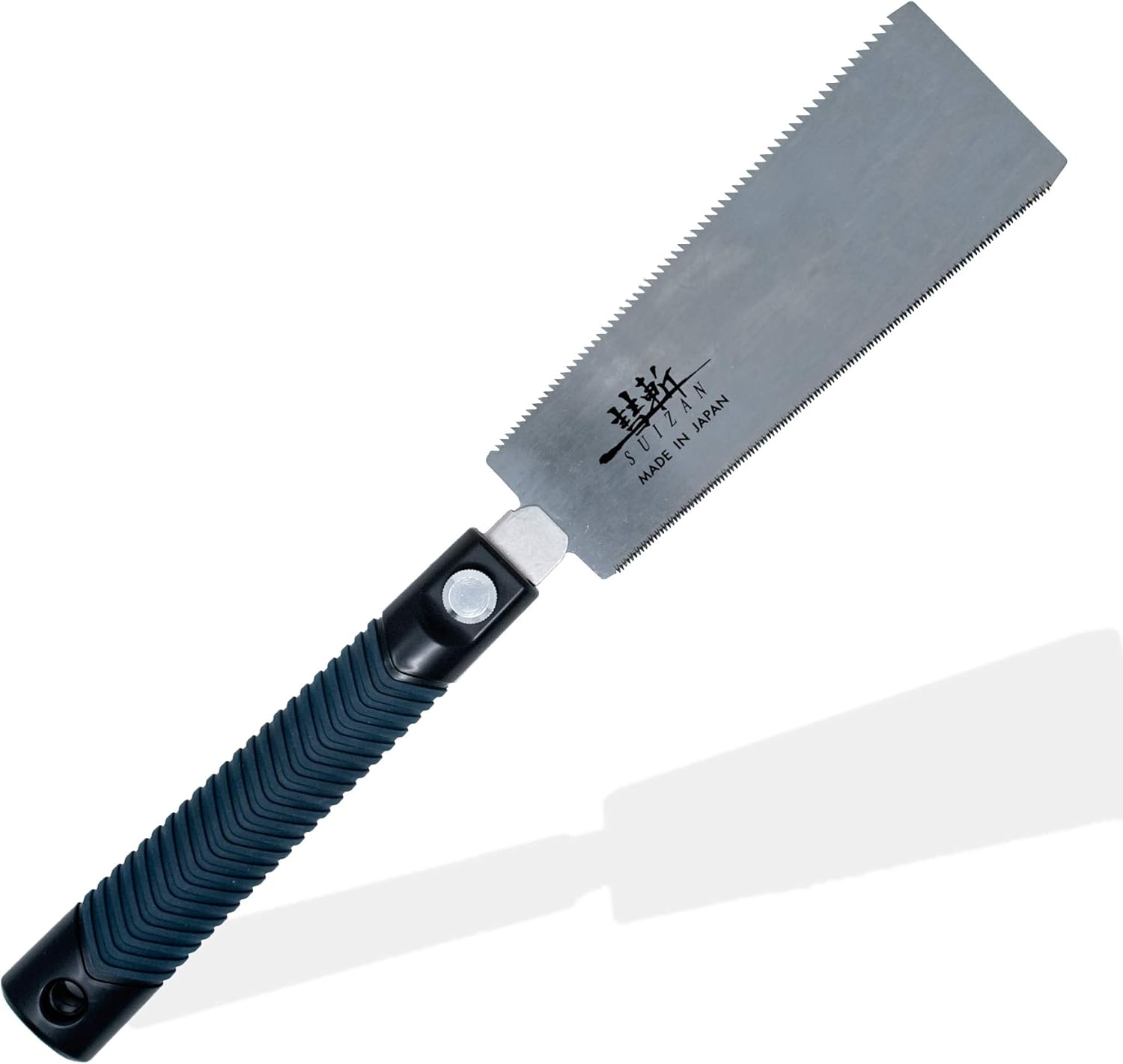
| Blade Length | 7 inches |
|---|---|
| Blade Thickness | 0.02" (0.5mm) |
| Kerf Width | 0.03" (0.8mm) |
| TPI | Rip 7-11 / Crosscut 19 |
| Blade Material | Japanese Steel |
The SUIZAN 7" Ryoba is a double-edge Japanese pull saw designed for accurate, low-effort cuts in joinery, trim, and small woodworking tasks. It has a very thin 0.02" blade and dual tooth sets: rip teeth for cutting with the grain and fine 19-TPI crosscut teeth for clean cross-grain cuts. The pull-stroke design and narrow 0.03" kerf reduce resistance and produce smooth, precise faces that need minimal sanding, which is useful when working on molding, small furniture, or detailed joinery. The elastomer handle gives a secure, non-slip grip and the blade is replaceable without special tools, so you can maintain sharpness over time. Because the blade is thin it excels at fine work but is less suited for heavy demolition or cutting very thick hardwood quickly. Users unfamiliar with pull-saw technique will need a short learning curve to get the best results. For everyday woodworkers and hobbyists who value accuracy and a clean finish, this saw is a durable, easy-to-control choice made in Japan.
Best for: Buyers who prioritize precise, clean cuts for trim, joinery, and small woodworking projects and prefer a reliable, low-effort saw they can maintain over time.
Less Ideal for: People needing a saw for heavy demolition, fast stock removal, or frequent cutting of very large or dense timbers should choose a coarser, heavier-duty saw instead.
- Double-edge design for both rip and fine crosscutting in one tool
- Very thin 0.02" blade and narrow kerf for clean, precise cuts and minimal waste
- Razor-sharp Japanese steel blade made in Japan for long-lasting edge and smooth cutting
- Replaceable blade with tool-free removal and a non-slip elastomer handle for secure control
- Thin blade is not intended for heavy-duty or high-force cutting of large timbers
- Requires learning the pull-stroke technique to achieve best accuracy
Verdict: Choose this saw when you want a compact, made-in-Japan Ryoba that delivers clean, low-effort rip and crosscuts for precise woodworking.
Choosing the Right Japanese Hand Saw: Key Factors to Consider
Tooth Geometry and Cut Type
Tooth pattern determines whether a Japanese hand saw excels at crosscutting, ripping, or fine joinery. Rip teeth are shaped to remove material along the grain quickly, while crosscut teeth slice fibers cleanly across the grain. Some saws use hybrid or ultra-fine teeth for dovetails and trim work. Choosing the right tooth geometry minimizes tear-out and reduces the effort needed to finish a surface.
Think about the cuts you make most often. For pruning or rough yard work, a coarser tooth will cut faster and resist clogging with sap. For furniture and trim, finer teeth and a higher TPI produce smoother faces and require less sanding.
Blade Steel and Heat Treatment
Blade material and how it is heat-treated affect edge retention, toughness, and resistance to chipping. Higher-carbon steels that are properly hardened hold an edge longer but can be more brittle if the blade is very thin. Blades intended for mixed indoor and outdoor use should balance hardness with sufficient flexibility to survive knocks when used around the yard.
Also consider corrosion resistance if you will use the saw outdoors. Some blades receive surface treatments or finishes that slow rusting, which prolongs life and reduces maintenance time.
Blade Thickness and Kerf
Japanese saws are known for their thin blades and narrow kerfs, which produce accurate cuts with minimal waste. Thinner blades require less force when pulling and give better line control for fine joinery. However, extremely thin blades can flex or bind in deep cuts, and they are more vulnerable to damage when used on nails, knotty wood, or twisted cuts in the garden.
Match blade thickness to the depth and roughness of your typical cuts. For long, deep rip cuts you may prefer a slightly stiffer blade; for trim and joinery, a very thin blade improves precision.
Handle Design and Grip Comfort
Handle shape, length, and finish influence how steady your stroke is and how long you can work without hand fatigue. Traditional Japanese saws often have straight, wrapped handles that let you change hand position easily for detail work. Modern variants add ergonomic contours or rubberized sections to improve comfort.
Consider whether you will do one-handed pruning or two-handed precision work. A handle that fits your hand size and allows a secure grip during wet conditions will noticeably improve control and safety.
Blade Length and Cutting Reach
Blade length affects stroke length and how many pulls you need to complete a cut. Short blades give excellent control for small joints and flush trimming, while longer blades speed up cutting of wide boards or larger branches. In garden use, a longer blade helps with pruning larger limbs but can be awkward in tight spaces.
Balance the blade length against storage and portability needs. If you carry tools to different beds or job sites, a compact blade may be preferable even if it slows some cuts.
Maintenance and Sharpening Requirements
Some Japanese saw blades are disposable or intended to be replaced rather than resharpened, while others accept re-filed teeth. Blades that can be resharpened reduce waste and long-term cost but require skill and the right tools. Blade coatings and corrosion resistance also reduce the cleaning and oiling you must do after outdoor work.
Think about how much time you want to spend on upkeep. A low-maintenance blade that still holds a good edge is often the best choice for mixed garden and workshop use.
Common Japanese Saw Styles and When to Use Them
Japanese hand saws come in several styles, and each is optimized for different tasks. Dozuki saws have a stiff spine that keeps a very thin blade straight for precise joinery and tenon work. Ryoba saws are double-edged with a rip side and a crosscut side, offering versatility for both ripping and crosscutting tasks in the shop. Kataba saws are single-edged and typically used for longer rip or crosscuts where a flush back is not needed.
- Dozuki: best for fine joinery and tenons because of a reinforced spine.
- Ryoba: two cutting edges in one blade for general-purpose woodworking.
- Kataba: longer single-edge blade for faster cuts and pruning larger pieces.
Adapting Japanese Saws for Garden Use
Although many Japanese hand saws originate from fine woodworking, several styles transition well to outdoor tasks like pruning and light timber cutting. Choose a saw with coarser teeth or a slightly thicker blade for yard work to resist binding on knots and to handle sap. Look for simple corrosion protections and a handle that sheds water to avoid slipping during wet conditions.
- Trim finer branches with a fine-toothed kataba or a compact ryoba.
- Use a thicker, coarser-toothed blade for hardwood or knotty branches.
- Keep blades clean and dry to minimize rust after outdoor use.
Safety and Proper Cutting Technique
Pull-stroke mechanics change how you position your body and hands. Because the cutting force happens on the pull, you should keep a steady backward stroke and use the forward stroke to reposition without pressure. Secure the workpiece to prevent twisting, which can bind the thin Japanese blades and lead to sudden slips. For pruning, clear the cut path and stand to one side to avoid falling branches.
- Use light, controlled pulls for accuracy and to avoid blade binding.
- Clamp boards for shop cuts to keep the blade on the intended line.
- When pruning, cut branches in stages to control fall direction and reduce blade stress.
Care and Storage Tips
Regular cleaning and a light coat of oil will slow rust and keep teeth performing predictably. After outdoor use, remove sap and grit with a brush and mild solvent if necessary. Store blades flat or hung to avoid bending; avoid stacking heavy items on thin blades. Replace or resharpen a blade once you notice increased effort or tear-out, rather than forcing a dull saw to do precise work.
- Wipe blades after use and oil lightly to prevent corrosion.
- Protect thin blades from bending by storing them in a sheath or hung vertically.
- Inspect teeth for chips and address small nicks early with a fine file.
How We Chose the Best Japanese Hand Saw
We prioritized criteria that matter to woodworkers and gardeners who rely on Japanese hand saws for precise, repeatable cuts. Cutting accuracy and blade tooth geometry were primary filters because a saw that produces clean crosscuts and rip cuts reduces sanding and rework. Blade steel composition and heat treatment informed assessments of edge retention and resistance to chipping during outdoor or resinous-wood use. Handle ergonomics and grip shape were considered to reduce fatigue during long sessions and to maintain control on fine joinery or awkward garden cuts. Blade thickness and kerf influenced both cut speed and the amount of material removed; thinner blades are typical of Japanese saws and favor accuracy but can be more fragile. Versatility and intended use were also evaluated, distinguishing saws better suited to flush cuts, dovetailing, or pruning tasks. We excluded saws that use nontraditional cutting directions or that are essentially powered saw replacements. Extremely specialized blades that only work with a single joint type were not included because this roundup aims to serve gardeners and woodworkers seeking broadly useful Japanese hand saws. Our shortlisting focused on durability, consistent tooth geometry, ergonomics, and reasonable versatility for shop and outdoor use.
FAQ
Are Japanese hand saws good for pruning in the garden?
Japanese hand saws can be excellent for pruning small to medium branches, especially when you choose a coarser-toothed, sturdier blade. Very thin, fine-toothed saws are better suited to joinery and may struggle with knotty or sap-filled wood.
Can I sharpen a Japanese saw blade myself?
Some blades can be resharpened with the right files and experience, but many modern blades are designed to be replaced once blunt. Sharpening thin, hard blades takes skill and can be slower than swapping in a fresh blade.
What blade length should I choose for mixed shop and yard use?
For mixed use, a mid-length blade offers a good compromise: long enough to speed up wider cuts yet short enough for tight spaces and portability. If you focus on furniture, favor shorter, stiffer blades; for larger branches, choose a longer blade.
Do Japanese saws cut wood faster than Western saws?
They cut differently rather than strictly faster. Japanese saws slice on the pull and use thinner blades, which can make very precise cuts with less effort. In some ripping tasks a Western saw with a thicker blade may remove material faster, but with more waste.
How do I avoid the blade binding during a long cut?
Keep steady, even pull strokes and make sure the cut is aligned so the kerf opens as the blade advances. Clamp or support the workpiece to prevent twist, and use a slightly stiffer blade for deeper or longer cuts to resist flexing.
Final Verdict
Choosing the right Japanese hand saw comes down to matching blade style, tooth geometry, and blade thickness to the cuts you make most often. Prioritize cut accuracy and handle comfort for fine joinery, and favor coarser teeth and tougher blades when you need outdoor durability or pruning capability. Balance blade length and maintenance needs against portability and frequency of use. With a clear idea of how you will use the saw, you can select the style that best aligns with your workshop and garden tasks and get consistently clean, efficient cuts.
