

Note: This article contains affiliate links. If you click on these links and make a purchase, I may earn a small commission at no extra cost to you. This helps support my research and content. Read my full affiliate disclosure here.
Picking the right landscape fabric makes a big difference in how tidy and low-maintenance your beds, paths, and planting areas stay. The wrong fabric traps water, tears easily, or lets weeds push through; the right one suppresses weeds, sheds light, and permits moisture to reach soil and plant roots. This guide covers seven shortlisted landscape fabrics chosen for common garden situations from raised beds and flower borders to walkways and understone. We evaluate each fabric on durability, permeability, and ease of installation so you can match a material to how you garden. Read on to see the factors that matter and the practical tradeoffs to expect before you pick a fabric for your site.
Top Picks at a Glance
| Best Overall The best all-around choice for most situations | DeWitt Sunbelt Heavy-Duty Woven Weed Barrier Fabric, 3.2 oz |  |
| Best Quality Built to a higher standard if you want something more solid | VEVOR 4 ft x 300 ft Heavy-Duty Weed Barrier Landscape Fabric (5.8 oz) |  |
| Best Value The sweet spot between price and what you get | JTSIOV 4 x 300 ft Heavy-Duty Woven Weed Barrier Fabric (3.2 oz) with 20 U-Pegs |  |
| Best Budget The cheapest option that still gets the job done reliably | Groweco Heavy Duty Weed Barrier Landscape Fabric, 1.4 ft x 50 ft |  |
| Highest Rated A top-rated pick with lots of positive feedback | iropro 5oz Heavy-Duty Weed Barrier Fabric, 3ft x 250ft |  |
| Most Popular A crowd favorite that many people choose with confidence | Happybuy 6 ft x 300 ft Heavy-Duty Woven Weed Barrier Fabric |  |
| Best Seller A high-volume bestseller chosen again and again | LAVEVE Heavy Duty Weed Barrier Landscape Fabric, 4 ft x 100 ft |  |
DeWitt Sunbelt Heavy-Duty Woven Weed Barrier Fabric, 3.2 oz

| Material | Woven polypropylene |
|---|---|
| Weight | 3.2 oz |
| UV-stabilized | Yes |
| Alignment stripes | Every 12 inches |
This DeWitt Sunbelt woven weed barrier is built for long runs and heavier traffic where reliable weed suppression is needed. The polypropylene weave is UV-stabilized so it can be used outdoors for beds, walkways, greenhouse floors, and raised rows without breaking down quickly. Alignment stripes every 12 inches make laying out straight planting rows or spacing plants simple, and the fabric’s resistance to tears and punctures means it stands up to tools and occasional repositioning. Because it is permeable, water and nutrients still reach the soil which helps plant health compared with impermeable mulches. The material is thicker than lightweight landscape cloth, so installation is more durable but slightly stiffer to handle and cut. If you need clean edges or want to plant through it frequently, expect to spend a bit more time cutting and securing it compared with thinner options. For balanced, long-term outdoor use this fabric gives a dependable combination of durability and soil permeability.
Best for: Gardeners or landscapers who want a durable, long-lasting fabric for beds, walkways, greenhouses, or large landscape runs and value dependable weed control with soil permeability.
Less Ideal for: People who need a lightweight, highly flexible fabric for small DIY projects or frequent replanting where very easy cutting and removal is the priority.
- Woven polypropylene construction resists tears and punctures for long-term use
- UV-stabilized formula suitable for exposed outdoor areas
- Permeable fabric allows water, air, and nutrients to reach soil
- Alignment stripes every 12 inches simplify straight rows and spacing
- Thicker, heavy-duty material is stiffer and takes more effort to cut and shape
Verdict: Choose this DeWitt Sunbelt fabric when you need a durable, UV-stable woven barrier that balances long-term weed suppression with soil permeability for medium to large landscape projects.
VEVOR 4 ft x 300 ft Heavy-Duty Weed Barrier Landscape Fabric (5.8 oz)

| Material | Polypropylene fabric |
|---|---|
| Construction | Woven + needle-punched dual layer |
| Coverage | 4 x 300 ft |
| Weight | 5.8 oz/sq. yd |
This VEVOR landscape fabric is a heavy-duty, dual-layer polypropylene geotextile sold as a 4 ft by 300 ft roll and intended for large-scale weed suppression and underlayment. In practice you unroll it, cut along the printed green guide lines, and secure it with staples or pins to create a light-blocking layer that still lets water and air pass to the soil. The woven plus needle-punched construction and 5.8 oz/sq yd density give it strong tear resistance and good shading to reduce weed growth and soil erosion. High permeability means rain and irrigation drain through rather than puddling on top, and the manufacturer notes the woven side should face up for best performance. It is simple to DIY for beds, pathways, gravel or greenhouse underlayment, and the long roll size reduces seams on larger jobs. Limitations are that you will need separate fasteners and edging, it does not replace proper edging or a mulch layer for finished beds, and heavy foot traffic or UV exposure over many seasons will eventually degrade the fabric so periodic replacement may be necessary.
Best for: Buyers who prioritize durable, high-performance groundcover for large beds, gravel paths, or greenhouse underlayment and want a material that balances strong weed suppression with water permeability.
Less Ideal for: Gardeners seeking a decorative finished surface without additional mulch or edging or those who need a short-term, temporary weed solution for small container plantings.
- Dual-layer woven and needle-punched polypropylene construction for increased tear resistance
- High permeability lets water and air pass to soil to prevent puddling
- Long 4 ft x 300 ft roll reduces seams on large projects and speeds installation
- Does not include staples or fasteners needed to secure the fabric
- Will degrade over multiple seasons with heavy UV exposure and traffic
Verdict: Choose this fabric when you need a long, heavy-duty landscape underlayment that blocks weeds while still allowing water and air through for performance-focused garden and hardscape projects.
JTSIOV 4 x 300 ft Heavy-Duty Woven Weed Barrier Fabric (3.2 oz) with 20 U-Pegs

| Material | Polypropylene (PP) |
|---|---|
| Width | 4 ft |
| Length | 300 ft |
| Weight per area | 3.2 oz |
This JTSIOV woven weed barrier is a large, heavy-duty polypropylene fabric intended for landscape projects where long runs of weed suppression are needed. It is typically used under mulch, gravel, or pavers to reduce weed growth, stabilize soil, and slow moisture loss. The 3.2 oz woven construction offers good tear resistance and the narrow-strip weave improves water and air permeability so irrigation and rainfall still reach roots. Practical features include printed planting guide lines for straight beds and 20 U-shaped ground pegs to secure the fabric during installation. Because the roll is folded for packing, cutting and heat-sealing cut edges is recommended to prevent fray. Expect easier installation on relatively flat beds and larger projects where a continuous sheet is useful; it is less convenient for small, irregular areas where smaller pre-cut pieces or a nonwoven fabric might be faster. The fabric’s durability and breathability make it a solid choice when you want a long-lasting barrier that still lets water and nutrients through.
Best for: Home gardeners and landscapers tackling medium to large beds, paths, or driveway underlayment who prioritize a durable, long-lasting fabric and want to reduce future weeding and maintenance.
Less Ideal for: People with many small, irregular planting areas or container gardeners who prefer pre-cut pieces or very fine nonwoven weed mats designed for close planting.
- Heavy-duty woven polypropylene construction resists tearing and UV-related aging
- Woven weave allows good water and air permeability so irrigation reaches roots
- Large 4 x 300 ft roll covers extended runs, reducing seams for big projects
- Printed planting lines and included 20 U-pegs simplify alignment and fastening
- Folded packaging can cause frayed edges that benefit from heat-sealing after cutting
- Less maneuverable for small irregular beds compared with smaller pre-cut fabrics
Verdict: Choose this heavy-duty woven fabric when you need a breathable, long-lasting landscape barrier that covers large areas with minimal seams.
Groweco Heavy Duty Weed Barrier Landscape Fabric, 1.4 ft x 50 ft

| Material | Polypropylene |
|---|---|
| Weight | 3.2 OZ |
| Width | 1.4FT |
| Length | 50FT |
The Groweco Heavy Duty Weed Barrier is a woven polypropylene fabric sold in a 1.4 ft x 50 ft roll that’s built for straightforward garden and landscaping tasks. It is typically used as an underlayer for flower beds, vegetable patches, gravel paths, greenhouse floors, and artificial turf underlayment to suppress weed germination while still allowing water and air to reach the soil. The fabric is reasonably heavy at 3.2 oz and described as tear resistant, with printed alignment lines that make cutting and positioning quicker. That combination makes installation simple for homeowners laying fabric by hand and anchoring with staples or rocks. Because it is permeable, it reduces surface runoff and helps retain soil moisture compared with impermeable barriers. Limitations are its modest width, which requires more seams on wider beds, and that woven weed fabric will eventually allow persistent weeds to work through at planting holes or seams, so it is best paired with proper edging and occasional maintenance.
Best for: Home gardeners and DIY landscapers looking for an affordable, heavier-than-basic weed fabric to reduce hand-weeding on beds, paths, and underlay for artificial turf.
Less Ideal for: Large commercial projects or buyers who need very wide, seamless coverage or a long-term impermeable weed barrier should consider wider rolls or different materials.
- Woven polypropylene construction resists tearing and stands up to foot traffic
- 3.2 oz weight offers heavier-duty coverage than very thin landscape cloths
- Permeable fabric allows water and air to reach the soil to preserve moisture
- Printed green alignment lines simplify cutting and straight installation
- Narrow 1.4 ft roll width requires overlapping and more seams for larger areas
- Will not permanently stop weeds at seams or planting holes and needs maintenance
Verdict: A durable, budget-friendly woven landscape fabric that gives homeowners heavier-duty weed suppression with easy installation for small to medium garden projects.
iropro 5oz Heavy-Duty Weed Barrier Fabric, 3ft x 250ft

| Material weight | 5oz |
|---|---|
| Manufacturer | iropro |
This iropro 5oz heavy-duty weed barrier fabric is built for long-lasting weed control in demanding landscaping projects. It is typically rolled out under gravel, around garden beds, along pathways, or under mulch to block sunlight and prevent weed seeds from germinating while remaining breathable so water and nutrients pass through to plant roots. The 5oz woven construction increases puncture and tear resistance compared with lighter fabrics, so it stands up to foot traffic, gravel loads, and repeated garden work. Installation is straightforward: cut to shape, anchor with staples or pins, and overlap seams for continuous coverage. Practical benefits include reduced maintenance, better ground stability under gravel, and a durable base for beds that reduces the need for repeated replacement. Important limitations are that it still requires correct installation to avoid gaps where weeds can infiltrate and that perennial weeds with deep roots may eventually find their way through or around the fabric, so it is not a guaranteed permanent solution.
Best for: Homeowners and landscaping pros who prioritize a durable, low-maintenance fabric for long-term beds, pathways, and gravel areas and want a reliable material that tolerates heavy use.
Less Ideal for: Gardeners seeking a lightweight, temporary solution for small annual beds or those who prefer chemical weed control rather than physical barriers.
- 5oz heavy-duty woven construction increases resistance to punctures and tears
- Breathable and permeable design allows water and nutrients to reach plant roots
- Suitable for high-traffic areas and under gravel to improve ground stability
- Easy to cut and lay for straightforward installation on large projects
- Not a foolproof permanent barrier against aggressive perennial roots
- Effectiveness depends on careful overlap and anchoring during installation
Verdict: Choose this 5oz woven fabric when you need a tough, professional-grade weed barrier that holds up to foot traffic and gravel for long-term landscape projects.
Happybuy 6 ft x 300 ft Heavy-Duty Woven Weed Barrier Fabric
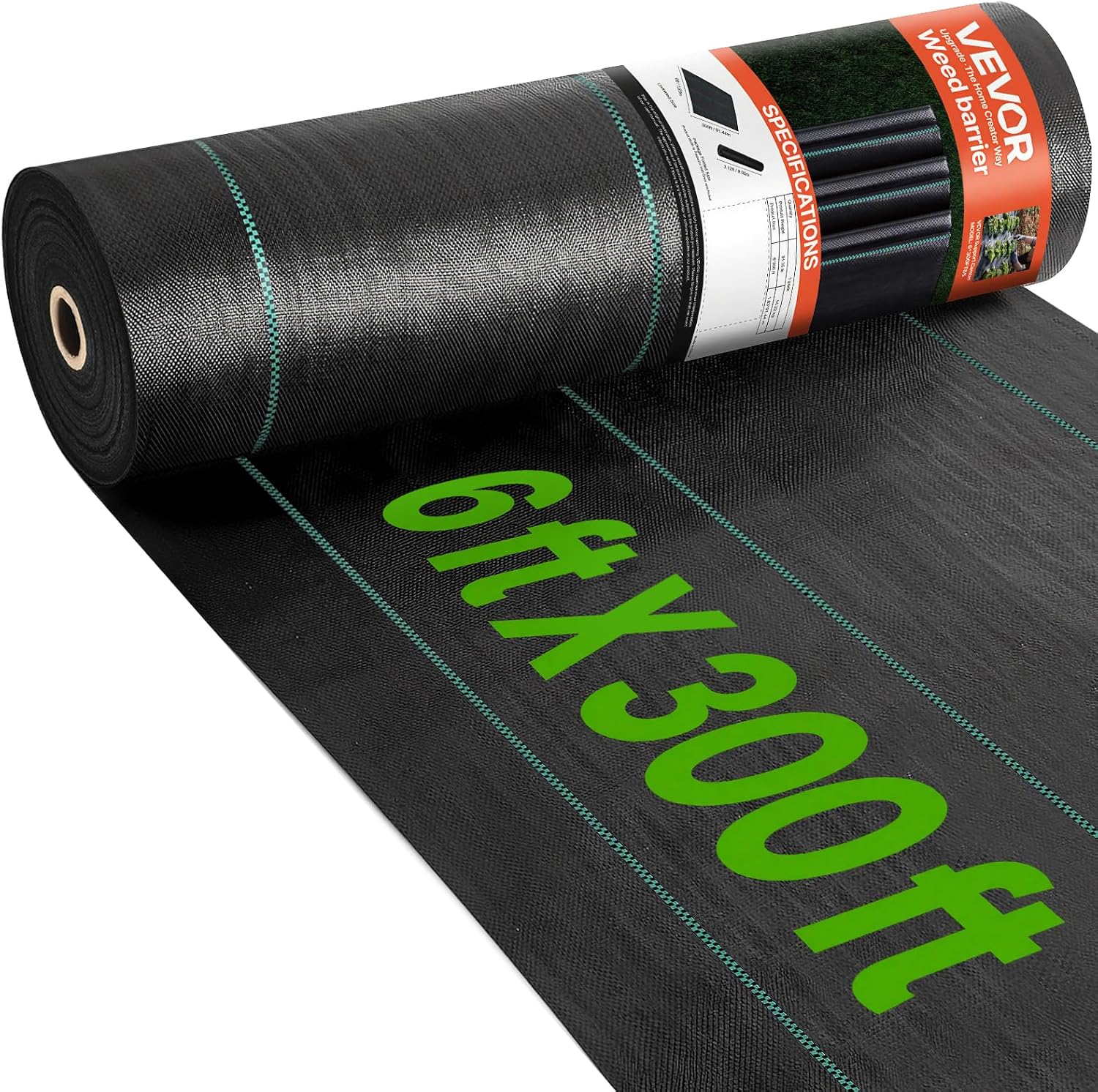
| Material | Polypropylene fabric |
|---|---|
| Size(LxW) | 300 x 6 ft |
| Density | 12 |
This Happybuy landscape fabric is a heavy-duty woven polypropylene mat sold as a 6 by 300 foot roll intended to cover roughly 1,800 square feet. It is used by unrolling, cutting to shape using the printed guide lines, and securing it over beds, walkways, or under gravel to prevent weeds while letting water and air reach the soil. The woven 2.4 oz material is tear-resistant and weatherproof, so it stands up to foot traffic and seasonal exposure better than thin nonwoven fabrics. High permeability keeps soil from puddling and helps retain moisture, and the printed green lines make layout and plant spacing easier. You will need to buy landscape staples or pins separately and expect some fiddliness around planting holes or irregular borders, where cutting and overlap technique affect performance. For long-term planting beds plan on occasional lift-and-replace when organic matter builds up under the fabric or for perennial planting changes.
Best for: Gardeners who want a durable, large-format landscape fabric to reduce weeding across multiple beds or longer runs and who value a product with established customer feedback.
Less Ideal for: People seeking a temporary or decorative mulch substitute for small container gardens or those who prefer fully biodegradable weed barriers.
- Large coverage area (6 ft x 300 ft) reduces seams and installation time for medium to large beds
- Woven polypropylene construction gives tear resistance and weather durability
- Permeable design allows water and air to pass while limiting weed growth
- Guideline printing on the fabric simplifies cutting and plant alignment
- Does not include stakes or staples so fastening supplies must be purchased separately
- Can be awkward to work around established plants and may require periodic lifting as soil organic matter accumulates
Verdict: Choose this heavy-duty woven fabric when you need wide, long-lasting weed control that lets water and air through while covering large areas with fewer seams.
LAVEVE Heavy Duty Weed Barrier Landscape Fabric, 4 ft x 100 ft

| Material | Polypropylene |
|---|---|
| Coverage option | 4FT x 100FT (2 rolls of 4FT x 50FT) |
| Weight per unit | 3.2 OZ |
This LAVEVE landscape fabric is a heavy duty woven polypropylene mat intended to suppress weeds around beds, paths, and vegetable plots while letting water and air through to the soil. It is typically cut to shape with scissors and secured with U-shaped pegs; printed guide lines on the fabric help align rows and planting holes. The material is UV resistant and breathable, so it will tolerate sun exposure and reduce surface erosion while preventing many weeds from taking root under mulch or gravel. Practical benefits include easier maintenance of tidy beds, less hand-weeding, and suitability for a range of uses from flower beds to gravel paths. Limitations to expect are that windblown seeds or fine soil on top of the fabric can still sprout in mulch, so occasional surface weeding or topping with fresh mulch is recommended. Also, landscape fabric does not replace proper bed preparation or edging for long-term perennial borders.
Best for: Gardeners who want a reliable, low-maintenance way to reduce routine weeding and keep beds and pathways tidy with minimal fuss. It suits buyers who prefer proven, conservative solutions that perform predictably in common garden settings.
Less Ideal for: People seeking a permanent, hands-off solution for deep-rooted perennial weeds or those who need a decorative single-material ground cover without mulch or gravel on top.
- Woven polypropylene construction blocks weeds while permitting water and air flow
- UV resistant design for sun exposure and reduced degradation
- Printed guide lines make cutting and alignment easier during installation
- Suitable for multiple applications including beds, paths, and gravel areas
- Surface seeds and debris on top of mulch can still germinate, requiring occasional weeding
- Does not replace edging or soil preparation for long-term weed control
Verdict: A dependable, UV-resistant woven fabric that lets water through while significantly cutting routine weeding for mainstream gardeners.
Choosing the Right Landscape Fabric: Key Factors to Consider
Permeability and Drainage
Permeability determines whether water and air can move through the fabric into the soil. Fabrics with poor permeability cause surface runoff and pooling that can drown roots, while breathable weaves allow rainfall and irrigation to reach soil and support healthy root systems. For planted areas you intend to irrigate, choose fabrics with clearly rated water flow or a known woven construction that promotes drainage. For under-stone paths the fabric still needs enough permeability to prevent trapped groundwater that freezes and heaves. Consider local rainfall patterns and drainage when matching permeability to site conditions.
Durability and Tensile Strength
Durability affects how long the fabric resists tearing from foot traffic, weed roots, and seasonal freeze-thaw cycles. Heavier woven fabrics and those with higher tensile ratings will stand up to edging, mulching, and commonly used garden tools. If you plan to place the fabric under pavers or heavy gravel, prioritize tensile strength and resistance to puncture. For decorative beds with light foot traffic, a lighter weight fabric may be adequate but expect shorter service life. Inspect seams and edges because weak stitching is a common failure point.
UV Resistance and Expected Lifespan
Exposure to sunlight degrades many polymer fabrics over time unless they include UV stabilizers. A fabric used on exposed beds or along sunny borders should specify UV resistance or a projected lifespan under sun exposure. UV-stabilized fabrics may cost more but reduce the frequency of replacement, which matters for large installations. Where the fabric will be covered with a deep layer of mulch or stone, UV exposure is lower and lifespan concerns shift toward abrasion resistance and moisture effects.
Installation Ease and Repairability
How easily a fabric lays flat, stays in place, and is cut for planting determines the labor involved in installation and future work. Fabrics that sag, curl at edges, or are brittle when cut increase installation time and likelihood of mistakes. Look for fabrics available in wider rolls when covering large beds to minimize seams. Consider how simple it is to make planting holes and to patch tears without removing large sections. Compatibility with commonly used landscape staples and recommended anchoring spacing also affects installation speed and long-term performance.
Interaction With Mulch and Soil
Landscape fabric does not act alone; its performance depends on how it interacts with the top layer of mulch, gravel, or decorative stone. Fine weaves may trap soil particles over time and become less permeable, while coarser weaves can allow mulch to work through and look untidy. Decide whether the fabric will sit under organic mulch, rubber mulch, or stone, and choose a weave or weight that prevents excessive infill. For planting beds where soil health is a concern, consider how the fabric affects organic matter decomposition and earthworm activity.
Planting Flexibility and Maintenance
Some fabrics are designed to be cut and folded for individual plantings, while others discourage frequent planting changes. If you rotate annuals or dig bulbs, choose a fabric that lets you make clean planting holes and reseal the fabric without creating permanent weak points. Also think about future maintenance: fabrics that allow easy hand-weeding or targeted herbicide use reduce labor. For perennial borders where plants are seldom moved, a more permanent, heavier fabric may be appropriate.
Best Uses by Garden Zone and Surface
Different landscape fabrics suit different garden tasks. Lightweight, fine-weave fabrics are usually best for ornamental flower beds where minimal foot traffic and seasonal planting happen. Heavier woven fabrics work better under gravel paths, patios, and drive edges where load and abrasion are concerns.
- Light ornamental beds: prioritize breathability and ease of planting.
- Gravel paths and patios: prioritize tensile strength and puncture resistance.
- Under pavers: choose heavy-duty fabric with high tear resistance and good drainage.
- Containers and raised beds: prefer fabrics that allow water flow and easy cutting for planting holes.
Preparing the Site and Laying Fabric
Clear vegetation and level the soil before laying fabric to prevent lumps that will show through thin covers. Remove perennial roots and vigorous runners to reduce future breakthrough. For slopes, grade the area and install hardware cloth or edging where necessary to keep fabric in place.
Overlap seams according to manufacturer guidance, generally several inches, and anchor with landscape staples at regular intervals. When installing under stone or mulch, put enough covering material in place to protect the fabric from UV and mechanical wear.
- Remove existing weeds and an inch of topsoil if the site has deep-rooted perennials.
- Lay fabric on slightly mounded soil and secure edges with staples or edging.
- Cover with at least 2 to 3 inches of mulch or the recommended depth of stone for protection and aesthetics.
Planting Through Landscape Fabric
Cutting X-shaped or circular holes for plants is a common technique, but repeated cuts can weaken a fabric over time. Make planting holes only as large as needed and fold edges back to keep soil from washing into seams. Some gardeners prefer trenching a narrow slit and tucking soil back to create a cleaner edge around plants.
For bulbs and shallow-rooted annuals, consider planting above the fabric in a shallow layer of soil or using inserts to reduce repeated fabric disturbance. When you must add new plants, use sharp tools and patch any large tears with an extra piece of fabric anchored firmly.
- Use minimal openings and reseal edges when possible to extend life.
- Consider planting boxes or pockets for frequent replanting areas.
- Patch tears with overlapping fabric and staples rather than removing large sections.
Long-Term Care and When to Replace
Inspect fabric annually for tears, areas where weeds are pushing through, and signs of UV embrittlement around exposed edges. Small repairs and re-anchoring will extend service life, but extensive fraying or widespread root penetration signals time for replacement.
If soil health or drainage problems arise, removing the fabric temporarily can help with deep tilling or soil-amendment work. For heavy-use paths, expect more frequent replacement cycles than for decorative beds covered by thick mulch.
- Re-anchor staples and repair small tears each season.
- Monitor for root penetration and address persistent perennial weeds by removing roots.
- Replace fabric sections showing brittle cracking or wide-scale degradation.
How We Chose the Best Landscape Fabric
We selected landscape fabrics by focusing on attributes that most affect how well a fabric performs in a garden setting. Key evaluation dimensions included tensile durability under foot and frost, water permeability to avoid puddling and root suffocation, UV resistance for longevity in sun-exposed beds, and ease of installation and maintenance for typical homeowner projects. We also considered how a fabric interacts with mulch and planting operations, including whether it allows easy planting holes and how it tolerates weeding and edging. Products were excluded if they were intended only for temporary construction use, lacked clear permeability specifications, or were described solely as adhesive or single-use weed barriers. The shortlist favors fabrics with measured permeability ratings or manufacturer test data, robust UV warranties or stated UV stabilization, and a range of weights or weaves suited to the scope from light-duty ornamental beds to heavy-use paths. Practical installation features such as available widths, compatibility with common landscape staples, and repairability also influenced selection.
FAQ
Will landscape fabric stop all weeds?
Landscape fabric reduces many annual weeds by blocking light, but persistent perennial weeds with deep roots can grow through or around edges. Good site prep and regular maintenance are necessary to prevent persistent intruders.
Can I use landscape fabric under mulch and how deep should the mulch be?
Yes. Covering fabric with 2 to 3 inches of organic mulch or the recommended depth of decorative stone protects it from UV and limits soil infill. Deeper mulch helps reduce light reaching seeds and extends fabric life.
Does landscape fabric affect water reaching plant roots?
Some fabrics slow water flow if they are not breathable or become clogged with fine soil. Choose a fabric rated for permeability and avoid very fine nonwoven sheets in irrigated beds to ensure adequate drainage.
Is landscape fabric safe for raised beds and vegetable gardens?
Landscape fabric can be used in raised beds, but for vegetable gardens you may prefer materials that allow more organic matter exchange and earthworm activity. If used, pick a breathable fabric and expect more frequent soil refreshing.
How do I repair tears or seams in landscape fabric?
Small tears can be fixed with overlapping patches of the same fabric anchored with staples. For larger failures remove surrounding mulch, replace a wide enough section to overlap existing fabric, and secure edges to prevent future lifting.
Final Verdict
Choose the landscape fabric that matches how you use the space, balancing permeability against durability. For heavy foot traffic or under stone, prioritize tensile strength and puncture resistance. For planted beds and raised boxes, favor breathable weaves and easy planting access. Accept that no fabric is maintenance-free: good site prep, correct anchoring, and periodic repairs extend service life. Focus on the factors most important for your site and pick accordingly to get consistent weed control without harming soil or drainage.
