

Note: This article contains affiliate links. If you click on these links and make a purchase, I may earn a small commission at no extra cost to you. This helps support my research and content. Read my full affiliate disclosure here.
If you have slopes or rolling terrain, the right lawn tractor for mowing hills changes how safe and even your lawn looks. Hills demand machines that stay planted, steer predictably, and slow reliably without scalping or stalling. This guide covers five shortlisted lawn tractors chosen for uphill and downhill handling, engine and braking performance, and operator stability. Each pick was evaluated on hill-specific traits so you can match a tractor to your yard s slope, mowing frequency, and comfort needs. Below we explain what mattered in our selection and the key features to compare before committing to a model.
Top Picks at a Glance
| Best Overall The best all-around choice for most situations | Husqvarna TS 375XD Riding Lawn Mower, 54-inch Deck |  |
| Best Quality Built to a higher standard if you want something more solid | Husqvarna TS 140X 48" Riding Lawn Tractor with 24 HP Briggs V-Twin |  |
| Best Budget The cheapest option that still gets the job done reliably | GIYI Electric Riding Lawn Mower with 42" Deck and (6) 40V 6.0Ah Batteries |  |
| Highest Rated A top-rated pick with lots of positive feedback | Husqvarna TS 120 42" 19HP Briggs Lawn Tractor |  |
| Most Popular A crowd favorite that many people choose with confidence | EGO Power+ TR4204 42" Electric Riding Lawn Tractor |  |
Husqvarna TS 375XD Riding Lawn Mower, 54-inch Deck

| Power Source | Gas Powered |
|---|---|
| Cutting width | 54 |
| Operation Mode | Manual |
The Husqvarna TS 375XD is a performance-focused riding mower designed to tackle large residential lawns and challenging terrain. It uses a 24 hp FR series Kawasaki V-twin engine and a fabricated 54-inch, three-blade deck to deliver fast, even cutting across wide swaths of grass. Notable features aimed at control and comfort include dial-adjustable seat suspension and a push-button locking differential, which help when mowing uneven ground or turning on slopes. The mower is manually operated and built on a rugged chassis that emphasizes durability for frequent heavy use. Practical benefits include faster job completion on medium to large properties and improved handling on rough sections, reducing operator fatigue. Important limitations are the machine's substantial weight and bulk, which make transport and storage more demanding, and the need for routine gas-engine maintenance. This model is best when you prioritize power, cut quality, and durability over compactness or easy storage.
Best for: Homeowners with medium to large properties who want a high-performance mower that reduces mowing time and handles rough or uneven terrain reliably.
Less Ideal for: People with very small yards, limited storage space, or those who prefer electric or low-maintenance equipment should consider smaller or alternative power options.
- Powerful 24 hp Kawasaki V-twin engine for strong performance and consistent cutting
- 54-inch fabricated three-blade deck covers large areas quickly
- Dial-adjustable seat suspension improves comfort during long mowing sessions
- Push-button locking differential enhances traction and maneuverability on rough terrain
- Heavy and large footprint makes storage and transport more difficult
- Gas engine requires regular maintenance and fuel handling
Verdict: Choose the Husqvarna TS 375XD if you need a powerful, durable riding mower that finishes large, rough residential lawns quickly and with confident handling.
Husqvarna TS 140X 48" Riding Lawn Tractor with 24 HP Briggs V-Twin

| Cutting width | 48 inches |
|---|---|
| Power Source | Gas Powered |
| Operation Mode | Manual |
The Husqvarna TS 140X is built for homeowners who need a robust, straightforward riding tractor for mowing roughly an acre, including moderate slopes. It pairs a 24 HP Briggs & Stratton V-twin engine with a 48-inch stamped steel deck and pedal-operated transmission so you can keep both hands on the wheel while changing speed. The reinforced deck and Air Induction technology aim to improve cut quality and reduce clumping, while an upgraded seat and ergonomic steering wheel increase comfort during longer jobs. Typical use will be regular property maintenance: striping driveways, cutting large open areas, and handling rolling terrain where a wider deck reduces passes. The tractor’s strengths are engine power, simple mechanical controls, and a roomy cutting width that shortens mowing time. Important limitations are its manual operation and gas power, which require fuel and routine engine maintenance, and the stamped deck is durable but less serviceable than heavier fabricated decks for extreme commercial use. For homeowners seeking a capable, no-frills machine, this balances performance and ease of use.
Best for: Homeowners with about an acre of lawn who want a powerful, easy-to-operate riding tractor that speeds up mowing and handles modest hills while prioritizing comfort during longer jobs.
Less Ideal for: Users who need a commercial-grade mower for daily heavy use or those seeking a zero-emission electric option should look elsewhere.
- Powerful 24 HP Briggs & Stratton V-twin engine provides strong performance on hills and larger lawns
- 48-inch stamped steel cutting deck reduces mowing time on an acre-sized property
- Pedal-operated transmission lets you keep both hands on the wheel for better control
- Ergonomic seat and steering wheel improve comfort for longer mowing sessions
- Gas engine requires regular fuel, oil changes, and tune-ups
- Stamped deck is less heavy-duty than fabricated commercial decks for extreme, frequent use
Verdict: A practical, comfortable gas tractor that cuts large yards quickly and handles modest hills for homeowners who want dependable performance and simple controls.
GIYI Electric Riding Lawn Mower with 42" Deck and (6) 40V 6.0Ah Batteries

| Power Source | Battery Powered |
|---|---|
| Cutting width | 42 inches |
| Number of Positions | 9 |
| Maximum Adjustable Cutting Height | 4.52 inches |
| Minimum Adjustable Cutting Height | 1.37 inches |
This GIYI electric riding mower is a cordless lawn tractor built to cover roughly an acre per charge using six 40V 6.0Ah lithium-ion batteries and a brushless, belt-free drive. It is typically used for medium to large residential yards where a 42-inch deck and nine cutting-height positions (about 1.5 to 4.5 inches) speed up mowing runs. Notable features include a stamped steel 42" deck, an ergonomically designed low-back seat, a brushless motor that lowers maintenance compared with gas models, and claimed run times of 60 to 80 minutes. In practice the combination of multiple batteries and a 6 mph top mowing speed makes it effective for rolling lawns and modest slopes up to about 15 degrees. Important limitations are its large footprint and weight that require storage space and may complicate transport, and the reliance on multiple battery packs means replacement cost and charging setup should be considered. For buyers prioritizing quiet, low-maintenance cordless operation, it delivers strong coverage; buyers needing commercial runtime or tight zero-turn maneuverability will want different platforms.
Best for: Homeowners with roughly one-acre lawns who want a quiet, low-maintenance cordless riding mower that covers ground quickly and tolerates mild slopes.
Less Ideal for: Commercial users, owners of very steep or tightly contoured properties, or buyers who need tight zero-turn maneuverability and extended continuous runtime.
- Large 42-inch stamped steel deck for faster passes across medium to large yards
- Includes six 40V 6.0Ah batteries providing 60–80 minutes of runtime on a full charge
- Brushless, belt-free motor design reduces routine maintenance and increases durability
- Nine adjustable cutting heights to handle different grass conditions and seasons
- Heavy and bulky unit that needs significant storage space and may be difficult to transport
- Dependence on multiple battery packs increases long-term replacement costs and charging logistics
Verdict: If you want a quiet, low-maintenance cordless riding mower that can cover about an acre per charge, this 42" GIYI model delivers strong residential performance.
Husqvarna TS 120 42" 19HP Briggs Lawn Tractor
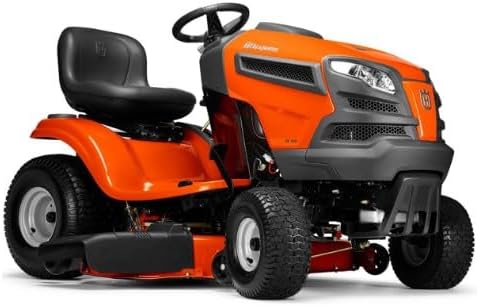
| Cutting width | 42 inches |
|---|---|
| Power Source | Gas Powered |
| Operation Mode | Manual |
The Husqvarna TS 120 is a straightforward, homeowner-oriented riding tractor built around a 19 HP Briggs & Stratton engine and a 42-inch twin-blade stamped deck. It is used like a conventional lawn tractor: sit in the ergonomic seat, use the pedal-operated transmission for smooth speed control, and choose side ejection or add optional mulching or collection accessories. Notable features include the proven gas engine, pedal-operated hydrostatic transmission that keeps both hands free for steering, and a deck width that balances cut speed with maneuverability. In practice the TS 120 will make quick work of small to mid-size properties while offering a comfortable ride and simple controls that reduce operator fatigue. Limitations are its basic stamped deck and homeowner-focused equipment level, which mean it is not targeted at heavy commercial use or extremely large properties where wider decks and commercial-grade components would be preferable.
Best for: Buyers who prioritize a reliable, easy-to-operate gas riding mower for maintaining small to mid-size lawns and who value straightforward controls and proven engine performance.
Less Ideal for: Not a good fit for commercial operators or homeowners with very large properties who need wider decks and more heavy-duty, commercial-grade components.
- Proven 19 HP Briggs & Stratton gas engine for reliable power
- Pedal-operated hydrostatic transmission for easy, hands-on steering and smooth speed changes
- 42-inch twin-blade deck balances cutting efficiency and maneuverability
- Ergonomic seating and intuitive controls reduce operator fatigue during longer mows
- Designed for homeowner use rather than commercial or heavy-duty applications
- Stamped mower deck is less durable than heavier fabricated decks
Verdict: A reliable, easy-to-use gas riding tractor that delivers proven Briggs & Stratton power and simple hydrostatic controls for homeowners with small to mid-size lawns.
EGO Power+ TR4204 42" Electric Riding Lawn Tractor

| Power Source | Battery Powered |
|---|---|
| Cutting width | 42 inches |
| Battery Average Life | 60 minutes |
| Maximum Adjustable Cutting Height | 4 inches |
| Number of Positions | 12 |
The EGO Power+ TR4204 is a cordless riding lawn tractor built to replace small gas tractors for yards up to about 1.5 acres. It combines up to six 56V ARC Lithium batteries to produce the equivalent of a 21-horsepower gas engine and runs dual brushless, belt-free cutting motors under a 42-inch stamped steel deck. Typical use is straightforward: charge the included batteries, set one of three blade speeds and one of three drive speeds on the digital display, and mow with cruise control engaged for consistent passes. Notable features include LED lights, USB charging, Bluetooth, anti-scalp wheels, and a rear tow hitch for light hauling. Practical benefits are quiet operation, reduced maintenance from no belts or gas engine upkeep, and modular battery compatibility with other EGO tools. Important limitations are the runtime ceiling—advertised at up to 1.5 acres with six 6.0Ah batteries—which means larger properties will require additional batteries or more frequent charging, and the tractor’s heavier weight and battery system make it less suitable for tight, steep, or highly maneuvered lawn work compared with compact zero-turns.
Best for: Buyers who want to replace a small gas tractor with a low-maintenance, quiet electric riding mower for regular care of roughly one to one and a half acre lawns and who value battery ecosystem flexibility.
Less Ideal for: Those with larger properties well over 1.5 acres or who need high-speed, tight-turning commercial zero-turn capability should consider other options.
- Battery platform compatibility with all EGO 56V ARC Lithium batteries for flexibility and tool ecosystem sharing
- Dual brushless cutting motors and a stamped steel 42-inch deck for gas-like cutting performance with lower maintenance
- Customizable digital controls including three blade settings, three drive speeds, and cruise control for consistent results
- Premium conveniences such as LED lights, USB charging port, Bluetooth, and rear tow hitch for utility beyond mowing
- Advertised single-charge coverage tops out at about 1.5 acres with the included batteries, limiting use on larger properties without extra batteries
- Heavier battery package increases vehicle weight and may be less nimble in very tight or steep yards
Verdict: A practical electric alternative to small gas tractors that delivers gas-like power and low maintenance for lawns up to about 1.5 acres.
Choosing the Right Lawn Tractor for Mowing Hills: Key Factors to Consider
Engine Torque and Cooling
On slopes a lawn tractor must deliver steady torque to climb without bogging down. Engines rated for higher torque at low RPMs make a noticeable difference when you start a climb or accelerate while turning on an incline.
Sustained climbing increases engine heat, so cooling design matters. Look for tractors with adequate airflow to the engine and an oil and fuel system that copes with angle changes. Poor cooling can lead to reduced power or premature wear when you regularly mow long, steep runs.
Braking System and Speed Control
Reliable braking is essential for downhill runs. Tractors that offer a firm, responsive braking pedal or independent park brake let you control descent speed without riding the brake, which prevents overheating and brake fade.
Transmission options that provide low-speed torque-such as hydrostatic drives with a strong low-end response or gearboxes with a crawler range-help you maintain safe, controlled downhill speeds. Cruise controls are less useful on steep terrain than positive engine braking and a predictable transmission response.
Traction, Tire Choice, and Weight Distribution
Traction affects both safety and cut quality on slopes. Wider, aggressive tread tires provide better bite on grass and loose soil. Rear-wheel-drive tractors can handle moderate slopes if fitted with proper turf or multi-surface tires; however, weight distribution is crucial to prevent wheel slip and loss of steering control.
Some tractors allow ballast or have factory ballast options to increase rear traction. Consider how added weight will affect handling, ground compaction, and the mower s center of gravity. Avoid top-heavy setups that raise rollover risk.
Deck Design and Anti-Scalp Features
Mowing on hills exposes deck edges to sudden angle changes that can scalp turf. Deck design that keeps the blades close to a consistent cutting plane will reduce scalping and uneven cuts. Look for decks with anti-scalp wheels or floating mounts that allow the deck to follow ground contours.
Discharge and mulching options also behave differently on slopes. Some decks evacuate clippings better when traveling downhill, while others hold clippings. Consider how clippings will distribute on your slopes and whether mulching or side-discharge matches your lawn care goals.
Steering Feel and Operator Ergonomics
Responsive, low-effort steering reduces fatigue and improves control on inclines and when making frequent directional changes. Power steering or reduced-effort steering is especially helpful on steeper gradients and with wider decks.
Operator platform design affects stability. A secure seat with good support, accessible controls, and a floor layout that lets you brace during maneuvers increase confidence. Vibration damping and visibility over the deck and terrain help you spot bumps, wet patches, or obstacles common on slopes.
Serviceability and Component Durability
Slope work accelerates wear on driveline components, belts, tires, and brakes. Easy access to service points reduces downtime and makes it simpler to inspect parts for slope-related wear. Choose tractors with straightforward grease points, accessible filters, and well-documented maintenance intervals.
Durable pulley systems, heat-resistant belts, and robust brake assemblies extend the useful life of a hill mower. Check for manufacturer guidance on slope limits and recommended maintenance when used frequently on inclines.
Understanding Safe Slope Limits and Terrain Types
Every lawn tractor has a practical slope limit for safe operation. Gradual, rolling hills pose different challenges than short, steep grades. Assess your yard s steepest runs, including changes of direction and the presence of loose soil, gravel, or wet grass before choosing a tractor.
If slopes are intermittent and gentle, a tractor with good tires and stable weight distribution may be enough. For sustained steep inclines pay attention to braking systems and transmission type. Note spots where obstacles or soft ground could reduce traction and plan your mowing pattern to minimize risky maneuvers.
- Measure slope angles in the steepest areas to compare against manufacturer guidance.
- Mark trouble spots like wet hollows, loose gravel, or steep cross-slopes before mowing.
- Plan mowing routes to avoid sharp turns while on a grade.
Tire Options and When to Add Ballast
Tire selection is one of the most cost-effective upgrades for improved hill performance. Look for tires with a tread depth and pattern suited to turf and mixed surfaces rather than smooth lawn-only tires that slip easily on wet or loose slopes.
Ballast, such as wheel weights or extra rear weight, increases rear traction but also raises ground pressure. Use ballast selectively: add enough to prevent rear wheel spin without overloading the axles or excessively compacting the soil.
- Choose tires rated for multi-surface use if you cross gravel or dirt frequently.
- Add ballast incrementally and test traction; too much ballast can harm turf.
Mowing Technique on Hills
Technique matters as much as equipment. For uphill and downhill sections mow at a steady, moderate speed and avoid sudden throttle or steering inputs. Where possible, mow across a slope rather than straight up and down to reduce strain and the chance of scalping.
On steeper pitches make shallow passes and overlap slightly to maintain cut quality. Reduce deck height gradually when approaching variable terrain to avoid scalping. When turning on a grade, slow early and make wide, gradual turns rather than tight maneuvers.
- Mow across slopes when safe to do so rather than directly up and down.
- Keep blade engagement smooth to avoid sudden load on the engine.
Maintaining Your Tractor After Slope Work
Regular maintenance prevents slope-specific wear from turning into failures. Inspect belts, blades, tires, and brake components more frequently if you regularly mow hills. Clean grass build-up from decks and engine compartments to ensure cooling and proper belt operation.
Check steering components and chassis fasteners for looseness after a season of hill mowing. Replace tires showing uneven wear and rebalance wheels if vibrations develop. Routine checks extend life and maintain safe operation on inclines.
- Grease fittings, check belt tension, and inspect brakes every 25 hours of use when mowing slopes.
- Sharpen blades more often to preserve cut quality on variable terrain.
Accessory Choices That Improve Hill Performance
Some accessories can help when used thoughtfully. Anti-scalp wheels or deck skids reduce turf damage on uneven slopes. Seat belts and operator presence systems add safety, especially on tractors with higher rollover risk. A high-visibility seat position and mirrors improve situational awareness.
Avoid add-ons that raise the center of gravity unnecessarily. Use ballast only when it meaningfully improves traction, and prioritize tires and braking upgrades over heavy attachments that make rollovers more likely.
- Consider anti-scalp wheels and a deck that floats to follow contours.
- Use safety accessories like roll-over protection only where appropriate and supported by the tractor s design.
How We Chose the Best Lawn Tractor for Mowing Hills
We focused on characteristics that matter when mowing sloped yards and excluded models built only for flat, ornamental lawns or strictly utility use. Selection filters prioritized uphill torque, braking and descent control, traction systems, operator stability, and deck performance on an incline. We looked for tractors that manage grass transfer and cut quality on slopes, maintain engine cooling during sustained climbs, and offer controls that let the operator maintain safe speed and direction. Excluded items included lightweight garden tractors with low ground contact, machines without reliable braking systems, and models designed solely for towing or heavy implements rather than mowing performance. The final list balances hill-capable engine power and transmission responsiveness with traction solutions and operator ergonomics. Durability under load, deck design for even clippings on slopes, and serviceability for slope-specific wear were also important.
FAQ
How steep is too steep to mow with a lawn tractor?
It depends on the tractor s design and the manufacturer s slope guidance, but sustained steep grades are riskier. Generally stay within moderate slopes and avoid mowing on inclines that force repeated wheel slip or require aggressive braking. When in doubt measure the slope and compare it to the tractor s recommended limits.
Can I add weight to improve traction on hills?
Yes, adding rear ballast or wheel weights can improve traction, but do so incrementally. Too much weight increases ground compaction and can stress axles and transmissions. Test traction after each adjustment and avoid making the machine top-heavy.
Are hydrostatic transmissions better for mowing hills?
Hydrostatic drives offer smooth speed control and strong low-speed torque, which many operators find useful on slopes. However, braking behavior and engine braking differ by design, so transmission type is one factor among several, including brakes, tires, and weight distribution.
How should I mow wet grass on a slope?
Wet grass reduces traction and increases slippage risk. If possible wait for drier conditions. If you must mow wet slopes, slow down, take wider turns, and use tires with better grip. Be prepared to stop immediately if the tractor starts to slide and avoid steep sections.
Do anti-scalp wheels help on hilly lawns?
Anti-scalp wheels help protect turf on uneven ground and steep transitions by preventing the deck from digging into the turf. They are a helpful accessory when slopes create frequent contour changes, but they do not replace good mowing technique or appropriate deck setup.
Final Verdict
Choosing a lawn tractor for mowing hills is about balancing traction, braking control, and deck behavior with operator stability. Prioritize machines that deliver steady low-end torque, reliable descent control, and tires or ballast that provide consistent grip without making the unit top-heavy. Weigh the tradeoffs between added weight and soil compaction, and focus on maintenance, correct tire choice, and safe mowing technique. With those priorities you can select a tractor that handles your slopes confidently and keeps your lawn looking even and healthy.
