

Note: This article contains affiliate links. If you click on these links and make a purchase, I may earn a small commission at no extra cost to you. This helps support my research and content. Read my full affiliate disclosure here.
Hanging baskets demand steady, balanced feeding because container soil is shallow and dries quickly. The wrong fertilizer can scorch roots, waste nutrients, or make foliage lush at the expense of flowers. This guide focuses on liquid fertilizers formulated for hanging baskets and similar small containers, covering options that deliver blossoms, steady growth, and easy application. We shortlisted seven strong choices and evaluated them on nutrient balance, dilution and feeding methods, and how they affect flowering and plant health. The following sections explain what matters for hanging baskets and how each shortlisted product performs against those criteria.
Top Picks at a Glance
| Best Overall The best all-around choice for most situations | TPS Nutrients Hanging Basket Plant Food, 32 oz Liquid Concentrate |  |
| Best Quality Built to a higher standard if you want something more solid | Espoma Organic Bloom! Liquid Concentrate Plant Food (16 fl oz) |  |
| Best Value The sweet spot between price and what you get | Grow Queen Organic Liquid Indoor Plant Food 5-5-5 with Sea Kelp, 8 oz | 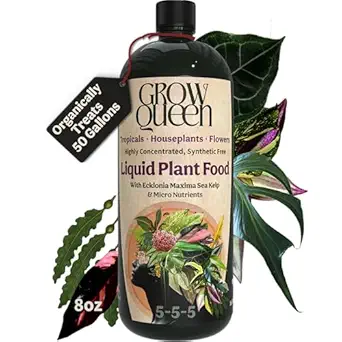 |
| Best Budget The cheapest option that still gets the job done reliably | Bonide Liquid Plant Food 10-10-10 (8 fl oz) |  |
| Highest Rated A top-rated pick with lots of positive feedback | Schultz All Purpose Liquid Plant Food 10-15-10 (8 fl oz) |  |
| Most Popular A crowd favorite that many people choose with confidence | Miracle-Gro Liquid All Purpose Plant Food Concentrate, 32 oz |  |
| Best Seller A high-volume bestseller chosen again and again | TPS NUTRIENTS Indoor Plant Food Liquid Concentrate, 32 fl oz |  |
TPS Nutrients Hanging Basket Plant Food, 32 oz Liquid Concentrate

| Item Form | Liquid |
|---|---|
| Application Method | Watering can or hose end sprayer |
| Coverage | Hanging basket plants |
| Target Species | Flowers, Vegetables, and Herbs |
| Unit Count | 32 Fluid Ounces |
This liquid fertilizer is formulated specifically for hanging baskets and other fast-draining containers where nutrients wash out quickly. It is a concentrated, water-soluble formula designed to be applied with a watering can or hose-end sprayer and aims to encourage continuous blooming, lush foliage, and balanced plant shape. Notable ingredients include added calcium and magnesium to support overall plant health, and the product is suitable for common flowering basket plants like petunias, fuchsias, and impatiens as well as vegetables and herbs grown in hanging containers. The practical benefit is steady feeding without repotting or bulky granular mixes, making it easy to keep baskets flowering through the season. Limitations are that it is targeted at hanging baskets rather than general landscape use and requires regular application to maintain results in quickly drying media. If you prefer a once-applied slow-release feed or need a product for in-ground beds, this concentrated liquid may not match those use patterns.
Best for: Gardeners who keep decorative or edible hanging baskets and want an easy, regular liquid feed to maintain continuous blooms and healthy foliage throughout the season.
Less Ideal for: Homeowners looking for a one-time slow-release fertilizer for beds or large containers should consider granular or controlled-release options instead.
- Formulated for hanging baskets so it addresses fast-draining media and frequent nutrient loss
- Liquid concentrate works with a watering can or hose-end sprayer for easy, even application
- Includes calcium and magnesium to support foliage strength and bloom quality
- Suitable for a range of basket plants including flowers, vegetables, and herbs
- Designed specifically for hanging baskets so it is less suited to in-ground or broad garden use
- Requires repeated applications through the season to maintain feeding in fast-drying pots
Verdict: A concentrated liquid feed tailored for hanging baskets that makes it simple to sustain continuous blooms and healthy growth in fast-draining containers.
Espoma Organic Bloom! Liquid Concentrate Plant Food (16 fl oz)

| Item Form | Liquid |
|---|---|
| Specific Uses For Product | Organic,Plant Food |
| Application Method | water |
| Target Species | flowering plants, annuals & perennials |
| Liquid Volume | 16 fluid ounces |
Espoma Organic Bloom! is a low-analysis liquid concentrate designed specifically to encourage prolific flowering in ornamentals, hanging baskets and garden beds. It mixes with water for routine feedings every 2 to 4 weeks and contains natural proteins, kelp extracts and humic acids in a 1-3-1 NPK balance to support bloom development rather than leafy growth. Because it is a concentrated liquid, small measured doses make it easy to apply through a watering can or hose-end applicator for medium coverage areas. The organic certification means it can be used in certified organic production and avoids synthetic fertilizers, but its low nitrogen content means it will not drive rapid vegetative growth if that is desired. Practical benefits include simple dilution instructions, suitability for containers and in-ground plantings, and a formulation aimed at improving flower size and frequency. Expect steady improvements in bloom performance over the season rather than an immediate dramatic change.
Best for: Gardeners focused on boosting flower production in containers, hanging baskets, and garden beds who prefer an organic, easy-to-mix liquid feed applied on a regular schedule.
Less Ideal for: Growers who need a high-nitrogen feed for rapid leafy growth or those managing very large landscapes where bulk granular fertilizers are more economical.
- Organic certified formulation suitable for organic gardening
- Concentrated liquid mixes with water for convenient routine feedings
- 1-3-1 formulation targets flowering and bud development
- Contains kelp extracts and humic acids to support overall plant vigor
- Low nitrogen ratio so it will not significantly increase leafy growth
- 16 fl oz bottle is best for small to medium gardens and may require repurchasing for larger areas
Verdict: Use this organic liquid concentrate every few weeks to reliably increase bloom size and frequency on flowers and container plants.
Grow Queen Organic Liquid Indoor Plant Food 5-5-5 with Sea Kelp, 8 oz

| Item Form | Liquid |
|---|---|
| Mixing Ratio | 1:1 |
| Specific Uses For Product | Plant Growth |
| Application Method | Watering |
| Target Species | Plants |
Grow Queen's 8 oz concentrated liquid plant food is a balanced 5-5-5 organic fertilizer designed for regular use on houseplants, tropicals and container gardens. You mix one capful (about 4 ml) per gallon of water and either drench the soil or apply as a foliar mist every one to three weeks, which makes it straightforward to fold into a weekly watering routine. The formula includes Ecklonia maxima sea kelp and trace micronutrients, which help support greener foliage, stronger stems and root development without the burning risk of high-strength synthetic feeds. At the stated dilution the bottle treats up to 50 gallons so it will last a small collection for months. It is also labeled safe for aerated hydroponic systems when reservoirs are changed regularly, though it can form a film in stagnant water so fresh mixes are recommended. The product has an earthy ocean scent from real kelp and excludes perfumes and dyes, but that natural smell may bother some users. Directions are simple and the fertilizer pairs well with slow-release feeds for longer-term nutrition.
Best for: Buyers who want a simple, one-bottle solution to feed a mixed collection of houseplants regularly and prefer organic ingredients and seaweed benefits.
Less Ideal for: Growers who need precision nutrient formulas for specific flowering or high-yield vegetable crops or those who require ready-to-use sprays without mixing.
- Balanced 5-5-5 NPK suitable for general indoor plant feeding
- Concentrated formula stretches up to 50 gallons from an 8 oz bottle
- Contains sea kelp and micronutrients to promote foliage color and root strength
- Safe for regular use at recommended dilution with low burn risk
- Natural kelp scent may be noticeable indoors
- Can form a film in standing water so not ideal for non-aerated reservoirs
Verdict: A concentrated, easy-to-use organic 5-5-5 liquid fertilizer with sea kelp that provides straightforward, all-purpose nutrition for indoor plant collections.
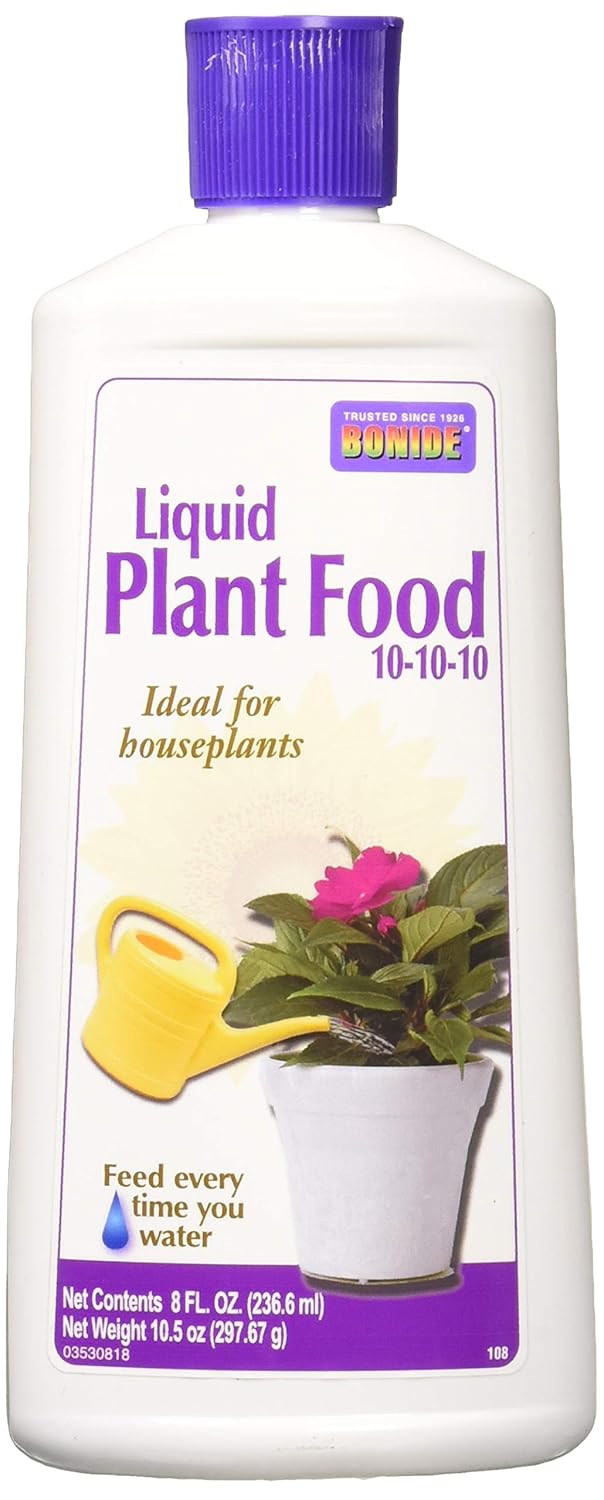
Bonide Liquid Plant Food 10-10-10 (8 fl oz)
| Item Form | Liquid |
|---|---|
| Specific Uses For Product | Plant Food |
| Coverage | Medium |
| Target Species | orchids |
| Liquid Volume | 236.6 ml |
This Bonide 10-10-10 liquid plant food is a straightforward all-purpose fertilizer intended to be mixed into your watering can and applied each time you water. It comes as an 8 fluid ounce concentrate with a simple mixing ratio (about 12 drops or 1/8 teaspoon per quart) so you can dilute small amounts for frequent feedings of hanging baskets and other container plants. Its balanced N-P-K makes it useful for general growth and blooms without specialized nutrients for a single species. The liquid format spreads evenly through potting media and is convenient for regular, low-effort maintenance of multiple baskets. Limitations are its small bottle size, which means heavier-use gardeners will need to repurchase more often, and it is not tailored to specific needs like high-phosphorus bloom boosters or orchid-specific formulas despite an indicated target of orchids. Safety notes advise keeping it away from children and pets. For gardeners on a budget looking for a simple routine feed, this product is an easy, no-frills option.
Best for: A budget-minded gardener who wants an inexpensive, easy-to-use liquid fertilizer for routine feeding of hanging baskets and mixed container plantings.
Less Ideal for: Gardeners who need larger-volume concentrates for many containers or who want specialty formulas targeting heavy bloom production or specific plant types.
- Balanced 10-10-10 formula suitable for general feeding of foliage and flowers
- Liquid concentrate mixes easily for precise, frequent feedings
- Small bottle is convenient for occasional gardeners and easy to store
- Clear mixing instructions allow controlled dilution to avoid overfeeding
- Only 8 fl oz capacity means frequent repurchases for many hanging baskets
- Not a specialized bloom booster or plant-specific formulation
Verdict: A low-cost, easy-to-mix liquid fertilizer that makes regular feeding of hanging baskets simple and hassle-free.
Schultz All Purpose Liquid Plant Food 10-15-10 (8 fl oz)

| Item Form | Liquid |
|---|---|
| Specific Uses For Product | Plant Food |
| Application Method | watering can |
| Liquid Volume | 8 fluid ounces |
| Mixing Ratio | a few drops |
Schultz All Purpose Liquid Plant Food is a small, easy-to-use liquid fertilizer formulated at 10-15-10 for balanced feeding of houseplants, potted ornamentals, vegetables and flowering plants. You use it by mixing a few drops into a watering can, which makes distribution simple and helps avoid overfeeding sensitive containers. The 8 fl oz bottle is convenient for small households or apartments and the liquid form is absorbed quickly by roots, encouraging blooms and steady growth. Notable features are the concentrated drops dosing and compatibility with many plant types, so one bottle covers multiple feedings for small collections. Limitations are its small volume if you have many plants and the lack of detailed dilution guidance beyond "a few drops," which means careful measuring is required to avoid mistakes. It does not include a pump or graduated applicator, so you may want a separate dropper for consistent dosing.
Best for: Ideal for apartment gardeners or anyone with a small to moderate houseplant collection who wants a simple, concentrated liquid fertilizer that is easy to store and apply.
Less Ideal for: Not a good fit for households with large numbers of plants or for growers who prefer precise, measured dilution instructions and built-in dispensers.
- Concentrated liquid formula allows small doses and quick absorption
- Versatile 10-15-10 NPK suitable for foliage and flowering houseplants
- Simple application method works with a watering can for even distribution
- Small 8 fl oz bottle may require frequent replacement for larger collections
- Instructions give only "a few drops" dosing which can be imprecise without a measuring tool
Verdict: A compact, easy-to-use concentrated liquid fertilizer that makes regular feeding of small houseplant collections fast and simple.
Miracle-Gro Liquid All Purpose Plant Food Concentrate, 32 oz

| Item Form | Liquid |
|---|---|
| Specific Uses For Product | Plant Growth, Root Development |
| Application Method | Mix with water in a watering can |
| Mixing Ratio | 1:10 (concentrate to water, estimate) |
Miracle-Gro Liquid All Purpose is a water-soluble concentrate you mix into a watering can and apply every 1 to 2 weeks to container and in-ground plants. It is formulated for general plant growth and root development and is marketed for flowers, vegetables, shrubs and houseplants, so it works as a straightforward feed for flowering bulbs like calla lilies. The bottle’s mixing guidance (cap measures for garden application and 1 teaspoon per gallon for containers) makes it easy to dose for pots or small beds. Practical benefits include fast uptake through the soil when applied as directed and compatibility with routine watering schedules. Limitations to note are that it is an all-purpose formula rather than a bloom-focused or calcium-rich fertilizer tailored specifically to calla lilies, so growers seeking targeted bloom enhancement or specialty nutrition may want a supplement. Also, frequent use at higher-than-recommended strength can risk fertilizer burn, so follow the mixing directions and schedule.
Best for: Buyers who want an affordable, easy-to-use liquid fertilizer to keep calla lilies and other flowering plants regularly fed without fuss.
Less Ideal for: Growers seeking a specialist bloom-boost or a fertilizer formulated for specific micronutrient needs should consider a targeted or bloom-specific product instead.
- Concentrated liquid mixes easily with water for quick application
- Clear dosing instructions for both garden beds and container plants
- Suitable for a wide range of plant types including flowering bulbs and houseplants
- General all-purpose formula not specifically formulated for enhancing blooms of calla lilies
Verdict: A budget-friendly, easy-to-use liquid concentrate that reliably feeds calla lilies and other common garden plants on a regular schedule.
TPS NUTRIENTS Indoor Plant Food Liquid Concentrate, 32 fl oz

| Item Form | Liquid |
|---|---|
| Application Method | Watering can |
| Target Species | houseplants, indoor plants |
| Liquid Volume | 32 fluid ounces |
| Mixing Ratio | 1 tablespoon per 32 oz water |
This TPS NUTRIENTS indoor plant food is a liquid concentrate intended to be mixed with water and applied through a watering can for routine feeding of houseplants. It is designed for weekly to monthly use and the label recommends 1 tablespoon per quart of water with applications every 2 to 4 weeks. The formula emphasizes kelp enrichment and claims to support greener, glossier leaves, steady new growth, and stronger roots — practical benefits for common indoor varieties like pothos, philodendron, snake plant, and fiddle leaf fig. As a liquid, it is easy to dose and integrates into normal watering so you do not need special equipment. The product includes clear directions and safety guidance, which suits buyers who prefer predictable, low-risk plant care. Limitations are that it is a general-purpose fertilizer rather than a plant-specific formula and the provided mixing ratio means you must measure rather than use a pre-diluted spray; heavy or specialized feeding needs may require different products.
Best for: Buyers who want a safe, easy-to-follow weekly or monthly feeding routine for everyday houseplants and value predictable, low-risk plant care.
Less Ideal for: Growers needing species-specific blends, concentrated bloom boosters, or a ready-to-use spray option should consider specialist products instead.
- Liquid concentrate mixes easily with water for straightforward application using a watering can
- Kelp-enriched formula marketed to improve leaf color, new growth, and root health
- Clear mixing ratio and directions reduce guesswork for routine feeding
- Suitable for a wide range of common houseplants
- General-purpose formula may not address specific nutrient needs of flowering or high-demand specimens
- Requires measuring and mixing before each use rather than a ready-to-use spray
Verdict: A simple, kelp-enriched liquid fertilizer that makes regular feeding of common houseplants easy and reliable.
Choosing the Right Liquid Fertilizer for Hanging Baskets: Key Factors to Consider
Nutrient Balance for Flowering
Hanging baskets usually contain flowering annuals or trailing perennials that respond best to fertilizer formulas higher in phosphorus relative to nitrogen once established. A balanced but bloom-focused N-P-K helps produce more flowers rather than excessive leafy growth. Overly high nitrogen will encourage foliage and can reduce flowering, while too little phosphorus can weaken bud set.
Inspect label ratios and think about the stage of the plants. For newly planted baskets a somewhat higher nitrogen balance supports root and leaf establishment; for mature, flowering baskets choose a ratio tuned for blooms. Liquid feeds allow you to adjust concentration and timing to match plant stage.
Mixing Instructions and Dilution Flexibility
Liquid fertilizers differ in how concentrated they are and how clearly mixing directions are written. For hanging baskets you want a product that dissolves fully in water at common watering volumes and provides a range of dilution rates for light feeding versus weekly boost treatments. Clear measuring guidance reduces the chance of over-concentration, which can damage shallow roots.
Also consider whether the product is compatible with a watering can, hose-end applicator, or injector. Ease of mixing translates to more consistent feeding and fewer mistakes during routine watering.
Root Safety and Salt Buildup
Containers, and especially hanging baskets, are prone to salt accumulation because there is limited soil to buffer dissolved fertilizer. High-salt formulas or frequent heavy doses can cause root burn and leaf tip browning. Look for liquid fertilizers with lower salt index, or that recommend regular flushes with plain water to leach salts.
Pay attention to label guidance on frequency and to whether the product recommends periodic deep watering to prevent buildup. Root-safe feeding schedules and mild concentrations are important to maintain healthy roots in small volumes of potting mix.
Micronutrient and Trace Element Content
Hanging baskets often show micronutrient deficiencies quickly because the potting mix is limited and watering can leach out trace elements. Formulations that include chelated iron, magnesium, and other trace elements help prevent yellowing and support sustained bloom color and health.
Some liquid fertilizers focus only on macronutrients. Those can be fine if you supplement occasionally with a foliar feed or a balanced trace element tonic. Prefer products that list included micronutrients and specify bioavailable forms where possible.
Application Convenience and Frequency
How you plan to water and fertilize will shape the best choice. If you hand-water daily or every other day, a light daily or weekly concentrate is practical. If you prefer a once-a-week stronger feed, choose a product with clear directions for that regimen. Bottles that measure easily, or that are compatible with common applicators, reduce fuss and dosing errors.
Also consider storage stability once opened and whether the product requires agitation each use. Convenience affects whether you will actually maintain a feeding schedule that keeps baskets healthy and flowering.
Timing Feeding Around Bloom Cycles
Adjust feeding strength and frequency to the plants' phase. For newly planted baskets use a milder feed to avoid shocking roots while encouraging establishment. Once plants begin steady vegetative growth, increase nutrients slightly to support foliage and root development, then shift to bloom-focused dilutions as buds form.
During peak flowering reduce nitrogen or switch to a bloom formula to improve bud set and color intensity. Also reduce feeding frequency late in the season as growth naturally slows.
- Start mild after planting, then increase slightly during active growth
- Switch to bloom-focused dilutions when buds form
- Flush with plain water occasionally to prevent salt buildup
Practical Mixing and Measuring Tips
Use a dedicated measuring cup or small graduated bottle to mix consistent concentrations. If the label lists ranges, pick a conservative starting dilution and watch plant response for a week before increasing strength. Dissolve concentrates fully in a bucket before filling a watering can to ensure even distribution.
Label the measuring tools you use for fertilizers so you do not confuse concentrations. If you use a hose-end applicator test it on one basket first to confirm the output matches the intended dilution.
- Measure precisely and start with a gentler dilution
- Dissolve concentrate in a small volume first to avoid streaks
- Test new application methods on a single basket first
Water Quality and Its Effect on Feeding
Tap water hardness and alkalinity affect nutrient availability and may interact with fertilizer chemistry. Hard water can precipitate some nutrients or raise pH in the potting mix over time. If your water is very hard, consider periodic use of rainwater or softened water for at least some waterings to reduce buildup.
Keep an eye for signs of nutrient lockup such as persistent yellowing despite regular feeding. Flushing the potting mix and using a complete liquid feed with chelated micronutrients can help restore balance.
- Use rainwater when possible to avoid minerals in tap water
- Flush containers periodically to manage pH and salts
- Watch plant cues rather than fixed schedules when adjusting feeds
Scheduling Feedings for Different Plant Types
Trailing petunias, geraniums, fuchsias, and popular basket annuals share similar fertilizer needs but vary in vigor. Fast-growing, heavy-blooming varieties often benefit from lighter, more frequent feeds. Slower, more delicate plants prefer less frequent, mild concentrations to avoid foliage burn.
Group your baskets by plant type or water needs to feed efficiently. That way you can tailor concentration and frequency and avoid over- or under-feeding individual baskets.
- Feed vigorous bloomers lightly and frequently
- Feed delicate plants less often at lower strength
- Group baskets by water and nutrient needs for easier maintenance
Recognizing Overfeed and Underfeed Symptoms
Overfeeding signs include brown leaf tips, sudden wilting after fertilizing, and stunted root development in severe cases. If you see these, flush the basket with plain water to leach excess salts and pause feeding for a week while monitoring recovery.
Underfeeding tends to show as pale leaves, fewer flowers, and slow growth. If plants are underfed, increase feed frequency gradually or switch to a bloom-supporting dilution and reassess in a week.
- Flush with plain water when you suspect overfeeding
- Increase feed frequency gradually if plants show underfeeding
- Adjust rather than switch products immediately; many issues respond to dilution changes
How We Chose the Best Liquid Fertilizer for Hanging Baskets
We focused on fertilizers designed for frequent, low-volume application to small containers and hanging baskets. Our selection filters prioritized formulas with clear N-P-K ratios suited to flowering ornamentals, soluble formulations that mix easily at common dilution rates, and label directions that protect shallow roots from overfeeding. We also gave weight to evidence of micronutrient inclusion, since iron and magnesium deficits show quickly in hanging plants. We excluded slow-release granules and concentrated spikes that are not intended for regular liquid feeding. Products lacking transparent dilution instructions, or those that required specialized equipment, were removed. Key evaluation dimensions were nutrient balance for blooms, dilution clarity and dosing flexibility, feeding frequency and ease of use, and the presence of essential micronutrients. Those same dimensions informed the scoring criteria used across the shortlist.
FAQ
How often should I feed hanging baskets with liquid fertilizer?
It depends on the product and plant vigor but often weekly to every two weeks is effective. Lighter daily or every-water dilutions also work for very fast-draining mixes; start conservatively and watch plant response.
Can I use the same concentration for all my hanging plants?
Not always. Different species have different nutrient demands. Group similar plants and use a milder dilution for delicate or slower-growing types and a slightly stronger schedule for heavy-blooming, vigorous varieties.
Will liquid fertilizer burn roots in small baskets?
Strong concentrations or frequent heavy doses can cause root burn because hanging baskets have limited soil volume. Use labeled dilutions, flush periodically, and choose products with low salt impact to reduce risk.
Should I feed more in hot weather?
Plants often use more nutrients during active growth in warm weather, but heat also stresses plants and increases evaporation. Favor lighter, more frequent feeds rather than increasing concentration during hot spells.
Do I need to flush hanging baskets when using liquid feed?
Yes. Periodic flushing with plain water helps remove accumulated salts from frequent liquid feeding and prevents root damage. A thorough soak every few weeks is a good maintenance practice.
Final Verdict
For hanging baskets the best liquid fertilizer matches the plants' growth stage, mixes clearly, and is gentle enough to avoid salt buildup in shallow pots. Prioritize bloom-oriented nutrient balance, clear dilution instructions, and included micronutrients if you want steady color and resilient plants. Decide whether you prefer lighter, more frequent feeds or weekly boosts, group baskets by need, and monitor plant cues. With the right feeding rhythm and an appropriately formulated liquid fertilizer, you can keep hanging baskets vigorous and productive all season.
