

Note: This article contains affiliate links. If you click on these links and make a purchase, I may earn a small commission at no extra cost to you. This helps support my research and content. Read my full affiliate disclosure here.
A good liquid fertilizer can change how your lawn responds to spring and summer care. Whether you want faster green-up after winter, steadier growth during peak season, or a quick correction for yellowing patches, the right formulation and application method matter. This guide shortlists seven top liquid fertilizers for lawns and explains how we evaluated nutrient ratios, spreadability, and safety around people and pets. Read on to understand the practical tradeoffs so you can pick the option that fits your mowing and irrigation routine.
Top Picks at a Glance
| Best Overall The best all-around choice for most situations | Simple Lawn Solutions 16-4-8 Liquid Lawn Fertilizer (32 oz) |  |
| Best Quality Built to a higher standard if you want something more solid | GS Plant Foods Liquid Fish & Kelp Fertilizer (1 Gallon) |  |
| Best Value The sweet spot between price and what you get | Spectracide Lawn Fertilizer 30-0-0 Liquid, 3 × 32 oz, Hose‑End Sprayer |  |
| Best Budget The cheapest option that still gets the job done reliably | Scotts Liquid Green Max Lawn Food Refill, 32 fl. oz. | 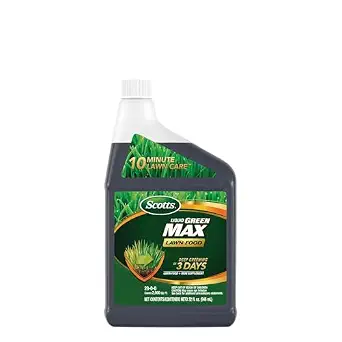 |
| Highest Rated A top-rated pick with lots of positive feedback | lawnbright Cold Snap Liquid Lawn Winterizer — 32 oz |  |
| Most Popular A crowd favorite that many people choose with confidence | Scotts Liquid Turf Builder with Plus 2 Weed Control, 32 fl. oz. |  |
| Best Seller A high-volume bestseller chosen again and again | Scotts Liquid Green Max Lawn Food, 32 fl. oz. |  |
Simple Lawn Solutions 16-4-8 Liquid Lawn Fertilizer (32 oz)

| Item Form | Liquid |
|---|---|
| Specific Uses For Product | Lawn Fertilizer |
| Application Method | Spray |
| Mixing Ratio | 3-5 fl. oz. per gallon |
| Target Species | Lawn Grass |
This 16-4-8 liquid lawn food supplies a balanced mix of nitrogen, phosphorus and potassium in a concentrated spray formula intended for routine maintenance and green-up. It connects to a hose-end sprayer and is applied every 3 to 4 weeks during the growing season, making it convenient for regular feeding across all common turf types. The formula includes seaweed and fish emulsion for added organic matter and is made from feed-grade ingredients, which helps with nutrient uptake and supports both shoot growth and root vigor. Practical benefits include fast coverage with a hose attachment, suitability for many grass varieties, and an adjustable mixing ratio (3 to 5 fl. oz. per gallon) so you can tailor strength for your lawn. Limitations are that it is a general-purpose maintenance fertilizer rather than a specialty formula for problems like iron deficiency or weed control, and proper watering is required after application for best results. Users should also follow the mixing guidance carefully to avoid overapplication.
Best for: Homeowners who want a straightforward, all-purpose liquid fertilizer for regular seasonal feeding and easy hose-end application on common turf types.
Less Ideal for: Gardeners seeking targeted soil amendments, specialty turf treatments, or integrated weed-and-feed solutions should consider other products.
- Balanced 16-4-8 NPK formula supports both green-up and root vigor
- Hose-end spray application for fast, even coverage of full lawns
- Includes seaweed and fish emulsion to improve nutrient uptake
- Concentrated solution with adjustable mixing ratio for flexible application
- Not formulated for specific nutrient deficiencies like iron or for weed control
- Requires regular watering after application to ensure nutrient absorption
Verdict: A convenient, balanced liquid fertilizer that makes routine lawn feeding quick and easy with a hose-end sprayer.
GS Plant Foods Liquid Fish & Kelp Fertilizer (1 Gallon)

| Item Form | Liquid |
|---|---|
| Application Method | foliar spray or soil drench |
| Liquid Volume | 128 fluid ounces |
| Mixing Ratio | 1:128 (Indoor), 1:64 (Outdoor) |
This one-gallon concentrate combines fresh fish hydrolysate and North Atlantic kelp into an OMRI-listed, organic liquid fertilizer meant for regular feeding across lawns and garden plants. It is mixed at low rates (2 fl. oz per gallon for outdoor use) and can be applied as a soil drench or foliar spray every 2 to 4 weeks, which makes it simple to dose for both spot treatments and broad lawn coverage. The formula is intended to support soil biology and root development rather than act as a fast synthetic nitrogen spike, so expect steadier, longer-term improvements in vigor and nutrient uptake instead of immediate green-up. Practical benefits include low odor relative to raw fish meals, suitability for organic growing, and versatility for houseplants through to turf. Important limitations are that it is a general soil health/biostimulant product rather than a high-N lawn-specific fertilizer, so users seeking rapid, strong turf greening or exact N-P-K ratios will need a complementary lawn-formulated product.
Best for: Buyers who prioritize long-term plant and soil health and want an organic, multi-use liquid they can apply to lawns and garden plants on a regular schedule.
Less Ideal for: Those who need a rapid, high-nitrogen lawn green-up or precise granular feeding plan focused solely on turf color and immediate growth.
- OMRI-listed organic formula made from fish hydrolysate and Ascophyllum nodosum kelp
- Versatile application as foliar spray or soil drench for lawns, vegetables, ornamentals, and houseplants
- Concentrated mix ratios let a little product treat a large area
- Supports soil microbiology and root development for longer-term plant health
- Not formulated as a high-nitrogen, quick-green lawn fertilizer so immediate color boost is limited
- Requires regular reapplication to maintain results versus slow-release granular options
Verdict: Pick this if you want an OMRI-listed liquid that builds soil biology and steady lawn vigor rather than a fast-acting synthetic green-up.
Spectracide Lawn Fertilizer 30-0-0 Liquid, 3 × 32 oz, Hose‑End Sprayer

| Item Form | Liquid |
|---|---|
| Coverage | 5000 square feet |
| Unit Count | 96 Fluid Ounces |
| Number of Packs | 3 |
This Spectracide 30-0-0 liquid fertilizer is designed to make routine lawn feeding quick and straightforward. The concentrate attaches to a hose-end QuickFlip sprayer so you can spray evenly across the yard without measuring or premixing. Its 2-in-1 formula delivers a burst of quick-release nitrogen for rapid greening and a slow-release fraction to sustain color over time, which helps thicken turf and encourage deeper roots when applied to actively growing grass. One 32-oz bottle covers up to 5,000 sq ft and the three-pack supplies multiple treatments or coverage for a larger lawn. Practical users will appreciate the ready-to-spray convenience and the ability to treat all common warm- and cool-season grasses. Important limits to note are application restrictions in some states and the need to avoid use on dormant turf; following local fertilizer ordinances and label directions is necessary. Also the pack includes one nozzle for three bottles, so you may need an extra sprayer if you want to work with bottles simultaneously.
Best for: Gardeners who want an efficient, low-effort way to green and strengthen actively growing lawns across several treatment cycles and who prioritize convenience and predictable results.
Less Ideal for: People who need to fertilize dormant turf, who must follow seasonal bans in their state, or who prefer granular slow-release products for very long feeding intervals.
- Ready-to-use hose-end sprayer eliminates measuring and mixing
- 30% nitrogen formula combines quick-release and slow-release for fast green-up and sustained color
- Each 32-oz bottle treats up to 5,000 sq ft, useful for medium-sized lawns
- Suitable for all common grass types when turf is actively growing
- One sprayer nozzle is provided for the three bottles rather than one per bottle
Verdict: If you want a fast, no-mess liquid fertilizer that combines quick green-up with sustained color and is easy to apply with a hose-end sprayer, this three-pack delivers that convenience.
Scotts Liquid Green Max Lawn Food Refill, 32 fl. oz.

| Unit Count | 32 Fluid Ounces |
|---|---|
| NPK | 29-0-0 |
| Application Method | hose sprayer |
| Coverage | Covers 2,000 sq. ft. |
Scotts Liquid Green Max is a high-nitrogen, ready-to-spray lawn fertilizer refill that connects to a hose-end applicator to feed turf while you water. It delivers a 29-0-0 NPK boost plus iron for rapid deep greening, with the manufacturer claiming visible results in about three days and coverage of roughly 2,000 square feet per bottle. Typical use is simple: attach the reusable applicator, connect your hose, flip the on/off slider and walk the yard for an even application. The translucent bottle makes it easy to monitor how much you have left and the hose sprayer removes measuring and mixing steps, so a small lawn can be treated in minutes. Because it is a straight liquid nitrogen feed with added iron, it is best for quick color improvement and seasonal feedings to build turf vigor. Limitations are that this is a high-nitrogen, phosphorus-free formula intended for regular feeding rather than weed control or soil amendment, and you need the compatible applicator to use the refill as intended.
Best for: Homeowners who want a quick, low-effort way to boost lawn color and maintain seasonal feedings without mixing fertilizer, especially for small to medium yards.
Less Ideal for: Gardeners seeking an all-in-one weed and feed solution or those who prefer granular fertilizers for slow-release feeding and soil-building benefits.
- Ready-to-spray hose-end refill eliminates measuring and mixing
- High nitrogen formula with added iron produces fast visible greening
- Covers approximately 2,000 sq. ft. per 32 fl. oz. bottle
- Translucent bottle lets you see remaining product during application
- Requires the compatible reusable applicator to use as intended
- Formulation focuses on greening only and does not provide weed control
Verdict: If you want fast, low-effort greening for a small lawn, this ready-to-spray liquid refill delivers visible results in days with minimal setup.
lawnbright Cold Snap Liquid Lawn Winterizer — 32 oz

| Item Form | Liquid |
|---|---|
| Application Method | hose-on |
| Target Species | Lawn Grass |
| Unit Count | 32 Fluid Ounces |
| Item Highlight | Sea kelp & potassium – covers 2,500 sq ft |
The lawnbright Cold Snap Liquid Lawn Winterizer is a ready‑to‑use hose‑on liquid formulated for late‑fall root feeding of cool‑season grasses. You connect the bottle to a hose and spray a measured application that the maker says covers up to 2,500 sq ft, so application takes about 15 minutes without a spreader. Its ingredient mix (low‑rate nitrogen, phosphate, soluble potash, sea kelp and hydrolyzed fish) is intended to encourage stronger, cold‑hardy roots and help lawns green up faster in spring. Key practical benefits are even coverage from the hose‑on method, a mostly natural ingredient profile that is labeled pet and kid safe after drying, and the focus on potassium for winter hardiness. Limitations to note are the relatively low nutrient percentages compared with heavier granular winterizers and the need to follow timing for cool‑season lawns for best effect. For homeowners wanting a simple, low‑labor late‑fall feeding this is an easy option; those seeking high‑N quick greening or granular soil amendment may prefer other products.
Best for: Homeowners who prioritize dependable, low‑effort late‑fall feeding for cool‑season lawns and want a mostly natural, pet‑safe product that requires minimal equipment.
Less Ideal for: Lawns that need heavy quick greening or corrective high‑nutrient treatments, or owners who prefer granular products for long‑lasting nutrient release.
- Hose‑on liquid simplifies application and provides even coverage without a broadcast spreader.
- Includes sea kelp and hydrolyzed fish for organic‑lean nutrient inputs and soil biology support.
- Formulated to boost potassium for late‑fall root hardening and spring recovery.
- Covers up to 2,500 sq ft from a single 32 oz bottle for typical suburban lawns.
- Low nutrient concentrations compared with concentrated granular winterizers, so effects are milder per application.
- Not suitable as a full season fertilizer program on its own; intended as a single late‑fall feed.
Verdict: A fuss‑free, hose‑on late‑fall winterizer that reliably strengthens cool‑season lawn roots with natural ingredients and minimal effort.
Scotts Liquid Turf Builder with Plus 2 Weed Control, 32 fl. oz.

| Liquid Volume | 32 fluid ounces |
|---|---|
| Coverage | 6000 square_feet |
| Item Form | Spray |
| Active Ingredients | Nitrogen |
This ready-to-spray Scotts Liquid Turf Builder combines a liquid lawn fertilizer with a broadleaf weed killer in a hose-end applicator for quick, walk-around applications. You connect the bottle to a garden hose, spray evenly when weeds are actively growing and avoid watering for 48 hours so the product can take effect. The formula provides a fast nitrogen lift and targets common lawn weeds such as dandelions, clover, chickweed and ground ivy, and is labeled for many warm- and cool-season grasses. A single 32 fl. oz. bottle covers up to 6,000 sq ft on warm-season lawns or 4,000 sq ft on cool-season lawns, which makes it useful for small to medium yards. Notable conveniences are the no-mix hose attachment and visible weed curling within days. Limitations include the need to follow temperature and grass-type guidance to prevent temporary injury to some bermudagrasses and the fact that stubborn weeds may need a repeat application in 3 to 4 weeks. This product is meant for lawn use only and should not be applied to garden beds or non-listed plants.
Best for: Homeowners who want a fast, low-effort lawn treatment that fertilizes and knocks back common broadleaf weeds in small to medium yards and prefer products with straightforward, proven use instructions.
Less Ideal for: People needing targeted weed control for beds, ornamentals, or vegetable gardens, or those managing very large properties who need higher‑capacity or professional-grade solutions.
- Ready-to-spray hose-end applicator requires no measuring or mixing
- Provides quick nitrogen boost for visible green-up
- Controls a wide list of common broadleaf lawn weeds
- Covers up to 6,000 sq ft (warm-season) or 4,000 sq ft (cool-season) from one bottle
- Can cause temporary injury on some bermudagrass varieties if directions are not followed
- May require a repeat application for stubborn weeds
Verdict: A convenient ready-to-spray fertilizer plus broadleaf weed killer that quickly greens lawns and controls common weeds with minimal setup.
Scotts Liquid Green Max Lawn Food, 32 fl. oz.

| Item Form | Liquid |
|---|---|
| Application Method | Spray |
| Coverage | 2000 |
| Unit Count | 32 Fluid Ounces |
Scotts Liquid Green Max is a hose‑end liquid lawn food that combines fast‑acting fertilizer with an iron supplement to deepen green color in as little as three days. You apply it by connecting the bottle to a garden hose and spraying evenly across turf, which makes it convenient for small to medium yards and last‑minute touch ups before events. Notable features include a 2‑in‑1 formula suitable for any grass type and a claimed 2,000 sq. ft. coverage per 32 fl. oz. bottle. In practice the product delivers quick cosmetic greening and is easy to use without measuring granules or a spreader, so it fits into a risk‑averse routine where simple, predictable results matter. Limitations are that it is primarily a cosmetic boost rather than a long‑term soil amendment and it should be applied when heavy rain is not expected to avoid washoff; repeated applications are needed for sustained turf health through the season.
Best for: Buyers who want an easy, low‑risk way to quickly green a small to medium lawn with minimal fuss and predictable short‑term results.
Less Ideal for: Those seeking a long‑term soil improvement plan or large‑acreage feeding solutions should consider granular programs or professional lawn care instead.
- Hose‑end bottle makes application quick and simple without measuring.
- 2‑in‑1 formula adds iron plus nutrients for faster visible greening.
- Covers up to 2,000 sq. ft. per bottle, suitable for small to medium lawns.
- Suitable for all common grass types, including cool‑ and warm‑season varieties.
- Provides mainly a short‑term cosmetic green up rather than lasting soil nutrient correction.
- Effectiveness can be reduced if applied before heavy rain due to runoff washout.
Verdict: If you want a fast, no‑fuss way to quickly green a small to medium lawn, this hose‑end liquid fertilizer delivers visible results with minimal effort.
Choosing the Right Liquid Fertilizer for Lawns: Key Factors to Consider
Nutrient Ratio and Nitrogen Source
The ratio of nitrogen, phosphorus, and potassium tells you what the product prioritizes. For most established lawns, a fertilizer higher in nitrogen with moderate potassium supports color and wear tolerance. Phosphorus is rarely needed for mature turf unless soil tests show a deficit.
Equally important is the type of nitrogen. Urea-based and ammonium forms produce quicker green-up but can increase burn risk if overapplied. Liquid formulations may include stabilized or slow-release nitrogen blends to extend feeding while reducing peak stress on grass.
Application Method and Coverage
How a liquid fertilizer is applied changes how evenly nutrients reach the turf. Hose-end sprayers, pump sprayers, and broadcast boom systems each demand different dilution clarity and suspension stability. A product that separates or foams makes uniform coverage difficult and raises the chance of streaking.
Also consider nozzle size and recommended walking speed for handheld sprayers. Clear instructions for spray volume per 1,000 square feet help you avoid thin coverage or overlapping that leads to burn spots.
Green-Up Speed Versus Longevity
Fast-acting liquids give quick color and growth response, which is useful for spring green-up or recovering from stress. However, quick-release nitrogen often wears off sooner and may require more frequent applications. Slow-release components provide steadier growth over weeks and reduce the need for repeat treatments.
Decide whether you prioritize immediate visual improvement or longer-lasting feeding. Many lawn routines benefit from an early quick-acting application followed by a slower-release maintenance product.
Safety for People, Pets, and Waterways
Liquids can move off-target with irrigation or heavy rain, so look for application windows and setbacks from water features listed on the label. Some formulations include surfactants or solvents that increase runoff risk, while others emphasize biodegradable carriers.
Also follow reentry intervals and pet-safe guidance. Even labeled lawn products can irritate sensitive skin immediately after application, so understanding the safety instructions affects when you mow or allow children and pets back onto treated grass.
Compatibility With Irrigation and Mowing
Plan applications around your irrigation schedule. Applying before a light irrigation helps wash nutrients into the root zone, but heavy watering soon after can wash away applied material. Timing relative to mowing matters too; applying to recently cut grass can increase foliar contact and speed uptake, but very short turf is more susceptible to burn.
Check label guidance for recommended moisture conditions and whether the product is intended for foliar uptake, soil uptake, or both.
Storage Stability and Mixing Clarity
Concentrated liquids need stable storage to prevent separation, gelling, or microbial growth. Products with clear shelf-life information and simple dilution tables reduce mistakes. Look for instructions about temperature limits and whether leftover mixed solution can be stored.
If you plan to tank-mix with weed or insect controls, verify compatibility notes. Immiscible additives can clog sprayer lines or reduce efficacy.
When to Use Liquid Fertilizer on Lawns
Liquid fertilizers are most useful when you want a fast visual response, need to correct early-season yellowing, or want precise control over application timing. They are also a good fit for spot treatments in high-traffic or thin areas because you can target small patches without treating the entire lawn.
Avoid using liquid concentrates right before heavy rain or if your lawn is drought stressed. For regular maintenance, combine occasional liquid feeds with a seasonal solid program or aeration schedule to support root development.
- Best for quick green-up and targeted corrections
- Useful for spot treatments and overseeding follow-ups
- Avoid application before heavy rainfall to reduce runoff risk
How to Measure Lawn Area and Mix Rates
Measure your lawn square footage before you buy product so you know how much concentrate to mix. Most labels give rates per 1,000 square feet. Calibrate your sprayer by measuring how much mixed solution it delivers over a known area to ensure you are not over or underapplying.
Keep a log of your application dates, rates, and weather conditions. That record helps you fine-tune timing and prevents accidental reapplication that can cause burn or excessive growth.
- Use a tape measure and simple area math for irregular sections
- Calibrate sprayer output using a catch can for accuracy
- Record applications and turf response for better timing
Managing Risk of Burn and Overstimulated Growth
To reduce burn risk, follow label dilution exactly and avoid applying on very hot days or to extremely short turf. If you need a strong green-up during the warmer months, split the recommended dose into two lighter applications spaced a week apart instead of one heavy application.
Monitor the lawn for the first week after application. If you see signs of scorching or unusually rapid thatch buildup, scale back frequency or switch to formulations with more slow-release nitrogen.
- Split heavy doses into multiple light applications
- Avoid treating during heat waves or drought stress
- Adjust mowing height upward for a few days after application if growth accelerates
Tank-Mixing and Compatibility Basics
Many liquid fertilizers can be tank-mixed with wettable iron or certain bio-stimulants, but always check compatibility charts and conduct a small jar test before full-scale mixing. Some adjuvants or herbicide residues in the tank can react with fertilizers and cause precipitation or reduced effectiveness.
Rinse sprayer tanks thoroughly between different products to prevent cross-contamination. When in doubt, apply products separately at recommended intervals rather than mixing incompatible chemistries.
- Perform a jar test when combining new product pairs
- Rinse tanks and lines to avoid cross-contamination
- Follow label wait times if applying other lawn treatments
Environmental Best Practices
Minimize runoff by applying only to dry grass followed by light irrigation if recommended. Keep a buffer from storm drains, ponds, and streams. Use slow-release or stabilized nitrogen blends when managing slopes or soils prone to leaching.
Apply during calmer weather to reduce drift and always avoid overapplication. These simple steps reduce nutrient loss and protect nearby plants and aquatic life.
- Avoid application within buffer zones near water
- Prefer stabilized nitrogen on sandy or sloped sites
- Do not apply before heavy rain events
How We Chose the Best Liquid Fertilizer for Lawns
We evaluated candidates against criteria that matter to people caring for turf. Primary filters included nutrient profile clarity and proportion of quick-release to slow-release nitrogen, since that determines green-up speed and risk of burn. Application practicality was assessed for compatibility with common hose-end or tank sprayers and for coverage uniformity. Safety and environmental impact considered label instructions for pet and waterway protection plus the presence of additives that increase runoff risk. Turf response evidence used manufacturer-provided usage guidelines and common agronomic norms for timing and frequency. Durability in storage and ease of mixing were also checked because concentrated liquids need stable formulations and clear dilution instructions. Exclusions: we excluded granular-only formulations, soil drenches not intended for broadcast lawn use, and products with incomplete nutrient labeling or missing application instructions. The final shortlist balances fast-acting formulas and slower-release blends so the list serves lawns needing immediate color boost as well as those requiring steady seasonal feeding.
FAQ
How often should I apply liquid fertilizer to my lawn?
Frequency depends on formulation and season. Fast-release liquids are often applied every 4 to 6 weeks during the growing season, while slow-release blends can be stretched to 8 to 12 weeks. Follow label guidance and adjust based on turf response and local growing conditions.
Can I use liquid fertilizer right after seeding or overseeding?
Light, low-rate liquid feeds can support new seedlings, but avoid high nitrogen concentrations that can burn tender shoots. Use products and rates labeled safe for newly seeded lawns and coordinate timing with the seed germination window.
Is it better to water before or after applying a liquid fertilizer?
A light irrigation after application often helps move nutrients into the root zone, but avoid heavy watering that causes runoff. If the product is foliar-friendly, some uptake happens through leaves without irrigation; check label instructions for best timing.
Are liquid fertilizers safe for pets and children?
Safety varies by formulation. Many products are safe once the treated grass is dry, but some labels recommend keeping people and pets off the lawn for a set period. Always read and follow reentry and safety directions to minimize exposure.
Can I mix liquid fertilizer with weed control products?
Sometimes, but compatibility is product-specific. If labels do not explicitly allow tank-mixing, apply the fertilizer and herbicide separately according to recommended intervals. Perform a jar test to check for precipitation before mixing in a sprayer.
How do I know if my lawn needs phosphorus?
Most established turf does not need extra phosphorus unless a soil test shows low levels. Overapplying phosphorus can harm waterways, so test soil before choosing a blend that includes phosphorus and follow agronomic recommendations.
Final Verdict
When choosing a liquid fertilizer for lawns, prioritize a nutrient profile that matches your turf goals and a nitrogen source that fits your timing preferences. Application ease, sprayer compatibility, and safety instructions matter as much as the numbers on the label because they determine how uniformly and safely you can feed the lawn. Balance quick green-up needs against steady-release options to avoid repeated applications and reduce burn risk. Use the factors above to pick the style and schedule that suits your mowing, irrigation, and environmental priorities so you can maintain a healthy, even lawn year-round.
