

Note: This article contains affiliate links. If you click on these links and make a purchase, I may earn a small commission at no extra cost to you. This helps support my research and content. Read my full affiliate disclosure here.
Picking the right liquid fertilizer matters because roses respond quickly to soluble nutrients and frequent feeding, whether they grow in beds, borders, or containers. The right product can improve bloom size, color, and disease resilience while avoiding salt buildup or excessive foliage at the expense of flowers. This guide covers seven shortlisted liquid fertilizers for roses chosen for their nutrient profiles, ease of application, and suitability for common garden situations. Below we explain the criteria used to evaluate each option, then walk through practical considerations so you can match feeding rhythm and formula to your rose type and growing setup.
Top Picks at a Glance
| Best Overall The best all-around choice for most situations | Neptune's Harvest Fish Fertilizer 2-4-1 (1 Gallon) |  |
| Best Quality Built to a higher standard if you want something more solid | Neptune's Harvest Rose & Flowering Liquid Fertilizer (2-6-4), 36 oz |  |
| Best Value The sweet spot between price and what you get | Farmer's Secret Rose Booster Fertilizer (8 oz) |  |
| Best Budget The cheapest option that still gets the job done reliably | Bloom City Rose & Flower Liquid Plant Food, 8 oz |  |
| Highest Rated A top-rated pick with lots of positive feedback | FoxFarm Grow Big Liquid Plant Food, 6-4-4 Quart Concentrate |  |
| Most Popular A crowd favorite that many people choose with confidence | Miracle-Gro Pour & Feed Liquid Plant Food, 32 fl. oz. | 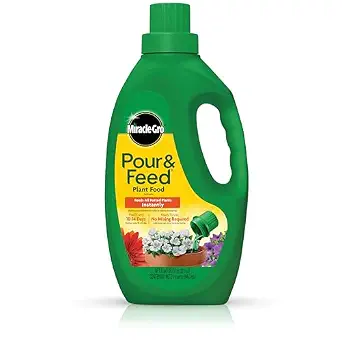 |
| Best Seller A high-volume bestseller chosen again and again | BioAdvanced All‑in‑One Rose & Flower Care Concentrate, 32 oz |  |
Neptune's Harvest Fish Fertilizer 2-4-1 (1 Gallon)

| Item Form | Liquid |
|---|---|
| Specific Uses For Product | Organic |
| Application Method | soil drench or foliar feed |
| Mixing Ratio | 1:128 |
Neptune's Harvest Fish Fertilizer is a one-gallon liquid concentrate made from cold-processed North Atlantic fish intended to deliver broad, biologically rich nutrition rather than just NPK. You dilute at the manufacturer-recommended 1 oz per gallon and apply as a soil drench or foliar spray every 2 to 3 weeks during the growing season. Notable features include an OMRI listing, a focus on preserving micronutrients and enzymes through a hydrolysate process, and a formulation that feeds soil microbes and improves soil structure over time. In practice it helps leafy growth, flowering and fruit set while also acting as a natural sticker for foliar applications. Because it supplies trace elements and amino acids, it can improve plant vigor and produce quality where used regularly. Limitations are typical for organic concentrates: it is lower in NPK compared with synthetic fertilizers so results are cumulative and require repeated use, and some gardeners may notice a mild fishy odor when handling concentrated product or immediately after application to foliage.
Best for: Gardeners focused on real growth performance and long-term soil health who want a biologically rich organic fertilizer for vegetables, ornamentals and lawns and are willing to apply it regularly.
Less Ideal for: People seeking an immediate high-nitrogen boost or quick-fix synthetic results, or those who need a no-odor fertilizer solution.
- Cold-process fish hydrolysate preserves vitamins, amino acids and enzymes for fuller nutrition
- OMRI listed organic concentrate suitable for edible gardens and ornamentals
- Versatile application as soil drench or foliar feed with a simple 1:128 mixing ratio
- Supports soil biology and improves soil structure over repeated use
- Lower straight NPK numbers compared with synthetic feeds so effects build over time
- Concentrated product can have a noticeable fish odor during handling
Verdict: Choose this product when you want a performance-focused organic fish fertilizer that builds plant vigor and soil biology rather than a fast-acting synthetic spike.
Neptune's Harvest Rose & Flowering Liquid Fertilizer (2-6-4), 36 oz

| Item Form | Liquid |
|---|---|
| Specific Uses For Product | Plant Growth, Root Development, Seed Development, Soil Conditioning |
| Application Method | Liquid |
| Target Species | Flowers |
| Mixing Ratio | 1 tbsp/gal (houseplants), 1/8 cup/gal (outdoor) |
Neptune's Harvest Rose & Flowering is a ready-to-mix organic liquid fertilizer with an NPK of 2-6-4 designed to encourage stronger roots and fuller blooms on roses and flowering plants. You mix the concentrate into water and apply as a soil drench or foliar feed; the label gives separate ratios for houseplants and outdoor use so it is easy to dose. The formula blends fish, seaweed, molasses, humic acids, yucca extract, microbes, and liquid calcium, which supports soil biology, improves nutrient uptake, and can deepen flower color and bud set. For gardeners focused on performance it helps increase bud density and can be used throughout the growing season without synthetic salts. Expect gradual, steady improvements in vigor rather than an instant flush; because the N is low this is a bloom-focused feed, so it is best paired with a more balanced fertilizer when larger vegetative growth is needed. The 36 ounce bottle covers repeated applications for a season on small to medium beds or containers, and the liquid format makes foliar feeding and quick nutrient delivery straightforward.
Best for: Gardeners who prioritize stronger bloom performance and healthier flower set on roses and other ornamentals and who prefer organic, soil-building feeds over high-salt synthetic boosters.
Less Ideal for: Growers seeking rapid leafy growth or a single all-purpose fertilizer for large landscapes should consider higher-nitrogen or bulk options instead.
- Bloom-focused 2-6-4 NPK encourages bud set and richer flower production
- Organic blend of fish and seaweed plus microbes supports soil biology and nutrient uptake
- Usable as soil drench or foliar feed with clear mixing ratios for different uses
- Liquid concentrate allows quick uptake and easy application to containers and beds
- Low nitrogen content means it will not drive rapid leafy growth on its own
- Smaller 36 oz bottle may require frequent repurchase for large gardens
Verdict: Choose this organic liquid if you want a performance-focused bloom booster that improves bud set and flower quality for roses while feeding soil biology.
Farmer's Secret Rose Booster Fertilizer (8 oz)

| Item Form | Liquid |
|---|---|
| Application Method | Dilute and spray |
| Coverage | Medium |
| Target Species | roses |
| Mixing Ratio | 2 teaspoons per 1 gallon |
Farmer's Secret Rose Booster is a concentrated liquid feed made for routine rose care. You dilute two teaspoons per gallon and apply weekly as a foliar spray or to the soil, which makes it straightforward to add into a regular maintenance routine. The formula is presented as professional-grade and concentrated, so a small 8 ounce bottle yields many gallons of feed and reduces how often you need to buy replacements. Practical advantages include simple mixing instructions, compatibility with foliar or soil applications, and a focus on roses rather than a one-size-fits-all blend. Expect better bloom intensity and healthier-looking plants when used consistently during the growing season. Limitations are that the product information does not list specific N-P-K values or micronutrient breakdown, so you cannot precisely balance feeding against soil test results, and it assumes weekly use rather than a flexible schedule for different rose varieties or seasonal needs.
Best for: Gardeners who prioritize efficient, repeatable rose care and want a concentrated, easy-to-mix weekly feed to keep shrubs blooming and vigorous.
Less Ideal for: Growers who need exact N-P-K ratios for tailored fertilization plans or those managing large rose estates who prefer bulk concentrates or granular slow-release feeds.
- Super-concentrated formula yields many gallons from one bottle
- Clear mixing ratio of 2 teaspoons per gallon makes dosing easy
- Can be applied as foliar spray or to soil for flexible use
- Formulated specifically for roses rather than a generic plant food
- No N-P-K or full nutrient breakdown provided for precise fertilization planning
- Small bottle size may require frequent repurchases for large rose collections
Verdict: A compact, highly concentrated weekly liquid feed that makes it easy to keep roses blooming with minimal fuss.
Bloom City Rose & Flower Liquid Plant Food, 8 oz

| Item Form | Liquid |
|---|---|
| Target Species | Flowers |
| Liquid Volume | 8 fluid ounces |
This Bloom City liquid plant food is a compact, flower-focused fertilizer designed for regular feeding of rose bushes, mixed flower beds, and container blooms. The product supplies balanced NPK nutrition in an easy-to-dilute liquid form so you can feed plants during the growing season to encourage repeat flowering and stronger foliage. Typical use is straightforward: dilute per package directions and apply at regular intervals as part of routine flower care. Notable features include a formula targeted to flowers and a small 8 ounce bottle that is convenient for trial use or small gardens. Practical benefits are simple dosing, suitability for pots and beds, and a formula aimed at improving petal color and bloom frequency. Important limitations are the small volume, which will require frequent repurchasing for larger gardens, and lack of detailed NPK numbers on the label provided here, which makes precise nutrient planning difficult for growers who track exact ratios.
Best for: Gardeners who want an affordable, easy-to-use liquid fertilizer to try on roses and small flower plantings and who prioritize simple, regular feeding over exact nutrient control.
Less Ideal for: Large-scale rose growers or those who need large supply volumes or precise NPK formulations should consider concentrated or bulk fertilizers instead.
- Formulated specifically for roses and flowering plants
- Liquid form makes dilution and application easy for garden or containers
- Compact 8 oz bottle is convenient for small gardens or trial use
- Small 8 oz volume is not cost-effective for larger gardens
- Label information shown does not list exact NPK ratios for precise nutrient management
Verdict: A handy, flower-focused liquid fertilizer that lets budget-minded gardeners easily boost bloom frequency and color in small rose beds and containers.
FoxFarm Grow Big Liquid Plant Food, 6-4-4 Quart Concentrate

| N-P-K | 6-4-4 |
|---|---|
| Form | Liquid concentrate |
| Unit count | 32 Fluid Ounces |
| Mixing ratio | 2-3 teaspoons per gallon |
FoxFarm Grow Big is a water-soluble concentrate designed to boost vegetative growth and speed nutrient uptake in vegetable gardens and ornamentals. Mixed at 2 to 3 teaspoons per gallon, it can be applied through watering or foliar feeding to quickly deliver nitrogen-focused nutrition that supports larger plants and stronger stems. The low pH formula helps keep micronutrients stable so feedings remain effective, and the quart concentrate covers repeated applications for a small plot or a set of containers. Practical benefits include clear mixing instructions, versatility for both indoor and outdoor use, and a fast-acting effect when plants need a growth push. Limitations to note are the higher nitrogen emphasis, which favors leaf and stem growth over bloom or fruit set, and the presence of phosphorus in the formula that may be restricted in some local lawn rules. For gardeners who prioritize consistent, predictable feedings, this product is straightforward to measure and integrate into a regular watering schedule.
Best for: Gardeners who want a reliable, easy-to-dose liquid fertilizer to encourage rapid vegetative growth in vegetable beds, containers, and established plants and who value predictable results from each feeding.
Less Ideal for: Growers focused primarily on maximizing flowering or fruit set who need a bloom-boosting formula or those working under strict phosphorus-use restrictions in their area.
- Concentrated liquid formula for fast nutrient uptake and quick visible response
- Low pH formulation helps maintain micronutrient stability during storage and application
- Versatile application by watering or foliar feeding for indoor and outdoor use
- Clear mixing ratio (2–3 teaspoons per gallon) simplifies repeatable feedings
- Nutrient ratio (6-4-4) emphasizes vegetative growth rather than flowering or fruit production
- Contains phosphorus which may be restricted by local regulations for turf or non-agricultural use
Verdict: Choose this concentrate when you want a dependable, fast-acting liquid feed to promote vigorous leafy and structural growth in a vegetable garden.
Miracle-Gro Pour & Feed Liquid Plant Food, 32 fl. oz.

| Item Form | Liquid |
|---|---|
| Application Method | Directly to the soil |
| Target Species | potted plants |
| Unit Count | 32 Fluid Ounces |
Miracle-Gro Pour & Feed is a ready-to-use liquid fertilizer designed for container plants and houseplants. You apply it by measuring with the bottle cap and pouring the recommended amount directly onto the soil around each pot, so no mixing or watering-can prep is required. Its convenience makes it easy to maintain a regular 10–14 day feeding schedule for bedding plants like petunias in containers. The product is formulated for potted plants only, and the liquid form gives fairly quick nutrient availability compared with slow-release granules. Practical benefits include simple dosing with the cap, suitability for indoor and outdoor use, and a clearly stated application rhythm that helps keep flowering plants vigorous. Important limitations are that it is not intended for in-ground beds and that frequent applications mean you need to remember regular feedings; it is also a general all-purpose formula rather than a petunia-specific bloom booster.
Best for: A plant owner who prefers simple, low-effort care for container flowers and wants a dependable, easy-to-measure fertilizer to keep petunias and other potted ornamentals blooming.
Less Ideal for: Gardeners seeking a long-term, in-ground soil amendment or those who prefer an infrequent, slow-release feeding schedule should consider other products.
- Ready-to-use liquid requires no mixing so application is fast and low-effort
- Cap-measure dosing makes it easy to apply the correct amount for each container
- Suitable for both indoor and outdoor container plants so one product covers many uses
- Feeds on a 10–14 day schedule for consistent nutrient supply to flowering containers
- Not formulated for in-ground planting so unsuitable for garden beds
- Requires frequent application compared with slow-release fertilizers
Verdict: Use this if you want a no-mix, easy-to-measure liquid fertilizer to keep container petunias fed and blooming on a regular schedule.
BioAdvanced All‑in‑One Rose & Flower Care Concentrate, 32 oz

| Item Form | Liquid |
|---|---|
| Liquid Volume | 32 fluid ounces |
| Active Ingredients | Imidacloprid, Tebuconazole |
| Target Species | Insects |
This BioAdvanced All‑in‑One Rose & Flower Care is a concentrated liquid designed to simplify rose care by combining fertilizer, insect control, and fungicide in a single pour‑in application. You mix the concentrate with water and apply to soil around roses and other flowering shrubs; the systemic formula is taken up through roots so it is rainproof and protects plants for up to six weeks. Notable features are its dual active ingredients, imidacloprid for insect control and tebuconazole for disease suppression, and a formulation targeted at common rose problems such as aphids and black spot. In practice it helps reduce visible fungal symptoms while also feeding plants to encourage stronger roots and better blooms, which is useful when you want broad protection without multiple products. Important limitations are that the product contains systemic insecticide (so follow label safety and pollinator guidance) and it is not approved for sale in several states, so check local restrictions before purchase.
Best for: Gardeners who want a simple, low‑fuss approach to maintain healthy roses and reduce both fungal disease and insect problems without juggling multiple products.
Less Ideal for: Organic growers who avoid synthetic systemic insecticides or anyone who needs a product cleared for use in states where this formulation is restricted.
- Three functions in one bottle: fertilizer, insect control, and fungicide for simpler care routines.
- Systemic, rainproof action that protects plants for up to six weeks after application.
- Targets common rose pests and diseases including aphids and black spot.
- Concentrate form allows multiple treatments per bottle compared with ready‑to‑use sprays.
- Contains a systemic insecticide that requires careful use around pollinators and according to label restrictions.
- Not sold in certain states, so availability and legality vary by location.
Verdict: A convenient 3‑in‑1 concentrate that treats black spot and other rose diseases while feeding plants, ideal for gardeners who want broad, low‑effort protection.
Choosing the Right Liquid Fertilizer for Roses: Key Factors to Consider
Nutrient Ratio and Bloom Focus
Roses typically need a feeding program that supports flower production without excessive leafy growth. Look for liquid formulas with a higher middle number relative to nitrogen to encourage blooms while still supplying enough nitrogen for healthy foliage. Consistent bloom-focused ratios help maintain repeat flowering through the season.
Too much nitrogen in a liquid feed can cause lush green growth with fewer flowers, while too little can leave plants weak and pale. A balanced liquid feed helps you tune frequency and strength to the season and rose type.
Micronutrients and Trace Elements
Micronutrients like iron, magnesium, manganese, and boron play an outsized role in petal color intensity, leaf health, and disease resistance. Liquid fertilizers that include chelated or soluble forms of these elements supply them immediately to actively growing tissue.
If your roses show yellowing between veins, poor bloom set, or slow recovery after stress, a feed that supplies these trace elements can correct deficiencies faster than granular top-dressings.
Solubility, Mixing, and Tank Compatibility
How well a liquid fertilizer dissolves affects application accuracy and clogging risk. A fully soluble concentrate that mixes clear reduces nozzle and spray-tank problems and ensures uniform distribution in foliar sprays or root drenchings.
Consider compatibility with your sprayer and whether the formula foams, precipitates, or needs warming to blend. Ease of mixing saves time and reduces the chance of dosing errors that can harm plants.
Application Frequency and Dilution Flexibility
Liquid feeds vary from weekly concentrates to mild daily strength formulations. Think about the schedule you can maintain and the flexibility the product allows. A product with clear dilution ratios for maintenance versus boost feeding lets you customize treatment for newly planted roses, established shrubs, or containerized specimens.
Flexible dilution options also help avoid fertilizer burn in hot weather or when plants are under drought stress by allowing you to reduce concentration without changing the product.
Salt Load and Root Safety
Some liquid fertilizers deliver a high soluble salt load that can build up in soil or potting mix, stressing roots and reducing water uptake. Choose formulas with clear instructions on leaching and lower salt concentrations when you grow roses in containers or heavy soils.
Regular monitoring and occasional deep watering to flush salts are important when using any liquid feed. Products that state electrical conductivity or provide low-salt alternatives are useful for sensitive sites.
Storage, Shelf Life, and Season-Long Use
A liquid fertilizer that remains stable once opened and stores safely between feedings is more practical for most gardeners. Look for products that resist separation, come with resealable containers, and include storage instructions.
Longer shelf life matters if you feed sporadically through the season or over multiple seasons. Formulations that require refrigeration or degrade quickly after opening add extra maintenance and waste.
Feeding Roses in Beds Versus Containers
Container roses dry out and concentrate soluble salts faster than those planted in the ground, so adjust feed strength and frequency accordingly. For containers, use weaker but more frequent liquid feeds and plan to flush pots with clear water every few weeks to avoid buildup.
In garden beds, roots can access a larger soil volume, so you can use slightly stronger dilutions or less frequent feedings. Still, timing matters: feed early in the season to support new growth, then switch to bloom-focused dilutions as flowering begins.
- Containers: lower concentration, higher frequency, routine leaching
- Beds: slightly stronger mixes, feed at key growth stages
- New plantings: gentle starter dilutions to avoid root shock
Applying Liquid Fertilizer Safely
Apply liquid feeds to moist soil rather than dry media to reduce risk of root burn. Follow label dilution rates and never exceed recommended frequency. When using foliar sprays, target early morning or late afternoon to limit leaf scorch and improve uptake.
Protect pollinators by avoiding foliar applications during peak bloom visitation times. If you must spray when flowers are present, aim for root drenching or apply when pollinators are not active.
- Water before feeding to reduce salt stress
- Apply sprays in cool parts of the day to prevent scorch
- Avoid spraying open blooms when pollinators are active
Seasonal Feeding Calendar for Roses
Start light feeding as soon as new growth appears in spring to support canes and leaf set. Move to a bloom-focused routine once buds form, maintaining that through main flowering flushes. Reduce or stop fertilizing in late fall as plants harden off for winter.
For repeat-blooming varieties, a steady moderate schedule keeps blooms coming. For once-blooming or heritage roses, concentrate feeding leading up to the single major flush.
- Spring: maintenance to encourage leaf and cane growth
- Bud formation through bloom: bloom-focused dilutions
- Late season: taper off to harden plants
Troubleshooting Common Feeding Issues
Yellowing between veins often indicates a micronutrient shortage rather than a nitrogen problem. Use targeted micronutrient supplements or feeds that include those trace elements. If foliage is dark green but few flowers are produced, reduce nitrogen and emphasize bloom-targeted feeding.
If you see leaf burn or stunted growth after an application, flush the soil with plenty of water and cut back feed strength. Clogged sprayer nozzles or cloudy tank mixes suggest poor solubility or incompatible additives.
- Interveinal chlorosis: check for iron or magnesium deficiency
- Excessive foliage, few flowers: lower nitrogen in feed
- Leaf burn after feeding: flush soil and reduce concentration
Combining Liquid Fertilizers with Organic Amendments
Liquid fertilizers provide quick, soluble nutrients while organic matter improves long-term soil structure and microbial activity. Use liquids for fast correction and bloom boosts, and maintain soil health with compost or well-rotted manure applied in the off-season.
Avoid heavy overlapping of concentrated liquid feeds with high-nitrogen manures at the same time. Stagger applications so organic slow-release sources supply baseline nutrition and liquids supply targeted, timely boosts.
- Use liquid feeds for short-term corrections and bloom pushes
- Apply compost in fall or early spring for long-term fertility
- Stagger liquid and organic applications to prevent nutrient spikes
How We Chose the Best Liquid Fertilizer for Roses
We selected products that address the distinct needs of roses: predictable bloom production, balanced nutrient ratios, and straightforward application. Primary evaluation criteria included nutrient composition and N-P-K balance tailored for flowering, presence of micronutrients important to rose health, and solubility for consistent feeding. We also assessed application convenience, including dilution clarity, spray compatibility, and recommended feeding intervals for both beds and containers. Longevity and storage stability were factored in to favor formulations that remain usable through a season without rapid breakdown. Safety and runoff risk were considered, prioritizing products with clear dosing guidance to avoid salt accumulation in soil. Exclusions included dry fertilizers, blends designed primarily for lawns, and products lacking clear label nutrient information. The final shortlist emphasizes formulas that deliver measurable feeding control, reduce application guesswork, and suit common rose-growing situations.
FAQ
How often should I feed roses with a liquid fertilizer?
It often depends on the product strength. Many concentrates are used weekly or every two weeks, while lower-strength daily feeds exist. Match frequency to dilution and monitor plant response, reducing strength in hot or dry conditions.
Can I use liquid fertilizer as a foliar spray on roses?
Yes. Foliar applications deliver nutrients quickly, especially micronutrients, but apply in the cool part of the day and avoid spraying open flowers when pollinators are active. Use labeled rates to prevent leaf scorch.
Will liquid feeding cause fertilizer burn in potted roses?
It can if concentrations are too strong or pots are not leached. Use weaker mixes for containers and flush pots periodically with clear water to remove accumulated salts.
Do roses need different feeding in spring versus summer?
Usually. Early spring feeding supports cane growth and leafing, while mid-season feeding should emphasize bloom-promoting nutrients. Many gardeners reduce or stop feeding as autumn approaches to help plants harden off.
Are liquid fertilizers safe near ornamentals and vegetables planted nearby?
Often they are safe when applied at recommended rates, but avoid drift from foliar sprays onto sensitive plants. Choose formulations with balanced N-P-K and minimal salt load to reduce risk to adjacent plantings.
Final Verdict
Choose a liquid fertilizer that matches how and where you grow roses: lighter, more frequent dilutions for containers and flexible, bloom-focused ratios for beds. Prioritize products with the micronutrients your roses need, clear dilution instructions, and good solubility to avoid application problems. Balance the convenience of quick-acting liquids with periodic organic soil improvements to maintain long-term vigor. Ultimately, prioritize nutrient profile and application clarity over claims. Matching feed strength and schedule to your rose type and growing situation will deliver the best bloom response and plant health.
