

Note: This article contains affiliate links. If you click on these links and make a purchase, I may earn a small commission at no extra cost to you. This helps support my research and content. Read my full affiliate disclosure here.
Choosing the right liquid fertilizer changes how quickly plants recover from stress, respond after planting, and show new growth. Whether you tend a vegetable patch, a patio of containers, or a mixed flower border, liquid fertilizers deliver nutrients fast and let you adjust feeding rates to match growth stages. This guide shortlists seven top options and evaluates them on the practical criteria gardeners care about, including nutrient balance, ease of application, and safety around edibles and pets. Read on to see the factors that matter and what to prioritize for your situation before the product list.
Top Picks at a Glance
| Best Overall The best all-around choice for most situations | FoxFarm Grow Big Liquid Plant Food, Quart Concentrate (6-4-4) |  |
| Best Quality Built to a higher standard if you want something more solid | FoxFarm Soil Liquid Trio Pack (Big Bloom, Grow Big, Tiger Bloom) – 3 Quart Bottles |  |
| Best Value The sweet spot between price and what you get | Purived 16 oz All-Purpose Liquid Plant Fertilizer |  |
| Best Budget The cheapest option that still gets the job done reliably | Miracle-Gro Liquid All Purpose Plant Food Concentrate, 32 oz |  |
| Highest Rated A top-rated pick with lots of positive feedback | Ocean's Bounty Organic Seaweed Liquid Kelp Concentrate, 16 oz |  |
| Most Popular A crowd favorite that many people choose with confidence | Miracle-Gro Indoor Plant Food, Liquid, 8 oz. (2-Pack) |  |
| Best Seller A high-volume bestseller chosen again and again | TPS NUTRIENTS Indoor Plant Food Liquid Concentrate, 32 fl oz |  |
FoxFarm Grow Big Liquid Plant Food, Quart Concentrate (6-4-4)

| NPK | 6-4-4 |
|---|---|
| Form | Liquid |
| Unit Count | 32 Fluid Ounces |
| Mixing Ratio | 2-3 teaspoons per gallon |
FoxFarm Grow Big is a concentrated 6-4-4 liquid plant food designed for fast nutrient uptake and lush vegetative growth. It is typically mixed at 2 to 3 teaspoons per gallon and applied via watering or foliar feeding to roses, tomatoes, herbs, vegetables, and houseplants. The low pH formula helps keep micronutrients stable so plants can absorb them quickly, which is useful when you want a visible growth boost during the vegetative stage. The quart concentrate covers routine feedings for small to medium gardens and potted collections and is easy to measure and mix. Practical benefits include versatile application options, clear mixing guidance, and a formula aimed at promoting leaf and stem development that supports bigger flowers and fruit later. Limitations to consider are that it is focused on vegetative growth rather than bloom-specific feeding and it contains phosphorus, so you should follow local guidelines for turf or runoff-sensitive areas.
Best for: Gardeners who want an all-purpose liquid feed to encourage strong foliage and overall plant vigor across vegetables, herbs, and potted plants; good for people looking for a reliable, easy-to-mix concentrate for routine feedings.
Less Ideal for: Growers seeking a bloom-specific or high-potassium finish fertilizer for flowering and fruiting stages; large-scale lawns or commercial plantings that need bulk or phosphorus-free formulations.
- Concentrated liquid formula for quick nutrient uptake
- Versatile application by watering or foliar feeding
- Low pH formulation to keep micronutrients stable
- Clear mixing ratio included for straightforward use
- Formulation emphasizes vegetative growth rather than bloom boosting
- Contains phosphorus which may be restricted in some areas
Verdict: Choose this concentrate when you want a fast-acting, easy-to-use liquid feed to build strong vegetative growth across vegetables and houseplants.
FoxFarm Soil Liquid Trio Pack (Big Bloom, Grow Big, Tiger Bloom) – 3 Quart Bottles

| Unit Count | 32 Fluid Ounces |
|---|---|
| Item Form | Liquid |
| Specific Uses For Product | Plant Food |
| Mixing Ratio | 1-2 teaspoons per gallon of water |
The FoxFarm Soil Liquid Trio Pack bundles Big Bloom, Grow Big, and Tiger Bloom into a single feeding program for gardens and houseplants. Users typically start with Grow Big during vegetative stages to promote leafy growth, switch to Tiger Bloom when buds form to support flowering, and use Big Bloom throughout for steady nutrient support and bloom enhancement. The formulas are greenhouse tested and supplied with a clear mixing ratio of 1 to 2 teaspoons per gallon, making it straightforward to dose for pots, raised beds, or containers. Practical benefits include versatility across flowers, vegetables, and ornamentals, immediate availability of nutrients in liquid form, and consistency from a long-established brand. Important limitations are that these are concentrated liquids that require careful measuring and a feeding schedule for best results, and phosphorus-containing formulas may be restricted by local rules near waterways. This set is best for gardeners who want a performance-focused, stage-specific feeding plan rather than a single all-purpose fertilizer.
Best for: Gardeners focused on maximizing plant performance and bloom production who are willing to follow a staged feeding schedule and measure concentrates accurately.
Less Ideal for: Casual gardeners who prefer set-and-forget granular fertilizers or users who cannot comply with local phosphorus application restrictions.
- Complete three-part feeding program covers vegetative growth, bloom initiation, and ongoing bloom support
- Liquid form delivers nutrients immediately and mixes at low rates for precise dosing
- Greenhouse-tested formulas for consistency across applications
- Versatile across flowers, vegetables, and houseplants
- Requires careful measurement and adherence to a feeding schedule to avoid overfeeding
- Contains phosphorus which may be restricted in some localities near water bodies
Verdict: Buy this trio if you want a performance-driven, stage-specific liquid feeding program to push vigorous growth and heavier blooms.
Purived 16 oz All-Purpose Liquid Plant Fertilizer

| Item Form | Liquid |
|---|---|
| Specific Uses For Product | Houseplant Fertilizer |
| Application Method | soil drench, foliar feed, full & semi hydroponics |
| Mixing Ratio | 320:1 |
| Liquid Volume | 16 fluid ounces |
Purived 16 oz All-Purpose Liquid Plant Fertilizer is a concentrated liquid feed for houseplants that is intended for soil drench, foliar feeding, and both full and semi-hydroponic systems. You mix roughly one cap per gallon (manufacturer mixing ratio 320:1) to create a nutrient solution; a single bottle claims to make about 50 gallons, which makes it convenient for regular feeding cycles. The formula lists primary macronutrients and several micronutrients including iron, magnesium, and zinc, so it supplies a broad spectrum of elements rather than a single nutrient. In practice it works well for routine maintenance feeding of mixed indoor collections and can be used directly in watering or as a foliar spray when diluted. Important limitations are the need to follow dilution instructions carefully to avoid overfeeding and that the product label requires safe handling around children and pets. There is no detailed N-P-K breakdown on the provided information, so growers seeking exact nutrient ratios or specialty formulations may need a different product.
Best for: Buyers who want a single, versatile liquid fertilizer for routine feeding of indoor potted plants and who prioritize cost-effective concentrate that covers multiple feeding methods.
Less Ideal for: Specialist growers who need precise N-P-K ratios or tailored formulations for a specific plant problem should consider a fertilizer with labeled macronutrient breakdown or targeted products.
- Highly concentrated so one 16 oz bottle makes a large volume of feed
- Suitable for soil drench, foliar feeding, and hydroponic use
- Contains broad-spectrum micronutrients in addition to primary nutrients
- Odorless formulation that is easy to mix and apply
- No explicit N-P-K ratio provided in the listed product details
- Safety precautions required around children and pets due to concentrate
Verdict: A concentrated, versatile liquid feed that gives practical, multi-method nutrition for routine care of indoor plants.
Miracle-Gro Liquid All Purpose Plant Food Concentrate, 32 oz

| Item Form | Liquid |
|---|---|
| Specific Uses For Product | Plant Growth, Root Development |
| Application Method | Mix with water in a watering can |
| Unit Count | 32 Fluid Ounces |
| Mixing Ratio | 1:10 (concentrate to water, estimate) |
Miracle-Gro Liquid All Purpose is a straightforward, water-soluble concentrate for feeding container and in-ground plants. You dilute the concentrate with water in a watering can and apply every 1 to 2 weeks; the bottle includes simple mixing guidance for gardens and houseplants. Notable features are its universal formula for flowers, vegetables, shrubs, trees and houseplants and an easy-to-follow cap dosing method that makes routine feeding quick. In practice the product supplies fast-acting nutrients that are convenient for regular maintenance and responsive plant growth. The concentrate format keeps storage footprint small and makes it inexpensive per application when mixed correctly. Important limitations are that it is a general-purpose feed rather than a targeted formula for bloom boosting or specialty plants and repeated frequent use can require attention to watering and soil health to avoid nutrient imbalance. For gardeners seeking a reliable, no-fuss liquid feed to support regular growth, this performs well; those wanting organic or crop-specific formulas should look elsewhere.
Best for: Buyers who want a low-effort, economical liquid fertilizer to feed a variety of indoor and outdoor plants on a regular schedule.
Less Ideal for: Growers seeking organic-certified feeds or specialized formulas for bloom boosting, orchids, or succulents should consider dedicated products instead.
- Concentrate format reduces storage space and cost per application
- Easy dilution instructions for both garden and houseplants
- Suitable for a wide range of plants including flowers, vegetables and houseplants
- Not a specialized formula for flowering or fruiting boost
- Not labeled as organic
Verdict: A budget-friendly, easy-to-use liquid concentrate that reliably feeds a wide range of plants on a regular schedule.
Ocean's Bounty Organic Seaweed Liquid Kelp Concentrate, 16 oz

| Item Form | Liquid |
|---|---|
| Target Species | plants |
| Liquid Volume | 16 fluid ounces |
This Ocean's Bounty liquid seaweed fertilizer is an OMRI-certified kelp concentrate formulated from tropical red and brown seaweeds to deliver micronutrients that support root and stem growth. It is typically diluted and applied to soil or as a foliar feed to encourage deeper roots, stronger stems, and greener leaves on indoor plants, lawns, and garden beds. Notable features include its organic certification and a concentrated liquid form that makes measuring and mixing straightforward. Practical benefits are improved nutrient uptake from stronger root systems, easier application across different plant types, and the sustainability story of farmed seaweed sourcing. Limitations are inherent to kelp concentrates: it is a biostimulant rather than a complete NPK fertilizer so it complements rather than replaces regular balanced feeding, and the 16 oz bottle is modest in volume for larger gardens. For gardeners seeking a reliable, organic growth stimulator, this is a simple, well-documented option, but you will still need a separate fertilizer for primary macronutrients.
Best for: Gardeners who prioritize dependable, certified organic inputs and want a consistent biostimulant to strengthen roots and recovery across indoor plants, lawns, and small to medium garden beds.
Less Ideal for: Large-scale vegetable growers or landscapers who need bulk primary-nutrient fertilization or high-volume supply in a single purchase.
- OMRI-certified organic formulation from tropical red and brown seaweeds
- Liquid concentrate that is easy to dilute and apply to soil or foliage
- Specifically formulated to stimulate root and stem development
- Sustainably farmed seaweed with a documented social impact on coastal communities
- Not a complete NPK fertilizer so it must be used alongside regular feeding
- 16 fl oz bottle may be small for large gardens or frequent use
Verdict: Pick this OMRI-certified kelp concentrate when you want a reliable organic liquid biostimulant to strengthen roots and improve plant vigor alongside your regular fertilizer.
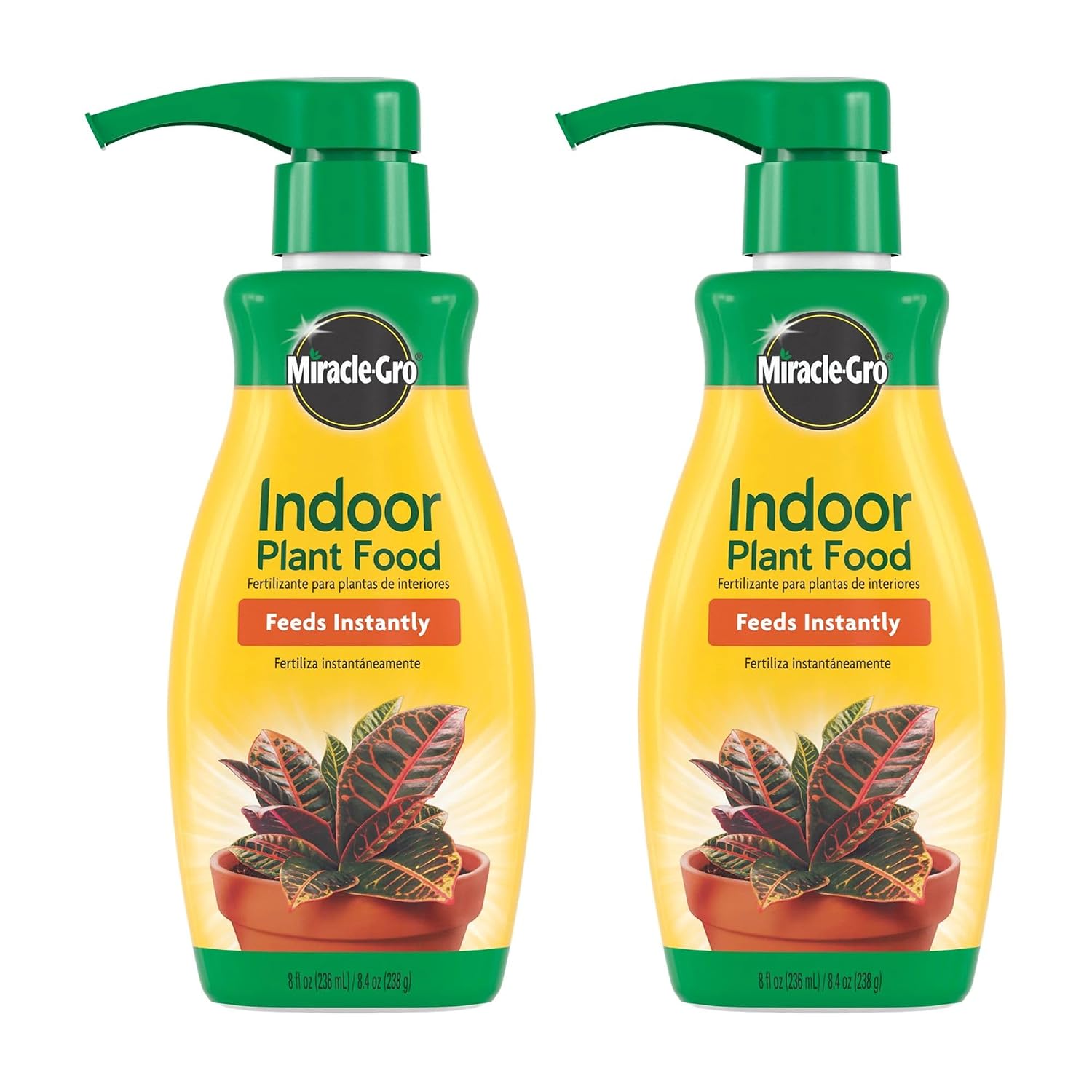
Miracle-Gro Indoor Plant Food, Liquid, 8 oz. (2-Pack)
| Item Form | Liquid |
|---|---|
| Specific Uses For Product | Plant Food |
| Application Method | Apply directly to the soil or mix with water |
| Coverage | Pot size |
| Target Species | Peace Lily, Snake Plant, Croton, Succulents, Herbs |
Miracle-Gro Indoor Plant Food is a concentrated liquid fertilizer intended for weekly feeding of indoor potted plants. You can apply it directly to the soil with the built-in pump (one pump for small pots, two for pots over 6 inches) or mix four pumps per quart of water for watering can application. It supplies fast-acting nutrients that help foliage and flowering houseplants, herbs, and kitchen vegetables recover between feedings and maintain steady growth. The practical pump dispenser makes dosing simple and reduces guesswork for busy plant owners, and the 2-pack gives enough product to treat multiple plants for several weeks. Important limitations are that it is a general-purpose formula rather than a tailored nutrient mix for specific species, and weekly use means you must remember regular applications for best results; also safety precautions are advised around children and pets. For apartment gardeners who want a straightforward, proven liquid feed for mixed houseplant collections, this is an easy, reliable option.
Best for: Buyers who want a low-effort, proven weekly feed for mixed indoor containers and value straightforward dosing and visible results.
Less Ideal for: Growers seeking species-specific or slow-release fertilization solutions for large collections or for those who prefer less frequent feeding schedules.
- Ready-to-use liquid feeds plants immediately without complicated mixing
- Built-in pump provides simple, consistent dosing for small and larger pots
- Suitable for a wide variety of indoor plants including herbs, succulents, and flowering houseplants
- Two 8 oz. bottles offer enough product to treat multiple pots over time
- General-purpose formula may not meet specific micronutrient needs of specialty plants
- Requires weekly application to maintain benefits
Verdict: A simple, pump-dosed liquid fertilizer that reliably feeds a wide range of houseplants with minimal fuss.
TPS NUTRIENTS Indoor Plant Food Liquid Concentrate, 32 fl oz

| Item Form | Liquid |
|---|---|
| Application Method | Watering can |
| Target Species | houseplants, indoor plants |
| Liquid Volume | 32 fluid ounces |
| Mixing Ratio | 1 tablespoon per 32 oz water |
This TPS NUTRIENTS indoor plant food is a liquid concentrate intended to be mixed with water and applied through a watering can for routine feeding of houseplants. It is designed for weekly to monthly use and the label recommends 1 tablespoon per quart of water with applications every 2 to 4 weeks. The formula emphasizes kelp enrichment and claims to support greener, glossier leaves, steady new growth, and stronger roots — practical benefits for common indoor varieties like pothos, philodendron, snake plant, and fiddle leaf fig. As a liquid, it is easy to dose and integrates into normal watering so you do not need special equipment. The product includes clear directions and safety guidance, which suits buyers who prefer predictable, low-risk plant care. Limitations are that it is a general-purpose fertilizer rather than a plant-specific formula and the provided mixing ratio means you must measure rather than use a pre-diluted spray; heavy or specialized feeding needs may require different products.
Best for: Buyers who want a safe, easy-to-follow weekly or monthly feeding routine for everyday houseplants and value predictable, low-risk plant care.
Less Ideal for: Growers needing species-specific blends, concentrated bloom boosters, or a ready-to-use spray option should consider specialist products instead.
- Liquid concentrate mixes easily with water for straightforward application using a watering can
- Kelp-enriched formula marketed to improve leaf color, new growth, and root health
- Clear mixing ratio and directions reduce guesswork for routine feeding
- Suitable for a wide range of common houseplants
- General-purpose formula may not address specific nutrient needs of flowering or high-demand specimens
- Requires measuring and mixing before each use rather than a ready-to-use spray
Verdict: A simple, kelp-enriched liquid fertilizer that makes regular feeding of common houseplants easy and reliable.
Choosing the Right Liquid Fertilizer: Key Factors to Consider
Nutrient Balance and Label Transparency
Liquid fertilizers vary widely in the ratio of nitrogen, phosphorus, and potassium and in the presence of secondary nutrients like magnesium, calcium, and micronutrients. A balanced label helps you match the fertilizer to the plant's needs-higher nitrogen for leafy growth, higher phosphorus for flowering and root establishment, and potassium for stress resilience. Clear labels that state elemental percentages and the presence of chelated micronutrients let you avoid guesswork and reduce the risk of micronutrient deficiencies.
Label transparency also matters for repeat feedings. If you plan regular applications, precise nutrient data prevents cumulative excess of a single element. For vegetable gardens, look for formulas that list safe limits for edible crops or that are explicitly formulated for food-bearing plants.
Application Methods and Versatility
Some liquid fertilizers are formulated for foliar sprays, others for soil drenches, and some are designed to work in both modes. Foliar feeding delivers nutrients directly to leaves for rapid correction of deficiencies, while soil drenches feed the root zone for sustained uptake. A versatile product that works for both lets you switch tactics as plants mature or as conditions change.
Consider whether the fertilizer mixes easily with common sprayers and hose-end applicators, and whether it is safe to tank-mix with compatible insecticidal soaps or biologicals. Products that clog nozzles or leave sticky residues can make regular applications more work.
Concentration, Dilution Accuracy, and Dosing
Liquid fertilizers range from highly concentrated solutions that require precise measurement to dilute, to ready-to-use mixes. Concentrated products are economical for larger gardens but demand accurate measuring to avoid burn. Look for clearly marked dosing instructions that include rates for different plant types and growth stages.
Dosing accuracy also affects seedlings and container plants, which are more sensitive to salts. Products with graduated measuring caps, dosing charts, or clear tablespoon/teaspoon conversions reduce the chance of overapplication. If you run an automated irrigation system, verify whether the product is compatible with injection dosing or if it requires manual mixing.
pH Effects and Salt Index
Some liquid fertilizers alter root zone pH or have a higher salt index that can accumulate in container media. Changes in pH can affect nutrient availability and microbial activity, especially in containerized plants and raised beds. If you tend acid-loving or alkaline-sensitive plants, choose a formula with minimal pH shift or one that includes pH buffering instructions.
High-salt formulas may require periodic leaching or media replacement for containers to prevent root damage. For sensitive crops, lower-salt formulations or light, more frequent applications reduce the risk of salt buildup.
Suitability for Edible Gardens and Safety
If you grow vegetables or herbs, safety and withholding guidance are important. Some liquid fertilizers are labeled for edible crops with clear pre-harvest intervals, while others are intended for ornamental use only. Look for statements about suitability on the label and follow any recommended waiting times before harvesting.
Also consider child and pet safety for backyards and patios. Products with benign ingredient profiles and straightforward spill cleanup instructions reduce risk during and after application. Proper storage guidance minimizes accidental exposure.
Storage, Shelf Life, and Stability
Liquid products can separate, precipitate, or degrade if stored improperly. Long shelf life and instructions for storing at moderate temperatures increase product value, especially if you plan seasonal purchases. Check whether the manufacturer advises against freezing or exposure to high heat and whether mixed solutions must be used immediately.
Stability also affects consistency of application. A formula that remains homogeneous in storage and that does not form sediments will spray more reliably and deliver predictable nutrient doses over time.
Matching Liquid Fertilizer to Garden Types
Different garden situations call for different feeding strategies. Containers and hanging baskets need gentler, more frequent applications because media volume is small and nutrients leach quickly. In-ground beds allow for broader, less frequent soil drenches because roots have more buffer and can mine nutrients from the surrounding soil.
For mixed landscapes that include ornamentals and edibles, select a flexible liquid formula or plan separate feeding routines to avoid accidental overfeeding of sensitive plants. For seed-starting and propagation, use a low-concentration feed to avoid burning young roots.
- Containers: light, frequent dilute feedings
- Vegetable beds: balanced feeds timed to growth stages
- Seedlings: very dilute, limited frequency
How to Apply Liquid Fertilizer Safely
Always follow label directions for dilution rates and application frequency. When using foliar sprays, apply in the cooler parts of the day to reduce leaf burn and improve uptake. Avoid spraying during the heat of midday or in direct intense sun.
Wear basic protective gear when mixing concentrated formulas and keep pets and children away from treated areas until the solution has dried. Clean sprayers thoroughly after use to prevent cross-contamination.
- Measure carefully with marked caps or measuring spoons
- Rinse equipment after each use
- Note any pre-harvest intervals listed on labels for edibles
Adjusting Feed Schedules for Growing Stages
Young plants, transplants, and seedlings need a different nutrient program than flowering or fruiting plants. Start with lower concentrations after transplanting to support root recovery. As plants enter active vegetative growth, increase nitrogen slightly if the goal is leaf and shoot production.
When plants begin to flower or set fruit, switch to a formula with higher phosphorus and potassium or reduce nitrogen to encourage bloom and fruit development. Monitor plant response and adjust frequency rather than concentration when possible to avoid salt stress.
- Propagation: minimal concentration, infrequent feeding
- Vegetative growth: modest nitrogen boost
- Flowering/fruiting: emphasize phosphorus and potassium
Compatibility With Organic Gardening
If you maintain an organic garden, look for liquid fertilizers derived from plant or mineral sources that meet organic standards. Organic liquid feeds often provide a broader mix of micronutrients and can support beneficial soil microbiology, but they may release nutrients more slowly than synthetic counterparts.
Even organic liquefied inputs can vary in concentration and smell, and some may require different storage care. Verify certification or ingredient transparency if meeting organic program requirements matters to you.
- Organic liquid feeds may support soil life
- Check for certification or ingredient lists
- Expect slower release in some organic formulas
Troubleshooting Common Issues
Yellowing leaves after application can indicate either a deficiency or fertilizer burn. Review dilution rates first and flush container media with plain water if salts are suspected. If deficiencies persist, consider a foliar feed with a balanced micronutrient blend for quicker correction.
Clogged nozzles, sediment in the bottle, or strong odors are signs the product may be incompatible with your equipment or has stability issues. Strain mixed solutions and test a small area before broad application.
- Flush containers to reduce salt buildup
- Use fine nozzles and strain mixes to avoid clogs
- Apply foliar feeds in cool, calm weather for best uptake
How We Chose the Best Liquid Fertilizer
We focused on attributes that affect real garden outcomes when selecting the seven liquid fertilizers included here. Our editorial filters prioritized nutrient formulation clarity, measured as complete N-P-K labeling and presence of secondary nutrients; application flexibility, meaning whether the product is suitable for foliar spray, soil drench, and container use; concentration and dilution control so gardeners can safely dose across seedlings to mature plants; and compatibility with common irrigation and spray equipment. We also considered source materials and suitability for organic or conventional gardens when indicated by manufacturers, along with storage stability and clear shelf-life guidance. Safety guidance for edible plants and pets, and whether a product leaves visible residue on leaves or soil, were additional factors. Excluded items included solid or granular fertilizers, products intended only for turf or industrial agriculture, and any liquid fertilizers lacking transparent labeling on nutrient content. The resulting list reflects products that balance clear nutrient specs, application versatility, and gardener-safe handling.
FAQ
How often should I apply liquid fertilizer to containers?
Containers usually need lighter, more frequent feedings because media leaches nutrients faster. A common approach is a dilute feed every one to two weeks during the growing season, adjusting based on plant response and fertilizer concentration.
Can I foliar-feed vegetables with liquid fertilizer?
Foliar feeding can quickly correct nutrient deficiencies on vegetables, but it should be used as a supplement rather than a sole feeding method. Use diluted solutions and avoid spraying close to harvest unless the product specifies suitability for edibles.
Will liquid fertilizer change soil pH?
Some liquid fertilizers influence root zone pH depending on their formulation. Repeated use of certain formulas can shift pH over time, so monitor soil or media pH if you maintain acid- or alkaline-loving plants and choose buffered products when necessary.
Are concentrated liquids better than ready-to-use mixes?
Concentrates are more economical and reduce packaging waste, but they require precise measuring to avoid overapplication. Ready-to-use mixes are convenient for small gardens or casual users but can be costlier and less flexible for adjusting dose.
How do I avoid fertilizer burn when using liquid feeds?
Prevent burn by following dilution instructions, starting with a weaker solution for sensitive or newly transplanted plants, and avoiding applications during hot, sunny periods. If burn occurs, flush the soil or media with water to leach excess salts.
Can I mix liquid fertilizer with other garden products in the sprayer?
Tank-mixing depends on the specific fertilizer and the other product. Some liquid feeds are compatible with insecticidal soaps or biologicals, while others will precipitate or neutralize. Always check compatibility guidance and perform a small jar test before mixing.
Final Verdict
When choosing a liquid fertilizer, prioritize clear nutrient labels, suitable application methods for your garden type, and dosing controls that match your comfort with measuring. Be mindful of pH effects, salt load, and any pre-harvest guidance needed for edible crops. Balance convenience and concentration against the sensitivity of your plants. For most gardeners, starting with a versatile, clearly labeled liquid and adjusting feed frequency and concentration by growth stage will yield the most predictable results.
