

Note: This article contains affiliate links. If you click on these links and make a purchase, I may earn a small commission at no extra cost to you. This helps support my research and content. Read my full affiliate disclosure here.
If you rely on potted specimens, hanging baskets, or mixed container gardens, the right liquid plant food makes a big difference in growth, bloom frequency, and stress recovery. Liquid formulations act quickly, so you can correct deficiencies and respond to seasonal needs without disturbing roots or potting mixes. This guide covers our shortlist of seven top-rated liquid plant food options for general household and container use and explains the practical tradeoffs gardeners face. We evaluate each option for nutrient balance, feeding convenience, and how it performs in typical home conditions to help you pick the best fit for your plants and routine.
Top Picks at a Glance
| Best Overall The best all-around choice for most situations | Miracle-Gro Pour & Feed Liquid Plant Food, 32 fl. oz. | 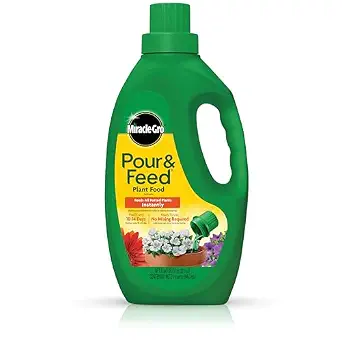 |
| Best Quality Built to a higher standard if you want something more solid | FoxFarm Big Bloom Liquid Plant Food, 32 fl oz |  |
| Best Value The sweet spot between price and what you get | Purived All-Purpose Liquid Plant Fertilizer, 16 oz (Makes 50 Gallons) |  |
| Best Budget The cheapest option that still gets the job done reliably | Miracle-Gro Liquid All Purpose Plant Food Concentrate, 32 oz |  |
| Highest Rated A top-rated pick with lots of positive feedback | FoxFarm Grow Big Liquid Plant Food, 16 fl oz |  |
| Most Popular A crowd favorite that many people choose with confidence | Miracle-Gro Indoor Plant Food, Liquid, 8 oz. (2-Pack) |  |
| Best Seller A high-volume bestseller chosen again and again | TPS NUTRIENTS Indoor Plant Food Liquid Fertilizer, 8 oz |  |
Miracle-Gro Pour & Feed Liquid Plant Food, 32 fl. oz.

| Item Form | Liquid |
|---|---|
| Application Method | Directly to the soil |
| Target Species | potted plants |
| Unit Count | 32 Fluid Ounces |
Miracle-Gro Pour & Feed is a ready-to-use liquid plant food formulated for potted plants that you apply directly to the soil using the bottle cap as a measure. It is intended for houseplants and outdoor container plants and is used every 10 to 14 days to provide regular nutrition without mixing or a watering can. Key features are the no-mix formula and a simple cap-measure system that makes dosing straightforward for common container sizes. In practice this saves time and reduces setup compared with concentrated fertilizers, and the manufacturer guidance makes it easy for someone who wants consistent feeding without needing to calculate dilutions. Important limitations are that it is specifically for containers and not formulated for in-ground beds, and frequent applications mean you need to keep a regular schedule. People who prefer very precise NPK control or organic certified products may want a different option, but for convenient, frequent feeding of pots this is a practical, easy-to-use choice.
Best for: Gardeners who want a low-effort, consistent feeding routine for houseplants and container gardens and value convenience over custom mixes.
Less Ideal for: Growers who need fertilizer for in-ground beds, want organic-certified products, or require fine-grained control of nutrient ratios.
- Ready-to-use liquid requires no mixing with water
- Cap-measure system simplifies dosing for container plants
- Suitable for both indoor and outdoor potted plants
- Feeds quickly with a recommended 10–14 day application schedule
- Not intended for in-ground garden use
- Requires frequent applications compared with slow-release formulas
Verdict: If you want a simple, no-mix fertilizer that feeds container plants quickly and reliably, this ready-to-use pour-and-feed formula is a convenient pick.
FoxFarm Big Bloom Liquid Plant Food, 32 fl oz

| Item Form | Liquid |
|---|---|
| Specific Uses For Product | Plant Food |
| Coverage | Medium |
| Liquid Volume | 32 fluid ounces |
| Mixing Ratio | 4 tbsp per gallon of water |
FoxFarm Big Bloom is a concentrated liquid plant food designed to boost flowering and fruit development. It is typically mixed at 4 tablespoons per gallon of water and applied every other watering, or delivered via hose-end sprayer or drip systems for regular feeding. The formula relies on organic inputs such as earthworm castings and bat guano, which promote quick nutrient uptake and encourage bigger blooms, stronger seed set, and improved flavor in fruits and vegetables. Practical benefits include easy mixing, compatibility with common irrigation setups, and a medium coverage suitable for garden beds, containers, and small orchards. Because it is low in NPK numbers, Big Bloom performs best as a bloom/fruit booster rather than a complete base fertilizer, so gardeners should pair it with a higher-nitrogen feed during vigorous vegetative growth. Users should also observe local regulations about phosphorus use and take care to avoid runoff. For growers focused on enhancing flower size and fruit quality, this product provides a reliable, easy-to-use organic bloom feed.
Best for: Gardeners aiming to maximize flower size and fruit quality who want an easy-to-apply organic bloom booster for regular feeding.
Less Ideal for: Those seeking an all-in-one primary fertilizer for rapid vegetative growth or users in areas where phosphorus-containing fertilizers are restricted.
- Concentrated liquid that's easy to mix and apply with watering systems
- Contains organic inputs like earthworm castings and bat guano for nutrient-rich feeding
- Formulated specifically to support flowering and fruit development
- Suitable for use across beds, containers, and irrigation systems
- Low NPK numbers mean it is not a complete feed for heavy vegetative growth
- Contains phosphorus which may be restricted by some local regulations
Verdict: Choose Big Bloom when your priority is bigger, more abundant flowers and better-tasting fruit delivered in an easy-to-use organic liquid feed.
Purived All-Purpose Liquid Plant Fertilizer, 16 oz (Makes 50 Gallons)

| Item Form | Liquid |
|---|---|
| Specific Uses For Product | Houseplant Fertilizer |
| Application Method | soil drench, foliar feed, full & semi hydroponics |
| Mixing Ratio | 320:1 |
Purived 16 oz liquid plant fertilizer is a concentrated, all-purpose feed designed for indoor and potted outdoor plants. One 16 oz bottle mixes to about 50 gallons at the stated 320:1 ratio, so it is aimed at gardeners who want a high-yield, low-waste option. It is usable as a soil drench, foliar feed, or in full and semi-hydroponic systems, which makes it flexible for different watering routines and container setups. The formula lists essential macro and micronutrients including nitrogen, phosphorus, potassium and several trace elements, so it covers general maintenance and recovery feeding. Practical benefits include a long effective supply from a single bottle and simple dosing using the cap, plus a neutral odor and a two-year shelf life for storage. Limitations are that the product is a generic all-purpose formula rather than a crop-specific mix, so users seeking precise N-P-K ratios or specialty blends for flowering or succulents may need to supplement or choose a targeted fertilizer. Careful measurement is required to avoid overfeeding sensitive plants.
Best for: Gardeners who prioritize efficiency and low-cost-per-feed for everyday houseplant care and want one bottle that covers routine feeding across soil and hydro setups.
Less Ideal for: Growers who need precise, crop-specific nutrient blends for heavy feeders or advanced flowering cycles should consider a targeted fertilizer instead.
- Highly concentrated formula stretches one 16 oz bottle into about 50 gallons of feed
- Versatile application: soil drench, foliar spray, and full or semi-hydroponic use
- Contains both macro and trace nutrients for broad-spectrum plant feeding
- Simple dosing with cap measurement and a long two-year shelf life
- No specific N‑P‑K ratio provided on listing for precise nutrient planning
- Generic all-purpose formula may not optimize flowering or specialty plant needs
Verdict: A cost-effective, concentrated all-purpose liquid fertilizer that stretches a single bottle into many feedings for routine houseplant maintenance.
Miracle-Gro Liquid All Purpose Plant Food Concentrate, 32 oz

| Item Form | Liquid |
|---|---|
| Specific Uses For Product | Plant Growth, Root Development |
| Application Method | Mix with water in a watering can |
| Unit Count | 32 Fluid Ounces |
| Mixing Ratio | 1:10 (concentrate to water, estimate) |
Miracle-Gro Liquid All Purpose Plant Food is a water-soluble concentrate you mix into a watering can and apply every one to two weeks. It is formulated for container and in-ground use and lists flowers, vegetables, trees and houseplants as target plants. The bottle includes simple dosing guidance—fill the cap to the first line for garden mixes or use about 1 teaspoon per gallon for houseplants—which makes routine feeding quick and repeatable. As a liquid, it soaks into the soil for faster nutrient availability than granular fertilizers, which is helpful when you need visible growth or recovery. The product is versatile for many garden tasks from feeding pots to patching up garden beds, and the concentrate format keeps storage space small. Limitations are that the label provides general mixing ratios rather than plant-specific NPK breakdowns, so gardeners wanting precise nutrient management or slow-release feeding may prefer other formulations. Frequent application every 1 to 2 weeks also means slightly more maintenance than granular options.
Best for: Buyers who want an affordable, easy-to-use liquid fertilizer to boost growth across many plant types and who do routine, hands-on plant care.
Less Ideal for: People seeking a low-maintenance, infrequent-feeding solution or gardeners who need precise nutrient formulas for specialized crops.
- Ready-to-use concentrate that mixes with water for fast feeding
- Works on a wide range of plants including flowers, vegetables and houseplants
- Simple dosing instructions for garden and container use
- Liquid form delivers nutrients to the root zone quickly
- No detailed NPK ratio or nutrient breakdown included on the product information
- Requires regular reapplication every 1 to 2 weeks compared with slow-release products
Verdict: A versatile, easy-to-mix liquid concentrate that gives budget-minded gardeners fast, reliable feeding for a wide range of indoor and outdoor plants.
FoxFarm Grow Big Liquid Plant Food, 16 fl oz

| NPK | 6-4-4 |
|---|---|
| Form | Liquid |
| Unit Count | 16 Fluid Ounces |
| Application Method | watering or foliar |
| Mixing Ratio | 2 teaspoons per 1 gallon |
FoxFarm Grow Big is a pint-sized concentrated liquid fertilizer intended to boost vegetative growth for houseplants, vegetables, roses and ornamentals. You mix 2 teaspoons per gallon and apply through watering or as a foliar spray every other watering, which makes it easy to add to an existing routine. The 6-4-4 formula and low pH promote fast nutrient availability so plants take up nutrients quickly during active growth. Practical strengths are its clear dosing, versatility for indoor and outdoor use, and quick-acting results when you need stronger leaf and stem development. Limitations are the single-purpose vegetative formula and relatively small 16-ounce container, which means frequent repurchase for larger beds or frequent feeders and a required switch to a bloom formulation at flowering. For gardeners who prioritize predictable, consistent feeding and want a ready-to-use concentrated liquid, this product delivers reliable, measurable results.
Best for: Gardeners who value dependable, easy-to-follow feeding and want a fast-acting liquid to support robust vegetative growth on a variety of plants.
Less Ideal for: People who need a single all-in-one fertilizer from seedling through bloom or those managing very large vegetable beds where a larger-volume product would be more economical.
- Concentrated liquid formula for quick nutrient uptake and fast visible growth
- Clear mixing ratio (2 teaspoons per gallon) and feeding guidance for consistent use
- Versatile application by watering or foliar spray for indoor and outdoor plants
- Low pH formulation that helps micronutrient stability and availability
- 16-ounce size can be small for larger gardens or frequent feedings
- Formulated for vegetative growth only so a different bloom fertilizer is needed for flowering/fruiting phases
Verdict: Choose this concentrated liquid if you want a reliable, fast-acting fertilizer to support strong vegetative growth with simple, repeatable dosing.
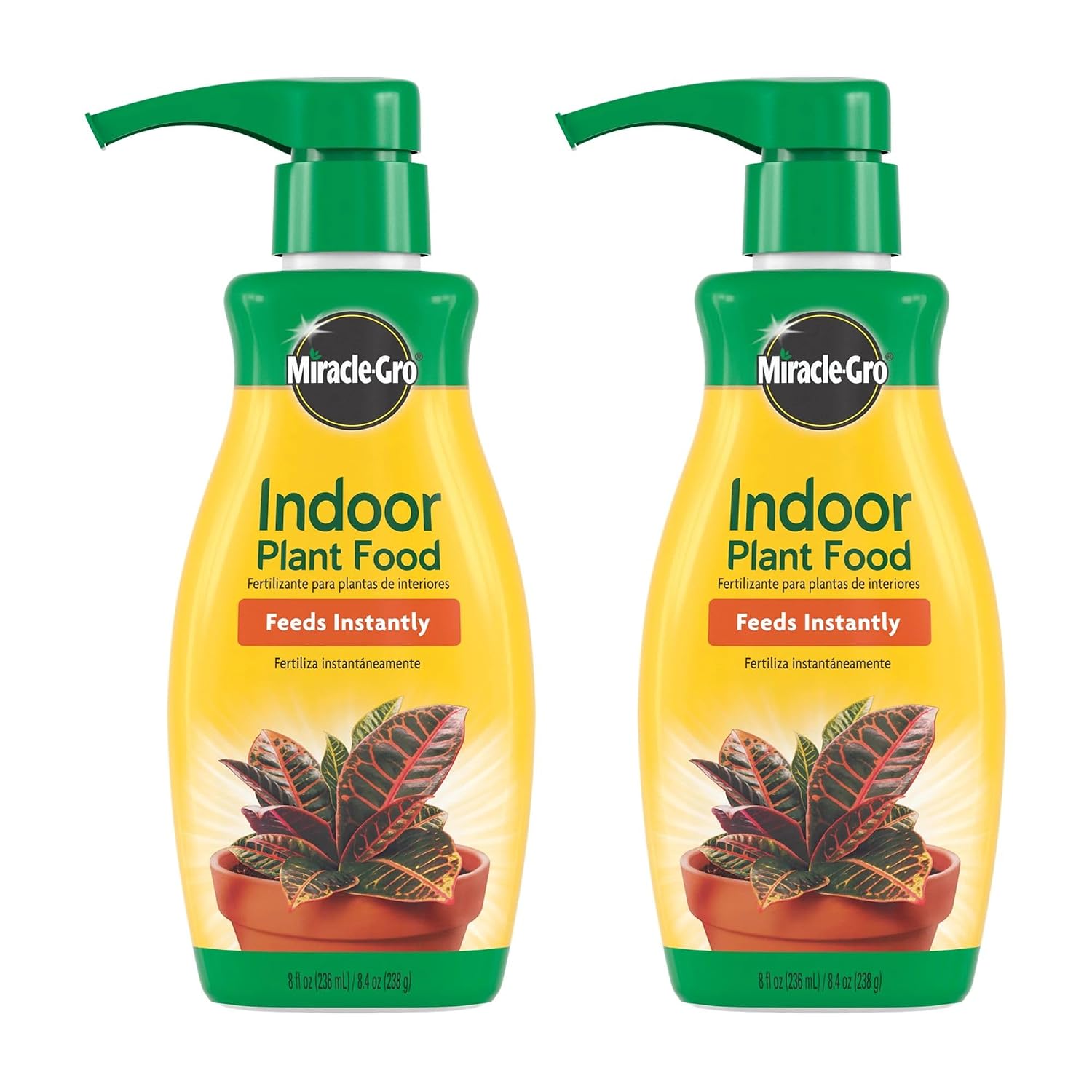
Miracle-Gro Indoor Plant Food, Liquid, 8 oz. (2-Pack)
| Item Form | Liquid |
|---|---|
| Specific Uses For Product | Plant Food |
| Application Method | Apply directly to the soil or mix with water |
| Coverage | Pot size |
| Target Species | Peace Lily, Snake Plant, Croton, Succulents, Herbs |
Miracle-Gro Indoor Plant Food is a ready-to-use liquid fertilizer designed for weekly feeding of houseplants, herbs, vegetables and common indoor ornamentals. You can apply it directly to the soil with the built-in pump (one pump for small pots, two for larger pots) or dilute four pumps per quart of water and use with a watering can. The product supplies immediately available nutrients in a convenient dosing format that makes routine feeding simple and consistent. It is especially practical for busy plant owners who want visible improvement without measuring powders or complex schedules. Important limitations: it is a general-purpose indoor formula rather than a tailored fertilizer for specific species or growth stages, and safety guidance calls for careful handling around children and pets. Users should follow the weekly schedule and avoid overapplication to prevent nutrient burn. For routine maintenance and greener, fuller indoor plants this delivers predictable, easy-to-follow results.
Best for: Indoor plant owners who want a simple, no-fuss weekly fertilizer routine and value consistent, easy dosing over customized feeding plans.
Less Ideal for: Specialist growers who need species-specific or stage-specific nutrient formulas or those who prefer granular slow-release fertilizers for hands-off feeding.
- Two 8 oz. bottles provide convenient supply for frequent weekly feeding
- Pump dispenser makes direct application to pots fast and reduces measuring
- Usable straight or diluted so it fits both small pots and larger container watering
- Formulated for a broad range of indoor species from succulents to herbs
- General-purpose formula not optimized for specific plant nutrient ratios
- Contains concentrated nutrients so improper use can cause leaf burn
Verdict: A reliable, easy-to-use weekly liquid fertilizer that streamlines feeding for a wide range of indoor plants.
TPS NUTRIENTS Indoor Plant Food Liquid Fertilizer, 8 oz

| Item Form | Liquid |
|---|---|
| Application Method | Watering can |
| Specific Uses For Product | Plant Food |
| Unit Count | 8 Fluid Ounces |
| Mixing Ratio | 2:1 (oz/gallon) or 1:64 (tbsp/gallon) |
This 8 oz TPS NUTRIENTS indoor plant food is a liquid concentrate designed to mix with water and be applied with your normal watering can. It supplies a balanced feeding for common houseplants such as pothos, monstera, snake plants, and fiddle leaf figs and is kelp-enriched to support leaf color and root health. Typical use is weekly or regular feedings at the recommended dilution (1 tablespoon per 32 oz water or the listed mixing ratios), which makes it easy to add to an existing watering routine. The product highlights include a gentle formula for weekly use, clear dosing guidance, and a medium coverage claim that fits most small to medium collections. Practical benefits are visibly fuller leaves and steady new growth when used consistently, and the liquid form avoids mess and uneven granule distribution. Limitations to note are the small bottle size for larger collections and the need to follow dilution instructions carefully to avoid overfeeding sensitive plants.
Best for: Buyers who want a simple, low-risk liquid fertilizer to add predictable nourishment to a modest indoor plant collection and prefer clear dosing instructions.
Less Ideal for: Not the best choice for growers with large collections or those who prefer slow-release granules or highly concentrated professional formulations.
- Liquid concentrate mixes easily with water for straightforward weekly feeding
- Kelp-enriched formula supports leaf vibrancy and root health
- Clear mixing ratios and directions reduce dosing guesswork
- Gentle formula intended for all common indoor plant varieties
- 8 oz bottle is small for users with many houseplants
- Coverage marked as medium so frequent purchases may be necessary for larger collections
Verdict: A user-friendly liquid fertilizer that makes weekly feeding simple and reliable for typical indoor houseplant owners.
Choosing the Right Liquid Plant Food: Key Factors to Consider
Nutrient Profile and NPK Ratio
The primary role of liquid plant food is to supply the macronutrients plants need: nitrogen, phosphorus, and potassium. Different NPK ratios favor leaf growth, flowering, or overall maintenance. For container and houseplant use, balanced or slightly higher phosphorus formulas can encourage blooms, while higher nitrogen supports leafy growth. Understanding the NPK ratio helps you match the feed to the plant's growth stage. For mixed collections, choose a general-purpose balance to avoid overstimulating any one group.
Concentration matters alongside NPK. A clearly labeled nutrient profile lets you calculate how much actual nutrient you are delivering per feed and avoid overfertilizing small pots.
Concentration, Dilution, and Feeding Frequency
Liquid feeds vary from very concentrated concentrates to ready-to-use sprays. Concentrated formulas are economical and allow fine control, but they require accurate measuring to avoid burning roots. Look for clear dilution ratios for weekly, biweekly, or maintenance feeds so you can adapt strength to plant vigor and season. Feeding frequency interacts with pot size, media drainage, and watering habits: smaller pots and fast-draining mixes need gentler, more frequent feeds.
When using concentrates, small dosing errors scale quickly. Choose products with simple measurement systems or dosing caps if you prefer fewer calculations.
Application Method and Ease of Use
How you apply liquid plant food affects routine adherence and safety. Pour-in-the-pot concentrates, hose-end diluters, and spray-on foliar feeds all have different workflows. Pour-in feeds are straightforward for container plants; foliar sprays can correct nutrient shortages faster but require even coverage and safe timing to avoid leaf burn. Consider packaging features like measuring caps, pour spouts, and clear labeling to reduce mistakes.
Ease of use also includes storage and stability. A stable, non-separating product reduces shaking and mixing steps, and durable packaging prevents spills during routine watering.
Solubility and Impact on Potting Media
Solubility determines whether nutrients remain available to plant roots or form residues in the potting mix. Well-soluble formulas feed quickly and rinse through when you water, reducing localized salt buildup. Low-solubility particles or undissolved residues can clog irrigation lines or concentrate salts around root crowns, stressing plants.
Regular flushing and observing substrate salinity are part of container maintenance. Choose liquid feeds designed to minimize precipitates and labeled as safe for the types of irrigation you use.
Micronutrients and Chelation
Micronutrients such as iron, magnesium, and manganese are essential in small amounts and prevent common indoor deficiency symptoms like yellowing or stunted growth. Some liquid feeds include chelated forms of micronutrients, which stay available across a wider pH range and are especially helpful in hard water or alkaline mixes.
If your tap water is high in calcium or you grow species sensitive to iron availability, pick a formula with clearly listed chelated micronutrients to reduce the need for corrective foliar sprays.
Plant Safety and Salt Build-Up Risk
Liquid feeds deliver soluble salts, so repeated applications without occasional leaching can raise substrate electrical conductivity and harm roots. Products that recommend schedule-based flushing or lower-strength maintenance feeds help mitigate this risk. Also consider salt-sensitive species like many succulents and carnivorous houseplants; they need specially formulated dilute feeds or long intervals between applications.
Understanding how the product interacts with your watering routine and potting media will help you avoid cumulative salt stress and maintain healthy root zones.
Choosing Strength for Different Growth Stages
Seedlings, actively growing foliage, and flowering plants each benefit from different feeding strengths. Young plants are best served by very dilute solutions to avoid root damage while they establish. During active vegetative growth, slightly stronger feeds support foliage expansion. For bloom initiation and maintenance, shift to a formula or ratio that supports flower production without overloading nitrogen.
Adjust strength gradually and observe plant response over one to two weeks before changing again. If leaves scorch or edges brown, reduce concentration and flush the potting mix with clean water.
- Seedlings: very low concentration, infrequent feeding
- Vegetative: moderate concentration, regular schedule
- Flowering: bloom-focused ratio, watch for salt signs
Using Liquid Feed with Different Potting Media
Soilless mixes, bark blends, and peat-based media differ in nutrient retention and drainage. Fast-draining mixes need more frequent, milder feeds because nutrients are leached quickly. Heavier mixes retain nutrients but can accumulate salts, so occasional deep watering to flush is important.
Match feed frequency and dilution to your medium. When switching potting media, reset your feeding schedule and check plant response closely for the first month.
- Fast-draining mixes: more frequent, lighter feeds
- Dense mixes: less frequent, monitor for salt buildup
- When repotting: hold off feeding for a couple weeks unless mix is precharged
Safe Foliar Feeding Practices
Foliar feeding can correct micronutrient deficiencies quickly, but it requires attention to timing and concentration. Apply during cooler parts of the day to reduce leaf burn and avoid spraying plants in direct sun. Use fine sprays and ensure even coverage, but avoid saturating flowers or buds to reduce disease risk.
Foliar applications should complement soil feeds, not replace them. They are most useful for spot treatments or rapid correction of visible deficiencies.
- Spray in morning or evening to minimize scorch
- Use dilute mixes for foliar work compared with root feeding
- Avoid foliar sprays on stressed or recently repotted plants
Storing and Handling Liquid Plant Food
Proper storage keeps the product effective and safe. Store concentrates in a cool, shaded spot out of direct sunlight and away from freezing temperatures. Make sure caps are sealed to prevent contamination and evaporation. Keep measuring tools clean to avoid cross-contamination between different formulations.
Label any decanted mixtures with dilution ratio and date. Most diluted feeds are best used within a short window; do not store already-mixed solutions long-term.
- Store concentrates sealed, cool, and out of sunlight
- Do not freeze or expose to prolonged heat
- Label decanted mixes with ratio and date
Environmental Considerations and Runoff
Liquid fertilizers are mobile and can move out of pots during drainage. Minimize runoff by applying measured amounts and allowing substrate to dry slightly between feeds. For balcony or rooftop gardeners, capture or neutralize drainage to prevent nutrient runoff into storm drains or landscaped beds. Organic-based liquid feeds may reduce soluble salt spikes but still contribute nutrients to runoff.
Consider slow-release alternatives for planted beds or when runoff is a concern, and reserve liquid feeding for targeted corrective or seasonal boosts.
- Limit runoff by measuring feed volumes carefully
- Use catch trays or absorbent material where necessary
- Combine with irrigation practices that reduce excess drainage
How We Chose the Best Liquid Plant Food
We shortlisted options that fit typical household and container-garden use, then applied a consistent set of criteria focused on real-world gardener needs. Primary evaluation criteria included nutrient profile and NPK balance for common houseplants and flowering containers, concentration and dilute-to-feed flexibility so doses can be adjusted safely, ease of application including measuring and pour features, and formulation clarity such as presence of chelated micronutrients or organic inputs. We also considered container compatibility, meaning how the product behaves in common potting mixes, whether it leaves residues, and potential salt buildup risk. Products were excluded if labeling lacked clear dilution instructions or nutrient breakdowns, if the formulation was clearly intended only for foliar spraying without root feeding, or if the product required specialized equipment to apply. Our final picks emphasize options that perform predictably across a wide range of indoor and patio container conditions and that give gardeners clear control over feeding frequency and strength.
FAQ
How often should I apply liquid plant food to houseplants?
Frequency depends on concentration and plant activity. Many houseplants do well with a half-strength feed every two to four weeks during active growth and little to no feeding in winter. If using a very dilute weekly solution, monitor growth and leaf color to adjust frequency.
Can I use the same liquid feed on flowering and foliage plants?
Often you can, but matching NPK to the plant's needs gives better results. A balanced general-purpose liquid is fine for mixed collections, but switch to a bloom-focused ratio for heavy-flowering periods to encourage blooms without excessive leafy growth.
Will liquid plant food cause salt buildup in pots?
Repeated applications without occasional deep watering can raise substrate salt levels. To avoid buildup, use recommended dilutions, flush pots with plain water periodically, and reduce concentration for small or salt-sensitive plants.
Is foliar feeding better than root feeding?
Foliar feeding provides faster correction for micronutrient deficiencies but is not a full replacement for root feeding. Use foliar sprays for quick fixes and root-applied liquids for regular nutrition and larger nutrient needs.
Can I mix different liquid plant foods together?
Mixing different fertilizers can risk nutrient precipitation or unexpected reactions. Only combine products if labels explicitly state compatibility and do a small test mixture first. When in doubt, apply separately and allow some time between applications.
How do I adjust feeding for plants in hanging baskets or small pots?
Small containers have limited root volume and higher leaching rates. Use lower concentrations more frequently and monitor moisture and salt signs closely. Consider using a balanced, dilute solution and reduce strength if leaves show tip burn or wilting.
Final Verdict
For container and houseplant gardeners, prioritize a liquid feed with a clear nutrient profile, simple dilution instructions, and stable solubility. Match concentration to plant stage and potting medium, and watch for salt buildup by flushing occasionally. Balance micronutrient availability with regular monitoring so deficiencies are caught early. Choosing the right liquid plant food is a tradeoff between convenience and control. If you want quick correction and flexible dosing, pick a concentrated, well-labeled formulation and follow conservative dilutions. If you prefer minimal fuss, opt for a simpler, lower-strength option and adjust feeding frequency based on plant response.
