

Note: This article contains affiliate links. If you click on these links and make a purchase, I may earn a small commission at no extra cost to you. This helps support my research and content. Read my full affiliate disclosure here.
If you are looking for a soaker hose that will keep delivering steady water season after season, durability and consistent flow matter most. A long-lasting soaker hose reduces trips to the faucet, avoids frustrating leaks and clogs, and makes scheduled or manual watering more reliable across beds and containers. This guide shortlists the top durable options designed for heavy garden use and evaluates them on the construction and watering performance that affect lifespan. Read on to see the picks that balance longevity, ease of use, and steady moisture delivery, plus practical buying guidance for different yard and planting situations.
Top Picks at a Glance
| Best Overall The best all-around choice for most situations | LINEX 50 ft Sprinkler Soaker Hose (3-Tube) with Hose Stakes |  |
| Best Quality Built to a higher standard if you want something more solid | Dramm ColorStorm Premium 50 ft Soaker Garden Hose |  |
| Best Value The sweet spot between price and what you get | Gilmour 75' Flat Weeper Soaker Hose |  |
| Best Budget The cheapest option that still gets the job done reliably | Raindrip 1/4-Inch x 50-Foot Soaker Hose Tubing |  |
| Highest Rated A top-rated pick with lots of positive feedback | A.M. Leonard 5/8in x 250ft Bulk Rubber Soaker Hose (hose only) |  |
| Most Popular A crowd favorite that many people choose with confidence | Gilmour 50' Flat Weeper Soaker Hose |  |
LINEX 50 ft Sprinkler Soaker Hose (3-Tube) with Hose Stakes

| Item Length | 50 feet |
|---|---|
| Outside Diameter | 3 centimeters |
| Material Type | Polyvinyl Chloride (PVC) |
| Maximum Pressure | 60 psi |
The LINEX 50 ft sprinkler soaker hose is designed to work as both a low-flow soaker and a light-spray sprinkler, making it useful for lawns, planting beds, shrubs, and tight spaces. It lays flat on the ground to avoid kinks and unrolls easily; the three-tube construction and removable end caps let you run it as a continuous sprinkler line or convert sections into a soaker. LINEX supplies multiple steel stakes for holding the hose in place and spare end caps and gaskets so you can connect or extend runs. At normal pressures (up to 60 psi) expect a 3 to 6 ft spray pattern from the tubes, and wider coverage if you loop the hose, though pressure loss can reduce range. The PVC build is lightweight and UV-resistant but is not the most heavy-duty material compared with reinforced rubber hoses. This hose is best when used laid flat along beds or looped for shrubs rather than for high-pressure tasks or long-distance runs.
Best for: Gardeners who want one adaptable hose to handle both gentle sprinkler coverage and soaker-style watering across beds and small lawns, and who prioritize easy placement and simple extension options.
Less Ideal for: Those needing a rugged, high-pressure main-line hose for long runs or frequent dragging across rough surfaces should consider a reinforced rubber hose instead.
- Combined sprinkler and soaker functionality for flexible watering setups
- Includes multiple end caps, gaskets, and 15 steel stakes for secure placement and easy connection
- Flat, kink-resistant profile that is easy to roll up and store
- Three-tube configuration yields an even, gentle spray suitable for new sod, beds, and shrubs
- PVC construction is lighter duty than reinforced rubber and may wear faster under heavy use
- Effective spray distance and coverage depend strongly on household water pressure
Verdict: Buy this if you want a single, easy-to-position hose that doubles as a sprinkler and soaker for watering beds, new sod, and small lawn zones.
Dramm ColorStorm Premium 50 ft Soaker Garden Hose

| Item Type Name | Soaker Garden Hose |
|---|---|
| Item Length | 50 feet |
| Material Type | Rubber |
| Maximum Pressure | 518 psi |
| Included Components | Hose only |
The Dramm ColorStorm Premium 50 ft soaker hose is a heavy-duty rubber hose built to deliver slow, even watering along beds and borders. It is typically laid along planting rows or buried lightly under mulch and attached to a standard faucet; water soaks out through the hose length to feed roots rather than spraying the surface. Notable features include 50 percent thicker walls to reduce bursty geysering, crush-proof nickel-plated brass couplings for secure connections, and a high maximum pressure rating for durability. The construction and recycled-material content make it abrasion and kink resistant for season-to-season use, and the manufacturer backs it with a lifetime guarantee. Practical benefits are water savings from slow release irrigation, more consistent moisture for flowers and vegetables, and fewer wet leaves that can encourage disease. Important limitations are that soaker hoses require low water pressure and careful layout to achieve uniform coverage, and they are best for fixed beds rather than lawns or frequently reconfigured planting areas.
Best for: Gardeners who want a low-maintenance, water-efficient solution for permanent or semi-permanent flower beds and vegetable rows and who prioritize consistent root-zone moisture.
Less Ideal for: People needing a portable hose for lawn sprinkling, frequent bed rearrangement, or high-pressure tasks like power washing.
- Thicker rubber walls reduce spurting and promote steady seepage
- Crush-proof nickel-plated brass fittings for a reliable, leak-resistant connection
- Designed to use significantly less water than sprinkler watering
- Abrasion- and kink-resistant construction for longer life
- Made from recycled material and supported by a lifetime guarantee
- Requires low flow or pressure regulation to avoid uneven soaking
- Not suited for watering large turf areas or mobile irrigation needs
Verdict: Choose this hose if you want a durable, water-saving soaker that delivers steady root-zone watering for fixed garden beds.
Gilmour 75' Flat Weeper Soaker Hose

| Material Type | Vinyl |
|---|---|
| Item Length | 75 inches |
| Item Weight | 2 pounds |
| Included Components | Pack of 1 Gilmour 870751-1001 Hose Flat Soaker, 75' |
The Gilmour 75' flat weeper soaker hose is a lightweight, flexible soaker that distributes water through a fabric-covered jacket so moisture seeps into the soil rather than spraying the surface. It is typically laid along foundation beds, under mulch, or at the base of shrubs and vegetables and can be left in place for seasonal irrigation. The flat profile makes it easy to position in tight beds and to roll up for compact storage. Its vinyl construction and fabric cover are described as clog resistant and durable for repeated seasonal use, and multiple lengths can be linked to extend coverage for longer foundation runs. Expect slow, steady water delivery that can save water compared with overhead watering and reduce runoff near foundations. Limitations include the need to monitor pressure and run time to avoid overwatering in clay soils and the lack of built-in emitters for precise, measured flow per foot, so spacing and layout require some trial and adjustment for uniform moisture.
Best for: Buyers who want a simple, low-maintenance method to water foundation plantings and garden beds efficiently and who prefer a solution that is easy to install and store seasonally.
Less Ideal for: Those seeking a precision drip system with rated emitters per foot or homeowners who need a heavy-duty hose to withstand frequent foot traffic or burial without protective sleeving.
- Delivers water directly to root zone for efficient, low-evaporation watering
- Flat, flexible design is easy to lay in narrow foundation beds and rolls up compactly for storage
- Clog-resistant fabric cover helps maintain consistent seepage
- Can be linked to additional hoses to extend coverage for longer runs
- No integrated flow regulation or per-foot emitter specification for exact uniformity
- Made of vinyl which can wear faster than reinforced rubber in high-traffic areas
Verdict: A straightforward, easy-to-install soaker hose that efficiently waters foundation beds with minimal fuss and compact storage.
Raindrip 1/4-Inch x 50-Foot Soaker Hose Tubing

| Material Type | Recycled rubber |
|---|---|
| Nominal Wall Thickness | 0.080 inches |
| Outside Diameter | 0.25 inches |
| Unit Count | 50 Feet |
This Raindrip 1/4-inch by 50-foot soaker hose is a simple, flexible option for delivering low-pressure, even moisture to vegetable beds and small planting areas. The recycled rubber tubing is porous and non-pressure-compensating so water gently seeps out along the whole length, which helps keep root zones uniformly moist on flat runs and curved layouts. It connects to common supply lines using 1/4-inch micro fittings or barbed connectors and can be cut to fit specific bed lengths. Practical benefits include easy handling for short runs, compatibility with standard drip- irrigation parts, and the ability to leave it buried under mulch or soil in cold climates without winterizing. Limitations are its small 1/4-inch diameter, which makes it best for short to moderate runs rather than high-flow or long-distance systems, and the non-pressure-compensating construction means output can vary with supply pressure and elevation changes. Expect occasional checks for pinhole leaks or damage over seasons, but for straightforward vegetable garden watering this hose is a low-effort, water-efficient choice.
Best for: Gardeners who want a low-maintenance, water-efficient way to keep vegetable beds and small borders evenly moist without building a complex irrigation system.
Less Ideal for: People planning long-distance irrigation, heavy clay soils that block pores, or systems that require precise pressure-compensated emitters should consider other solutions.
- Porous recycled rubber construction provides gentle, continuous seepage for even root-zone watering
- Flexible tubing that can be cut to fit curved beds and short runs
- Compatible with common 1/4-inch micro fittings and barbed connectors for easy integration into drip systems
- Can be left in place under mulch or soil in cold climates without mandatory winterizing
- Non-pressure-compensating design can produce uneven output if supply pressure varies or on sloped terrain
- Small 1/4-inch diameter limits flow for long runs or high-demand installations
Verdict: A simple, flexible 50-foot soaker hose that delivers gentle, whole-line watering ideal for vegetable beds and small garden runs.
A.M. Leonard 5/8in x 250ft Bulk Rubber Soaker Hose (hose only)

| Material Type | Rubber |
|---|---|
| Unit Count | 250 Feet |
| Item Type Name | Soaker Hose |
This 5/8in x 250ft rubber soaker hose is built for long stretches of low‑pressure, root‑zone watering. Made from high‑grade rubber with thicker walls, it is intended for professional or demanding home use where durability matters. You lay the hose along planting rows or at the base of arborvitae, connect it to a water source and run low pressure so water seeps directly into the soil, reducing runoff and evaporation and allowing deep, even wetting over time. The 250ft bulk length is convenient for covering long hedgerows without frequent joins, and because fittings are not included you can cut and couple runs to fit your layout. Practical limitations are that you must supply appropriate fittings and a pressure regulator or timer for best performance, and the hose performs best on fairly level runs or gentle slopes per manufacturer guidance. For reliability‑minded gardeners this hose focuses on rugged construction and sustained, water‑efficient delivery rather than bundled accessories or short‑run convenience.
Best for: Gardeners who prioritize a durable, no‑frills irrigation solution for long runs of arborvitae or hedges and want consistent, deep watering rather than quick surface wetting.
Less Ideal for: People who need a ready‑to‑use kit with fittings or those irrigating steep, uneven terrain where pressure and flow control are difficult to maintain.
- Long continuous 250ft length minimizes joins for long hedgerows
- Heavy‑duty rubber construction with thicker walls for improved durability
- Low‑flow, low‑pressure delivery concentrates water at the root zone to cut evaporation and runoff
- Made in the USA from recycled materials, supporting sustainable irrigation choices
- Does not include fittings or connectors so additional purchases are required
- Best performance requires a pressure regulator or timer and relatively level installation
Verdict: Choose this heavy‑duty 250ft rubber soaker hose when you need a reliable, long‑run solution to deliver slow, deep irrigation to arborvitae rows.
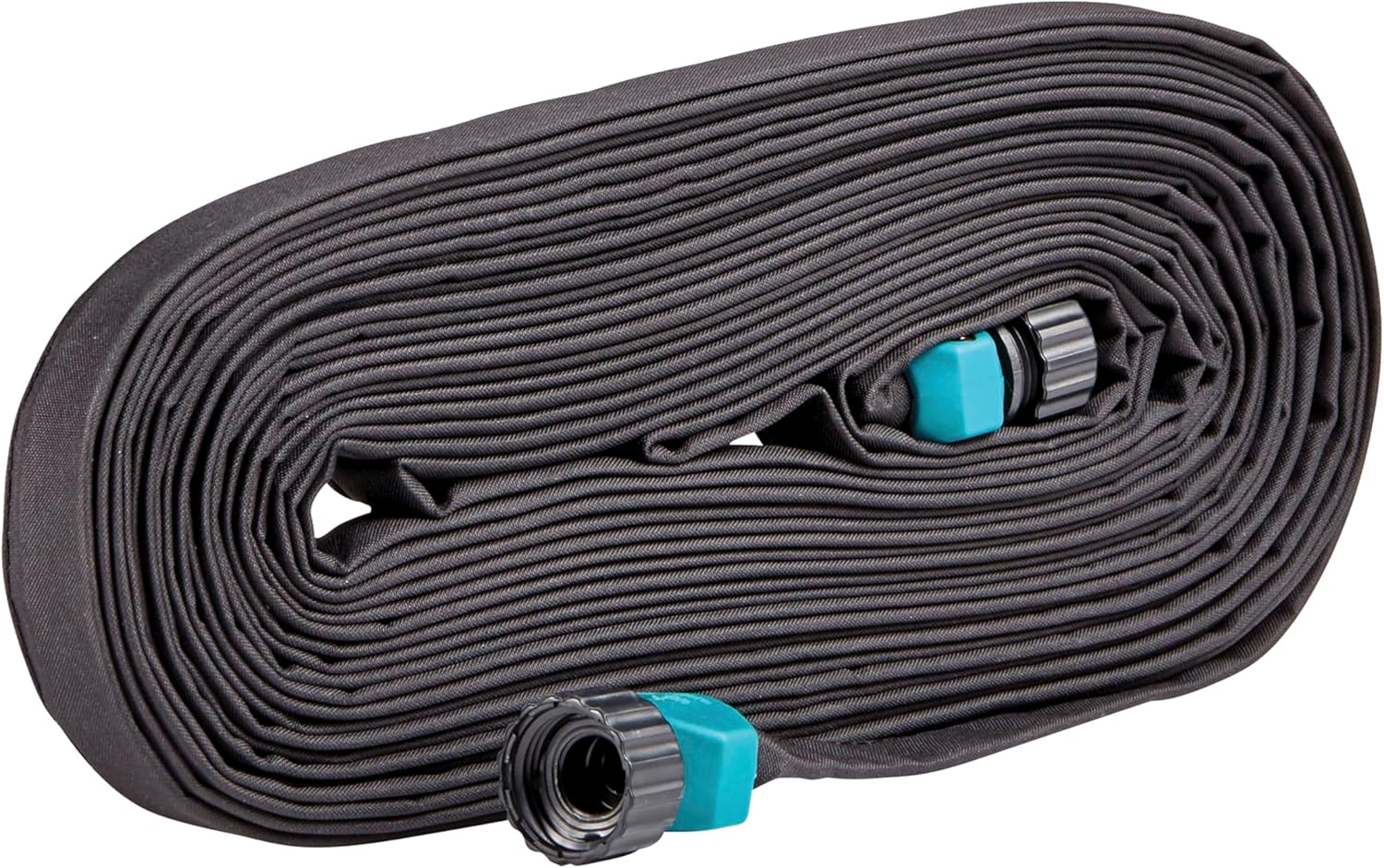
Gilmour 50' Flat Weeper Soaker Hose
| Material Type | Vinyl |
|---|---|
| Item Length | 50 feet |
| Nominal Wall Thickness | 0.0625 inches |
| Outside Diameter | 0.63 inches |
The Gilmour 50' Flat Weeper Soaker Hose is a lightweight, vinyl soaker hose that waters plants by seeping moisture through a fabric jacket directly into the soil. It is typically laid along planting rows or buried shallowly under mulch so water reaches roots without wetting foliage or pathways. Notable features include a clog-resistant fabric cover and a flat profile that makes rolling and winter storage simple. Being made from 100% recycled vinyl and described as UV resistant, it is intended for repeated seasonal use and can be linked to additional hoses to create a longer DIY drip system. Practical benefits are water savings from targeted delivery and easier placement in narrow beds where sprinklers would waste water. Limitations to expect are the usual for vinyl soaker hoses: it is not intended for high-pressure use and can be punctured by sharp tools or heavy foot traffic, and performance depends on even water pressure along the length so very long runs may deliver uneven soaking without splitters or a faucet regulator.
Best for: Gardeners who prioritize reliable, water-efficient irrigation for beds and vegetable rows and who prefer a simple, low-tech solution that is easy to install and store.
Less Ideal for: People who need high-pressure irrigation, frequent heavy-duty use, or a permanent buried drip system should consider reinforced or commercial-grade drip tubing instead.
- Delivers water directly to roots through a fabric jacket for efficient, low-waste watering
- Clog-resistant fabric cover helps maintain consistent seepage over time
- Flat, flexible design rolls up for compact, easy seasonal storage
- Made from recycled vinyl and marketed as UV resistant for seasonal durability
- Not designed for high-pressure applications and can give uneven watering on very long runs
- Vinyl construction can be damaged by sharp objects or heavy foot traffic
Verdict: A straightforward, water-saving soaker hose that makes efficient root watering and seasonal storage easy for home garden beds.
Choosing the Right Longest Lasting Soaker Hose: Key Factors to Consider
Construction Material and Wall Thickness
The hose material and wall thickness determine how well a soaker hose resists UV damage, abrasion, and seasonal wear. Thicker walls tolerate higher internal pressure spikes and are less likely to develop small tears when dragged across mulch or edging. Materials with UV stabilizers or woven reinforcement slow degradation from sun exposure, which is a major cause of failure when hoses are left exposed for months. While heavier construction can add some stiffness, it usually translates to longer service life in a garden where hoses are frequently moved, coiled, or covered with soil or mulch.
When comparing products, look for clear material specs and any mention of reinforcement or UV resistance. Those features often explain why some hoses remain leak-free for several seasons while inexpensive thin-walled hoses split after minimal use.
Water Distribution Pattern and Hole Integrity
How a hose delivers water affects both plant health and wear. Even, low-pressure seepage along the length reduces localized stress on the hose wall compared with concentrated bursts at few points. Uniform pore patterns also ensure consistent soil moisture so you do not overwater the section near the faucet and under-water the far end. Pores that are well embedded in the wall material resist tearing and clogging better than thin slits or surface-applied holes.
Inspecting how holes are made and whether they are reinforced or molded as part of the hose material gives insight into long-term performance. Hoses that maintain steady flow with minimal pressure adjustment are easier on fittings and last longer because they avoid repeated surges that wear connections.
Fittings, Couplers, and Connector Design
Durable connectors are a common failure point on soaker hoses. Cheap plastic barbs and thin coupler shells crack when tightened or when the hose is moved across rough surfaces. Metal-reinforced barbs or thicker molded connectors reduce the chance of split connection points that cause leaks. Consider whether the hose uses crimped fittings, push-fit designs, or threaded adapters and whether those components are rated for outdoor use.
A hose that allows standard threaded adapter replacements or uses widely available couplers is easier to repair and maintain. Reinforced ends and strong crimps also reduce stress where the garden hose attaches, a frequent source of early failure.
Kink Resistance and Flexibility for Garden Layouts
A soaker hose must be flexible enough to snake around planting beds and durable enough to resist kinking when bent. Kinks interrupt water flow and create high-stress points that lead to splits. Hoses with built-in flexibility and memory are simpler to lay out and reposition without causing damage. In colder climates, flexibility at lower temperatures matters because brittle hoses are more likely to crack during handling.
Consider how often you will move the hose and whether it needs to be stored coiled. Hoses that resist twisting and retain shape after being rolled up tend to last longer in routine garden use.
Repairability and Compatibility
Even the best soaker hoses can be punctured by tools, pets, or sun-dried debris. A hose that is easy to repair with simple couplers or clamps extends usable life and lowers long-term cost. Look for hoses compatible with standard repair kits, including connectors, clamps, and end caps. Some designs allow you to cut out damaged sections and rejoin the ends without special tools.
Repairability matters when assessing longevity because a hose that can be patched and reconnected will often outlast an otherwise similar hose that requires full replacement when damaged. Compatibility with common fittings also makes it easier to upgrade or replace connectors over time.
Pressure and Flow Requirements
Matching hose design to the water pressure you can run in your garden is important for long-term performance. Some soaker hoses are built for very low-pressure drip setups and will burst or leak if exposed to full faucet pressure. Others tolerate moderate pressure and are designed to supply longer runs or higher-elevation beds. Knowing the expected pressure at the hose inlet, and whether you will use a timer or regulator, helps select a hose that will not be overstressed.
Selecting an appropriate pressure range reduces strain on seams and fittings, which directly affects the lifespan of the hose. If you plan to attach multiple lengths, verify the combined length rating for acceptable flow and pressure drop.
Best Uses by Garden Situation
Different garden layouts place different demands on a soaker hose. In raised beds and narrow vegetable rows, you will value a hose that lies flat and delivers even seepage without bulging. For mixed perennial beds with irregular shapes, flexibility and kink resistance become more important so you can weave the hose around plants without creating stress points.
For container gardens or patios, look for hoses rated for shorter runs with consistent flow, and prioritize small-diameter options that fit between pots. In long, linear beds or sloped areas, choose hoses designed for pressure tolerance and uniform output so the far end receives adequate water without overpressurizing the near end.
- Raised beds: flat-laying, even seepage
- Perennial borders: flexible, kink-resistant lengths
- Containers and pots: short runs, small diameter
- Long beds or slopes: pressure-tolerant designs
Installation Tips to Maximize Lifespan
Lay hoses on a prepared surface free of sharp debris and large stones that can abrade the outer wall. If possible, place hoses under a thin layer of mulch to protect them from direct sun while still allowing seepage to reach roots. When routing hoses near edging or hard surfaces, use protective sleeves or avoid forcing tight bends that kink the line.
Use proper connectors and do not overtighten plastic fittings. If you plan seasonal removal, coil the hose loosely and store it away from harsh sun and freezing temperatures. For winter, draining water and storing indoors reduces freeze-related damage.
- Clear bed of sharp debris before laying hose
- Cover with mulch to shield from UV exposure
- Avoid tight bends and excessive tension at fittings
- Drain and store indoors in freezing climates
Maintenance and Simple Repairs
Inspect hoses periodically for shallow abrasions, loose fittings, and reduced flow. Small punctures can usually be fixed with hose repair couplers or clamps, and end caps keep the system pressurized without leaks. If you spot surface cracking or brittle sections, cut out the damaged portion and rejoin with a compatible connector to extend service life.
Keep fittings clean of mineral deposits by flushing with plain water occasionally. If clogs develop at embedded pores, reverse flushing the hose at low pressure can dislodge loose debris without stressing the wall.
- Check fittings and holes each season
- Use repair couplers for punctures
- Flush gently to clear mineral sediment
- Replace brittle lengths rather than repeatedly patching
How Length and Layout Affect Performance
Long runs increase pressure drop and can cause uneven water delivery. If you need to irrigate a long bed, either choose a hose rated for extended lengths or divide the run into multiple shorter lines fed from separate manifolds. Routing and elevation changes also influence flow, so factor in head pressure when planning placement.
Placing the hose along the contour of a slope helps achieve more uniform distribution than running straight up or down a grade. For very long installations, a slightly higher inlet pressure combined with a pressure regulator can help maintain consistent seepage without overstressing the hose.
- Split long runs for even watering
- Consider elevation changes and head pressure
- Use manifolds for multiple short lines
- Check manufacturer max length recommendations
Material Tradeoffs: Weight Versus Durability
Heavier, reinforced hoses are more durable but less easy to coil and store. Lighter hoses are simpler to handle for quick container watering but may wear out faster under constant abrasion or UV exposure. Think about how often you will move the hose and the physical demands of your garden when choosing between lighter and heavier constructions.
If storage and portability are must-haves for your setup, prioritize flexible but UV-treated designs. If the hose will stay largely in place, a heavier, thicker-walled option typically yields a longer useful life.
- Heavy hoses last longer in fixed installations
- Light hoses suit portable or temporary use
- UV treatment improves lifespan regardless of weight
- Balance handling needs against expected wear
How We Chose the Best Longest Lasting Soaker Hose
We focused on criteria that directly predict lifespan and reliable irrigation in real gardens. Material durability was a primary filter, emphasizing reinforced polymers and UV-resistant outer layers that withstand sun, abrasion, and repeated handling. Water distribution consistency was assessed through reported hole patterns and wall thickness, since even seepage prevents dry patches and reduces pressure stress. Connection and fitting durability mattered because loose fittings and fragile barbs are common failure points. Resistance to kinking and ability to lie flat under soil or mulch were prioritized to reduce wear from crushing or bending. We excluded hoses intended only for light indoor or decorative use, low-pressure drip tapes, and products lacking clear material specifications or user reports about longevity. The final shortlist emphasizes hoses suited for regular seasonal use, heavier soil contact, and flexible routing around beds. In addition to the four concrete criteria above, we considered ease of repair and adaptability to common fittings so gardeners can maintain performance without replacing the entire length.
FAQ
How long should a high-quality soaker hose last?
A well-constructed soaker hose used and stored properly can last multiple seasons, often three to five years or more. Lifespan depends on material quality, UV exposure, handling, and whether the hose sits on abrasive surfaces.
Can I run a soaker hose at full faucet pressure?
Most soaker hoses are designed for low to moderate pressure and can be damaged by full faucet pressure. Use a pressure regulator or a low-flow setting to avoid overpressurizing the hose and stressing fittings.
Is it better to bury a soaker hose under mulch or leave it on top?
Placing a soaker hose under a thin layer of mulch protects it from sun and helps keep moisture where roots can access it. Avoid burying too deep or covering with heavy soil that can crush the hose; mulch provides protection while still allowing water to seep into the root zone.
How do I prevent mineral buildup from clogging the pores?
Flush the hose occasionally with clean water and, if possible, reverse the flow to dislodge sediment. Using filtered or softened water reduces mineral deposits. If buildup persists, remove affected sections and clean or replace them.
Can I join multiple soaker hoses for a longer run?
You can join hoses with compatible couplers, but long continuous runs may suffer uneven flow and higher pressure drop. For best results, divide long beds into shorter sections fed from manifolds or separate supply lines.
What is the easiest way to repair a puncture?
Cut out the damaged area and use a standard repair coupler or hose clamp connector to rejoin the ends. Many hoses are compatible with common repair kits that make this a quick field fix without special tools.
Final Verdict
Prioritize material durability, connector strength, and water distribution when choosing a long-lasting soaker hose. Durable wall construction and UV resistance reduce the chance of tears, while strong fittings and good repair options let you maintain a hose for years. Balance flexibility and weight with how often you will move or store the hose, and plan runs to avoid excessive pressure drop. Ultimately, choose the option that matches your garden layout and maintenance habits. A hose with the right combination of durable materials, uniform seepage, and easy repairability will give you reliable irrigation and a longer service life.
