

Note: This article contains affiliate links. If you click on these links and make a purchase, I may earn a small commission at no extra cost to you. This helps support my research and content. Read my full affiliate disclosure here.
If you have a shady porch, a north-facing window, or a covered balcony, the right hanging plant can bring vertical life without demanding bright sun. Low sunlight hanging plants behave differently than sun-loving varieties: they grow more slowly, need gentler watering, and tolerate lower light levels but still need occasional brightening. This guide shortlists seven top options suited to dim gardens and indoor spots, chosen for reliable shade tolerance, manageable upkeep, and attractive trailing habits. Below you will find practical notes on how each type performs in low light, plus the evaluation criteria we used to select these picks.
Top Picks at a Glance
| Best Overall The best all-around choice for most situations | Thorsen's Greenhouse Lemon Lime Prayer Plant (4" Pot) |  |
| Best Quality Built to a higher standard if you want something more solid | Tricolor Hoya Krimson Queen (Hoya Carnosa Variegata) — Live 6" Hanging Plant |  |
| Best Value The sweet spot between price and what you get | Shop Succulents Ficus Repens (Creeping Fig) — Live Indoor Trailing Plant, 6-inch Nursery Pot |  |
| Best Budget The cheapest option that still gets the job done reliably | NYGardenia Live Variegated Spider Plant in 4" Nursery Pot |  |
| Highest Rated A top-rated pick with lots of positive feedback | Topiary Art Works Hawaiian Spider Plant 10-inch Hanging Basket |  |
| Most Popular A crowd favorite that many people choose with confidence | Shop Succulents Brazil Philodendron Heartleaf (6" nursery pot) |  |
| Best Seller A high-volume bestseller chosen again and again | Plants for Pets Pothos 4-Pack (4" Assorted) |  |
Thorsen's Greenhouse Lemon Lime Prayer Plant (4" Pot)

| Indoor Outdoor Usage | Indoor |
|---|---|
| Other Special Features of the Product | Air Purification, Low Maintenance, Pet Friendly, Shade Resistant |
| Sunlight Exposure | Partial Sun |
| Soil Type | Peat Soil |
| Moisture Needs | Moderate Watering |
The Lemon Lime Prayer Plant (Maranta leuconeura) is a small, easy-care houseplant that brightens low-to-moderate light spots with bold green foliage that tracks the sun and folds at night. It ships in a 4-inch plastic pot and is typically displayed on a windowsill, shelf, or in a hanging planter where its sideways, trailing habit can show off the leaves. Notable features include ASPCA-approved non-toxicity to pets, moderate water needs, and reported air-purifying benefits, which make it a solid choice for family homes. Practical benefits are straightforward: it requires only partial sun, tolerates shade better than many tropicals, and its movement adds living interest to small rooms. Limitations to expect are the small nursery pot size at delivery, which means you'll likely repot within months as it grows, and sensitivity to overwatering or direct hot sun which can scorch leaves. Shipping can stress live plants so allow an acclimation period and follow moderate watering and indirect light care to help it recover and thrive.
Best for: Buyers who want an attractive, low-to-moderate light hanging plant that is pet-safe and adds movement and color to small indoor spaces without complex care.
Less Ideal for: People who want large, fast-growing plants right away or gardeners who need plants that tolerate full sun or very irregular watering schedules.
- ASPCA-approved non-toxic to cats and dogs, safe for pet households
- Performs well in partial sun and lower-light indoor spots suitable for hanging or shelving
- Distinctive, moving foliage adds visual interest without demanding advanced care
- Moderate watering needs make it manageable for casual plant owners
- Arrives in a small 4-inch nursery pot, so repotting may be needed soon
- Can be sensitive to overwatering and direct hot sun, requiring attentive watering and placement
Verdict: A compact, pet-safe hanging-friendly plant that brings bold, moving foliage to low-sun indoor spots with minimal fuss.
Tricolor Hoya Krimson Queen (Hoya Carnosa Variegata) — Live 6" Hanging Plant
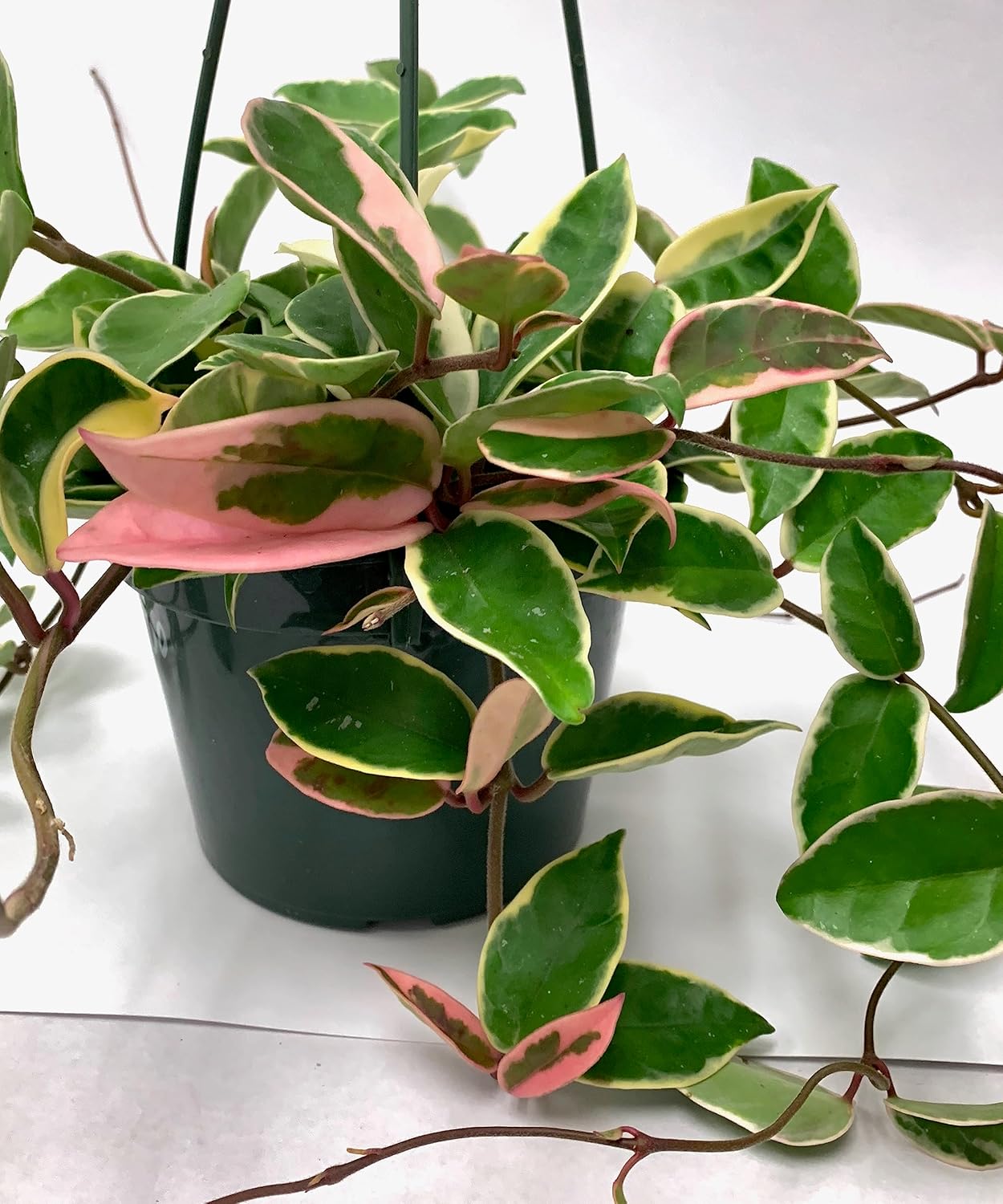
| Indoor Outdoor Usage | Indoor |
|---|---|
| Soil Type | Well Draining |
| Moisture Needs | Little To No Watering |
| Bloom Season | Spring to Summer |
| USDA Hardiness Zone | 10 |
The Hoya Krimson Queen is a compact, trailing houseplant prized for its variegated foliage and easy-care habit, sold here in a 6-inch hanging pot ready for suspension. It performs best in bright, indirect light but tolerates lower light, making it flexible for living rooms, bathrooms, or covered patios where direct sun is limited. Watering is low-maintenance: allow the top inch of soil to dry between waterings and use a well-draining medium to avoid root rot. The plant is already rooted and will steadily push out new leaves and occasionally bloom from spring into summer. Notable features include built-in air-purifying benefits and seasonal pink tones on new leaves in the right conditions. Practical benefits are low watering demands, a trailing habit that suits hanging displays, and straightforward propagation for enthusiasts who want to expand their collection. Limitations are that the pink coloration is seasonal and cannot be guaranteed at delivery and the plant is recommended for milder climates or strictly indoor environments given its USDA zone 10 rating.
Best for: Buyers who want a low-maintenance, decorative hanging plant that performs reliably in indoor settings and rewards attention with steady growth and occasional blooms.
Less Ideal for: Gardeners seeking a cold-hardy outdoor specimen or those who need guaranteed seasonal coloration year-round should consider other plants.
- Variegated trailing foliage adds visual interest in hanging displays
- Tolerates lower light while preferring bright indirect light for best growth
- Low watering needs when grown in well-draining soil
- Blooms in spring to summer and propagates easily for collectors
- Pink leaf coloration is seasonal and not guaranteed at purchase
- Recommended for indoor or warm-climate use only (USDA Zone 10)
Verdict: A low-effort, eye-catching hanging Hoya that delivers attractive variegation and easy indoor performance for buyers prioritizing reliable, low-maintenance plants.
Shop Succulents Ficus Repens (Creeping Fig) — Live Indoor Trailing Plant, 6-inch Nursery Pot

| Indoor Outdoor Usage | Indoor |
|---|---|
| Sunlight Exposure | Partial Sun |
| Unit Count | 1 Count |
The Shop Succulents Ficus Repens (Creeping Fig) is a compact trailing houseplant intended for indoor decoration and low-light spots. It arrives in a 6-inch nursery pot and produces dense, small green leaves that form an attractive cascade for hanging baskets or for training up small trellises. This variety is tolerant of bright indirect light and will also perform acceptably in lower light, making it a good option for offices, bathrooms, or shaded living-room corners. Care is straightforward: water only when the top inch of soil dries and avoid overwatering. The plant’s trailing habit and easy trainability let you use it as a hanging accent or a tabletop spillover, and its low-maintenance needs suit busy owners or beginners. Expect moderate growth rather than rapid filling of large spaces, and occasional pruning to control length and encourage denser foliage. If you want a dramatic, fast-climbing specimen or an outdoor landscape vine, this indoor-focused plant may not meet those goals.
Best for: Buyers who want an easy-care, decorative trailing houseplant for low-light indoor spots and prefer something adaptable that needs minimal daily attention.
Less Ideal for: People seeking a fast-growing outdoor climber or a large statement plant for big spaces should look at larger species or outdoor varieties instead.
- Tolerates a range of light from bright indirect to low light, good for shaded indoor spots
- Trailing growth habit works well in hanging baskets or trained on small trellises
- Low watering needs; thrives when watered only after the top inch of soil dries
- Arrives ready in a 6-inch nursery pot for immediate placement or easy repotting
- Moderate growth rate means it will not quickly fill large hanging displays
Verdict: A low-maintenance trailing indoor plant that fits low-light hanging or shelf displays and is well suited to busy or beginner plant owners.
NYGardenia Live Variegated Spider Plant in 4" Nursery Pot

| Indoor Outdoor Usage | Indoor |
|---|---|
| Sunlight Exposure | Indirect Bright Light To Partial Shade |
| Soil Type | Well-draining Potting Mix |
| Moisture Needs | Moderate; Allow Soil To Dry Slightly Between Waterings |
| Container Material | Plastic |
This NYGardenia spider plant is a straightforward, low-maintenance houseplant well suited to low- to moderate-light indoor spaces. It arrives as a young, rooted cutting in a 4-inch plastic nursery pot and develops arching green-and-white leaves that trail and produce spiderettes you can root to make new plants. Care is simple: keep the plant in bright, indirect light or partial shade, water when the top inch of soil dries, and ensure excess water drains to avoid rot. Its pet-safe, air-purifying foliage makes it a flexible choice for shelves, tabletops, or hanging displays once it fills out. Because it ships small, expect gradual growth to the fuller mature look shown in illustrations rather than an immediate statement plant. The plastic nursery pot is functional but you will likely want to repot into a decorative container as it grows. For buyers focused on an affordable, low-effort trailing plant that can be propagated, this is a practical option; if you need an instantly full hanging basket, plan to buy multiple plants or a larger, mature specimen instead.
Best for: Buyers wanting an inexpensive, low-maintenance trailing houseplant for low- to moderate-light rooms who plan to grow or propagate plants over time.
Less Ideal for: People who need an immediate, full hanging display or a mature specimen straight away should choose a larger pre-established plant instead.
- Easy care that tolerates indirect light and occasional watering
- Produces spiderettes for inexpensive propagation and sharing
- Variegated foliage adds visual interest in small spaces
- Pet-safe and noted for air-purifying qualities
- Arrives as a young plant and will take time to reach the fuller, hanging appearance shown in images
- Comes in a basic plastic nursery pot so repotting or a decorative container is usually needed
Verdict: A budget-friendly, low-light tolerant trailing plant that is easy to care for and produces baby plantlets you can propagate.
Topiary Art Works Hawaiian Spider Plant 10-inch Hanging Basket

| Indoor Outdoor Usage | Indoor |
|---|---|
| Sunlight Exposure | Partial Shade |
| Soil Type | Peat Soil |
| Material Features | Organic |
This Hawaiian spider plant arrives pre-potted in a 10-inch hanging basket and provides a low-maintenance burst of cascading green-and-white variegated foliage. It is typically hung on a hook or placed on a high shelf where its arching leaves and baby plantlets can trail freely. The plant tolerates a wide range of indoor light from low to bright indirect, prefers peat-based loose soil, and needs routine but not fussy watering, which makes it forgiving for forgetful owners. Notable features include its pet-safe status, natural aeration from the hanging presentation, and quick growth potential when given brighter indirect light. Practical benefits are immediate visual impact without transplanting, adaptability to dim corners, and easy propagation from produced spiderettes. Limitations to consider are that direct sun will scorch leaves, it can produce many baby plantlets that require occasional pruning or re-homing, and long-term growers may want to repot into fresh, well-draining mix as it matures.
Best for: Buyers who want a reliable, low-effort hanging houseplant that provides instant greenery and tolerates lower light and occasional missed waterings.
Less Ideal for: People seeking a slow-growing, compact planter or those who prefer a plant that never needs pruning or re-potting as it matures.
- Ready to hang in a 10-inch basket for immediate display
- Tolerates low to bright indirect light, making it suitable for low-sun spots
- Pet-safe plant type, safe for homes with cats and dogs
- Adaptable and fast-growing when given adequate indirect light
- Produces many plantlets that need pruning or replanting to avoid a messy look
- Leaves can burn in direct sunlight, limiting placement options in bright windows
Verdict: A fuss-tolerant, pet-safe hanging spider plant that reliably brightens low-sun indoor spots with minimal care.
Shop Succulents Brazil Philodendron Heartleaf (6" nursery pot)

| Sunlight Exposure | Partial Sun |
|---|---|
| Soil Type | Sandy Soil |
| Moisture Needs | Moderate Watering |
| Unit Count | 1 Count |
This Brazil Philodendron Heartleaf is a low-maintenance houseplant grown in a 6" nursery pot that’s well suited to moderate or partial sun and hanging displays. It features heart-shaped green leaves with yellow variegation that trail 2 to 4 feet, making it effective for softening corners, shelves, or hanging baskets. The listing highlights moderate watering needs and sandy soil preference, which in practice means letting the topsoil dry slightly between waterings and avoiding waterlogged pots. As a common air-purifying indoor plant, it can freshen small to medium rooms without demanding bright direct sun. The main limitations are its basic nursery presentation and the lack of detailed care instructions in the listing, so new owners should be prepared to repot as it grows and monitor humidity for vigorous trailing. For those who value visible social proof, the product has a history of customer feedback and is presented as an easy-care option for lower-light interiors.
Best for: Buyers who want an easy-care, visually striking trailing plant for rooms with limited direct sun and who rely on others’ purchase experience to confirm reliability.
Less Ideal for: Those wanting a mature, showpiece specimen or a fully styled hanging planter should look for larger, display-ready options.
- Attractive variegated heart-shaped leaves that add tropical interest in low to moderate light
- Suitable for hanging or trailing displays with up to 2–4 foot trails
- Low-maintenance watering profile ideal for beginners who prefer moderate care
- Sold in a 6" nursery pot ready for display or easy repotting
- Care guidance in the listing is minimal so beginners may need to seek additional instructions
- Supplied in a basic nursery pot rather than a decorative hanging planter
Verdict: A low-light friendly, variegated trailing philodendron that delivers easy-care greenery and visual impact for hanging displays.
Plants for Pets Pothos 4-Pack (4" Assorted)

| Indoor Outdoor Usage | Indoor |
|---|---|
| Other Special Features of the Product | Air Purification |
| Sunlight Exposure | Full Sun |
| Moisture Needs | Regular Watering |
| USDA Hardiness Zone | 3 |
This four-pack delivers beginner-friendly pothos varieties that suit low-light rooms and simple indoor care routines. Each plant comes rooted in a 4" nursery pot and the assortment rotates between familiar types such as Marble Queen, Golden, Neon, and Satin, so you get visual variety without extra effort. Pothos are typically grown in hanging planters, on shelves, or trained up a support; they prefer bright, indirect light but tolerate lower light levels that many apartments and offices have. The listing emphasizes air-purifying benefits and gives clear care guidance: allow the soil to dry between waterings and keep temperatures above about 60 F. Practical strengths are resilience, fast trailing growth for a lush look, and compatibility with common indoor spots like living rooms, kitchens, or bathrooms. Limitations are that you may receive different varieties than pictured and plants arrive in small 4" pots, so plan to repot sooner if you want bigger specimens or longer-term display without frequent watering.
Best for: Buyers who want low-maintenance greenery for indoor spaces and prefer reliable, easy-to-care-for plants that tolerate lower light and occasional neglect.
Less Ideal for: Growers seeking large, mature plants ready for instant statement displays or those who want guaranteed, specific rare varieties.
- Easy to grow and tolerant of low to bright indirect light
- Four different varieties provide visual variety in one purchase
- Ships in small nursery pots that establish quickly and are ready for hanging or shelving displays
- Listed care guidance is straightforward for first-time plant owners
- Arrives in 4" pots so plants may need repotting soon for faster growth or long-term display
- Specific varieties are not guaranteed and assortment can vary
Verdict: A simple, low-maintenance way to add trailing, low-light-friendly pothos to your home with minimal fuss.
Choosing the Right Low Sunlight Hanging Plants: Key Factors to Consider
Light Level and Placement
Low-sun hanging plants vary in how little light they will accept. Some species will survive in deep shade but only produce limited new growth, while others prefer bright, indirect light and will become leggy when undersupplied. Think about the actual light at the intended location across the day. A covered porch that gets a hour or two of morning sun is very different from an alley-facing balcony that stays shaded all day.
Also consider seasonal changes. Winter light is weaker and may push shade-tolerant plants slower; moving a hanging pot to a brighter spot for a few weeks can help. Placement also affects temperature and humidity, which interact with light to influence watering frequency and growth habit.
Watering Frequency and Drainage
Shaded locations usually mean soil stays moist longer, so overwatering is a common mistake. Choose plants and containers that allow excess water to drain and let the root zone dry partially between waterings. Hanging pots often dry from the top down and from the edges inward; check the root ball before watering rather than following a fixed schedule.
Consider potting mixes that balance aeration with moisture retention for shaded conditions, and use saucers or liners that avoid trapping standing water against the plant. Proper drainage reduces root rot risk and keeps foliage healthy when sunlight is limited.
Growth Habit in Low Light
Plants in low sun often stretch or become sparse. Favor species known to maintain a trailing or cascading habit in shade rather than those that only show form in full sun. Think about expected size and how long vines or tendrils will grow in dim light; slower growth can be an advantage if you want a tidy display, while faster trailing varieties may need occasional trimming to prevent tangling.
Plan for support or training if the plant tends to scramble rather than neatly trail. Pruning encourages fuller growth but is done less often with truly low-light tolerant selections.
Humidity and Microclimate Needs
Shade spots can be cooler and more humid than exposed areas, which benefits some tropical hanging plants but may invite mildew or fungal problems for others. Know whether a plant prefers consistently high humidity or tolerates drier indoor air. If your site is dry, occasional misting, pebble trays, or grouping containers can raise humidity around hanging plants.
Avoid species that require strict greenhouse humidity unless you can replicate those conditions. Plants that handle moderate indoor humidity are usually more forgiving and easier to place in covered outdoor locations.
Maintenance and Pruning
Low-light hanging plants usually need less frequent feeding and pruning than sun plants, but they do require periodic maintenance to remove leggy or dead growth. Consider how easy it will be to access hanging pots for pruning, pinching, and light fertilizing. Simpler maintenance routines are better for high placements or for gardeners who prefer low-effort displays.
Propagation ease also matters if you want to expand displays from cuttings. Species that root readily from stem cuttings allow you to refresh a pot or replace individual strands without buying a new plant.
Pest and Disease Susceptibility
Shady, cool, or humid microclimates can increase risk of scale, mealybugs, and fungal issues. Look for plants that typically resist pests or that respond well to simple intervention like wiping foliage, targeted sprays, or manual removal. Inspect potential plants for common shade-related problems and factor in how comfortable you are with routine checks and treatments.
Choosing robust species reduces the time you spend troubleshooting and helps keep trailing displays attractive even when light is limited.
Best Uses for Low Sun Hanging Plants
Low sun hanging plants are ideal for shaded porches, covered patios, bathroom windows with indirect light, stairwell landings, and north-facing balconies. They provide vertical interest where larger shrubs or sun-loving vines would fail.
- Add color and texture to shaded corners without installing grow lights
- Soften railing lines or hide unattractive fixtures with trailing foliage
- Create layered plantings by mixing hanging pots with floor containers
How to Keep Hanging Plants Full and Not Leggy
Prevent legginess by rotating pots periodically toward the light and giving plants brief doses of brighter indirect light when possible. Pinch back long stems to encourage branching and fuller growth. Occasional, light fertilization during active growth months helps maintain foliage density without overdriving growth that the light cannot support.
- Rotate hanging pots every few weeks
- Pinch or prune late winter to shape before the main growth season
- Use a balanced, diluted liquid feed during spring and summer
Potting Mix and Container Tips for Shade
Use a mix that holds some moisture but remains airy. Adding orchid bark or perlite improves drainage without letting the pot dry out too quickly. For hanging baskets, prefer lighter mixes to reduce overall weight on hooks and supports.
Choose containers with adequate drainage holes and consider a liner that allows excess water to escape rather than pooling. If your hanging location is sheltered from rain, adjust watering accordingly because rain will not flush the pot.
- Lightweight mixes with good drainage reduce root rot risk
- Ensure containers have drainage and avoid deep saucers that trap water
- Consider breakaway hanging systems for easy maintenance access
Seasonal Care and Winter Considerations
In colder climates move tender hanging plants indoors or to protected microclimates before the first hard freeze. Even in mild areas, winter light is weaker so growth slows and watering should be reduced. Inspect for pests that become more noticeable when growth stalls.
If you keep plants outdoors year-round, protect them from heavy rain that can saturate pots and from sudden cold snaps by temporarily lowering them to a sheltered spot or wrapping the container with insulating material.
- Reduce watering in winter as growth slows
- Bring tropicals indoors ahead of frost
- Monitor for pests during dormant periods
Propagation and Refreshing Hanging Displays
Many low-light hanging plants root easily from stem cuttings, which makes it simple to refresh a sparse basket or expand your collection. Take cuttings from healthy, non-flowering stems and root them in water or a light soilless mix before potting into a hanging container.
Refreshing the top layer of potting mix and trimming old stems each year keeps a hanging pot vigorous without needing full repotting. For very compact sites, use shorter-lived fillers that you can replace seasonally while keeping the main trailing plants intact.
- Root cuttings in water or a damp soilless medium
- Top-dress with fresh mix annually if pots dry very slowly
- Combine a focal trailing plant with small shade-loving fillers for variety
How We Chose the Best Low Sunlight Hanging Plants
We focused on plants that reliably thrive in low to moderate indirect light and that develop attractive hanging or trailing forms in a variety of sheltered garden situations. Selection prioritized shade tolerance, predictable growth habit in low light, resistance to common moisture problems in shaded spots, and ease of routine care for gardeners who prefer lower-maintenance displays. We also considered seasonal resilience indoors or on covered patios, how well plants respond to occasional brightening, and their ability to tolerate imperfect light cycles. Excluded from the shortlist were sun-requiring vines, plants that need frequent pruning to avoid leggy growth in shade, and specimens that depend on specialized greenhouse conditions. We gave extra weight to species with documented shading ratings or strong anecdotal performance in north-facing windows, covered porches, or beneath tree canopies. The criteria that mattered most for selection mirror the scoring metrics below and guided exclusions: light tolerance, watering and humidity needs, growth habit in low light, ease of propagation and maintenance, and pest or disease resistance in shady conditions.
FAQ
Can hanging plants survive without any direct sun?
Many shade-tolerant hanging plants will survive with no direct sun if they receive bright, indirect light for part of the day. However, growth will be slower and flowering is unlikely. Regular rotation and occasional time in a brighter spot can improve vigor.
How often should I water hanging plants in low light?
Watering depends on pot size, mix, and local humidity, but shaded hanging pots typically need less frequent watering than sun-exposed ones. Check the root ball moisture and water only when the top inch or two feels dry to the touch to avoid overwatering.
Will low light make hanging plants leggy?
Yes, many plants stretch in insufficient light and become leggy. Choose species known to hold a trailing form in shade, rotate and prune regularly, and provide occasional brighter indirect light to reduce stretching.
Are pests more common on shade plants?
Some pests and fungal issues can be more prevalent in cool, humid, or poorly ventilated shade. Inspect foliage frequently, improve air circulation around hanging pots, and treat infestations early with mechanical removal or targeted organic controls.
Can I mix low-light hanging plants with sun-loving species in the same display?
Avoid mixing plants with very different light needs in one hanging pot. Choose companions with similar shade tolerance to keep maintenance and watering consistent and to prevent one species from outcompeting the others.
Final Verdict
Choose low sunlight hanging plants by prioritizing reliable shade tolerance and appropriate watering strategies for your specific location. Factor growth habit and maintenance access when selecting species so the display stays full without constant intervention. Balance humidity and air circulation to reduce pests and fungal issues. Focus on plants that maintain a trailing form in dim conditions, and accept that slower growth and reduced flowering are normal tradeoffs for shade-friendly hanging displays. With the right placement and routine care, you can enjoy lush, low-light vertical greenery that fits your shaded patio or indoor nook.
